Key takeaways
- Mars was at solar conjunction on 9 January 2026. It was invisible until late March, then reappeared in the morning sky
- The planet brightens steadily all year, from around magnitude +1.4 in spring to about −0.1 by late December
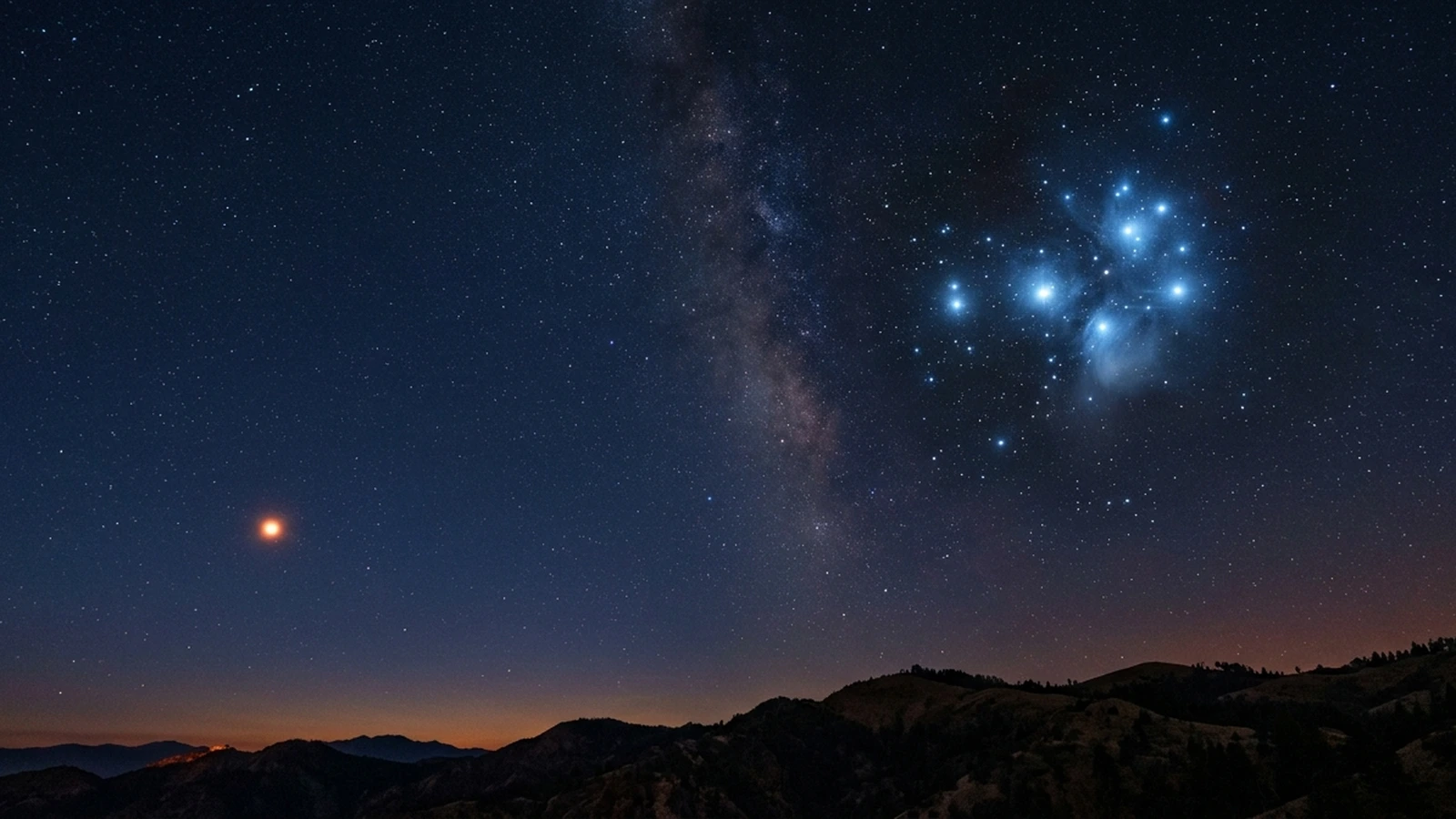
- 2026 has several good sky events: Mars passes 0.1° from Uranus on 4 July, drifts through the Beehive Cluster (M44) on 11 October, and closes to 1.2° from Jupiter on 16 November
- The next Mars opposition is 19 February 2027: magnitude −1.2, disk 13.8 arcseconds. Plan ahead for it
Jump to section 6 sections
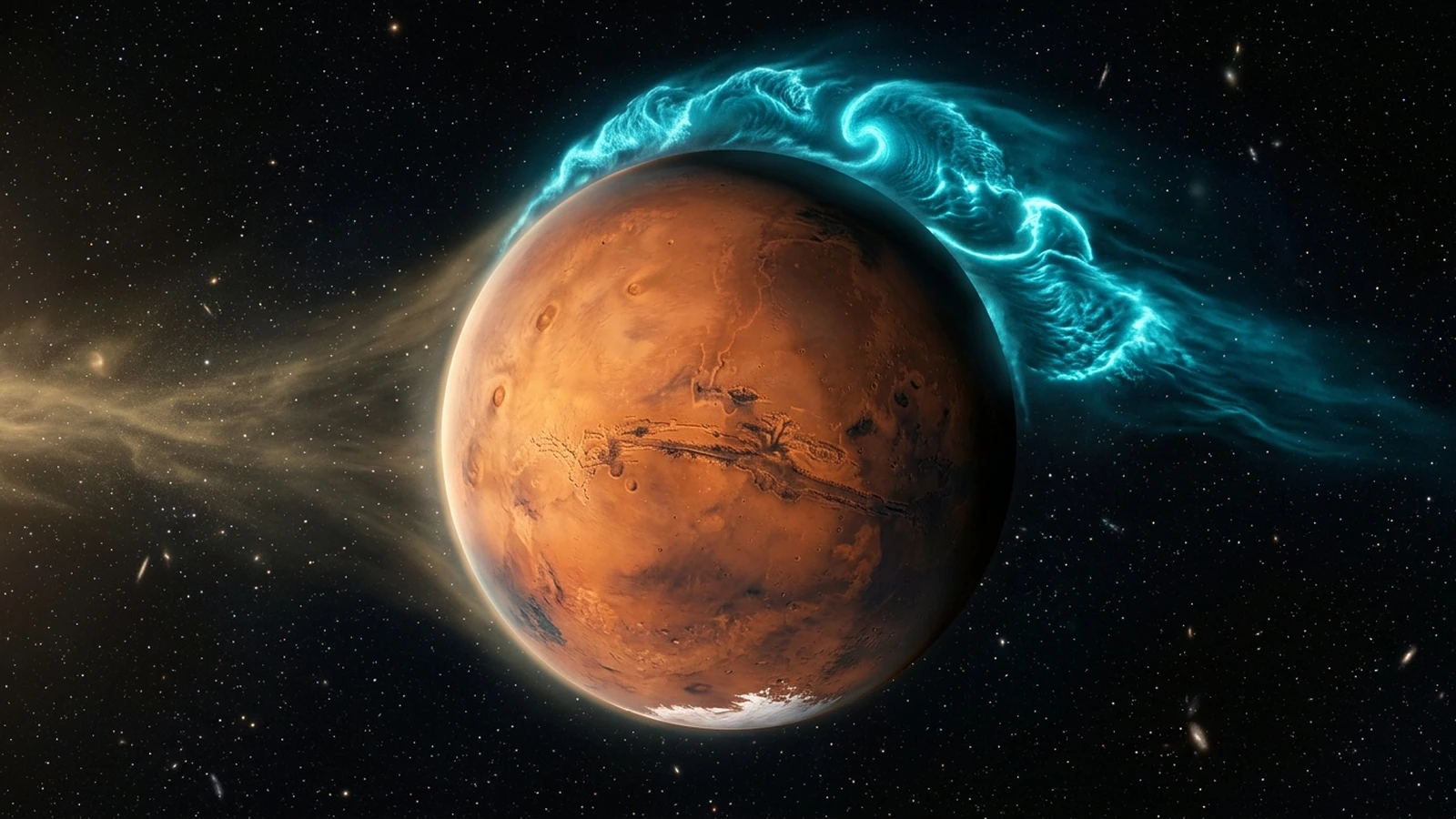
Mars is having a quiet but significant year in 2026. It passed behind the Sun on 9 January (solar conjunction) and was completely invisible for a couple of months. Since late March it has been climbing back into the morning sky, faint and small but getting a little brighter and a little larger each week.
This is the approach year. Earth is slowly catching up to Mars in our faster orbit. By February 2027 when Mars reaches opposition, it will be one of the brighter objects in the sky. Everything in 2026 is prologue to that.
This guide covers what to expect month by month, the year's best sky events involving Mars, and when it is worth pointing a telescope at it.
How to See Mars in 2026: Overview
Mars follows a roughly 26-month opposition cycle. The previous opposition was 16 January 2025. The next is 19 February 2027. That puts 2026 in the pre-opposition phase: the year when Mars and Earth are gradually closing the gap after passing each other on opposite sides of the Sun.
Key facts for 2026
Opposition timeline:
- Previous opposition: 16 January 2025
- Solar conjunction: 9 January 2026 (Mars behind the Sun, about 223 million miles away)
- Next opposition: 19 February 2027 (about 63 million miles / 0.68 AU, magnitude −1.2, disk 13.8 arcseconds)
- 2026 status: pre-opposition year, Mars emerging from conjunction and brightening steadily
Visibility through the year:
- January to late March: not observable (too close to the Sun)
- Late March to September: morning sky, faint at around magnitude +1.4
- October to December: noticeably brighter, disk growing, approaching opposition
Size and brightness (approximate, from ALPO ephemeris):
- Late March: about 4 arcseconds, magnitude +1.4
- September: about 5.6 arcseconds
- Mid-October: 6 arcseconds (serious telescope work can begin)
- Early December: about 8 arcseconds
- Late December: approaching 10 arcseconds, magnitude −0.1
Key dates:
- 9 January 2026: solar conjunction
- Late March 2026: Mars reappears in morning sky (Aquarius)
- 20 April 2026: Mars, Saturn and Mercury morning alignment (low from UK)
- 4 July 2026: Mars passes 0.1° from Uranus (superb binocular event)
- 25 September 2026: Castor and Pollux point toward Mars
- 11 October 2026: Mars passes through M44, the Beehive Cluster
- 16 November 2026: Mars 1.2° from Jupiter in morning sky
- 26 November 2026: Mars 1.7° above Regulus in Leo
- 19 February 2027: opposition
Mars Opposition Cycle Explained
Mars's orbit creates a predictable pattern of visibility that repeats roughly every 26 months.
The cycle
Solar conjunction is where 2026 started. Mars sat directly behind the Sun, at maximum distance, completely unobservable.
Morning emergence follows in late March. Mars reappears in the pre-dawn sky, faint and low in the east, moving through Aquarius. The disk is only about 4 arcseconds, too small for telescope detail. This phase lasts through spring and summer.
Pre-opposition brightening runs from June through December 2026. Earth is closing the gap and Mars gets noticeably brighter each month. By late autumn it starts to reward telescope time, and by December it is genuinely bright at magnitude −0.1.
Opposition arrives on 19 February 2027, with Mars opposite the Sun, rising at sunset and visible all night. Closest approach puts it about 63 million miles away, the disk reaching 13.8 arcseconds. Magnitude −1.2, outshining everything except Venus, Jupiter and Sirius.
Why 2027 is a moderate opposition
Not all Mars oppositions are equal. When opposition occurs near perihelion (as in July 2018) Mars can close to 35 million miles and reach magnitude −2.9, with a disk over 24 arcseconds. The February 2027 opposition is an aphelic one, when Mars is near the far end of its orbit, so it only reaches 13.8 arcseconds. Still a decent showing, better than a poor opposition, and well worth the wait.
Why Mars brightens so dramatically through 2026
Mars was about 223 million miles away in January 2026. By late December it is around 80 million miles. That dramatic closing of the gap, driven by Earth's faster orbit catching up, is why December Mars looks so much more impressive than March Mars.
Month-by-Month Viewing Guide
January 2026: solar conjunction
Mars passed directly behind the Sun on 9 January at maximum distance (about 223 million miles). It is completely unobservable throughout January, lost in the solar glare and not returning to view until late March.
February 2026: still invisible
Mars remains too close to the Sun to observe. It is pulling away from the solar glare but won't reach a safe observing angle until the fourth week of March.
March 2026: Mars returns to the morning sky
- Visibility: low in the east before sunrise, from around the third week
- Constellation: Aquarius
- Magnitude: about +1.4
- Apparent diameter: about 4 arcseconds
- Best viewing time: 45–60 minutes before sunrise
Mars reappears in the pre-dawn sky low above the eastern horizon. It is a modest orange-red point, nothing dramatic yet, but it is back. The disk is only about 4 arcseconds, far too small for surface detail. Enjoy it for what it is: the first sighting after conjunction. You will need a clear, flat eastern horizon and good timing relative to sunrise.
April 2026: faint morning planet
- Constellation: Aquarius to Pisces
- Magnitude: about +1.4
- Apparent diameter: about 4 arcseconds
Mars climbs a little higher in the pre-dawn sky each morning. Still faint but unmistakably orange against the surrounding stars.
20 April: Mars, Saturn and Mercury morning alignment: A tight three-planet grouping low in morning twilight. Mars and Saturn will be close, with Mercury nearby. It will be low and challenging from the UK, so worth binoculars and a clear southeastern horizon, but don't lose sleep over it if the conditions aren't right.
Through a telescope, Mars is still too small for any meaningful detail. Use the mornings to practise finding it and tracking it as it moves.
May 2026: moving into Taurus
- Constellation: Aries to Taurus
- Magnitude: about +1.3
- Apparent diameter: about 4–4.5 arcseconds
Mars moves into Taurus, one of the richer regions of the morning sky. The Pleiades and Hyades make good reference points for tracking its movement. Still a small disk with nothing to see through the telescope.
June 2026: steady climb
- Constellation: Taurus
- Magnitude: about +1.3
- Apparent diameter: approaching 5 arcseconds
Mars sits among the stars of Taurus and shines at around magnitude +1.3, similar in brightness to Aldebaran nearby. The colour comparison between the two is worth a look in binoculars. At the telescope, the disk is still too small for reliable surface detail, though a large aperture under excellent seeing might hint at something on a very steady night.
July 2026: 4 July Mars passes 0.1° from Uranus
- Constellation: Taurus to Gemini
- Magnitude: about +1.2
- Apparent diameter: about 5 arcseconds
4 July: Mars 0.1° from Uranus: This is the binocular event of the first half of the year. Mars is around 158 times brighter than Uranus (magnitude +5.8, at the edge of naked-eye visibility), but the separation is tiny. Put Mars in the same binocular field and the pale blue-green dot of Uranus will be right beside it. Uranus is genuinely hard to identify without a pointer like this. Don't miss it.
Through a telescope on 4 July: two planets in the same low-power field, one a tiny orange disk and one a tiny blue-green disk. Unusual and satisfying even if neither shows much detail.
August 2026: brightening, higher in the sky
- Constellation: Gemini
- Magnitude: about +1.0
- Apparent diameter: about 5.5 arcseconds
Mars is noticeably brighter than it was in spring. Earth is clearly closing the gap now. From a dark site the orange-red tint is vivid to the naked eye. Through a 6-inch or larger telescope under good seeing, you might catch the faintest hint of the polar cap or a dark marking. Don't expect much, but it is worth a look on steady nights.
September 2026: 25 September Castor and Pollux alignment
- Constellation: Gemini to Cancer
- Magnitude: about +0.6
- Apparent diameter: about 5.6 arcseconds
Mars is now clearly brighter than a few months ago. The brightening has become noticeable to anyone who has been following it.
25 September: Castor and Pollux (the twin stars of Gemini) point almost directly at Mars as it moves into Cancer. A nice alignment to photograph or sketch.
Through a telescope, the disk is around 5–6 arcseconds. A large telescope on a very steady night might show the polar cap. Mars is beginning to reward attention, though the real telescope season is still a few weeks away.
October 2026: 11 October Mars drifts through the Beehive
- Constellation: Cancer
- Magnitude: about +0.4
- Apparent diameter: reaching 6–7 arcseconds from mid-month
11 October: Mars passes through M44, the Beehive Cluster: This is the binocular highlight of the year. M44 (Praesepe) is a loose open cluster of roughly 1,000 stars, easily visible as a misty patch to the naked eye and a beautiful scattered mass in binoculars. Watching orange Mars drift through it against the white stellar background is genuinely striking. Use 7x50 or 10x50 binoculars for the best view; you want a wide field to take in the whole cluster with Mars in the middle.
According to ALPO, Mars reaches 6 arcseconds around 14 October. From this point serious telescope work can begin with 4 to 8-inch apertures. With a 6-inch on a steady night the polar cap should start to show. Major dark features like Syrtis Major may become detectable with an 8-inch. This is the month to start regular Mars sessions.
November 2026: 16 November Mars 1.2° from Jupiter
- Constellation: Cancer to Leo
- Magnitude: about +0.1, brightening toward 0.0
- Apparent diameter: 7–8 arcseconds
16 November: Mars 1.2° from Jupiter in the morning sky: Both planets in the same binocular field, Mars orange-red, Jupiter a steady white. Jupiter is brighter at this point, but Mars is closing. A striking morning pairing worth getting up for.
26 November: Mars passes 1.7° above Regulus in Leo. The colour contrast between the reddish-orange Mars and the blue-white Regulus is attractive in binoculars.
Through a telescope, Mars is now approaching 8 arcseconds. The polar cap should be clearly visible with a 6-inch on a steady night. Surface features (Syrtis Major, Mare Acidalium, Hellas Basin) are within reach for an 8-inch under good seeing. This is the start of the serious pre-opposition observing season.
December 2026: Mars bright and growing
- Constellation: Leo
- Magnitude: about −0.1, matching Arcturus
- Apparent diameter: 8–10 arcseconds
- Best viewing time: rises well before midnight by year's end
By late December Mars is around magnitude −0.1, as bright as Arcturus, and noticeably outshining most stars. Anyone who hasn't looked at it since spring will be struck by the transformation. The orange-red colour is vivid to the naked eye.
Through a telescope, the disk is now over 8 arcseconds and growing. The polar cap is prominent. Surface features are accessible through smaller telescopes. This is serious Mars season, and it only gets better as February 2027 approaches.
Mars reaches opposition on 19 February 2027 with a disk of 13.8 arcseconds and magnitude −1.2. Keep observing.
What You Can See Through a Telescope
With the naked eye
Mars appears as a distinctly orange-red "star". It twinkles far less than a real star (the planetary disk rather than a point source), which is the easiest way to confirm what you are looking at. Magnitude ranges from +1.4 in spring to −0.1 by late December, so it starts fairly modest and ends genuinely prominent.
Best naked-eye period: from October onwards, when Mars starts rivalling the brightest stars in colour and brightness.
With binoculars
- Early year: confirms Mars is a planet (steady orange light); useful for tracking its path
- 4 July: the Uranus conjunction, essential for putting Uranus right next to Mars in the field
- 11 October: the Beehive Cluster pass, the standout binocular event of 2026
- November onwards: the orange disk starts to show as a tiny disc rather than a pure point
With a small telescope (60–90mm)
Useful from October onwards. The disk is clearly visible as an orange circle, and the polar cap may begin to show in November or December under good seeing. Magnification of 75–150x is about right. Before October, Mars is just a tiny orange dot; the telescope mainly confirms you have the right object.
With a medium telescope (4–6 inch / 100–150mm)
Best from: October 2026, building toward the February 2027 opposition.
The polar cap should be visible from October on a steady night. Dark markings, Syrtis Major in particular, come into view from November. Use 150–250x when the seeing allows.
Features worth looking for:
- Syrtis Major: large dark triangular region, the most obvious surface marking
- Hellas Basin: sometimes appears as a bright washed-out patch
- Mare Acidalium: dark region in the northern hemisphere
- Polar cap: bright white spot at the north pole
With a large telescope (8 inch / 200mm and up)
Best from: October 2026 through the 2027 opposition.
At this aperture polar cap detail is clearly visible from October, and the major dark albedo features are well-defined by December. Use 200–400x when the seeing is good enough.
Advanced things to watch for: polar cap size changing over weeks, signs of dust storm activity (dark features fading or brightening unexpectedly), occasional white limb clouds.
What you won't see in 2026
- Surface craters or canyon detail: Mars is still too small and too far
- Phobos and Deimos: impossibly faint and too close to the bright planet
- The 13.8 arcsecond disk: that comes at the February 2027 opposition
Best Telescopes and Equipment for Mars
For naked-eye and general tracking: no equipment needed. A planetarium app like Stellarium helps confirm what you are looking at in the morning sky.
For binocular observing: the Celestron SkyMaster 15x70 or Helios Stellar II 10x50 are ideal for the 4 July Uranus conjunction and the 11 October Beehive Cluster pass. Wide field matters here; you want both objects in the frame at once.
For serious telescope work:
- Minimum useful aperture: 6 inch (150mm) from October onwards
- Recommended: 8 inch (200mm) for genuine surface detail
- A stable mount is essential: Mars at 200x needs steady tracking
Telescopes
For casual observing (October–December 2026):
The Sky-Watcher Heritage 150P (150mm) gives enough light grasp to spot the polar cap and hints of the major dark markings like Syrtis Major from October onwards on nights of good seeing. This is about the minimum aperture worth using on Mars in 2026.
For serious pre-opposition work:
The Sky-Watcher Skyliner 200P (200mm Dobsonian) is where Mars observation gets genuinely rewarding: more polar cap detail, darker and more contrasted surface features, and room for higher magnification on steady nights. See our Mid-Range Visual setup guide for a complete kit.
For maximum detail toward the 2027 opposition:
10-inch-plus aperture. Browse First Light Optics Dobsonians for options at that aperture.
Eyepieces and accessories
The BST StarGuider 8mm is the go-to for high-magnification Mars work, pushing to 150–200x through a 150P or Skyliner 200P on steady nights. The Astro Essentials 2x Barlow doubles any eyepiece's magnification and is especially useful for reaching 250x+ without needing a dedicated high-power eyepiece.
Filters for Mars
Coloured filters make a genuine difference from October onwards, once the disk has some size to work with.
The Astro Essentials #23A Light Red Filter is the essential Mars filter. It darkens the blue-grey sky features and polar hazes while making the desert regions punchier, so dark surface markings like Syrtis Major snap into clarity. Needs 100mm+ aperture. The #82A Light Blue Filter does the opposite, enhancing the bright polar ice caps and atmospheric hazes. Both are around £9 each.
Kit for following Mars in 2026
Kit we've tested and reviewed in full
Binoculars for the sky events through the year, a 6-inch or 8-inch scope for the October–December telescope season.
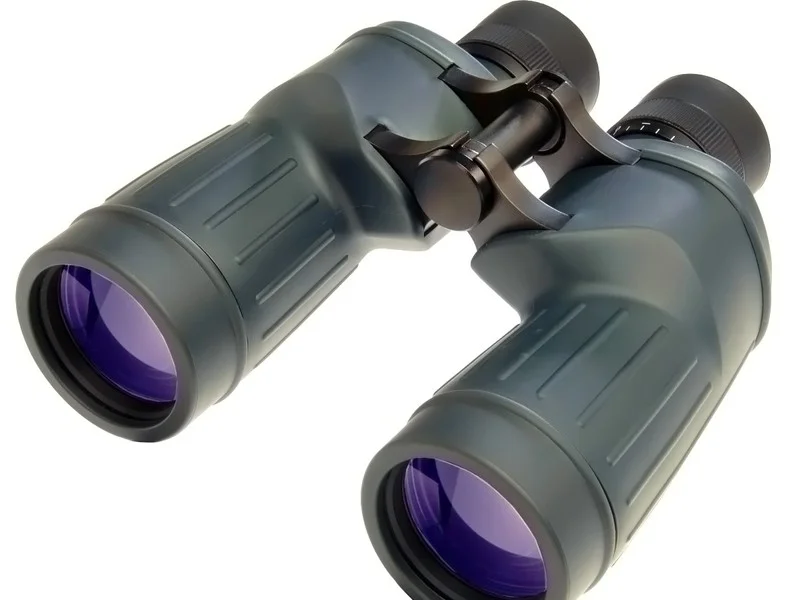
Ideal for the 4 July Uranus conjunction and the October Beehive Cluster pass. Wide field, good light grasp.
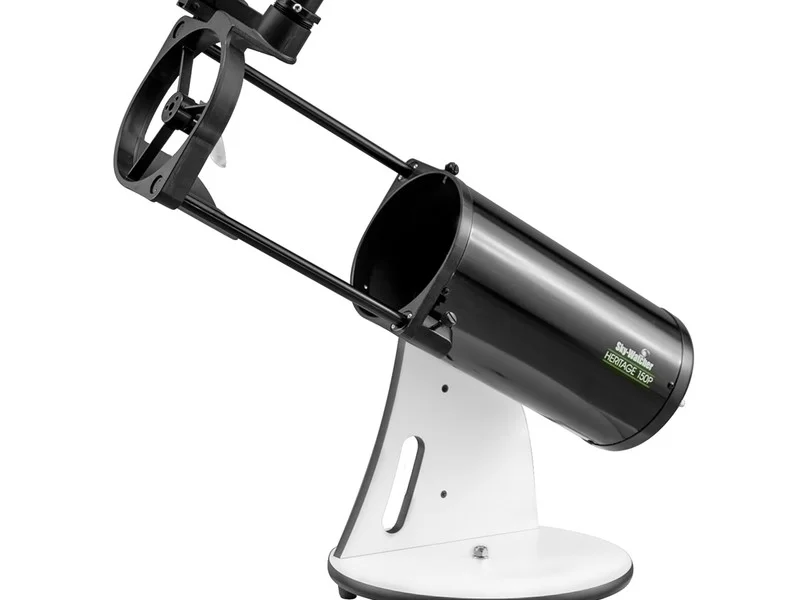
Minimum aperture worth using on Mars in 2026. Shows polar cap and Syrtis Major from October under good seeing.
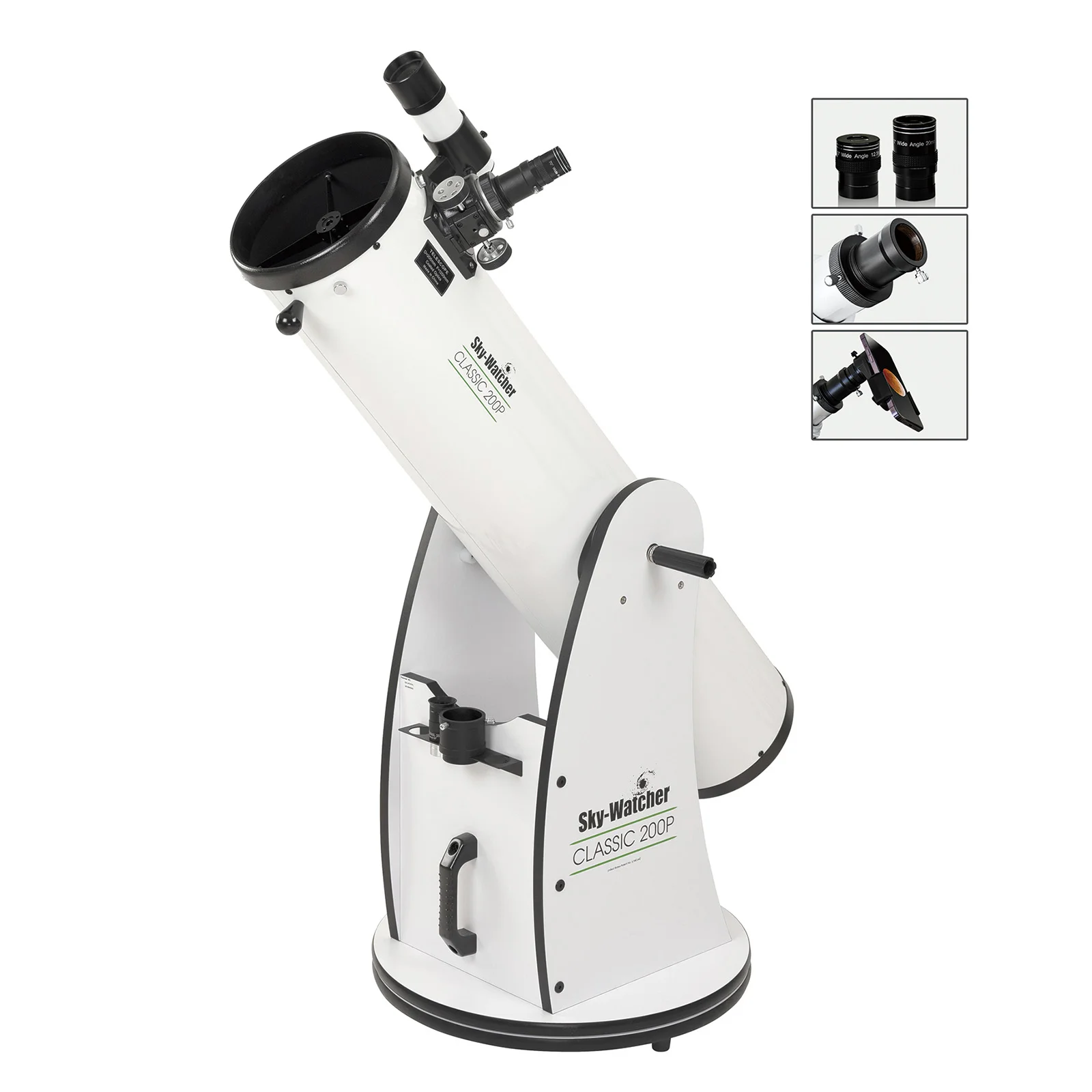
Where Mars observation gets genuinely rewarding: dark surface features, polar cap detail, and scope for high magnification on steady nights.
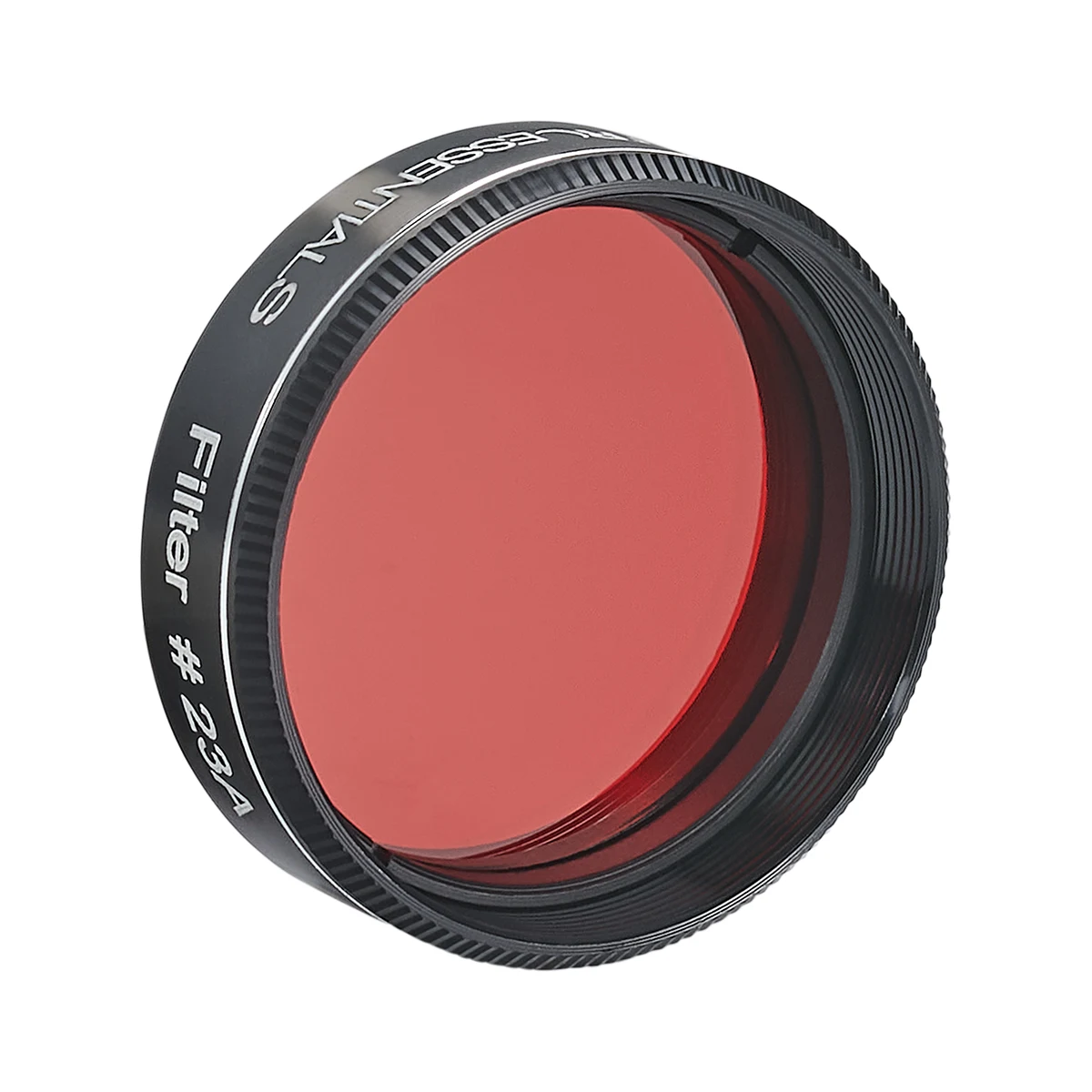
Astro Essentials #23A Light Red Filter 1.25"
Blocks the blue haze and makes Syrtis Major and the dark maria stand out against the deserts. Needs 100mm or more of aperture, so pair it with the 150P or 200P.
Affiliate links: you pay the same price, we earn a small commission that helps keep WatchTheStars free.
Planetary camera
For imaging, the ZWO ASI662MC is a dedicated colour planetary camera. Capture thousands of short exposures and stack the best frames to pull out detail the eye can't hold. The full routine, from Barlow and ADC to AutoStakkert, is in our planetary imaging for beginners guide; and because this opposition falls in February, read our telescope dew and winter observing guide before the first frosty night. The Celestron NexYZ Adapter is a much cheaper option if you just want to attach your smartphone for a quick shot.
Observing Tips for Mars
Start in October. The serious Mars observing season in 2026 begins when the disk passes 6 arcseconds in mid-October and genuine surface detail becomes accessible. For earlier months, track Mars in binoculars and follow the sky events. It is still interesting, just not a telescope priority.
Catch Mars at its highest. Mars detail is extremely seeing-dependent. Observe when Mars is highest in the sky to minimise atmospheric turbulence. Avoid the last 20° of altitude if possible, and wait for the calm spells between the turbulence.
Use high magnification, but know when to stop. Start at 75–100x to find and centre Mars, move to 150–200x for the main view, and push to 250–400x only on nights of exceptional seeing. If the image becomes blurry or boiling, come back down. The highest magnification that gives a sharp, steady image is the right magnification. Our guide to telescope magnification explains how to work out which eyepiece gets you to each of those steps on your own scope.
Wait for good seeing. If stars are twinkling strongly, Mars won't show detail. On those nights, observe Jupiter or Saturn instead and save the Mars work for a steadier evening.
Let the telescope cool down. Take it outside 30–60 minutes before observing. Larger scopes need longer, an hour or two for a 10-inch. A warm telescope creates internal air currents that blur the image, which matters a lot when the disk is small.
Track Mars's rotation. Mars rotates every 24.6 hours, so different surface features face Earth on different nights. Syrtis Major might be well-placed tonight and rotated away tomorrow. Stellarium shows Mars's orientation and helps you plan sessions around which features are facing Earth.
Watch for dust storms. Mars occasionally develops dust storms that obscure surface features and brighten affected regions. If dark features appear to fade or disappear unexpectedly, note it and report to the ALPO Mars Section.
Sketch what you see. Drawing forces careful observation and builds skill far faster than just looking. Mark the disk outline, polar cap position and any dark markings, then note date, time, magnification and seeing (1–10 scale). Comparing sketches over weeks shows you Mars genuinely changing.
Use averted vision for subtle features. Look slightly to the side of Mars and let peripheral vision detect faint detail. Dark markings often show better this way than staring directly.
Be patient. 2026 is the build-up year. Mars in April looks nothing like Mars in December, and December looks nothing like opposition in February 2027. Follow it month by month, in binoculars at first then through the telescope, and the context makes the opposition itself far more rewarding when it arrives.
Your 2026 Mars observing calendar
Not observable: January to late March. Solar conjunction on 9 January and post-conjunction recovery.
Track in binoculars: late March to September. Faint morning planet; follow its path and the sky events. 4 July (0.1° from Uranus) and 11 October (through M44 Beehive Cluster) are the highlights.
Telescope season: from mid-October. Disk reaching 6 arcseconds, polar cap and markings becoming accessible. November and December (9–10 arcseconds, magnitude approaching 0) are when regular sessions really pay off. 16 November brings a close pairing with Jupiter.
The payoff: 19 February 2027. Opposition, magnitude −1.2, disk 13.8 arcseconds.
Clear skies.
Resources
Mars observing tools:
- Stellarium Web: shows Mars position and orientation
- ALPO Mars Section: submit observations, get updates on dust storms
- ALPO 2026-2027 Mars Apparition Guide: detailed ephemeris
- In-The-Sky.org: Mars: opposition dates and apparition data
Imaging tools:
- WinJUPOS: advanced planetary observation and imaging software
UK observing groups:
- British Astronomical Association Mars Section: UK observing reports and guidance
Frequently Asked Questions
Equipment guides
Related topics

Ian ClaytonAmateur astronomer and founder of WatchTheStars.co.uk, dedicated to helping others explore the wonders of our universe. Full profile →