Next full moon
The Hunter's Moon: Monday 26 October 2026, 4.12am UK time
The first full Moon after the Harvest Moon. It is full before dawn on the Monday, and the clocks go back the day before, so that time is GMT. Sunday evening 25 October is the night to look. For tonight's phase, rise and set times for your location, and the next 12 full and new Moons, use our Moon Phase Tonight tool.
Where Do Full Moon Names Come From?
Most of the names we use today come from the native peoples of north-eastern North America, above all the Algonquian-speaking tribes around the Great Lakes and New England, who didn't use our twelve-month calendar at all. They tracked the year by moons, and each full moon carried a name describing what mattered right then: the ice breaking up, or the corn coming ripe. Naming varied a great deal from tribe to tribe. The Ojibwe called January's moon the Spirit Moon; the Cree called it the Freeze Up Moon; for the Cherokee, February's was the Hungry Moon. There was never one single "Native American" list.
European settlers brought their own moon names with them. The Harvest Moon is an old English farming term, and the Wolf Moon is thought to be a European import rather than a native one. Over time the two traditions blended. The list most people know today was popularised by the Maine Farmers' Almanac, which began printing "Indian" moon names in the 1930s, and later by the Old Farmer's Almanac. So the familiar names are really a mixture: genuine Algonquian tradition, colonial farming culture, and a helping of almanac editorial.
One thing worth knowing: none of this is official astronomy. The International Astronomical Union doesn't recognise any full moon names, and a lunar month (29.5 days) doesn't fit neatly inside a calendar month, which is exactly why we occasionally get a thirteenth full moon and call it a blue moon. The names survive because they're an enjoyable way to follow the turning of the year. If you want the science instead, our guide to moon phases covers how the cycle actually works.
Full Moon Names by Month: Quick Guide
| Month | Name | The story in one line |
|---|---|---|
| January | Wolf Moon | Wolves howling through the midwinter cold |
| February | Snow Moon | The snowiest stretch of the year |
| March | Worm Moon | Earthworms surfacing as the ground thaws |
| April | Pink Moon | Pink spring wildflowers, not a pink moon |
| May | Flower Moon | Everything in bloom at once |
| June | Strawberry Moon | Wild strawberry picking season |
| July | Buck Moon | Stags growing their new antlers |
| August | Sturgeon Moon | Giant fish filling the Great Lakes nets |
| September | Corn / Harvest Moon | Bringing the crops in by moonlight |
| October | Hunter's Moon | Stocking the larder before winter |
| November | Beaver Moon | Beavers finishing their lodges before the freeze |
| December | Cold Moon | The longest, coldest nights of the year |
🐺 Wolf Moon: January's Full Moon
January's full moon is the Wolf Moon, named for packs howling through the deepest, hungriest part of winter. It's usually filed under Native American names, but it's thought to have crossed the Atlantic with European settlers: wolves howled through English and continental winters long before colonial America. People assumed the howling meant hunger; in truth wolves howl to find each other and to warn rival packs off their territory.
Native names for the same moon show how local these traditions were: the Ojibwe knew it as the Spirit Moon, the Cree as the Cold Moon or Freeze Up Moon, and older English almanacs sometimes simply called it the Old Moon.
For UK stargazers, January's full moon is a highlight for a purely astronomical reason: a full moon sits opposite the Sun, so while the January sun crawls low across the sky, the Wolf Moon soars: it's among the highest-riding full moons of the year, blazing above the winter constellations all night.
❄️ Snow Moon: February's Full Moon
February's full moon is the Snow Moon, and there's no mystery to it: in most of North America, February brings the heaviest snowfall of the year, and the moon that lights it took the name. The alternatives are bleaker and say a lot about what late winter meant before supermarkets: the Cherokee called it the Hungry Moon, when stores ran low and game was scarce. The Ojibwe called it the Bear Moon, for the season when cubs are born in the den, and the Cree the Bald Eagle Moon.
Some older English traditions called February's moon the Storm Moon, which any UK observer who has waited out a week of Atlantic fronts for one clear night will find entirely fair. Like January's, it sits high and bright, snow or no snow.
🪱 Worm Moon: March's Full Moon
March's full moon is the Worm Moon, and the usual explanation is charming: the ground thaws, earthworms surface, and the birds return to feed on them. There's a rival theory with a good pedigree, though: the 18th-century explorer Jonathan Carver recorded that the "worms" were beetle larvae emerging from thawing tree bark. Either way, the name marks the moment winter loses its grip. Other traditions caught the same turning point differently: the Ojibwe Sugar Moon marks the maple sap starting to flow, and the northern Ojibwe called it the Crow Comes Back Moon.
March's full moon carries older European weight too. In the Christian calendar it's tied to the Lenten Moon, and the first full moon after the spring equinox is the Paschal Moon: the one that sets the date of Easter. That's why Easter wanders around the calendar: it follows the Moon, not the month.
🌸 Pink Moon: April's Full Moon
April's full moon is the Pink Moon: named for a flower, not its colour, which is why every April social media fills with people asking why the moon isn't pink. Creeping phlox, or "moss pink", carpets the ground across eastern North America in early spring, and April's moon was named for that burst of colour on the land beneath it. Other names catch the same spring surge: the Cree Frog Moon and Egg Moon, the Algonquin Breaking Ice Moon, the Lakota Moon When the Ducks Come Back, and the colonial Sprouting Grass Moon.
The April full moon is usually the Paschal Moon, so it generally sets Easter's date. And while it won't be pink, catch it rising over the eastern horizon and it may well look golden, a taste of what the low summer moons do far more dramatically.
🌼 Flower Moon: May's Full Moon
May's full moon is the Flower Moon: the simplest name on the list, because by May everything is in bloom at once. The Dakota and Lakota called it the Planting Moon, the Cree the Egg Laying Moon and the Leaf Budding Moon. All carry the same message: the growing season has properly begun.
England had its own name centuries earlier. The Anglo-Saxons knew May as Þrimilcemonath, "the month of three milkings", because the grass grew so rich that cows could be milked three times a day, and May's moon is still sometimes called the Milk Moon in its honour. By May the full moon has begun its slide down the sky, each one arcing lower than the last as it heads for June's low point.
🍓 Strawberry Moon: June's Full Moon
June's full moon is the Strawberry Moon: the prettiest name of the year, and the most misunderstood. It has nothing to do with colour: for the Algonquian peoples of the north-east, June's moon marked the short season when wild strawberries ripen. The Cherokee called it the Green Corn Moon, the Tlingit the Birth Moon. Europeans knew it as the Rose Moon or the Mead Moon. June was the month for honey harvests, and one persistent (if unproven) piece of folklore links the "honey moon" to June weddings.
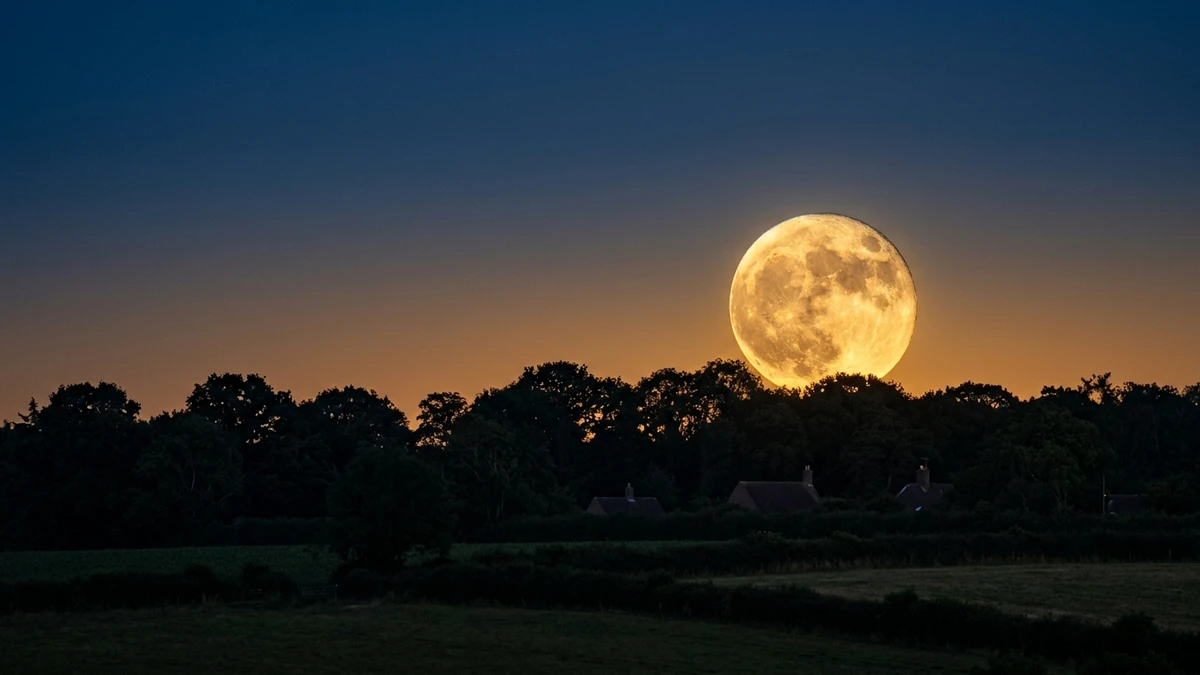
Here's the twist: the Strawberry Moon often does glow a warm gold or amber, at least from the UK. As the first full moon after the summer solstice it rides the lowest arc of any full moon all year, and all that extra atmosphere near the horizon filters its light. We covered the 2026 one in detail in our Strawberry Moon guide.
🦌 Buck Moon: July's Full Moon
July's full moon is the Buck Moon. By July, male deer are growing their new antlers at up to two centimetres a day, some of the fastest-growing tissue in any mammal, and the moon took their name. The western Abenaki called it the Thunder Moon, for the month's dramatic storms; the Algonquin and Ojibwe the Raspberry Moon; the Tlingit, on the salmon rivers of the north-west coast, the Salmon Moon. English farming tradition called it the Hay Moon, for obvious reasons.
Like June's, the Buck Moon hugs the southern horizon from UK latitudes and often rises looking huge and amber, well worth catching in the first half-hour after moonrise, when the low-moon effect is at its best.
🐟 Sturgeon Moon: August's Full Moon
August's full moon is the Sturgeon Moon: the oddest-sounding name on the list, until you know the geography. Lake sturgeon, armoured giants that can top two metres and live over a century, were a staple catch for the peoples of the Great Lakes, and August was when they were caught most easily. The Algonquin and Ojibwe also called this the Corn Moon, and the Cree the Flying Up Moon, for the season young birds fledge.
The Anglo-Saxon name was the Grain Moon, tied to Lammas: the early-August festival of the first loaf of the new wheat. It's a reminder that on both sides of the Atlantic, the moon names are really a farming and foraging calendar with the sky as its clock face.
🌾 Harvest Moon: September's Full Moon (Usually)
The most famous moon name of all, and the only one defined by astronomy rather than the calendar: the Harvest Moon is whichever full moon falls closest to the autumn equinox around 22–23 September. Usually that's September's moon, otherwise called the Corn Moon, but roughly every three years October's moon sits closer to the equinox and takes the title instead.
The name is old English farming language, and it earned its keep. Around the equinox, the Moon's path makes a shallow angle with the evening horizon, so instead of rising its usual 50 minutes later each night, the full moon rises only 25–30 minutes later for several nights running. The effect is a run of evenings with a bright moon low in the east just as the light fades, free working light, in the days before tractors had headlamps, exactly when the crops had to come in.
The Dakota called this moon the Corn Harvest Moon and the Ojibwe the Falling Leaves Moon. In 2026 the Harvest Moon fell on 26 September; in 2027 it's the moon of 16 September.
🏹 Hunter's Moon: October's Full Moon
October's full moon is the Hunter's Moon. It follows the Harvest Moon and inherits some of its shallow-angle, early-rising behaviour, another run of bright early evenings, this time lighting the hunt rather than the harvest. With the fields cleared and the game fattened on autumn's plenty, this was the month to stock the winter larder, and the name (another one with deep English roots) stuck.
The Cree called it the Migrating Moon as the birds streamed south, the Ojibwe the Freezing Moon, and the Haida the Ice Moon. Some older English sources called it the Blood Moon, a name that has since been borrowed by the media for the copper-red moon of a total lunar eclipse, so treat that one with care: they're two different things.
🦫 Beaver Moon: November's Full Moon
November's full moon is the Beaver Moon, and the name watches the riverbank: this is the month beavers finish reinforcing their lodges and stockpiling food before the water freezes over, and, less romantically, it was also the season trappers set their beaver traps, when the animals' winter coats were at their thickest and most valuable. The fur trade built colonial North America, so it's no surprise the beaver got a moon.
The Dakota and Lakota called it the Deer Rutting Moon, the Cree and Assiniboine the Frost Moon. From the UK, the Beaver Moon marks the full moon's climb back up the sky: each one now rides higher than the last as the nights stretch out towards the solstice.
🥶 Cold Moon: December's Full Moon
December's full moon is the Cold Moon: the year ends as bluntly as it began. The Mohican name, the Long Night Moon, is even better, because it's astronomically exact: falling nearest the winter solstice, this full moon is above the horizon longer than any other of the year. The western Abenaki called it the Winter Maker Moon; old English tradition, the Moon Before Yule; and the Oak Moon appears in later European folklore.
For UK observers it's the mirror of June's Strawberry Moon: while the solstice sun barely scrapes the horizon, the Cold Moon takes the sun's high summer path, sailing almost overhead through the longest nights. On crisp December evenings over snow or frost, no moon of the year is brighter company.
🔵 Blue Moon, Supermoon and Micromoon: The Special Names
A few full moon names describe circumstances rather than seasons, and these are the ones that make headlines.
Blue Moon. Twelve lunar months add up to about 354 days, eleven short of a year, so every two to three years a thirteenth full moon squeezes in. The original Maine Farmers' Almanac rule named the third full moon in a season that has four; the definition most people use now, a second full moon in a single calendar month, actually comes from a 1946 Sky & Telescope article that misread the almanac, and the mistake proved catchier than the rule. Either way, it won't look blue. The UK's most recent was 31 May 2026; the next, by the seasonal definition, is 20 May 2027.
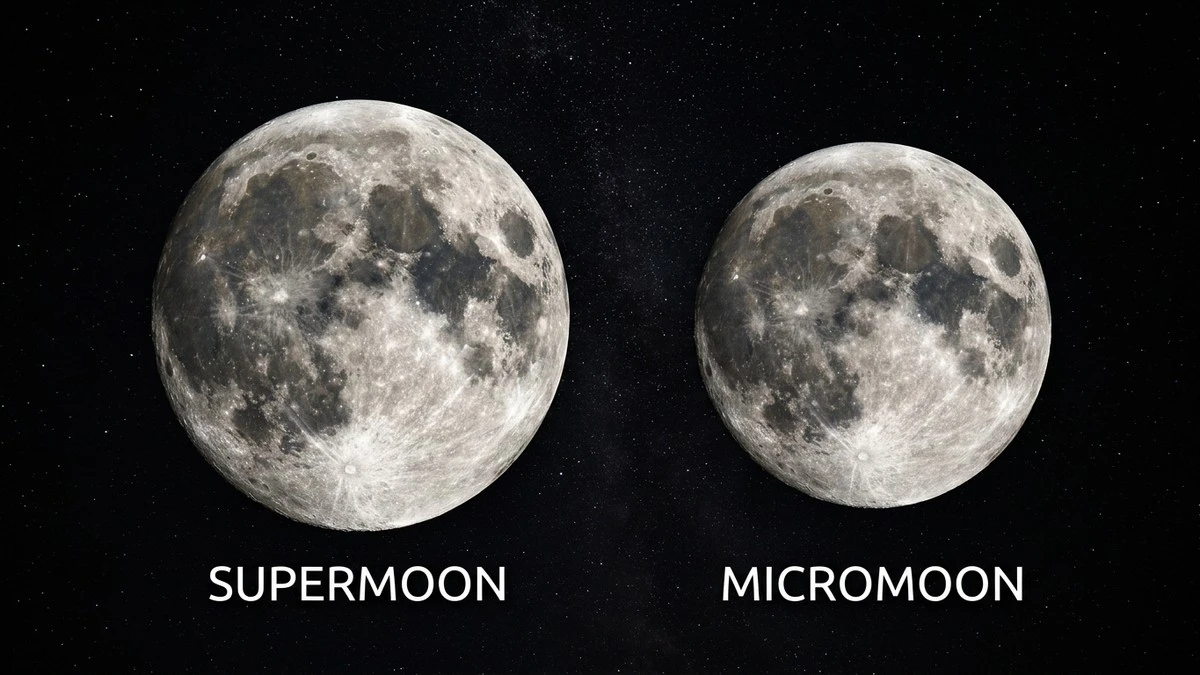
Supermoon and micromoon. The Moon's orbit is an ellipse, so its distance from Earth varies between roughly 356,000 and 406,000 km. A full moon near its closest point (perigee) looks up to 14% larger and noticeably brighter: a supermoon; one near its furthest (apogee) is a micromoon. Neither term is official astronomy ("supermoon" was coined by an astrologer in 1979), but the distance difference is real. 2026 has supermoons on 3 January, 24 November and 24 December, the December one the closest and brightest of the year.
Blood Moon. The popular name for a totally eclipsed moon, when the only sunlight reaching the lunar surface has been bent through Earth's atmosphere and stained copper-red. It only properly applies during a lunar eclipse: the UK's next good one is the deep partial eclipse of 28 August 2026.
📅 Full Moon Calendar 2026: UK Dates and Times
All times are UK time (GMT or BST), from Royal Observatory Greenwich data. 2026 is a 13-moon year thanks to May's blue moon.
| Date | Time (UK) | Name |
|---|---|---|
| 3 January | 10.03am | Wolf Moon (supermoon) |
| 1 February | 10.09pm | Snow Moon |
| 3 March | 11.38am | Worm Moon |
| 2 April | 3.12am | Pink Moon |
| 1 May | 6.23pm | Flower Moon |
| 31 May | 9.45am | Blue Moon (micromoon) |
| 30 June | 12.57am | Strawberry Moon |
| 29 July | 3.36pm | Buck Moon |
| 28 August | 5.18am | Sturgeon Moon: partial lunar eclipse |
| 26 September | 5.49pm | Corn / Harvest Moon |
| 26 October | 4.12am | Hunter's Moon |
| 24 November | 2.53pm | Beaver Moon (supermoon) |
| 24 December | 1.28am | Cold Moon (supermoon) |
For the August eclipse timings and what makes each of these worth watching, see our full 2026 Moon observing guide.
📅 Full Moon Calendar 2027: UK Dates and Times
A tidier year: twelve full moons, one per month. Times are UK time; note that a few peaks fall in the small hours, shifting the UK date a day later than in North America.
| Date | Time (UK) | Name |
|---|---|---|
| 22 January | 12.17pm | Wolf Moon |
| 20 February | 11.23pm | Snow Moon |
| 22 March | 10.44am | Worm Moon |
| 20 April | 11.27pm | Pink Moon |
| 20 May | 11.59am | Flower Moon (seasonal blue moon) |
| 19 June | 1.44am | Strawberry Moon |
| 18 July | 4.45pm | Buck Moon |
| 17 August | 8.29am | Sturgeon Moon |
| 16 September | 12.03am | Harvest Moon |
| 15 October | 2.47pm | Hunter's Moon |
| 14 November | 3.26am | Beaver Moon |
| 13 December | 4.09pm | Cold Moon |
❓ Full Moon Names: Your Questions Answered
What are the 12 full moon names?
In calendar order: Wolf Moon (January), Snow Moon (February), Worm Moon (March), Pink Moon (April), Flower Moon (May), Strawberry Moon (June), Buck Moon (July), Sturgeon Moon (August), Corn or Harvest Moon (September), Hunter's Moon (October), Beaver Moon (November) and Cold Moon (December). The Harvest Moon is a special case: it's whichever full moon falls closest to the September equinox, so once every few years it lands in October instead.
Where do full moon names come from?
Mostly from the native peoples of north-eastern North America, particularly Algonquian-speaking tribes, who tracked the year by moons rather than calendar months. Colonial settlers adopted some of these names, mixed in older European ones, and the Maine Farmers' Almanac popularised the combined list from the 1930s onwards. A few names, like the Harvest Moon and probably the Wolf Moon, are older English or European terms.
Why is it called a Wolf Moon?
January's full moon is named for the howling of wolves in the hungry depths of midwinter. It's often described as a Native American name, but it's thought to have come over with European settlers: wolves howled through English and continental winters too. People once believed wolves howled from hunger; in fact howling is how packs communicate and mark territory.
Are full moon names official?
No. They're folklore, not astronomy: the International Astronomical Union doesn't recognise any of them, and different cultures used completely different names. They survive because they're a lovely way to follow the rhythm of the year, and because newspapers enjoy a good headline. The Moon itself behaves exactly the same whatever you call it.
What is the rarest type of full moon?
A blue moon, which is why 'once in a blue moon' means rarely. The modern definition, a second full moon in one calendar month, comes around roughly every two and a half years. The original definition, the third full moon in a season that has four, is about as rare. Neither looks blue. The UK's last one was the blue moon of 31 May 2026; the next, by the seasonal definition, falls on 20 May 2027.
Is the Harvest Moon always in September?
Usually, but not always. The Harvest Moon is defined as the full moon closest to the autumn equinox on or around 22–23 September, and roughly every three years that turns out to be early October's moon. In 2026 the Harvest Moon fell on 26 September; in 2027 it's the full moon of 16 September (UK time).
🔔 Never Miss a Full Moon
📖 Go Deeper
Kit for full moon nights
Kit we've tested and reviewed in full
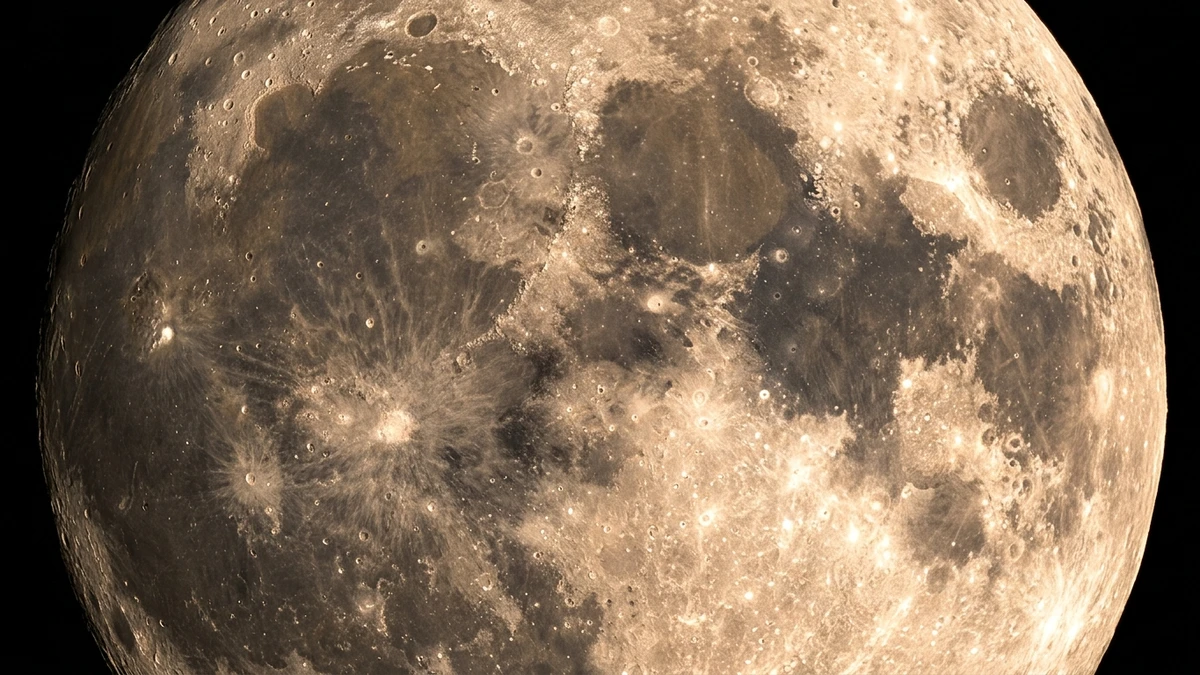
A full moon is the easiest sight in the sky: no equipment needed. But a decent pair of binoculars turns a bright disc into a landscape of dark seas and crater rays, and a cheap moon filter stops the glare from dazzling you.
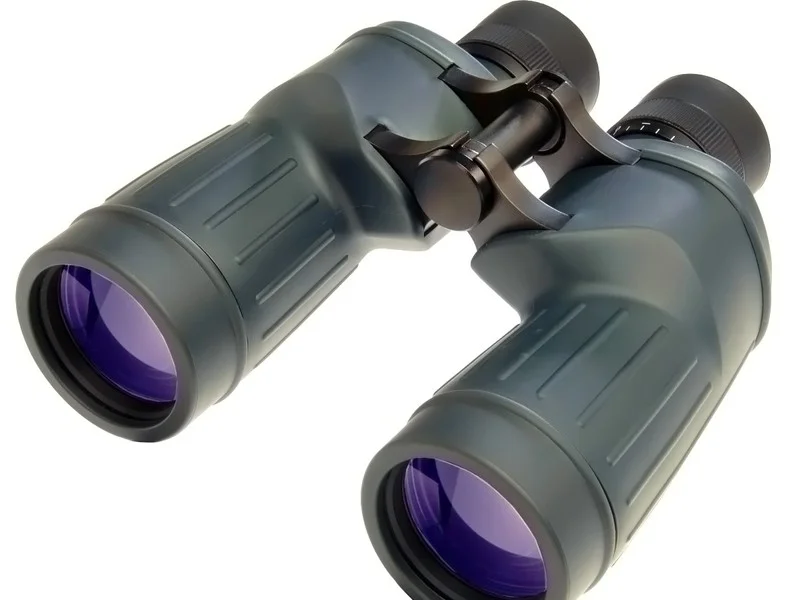
Sharp, high-contrast 10×50s that pick out the dark maria, the bright southern highlands and Tycho's huge ray system, the features that stand out best when the Moon is full. A pair to keep for years.
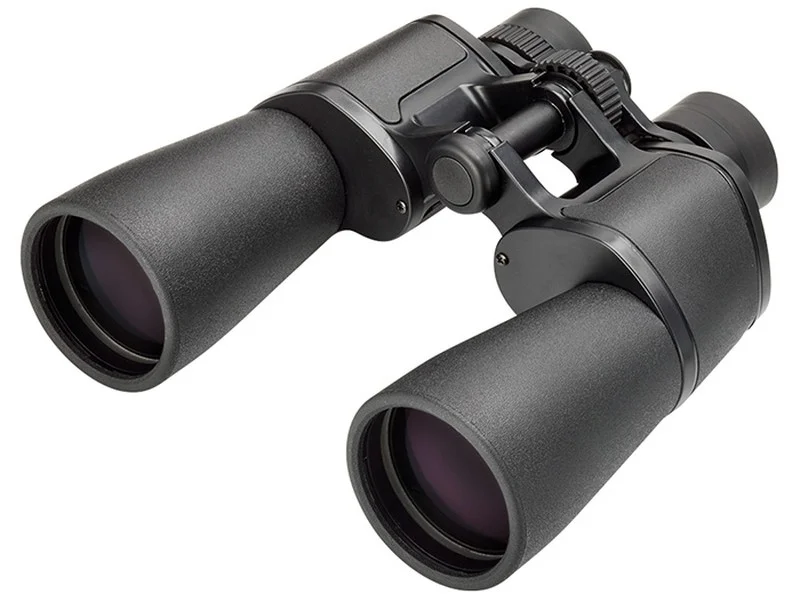
The most-recommended starter binocular in UK astronomy circles, and the full Moon is exactly what it's good at. Light enough to hand-hold while you watch a golden moonrise.

Astro Essentials ND96 Moon Filter
A full moon through any optics is dazzling. This £11 filter screws onto a standard 1.25-inch eyepiece and cuts the brightness right down, so you can actually study the surface in comfort.
Affiliate links: you pay the same price, we earn a small commission that helps keep WatchTheStars free.
Sources: Full Moon Calendar, Royal Observatory Greenwich · Full Moon Names, The Old Farmer's Almanac · U.S. Naval Observatory moon phase data (UK local times)