The Roswell Incident
The Day the Army Said It Had a Flying Disc
In the summer of 1947, a rancher in New Mexico found something unusual scattered across his land. He reported it to the local sheriff. The military came out, collected the debris, and on 8 July 1947, the Roswell Army Air Field issued a press release announcing they had recovered a "flying disc." The story went around the world.
A few hours later, the Army changed its story. It was a weather balloon, they said. Nothing to see.
That gap, between what the US Army said in the morning and what it said in the afternoon, is what Roswell is really about. Not just alien bodies and conspiracy theories. The documented record includes a Congressional investigation, destroyed military records, a senior intelligence officer who spent 30 years saying the Army lied, and three different official explanations that have shifted whenever the previous one fell apart.
Mac Brazel Finds Something
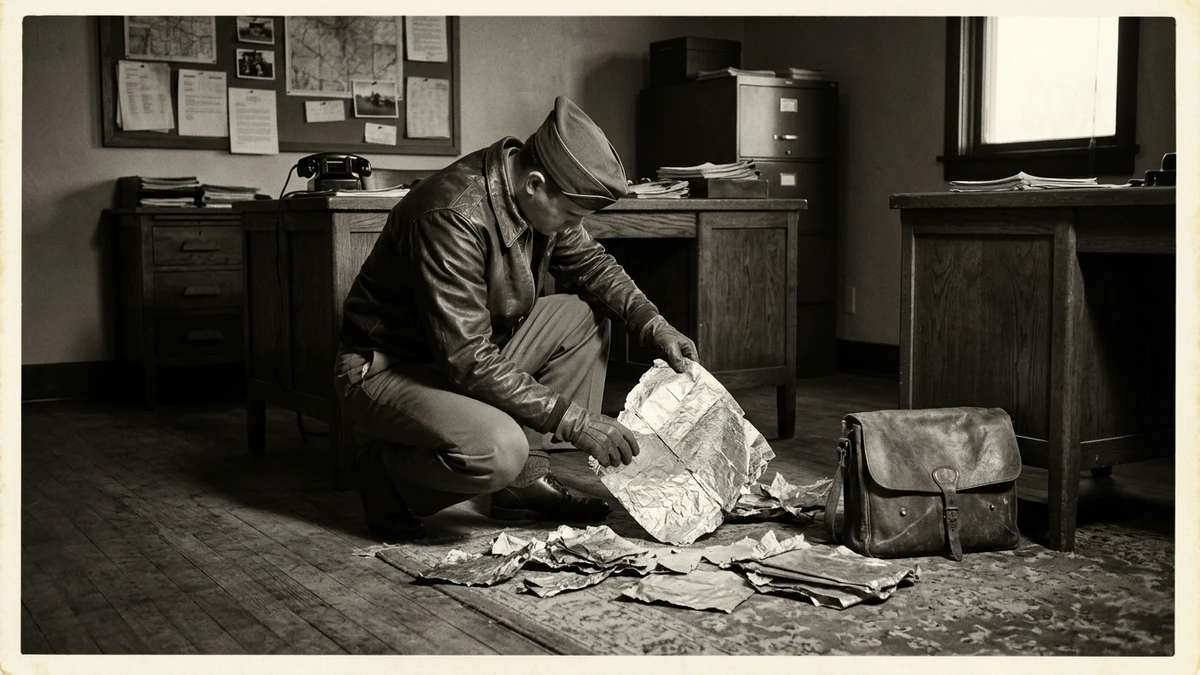
William "Mac" Brazel managed the Foster sheep ranch about 75 miles north of Roswell. In late June 1947, after a night of thunderstorms, he rode out across the land and found debris scattered across a large area: a strip roughly three-quarters of a mile long and a few hundred feet wide. Brazel described finding strips of rubber, tinfoil, thick paper, and thin wooden beams. He gathered some of it up and left the rest.
A few days later, Brazel drove into Roswell and reported what he'd found to Sheriff George Wilcox. Wilcox contacted Roswell Army Air Field. The base intelligence officer, Major Jesse Marcel, drove out to the ranch to take a look.
"I was pretty sure it was not a weather balloon. I had handled many of them. It wasn't."
· Major Jesse Marcel, RAAF Intelligence Officer, in a 1978 interview with researcher Stanton Friedman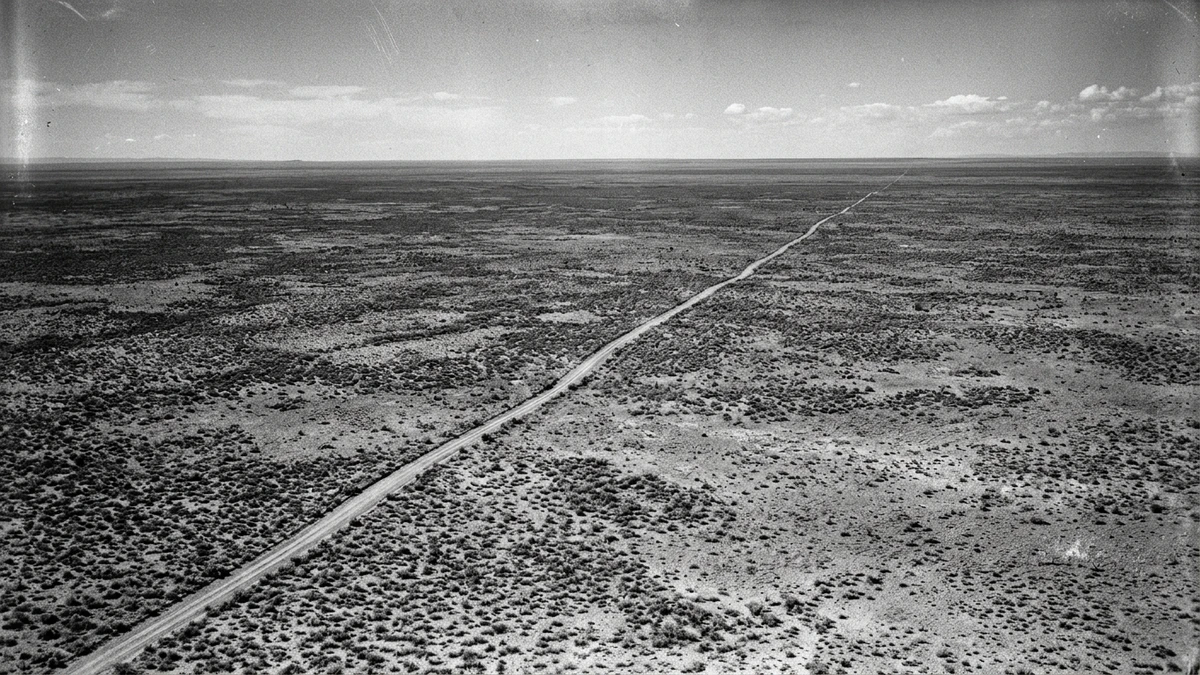
The Press Release
On 8 July 1947, the Roswell Army Air Field's Public Information Officer, Lieutenant Walter Haut, issued a press release that went out on the AP wire. It read:
"The many rumours regarding the flying disc became a reality yesterday when the intelligence office of the 509th Bomb Group of the Eighth Air Force, Roswell Army Air Field, was fortunate enough to gain possession of a disc through the cooperation of one of the local ranchers and the sheriff's office of Chaves County."· RAAF Press Release, 8 July 1947 · issued by Public Information Officer Lt. Walter Haut
The 509th Bomb Group was not just any unit. It was the only nuclear-capable bomb group in the world at the time. The press release was cleared through the base commander, Colonel William Blanchard, before it went out. This wasn't a junior officer going off-script. It was an authorised statement from one of the most sensitive military installations in the United States.
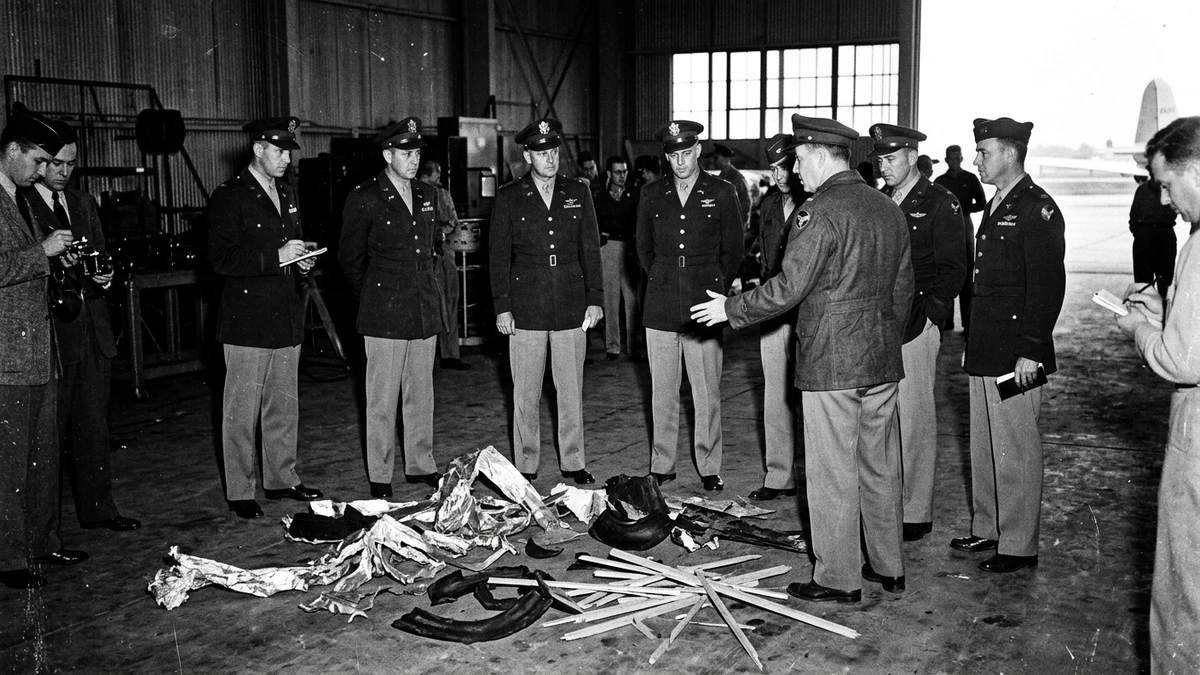
The story spread immediately. Newspapers ran it. Radio stations broadcast it. Then, within a few hours, Brigadier General Roger Ramey, Blanchard's commanding officer at 8th Air Force HQ in Fort Worth, held a press conference showing journalists debris he said was a weather balloon and its radar target. The flying disc story was dead.
How the Story Unfolded
Brazel finds debris
Mac Brazel discovers a large field of debris on the Foster Ranch after a night of storms. He leaves most of it, takes some samples.
Sheriff called
Brazel drives to Roswell, reports the find to Sheriff George Wilcox. Wilcox contacts RAAF. Intelligence officer Major Jesse Marcel and a Counter Intelligence Corps officer drive out to the ranch.
Flying disc announced
RAAF press release, issued by Lt. Walter Haut and approved by base commander Col. Blanchard, announces recovery of a 'flying disc'. Story goes worldwide on the AP wire.
Revised to weather balloon
General Ramey holds a press conference at 8th Air Force HQ in Fort Worth. Debris displayed to journalists is described as a weather balloon and Rawin radar target. Marcel is photographed with the balloon material.
Marcel speaks out
Retired intelligence officer Jesse Marcel tells researcher Stanton Friedman that the material shown at the Fort Worth press conference was substituted: that the actual debris he handled was unlike any balloon he had seen.
DuBose confirms cover story
Brigadier General Thomas DuBose, who was Ramey's chief of staff at Fort Worth in 1947, states on camera that the weather balloon story was ordered from Washington as a cover story.
Air Force: Project Mogul
The US Air Force publishes its first formal investigation, concluding the debris came from a classified high-altitude balloon programme called Project Mogul. A GAO investigation finds all RAAF outgoing messages from July 1947 have been destroyed.
Air Force: Case Closed
A second Air Force report attributes witness accounts of bodies to misremembered sightings of crash test dummies. Critics note those dummies weren't used until 1953, six years after the incident.
FBI memo released
The Pentagon's PURSUE document release includes an FBI memo recording that an Air Force major contacted the local FBI office to report 'an object purporting to be a flying disc' had been recovered near Roswell. Read the FBI Vault Roswell files →
The Key Witnesses
Major Jesse Marcel
Marcel was the first military officer to examine the debris on the Foster Ranch. He personally handled it, loaded it onto vehicles, and transported it to Fort Worth. In a 1978 interview, he said the material was 'nothing made on this earth' and that the balloon debris shown at the Fort Worth press conference was not what he had recovered. He repeated this until his death in 1986.
Brigadier General Thomas DuBose
DuBose was Ramey's senior officer at Fort Worth. In a 1991 video interview, he stated that the weather balloon explanation had been ordered by phone from Washington to 'get the press off our backs'. He said it was a cover story, and that he didn't know what the actual recovered material was.
Mac Brazel
Brazel found the debris and reported it. After spending several days at the RAAF base following his report, which witnesses found unusually long, he reportedly told neighbours the whole thing had been exaggerated and that it was just a balloon. Locals said this was completely out of character for him.
Lieutenant Walter Haut
Haut issued the original flying disc press release on 8 July. He spent decades saying he was just following orders from Colonel Blanchard. In a sealed affidavit opened after his death in 2005, he stated he had personally seen a craft and bodies at the base, and that the press release had been accurate. The affidavit cannot be cross-examined.
Three Explanations in Fifty Years
The US government's official position on Roswell has changed twice since 1947. Each shift came after the previous explanation attracted criticism it couldn't answer.
1947: Weather balloon. The immediate revision of the flying disc story. General Ramey showed journalists balloon debris at Fort Worth. The problem is that Jesse Marcel, the man who actually handled the wreckage from the ranch, had spent his military career handling balloon equipment and insisted in multiple interviews that what he found was nothing like a balloon.
1994: Project Mogul. After researchers and a Congressman pushed for a formal investigation, the Air Force concluded the debris was from a classified balloon array called Project Mogul, designed to detect Soviet nuclear tests by monitoring sound waves at high altitude. The balloons used foil radar reflectors, balsa wood, and rubber, which does roughly match what Brazel described. This is the most plausible of the three official explanations, but it still doesn't account for Marcel's insistence that the material was exotic, or for the authorised press release describing it as a disc.
1997: Crash test dummies. The Air Force published a second report attempting to address accounts of bodies near the crash site, attributing these to witnesses misremembering parachute test dummies used in high-altitude experiments. The report was widely criticised: the dummy programme it referenced didn't begin until 1953, six years after Roswell. The Air Force acknowledged the timing discrepancy but suggested witnesses had conflated different events across different years.
The Missing Records
In 1994, Congressman Steven Schiff requested a GAO investigation after the Air Force's initial responses to his enquiries were, in his words, "unsatisfactory". The GAO went through the National Archives and surviving military files.
They found that all outgoing messages from Roswell Army Air Field for the period covering the July 1947 incident had been destroyed. The destruction was not in accordance with the normal rules for retaining military records, and no explanation has ever been given for it.
"The outgoing messages were not available for review. According to the Army, the outgoing messages from Roswell Army Air Field for this period were destroyed without proper authority."· US General Accounting Office · Report on the Roswell Incident, 1994
The GAO investigation did not conclude that anything extraterrestrial was involved. But it did establish that records specifically covering the period in question had been destroyed outside the normal process, and that no one could account for why.
The Ramey Memo
One of the stranger details from the 1947 press conference is that photographs of General Ramey holding a document were taken at Fort Worth. In the 1990s, researchers had high-resolution scans made of the original photographic negatives and attempted to read the text in the document Ramey was holding.
The memo is partially legible. Researchers have been able to make out fragments including what appears to be the phrase "victims of the wreck" and references to Roswell. The Air Force has never publicly addressed what the document says. It remains one of the few physical artefacts from the 8 July press conference.
What the 2026 Document Releases Added
The PURSUE programme's first release in May 2026 included an FBI memo from July 1947. In it, an FBI agent records that a major from the Air Force contacted the local FBI office to report that "an object purporting to be a flying disc was recovered near Roswell, New Mexico."
This isn't a bombshell revelation. But it is significant as a primary source document written at the time by a government official. It confirms that the Air Force was describing the recovered object as a flying disc in its communications with the FBI, not just in a press release that could later be written off as an error.
The Evidence
Confirmed
RAAF authorised 'flying disc' press releaseIssued 8 July 1947 by Lt. Walter Haut, approved by base commander Colonel Blanchard. Not an error or a rogue statement: a cleared, official communication.
Confirmed
FBI memo describes 'flying disc' to bureauA 1947 FBI memo released in 2026 records an Air Force officer describing the recovered object as a flying disc in communications with the FBI, not just the press.
Confirmed
RAAF July 1947 outgoing messages destroyedEstablished by the 1994 GAO investigation. Destruction was outside normal retention procedures. No explanation has been given.
Credible testimony
Marcel and DuBose say it was a cover storyBoth officers stated on record that the balloon explanation was false. Marcel maintained this for 30 years. DuBose said the cover story came from Washington. Neither account can now be cross-examined.
Official position
Project Mogul explains the debrisThe 1994 Air Force conclusion. Accounts for the general character of the material: foil, balsa, rubber. Does not account for Marcel's description of exotic material properties or the disc language in official communications.
Unsubstantiated
Alien bodies recoveredMultiple witness accounts exist, including a sealed posthumous affidavit from Lt. Walter Haut. No physical evidence has ever been produced. The 1997 crash dummy explanation has a fatal timing problem.
The Bottom Line
Roswell is not just folklore. There's a documented record: an authorised press release describing a recovered flying disc, an intelligence officer who handled the debris and spent his life saying it wasn't a balloon, a general's chief of staff confirming the cover story came from Washington, destroyed outgoing military messages, and three different official explanations across five decades.
Project Mogul is probably the best explanation for what the debris was. It accounts for the physical description reasonably well, and it explains why the Army would want to keep quiet about a highly classified acoustic surveillance programme in 1947. But it leaves real questions unanswered: Why did the authorised press release call it a disc? Why were the outgoing messages destroyed? Why did a senior intelligence officer, whose job it was to identify exactly this kind of equipment, insist for thirty years that it wasn't a balloon?
What actually came down on the Foster Ranch that summer is still not definitively established. That's what keeps it alive.
Better optics than a 1947 rancher had
Kit we've tested and reviewed in full
Mac Brazel found his debris field with nothing but his own eyes. You've got binoculars, a much better tool for working out what's actually in the sky above New Mexico tonight.
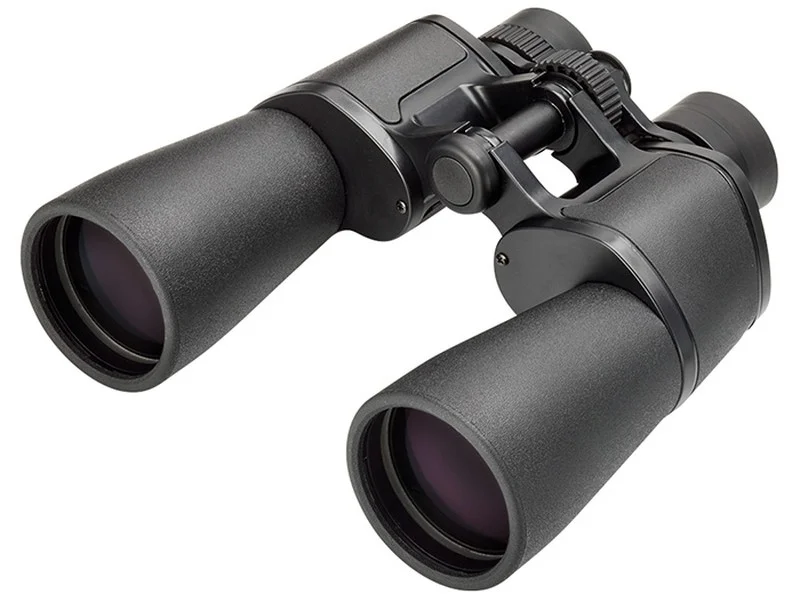
Bright and quick to aim under New Mexico's clear desert skies, enough to pick out shape and motion in seconds.
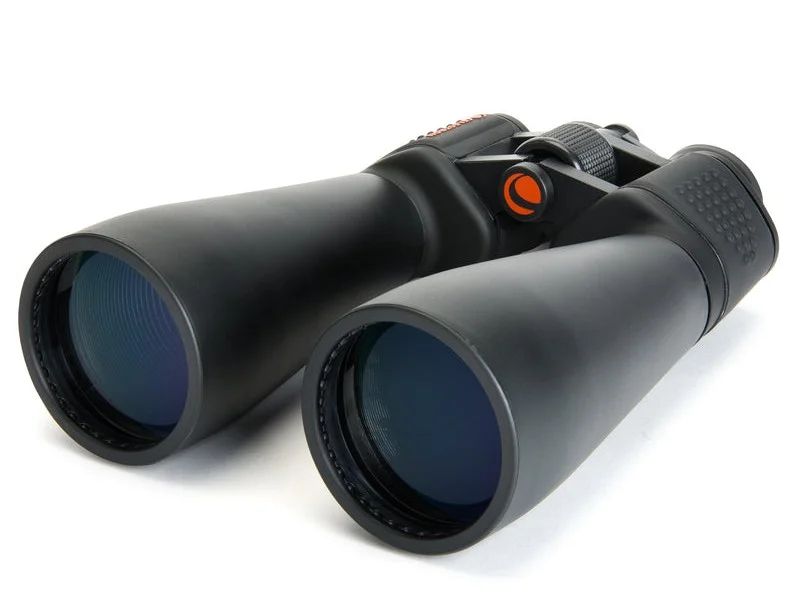
Extra aperture for anything far off across open desert, real detail rather than just a light on the horizon.
Affiliate links: you pay the same price, we earn a small commission that helps keep WatchTheStars free.
Primary Source Documents
Official government documents related to the Roswell incident, available via the FBI's online reading room and the National Archives.
FBI Vault: Roswell UFO Files
vault.fbi.gov
The FBI's declassified Roswell files, including the July 1947 teletype describing a recovered "flying disc", one of the most significant contemporary government documents from the incident.
View FBI Files ↗PURSUE Release 01: Full Archive
US Department of War, May 2026
The first batch of PURSUE-declassified files, including the FBI memo from July 1947 referenced above, released 8 May 2026.
Browse Archive (war.gov) ↗Related Cases
The Roswell incident sits within a broader pattern of UAP activity around US nuclear facilities in the late 1940s. Green fireballs began appearing over New Mexico's nuclear weapons sites within months of the Roswell recovery.
More UAP cases
- UAP Document Archive: Official UFO Files from the US, UK & BrazilUS DoD PURSUE Releases · UK MOD & National Archives Files · Brazilian Air Force Records · NSA UMBRA Files
- The Green Fireball IncidentsDURATION: DEC 1948 – 1952 · LOCATION: LOS ALAMOS / SANDIA / KIRTLAND / WHITE SANDS · STATUS: UNEXPLAINED
- UAP and Nuclear Weapons: A 70-Year PatternCOVERAGE PERIOD: 1945–PRESENT | DECLASSIFIED INCIDENTS: 150+ | US + SOVIET CASES
- The Newfoundland KC-97 Incident6 JULY 1955 · NEWFOUNDLAND, CANADA · FILE RELEASED 10 JULY 2026
- Types of Aliens & the EvidenceGreys · Reptilians · Robots · Monsters · Men in Black
- The Senator Russell Sighting4 OCTOBER 1955 · SOVIET TRANSCAUCASUS (PRESENT-DAY AZERBAIJAN) · FULL CIA FILE RELEASED 10 JULY 2026