The Ariel School Incident
The morning 60 children said something landed beside the playground
It is one of the largest mass close-encounter reports on record, and the witnesses were children, interviewed within days, who have mostly never changed their story.
It was an ordinary Friday morning at a small private school just outside Harare. At around ten o'clock the bell went for mid-morning break, and a couple of hundred children spilled out onto the grounds while the teachers stayed inside for a staff meeting. Beyond the edge of the playground was a stretch of rough scrubland and trees the pupils weren't supposed to wander into.
Within a few minutes, dozens of children were screaming. They said one or more silver objects had come down out of the sky and settled on the scrub just past the fence, and that a small figure in tight black clothing had stood beside one of them and looked at them, before the whole thing shot away.
Thirty years on, the Ariel School incident is still argued over precisely because of who the witnesses were. Not pilots or radar operators, but young children, interviewed within days, many of whom drew the same thing and have repeated the same account into adulthood. Whether that makes it the strongest mass sighting of its kind or simply the best-documented case of how a story spreads through a playground is exactly what people can't agree on.
What happened at Ariel School in 1994
Ariel School was a private primary in Ruwa, a small farming town roughly 22 kilometres south-east of Harare. On the morning of Friday 16 September 1994 the staff were in a meeting, and the pupils, somewhere around two hundred of them, were outside for their mid-morning break. The children later said the objects appeared over the trees beyond the playing field, on a patch of scrubby ground the school kept off-limits.
Accounts of exactly how many craft there were vary; some children described a single disc, others two or three silver objects with smaller red lights. What's consistent is that they said one came down and rested on, or just above, the ground a short distance past the fence. The younger children, frightened, ran back towards the school buildings. The older ones edged closer to look.
What the children said they saw
When the children were asked to describe and draw what they had seen, a recurring picture emerged: a silver, domed disc on the ground, and beside it a small, thin figure dressed entirely in tight black clothing, with a pale or dark face dominated by large black eyes. Some described long black hair; some described the figure moving in an odd, bounding way. Several said a second figure was on top of the craft.
The detail that unsettled the adults who interviewed them wasn't the spaceship, children draw spaceships, but the figure's eyes, which came up again and again, and the children's evident fear. Some cried. Some had nightmares afterwards. A few, raised in homes where such things were associated with evil, were genuinely terrified rather than excited.
"It had big eyes. It looked at me and I felt scared. I had never seen anything like it."
· A representative account of how the Ariel pupils described the figure to investigators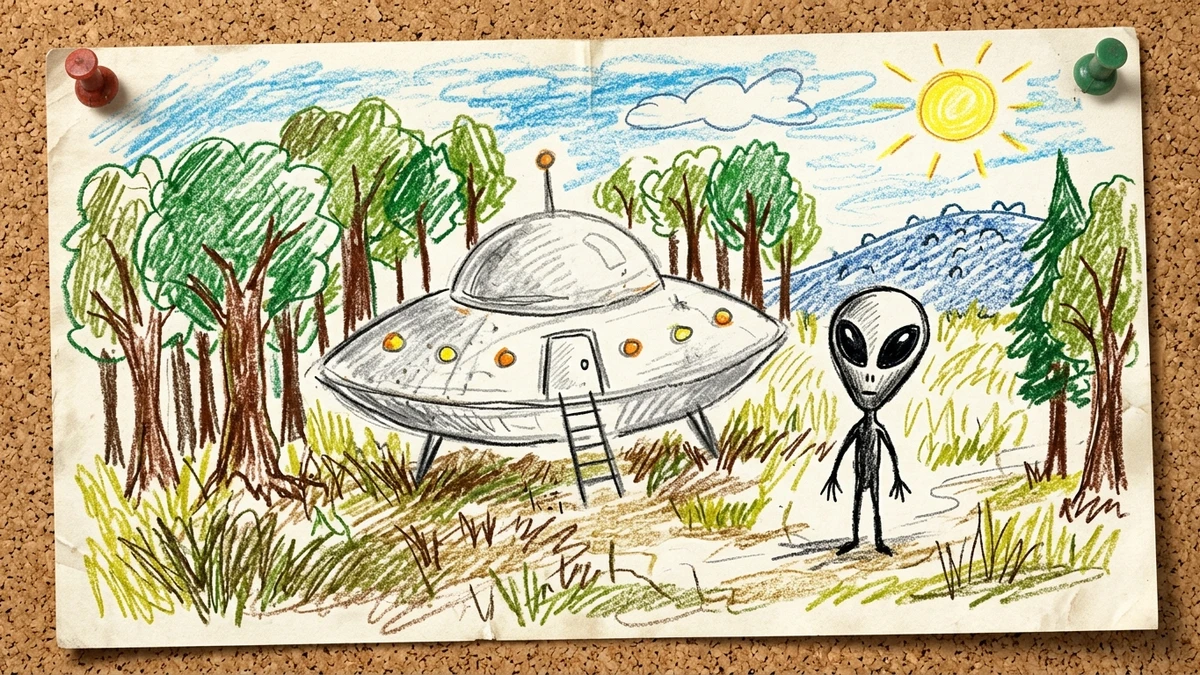
The beings and the telepathic message
The strangest part of the case isn't the craft or even the figure: it's what some of the children said happened next. A number of them reported receiving a message without anyone speaking: a thought or feeling pressed into their minds. The theme, remarkably consistently, was the environment.
In John Mack's filmed interviews, one boy said he had been warned "about something that's going to happen", and that "pollution mustn't be". An eleven-year-old girl told Mack: "I think they want people to know that we're actually making harm on this world… we mustn't get too technologed." Whether you read that as a genuine telepathic warning, the imagination of children who'd absorbed early-1990s environmental anxiety, or something an interviewer's questions helped shape, it's one of the most distinctive features of the whole case.
How the Ariel School case was investigated
What separates Ariel from a hundred forgotten playground rumours is that serious people turned up quickly. The BBC's Zimbabwe correspondent, Tim Leach, who knew the headmaster, was at the school within days filming interviews with pupils and staff: footage that survives and forms the spine of later documentaries.
Cynthia Hind, the most respected UFO researcher in southern Africa, visited on 20 September, four days after the event. She interviewed the children, took statements, and crucially had them draw what they had seen. She reported that the accounts matched closely. Then, that November, came the figure who gave the case its weight and its controversy: Dr John Mack, a professor of psychiatry at Harvard Medical School and a Pulitzer Prize-winning author, who by then was deep into studying people who reported encounter experiences. He flew to Ruwa, interviewed the children on camera, and came away convinced they were describing something real to them and were not lying.
Tim Leach
Filmed pupils and staff within days of the sighting. The interviews he recorded in September 1994 are the earliest documentation of the children's accounts and remain the primary visual record.
Cynthia Hind
Visited on 20 September, interviewed the children and had them draw what they saw separately. She reported the drawings and descriptions were strikingly consistent across different pupils.
Dr John Mack
Travelled to Ruwa in November 1994 and recorded hours of interviews. He concluded the children were sincere, a verdict critics say rested on leading questions and his prior belief in encounter experiences.
See the real BBC footage and the children's drawings
The illustrations on this page stand in for material we can't host here, but the genuine 1994 footage and the children's own drawings survive. Tim Leach's BBC interviews, Cynthia Hind's archive and decades of follow-up are gathered in Randall Nickerson's documentary Ariel Phenomenon (2022), the most thorough record of the case. It's worth seeing the children describe it in their own words.
Timeline of the Ariel School incident
A fireball over southern Africa
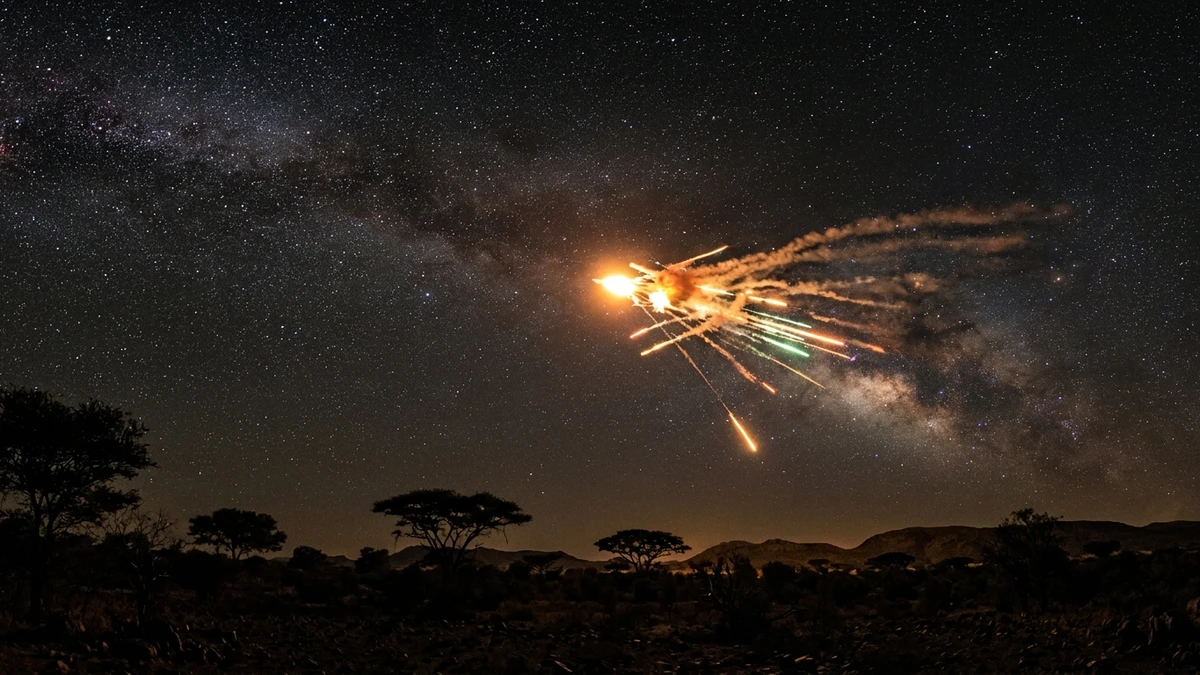
Two nights before the sighting, a brilliant fireball is seen across Zimbabwe, South Africa and beyond. It is later identified as the re-entry of a Soviet Zenit-2 rocket from the Cosmos 2290 launch, and may have put strange lights in the sky on everyone's mind.
The sighting, ~10am
During morning break, with teachers in a meeting, around 60 Ariel pupils report silver craft landing on scrub beyond the playground and a small black-clad figure with large eyes. Younger children flee; older ones approach.
The children tell the staff
Pupils run inside describing what they saw. A teacher and the tuck-shop operator note the children's fear and the consistency of their accounts. Word spreads through Ruwa almost immediately.
The BBC films the witnesses
Tim Leach visits the school to record interviews with pupils and staff: the earliest footage of the children describing the event in their own words.
Cynthia Hind investigates
Hind interviews the children and asks them to draw what they saw. She reports the drawings are remarkably alike: a domed disc and a thin figure with large eyes.
John Mack arrives
The Harvard psychiatrist spends days at the school recording video testimony. He concludes the children are sincere, and the case gains, and divides, international attention.
Mack continues to defend the case
Mack cites Ariel as among the most compelling encounter reports he studied, until his death in a road accident in London in 2004.
Ariel Phenomenon released
Randall Nickerson's documentary reunites many of the now-adult witnesses and presents the surviving 1994 footage to a new audience.
Netflix's Encounters
The series revisits Ariel, with witnesses standing by their accounts, and one former pupil offering a deflating claim that he had simply pointed at a distant 'shiny rock'.
Could it have been a rocket re-entry?
The most concrete sceptical lead is the fireball. On the night of 14 September 1994, a Soviet Zenit-2 rocket body from the Cosmos 2290 launch re-entered the atmosphere over southern Africa, breaking into burning fragments that drifted silently across the sky and were seen by huge numbers of people. Sceptic Brian Dunning argues this is the key context: a region already buzzing about strange lights, two days before a group of children saw something glinting at the edge of their playground.
The second argument is about how memory works in a crowd. The children weren't separated and questioned the instant it happened. They had time to talk to each other first, and were later interviewed in small groups. Critics say that's exactly the situation in which a handful of vivid impressions can spread, harden and converge into a shared "memory" that feels far more uniform than the original sightings were. Mack's interviews, they add, sometimes pointed the children towards particular answers. And in the 2023 Netflix series Encounters, a former pupil named Dallyn claimed he had started the whole thing by telling classmates a distant shiny object was a UFO.
None of this is a knockout blow, and supporters push back hard. A rocket re-entry explains a fireball two nights earlier, not a daytime object on the ground with a figure beside it. The drawings were reportedly collected from children individually. And one late claim of a prank, decades after the fact, doesn't account for the fear of six-year-olds or the consistency Hind described at the time. The honest position is that the sceptical case raises real doubts about how clean the evidence is, without ever quite explaining the event away.
Where are the Ariel School witnesses now
The pupils of 1994 are now adults in their thirties and forties, scattered across the world, and what's notable is how many still hold to what they reported as children. Emily Trim, who was at the school that day, has spoken publicly about the lasting impact and exhibited paintings she describes as a response to the encounter. Others have appeared in Ariel Phenomenon and Encounters, describing the same craft and the same thin figure they drew as kids.
Not all of them agree. Some have grown more sceptical with age, a few have offered ordinary explanations, and one, as noted, claimed responsibility for the whole thing as a misread distant object. But there has never been a single confession that accounts for all the witnesses, nor any physical trace, photograph or piece of hard evidence on either side. It rests, as it always has, on the testimony of the children who were there.
"We were just kids. We had no reason to make it up, and I have never been able to explain what I saw."
· The recurring sentiment of the now-adult Ariel witnesses in recent documentariesThe evidence
On the record
Around 60 child witnesses, interviewed within daysThe sheer number of young witnesses, questioned and filmed within a week of the event by the BBC, Cynthia Hind and later John Mack, makes this one of the best-documented mass close-encounter reports anywhere.
On the record
Consistent independent drawingsAsked to draw what they saw, many children produced strikingly similar images: a domed silver craft and a thin figure with large black eyes. Investigators reported these were collected from pupils individually.
On the record
Decades of consistent testimonyMany witnesses have repeated the same account into adulthood across multiple documentaries, with no financial motive and, in several cases, reluctance to revisit it at all.
Context
A rocket re-entry two nights beforeThe confirmed Zenit-2 / Cosmos 2290 re-entry on 14 September produced a widely-seen fireball over southern Africa, plausibly priming the region for talk of objects in the sky.
Caution
Group interviews and social contagionThe children talked among themselves before being questioned and were interviewed in small groups. This is the classic setup for accounts converging through suggestion rather than shared observation.
Unresolved
No physical evidence either wayThere are no photographs, no ground traces and no recovered material. There is also no single confession that explains every witness. The case rests entirely on testimony.
The bottom line
Strip Ariel back to what's solid and you're left with something genuinely hard to dismiss and genuinely hard to prove. Around sixty children, on an ordinary morning, came running in frightened, told much the same story, drew much the same picture, and, many of them, have never let go of it. That isn't nothing. It's also not a landed spacecraft you can point to.
The sceptical reading is coherent: a fireball had everyone primed, a few vivid impressions spread through a playground, and sympathetic adults helped firm them into a single shared memory. The believer's reading is just as understandable: too many young witnesses, too consistent, too frightened, with a detail (the eyes, the wordless warning) that children don't usually invent in unison.
Thirty years on, no photograph, confession or document has settled it, and probably none ever will. What you're left with is the testimony of the people who were standing at the edge of that playground, and the question of how much weight a child's word should carry when sixty of them say the same thing.
Teach the kids to look properly
Kit we've tested and reviewed in full
Sixty children saw something they couldn't explain from the school playing field. A family-friendly pair of binoculars turns "there's something in the sky" into a proper look, and a much better story either way.

Light enough for smaller hands, bright enough to make an ordinary aircraft or planet obvious in seconds.
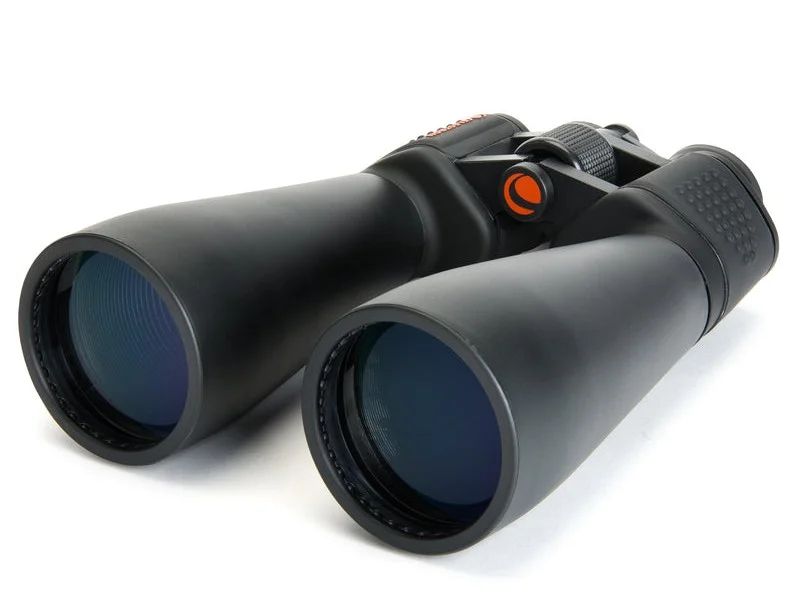
More light-gathering power for anything fainter or further off: the difference between a shape and a genuine description.
Affiliate links: you pay the same price, we earn a small commission that helps keep WatchTheStars free.
Related Cases
Ariel is one of several cases where John Mack's name appears, and one of many where the witnesses' sincerity is not really in doubt, only what they saw. Two worth reading alongside it: another foreign daylight encounter with child witnesses, and the case that defined the whole genre.
More UAP cases
- The Rendlesham Forest IncidentDecember 1980 · RAF Woodbridge, Suffolk, England
- The Varginha Incident20 January 1996 · Varginha, Minas Gerais, Brazil · Status: Officially Explained · Disputed
- The 1978 Amazon Pilot Encounters6 & 28 November 1978 · Amazon airspace, Brazil · Status: In the Official Records
- The STS-80 IncidentNOVEMBER–DECEMBER 1996 · LOW-EARTH ORBIT · PHOTOS RELEASED 10 JULY 2026
- Operação PratoOctober–December 1977 · Colares, Pará, Brazil · Status: Files Released
- The Phoenix LightsNevada · Arizona · Sonora, Mexico · ~8:15 PM and ~10:00 PM MST