Finding & Observing
Libra · The Scales
Libra is the smallest zodiac constellation and the only one not named after a living creature: it represents the scales of justice. Positioned between the celestial maiden (Virgo) and the scorpion (Scorpius), Libra carries historical echoes of its ancient past as the "claws of the scorpion." Its brightest star, Zubeneschamali, is reportedly the only visually greenish star in the sky. This constellation offers a rewarding observing experience for those seeking to explore the spring sky, from naked-eye star patterns to distant galaxies at the border of the Virgo Cluster.
Jump to section 6 sections
How to Find Libra
Locate via Antares
Find the bright orange star Antares in Scorpius (low south in spring/early summer). Sweep 20° upward and to the left (northwest). The moderate-brightness stars you encounter form Libra. Zubeneschamali (β), the brightest, will appear as the northernmost prominent star.
Spot the Green Star
Zubeneschamali (β Librae) is often described as the only visibly greenish star in the sky, though this remains debated among observers. Test this claim yourself. Many observers see a subtle green tint, while others see white or yellow. Personal perception varies.
Naked-Eye Double
Zubenelgenubi (α Librae) is an easy naked-eye double star, separated by 5.2 arcminutes. On a clear night, test whether you can split it without optical aid. Binoculars cleanly separate it into two components with a subtle golden and pale-blue colour contrast.
The Scales Pattern
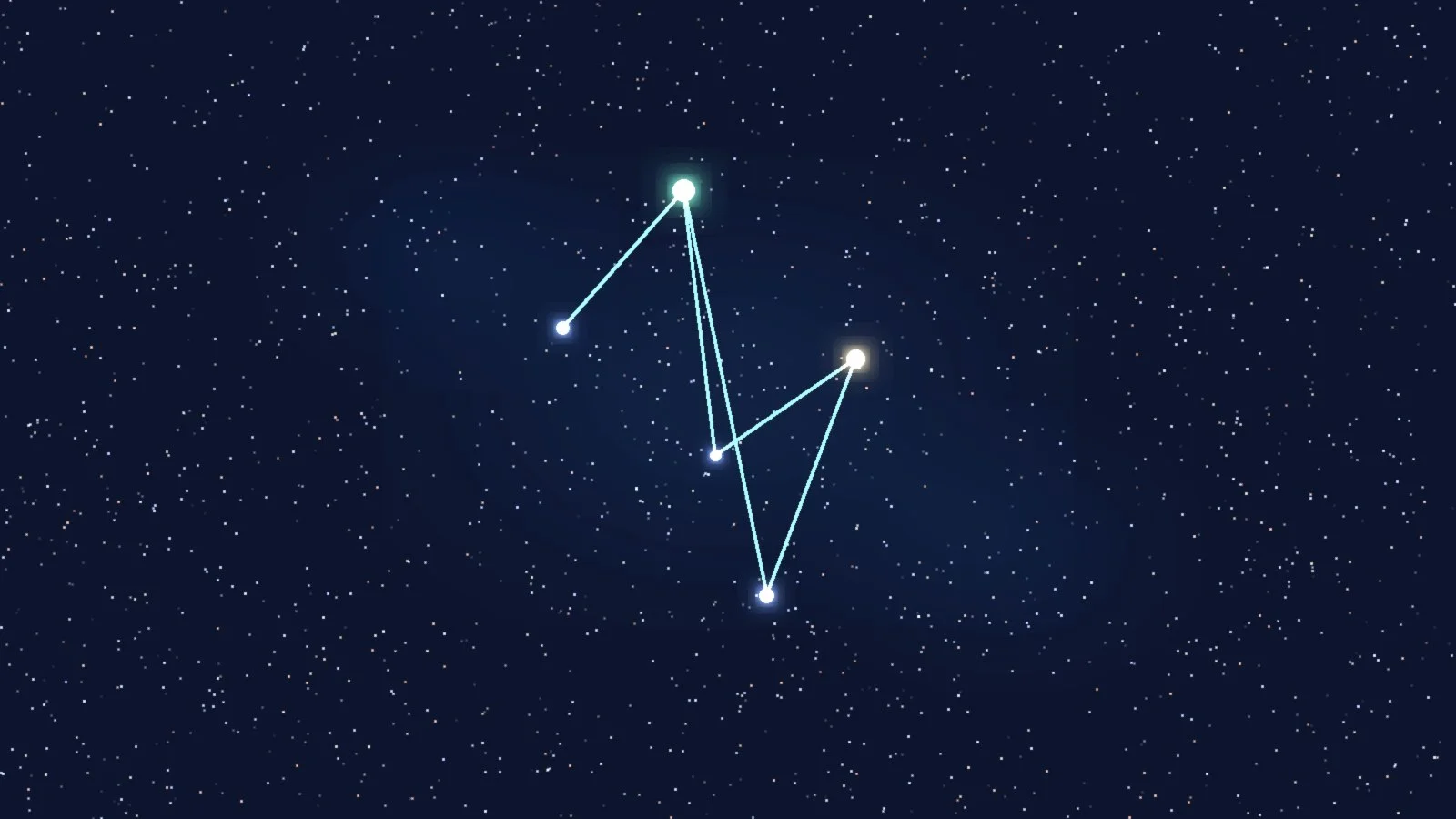
The four main stars (Gamma, Beta, Alpha, Sigma) form a quadrilateral resembling a pair of scales or balance. In ancient times, these stars were the claws of Scorpius; the Romans separated them as a symbol of Justice (Astraea).
| Month | Direction | Altitude | Visibility |
|---|---|---|---|
| March | Southeast | Low (15°) | Rising, challenging |
| April | South-Southeast | 25–30° | Improving, better |
| May | Due South | 35° (Excellent) | Best month for observation |
| June | South-Southwest | 30–35° | Still good, gradually lower |
| July | Southwest | 20–25° | Fading into twilight |
| August | Low west | Low (5–10°) | Twilight observer only |
Key Stars of Libra
Zubeneschamali β Librae
Libra's brightest star, and allegedly the only star in the sky with a distinctly greenish colour visible to the naked eye, though this claim remains debated. The name means "northern claw," a remnant from when Libra was part of Scorpius. At magnitude 2.61, it's easily visible from dark skies. Test the greenish colour yourself; results are highly subjective.
Zubenelgenubi α Librae
The "southern claw": a beautiful wide double star separable with the naked eye or binoculars. The two components are 5.2 arcminutes apart, fitting in the same binocular field with clear separation. The primary shows subtle gold; the secondary pale blue. One of the widest, most elegant binary pairs visible to amateurs.
Brachium σ Librae
A semi-regular variable star pulsating between magnitude 3.2 and 3.5 over months. Shows obvious red-orange colour through binoculars. Originally part of Scorpius (as γ Scorpii), it was transferred to Libra when the constellation boundaries were formalized. Named "Brachium" meaning "arm" in Latin.
Gamma Librae
The easternmost prominent star, marking one tip of the "scales." An orange-tinged K-type giant. Less famous than Zubeneschamali and Zubenelgenubi but essential for defining the constellation's eastern boundary and completing the quadrilateral pattern.
Upsilon Librae
A giant star near the southern boundary of Libra, helping define the constellation's extent. Red-orange colour obvious through binoculars. Often overlooked but important for those mapping the entire constellation region.
Gliese 570
One of the nearest star systems at just 19 light-years: a K-type dwarf with three red dwarf companions, forming a quadruple system. Visible to the naked eye from very dark sites.
Mythology & History
Greek & Roman
Libra was considered the claws of the Scorpion (Scorpius) until around the 1st century BCE. The Romans separated it as a distinct constellation, representing the scales of Astraea or Justice. The maiden (Virgo) holds the scales; below her is the Scorpion. Together they represent the balance between virtue and vice, life and death.
Mesopotamian
The Babylonians called this region ZI.BA.AN.NA, "the balance of heaven", as far back as 2000 BCE. Associated with Shamash (the sun god) and justice, the scales were symbolically important in Babylonian cosmology. One of the most directly-named sky objects in ancient astronomical records.
Egyptian
The Egyptians associated scales with the weighing of the heart in the afterlife. In the Hall of Two Truths, Anubis weighed the deceased's heart against the feather of Ma'at (truth and justice). The sky scales thus represented this profound cosmic judgment and moral reckoning.
Hindu & Vedic
The nakshatras Vishakha (the forked, two-branched) and Anuradha lie in Libra. Vishakha is associated with Indra and Agni (fire god) and represents a transitional point: the fork where paths diverge. It straddles the Scorpius boundary, reflecting the constellation's transitional nature in the sky.
Chinese
The Chinese divided this region between several lunar mansions including Fang (房, Room) and Xin (心, Heart). The "Room" mansion was associated with the celestial palace and good fortune. Different from Western traditions, these divisions reflected Chinese cosmological and astrological systems.
Deep-Sky Objects
Zubenelgenubi: Naked-Eye Double
The widest easily-separated naked-eye double in the zodiac. Two stars clearly separated in binoculars with a gentle colour contrast (primary gold, secondary pale blue). A perfect entry point for binary star observing: requires no telescope and teaches you to recognize orbital motion over years.
NGC 5897: Globular Cluster
A loose, scattered globular cluster visible in binoculars as a haze. A 15cm telescope begins to resolve its outer stars. One of the less-concentrated globular clusters, giving it a "dissolving" appearance, less dense than M13 or M3, but equally rewarding to study.
NGC 5792: Barred Spiral Galaxy
A large barred spiral galaxy visible in 20cm telescopes. The bar structure becomes visible in larger apertures under good conditions. A photographic target requiring dark skies and good seeing. Challenging but rewarding for experienced observers.
HD 140283: Methuselah Star
One of the oldest known stars: approximately 13.7 billion years old (possibly 14.5 billion, with uncertainty), formed shortly after the Big Bang. Visible in binoculars. A metal-poor subgiant containing primordial elements, old enough to predate most galaxies.
Gliese 570: Nearby Star System
A naked-eye star at just 19 light-years: one of the closest star systems. A K-type dwarf with three red dwarf companions, plus possibly brown dwarf companions. An accessible nearby solar-type system for study.
NGC 5728: Seyfert Galaxy
A Seyfert Type 2 galaxy with an active nucleus: the central region is unusually bright due to matter accreting onto a black hole. A photographic target requiring patience and good equipment. Part of the distant Virgo Cluster extension into Libra.
Beginner Observing Guide
- Locate Antares: Find the bright orange star Antares in Scorpius low in the south on spring/early summer evenings. It's unmistakable: the brightest star in Scorpius and among the brightest in the sky.
- Sweep northwest: Move your gaze 20° upward and to the left (northwest) from Antares. The moderate-brightness stars you encounter form Libra. Zubeneschamali (β), the brightest, will appear as the northernmost prominent star in this region.
- Test the green colour: Observe Zubeneschamali (β Librae) carefully. Many observers claim to see a greenish tint, though this is debated. Compare your perception with others; you may be surprised by the variation in reported colours.
- Split the double: Locate Zubenelgenubi (α Librae) to the lower right. Try to split this wide double (5.2' separation) with your binoculars or naked eye. It's one of the widest, easiest binary pairs visible without a telescope.
- Trace the scales pattern: Identify the four main stars (Gamma, Beta, Alpha, Sigma) and trace their quadrilateral arrangement. Imagine these as the two pans of a balance: a geometric representation fitting for the constellation.
- Search for NGC 5897: With binoculars, scan the area south and slightly west of the main stars. NGC 5897, a loose globular cluster, appears as a faint fuzzy patch in dark skies. A 10cm telescope begins to resolve its outer regions.
Essential Kit
Recommended equipment for observing Libra
Kit we've reviewed in full
Libra is not the richest constellation, but it has its rewards: particularly the naked-eye double star Zubenelgenubi and the curious blue-green tint of Zubeneschamali. A telescope opens up several challenging deep-sky objects and interesting double stars.
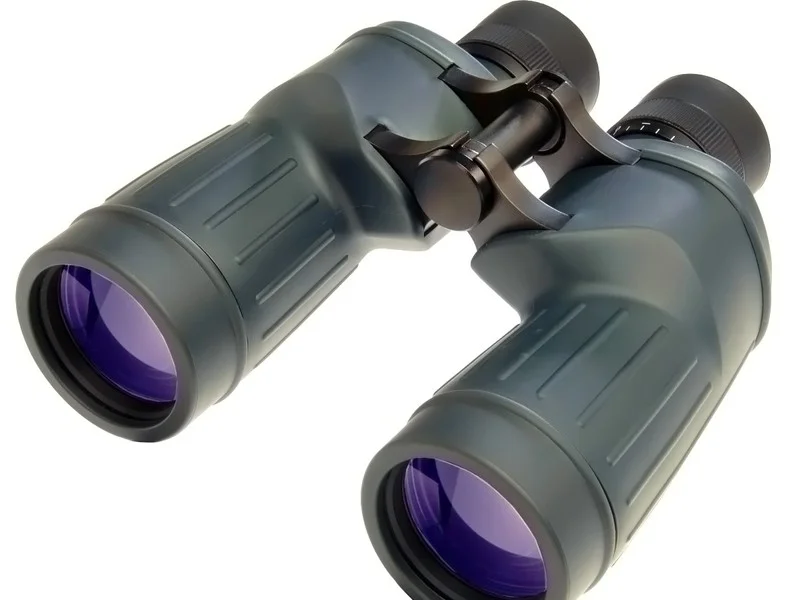
Zubenelgenubi (Alpha Librae) is a wide double star with components separated enough to split with the naked eye on a good night: binoculars make the separation comfortable and easy. Look for the unusual blue-green tint of Zubeneschamali, one of very few stars that observers consistently describe as appearing green. NGC 5897 globular is visible as a faint smudge.
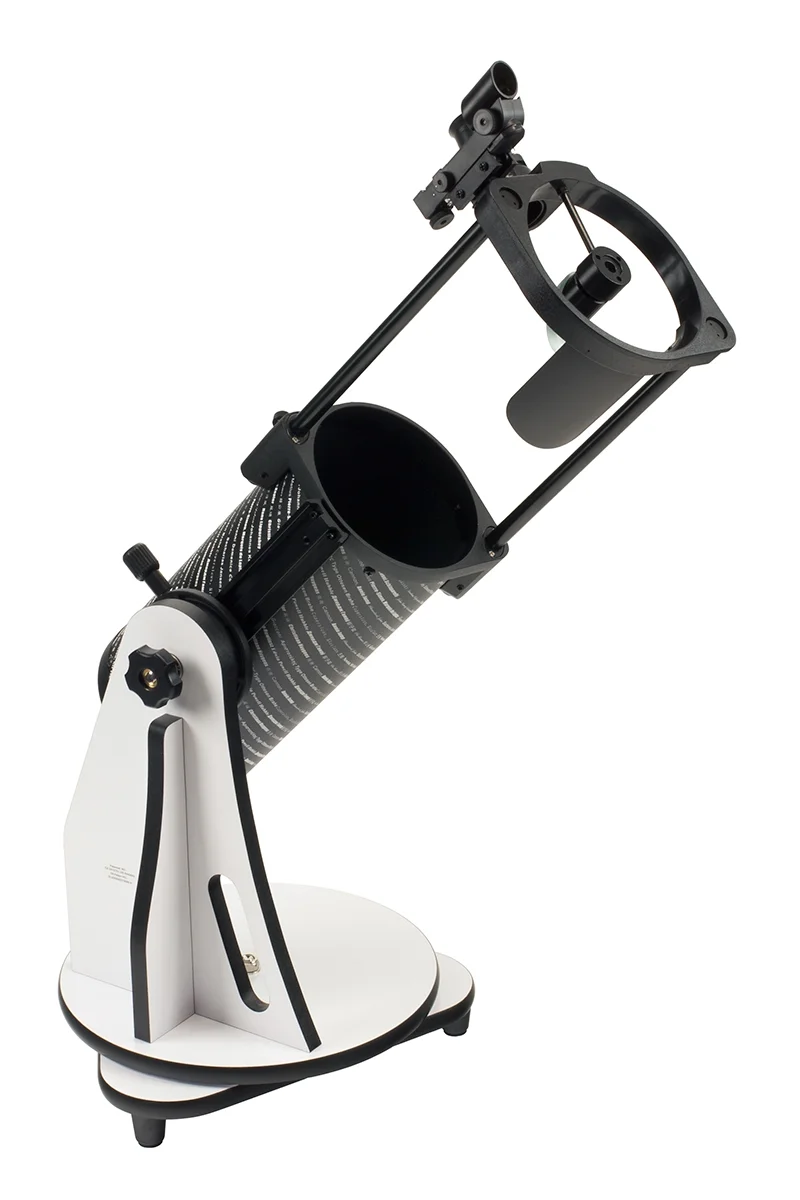
Delta Librae is an Algol-type eclipsing binary: track it over several weeks and watch it dim by about 0.6 magnitudes as the fainter star passes in front of the brighter. NGC 5897 globular shows as a diffuse, loosely concentrated haze at 80×, one of the least concentrated globulars in the sky. Mu Librae is a challenging close double requiring 100×.
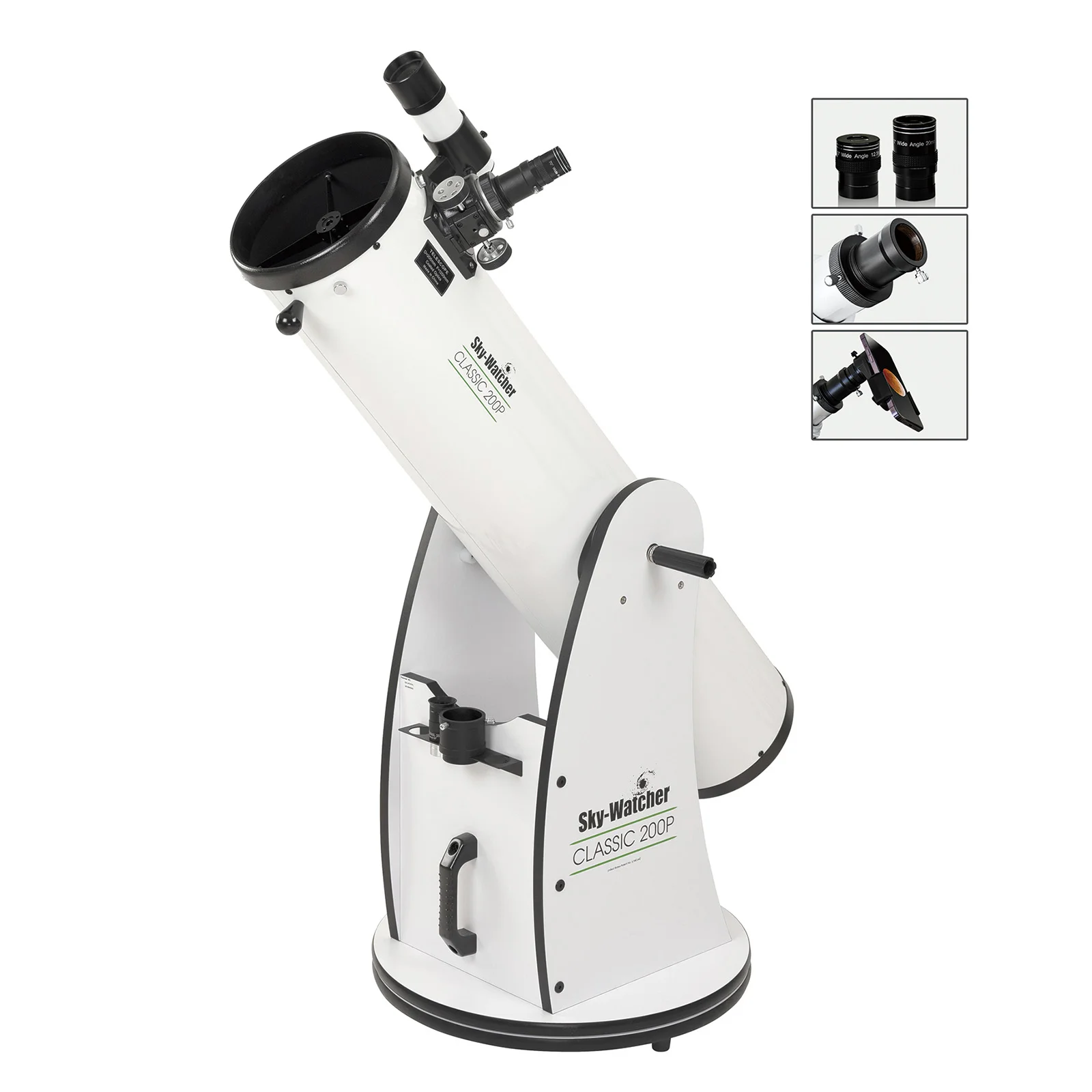
NGC 5897 begins to show granularity at its edges with 200mm: the loose concentration makes individual stars easier to resolve than in tightly-packed globulars. NGC 5885, a barred spiral galaxy on the Libra/Hydra border, becomes a rewarding faint target. Libra's proximity to the rich Scorpius field means a 200mm scope in this region offers easy access to both constellations' objects.
Affiliate links: you pay the same price, we earn a small commission that helps keep WatchTheStars free.
Need help choosing? See our binoculars and telescope guides.
Advanced Observing
Methuselah Star Age
At magnitude 7.2, HD 140283 is just visible in binoculars. This star is approximately 13.7 billion years old (possibly 14.5 billion, with uncertainty), formed shortly after the Big Bang. You're looking at light from something older than most galaxies.
Zubeneschamali's Green
The green-colour debate continues among experienced observers. Gather naked-eye opinions from multiple observers on the same night; results are often split. Some see white, some see yellow, some distinctly see green. This subjectivity teaches us about human colour perception and the nature of starlight.
Libra/Scorpius History
Remember that Zubeneschamali and Zubenelgenubi both mean "claws of the scorpion" in Arabic: remnants from when Libra was part of Scorpius. When observing, reflect on how ancient astronomers saw these stars as the scorpion's pincers before the Romans renamed them as Justice's scales.
Virgo Cluster Border
Libra borders the Virgo Galaxy Cluster to the north. As you observe, consider the three-dimensional cosmic structure you're looking into. Galaxies in NGC 5728 and similar Seyfert objects are among the most distant targets visible from Libra, showing the cluster's vast extent.
Libra is often overlooked by observers focused on brighter, more famous constellations. But its accessibility, bright stars, and rich mythology make it a rewarding target. Its position between Virgo and Scorpius places it at the crossroads of celestial history: literally at the boundaries between ancient constellation traditions.