Finding & Observing
Virgo · The Maiden
Virgo is the second largest constellation in the night sky and dominates the spring heavens. Its brightest star, Spica, shines at magnitude 0.97 and serves as a crucial wayfinding star. This sprawling constellation represents Demeter or Justice, and contains some of the most spectacular deep-sky objects visible from the UK: the Virgo Galaxy Cluster, M87 with its famous black hole, and the iconic Sombrero Galaxy (M104). Follow this guide to locate Virgo, understand its mythology across cultures, and explore its treasures from naked eye to telescope.
Jump to section 6 sections
How to Find Virgo
Use the Spring Arc
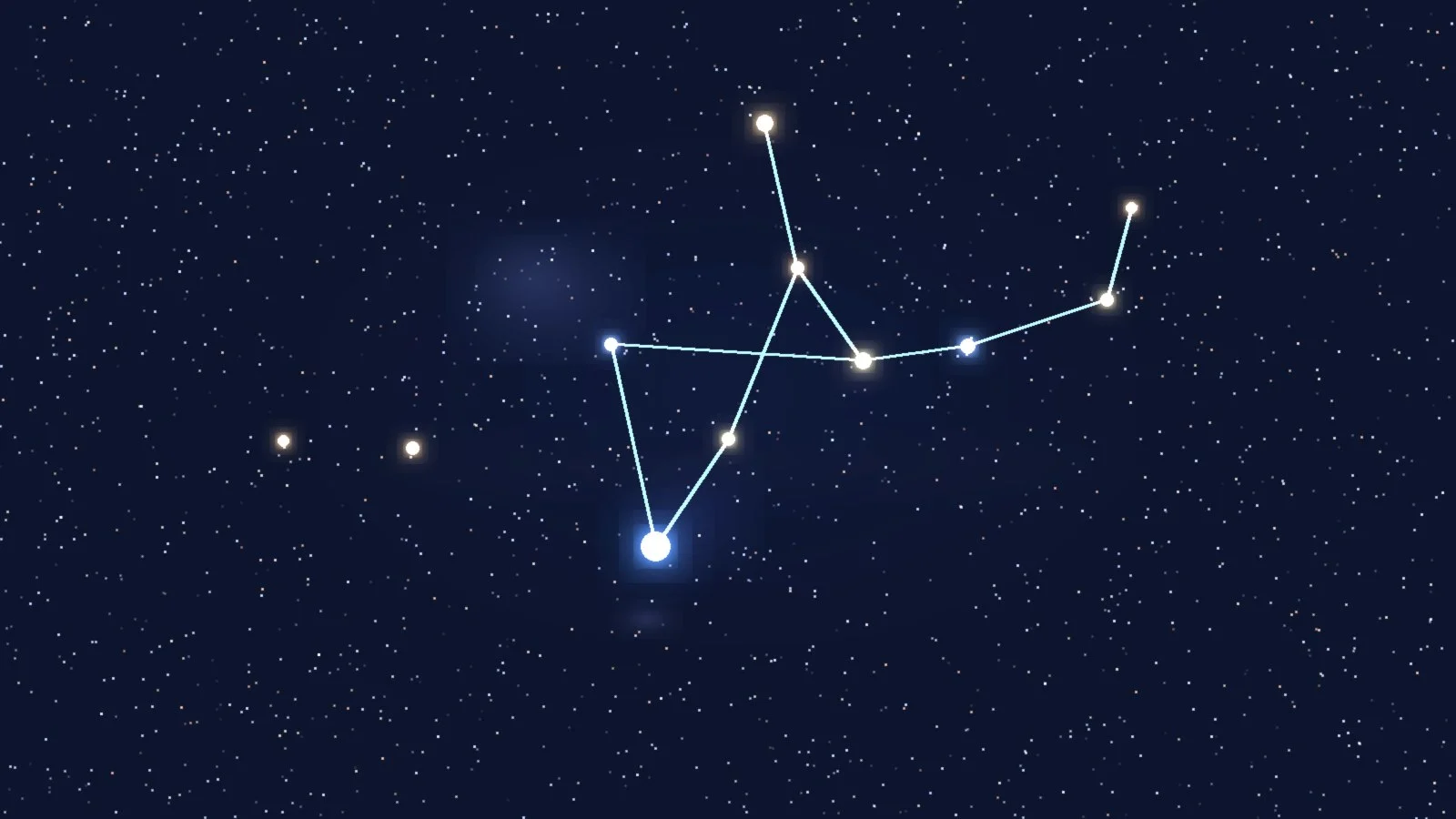
Follow the arc of the Big Dipper's handle to orange Arcturus, then continue the curve to reach blue-white Spica. This famous "Arc to Arcturus, Speed to Spica" rule makes locating Virgo straightforward in spring.
Find Spica First
Spica is the brightest star in Virgo (magnitude 0.97) and the 15th brightest star in the entire sky. Once you spot this brilliant blue-white star low in the southeast on spring evenings, you've found Virgo's anchor point.
Trace the Maiden
From Spica, trace northward (upward on the sky) through Heze and Porrima toward the distinctive kite-shaped upper body. Epsilon is a golden star marking one wing; Zavijava lies far to the west.
Spot the Clusters
With binoculars, scan the area between Porrima and Epsilon: this is the heart of the Virgo Galaxy Cluster, the nearest large galaxy cluster. Faint fuzzy patches indicate galaxies.
| Month | Direction | Altitude | Visibility |
|---|---|---|---|
| February | East-Southeast | Low (15°) | Rising late, challenging |
| March | Southeast | 20–25° | Improving throughout month |
| April | Due South | 30–35° (Excellent) | Best month for observation |
| May | South-Southwest | 30–32° | Still excellent, gradually lower |
| June | Southwest | 20–25° | Fading into twilight by 11pm |
| July | West-Southwest | Low (10–15°) | Twilight observer only |
Key Stars of Virgo
Spica α Virginis
The 15th brightest star in the night sky and Virgo's unmistakable anchor. Spica is a close binary pair so gravitationally bound they're egg-shaped from mutual tidal forces, orbiting each other every 4 days. Hipparchus used Spica's position to discover the precession of Earth's axis in 127 BCE. Its name means "ear of grain": Virgo holds a sheaf of wheat.
Porrima γ Virginis
Two identical F-type stars orbiting each other over 169 years. The pair was closest (~0.4" separation) in 2005 and is now steadily widening, currently a clean split in 15cm telescopes. Observing it year after year lets you track the slow orbital motion directly.
Vindemiatrix ε Virginis
The distinctive golden-yellow star marking Virgo's upper wing. The name means "grape harvester": its heliacal rising announced the grape harvest to ancient Greeks. One of the reference stars in Greek astronomical tradition, used by Hipparchus and others for naked-eye star cataloguing.
Zavijava β Virginis
One of the nearest stars to Earth in Virgo at just 36 light-years. Because it lies near the Sun's apex (the direction the Sun moves through space), it was used in early 20th century measurements of solar velocity. A subgiant nearing the end of its main sequence life.
Auva δ Virginis
An obvious red-orange M-class giant visible through binoculars. The name may derive from Arabic for "the barker": a reference to dog-related constellations near the ecliptic. A slow irregular variable showing subtle magnitude changes over months and years.
Heze ζ Virginis
A wide binary system with a fast-rotating A-type primary and a slower G-type companion. Part of the "body" section of Virgo, it connects the distinctive skirt sweeping from Porrima down to Spica. Well-separated in binoculars.
Mythology & History
Greek & Roman
Virgo typically represents Demeter (or Ceres), the goddess of the harvest, holding a sheaf of wheat (Spica). The myth of Persephone explains the seasons: when Persephone descends to Hades, Demeter grieves and winter comes; when she returns, spring arrives. Alternatively, Virgo is Justice (Dike or Astraea), the last immortal to abandon humanity when the Golden Age ended.
Mesopotamian
The Babylonians called this region "The Furrow" (AB.SIN): the furrow of a ploughed field, associated with Shala, goddess of grain. Spica was "the star of the Furrow," and Virgo herself was linked to Ishtar in her aspect as grain goddess. Deeply agricultural, reflecting the importance of the harvest to Mesopotamian civilization.
Egyptian
Associated with Isis, who held the star Spica, called "she who was brought." Spica was linked to Sopdet (the star goddess). The heliacal rising of Spica near the autumn equinox was crucial to Egyptian calendar-keeping and the annual flooding of the Nile.
Hindu & Vedic
Virgo contains the nakshatra Chitra ("the brilliant"), anchored by Spica. Chitra was one of the most important lunar mansions, linked to Tvastar, the cosmic architect who shapes reality. Also contains Svati (Arcturus area) and Vishakha. Festival of Chitrapurnima celebrates this star.
Chinese
Spica (角宿一) was the "First Star of Horn," the first of the 28 lunar mansions. The Horn mansion was the entrance to the eastern palace of the sky, associated with the Azure Dragon. Crucial for Chinese calendar reform and celestial navigation.
Deep-Sky Objects
M87: Giant Elliptical & Black Hole
Home of a 6.5-billion-solar-mass black hole, photographed by the Event Horizon Telescope in 2019 as the first-ever image of a black hole shadow. Immense jets of plasma stream from the nucleus. Visually it appears as a round, featureless glow in small telescopes: the contrast between what you see and what is actually there is worth thinking about.
M104: Sombrero Galaxy
Among the most photographed galaxies in the sky: a brilliant nucleus with a wide dark dust lane resembling a hat brim. On Virgo's southern edge. A 10cm telescope shows the elongated core; 20cm hints at the dust lane. Best observed in April and May.
Virgo Cluster (Markarian's Chain)
The nearest large galaxy cluster contains over 1,300 galaxies. Markarian's Chain is an elegant curved arc of bright galaxies (M84, M86, NGC 4438, etc.) visible in the same 1° binocular field. A sweep with any telescope reveals a galaxy every few arcminutes: a genuine low-power sweep object unmatched elsewhere in the sky.
M58: Barred Spiral Galaxy
The brightest spiral galaxy in the Virgo Cluster and one of the brightest Messier objects north of the equator. Shows bar and spiral structure in 20cm+ aperture under good conditions. A satisfying target for medium-sized telescopes in dark skies.
Porrima γ Virginis: Binary
Two essentially identical F-type stars, a pearl-white pair. In 2026 they are well-separated and widening after their closest approach in 2005. Beautiful in 10cm at 100× magnification: equal brightness components moving around a 169-year orbit. Track their motion year after year.
M49: Elliptical Galaxy
The brightest member of the Virgo Cluster and the first Virgo Cluster galaxy discovered by Messier in 1771. Easy in small telescopes; appears as an out-of-focus star at low magnification. A good entry point into cluster galaxy observing.
Beginner Observing Guide
- Find the spring arc: In April, locate the handle of the Big Dipper in the northwest. Trace the curve of the handle downward and eastward: it points to orange Arcturus. Continue this arc; you'll reach blue-white Spica, the brightest star in Virgo.
- Locate the main figure: From Spica, look northward (upward on the sky). You'll see Heze, then Porrima (a golden star), then Delta and Epsilon: forming a distinctive kite or upper-body shape. These five stars define Virgo's main frame.
- Scan for cluster galaxies: Point binoculars at the area around Porrima and slightly north toward Epsilon. This is the heart of the Virgo Galaxy Cluster. In dark skies, you'll notice faint fuzzy patches: these are galaxies at 50+ million light-years distance.
- Resolve Markarian's Chain: With a 15cm+ telescope at low power (50×), aim near Porrima and find the curved arc of bright galaxies known as Markarian's Chain (M84, M86, NGC 4438). A stunning sight: multiple galaxies in a single field of view.
- Hunt the Sombrero: M104 lies in southern Virgo, toward the border with Corvus. Star-hop south from Spica using nearby star fields. A 20cm+ scope reveals the striking dark dust lane: one of the most visually distinctive galaxies from the ground.
- Compare galactic forms: Over the course of an observing session, view M87 (featureless elliptical), M104 (spiral with dust lane), and M49 (another elliptical). Recognize how galaxy morphology varies and relate each to its distance and orientation.
Essential Kit
Recommended equipment for observing Virgo
Kit we've reviewed in full
Virgo is the galaxy hunter's paradise. The Virgo Cluster contains over 1,300 galaxies, of which dozens are accessible in a small telescope. Markarian's Chain alone, a curved string of bright galaxies, can occupy an entire spring night. Even binoculars show the brightest members.
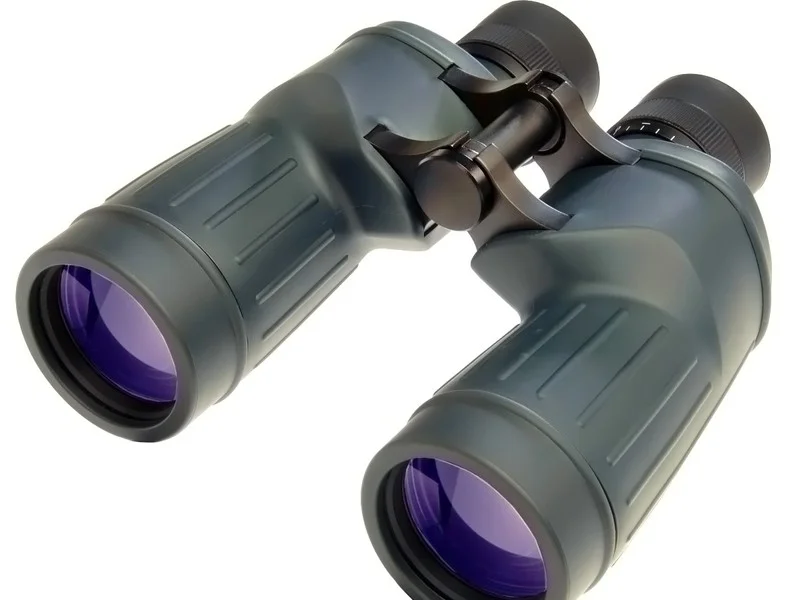
M49 (the brightest Virgo Cluster galaxy) and M87 are visible as faint fuzz in binoculars on dark nights. Spica's blue-white colour is striking compared to the orange stars of nearby Boötes. Binoculars let you sweep the whole cluster region and start to appreciate the density of galaxies you're looking at, 54 million light-years away.
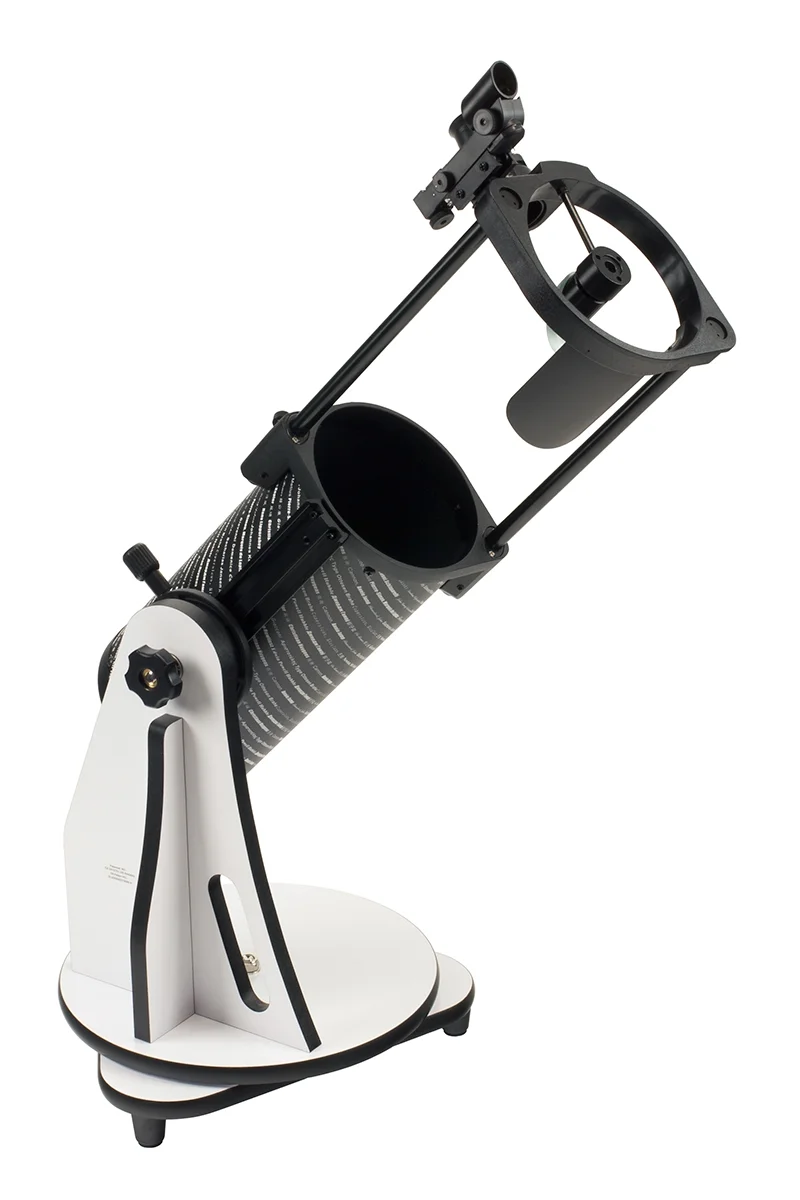
Markarian's Chain (M84, M86, NGC 4388, NGC 4402) can all be visible in the same low-power field. M87's immense elliptical form is unmistakable. At 80× you can galaxy-hop across the cluster core and count a dozen distinct fuzz-patches in a single evening. This is the most galaxy-rich area of sky accessible to a UK observer.
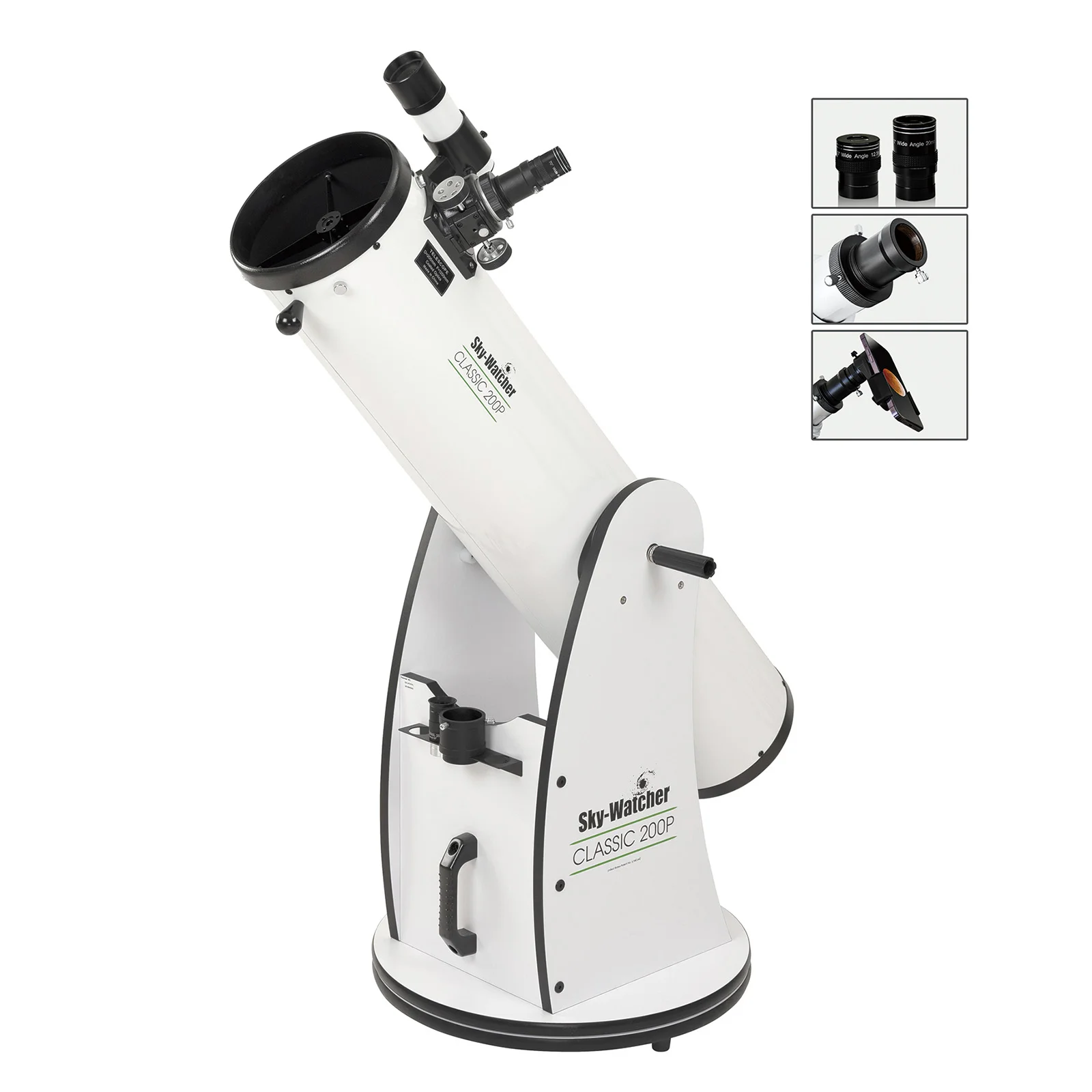
With 200mm you can observe 30+ distinct Virgo Cluster galaxies in a single session. M104 (Sombrero Galaxy, technically in the Virgo/Corvus border region) shows its iconic dark dust lane. M89's compact elliptical form contrasts with M90's diffuse structure. This is where galaxy hopping becomes a full observing programme that takes multiple spring nights to complete.
Affiliate links: you pay the same price, we earn a small commission that helps keep WatchTheStars free.
Need help choosing? See our binoculars and telescope guides.
Advanced Observing
M87 Black Hole
Knowing you can see (faintly) the galaxy containing the first-ever photographed black hole is extraordinary. The Event Horizon Telescope's 2019 image and subsequent refinements in 2024 provide unprecedented context. When viewing M87, visualize the 6.5 billion solar mass black hole at its core.
Porrima's Orbit
Check Porrima's separation each year. The pair will continue widening until around 2090 before closing again. Become part of a centuries-long observational record. Record your measurements and compare with other amateurs: you're tracking orbital mechanics in real time.
Virgo Cluster Sweep
The Virgo Cluster spans approximately 8°: equivalent to 16 full moons placed edge to edge. Using a low-power wide-field eyepiece, systematically sweep the area north of Porrima. Count the galaxies visible; compare counts over multiple nights and different apertures.
M104 Dust Lane Detail
The Sombrero's dust lane requires 20cm+ aperture from a dark site. At high magnification (150×+) under perfect conditions, the dark lane becomes a striking visual feature. Sketch its extent and structure; photograph it through different filters to enhance contrast.
Virgo contains the highest concentration of bright galaxies visible from mid-northern latitudes. Devote multiple observing sessions to this region: you'll develop skill at identifying galactic structure, recognizing morphological types, and understanding large-scale cosmic structure.