Key takeaways
- Venus and Jupiter are closest on June 9, just 1.6° apart in the western sky after sunset
- Mercury joins them around June 12 for a rare three-planet triangle visible with the naked eye
- June 11 pre-dawn: a crescent Moon lines up with Mars and Saturn in the east
- New Moon on June 15 brings the darkest skies of the month, and a supermoon at that
- June solstice on June 21: nights are short but noctilucent cloud season begins
- Strawberry Full Moon rises on June 30, low and golden
Jump to section 6 sections
June is a funny month for UK astronomers. The nights are at their shortest. By mid-month, the sky never gets truly dark in the north of England, let alone Scotland. And yet it delivers one of the year's most spectacular shows, because it happens entirely in twilight, where you don't need darkness at all. Two of the solar system's most dazzling planets are about to collide in the western sky, a third is sneaking into the frame, and the northern horizon is about to start glowing with one of nature's most otherworldly spectacles. Here's everything worth staying up for in June 2026.
The Main Event: Venus Meets Jupiter
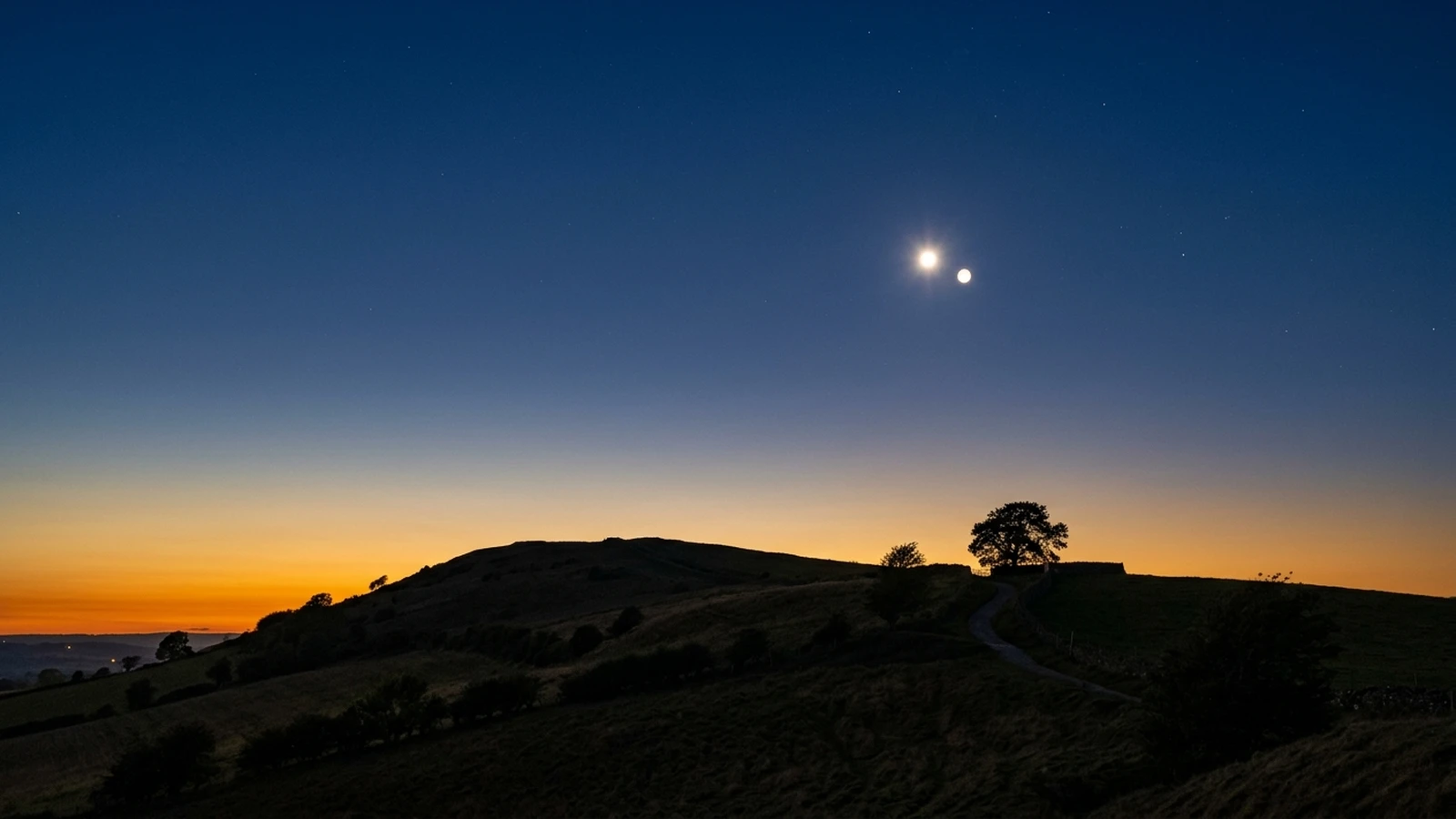
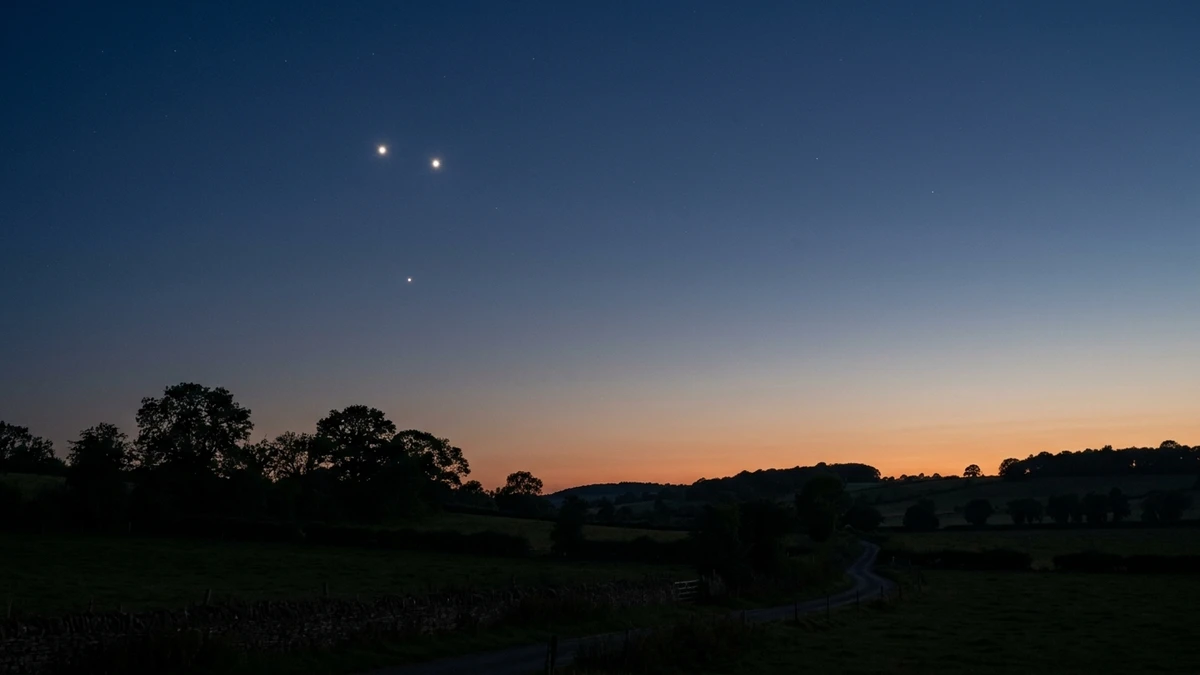
If you only look up once this month, make it the evening of Tuesday 9 June. That's when Venus and Jupiter reach their closest approach, a mere 1.6° apart in the west-northwest sky, low above the horizon as twilight fades.
You've already seen both planets if you've been watching the western sky since May. Venus is the one you simply cannot miss. It's blazing at magnitude –3.9, it's bright enough to cast a faint shadow on white paper on a clear night. Jupiter, sitting a little higher and to the upper left, shines at a respectable magnitude –1.7, dimmer than Venus, but still far outshining every star in the sky.
From early June, the two have been closing on each other at about a degree per night. On June 9, they'll be separated by less than two finger-widths held at arm's length. Binoculars will show both in the same field of view, which is a rare treat. Through even a small telescope, you'll see Jupiter's four bright moons and the creamy disc of Venus side by side.
The catch: they're low. From the UK, Venus and Jupiter sit in the west-northwest around 30° above the horizon at sunset, but they set roughly an hour to an hour and a half after the Sun goes down. That gives you a tight viewing window, but given how bright these two are, even 20 minutes of clear sky is all you need. Find a spot with an open western horizon, free from buildings and trees, and look from about 45 minutes after sunset. The sky will still be deep blue; these planets don't need it to be dark.
The conjunction is actually beautiful on the nights either side too. June 8 is nearly as close, and from June 7 to 10 they sit within 2.5° of each other, a wide binocular field. You've got four nights to catch it if cloud gets in the way.
The Triple Lineup: Mercury Joins In
Venus and Jupiter would be enough on their own. But around June 12, a third planet muscles its way into the scene.
Mercury has been lurking below Venus and Jupiter since late May, but it's been too close to the Sun's glare to pick out easily. By the second week of June, it climbs just high enough, and far enough from the Sun, to become a genuine naked-eye target. Look for it below and slightly to the right of Venus in the western sky, closer to the horizon, appearing as a steady yellowish point of light at around magnitude 0.5.
The three planets form a loose, compact triangle: Venus and Jupiter nestled close at the top, Mercury a few degrees below. It's not a tight, dramatic triangle (the separation between Mercury and the upper pair is around 5–8°), but seeing three planets of the solar system in a single naked-eye frame is genuinely special. Most people go their whole lives without noticing Mercury at all, let alone seeing it alongside the two brightest planets.
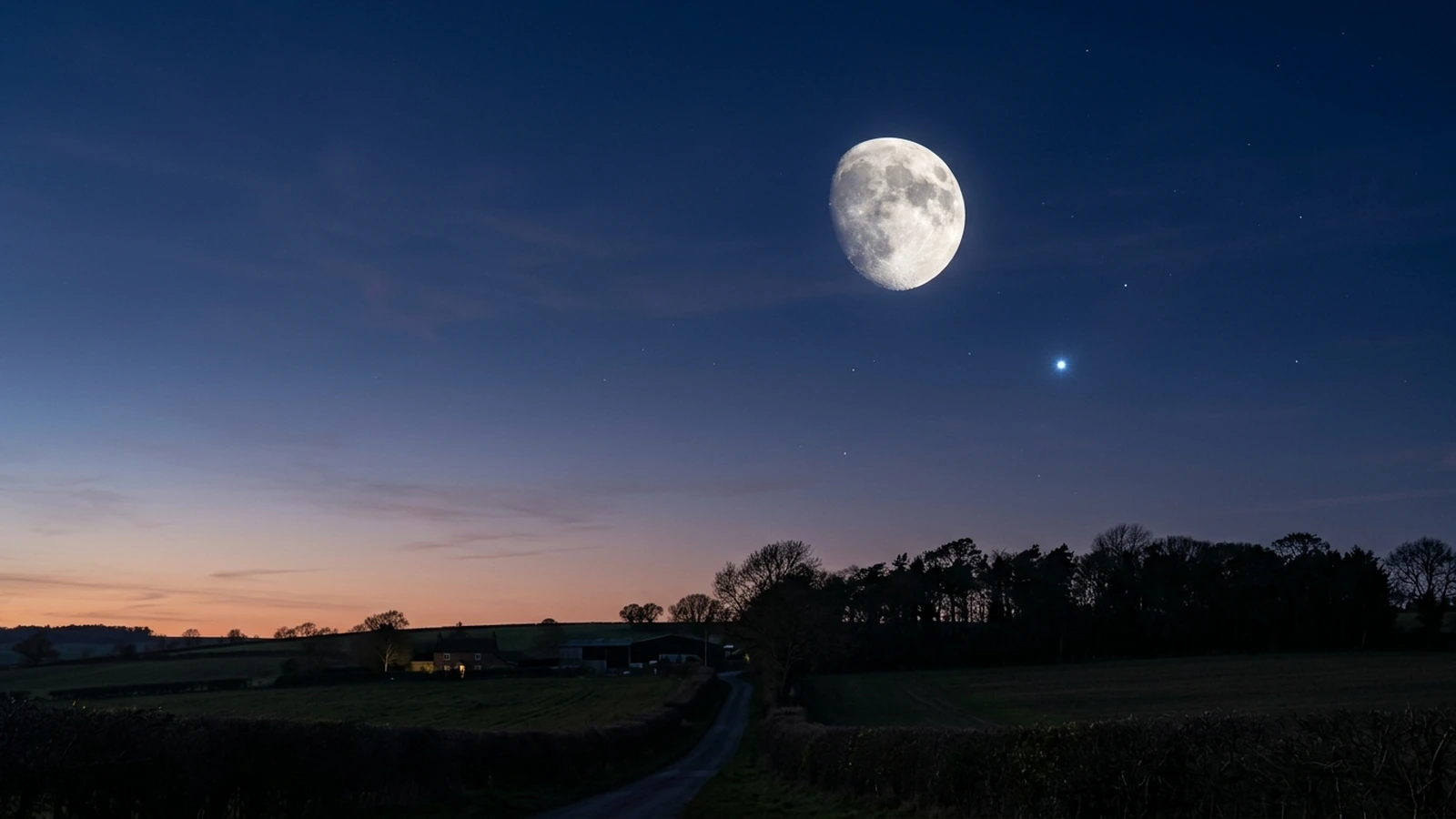
On June 16, a thin crescent Moon swings through and joins Jupiter and Mercury in a lovely grouping. The following evening (June 17), the Moon moves close to Venus, completing a four-object tableau above the western horizon. These evenings are particularly good for photography: a crescent Moon, two brilliant planets, and a third tucked beneath, all in one frame.
Get the full picture of June's planet parade
Kit we've reviewed in full
Venus and Jupiter are unmissable with the naked eye, but binoculars are what turn this month's conjunction into a proper show, both planets and their moons in one field of view.
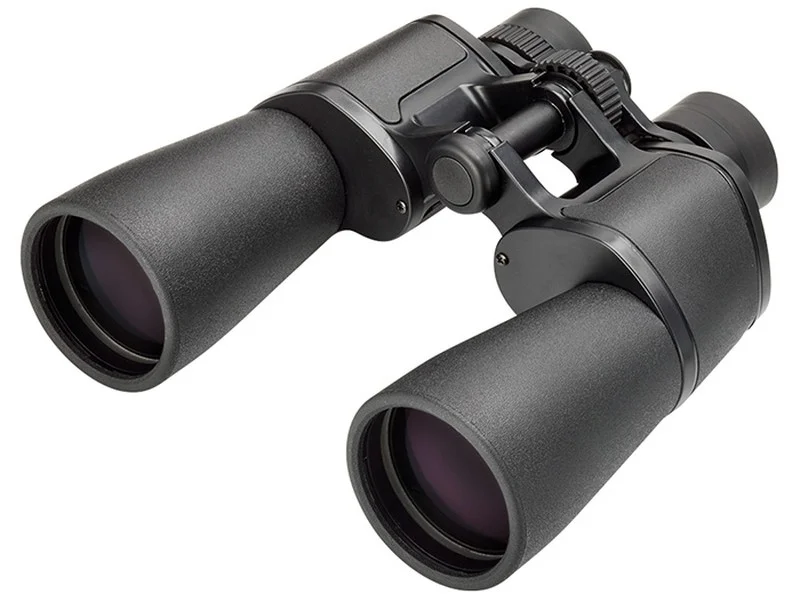
Ideal for catching Venus and Jupiter together on June 9, and light enough for a quick grab-and-go before they set.
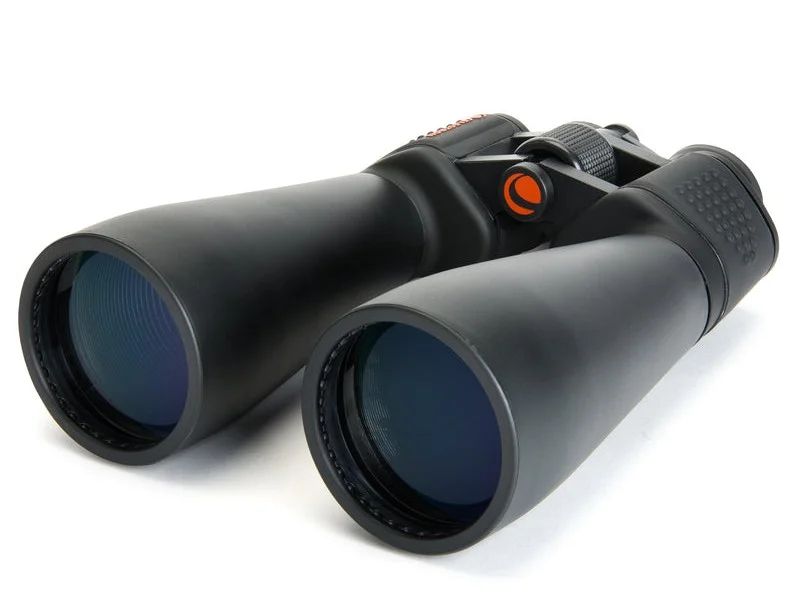
Enough magnification to separate Jupiter's four moons clearly, and useful for teasing out fainter Mercury low near the horizon from June 12.
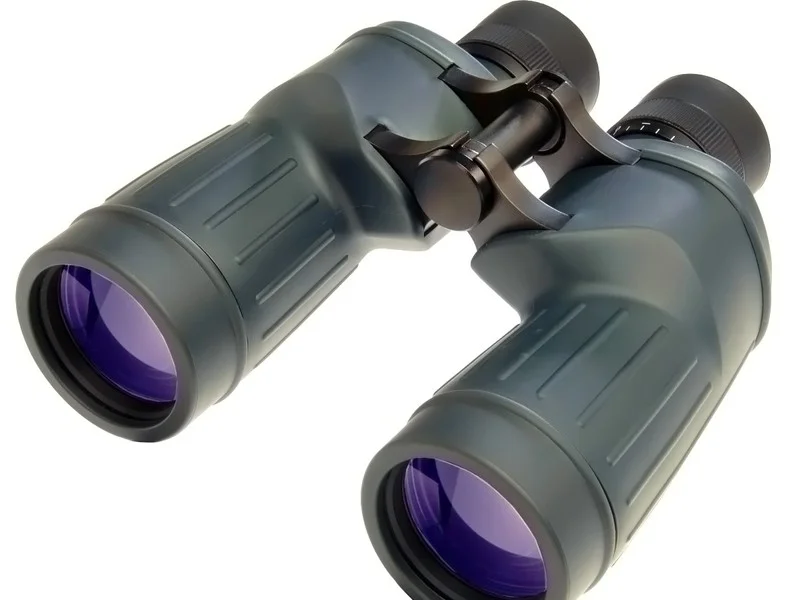
Clean, high-contrast views make the crescent Moon's earthshine and the planet trio easy to frame together on the 16th and 17th.
Affiliate links: you pay the same price, we earn a small commission that helps keep WatchTheStars free.
Pre-Dawn: Mars, Moon and Saturn
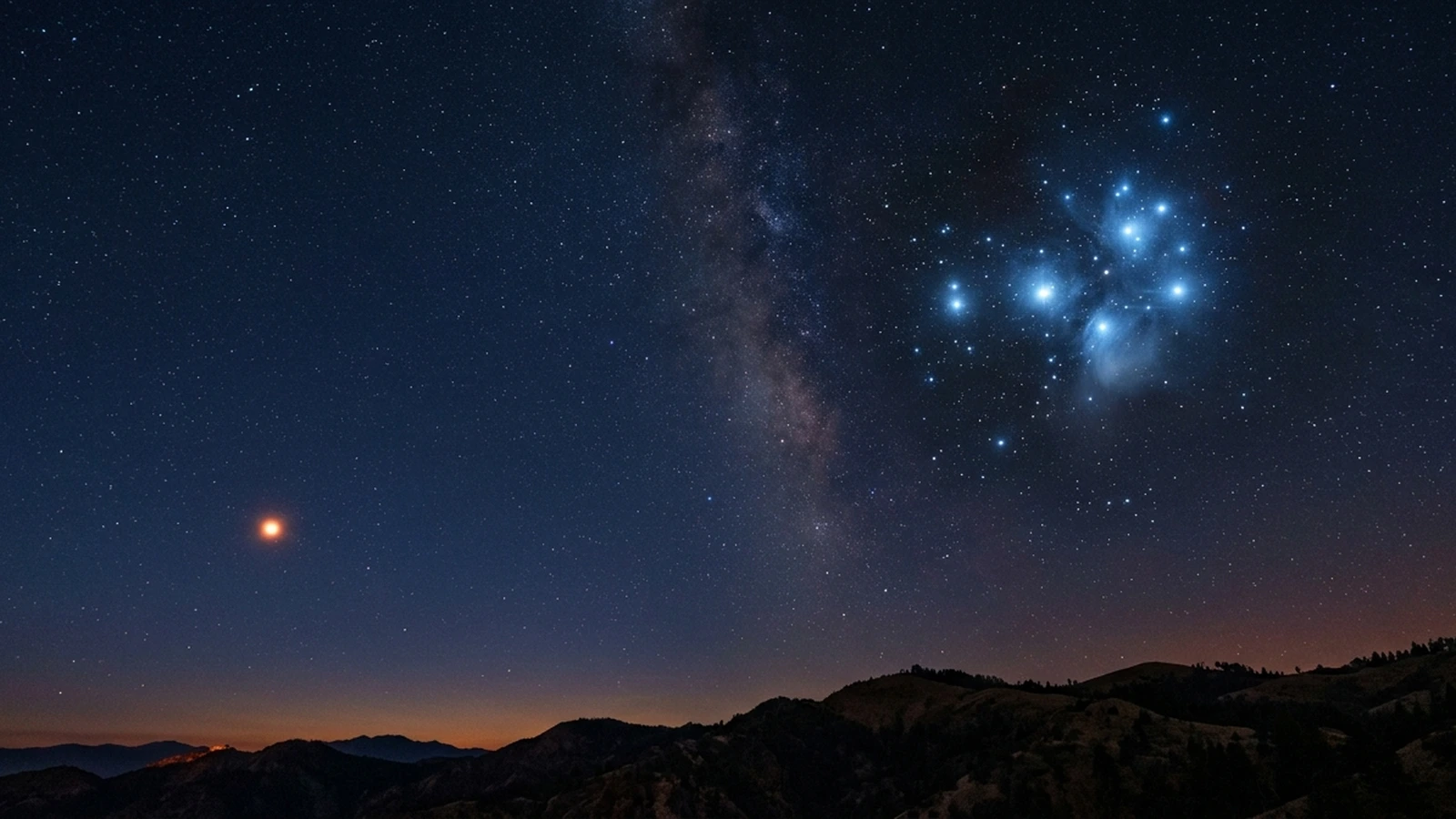
Night owls and early risers have their own reward this month. Saturn and Mars are both positioned in the eastern sky before sunrise, and on the morning of June 11 they put on a display of their own.
Around an hour before sunrise (roughly 04:00 BST), look east to find a tight diagonal line formed by three objects: reddish Mars lowest, then a slender crescent Moon in the middle, and yellowish Saturn highest. All three fit within a roughly 10° span, the width of your fist held at arm's length. It's the kind of accidental alignment that makes you glad you set an early alarm.
Mars is still fairly faint this month. It rises only about an hour before the Sun and sits low in the east-southeast. Binoculars show a small reddish disc. Saturn, meanwhile, is getting better every week. It reached opposition later in the year, but right now it clears the horizon well before dawn and at a reasonable altitude. A small telescope will resolve the rings, though the image will be a little unsteady this low in the atmosphere. By late summer Saturn will be a showpiece. For now, it's worth the early morning effort.
The Moon This Month
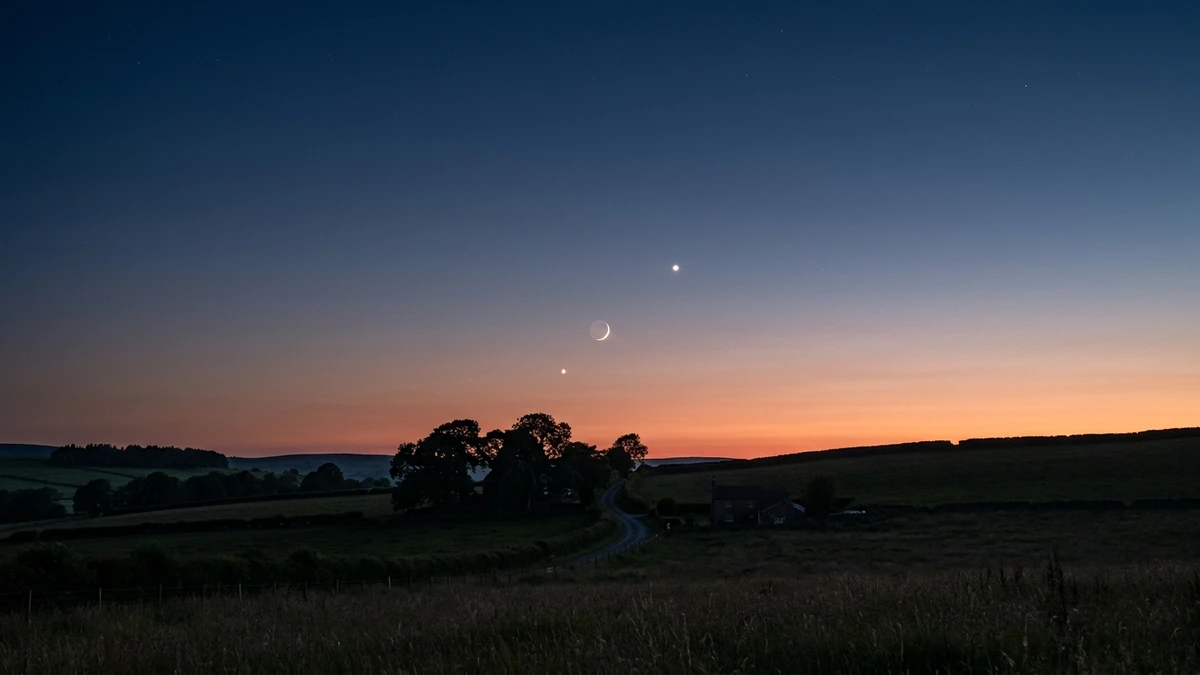
The Moon's phases this June are well timed for both planet-watching and dark-sky observing.
New Moon falls on Sunday 15 June at 02:54 BST, and it's not just any new moon. June's new moon is the closest of 2026 to Earth, at 357,221 km, making it technically a new supermoon (though you can't see it at new phase, of course). What you do get is the darkest skies of the month, from roughly June 12 to 18. If you have a telescope and want to hunt deep-sky objects, this is your window.
The crescent phases either side of new moon are also useful. On June 8–10, the waxing crescent Moon keeps away from Venus and Jupiter, leaving the conjunction pair uncluttered in the western sky. By June 16–17, as noted above, the crescent returns to frame up nicely with all three planets in the west.
Full Moon (the Strawberry Moon) falls on Tuesday 30 June at 00:57 BST, technically on the night of June 29–30. Being the first full moon after the solstice, it takes a very low path across the sky from the UK, rising in the northeast and barely climbing above 20° above the southern horizon at its highest. That makes it appear large and deep amber-orange as it skims the horizon, exactly the sort of Moon that makes people stop and stare. Worth watching around moonrise (approximately 21:30 BST in the south of England, later further north).
Solstice and Noctilucent Clouds
The June solstice arrives on Saturday 21 June at 09:25 BST, the longest day of the year, and the moment the Sun reaches its most northerly point. From that date, the days gradually shorten again, but for now we're at maximum twilight. In the north of England, the sky never reaches full astronomical darkness; in Scotland, there's effectively no true night at all this close to midsummer.
That might sound frustrating for stargazers, but it's the reason for one of June's most unique sky events: noctilucent clouds (NLCs).
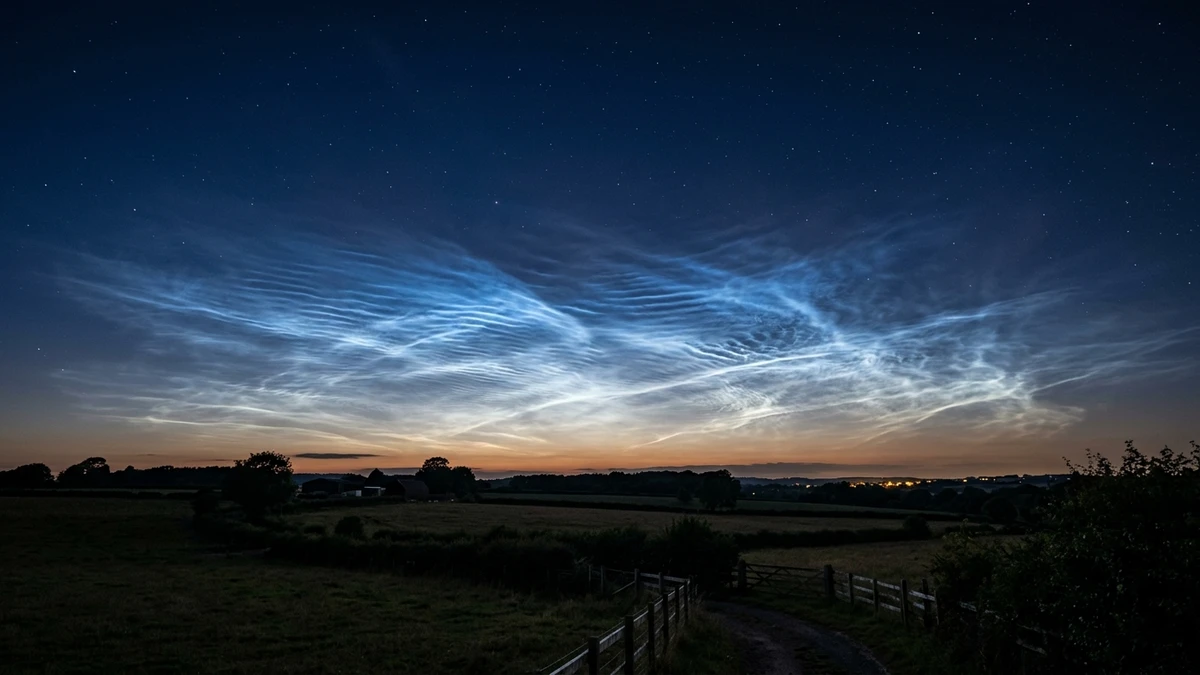
Noctilucent clouds are the highest clouds in Earth's atmosphere, forming at around 80 km altitude, so high that they're lit by sunlight long after the Sun has set for us on the ground. From the UK, they appear as intricate, rippling structures of electric blue and silver, low on the northern horizon, visible from roughly 90 minutes after sunset until about an hour before sunrise. They glow and shift over the course of an hour in a way that photographs beautifully.
June is prime NLC season. You don't need a telescope. Just look north from around 22:30 BST on any clear night and watch the horizon. They don't appear every night, but when they do, the display is unmistakable. They're most likely during the two weeks either side of the solstice. If you see a glowing, rippled structure on the northern horizon that looks too bright and structured to be ordinary cloud, that's them.
Key Dates at a Glance
June's nights are short, but the events are packed. Here are all the key moments to mark in your diary.
There's plenty to see this month even if you only catch snatches of clear sky. The Venus-Jupiter conjunction is the headline, but honestly any evening that's clear in the first half of June is worth stepping outside for: two brilliant planets in the western twilight needs no equipment, no dark adaptation, and no special knowledge. Just look west. Clear skies!
Sources:
- Venus-Jupiter conjunction guide · EarthSky
- Venus and Jupiter 'kiss' in June 2026 · BBC Sky at Night Magazine
- June 2026 sky events · National Geographic
- What's Up: June 2026 · NASA Science
- Strawberry Moon June 2026 · Space.com
- Night sky highlights June 2026 · Royal Observatory Greenwich
Frequently Asked Questions
Equipment guides
Related topics
Ian ClaytonAmateur astronomer and founder of WatchTheStars.co.uk, dedicated to helping others explore the wonders of our universe. Full profile →