Key takeaways
- Every 2026 full Moon date and UK time is in the calendar below, from the Royal Observatory Greenwich
- A partial lunar eclipse on 28 August 2026 is visible from the UK before dawn: over 90% of the Moon enters Earth's shadow
- 2026 ends with two supermoons: 24 November and 24 December
- Full Moon is the worst night for telescope viewing: first quarter, around a week earlier, shows far more detail
Jump to section 6 sections
The Moon is the one object every stargazer can rely on. No dark sky needed, no drive into the countryside: it shrugs off light pollution that erases everything else, and it shows more detail through cheap binoculars than any other object shows through a big telescope. This guide covers everything 2026 has on offer: every full Moon date, a deep partial eclipse in August, two supermoons, and the one piece of advice that surprises every beginner: when not to look.
Full Moon Calendar 2026
All times are UK time (GMT or BST), from the Royal Observatory Greenwich. The popular names are traditional ones you'll see in the news. We've covered what every full moon name means and where they come from separately, but they have no astronomical significance.
| Date | Time (UK) | Name |
|---|---|---|
| 3 January | 10.03am | Wolf Moon (supermoon) |
| 1 February | 10.09pm | Snow Moon |
| 3 March | 11.38am | Worm Moon |
| 2 April | 3.12am | Pink Moon |
| 1 May | 6.23pm | Flower Moon |
| 31 May | 9.45am | Blue Moon (micromoon) |
| 30 June | 12.57am | Strawberry Moon |
| 29 July | 3.36pm | Buck Moon |
| 28 August | 5.18am | Sturgeon Moon, partial eclipse |
| 26 September | 5.49pm | Corn/Harvest Moon |
| 26 October | 4.12am | Hunter's Moon |
| 24 November | 2.53pm | Beaver Moon (supermoon) |
| 24 December | 1.28am | Cold Moon (supermoon) |
May gave us two full Moons. The second, on 31 May, was both a blue Moon and a micromoon, which we covered when it happened. There was also a total lunar eclipse on 3 March, but it wasn't visible from the UK: the Pacific and the Americas got that one. Our turn comes in August.
Partial Lunar Eclipse 28 August 2026: UK Guide
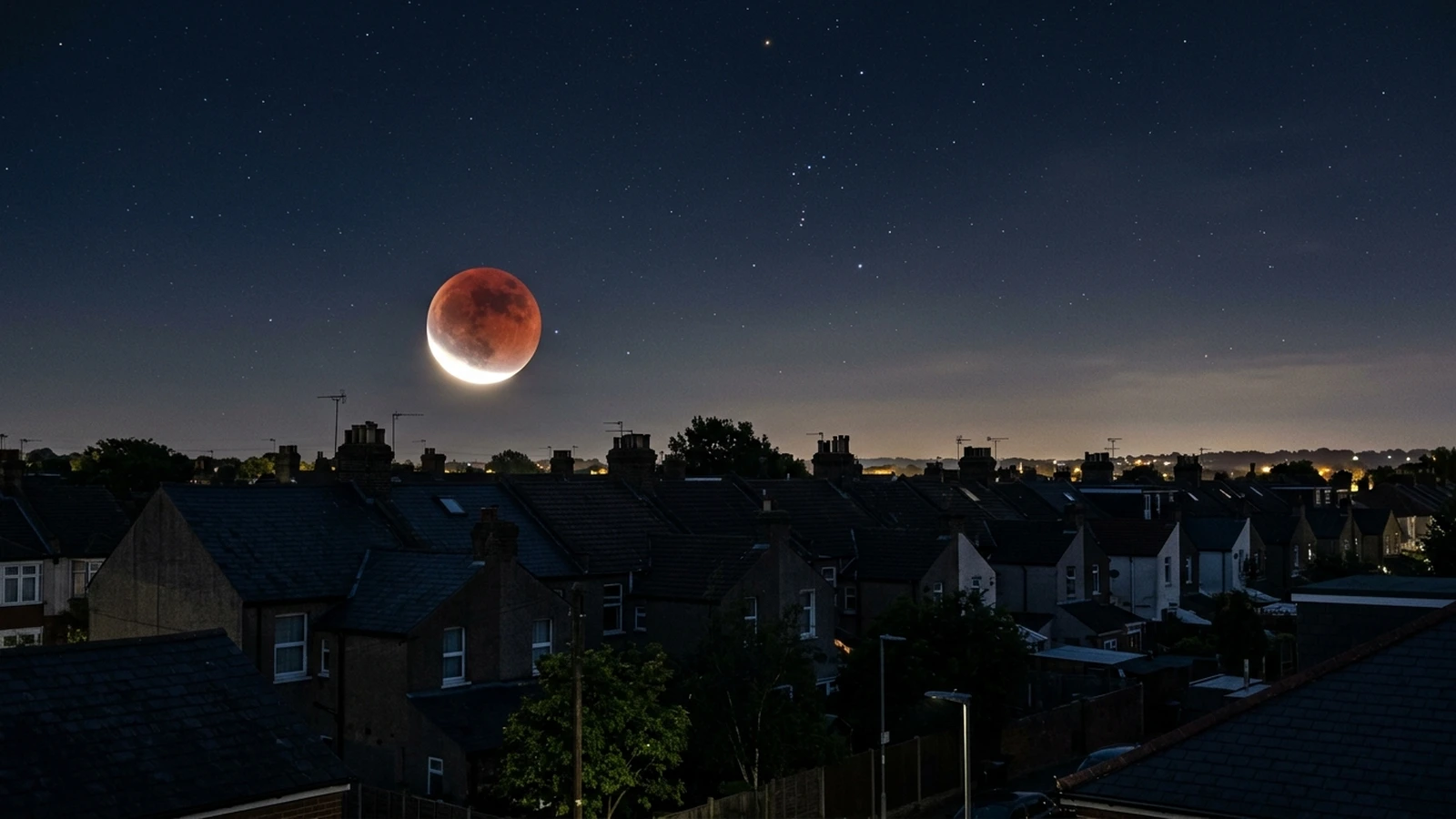
This is the Moon event of the year for UK observers. In the early hours of Friday 28 August, the full Moon slides deep into Earth's shadow. At maximum, over 90% of it is covered, leaving only a bright sliver along one edge. A partial eclipse this deep behaves much like a total one: the shadowed portion glows a dim, coppery red.
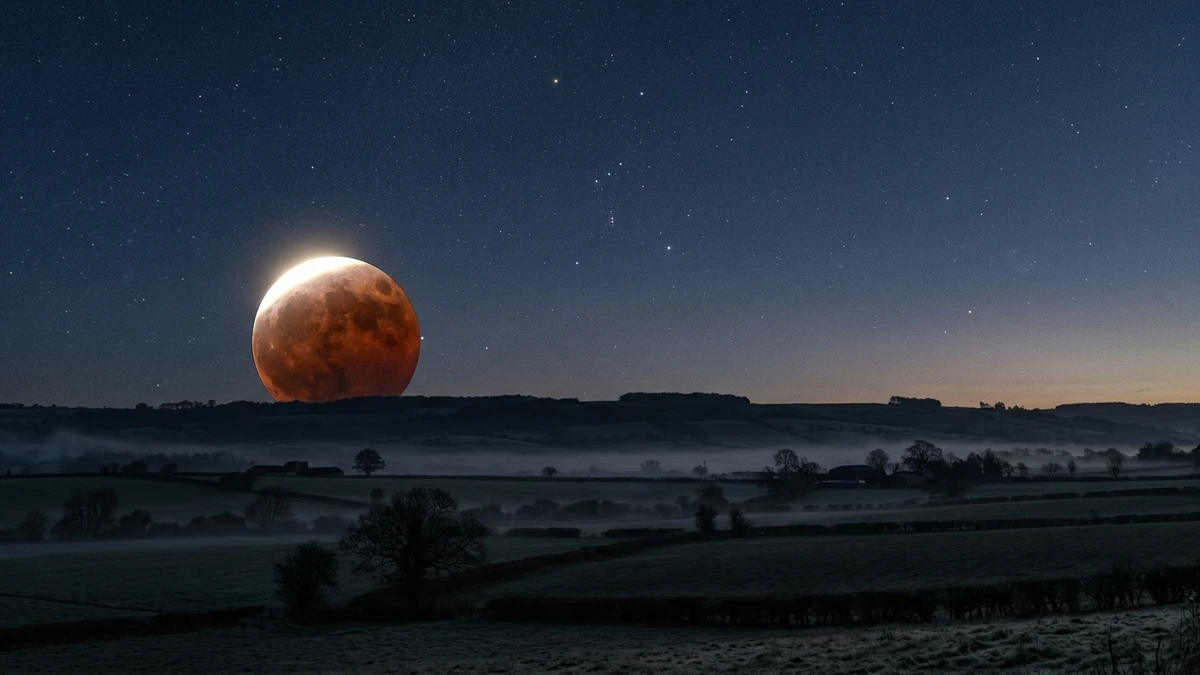
The timings for the UK (BST, from London, a minute or two different elsewhere):
- 2.23am: penumbral eclipse begins; the Moon starts to dim subtly
- 3.33am: partial eclipse begins; Earth's shadow takes a visible bite
- 5.12am: maximum eclipse; the Moon hangs just 8° above the west-southwest horizon
- 6.15am: moonset, while still partially eclipsed
The catch is that altitude. By maximum the Moon is very low, so you'll need to plan: find somewhere with a completely open view to the west-southwest: a hilltop, a west-facing coast, even an upstairs window. The low altitude is also a gift for photographers, putting the eclipsed Moon right against the landscape. No equipment is needed, though binoculars make the shadow's edge and the red colouring much more obvious.
One bonus for the same fortnight: the eclipse falls just 16 days after 12 August, when the UK sees a large partial solar eclipse: around 90% of the Sun covered from London, more from northern and western areas. (The path of totality crosses Iceland and Spain rather than the UK, but it's still the deepest partial solar eclipse visible from Britain in decades.) Eclipses pair up like this because the Sun, Earth and Moon stay roughly aligned for about a month at a time.
Supermoons 2026: November and December
The Moon's orbit is an ellipse, so its distance from us varies: from about 356,000 km at the closest (perigee) to 406,000 km at the furthest (apogee). When a full Moon lands near perigee, it appears slightly larger and brighter than average: a supermoon.
2026 has three: 3 January (the Wolf Moon, now past), then 24 November and 24 December to close the year. The size difference is hard to judge by eye: about 7% larger than an average full Moon for the November one. What you will notice is brightness, especially in December when the Moon rides high on long winter nights. The December supermoon is the closest and brightest of the year, appearing around 8% larger and 16% brighter than average. The Moon illusion, the way the brain exaggerates the size of a rising Moon, does the rest: both supermoons will look enormous as they lift over the horizon. The November one rises in the northeast around sunset, which is exactly when that effect is strongest.
Why Full Moon Is the Worst Time to Look
Here's the thing nobody tells beginners: the full Moon is the dullest possible target. With the Sun shining straight down on the lunar surface, there are no shadows: craters vanish, mountains flatten, and the whole disc becomes a bright, washed-out glare.
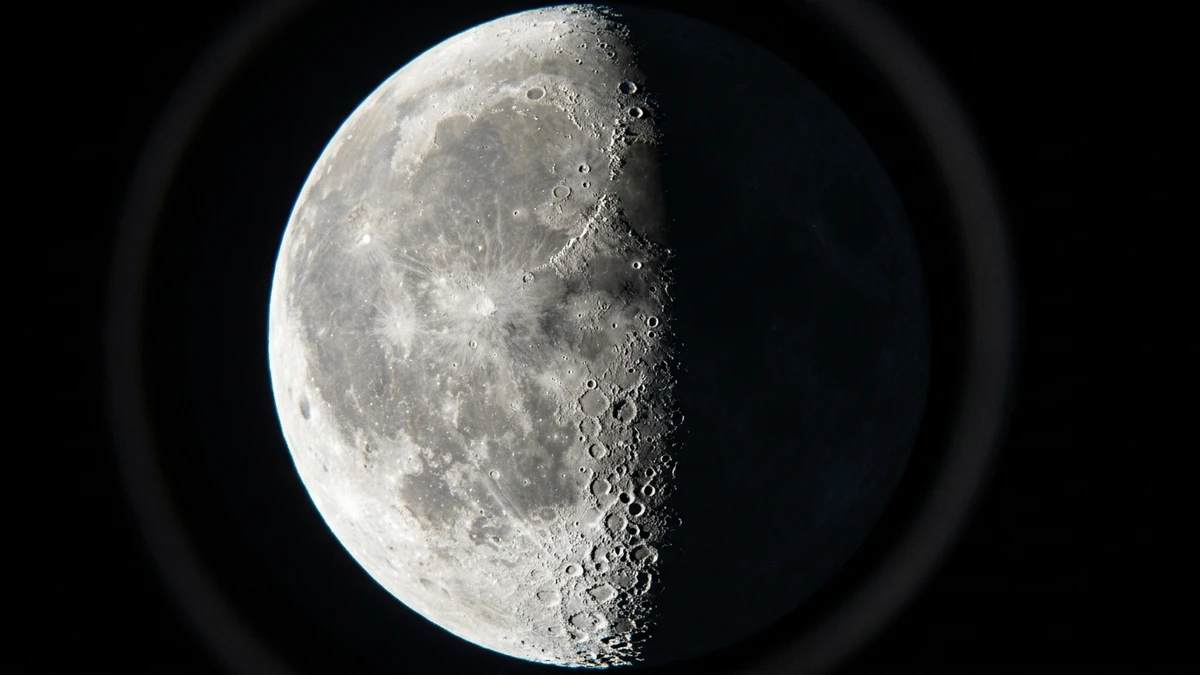
The detail lives along the terminator: the moving line between lunar day and night, where sunlight strikes at a grazing angle and every crater rim and mountain ridge casts a long shadow. The best evenings are around first quarter, roughly a week after new Moon: the terminator runs right down the middle of the disc, shadows are dramatic, and the Moon is up in the evening rather than the small hours. Each night the terminator shifts, lighting up a new strip of landscape: you can watch sunrise creep across the Apennine mountains over two evenings.
To plan a Moon session in 2026, just work back from the full Moon table above: first quarter falls about a week before each full Moon date.
What to Look For Through the Year
Naked eye. The dark patches are maria, ancient lava plains, and the pattern they make is the "man in the Moon". Around a thin crescent, look for the ghostly glow of the unlit portion: that's earthshine, sunlight reflected off Earth onto the lunar night side. It's best in spring evening crescents.
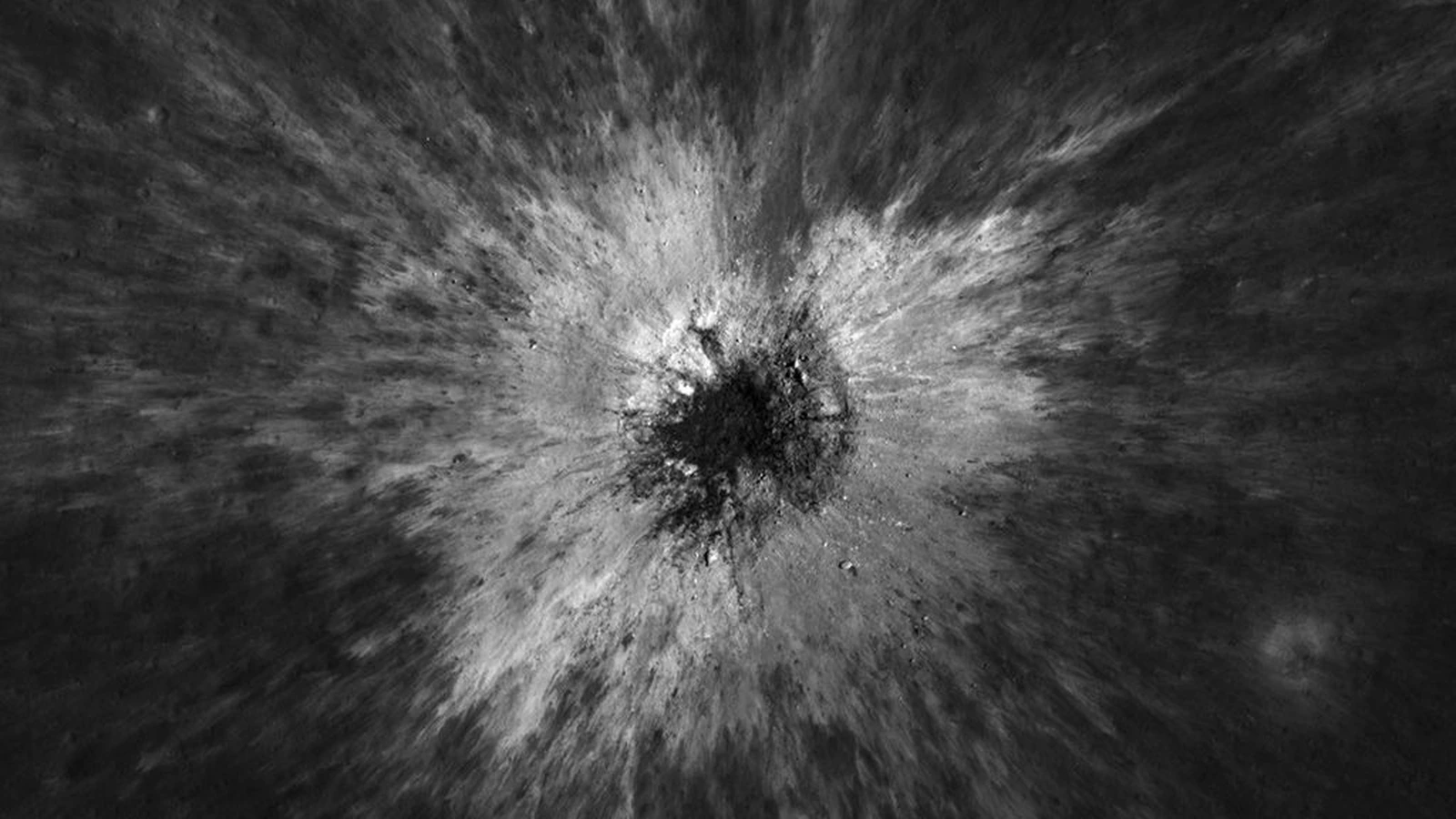
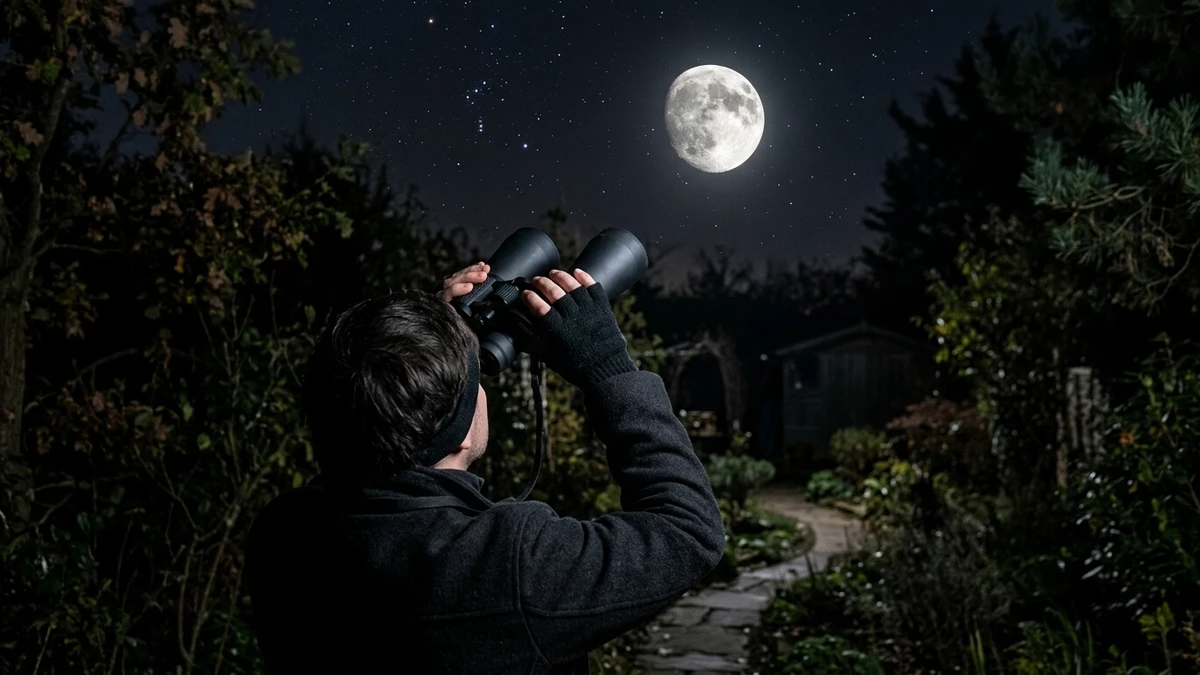
Binoculars. Any pair shows the major craters, the maria taking on texture, and the bright ray system splashing out from Tycho near full Moon. Brace your elbows on something solid, a fence, a car roof, and the view steadies considerably. Our binoculars guide covers what to buy, but for the Moon, whatever you already own works fine.
Telescope. This is where the Moon becomes a lifetime's hobby. A few first targets, all easy in a small scope when they sit near the terminator: Copernicus, a magnificent 93 km crater with terraced walls; Plato, a dark-floored oval in the north; the Apennine mountains, a 600 km arc of peaks; and the Straight Wall, a 110 km fault line that looks like a pencil stroke on the surface, best a day or two after first quarter. None of them need more than 50x magnification.
Equipment for Moon Observing
The honest answer: nothing. The Moon is the most forgiving target in the sky. But two cheap things improve it. A Moon filter (around £11) cuts the glare that makes a bright gibbous Moon uncomfortable through an eyepiece: our Moon filter review covers the standard pick. And if the Moon hooks you, the Heritage 150P at around £249 will show you every target named in this guide with room to spare.
What to take outside
Kit we've tested and reviewed in full
You don't need much for the Moon, but a decent pair of binoculars and a Moon filter make a real difference at any phase.
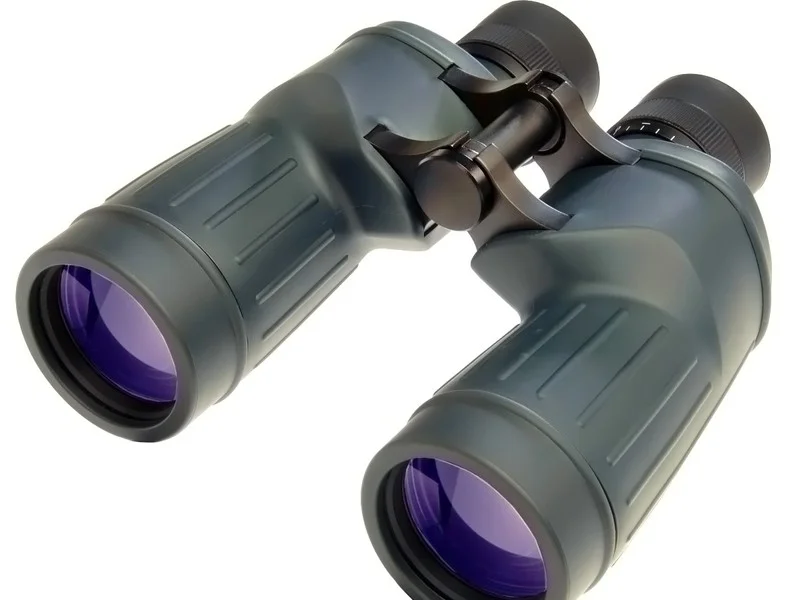
Wide-field binoculars that show the major craters, the maria and the Tycho ray system with ease. Good enough for everything else in the night sky too.
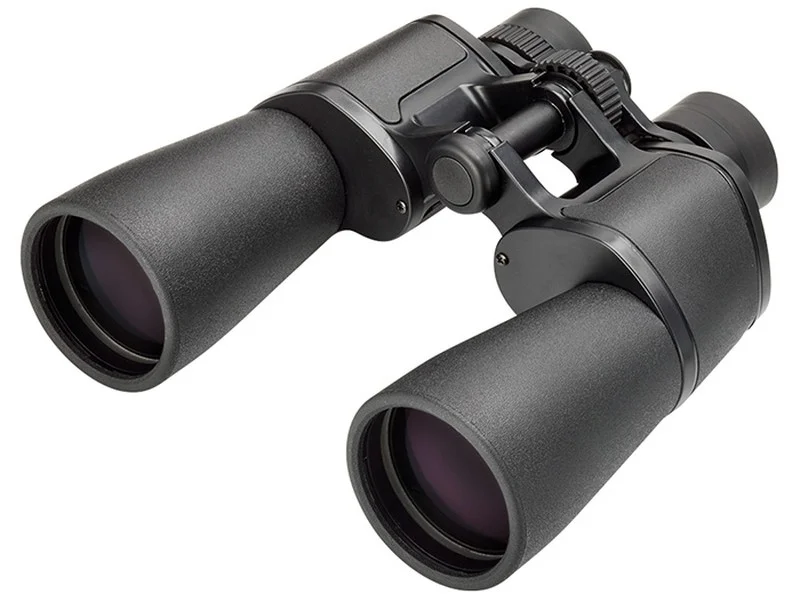
A solid, no-nonsense 10×50 that works well for the Moon and doubles up for daytime use. A good first pair if you're just starting out.
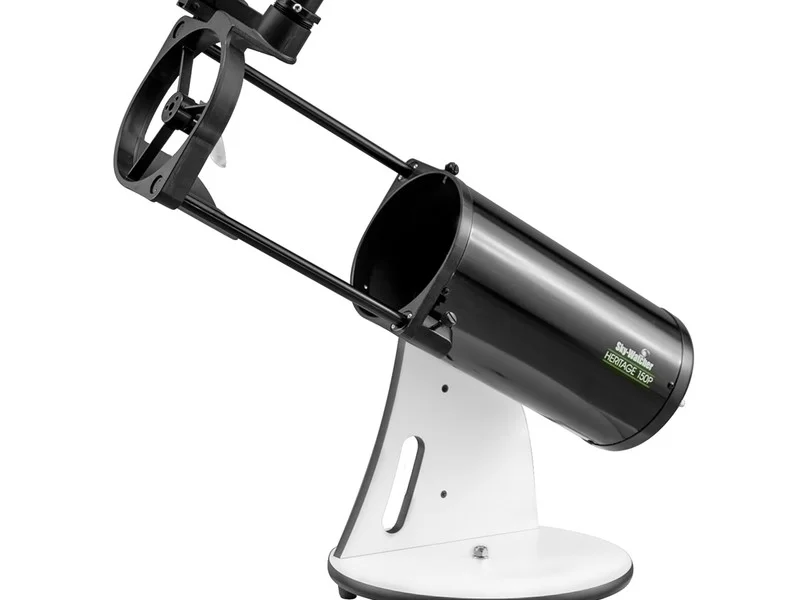
Shows every crater and feature named in this guide. The Cassini Division opens out in Saturn's rings too, making it a great all-purpose beginner scope.
Affiliate links: you pay the same price, we earn a small commission that helps keep WatchTheStars free.
For week-by-week Moon phases alongside everything else in the sky, the UK night sky this week guide is updated every Sunday, and if you just want to know whether tonight is worth it, check your stargazing score.
Sources:
- Full Moon calendar 2026 · Royal Observatory Greenwich
- August 28, 2026 partial lunar eclipse, London circumstances · timeanddate.com
- 12 August 2026 partial solar eclipse · Royal Observatory Greenwich
- Supermoons in 2026 · BBC Sky at Night Magazine
Frequently Asked Questions
Equipment guides
Related topics
Ian ClaytonAmateur astronomer and founder of WatchTheStars.co.uk, dedicated to helping others explore the wonders of our universe. Full profile →