Key takeaways
- NASA named the Artemis III crew on 9 June 2026: commander Randy Bresnik, pilot Luca Parmitano (ESA), and mission specialists Frank Rubio and Andre Douglas
- Luca Parmitano is the first ESA astronaut ever assigned to an Artemis mission, a major moment for European spaceflight
- Artemis III won't land on the Moon. It's a two-week test in Earth orbit in 2027, docking Orion with the SpaceX and Blue Origin lunar landers
- Frank Rubio holds the American single-spaceflight record at 371 days; Andre Douglas is making his first flight
- The mission clears the way for Artemis IV, the first crewed lunar South Pole landing, targeted for 2028
Jump to section 6 sections
Who Are the Artemis III Astronauts?
Two months after the Artemis II astronauts flew around the Moon and came home to a hero's welcome, NASA has named the next crew in line.
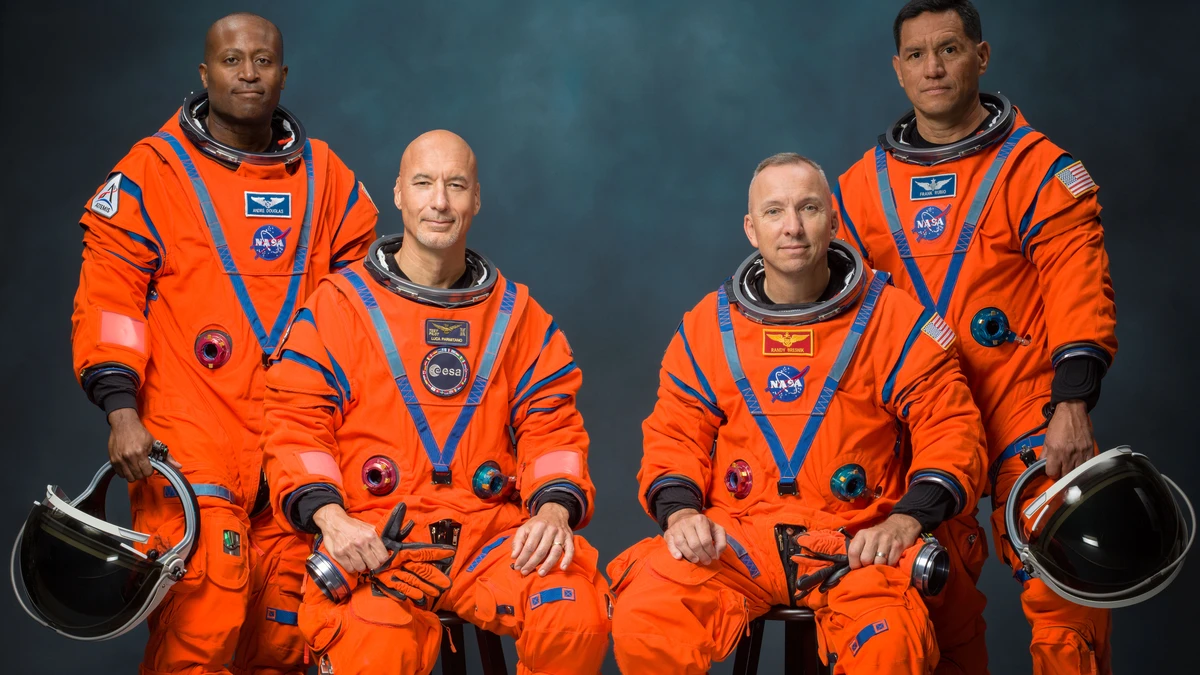
At an event at Johnson Space Center in Houston on Tuesday 9 June, the agency announced the four astronauts who will fly Artemis III in 2027. NASA's Randy Bresnik will command the mission. European Space Agency astronaut Luca Parmitano takes the pilot's seat, with NASA's Frank Rubio and Andre Douglas as mission specialists. A fifth name, Bob Hines, was announced as backup. He piloted SpaceX Crew-4 to the space station in 2022.
"Today we take another bold step in humanity's return to the Moon, building on the extraordinary foundation laid by the Artemis II astronauts," said NASA Administrator Jared Isaacman. "Their achievements reignited global excitement for exploration, and now they pass the torch to the Artemis III team."
The crew starts training on Orion straight away. Unusually, they will also help develop and operate the test versions of the two commercial lunar landers they are due to meet in orbit. More on that below.
Commander Bresnik knows this hardware better than almost anyone. A retired US Marine Corps colonel and test pilot with more than 7,000 hours in 95 types of aircraft, he flew on shuttle Atlantis in 2009 and commanded the International Space Station in 2017. Since 2018 he has overseen the development and testing of Artemis spacecraft within the Astronaut Office. In other words, he has spent eight years helping build the mission he will now fly. He is also one of only two astronauts in history to have a child born while they were in space.
Luca Parmitano: First European on an Artemis Mission
Here's the headline for those of us on this side of the Atlantic. Luca Parmitano is the first ESA astronaut ever assigned to an Artemis mission.
Artemis II carried Canadian Jeremy Hansen, the first non-American on a lunar trajectory. Now Europe gets its seat, and it isn't a passenger seat. Parmitano will pilot Orion, the spacecraft whose European Service Module is built by ESA. The module provides Orion's power, propulsion, water and air, so a European will be flying a spacecraft that Europe helped build.
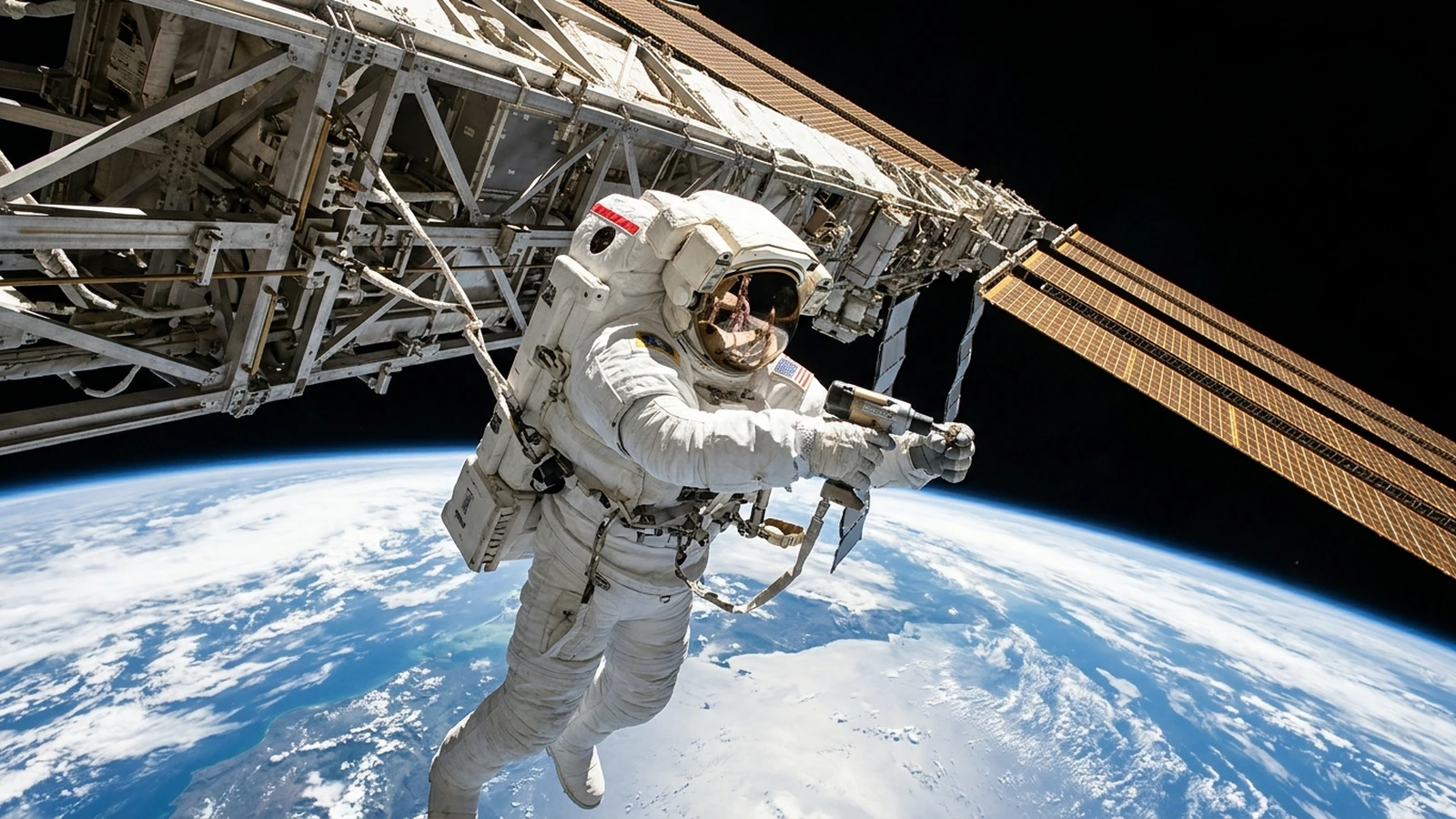
The Italian Air Force colonel is one of ESA's most experienced astronauts. He has flown twice to the ISS and commanded the station in 2019, the first Italian to do so. He also survived one of the most dangerous spacewalk incidents ever recorded, when his helmet began filling with water during a 2013 EVA. He kept calm, made his way back to the airlock half-blind, and the safety procedures written afterwards changed spacewalking for good. And for the record: he was the first person to DJ a live set from space.
"Luca's assignment as pilot reflects the depth of European expertise in human spaceflight," said ESA Director General Josef Aschbacher. "Europeans can take pride in being part of this exciting journey."
There's a wider story here too. When NASA cancelled the Gateway lunar station last year, the European astronaut seats tied to Gateway missions went with it, and Europe's place in the programme suddenly looked shaky. Parmitano's assignment is a meaningful answer to that doubt.
Look up at the Moon Artemis III will orbit
Kit we've tested and reviewed in full
Parmitano and the rest of the crew won't land in 2027, but you can still get a proper close-up of the Moon they're training for tonight, no launch pad required.

A great starting point for tracing the maria and craters the Artemis III crew will be studying from lunar orbit test runs.

Enough aperture to bring out real detail along the terminator, the kind of terrain Douglas and Rubio will be mapping ahead of Artemis IV.

Sharp, high-contrast views bring out the sort of crisp lunar detail that makes you appreciate just what Artemis III's dress rehearsal is really working toward.
Affiliate links: you pay the same price, we earn a small commission that helps keep WatchTheStars free.
Frank Rubio and Andre Douglas: The Record-Breaker and the Rookie
The two mission specialists could hardly have more different CVs.
Frank Rubio is the accidental record-holder. The Army helicopter pilot turned flight surgeon launched to the ISS in September 2022 for a six-month stay. Then his Soyuz sprang a coolant leak while docked, and his ride home became a year-long wait. By the time he landed in September 2023 he had spent 371 consecutive days in space, the longest single spaceflight by any American. Artemis III, at roughly two weeks, will feel like a weekend break.
Andre Douglas is making his first spaceflight, but he is no stranger to Artemis. He served as backup and closeout crew for Artemis II, helping strap his colleagues into Orion on launch morning. A former Coast Guard officer with a doctorate in systems engineering, he worked at the Johns Hopkins Applied Physics Laboratory on NASA's DART mission, the one that deliberately crashed into an asteroid and shifted its orbit. Now he gets a seat on the flight that tests the hardware for humanity's return to the lunar surface.
What Will the Artemis III Mission Do?
A quick reminder, because the mission numbering still trips people up: Artemis III is not a Moon landing. Under the plan NASA announced in February, the landing moved to Artemis IV in 2028. Artemis III became something arguably more important: the dress rehearsal that proves the landers actually work.
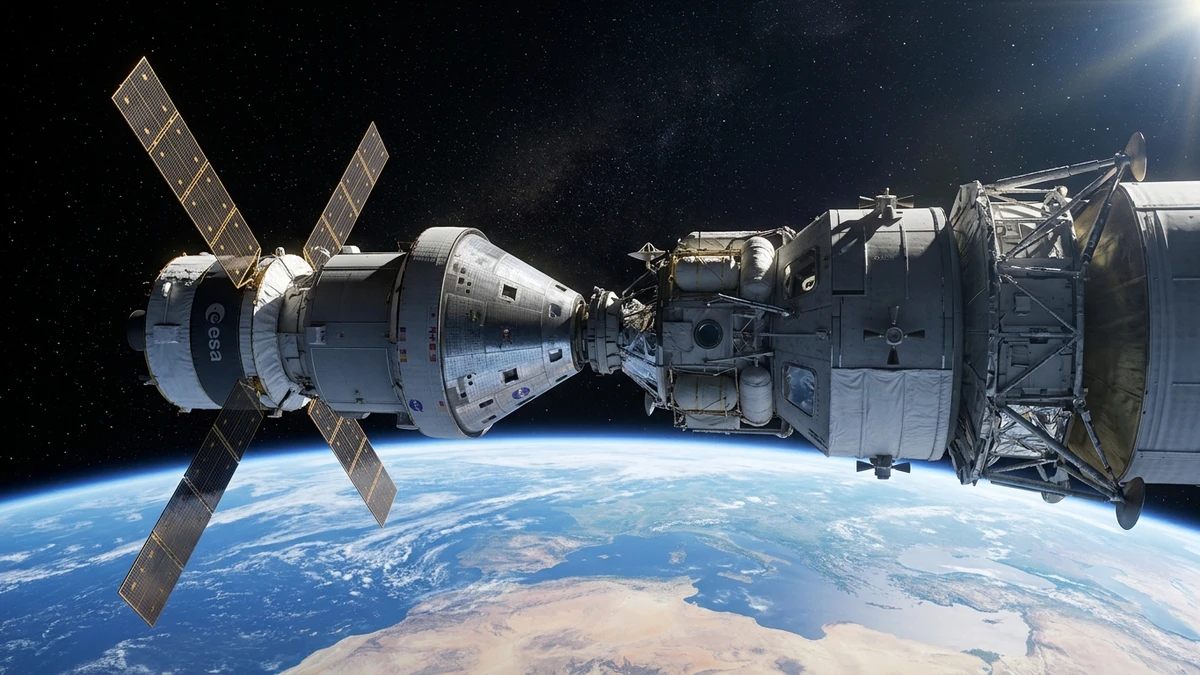
The mission lasts about two weeks, and the choreography is something to behold. Blue Origin goes first, launching a test version of its Blue Moon crew lander that can wait in orbit for weeks. Then SLS launches Orion and the crew from Kennedy Space Center into low Earth orbit. Once they've checked out their spacecraft, the crew chase down the Blue Origin vehicle and dock with it. That moment will be the first flight of Orion's docking system and the first time these two spacecraft have ever touched.
The crew spend about two days docked, testing interfaces, software, propulsion and communications. They will even go inside the lander. Then Orion undocks and waits for spacecraft number three: SpaceX's Starship pathfinder, which launches separately and meets Orion for about a day of further testing.
If that sounds familiar, it should. NASA did the same thing with Apollo 9 in 1969, testing the lunar module in Earth orbit before Apollo 11 attempted the landing. The logic hasn't changed in 57 years. Find the problems close to home, where a malfunction means coming back early rather than being stranded a quarter of a million miles away.
After the Starship tests, Orion brings the crew home to a splashdown in the Pacific.
Artemis III Launch Date and Hardware Progress
So when does Artemis III launch? NASA is targeting 2027, and Tuesday's event doubled as a progress report on the hardware that has to be ready by then.
The Orion crew module and its European service module will be joined together this summer, along with the docking system that flies for the first time. The heat shield, redesigned after the Artemis II investigation, is being assembled block by block, with every block ultrasonically inspected before installation.
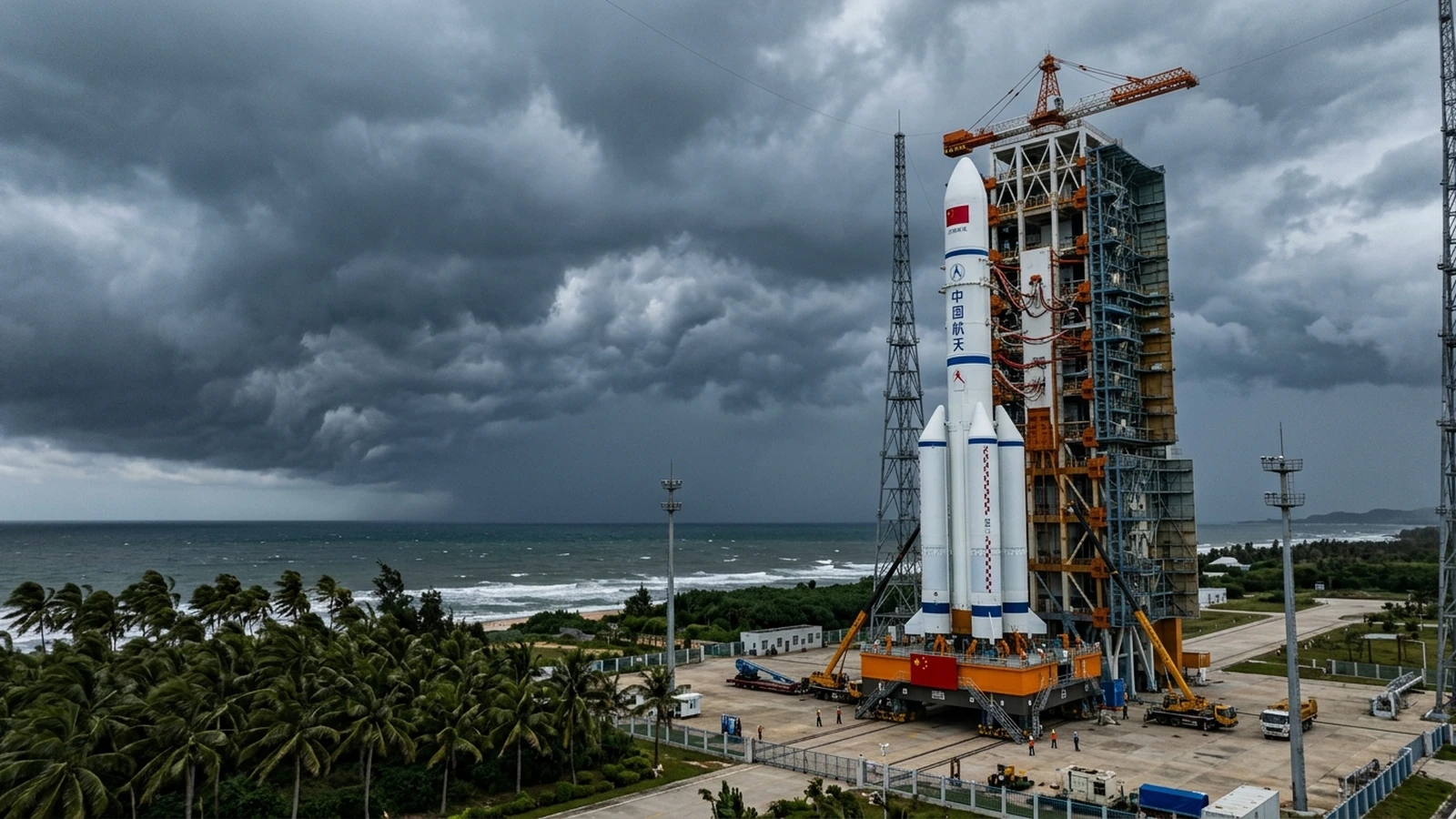
The rocket is moving too. All of the solid rocket booster segments are now at Kennedy Space Center, the four RS-25 engines go onto the core stage this summer, and stacking of the full SLS begins in the months after that.
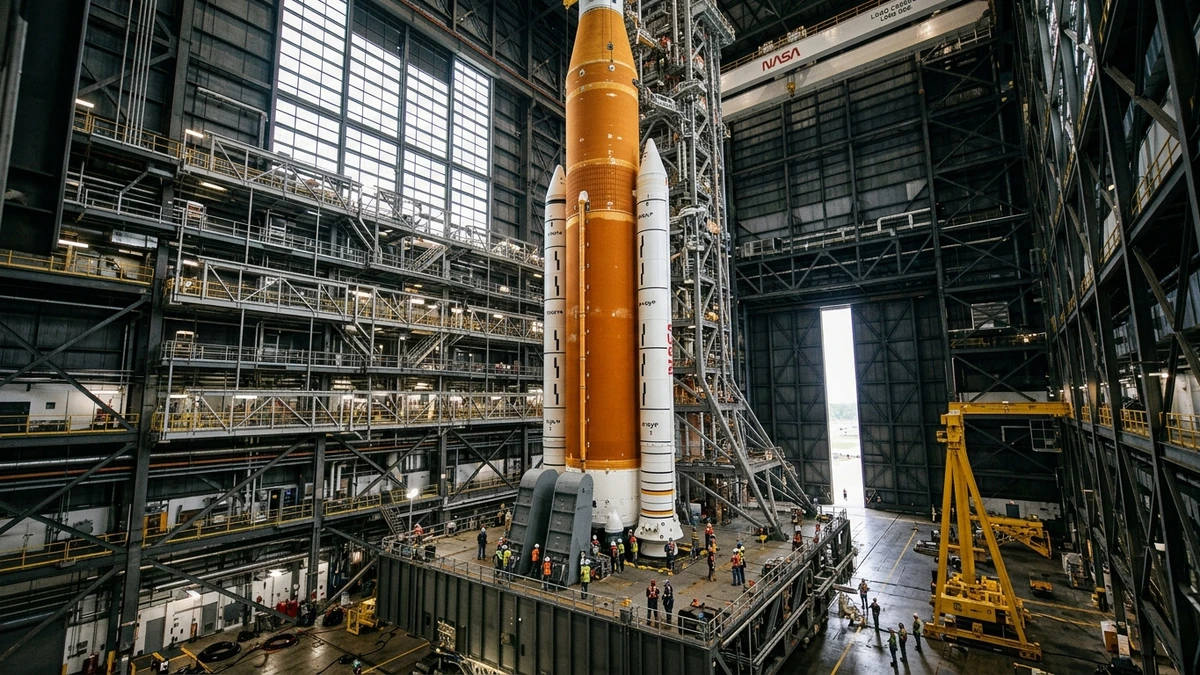
The big unknowns are the landers themselves. Blue Origin needs its New Glenn rocket flying reliably to get Blue Moon into orbit, and SpaceX is still working through Starship's test campaign. If neither pathfinder is ready in 2027 the mission could slip, which is why NASA has built in flexibility to dock with one lander or both, depending on what's actually flying.
Artemis IV and the 2028 Moon Landing
Take a step back and the pace becomes clear. In April, Artemis II proved Orion could carry humans around the Moon and bring them home safely. Two months later, the next crew is named and in training. In 2027 they fly the docking tests. And in 2028, if the schedule holds, Artemis IV puts the first bootprints on the lunar South Pole and ends a 56-year absence from the surface.
For Bresnik, Parmitano, Rubio and Douglas, the next eighteen months will be a blur of simulators, lander mock-ups and procedure development. Their mission won't generate the same headlines as a landing. But the crew of Apollo 9 never walked on the Moon either, and without them nobody else would have.
We've put together a complete guide to the Artemis programme: the full mission timeline, the SLS and Orion hardware, the commercial landers, and the plan for a permanent Moon base.
NASA Artemis Programme: The Complete Guide →
Sources:
- NASA Marches Toward Artemis III Mission in 2027, Names Crew Members · NASA
- What we know about Artemis III: NASA announces crew · The Planetary Society
- NASA reveals Artemis III crew that will take the next big step on its journey back to the moon · CNN
- NASA names astronaut crew for Artemis III mission · NPR
Frequently Asked Questions
Equipment guides
Related topics

Ian ClaytonAmateur astronomer and founder of WatchTheStars.co.uk, dedicated to helping others explore the wonders of our universe. Full profile →