Operação Prato
The Air Force Operation That Concluded the Lights Were 'Intelligently Directed'
In the second half of 1977, people living on the Amazon estuary in the Brazilian state of Pará became afraid to sleep. Night after night, lights came in off the water, over the fishing villages and the island town of Colares, and people said the lights were hurting them, leaving burn marks and puncture wounds on the neck and chest, and in some cases briefly paralysing them. Locals called the thing chupa-chupa: the sucker. Whole communities sat up until dawn around fires, letting off fireworks in the hope of keeping it away.
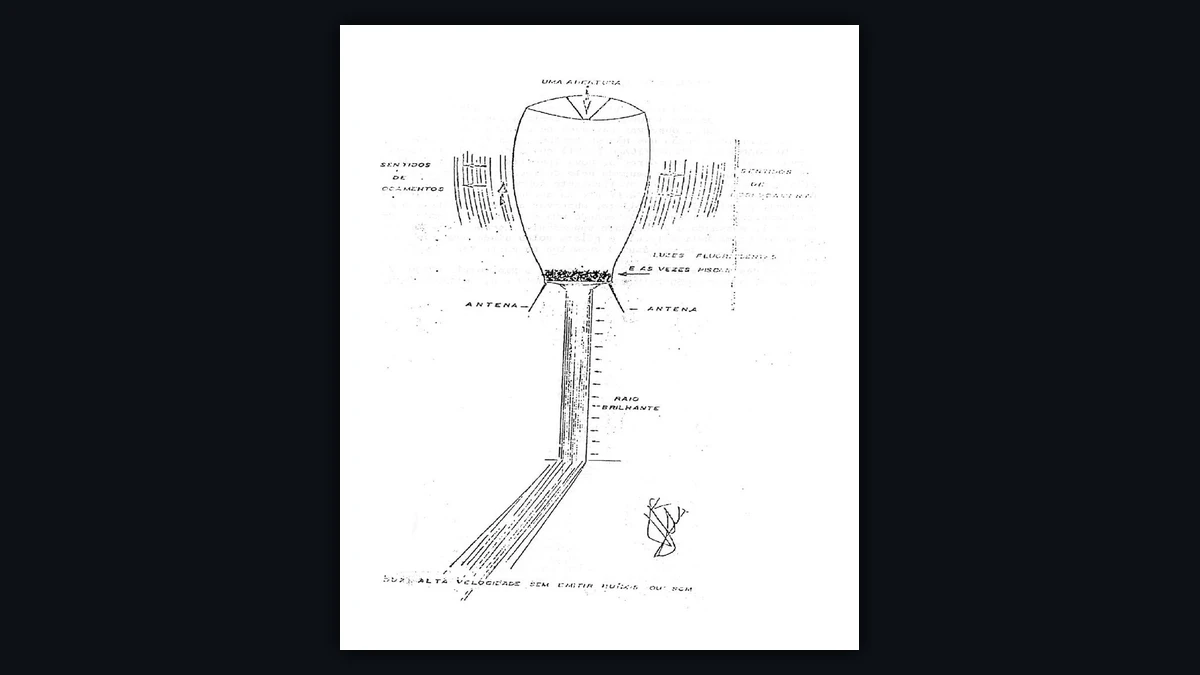
A town council formally petitioned the armed forces for protection. And here's where the story leaves every other UFO flap behind: the military actually came. In October 1977, the Brazilian Air Force's 1st Regional Air Command sent an intelligence team into the area with cameras, a theodolite and a medical officer. They called it Operação Prato: Operation Saucer. The team spent weeks watching the sky, photographing it, measuring it, and interviewing the injured.
Then the field team's chief sat down in Belém and typed his conclusion: the lights were executing complex manoeuvres "indicating that these bodies and lights are: INTELLIGENTLY DIRECTED". The capitals are his. That report, the sighting records, the sketches and the brigadier's letter that carried 130 UFO records to Air Force headquarters are all public now. This page is built from them.
The Chupa-Chupa Panic at Colares
The reports started in the Baixada Maranhense in mid-1977 and spread west along the coast into Pará, settling hardest on Colares, an island fishing town near the mouth of the Amazon. The pattern repeated for months: a light would come in low, off the bay, over the rooftops, and people in its path described being struck by a beam. The marks were consistent enough that locals could describe them by heart: burn-like patches, paired puncture marks, mostly on the neck and upper chest, followed by weakness, numbness and headaches that lasted days.
A young doctor at the Colares health post, Wellaide Cecim Carvalho, treated a stream of these patients during the wave and examined the marks herself, and, on two evenings in October, watched a silent cylindrical object from the waterfront. She appears in the Air Force's own files both as a treating physician and as a witness the team considered credible. The panic itself isn't in dispute, whatever caused it. The military's first mission report describes a town that had stopped functioning: nobody fishing, nobody sleeping, groups of twenty and thirty people out in the streets at night around fires.
The fear even made its way into local government records. In November 1977 the municipal council of Maracanã passed a formal resolution, preserved in the intelligence files, appealing to the Air Force, the Navy and the Army to protect its population from objects that were "causing terror and panic". An elected body was formally requesting military protection from lights in the sky. By then, the Air Force was already there.
We've covered the victims' side of this story (the named witness statements, the doctor who treated them, and the deaths that were never investigated) in a dedicated page: The Chupa-Chupa Attacks: The People the Lights Came For.
Operation Saucer: The Air Force Moves In
Operação Prato was run by the intelligence section (A2) of the 1st Regional Air Command in Belém, with field operations led by Captain Uyrangê Hollanda and a ground team headed by Sergeant João Flávio de Freitas Costa. The first mission ran from 20 October to 11 November 1977; a second followed in late November and early December. The team set up numbered observation points around Colares and the surrounding municipalities, kept hour-by-hour logs, and photographed what it could: the reports record cameras, lenses, exposure settings and film stock for each attempt.
They also brought a doctor. The medical mission, Lieutenant Pedro Ernesto Póvoa and Aspirant Augusto Sérgio Santos de Almeida, interviewed residents in Colares, Vigia and Santo Antônio do Umbituba who described bites and stings to the neck, paralysis of the limbs, and loss of speech after contact with the lights, and examined two people immediately after claimed strikes. Their report records racing pulses, muscle tremors, rapid breathing, crying, heat sensation and stammering. Its conclusion is the sceptical anchor of the whole file: what people attributed to the rays of the OVNI was, in the doctors' view, a normal adrenaline response: fear of the unknown, spread "epidemically" through a close-knit community living in "a climate of collective hysteria".
The field team, who spent their nights outside staring at the sky rather than in the clinic, came to a different view. Their reports treat the victims' accounts as too consistent to dismiss, and they had sightings of their own to weigh.
What the Team Itself Logged
The value of Operação Prato isn't civilian testimony: it's that trained military observers wrote down what they saw, with instruments. On 1 November 1977, from the corner of the Colares cemetery, officers including the unit's lieutenant-colonel watched an object dive, recover and climb out in a 45-second pass; the report calculates it would have needed to reach supersonic speed, yet no sonic boom was heard. On 5 November, after a low pass, the team logged that their hand radio went dead across a bearing arc for twenty minutes and the compass used to align the theodolite stuck pointing south. On other nights they recorded objects making spiral descents and abrupt course reversals, photographed against the dark with whatever film they had.
The reports are strikingly candid about their own limitations. The team chief wrote that the photographic record "does not reflect our certainty": they were issued slow film and inadequate equipment for most of the operation, and high-sensitivity stock only arrived near the end. It reads less like a cover-up than a unit doing extraordinary work on an ordinary budget.
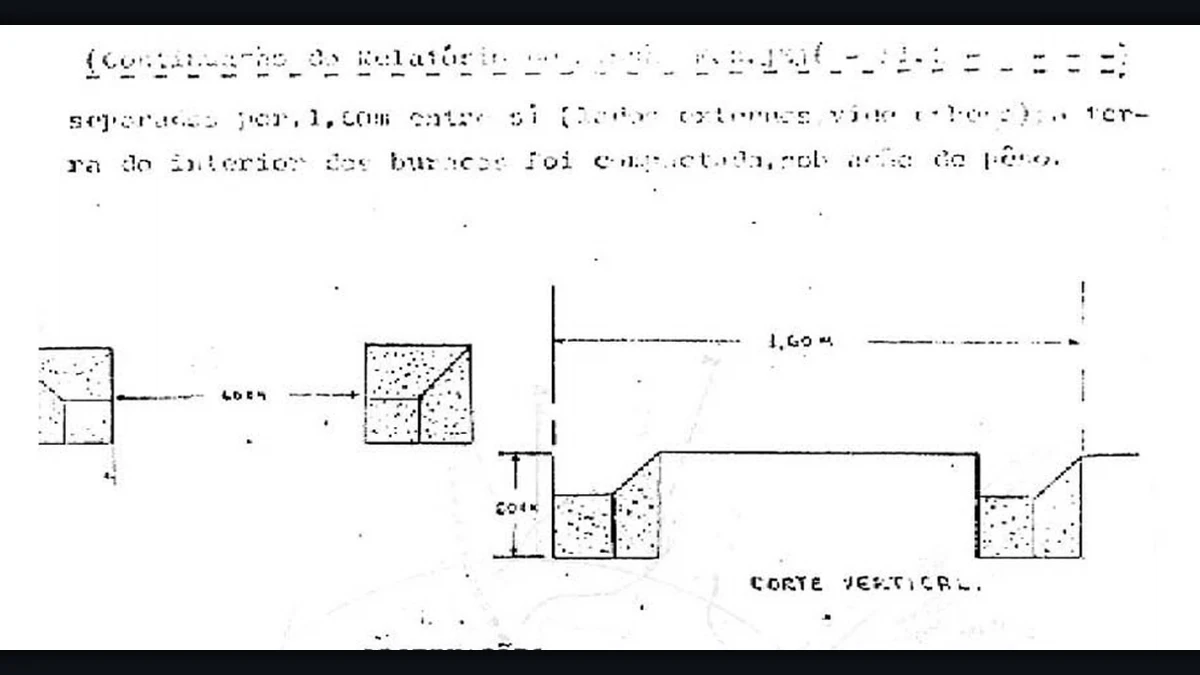
In December came the closest thing to trace evidence. A farmer named Expedito reported marks on his land at Fazenda Jejú, off highway PA-47. Three agents drove out in an unmarked vehicle, confirmed two holes in the ground, measured and photographed them, and drew the cross-section above. Then they stayed for the night vigils, and logged an object descending over the farm's gravel pit at half past midnight, spinning on its vertical axis "like a top", shifting from amber-red to blue-white, before it climbed away without quite touching down.
How Operação Prato Unfolded
The lights arrive
Reports of low, fast lights, and people struck by beams, spread from the Baixada Maranhense along the coast into Pará. The press names it chupa-chupa. The Navy's 4th Naval District starts its own intelligence file.
Panic on the estuary
Colares becomes the epicentre. Villagers sleep in groups around fires. Dr. Wellaide Cecim Carvalho treats a stream of patients with burn-like marks. Maracanã's town council formally petitions all three armed services for protection.
Operação Prato deploys
The I COMAR A2 intelligence team arrives in Santo Antônio do Tauá, then Colares: observation points, cameras, theodolite, medical officers. First mission runs to 11 November.
The cemetery sighting
From the Colares cemetery, the team, including its lieutenant-colonel, logs a 45-second dive-and-climb pass it calculates as supersonic. No sonic boom. The object then appears to follow the unit's own UH-1H helicopter.
Instruments fail
After a low pass, the team's hand radio goes silent across a fixed bearing arc for 20 minutes and the theodolite's alignment compass sticks pointing south. Both effects are written into the report.
"Intelligently directed"
Team chief Sgt. João Flávio de Freitas Costa signs the first mission report in Belém: the objects' complex manoeuvres indicate they are "INTELIGENTEMENTE DIRIGIDOS": intelligently directed.
Fazenda Jejú
Agents measure and photograph two compacted holes in a farmer's field, then watch an object spin "like a top" over the gravel pit at 00:30. The operation is wound down later that month; sighting records keep accumulating into late 1978.
The brigadier's letter
Brigadier Protásio Lopes de Oliveira, commander of I COMAR, forwards a folder of 130 OVNI observation records to the Chief of the Air Force General Staff. A routing clerk files it under "Arquivo da 'Discoteca'": the disco archive.
The leaks
Mission report pages and Air Force photographs surface in Brazil's UFO press. In 1991 the Air Force opens a formal investigation into the leak (ARX 322), and in doing so preserves verbatim copies of the leaked material in its own files.
Hollanda speaks
Retired colonel Uyrangê Hollanda gives Revista UFO a long interview confirming the operation and his own close-range sightings. Roughly two months later he is found dead at home; the death is ruled suicide.
The files go public
After a researchers' campaign, the Air Force transfers its UFO records, Operação Prato included, to Brazil's National Archives, where they remain freely accessible today.
"Intelligently Directed"
The most quoted line in Brazilian UFO history sits at the end of the first mission report's commentary section, typed in Belém in November 1977 over the signature of the A2 team chief:
"…movimentando-se em altitudes e direções variadas, efetuando manobras complexas, indicando que, estes corpos e luzes, são: INTELIGENTEMENTE DIRIGIDOS. (…moving at varied altitudes and directions, executing complex manoeuvres, indicating that these bodies and lights are: INTELLIGENTLY DIRECTED.)"· Sgt. João Flávio de Freitas Costa, Chief of the A2 Field Team: First Mission Report, Belém, November 1977
Two things keep this honest. First, it was the field team's assessment, not an Air Force institutional position. The same operation produced the medical report attributing the injuries to fear. Second, the certainty was explicitly personal: "our certainty is based on our personal observations and on the reliable testimony of people whom, by their actions and behaviour, we can trust." The team knew its photographs wouldn't carry the argument, and said so. What they put their names to was what they had watched, night after night, with their own eyes.
The Brigadier's Letter and the "Discoteca"
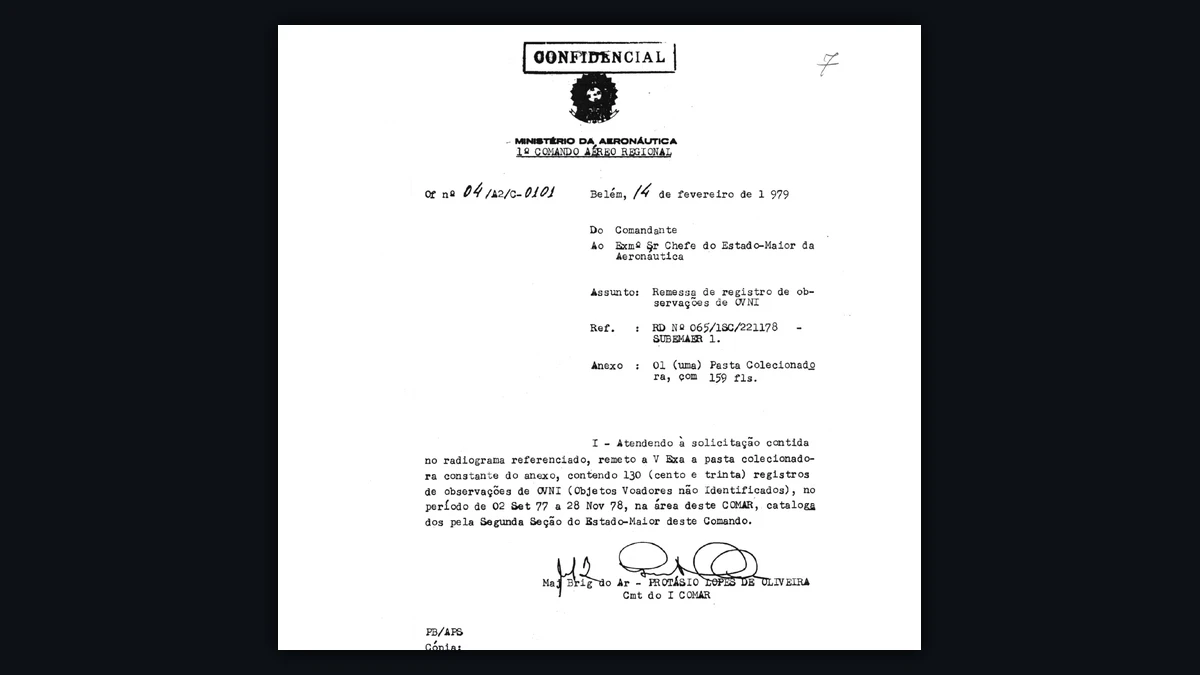
On 14 February 1979, Major-Brigadier Protásio Lopes de Oliveira, the commander of the entire 1st Regional Air Command, signed a confidential letter to the Chief of the Air Force General Staff in Brasília. Attached to it was a single collection folder containing "130 (one hundred and thirty) records of observations of OVNI (Unidentified Flying Objects)" covering 2 September 1977 to 28 November 1978, catalogued by his command's intelligence section. Sighting records had kept accumulating for a full year after the operation officially ended: including two 1978 reports from professional pilots, one of whom described a double-oval object holding position a hundred metres in front of his Cessna after a near-collision pass.
The letter's routing slip carries a small detail that says a lot about institutional attitudes. A staff officer at headquarters, filing the folder a week later, wrote its destination by hand: Arquivo da "Discoteca", the "disco" archive. A brigadier had sent Brazil's most extraordinary military file up the chain, and someone filed it with a joke. It stayed buried for thirty years.
The Leaks, and Colonel Uyrangê Hollanda
From the mid-1980s, pages of the mission reports and Air Force photographs began arriving anonymously at Brazil's UFO press, culminating in the magazine UFO Documento publishing them in 1991 under the headline "Official exclusive revelation: Air Force investigates flying saucers in Amazonia". The Air Force responded the way bureaucracies do: it opened a leak investigation. That file, ARX 322, also now public, reproduced the leaked material verbatim as evidence, page by page, photo by photo. In hunting its leaker, the Air Force formally confirmed that the leaked Operação Prato documents were real.
The final confirmation came from the man who ran it. In 1997, Uyrangê Hollanda (the captain who led the field operations, by then a retired colonel) gave a long on-the-record interview to Revista UFO. He confirmed the operation, described his own sightings at close range, including a small disc over Baía do Sol, and said he had come to believe the objects were not from here. About two months later he was found dead at home, and the death was ruled suicide. It has shadowed the story ever since, though no evidence of anything other than suicide has ever surfaced. What he left behind is the interview: the operation's commander, on tape, confirming everything the documents say.
The Evidence
Confirmed
The operation happened and the files are publicMission reports, 130 official sighting records, sketches, the brigadier's letter and the leak investigation are all held by Brazil's National Archives. The leaked and official documents cross-match.
Confirmed
The field team concluded "intelligently directed"Signed, in writing, November 1977, verified against the document scan. The team chief based it on the unit's own observations, not civilian rumour.
Confirmed
Instrument effects and supersonic passes were loggedRadio dead across a bearing arc for 20 minutes, a compass stuck on south, dive-and-climb passes calculated as supersonic with no sonic boom, all in the official records with dates, times and observers.
Documented, contested
The chupa-chupa injuriesVictims were examined by military doctors and a civilian physician; marks and symptoms were recorded. The Air Force medical report attributed the symptoms to adrenaline and collective fear. The field team called the accounts too consistent to dismiss. Both views are in the file.
Suggestive
The Fazenda Jejú ground marksTwo measured, photographed, compacted holes, and a spinning object logged over the same farm that night. The report never claims the object made the holes, and neither should we.
Unresolved
What the objects wereNo wreckage, no clear photographs in the public file, no official identification, and a year of continuing records after the operation ended. The Air Force never published a conclusion of its own.
The Bottom Line
Most UFO cases ask you to trust witnesses. Operação Prato asks you to read paperwork. A national air force deployed an intelligence team for months in response to civilian injuries; that team logged supersonic objects, instrument failures and ground traces; its chief signed his name under "intelligently directed"; his brigadier forwarded 130 records to headquarters; the institution filed it under a joke about disco and said nothing for three decades. Every link in that chain is a document you can download.
None of it proves what the lights were. The injuries have a plausible conventional reading, the Air Force's own doctor gave one, and the photographs that might have settled things were shot on the wrong film by an under-equipped unit. But as an official record of a military force taking the phenomenon seriously, watching it with trained observers, and admitting in writing that it could not explain what it saw, there is nothing else like it anywhere in the world.
See more than the Air Force team did
Kit we've tested and reviewed in full
The 1977 investigators worked mostly from witness accounts and a handful of underexposed photographs. Binoculars give you a much better first look if the lights over the Amazon ever return.
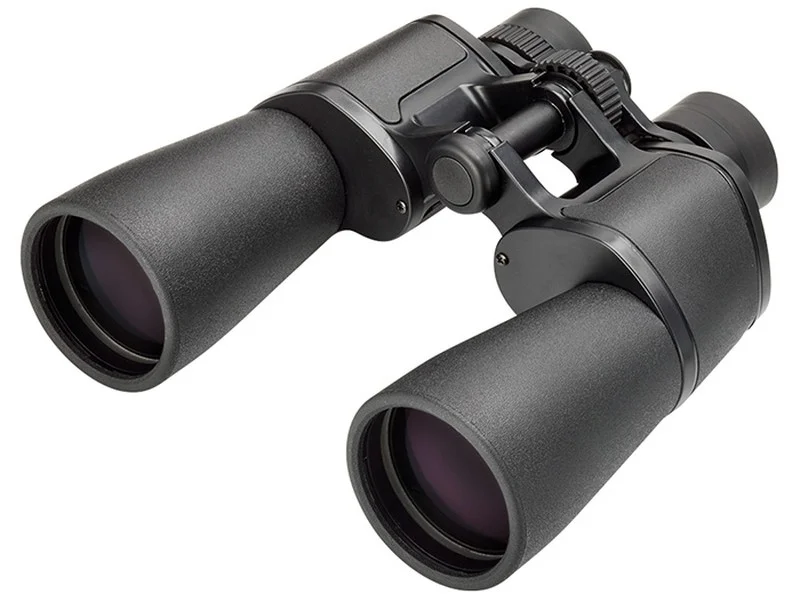
Bright and quick to aim at night: enough to see shape and colour on something low and fast.
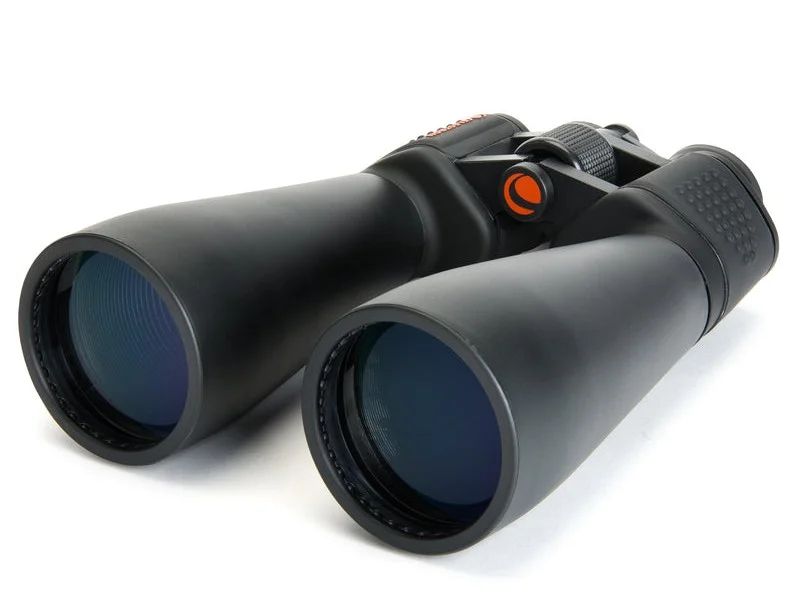
Bigger objectives pull in more light after dark: a real upgrade on what the original 1977 photographs managed.
Affiliate links: you pay the same price, we earn a small commission that helps keep WatchTheStars free.
Download the Original Documents
We host key Operação Prato records here so you can read them for yourself. All are scans of the original typewritten documents, in Portuguese. The full collection is at Brazil's National Archives and the researcher archive operacaoprato.com.
First Mission Report
40 pages · 4 MB PDF
The leaked full report of the first mission, 20 Oct–11 Nov 1977: operational logs, witness statements, and the commentary ending in "INTELIGENTEMENTE DIRIGIDOS".
Download PDFThe Brigadier's Letter (1979)
2 pages · 1 MB PDF
Ofício 04/A2/C-0101: the I COMAR commander forwards 130 OVNI records to Air Force HQ, complete with the "Discoteca" filing annotation.
Download PDFThe Medical Mission Report
2 pages · 3 MB PDF
The Air Force doctors' examination of the chupa-chupa victims, and their conclusion: normal adrenaline responses, driven by fear of the unknown.
Download PDFThe Fazenda Jejú Agent Report
3 pages · 1 MB PDF
The December 1977 ground-marks investigation: measured holes, the cross-section diagram, the hand-drawn map, and the spinning object logged at 00:30.
Download PDFOfficial Archives
The OVNI Fund: Brazilian National Archives
Arquivo Nacional · SIAN · BR DFANBSB ARX
The official releases: the 130 sighting records (ARX 184), the brigadier's letter (ARX 197) and the leak investigation (ARX 322). Searchable after free registration.
Search the Archive ↗operacaoprato.com: Researcher Archive
Independent Brazilian research project
The most complete organised collection: official and leaked documents, period newspapers, witness interviews and the document history this page draws on.
Browse the Archive ↗Related Cases
Operação Prato is one of two great Brazilian cases with public military files: the other is Varginha, twenty years later. For trace evidence investigated by military personnel, compare Rendlesham Forest.
More UAP cases
- The Chupa-Chupa AttacksSeptember–December 1977 · Colares, Vigia & the Pará coast · Status: Documented, Unexplained
- The 1978 Amazon Pilot Encounters6 & 28 November 1978 · Amazon airspace, Brazil · Status: In the Official Records
- The 1976 Tehran UFO Incident: F-4 Jets, Weapons Failure and the Declassified DIA Report
- The Rendlesham Forest IncidentDecember 1980 · RAF Woodbridge, Suffolk, England
- Apollo 17's Unknown CompanionTranslunar Coast · 9 December 1972 · Mission Elapsed Time 02:18:47
- The Ariel School Incident16 September 1994 · Ariel School, Ruwa, Zimbabwe · Status: Unexplained · Disputed