Key takeaways
- The solar eclipse of Wednesday 12 August 2026 was the deepest seen from the UK since March 2015, and the deepest in the far south-west since the total eclipse of 1999: about 91% of the Sun covered from London, rising to 96% in Cornwall
- It was an evening event, starting just after 6.10pm BST, peaking between 7.05pm and 7.15pm and ending by about 8.10pm, with the Sun low in the west
- Most of England had clear or partly clear skies at maximum; Scotland lost the peak to cloud. Greenland, Iceland and northern Spain saw totality
- The next solar eclipse visible from the UK is on 2 August 2027, but it's shallow. The next total solar eclipse from the UK isn't until 23 September 2090
- Never look at the Sun without ISO 12312-2 eclipse glasses. Sunglasses are not safe, and binoculars or telescopes must never be pointed at the Sun without a proper solar filter
Jump to section 8 sections
- Solar Eclipse 2026: What Happened on 12 August
- When Is the Next Solar Eclipse Visible From the UK?
- Solar Eclipse Times UK: 12 August 2026 City by City
- How Much of the Sun Was Covered Where You Were
- Total Solar Eclipse Path: Spain, Iceland and Greenland
- How to Watch a Solar Eclipse Safely
- What the Eclipse Looked and Felt Like From the UK
- Perseid Meteor Shower: The Same Night's Second Show
The solar eclipse of Wednesday 12 August 2026 was the deepest seen from the UK since March 2015, and in the far south-west the deepest since the famous total eclipse of August 1999. About 91% of the Sun was covered from London, rising to roughly 96% from Cornwall. For two hours on a warm August evening the Moon slid across the Sun and turned it into a thin crescent over the whole country.
This page was our guide in the run-up. We've kept all the times and coverage figures, because plenty of people still want them, and updated it with what actually happened and, the question everyone asked on the way home, when the next one is. For the photos and observing reports from around the UK, read our round-up of what the UK saw on 12 August.
Solar Eclipse 2026: What Happened on 12 August
The eclipse ran from about 6.10pm to just after 8pm BST across the UK, peaking between 7.05pm and 7.15pm depending on where you stood. At maximum the Moon hid roughly 91% of the Sun's area from London, Manchester and Glasgow, 93% from Cardiff and Belfast, and up to 96% from Land's End and the Isles of Scilly.
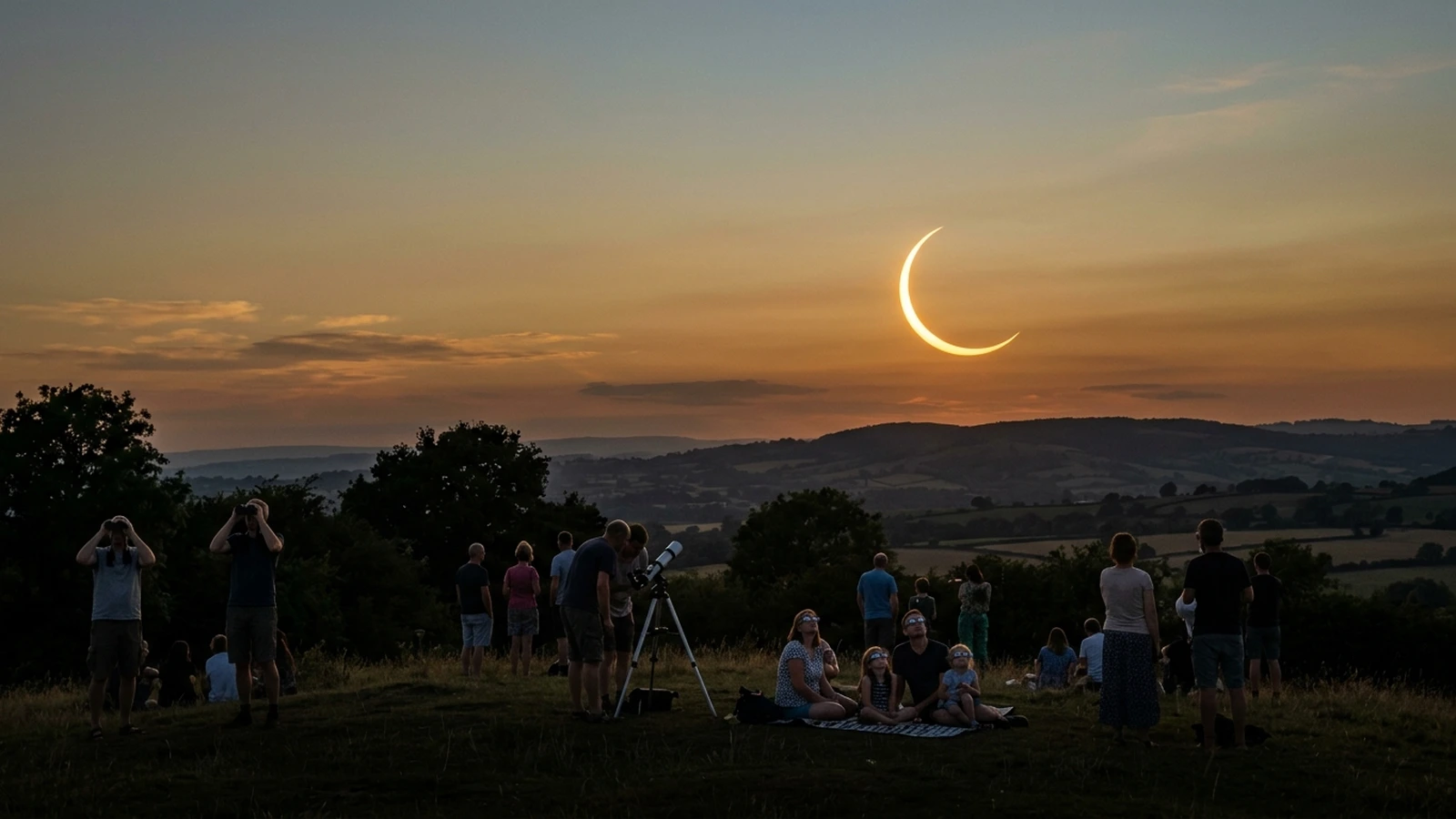
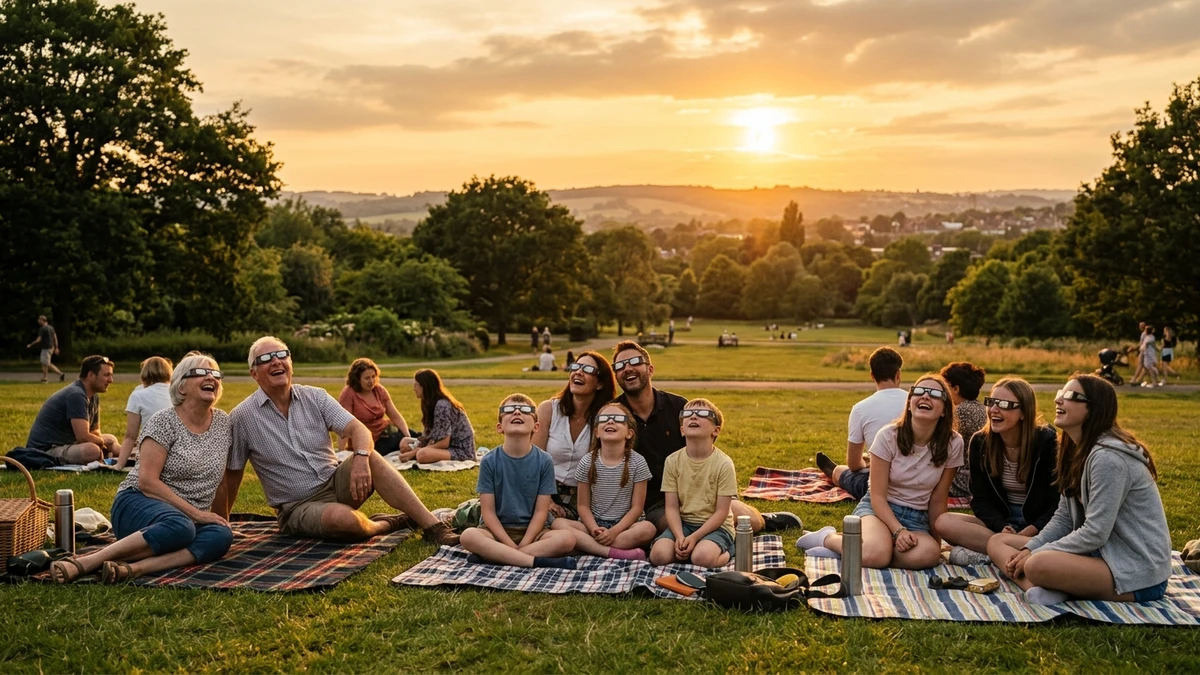
The weather was better than anyone dared hope. Most of England had clear or partly clear skies at the peak, and hilltops, beaches and village greens filled up with people in paper glasses. Scotland drew the short straw: observers around Edinburgh caught the early phases through gaps, then watched maximum vanish behind cloud that cleared about ten minutes too late.
Along the path of totality, Reykjavík saw its first total eclipse from the city since 1433, northern Spain had its first widely visible totality since 1905, and NASA flew a high-altitude aircraft above the cloud to study the Sun's corona. Then, a few hours later, the same new Moon that caused the eclipse gave the Perseid meteor shower a perfectly dark peak night. It was, as we said at the time, the best sky date of the decade.
When Is the Next Solar Eclipse Visible From the UK?
The next solar eclipse visible from the UK is on the morning of Monday 2 August 2027. It's a total eclipse across southern Spain, Gibraltar and north Africa, but from Britain it's shallow: only a modest bite from the Sun's edge, with the Sun well up in the morning sky. Worth a look through the glasses, but not an event to plan a day around. If you fancy chasing totality, the Spanish path is a short flight away: our guide to the 2027 solar eclipse from the UK has the full timings and travel options. For every other date worth diarising between now and then, our astronomy events calendar covers 2026 and 2027 month by month.
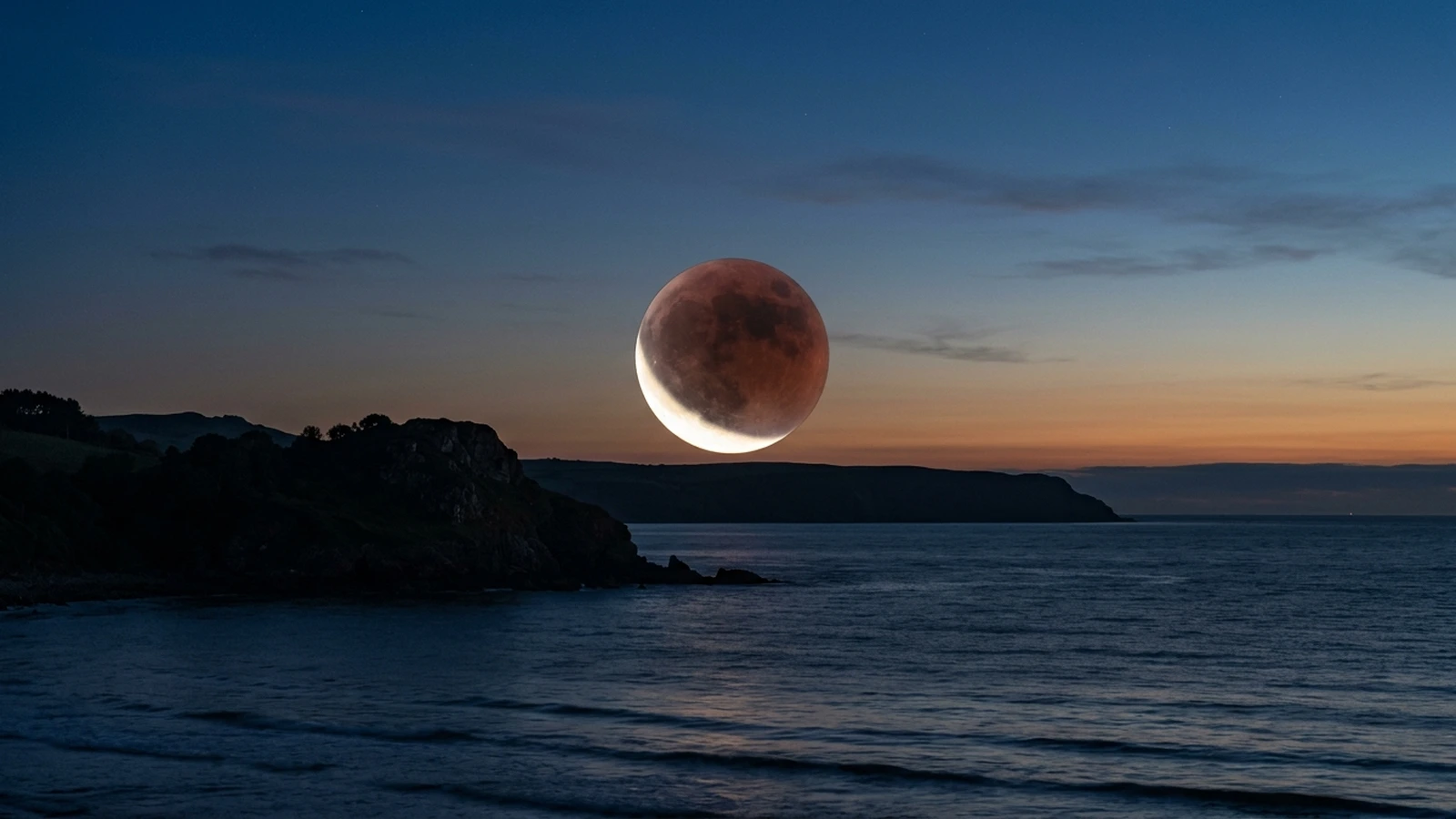
After that the pickings stay thin for a long time. There's a near miss on 3 September 2081, when parts of the UK see 99% of the Sun covered, but the next proper total solar eclipse visible from the UK isn't until 23 September 2090. For anyone reading this, 12 August 2026 was realistically the deepest eclipse we'll see from home for decades. If you missed it, there's a rather good lunar eclipse to make up for it: see our partial lunar eclipse guide.
Eclipse glasses for 2 August 2027
Kit we've reviewed in full
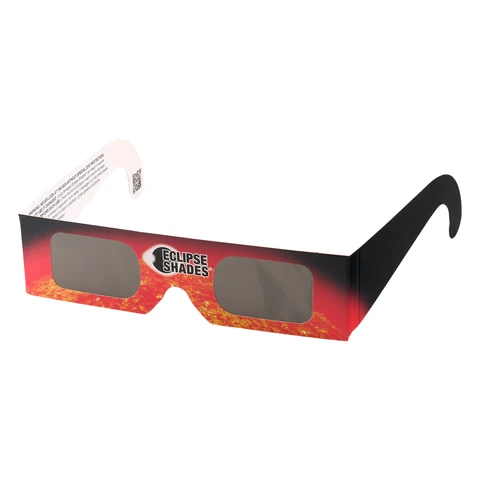
Certified ISO 12312-2 glasses are the only safe way to look at the Sun directly, and they cost less than a sandwich. They sold out nationwide in the week before the 2015, 2025 and 2026 eclipses, so if you want a pair for the 2027 partial eclipse, buy them well ahead and put them somewhere you'll find them. If you're ever caught without, don't improvise a filter: pinhole projection is free, completely safe and lovely to watch.
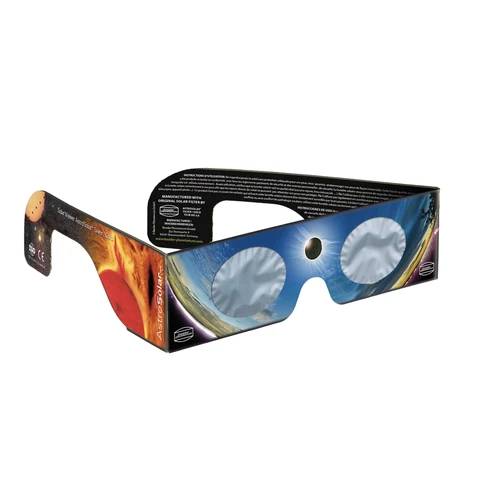
Baader Solar Eclipse Observing Glasses
Certified to ISO 12312-2 and about the price of a coffee. Check for scratches or pinholes before use. Any damage and they go in the bin.
Astro Essentials Safe Solar Eclipse Handheld Viewer
The same certified film in a handheld paddle rather than glasses. Easy to pass round a group, and nothing to slip off your face.
Every safe way to watch the Sun
Glasses, telescope filters and projection methods, with an eclipse-day checklist.
Browse all →Affiliate links: you pay the same price, we earn a small commission that helps keep WatchTheStars free.
Solar Eclipse Times UK: 12 August 2026 City by City
The eclipse was an evening event, which made it unusually easy to catch: no alarm clock, no day off work. From London:
- 6.17pm BST: first contact. The Moon took its first bite out of the Sun's lower right edge.
- 7.13pm BST: maximum eclipse. About 91% of the Sun covered, with only a thin crescent left.
- 8.06pm BST: the Moon cleared the Sun and the show ended.
Times elsewhere in the UK differed by only a few minutes. Here are the figures for the main cities, with coverage given as obscuration, the percentage of the Sun's area hidden by the Moon.
| City | Started | Maximum | Ended | Sun covered |
|---|---|---|---|---|
| London | 6.17pm | 7.13pm | 8.06pm | 91.4% |
| Birmingham | 6.15pm | 7.11pm | 8.05pm | 91.8% |
| Manchester | 6.13pm | 7.10pm | 8.03pm | 91.4% |
| Newcastle | 6.10pm | 7.07pm | 8.01pm | 90.1% |
| Edinburgh | 6.08pm | 7.05pm | 8.00pm | 90.7% |
| Glasgow | 6.08pm | 7.06pm | 8.00pm | 91.4% |
| Belfast | 6.10pm | 7.08pm | 8.03pm | 93.1% |
| Cardiff | 6.16pm | 7.13pm | 8.07pm | 93.2% |
| Truro | 6.18pm | 7.15pm | 8.09pm | 95.0% |
| Dublin | 6.12pm | 7.10pm | 8.05pm | 94.0% |
All times BST. The catch was altitude: by maximum the Sun sat low in the western sky, only about 10° up from London and nearer 14° from Edinburgh, so a clear view towards the west made all the difference. Contrary to a lot of the coverage beforehand, it was not a sunset eclipse. The Moon finished crossing the Sun 20 to 60 minutes before sunset everywhere in Britain and Ireland. In London the eclipse ended at 8.06pm and the Sun set at 8.28pm.
How Much of the Sun Was Covered Where You Were
Coverage increased as you headed south and west. The deepest views in the UK were right at the south-western tip:
- Bishop Rock, Isles of Scilly: 96.5%, the most anywhere in the UK.
- Land's End: 95.8%. Lizard Point: 95.6%.
- Cornwall and the far south-west generally: 95% and up, fittingly for the county that saw totality in 1999.
- Cardiff and south Wales: about 93%. Belfast: about 93%.
- London and the south-east: about 91%.
- Manchester, Glasgow and Edinburgh: about 91%.
Ireland did slightly better still. Dublin saw 94%, and the south-western tip of Ireland reached roughly 97.5%. For comparison, the much-hyped March 2025 partial eclipse covered under half the Sun from the UK. This was a different class of event: at 90%-plus the light goes strange, the temperature dips and birds start heading to roost an hour early.
A quick note on the numbers, since you'll see two figures quoted. Magnitude is the fraction of the Sun's diameter covered; obscuration is the fraction of its area. Obscuration is always the smaller number, and it's the one that matches what you actually see, so it's what we use throughout. From London the magnitude was 0.925 but the obscuration was 91.4%.
Total Solar Eclipse Path: Spain, Iceland and Greenland
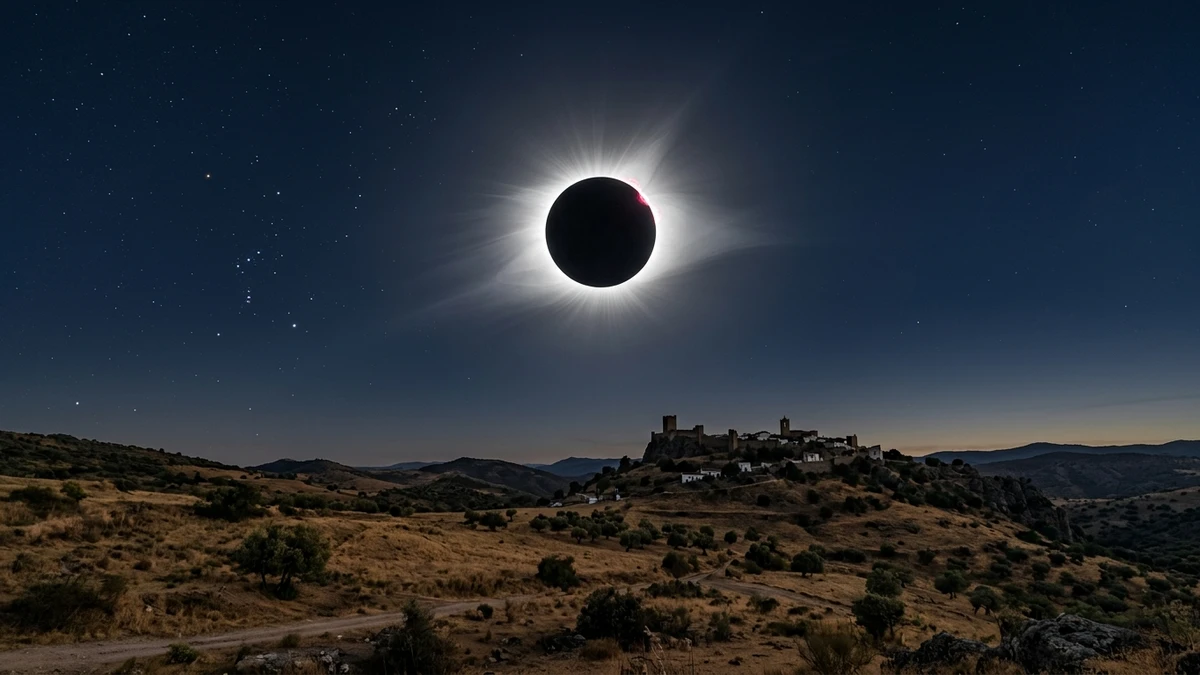
The Moon's full shadow, where day turns to night, missed the UK and swept instead across Greenland, western Iceland and northern Spain, clipping the north-east corner of Portugal. It was the first widely visible total solar eclipse from mainland Spain since 1905, and cities including Zaragoza sat inside the path, with Madrid right on its edge. (You'll see "since 1905" quoted everywhere. It's very nearly right. A brief hybrid eclipse in 1912 gave a few seconds of totality across Galicia, León and Asturias, but almost nobody saw it.)
Thousands of Britons made the trip, and accommodation along the path had been booked up for over a year. ESA's eclipse pages still have the maps and timings for the full track, and they're a good primer for the 2027 path through southern Spain.
How to Watch a Solar Eclipse Safely
This section applies to every eclipse, including 2027's, so here it is plainly. Even with 96% of the Sun covered, the remaining sliver is intensely bright, bright enough to permanently damage your retina, which has no pain receptors to warn you. The rules:
- Use eclipse glasses certified to ISO 12312-2. Check the marking, check for scratches or pinholes, and buy from a reputable astronomy supplier rather than an unknown marketplace seller. Buy early: they sold out everywhere before the 2015, 2025 and 2026 eclipses.
- Ordinary sunglasses are never safe. Not one pair, not three pairs stacked. They let through thousands of times too much light.
- Never look through binoculars, a telescope or a camera viewfinder without a certified solar filter fitted over the front. Magnified, unfiltered sunlight causes instant, permanent eye damage. Eclipse glasses behind an eyepiece are not protection; the concentrated light burns straight through them.
- No glasses? Project instead. Make a pinhole in a piece of card and let the Sun shine through it onto a second card: a perfect little crescent appears. A kitchen colander projects dozens at once, and a leafy tree scatters crescent suns across the ground.
For the full rundown, including telescope solar filters, projection step-by-steps, which smart telescopes come eclipse-ready and an eclipse-day checklist, read our complete guide to observing the Sun safely.
Gear for the next eclipse night (and every dark night in between)
Kit we've reviewed in full
One rule first: never point binoculars or a telescope anywhere near the Sun without a certified solar filter over the front, not even during an eclipse. Once the Sun is down, though, this is the kit that earns its place on any dark autumn night. See our binocular reviews for more.
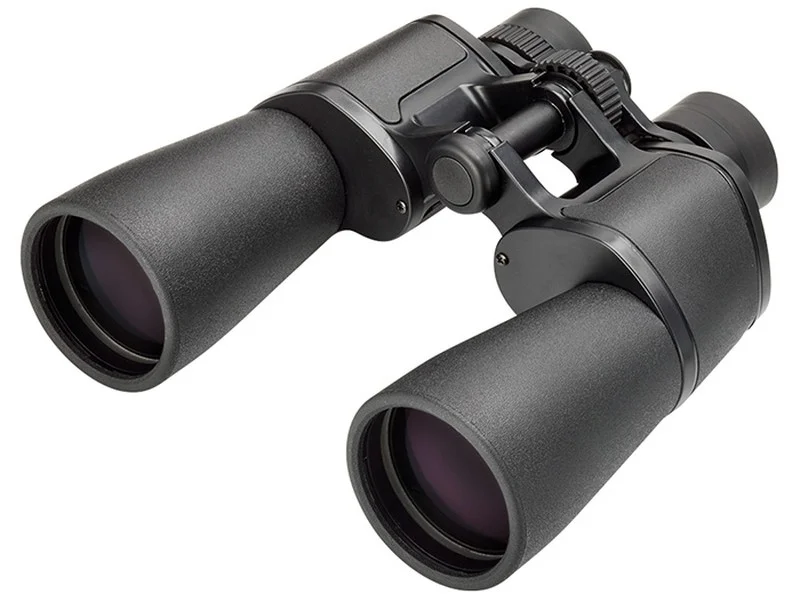
Perfect for sweeping the sky once the Sun is safely down: meteor trains, satellites and the Milky Way from a dark site. Light enough to hand-hold all evening.
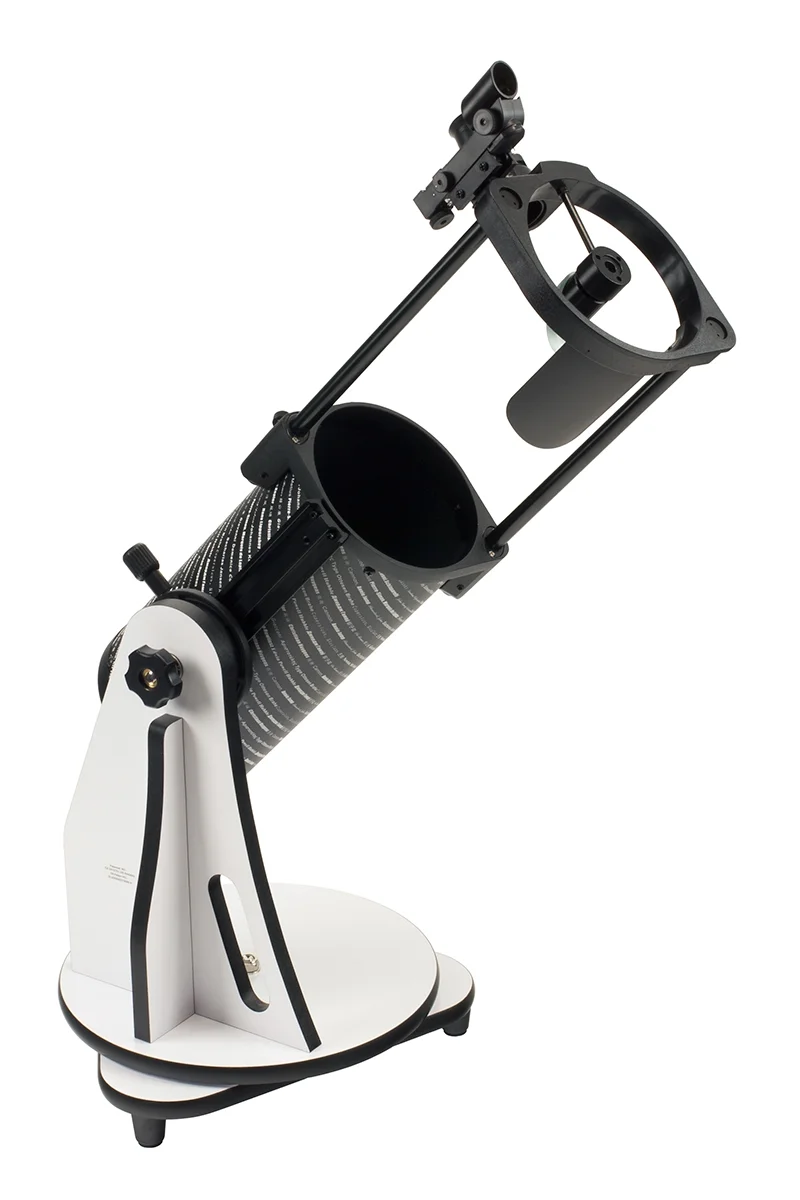
The best-value first telescope we've tested. Moonless nights around a new Moon are superb for deep-sky targets, and this little Dobsonian makes the most of them.
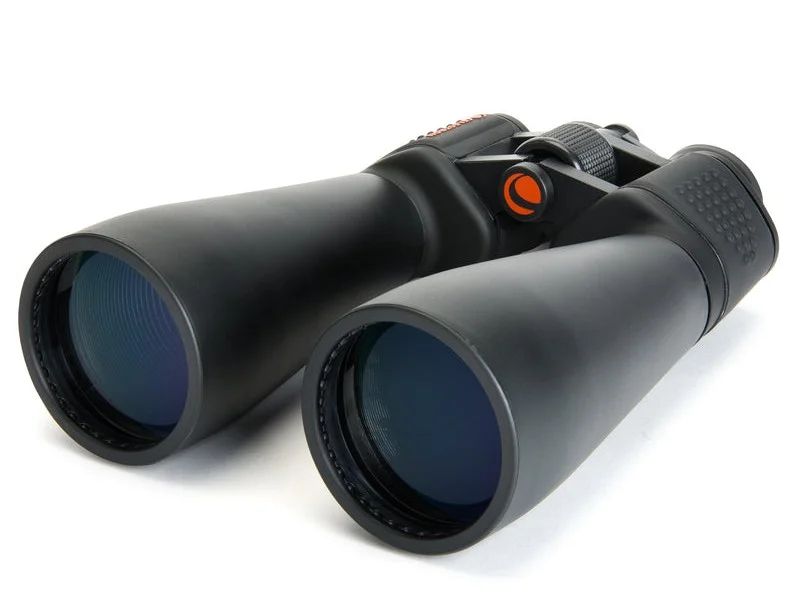
Big 70mm lenses drink in dark-sky targets like star clusters and the Andromeda Galaxy. Use a tripod and settle in.
Affiliate links: you pay the same price, we earn a small commission that helps keep WatchTheStars free.
What the Eclipse Looked and Felt Like From the UK
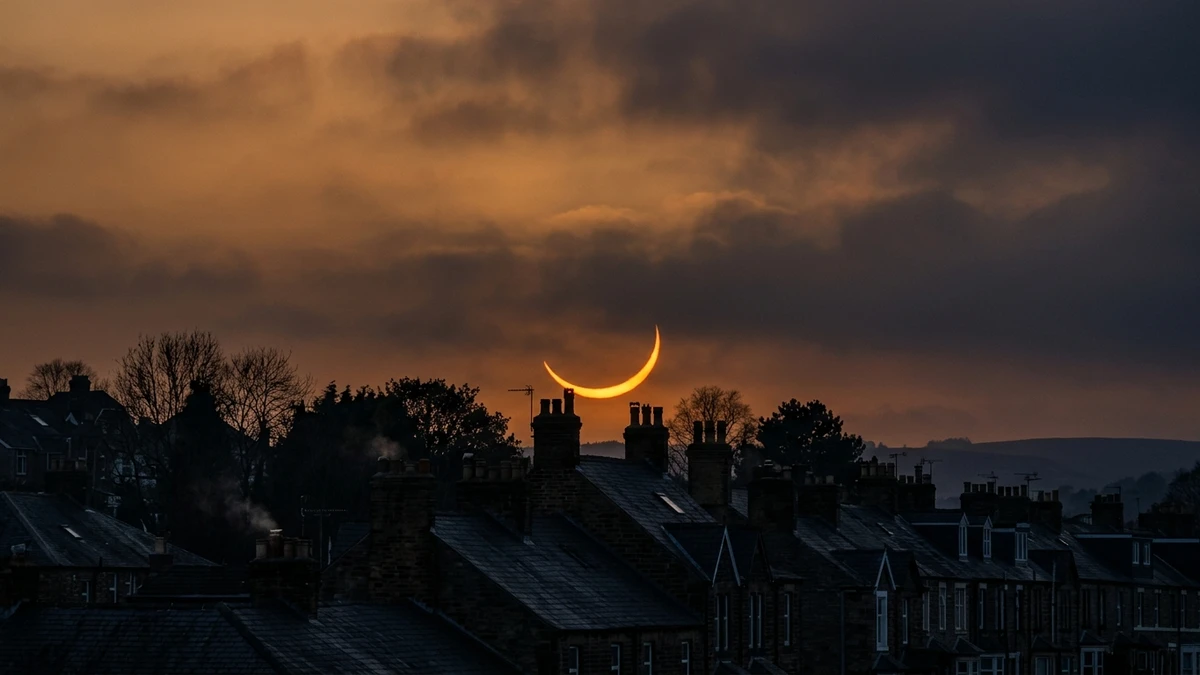
For the first half hour the change was subtle. Through the glasses the Sun looked like a biscuit with a growing bite out of it, while the world carried on as normal. The interesting part started past about 70% coverage, around 6.50pm. Daylight took on a flat, silvery quality, as if someone had turned down a dimmer switch that shouldn't exist. Shadows sharpened. The temperature eased back, birds got confused about bedtime, and around maximum the light became something people are still struggling to describe.
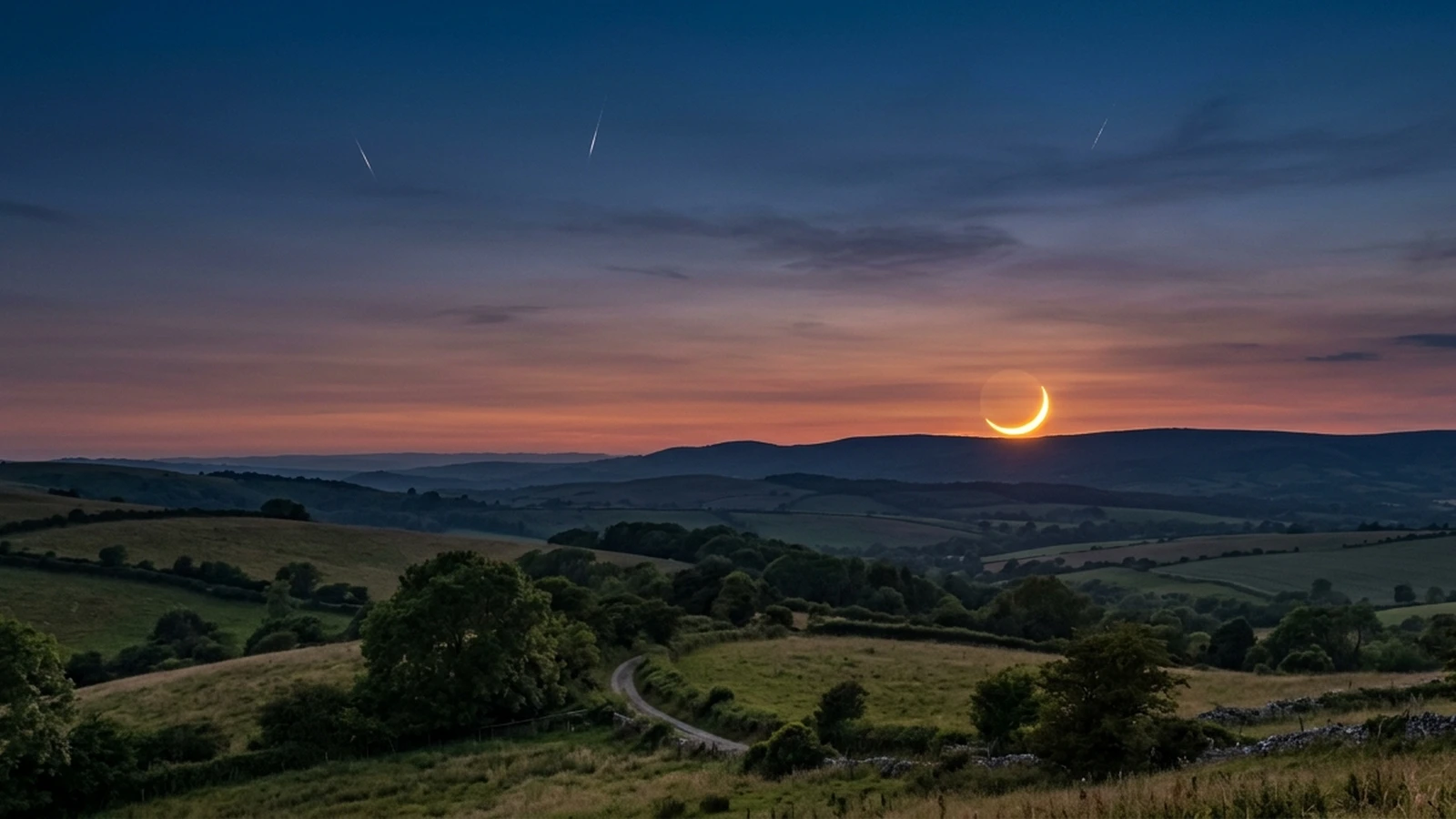
Because the Sun was low in the west at maximum, the eclipsed crescent hung over the horizon rather than high overhead, which made for wonderful photographs of the dimmed landscape. Photographing the Sun itself needs a proper solar filter; our safe solar observing guide covers the options. Then the Moon slid on, the light warmed back up, and the Sun set not long after.
Perseid Meteor Shower: The Same Night's Second Show
The bit that made 12 August 2026 the best sky date of the decade: the Perseid meteor shower, the year's most reliable, peaked that same night, and the new Moon that caused the eclipse guaranteed a properly dark sky. Under good conditions the Perseids produce up to 100 meteors an hour at peak, and plenty of people who'd gone out for the eclipse stayed for the fireballs.
If that's given you a taste for meteor watching, the Geminids on 13–14 December are the strongest shower of the year, and our meteor shower calendar has every UK peak date for 2026 and 2027. The full moon calendar explains the new Moon that made all this possible, with more on the mechanics in our moon phases guide. Want to know right now rather than wait for the next big date? Check is it a full moon tonight or see what you can see in the sky tonight.
Sources:
- Join ESA for a total solar eclipse on 12 August 2026 · European Space Agency
- 12 August 2026 partial solar eclipse · Royal Observatory Greenwich
- August 12, 2026 solar eclipse UK guide · BBC Sky at Night Magazine
- Total solar eclipse August 2026: path map and timings · BBC Sky at Night Magazine
- Solar Eclipse of August 12, 2026 from the United Kingdom · TheSkyLive
Frequently Asked Questions
Equipment guides
Related topics
Ian ClaytonAmateur astronomer and founder of WatchTheStars.co.uk, dedicated to helping others explore the wonders of our universe. Full profile →