The Senator Russell Sighting
A Flying Disc Over Soviet Territory, Witnessed by a US Senator
On an October evening in 1955, the chairman of the US Senate Armed Services Committee looked out of a train window deep inside the Soviet Union and watched a disc-shaped object rise vertically into the sky. Two other Americans saw it with him. The CIA debriefed them, stamped the file Top Secret, and concluded, carefully, that it was probably not what it looked like. The complete documents were released on 10 July 2026.
| Date | 4 October 1955, shortly after 7pm |
| Location | Soviet Transcaucasus, on the Baku–Tbilisi railway, present-day Azerbaijan |
| Principal witness | Senator Richard Russell: chairman, Senate Armed Services Committee |
| Other witnesses | Lt Col E. U. Hathaway (US Army) and Ruben Efron (interpreter); a fourth party member had a partial view |
| What was seen | Two disc-shaped objects rising vertically to ~6,000 ft, outer surface revolving, greenish-yellow light with sparks, then sharp horizontal acceleration |
| First report | US air attaché, Prague, roughly a week later |
| CIA conclusion | 'Probably... steep climbing aircraft or missiles': evidence 'not sufficiently firm' for a new Soviet aircraft |
| Classification | Top Secret |
| Documents | CIA-UAP-D020 (debrief memo) and CIA-UAP-D021 (analysis), full file released 10 July 2026 |
The Senator Russell UFO sighting is one of the strangest entries in the Cold War intelligence record: a sitting US senator, the man who oversaw the American military from Capitol Hill, reported watching a flying disc rise off the ground inside the Soviet Union. It happened on 4 October 1955, from the window of a train crossing the Transcaucasus. The CIA debriefed the party, classified everything Top Secret, and spent that autumn quietly working out whether Moscow had built a flying saucer.
Partial records surfaced in 1985. But on 10 July 2026, the fourth PURSUE release published the CIA's own file in full: the debriefing memorandum with its Top Secret cover sheet and signature record, and the analysis the agency's scientific intelligence chief sent up the chain. Together they show exactly how seriously the US government treated a UFO report, when the witness was somebody they couldn't dismiss.
What Did Senator Russell See in October 1955?
Russell was travelling on an official fact-finding trip through the USSR, accompanied by Lt Col E. U. Hathaway, a US Army officer, and Ruben Efron, his interpreter. Shortly after 7pm on 4 October, as their train ran between Baku and Tbilisi, Russell was looking out of the window and saw something rise from the ground: a disc, glowing greenish-yellow, climbing vertically.
He called the others over. As Hathaway reached the window, a second disc rose the same way. The accounts the party later gave were specific: the discs ascended slowly to roughly 6,000 feet, their outer surfaces appearing to revolve, with two stationary lights and sparks or flame visible. Then the slow climb ended, the objects accelerated sharply into level flight, and they passed over the train heading north.
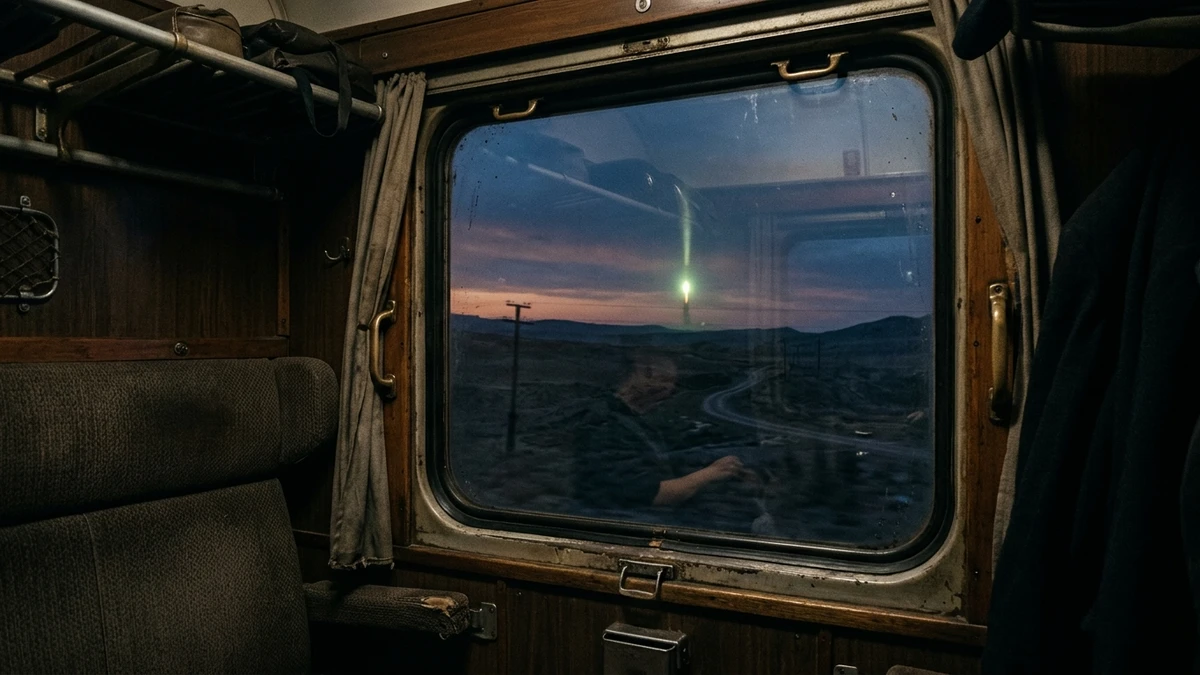
One detail from the historical record makes the scene stranger still: after the objects appeared, a Soviet trainman reportedly closed the compartment curtains and told the Americans not to look outside. Whatever had just flown over the line, somebody didn't want foreign visitors watching the sky.
The party said nothing while inside Soviet territory. About a week later, in Prague, they reported the sighting to the US air attaché. Hathaway opened with a line that has followed this case ever since:
"I doubt if you are going to believe this, but we all saw it. Senator Russell was the first to see this flying disc."
· Lt Col E. U. Hathaway, to the US air attaché in Prague, October 1955Who Was Richard Russell? The Witness the CIA Couldn't Ignore
Witness credibility decides how a sighting is treated, and Richard Russell's credentials were about as strong as they come. A senator from Georgia since 1933, he chaired the Senate Armed Services Committee: the body that oversaw the entire US military. He knew what American aircraft could do, he held the highest clearances, and he was on record as a cautious, unexcitable man. He was later one of the seven members of the Warren Commission.
That's what makes the file interesting regardless of what the discs were. This wasn't a report the CIA could file in the crank drawer. The agency debriefed all four members of the party individually, compared their accounts, and routed the results to the highest levels of its scientific intelligence directorate, all under a Top Secret stamp that held for three decades.
What the Declassified CIA Documents Say
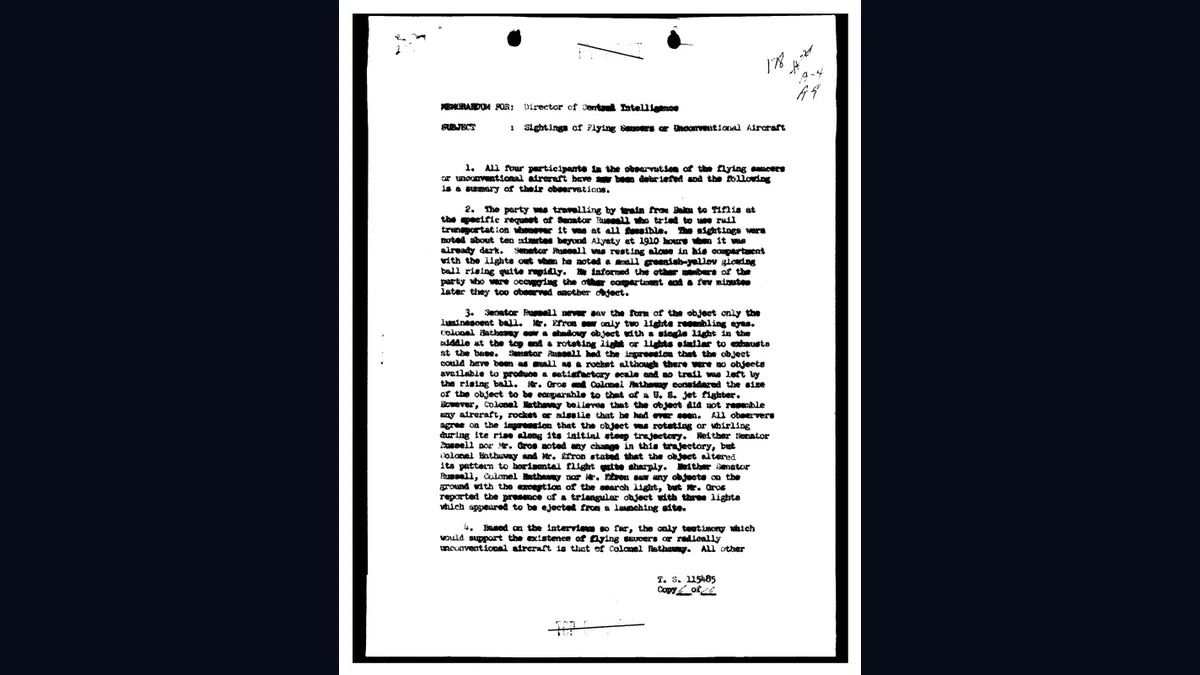
The July 2026 release contains two documents. The first, CIA-UAP-D020, is a memorandum dated 31 October 1955 summarising the debriefings. It records the observations in the dry language of intelligence work: the vertical ascent, the revolving outer surface, the two lights, the sparks, the estimated altitude, the sharp acceleration. It also records the conclusion the CIA reached:
"[The observation can] probably be explained as steep climbing aircraft or missiles... the evidence does not appear sufficiently firm to warrant the conclusion that the Soviets have developed [...] a radically new type of aircraft."· CIA Memorandum, Office of Scientific Intelligence, 31 October 1955 (CIA-UAP-D020, released 10 July 2026)
The memo is signed by Herbert Scoville Jr, the CIA's Assistant Director for Scientific Intelligence, a physicist who went on to become a leading arms-control voice. The signature matters: this went to the top of the agency's technical analysis chain, not to a regional desk.
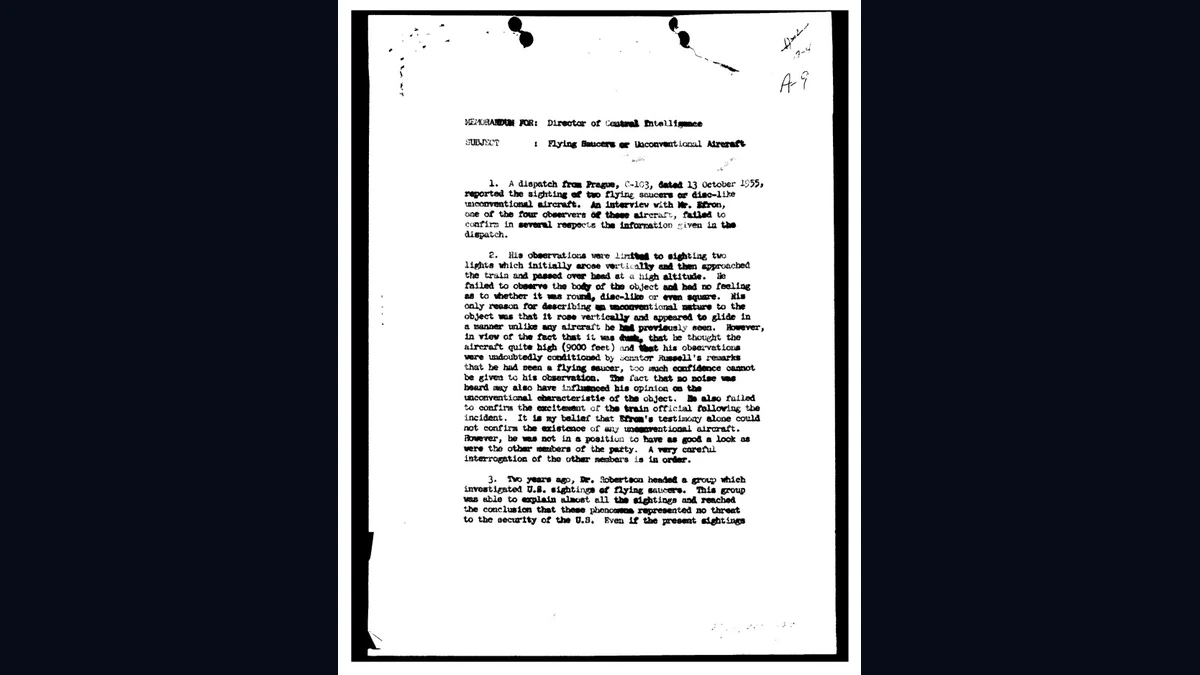
The second document, CIA-UAP-D021, is the more revealing one. It's an internal analysis that weighs the witnesses against each other. The party numbered four, and the fourth observer's account was weaker: he saw two lights rise vertically and pass over the train at altitude, but couldn't make out a solid body and admitted he wasn't sure whether what he saw was "real, three-dimensional." The analysis notes he viewed the objects from a poorer position than the others, heard no sound, and, in the author's view, his testimony alone couldn't confirm an unconventional aircraft. It's careful, honest sceptical work, and it stops well short of calling anyone mistaken.
The Avro Flying Saucer Section: Why the CIA Took a Disc Seriously
The most surprising part of the analysis has nothing to do with the Soviet Union. Section 4 discusses a real flying saucer: the one being built in the West. Avro Canada's Project "Y", funded with US Air Force money, was a genuine attempt at a disc-shaped, vertical take-off combat aircraft. The CIA memo runs through the claims attached to it: a ceiling around 100,000 feet, speeds up to 1,800 mph, a range of some 700 miles, a climb rate of 120,000 feet per minute, and vertical take-off.
"[The designer] is reported to have gotten his original idea for the flying machine from a group of Germans in World War II."· CIA analysis memorandum, 1955 (CIA-UAP-D021, released 10 July 2026)
The designer was Avro's John Frost, and the German connection reflects a thread that runs through several 1950s intelligence files: a belief that wartime German engineers had worked on disc aircraft, and that some of those engineers had ended up on the wrong side of the Iron Curtain. That was the real anxiety underneath the Russell file. If a disc could be built in Ontario, one could be built in the USSR, and a US senator may have just watched one fly. The project's claims never came true (the design eventually shrank into the Avrocar, which struggled to get off the ground), but nobody knew that in 1955.
Avro Canada Begins Project Y
Avro Canada starts work on a disc-shaped vertical take-off aircraft under designer John Frost, later funded by the US Air Force. Its existence gives Western intelligence a live reason to treat 'flying disc' reports as potential foreign technology.
4 October: The Sighting
Shortly after 7pm, on the Baku–Tbilisi line, Senator Russell sees a luminous disc rise vertically. Hathaway and Efron watch a second disc do the same. The objects climb to around 6,000 feet, then accelerate sharply and pass over the train.
Mid-October: Report in Prague
Out of Soviet territory, the party reports the sighting to the US air attaché in Prague. Hathaway: 'I doubt if you are going to believe this, but we all saw it.' A dispatch dated 13 October reaches Washington.
31 October: CIA Debrief Memorandum
The CIA's Office of Scientific Intelligence summarises debriefings of the party in a Top Secret memo signed by Herbert Scoville Jr. Conclusion: probably steep-climbing aircraft or missiles; evidence not firm enough for a new Soviet aircraft.
Internal Analysis Circulated
A companion analysis weighs the four witness accounts, cites the 1953 Robertson Panel finding that sightings represented no threat to the US, and reviews the Avro Project Y saucer programme as context.
First Declassification
A Freedom of Information request pries loose a set of CIA, FBI and Air Force records on the sighting. The case enters the public record for the first time, thirty years on.
10 July 2026: Full CIA File Released
The fourth PURSUE release publishes both CIA documents in full (cover sheets, signature records and distribution lists included) as CIA-UAP-D020 and CIA-UAP-D021.
The Witnesses
Senator Richard Russell
One of the most powerful figures in US defence policy, travelling through the USSR on official business. Spotted the first disc from the carriage window and called the others over. Reported the sighting through official channels and never publicised it. When a journalist asked him about it years later, he declined to discuss it.
Lt Col E. U. Hathaway
Reached the window in time to watch the second disc rise. Gave the air attaché in Prague the case's most quoted line: 'I doubt if you are going to believe this, but we all saw it.' His account matched Russell's on the key points: vertical ascent, revolving surface, then sharp acceleration.
Ruben Efron
The party's interpreter and the third principal witness. Confirmed the objects' slow vertical climb and their pass over the train. His account is one of the debriefings summarised in the CIA's October 1955 memorandum.
Herbert Scoville Jr
Not a witness, but the man whose signature closes the file. Scoville's memo accepted that the party saw something, offered climbing jets or missiles as the probable answer, and conceded the evidence couldn't settle whether the Soviets had built something radically new.
Evidence Assessment
CONFIRMED
The sighting happened and was reportedMultiple Top Secret documents record the sighting, the debriefings and the analysis. The party reported through official channels within days of leaving Soviet territory.
CONFIRMED
Witness quality was exceptionalA Senate committee chairman, a serving Army lieutenant colonel and a professional interpreter, debriefed separately, gave consistent core accounts.
CONFIRMED
The CIA treated it as a technology questionThe file went to the Office of Scientific Intelligence and was analysed alongside the West's own disc aircraft programme, not filed as a curiosity.
UNRESOLVED
The official explanation is a 'probably'Steep-climbing jets or missiles was the CIA's best fit, not a finding. The memo itself concedes the evidence couldn't firmly settle what the objects were.
UNRESOLVED
The fourth witness saw lessOne member of the party couldn't confirm a solid body: only two rising lights. The CIA analysis flags the discrepancy honestly and leaves it open.
UNKNOWN
What the Soviets were flying near BakuIf the objects were Soviet missiles or aircraft in a steep climb, no specific system has ever been publicly matched to the sighting, and the trainman's rush to close the curtains has never been explained.
Why the Senator Russell Sighting Still Matters
Seventy years on, the Russell file reads as a template for how governments actually handle credible UFO reports: quietly, seriously, and with the technology of rivals foremost in mind. Nobody in the CIA suggested the senator saw a spacecraft. Nobody suggested he saw nothing, either. The file's honest resting place (probably aircraft or missiles, evidence not sufficiently firm) is the same "unresolved" language the Pentagon's AARO office uses about military UAP cases today.
It also matters because of who did the watching. Every generation of UFO disclosure debate returns to the same question: would a serious, senior, security-cleared witness report something like this? In October 1955, one did. The chairman of the Senate Armed Services Committee looked out of a train window, saw a disc rise into the sky over Soviet territory, and told his government. His government believed he saw something, and spent the next month trying to work out whose it was.
Scan the skies yourself
Kit we've tested and reviewed in full
Russell's party identified what they could because they watched carefully and compared notes. A decent pair of binoculars is still the best first tool for checking whether that strange light is a planet, a satellite or something worth reporting.
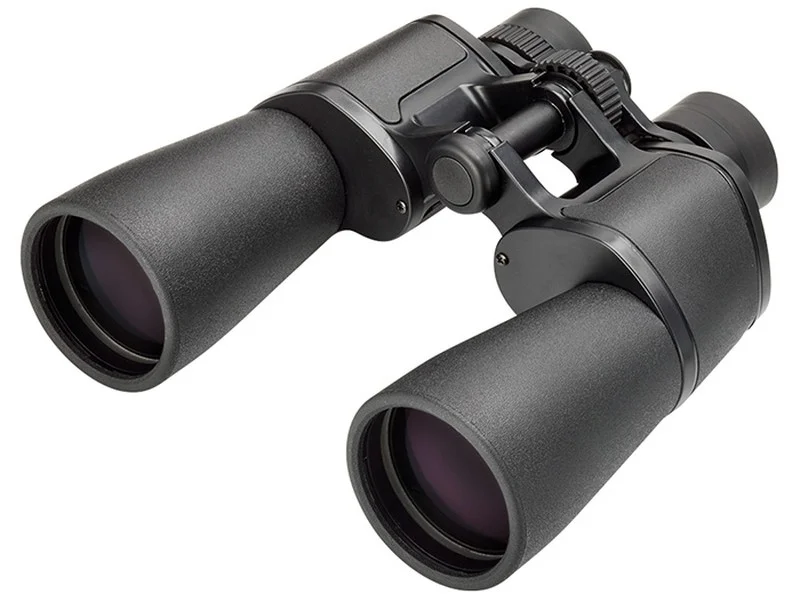
Bright 50mm objectives and enough magnification to resolve aircraft lights, satellites and planets, the quickest way to rule the ordinary in or out.
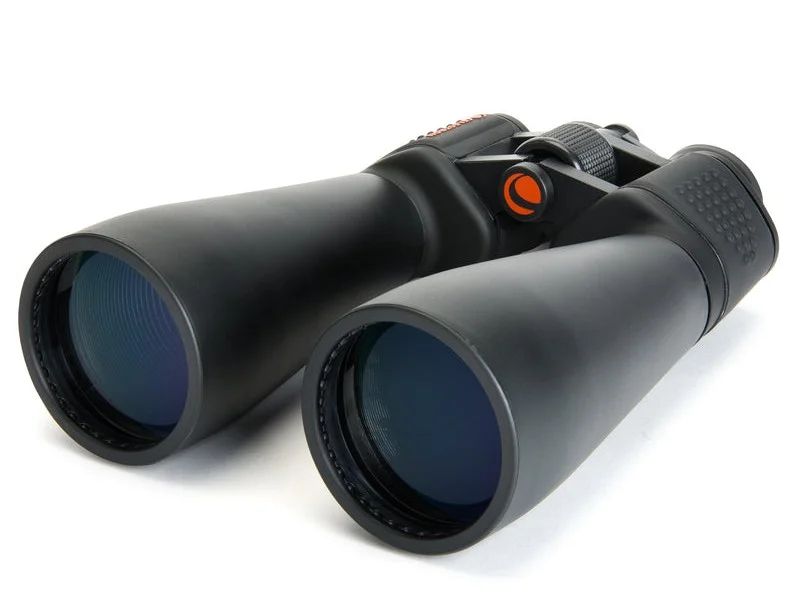
Big 70mm light grab at 15×, enough to pick out shape and motion in a distant light, which is exactly what separates a report from a mystery.
Affiliate links: you pay the same price, we earn a small commission that helps keep WatchTheStars free.
Primary Source Documents
CIA Debriefing Memorandum
CIA-UAP-D020 · 31 Oct 1955 · released 10 Jul 2026
The Top Secret summary of the CIA's debriefing of Senator Russell's party, with the original cover sheet, signature record and Scoville's conclusion.
Download PDFCIA Analysis of the Sighting
CIA-UAP-D021 · 1955 · released 10 Jul 2026
The internal analysis weighing the four witness accounts, citing the Robertson Panel, and reviewing the Avro Project Y saucer programme.
Download PDF📌 Note: These are official CIA documents released through the US government's PURSUE declassification programme (Release 04, 10 July 2026, war.gov/ufo). Copies are hosted here to ensure permanent availability.
Related Cases
More UAP cases
- The Newfoundland KC-97 Incident6 JULY 1955 · NEWFOUNDLAND, CANADA · FILE RELEASED 10 JULY 2026
- RAF Lakenheath: The Night Britain's Air Defences FailedSuffolk, England · 13–14 August 1956 · 2130–0330 hrs
- The Green Fireball IncidentsDURATION: DEC 1948 – 1952 · LOCATION: LOS ALAMOS / SANDIA / KIRTLAND / WHITE SANDS · STATUS: UNEXPLAINED
- The RB-47 Encounter: 700 Miles, Three Sensors, No ExplanationMississippi → Texas → Oklahoma → Kansas · 17 July 1957 · ~0200–0340 CST
- The Roswell IncidentJuly 1947 · Foster Ranch, New Mexico · Status: Unresolved
- Apollo 17's Unknown CompanionTranslunar Coast · 9 December 1972 · Mission Elapsed Time 02:18:47