Total Solar Eclipse 2027
Six minutes and 23 seconds of darkness across Spain, North Africa and Egypt, and a 42% partial eclipse from the UK
When is the 2027 solar eclipse?
The total solar eclipse falls on Monday 2 August 2027. Greatest eclipse is at 10:07 UTC over southern Egypt, where totality lasts 6 minutes 23 seconds: the longest on easily reachable land until 2114. The path of totality crosses southern Spain, Gibraltar, Morocco, Algeria, Tunisia, Libya, Egypt, Saudi Arabia, Yemen and Somalia.
From the UK it is a partial eclipse running from about 09:00 to 11:00 BST, peaking around 10:00. Roughly 42% of the Sun is covered from London, 47% from Penzance and 23% from Inverness.
If you watched the 89% partial eclipse from the UK in August 2026 and found yourself wondering what the real thing looks like, this is the one to travel for. A total eclipse is not a slightly better partial eclipse. It is a different event, and a six-minute one you can reach on a short-haul flight is rare. The next comparable eclipse is 88 years away.
Why is it called the eclipse of the century?
Three things, and the first is length. Most total eclipses give you two or three minutes. This one runs to 6 minutes 23 seconds at maximum, in Egypt's New Valley Governorate about 60km south-east of Luxor. That is the second-longest total eclipse of the 21st century, and the longest that crosses land you can actually get to: the only longer one, in 2009, peaked over the Pacific. You would have to wait until 3 June 2114 to beat it on reachable ground.
Second, the weather. Most of the track runs along the northern edge of the Sahara in high summer, which is about as favourable as eclipse climatology gets. Parts of Libya and western Egypt have recorded no August cloud whatsoever on eclipse day in 23 years of satellite observations. Veteran eclipse meteorologist Jay Anderson, who has been analysing eclipse weather for 45 years, rates the cloud prospects for 2027 as among the lowest he has ever assessed.
Third, the number of people. About 89 million live inside the path of totality: roughly double the 44 million who lived under the 2024 North American eclipse. One estimate puts the number who will try to watch it above 200 million. It is likely to become the most photographed astronomical event in history.
Where does the path of totality go?
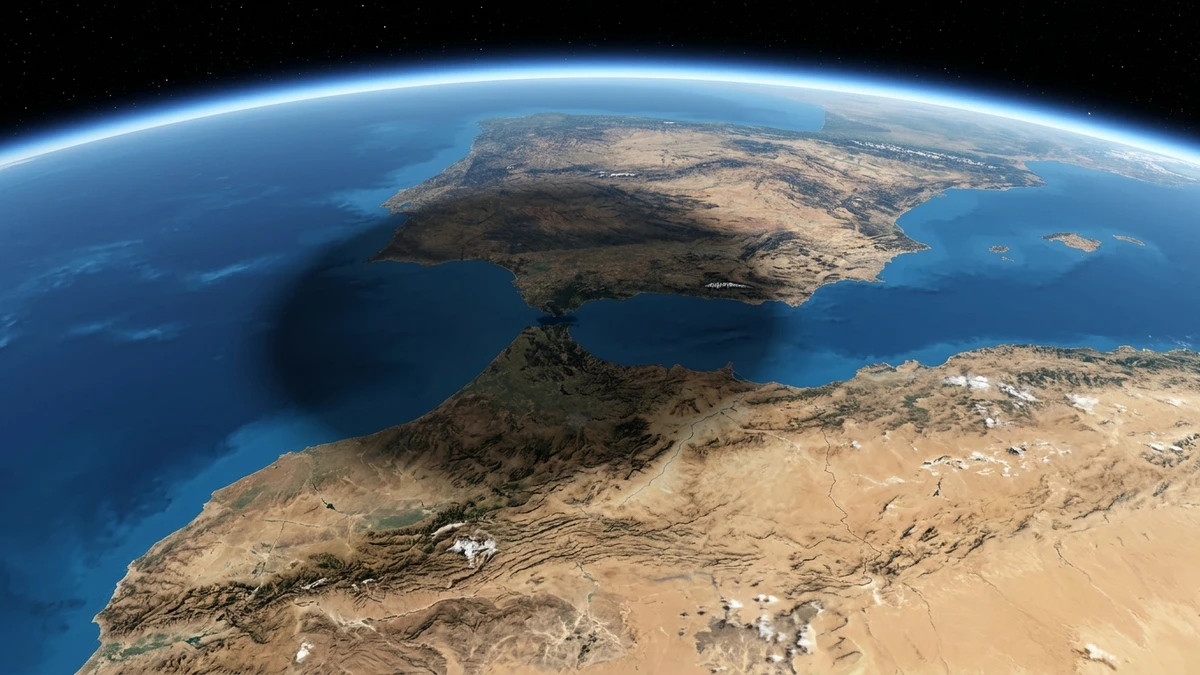
The Moon's shadow first touches Earth in the mid-Atlantic, misses Madeira by about 70km, then makes landfall simultaneously in southern Spain and northern Morocco. From there it runs east along the Mediterranean before curving south-east across Libya and Egypt, crossing the Red Sea into Saudi Arabia and Yemen, clipping the Horn of Africa, and ending over the Indian Ocean. The shadow is up to 258km wide.
Duration climbs steadily the further east you go. Here is what the main options give you, with times in local zones:
| Location | Country | Totality begins | Duration |
|---|---|---|---|
| Cádiz | Spain | 10:45 | 2m 56s |
| Málaga | Spain | 10:48 | 1m 57s |
| Gibraltar | Gibraltar | 10:46 | 4m 28s |
| Tangier | Morocco | 09:45 | 4m 51s |
| Oran | Algeria | 09:51 | 5m 08s |
| Sfax | Tunisia | 10:09 | 5m 41s |
| Benghazi | Libya | 11:28 | 6m 11s |
| Luxor | Egypt | 13:02 | 6m 22s |
| Jeddah | Saudi Arabia | 13:22 | 5m 53s |
| Sanaa | Yemen | 13:44 | 2m 39s |
Note how sharply duration falls off near the edges of the path. Málaga sits close to the northern limit and gets under two minutes; Gibraltar, only 100km away but nearer the centre line, more than doubles that. If you are travelling for this, being on the centre line matters more than the town you choose.
What will the UK see on 2 August 2027?
A partial eclipse, and a reasonable one. Better than most partial eclipses the UK gets, though nothing like the 89% of August 2026. The Sun will be high in the south-east, around 35 to 41 degrees up, so unlike the 2026 eclipse you will not be fighting for a low horizon. Coverage is best in the far south-west and tails off going north. For times in 30 UK towns and honest advice on what you will actually see, read our solar eclipse 2027 UK guide.
Times below are BST. Coverage is the fraction of the Sun's disc area hidden at maximum, which is the figure worth quoting: it is always lower than the fraction of the diameter covered, and the two get mixed up constantly.
| City | Starts | Maximum | Ends | Sun covered |
|---|---|---|---|---|
| Penzance | 08:57 | 09:54 | 10:54 | 47% |
| Plymouth | 08:59 | 09:56 | 10:56 | 46% |
| Dover | 09:03 | 10:01 | 11:01 | 43% |
| Cardiff | 09:01 | 09:57 | 10:56 | 42% |
| London | 09:03 | 10:00 | 10:59 | 42% |
| Birmingham | 09:04 | 09:59 | 10:56 | 39% |
| Norwich | 09:06 | 10:02 | 10:59 | 38% |
| Manchester | 09:06 | 09:59 | 10:55 | 35% |
| Leeds | 09:07 | 10:00 | 10:55 | 34% |
| Belfast | 09:06 | 09:57 | 10:50 | 32% |
| Newcastle | 09:09 | 10:01 | 10:54 | 30% |
| Glasgow | 09:10 | 09:59 | 10:50 | 28% |
| Edinburgh | 09:11 | 10:00 | 10:51 | 27% |
| Aberdeen | 09:14 | 10:02 | 10:51 | 24% |
| Inverness | 09:14 | 10:00 | 10:49 | 23% |
Calculated by WatchTheStars from the JPL DE421 ephemeris, using topocentric apparent positions of the Sun and Moon. Cross-checked against published figures for London (41.92%). Times are accurate to about a minute.
Be honest with yourself about what a 42% eclipse looks like: not much. Daylight barely dips, shadows sharpen slightly, and without eclipse glasses you would walk right past it. That is the point of travelling: a partial eclipse and a total eclipse are different experiences, not different amounts of the same one.
How do you watch a solar eclipse safely?
Wear certified eclipse glasses at every moment the Sun is not completely covered. From the UK that means the entire event, start to finish, with no exceptions. Even 5% of the Sun's disc is bright enough to burn your retina, and because the retina has no pain receptors, you get no warning that it is happening.
Things that are not safe: sunglasses of any darkness, stacked sunglasses, welding glass below shade 12, smoked glass, exposed photographic film, CDs, and looking through a phone screen. Things that are safe: ISO 12312-2 eclipse glasses in good condition, a front-mounted solar filter on a telescope or binoculars, and pinhole projection onto card, which costs nothing and is the best way to show a group. Our guide to observing the Sun safely covers the whole business properly, including how to check a filter before you trust it.
Inside the path of totality there is one exception: during totality itself, and only then, you take the glasses off. That is the only way to see the corona, and it is the whole reason people travel. The moment the first sliver of photosphere returns, the glasses go back on.
For photography, the same rule applies to your camera as to your eyes: a front filter, never a filter at the eyepiece end, because they crack under concentrated heat. A wide landscape shot of the changing light needs no filter, but anything zoomed on the Sun does. Our 2027 eclipse photography guide has the settings, focal lengths and bracketing plan, and the phone astrophotography guide covers what a phone can and cannot manage.
What you need to watch the 2027 eclipse safely
Kit we've tested and reviewed in full
Every phase of this eclipse except totality itself needs certified eye protection, and from the UK there is no totality at all, so glasses are not optional. Buy from a known astronomy retailer rather than a marketplace listing, and buy early: filters sold out weeks ahead of the 2026 eclipse.
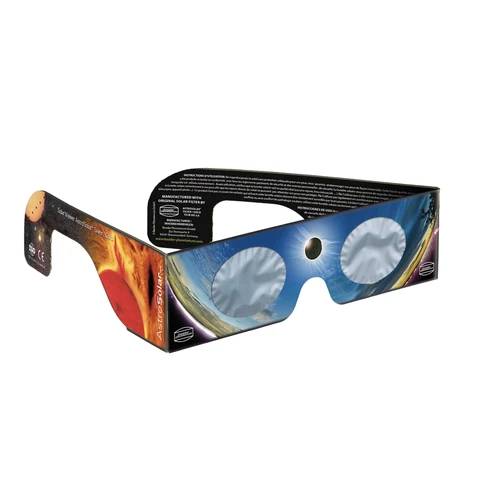
Baader Solar Eclipse Observing Glasses
Baader's film is the benchmark for safe solar viewing and these cost about the same as a coffee. Buy several: you will end up handing them round, and a scratched pair should be binned rather than shared.
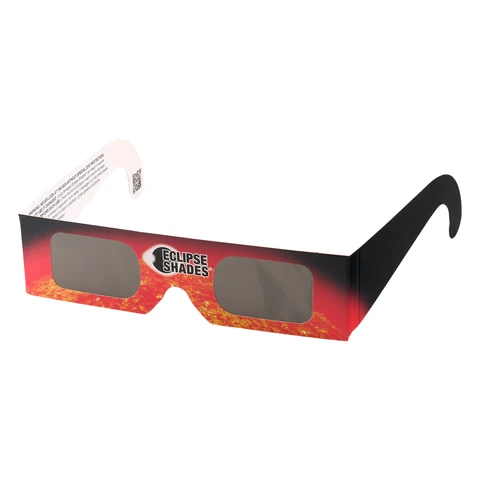
Astro Essentials Safe Solar Eclipse Handheld Viewer
A sensible pack size for a couple or a family topping up. Check the CE mark and the film for pinholes before eclipse day, not on the morning.
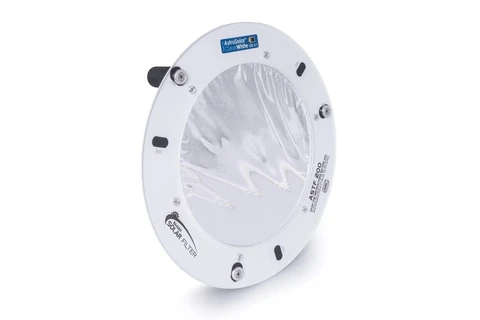
Baader AstroSolar Telescope Filter (ASTF)
Fits over the front of a telescope or binoculars so the light is cut before it enters the optics. Never use an eyepiece-end filter: they crack under the heat. This is the filter to buy if you plan to photograph the partial phases.
Affiliate links: you pay the same price, we earn a small commission that helps keep WatchTheStars free.
Where is the best place to see the 2027 eclipse?
It depends whether you are optimising for weather, duration or ease of getting there. Egypt wins on the first two and Spain on the third. The good news is that this eclipse is forgiving: cloud prospects are excellent almost everywhere along the track, so there is no single right answer. The summary is below; our guide to where to watch the 2027 eclipse ranks every realistic destination town by town, with the totality duration calculated for each, and lists the famous places that miss the path altogether.
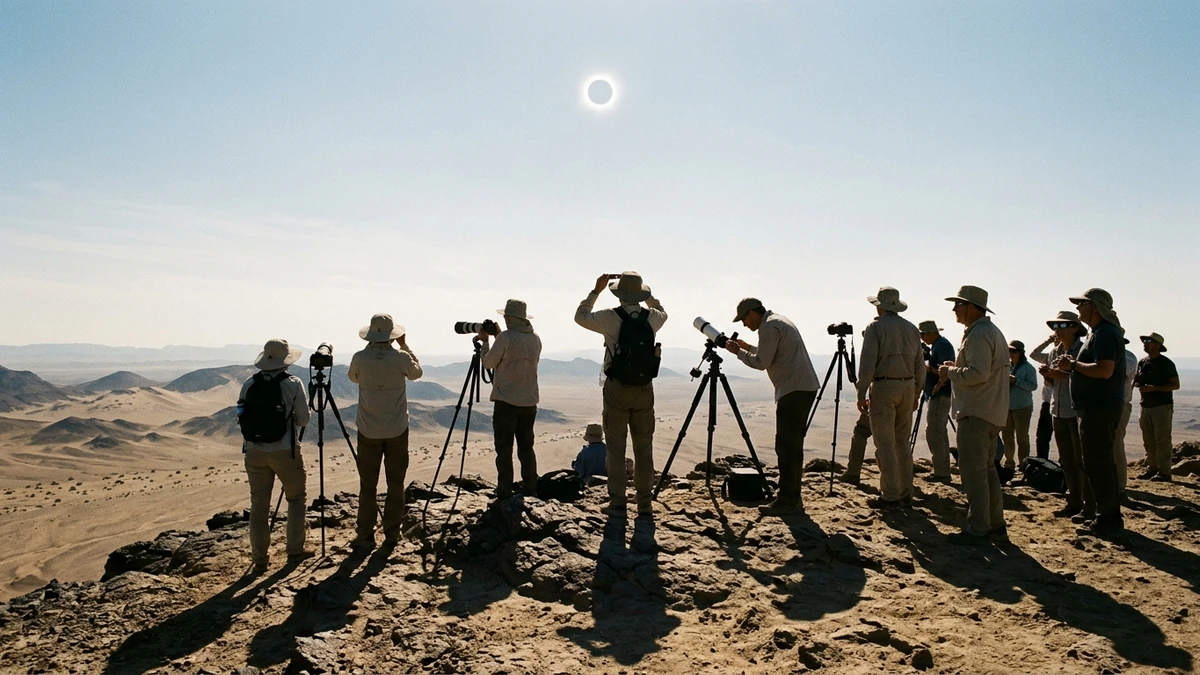
Egypt is the safest bet by a distance. Luxor gets 6 minutes 22 seconds, a hair off the maximum, with a well-developed tourist trade and reliable flights. The main threat there is thin cirrus, which softens the outer corona but does not spoil the view. If you want as close to a guarantee as eclipse chasing offers, Siwa Oasis and Bahariya Oasis have almost no prospect of cloud and are largely spared the dust storms that affect the desert further east. The catch is heat: Luxor averages 42°C on 2 August and has hit 46°C. Cameras start shutting down around 45°C internal temperature, so plan for shade and a damp cloth over the body.
Southern Spain and Gibraltar are the practical choice from the UK: two and a half hours' flying, familiar infrastructure, and totality mid-morning. The catch is duration: Cádiz gets under three minutes and Málaga under two. Gibraltar does better at 4 minutes 28 seconds. The other catch is marine cloud: the Atlantic coast near Tarifa and Barbate averaged only a 74% chance of clear sky in one recent survey, while Cádiz managed 88%. Move inland and average cloud drops below 15%, so if you are going to Spain, go inland rather than to the beach.
Morocco and Tunisia sit in between. Tangier gets 4 minutes 51 seconds and the eastern beaches of the city usually escape the morning marine stratus that troubles the Atlantic coast. Sfax in Tunisia is quietly one of the best spots on the western half of the track: 5 minutes 41 seconds, and the lowest average cloud of anywhere before Libya. Avoid Morocco's Mediterranean coast between Tetouan and El Jebha, where cloud packs against the Rif Mountains.
One risk that applies right across North Africa is dust. It is forecastable a few days out, and mostly makes for a hazy rather than a ruined view, but a heavy plume cannot be outrun by driving 50km: it covers too much ground. The Barcelona Dust Regional Center publishes 72-hour forecasts worth watching in eclipse week.
What actually happens during totality?
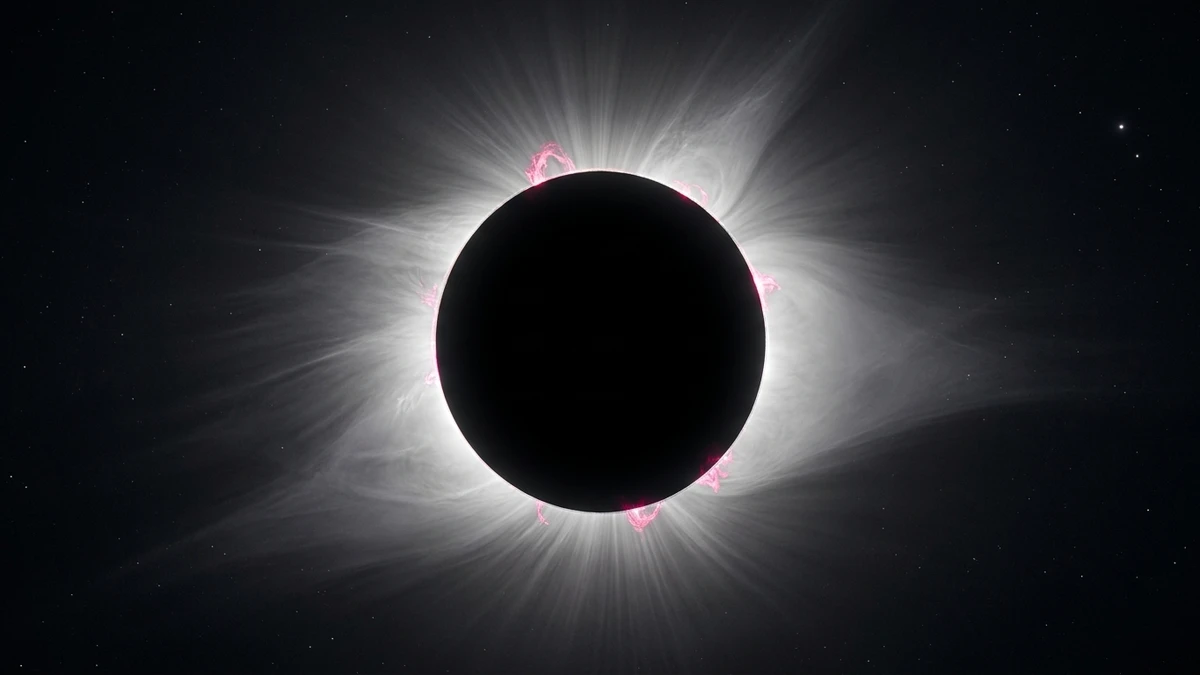
The last few minutes before totality are the strangest part. The light goes thin and metallic rather than dim, shadows sharpen to razor edges, the temperature drops noticeably, and birds go quiet. Rippling bands of light called shadow bands sometimes race across pale ground in the final seconds. Then the last bead of sunlight goes, the corona snaps into view, and the horizon glows orange all the way round like a 360-degree sunset.
In 2027 the eclipsed Sun sits in Cancer, a few degrees from the Beehive Cluster. Venus will be unmistakable if the air is at all clear, with Mercury a few degrees to its west and Jupiter nearby in Gemini, close to Castor and Pollux. Over most of the African part of the track the Winter Hexagon stars come out too: an odd thing to see in August.
Six minutes sounds long, and by eclipse standards it is. It will still go faster than you expect. The standard advice from people who have chased a few: spend your first totality looking, not photographing. The corona has a structure and depth that no photograph reproduces, and you cannot get it back.
How far ahead should you book?
Sooner than feels reasonable. Hotels in parts of southern Spain and Morocco were reported sold out in December 2025, a year and eight months ahead, and travel operators are forecasting a tourism surge worth millions of euros. Specialist eclipse tours to Egypt and Libya usually open two to three years out and fill quickly, because the good sites have limited capacity.
A few things worth knowing before you commit:
- Book flexible where you can. Eclipse chasers routinely move 100km or more on the morning based on the cloud forecast. A rigid package can leave you watching a cloud.
- Get on the centre line. Málaga versus Gibraltar is nearly three minutes of difference for an hour's drive.
- 2 August 2027 is a Monday. Book the time off early: it is not a UK bank holiday.
- Check your hotel is actually inside the path. Cairo, Seville, Aswan and most of Tunisia's resort coast all miss totality: our path of totality checker lists the near misses and the fix for each.
- Check visa lead times. Egypt, Algeria, Libya and Saudi Arabia all have their own requirements and Libya in particular is not a straightforward destination.
- Plan for heat. Mid-40s is normal along the eastern track in August, and heat stroke ruins eclipses.
- Buy filters early. Eclipse glasses sold out across UK retailers in the weeks before August 2026 and the same will happen again.
Staying home is a perfectly reasonable choice too. If you are watching the partial eclipse from the UK, the thing that decides your morning is cloud, and our observing conditions tool will tell you what the sky is doing. It is also worth planning a spot with a clear south-eastern view, though at nearly 40 degrees altitude the Sun will clear most obstructions.
What other eclipses are coming up?
2027 is a busy eclipse year. An annular eclipse crosses South America on 6 February, a penumbral lunar eclipse falls on 18 July, and another penumbral lunar eclipse follows on 17 August, a fortnight after the total. If you are tracking dates, the full run of events is on our astronomy calendar, and the meteor shower calendar covers 2027's showers, worth noting that the Perseids peak ten days after the eclipse.
Looking further out, the next total solar eclipse after this one is 22 July 2028 over Australia and New Zealand. Spain and Portugal get an annular eclipse on 26 January 2028. Then mainland Europe waits until 2053. If you have been putting off seeing a total eclipse, 2027 is the sensible time to stop putting it off.