How to Observe the Sun Safely
Certified glasses, front-mounted filters and simple projection: the only three ways to look at the Sun without risking your eyesight
The only safe ways to observe the Sun are eclipse glasses or viewers certified to ISO 12312-2, a certified solar filter fitted securely over the front of a telescope, binoculars or camera, or projection methods like a pinhole card or a kitchen colander. Ordinary sunglasses, smoked glass and homemade filters are never safe, at any point during an eclipse, however dim the Sun looks.
None of that is only for eclipse day. The Sun is worth looking at all year: sunspot groups drift across the disc over days, and with a proper filter you can follow them from your back garden. On 12 August 2026 the UK had its deepest partial eclipse since 1999, with around 91% of the Sun covered from London and up to 96% from Cornwall: our guide to that eclipse has the regional breakdown of times and coverage. The next solar eclipse visible from the UK is a shallower partial on the morning of 2 August 2027, the "eclipse of the century", total across southern Spain and North Africa, and the rules below apply just the same.
How Can You Look at the Sun Safely?
There are only three genuinely safe ways to observe the Sun: eclipse glasses or hand-held viewers certified to ISO 12312-2, a certified solar filter fitted securely over the front of a telescope, binoculars or camera lens, or projection: casting the Sun's image onto a card rather than looking at it directly. Everything else on the list below is a gamble with your eyesight, whatever anyone tells you.
| Method | Safe? | Notes |
|---|---|---|
| Eclipse glasses (ISO 12312-2) | Safe | Inspect before every use; bin if scratched, creased or pinholed; buy from a reputable astronomy retailer |
| Certified filter on the front of a scope, binoculars or camera | Safe | Must fit securely over the objective (front) end, not the eyepiece |
| Projection (pinhole, colander, telescope onto card) | Safe | You never look directly at the Sun: the image falls onto a card instead |
| Ordinary sunglasses (even stacked) | Never | Smoked glass, CDs/DVDs, camera film and space blankets are just as unsafe |
| Solar filter screwed onto the eyepiece | Never | Sits at the point of concentrated heat, with your eye behind it, known to crack |
| Unfiltered telescope, binoculars or camera viewfinder | Never | Optics concentrate sunlight enough to cause instant, severe injury |
| Welder's glass | Only shade 14 | Most workshop welder's glass is much lighter and not dark enough |
Why Is Looking at the Sun Without Protection So Dangerous?
Looking at the Sun without proper protection causes permanent damage to the retina, known as solar retinopathy. The retina has no pain receptors, the damage is completely painless: you won't feel anything while it happens, and you only discover it afterwards, when part of your vision doesn't come back to normal. Even a 96%-eclipsed Sun can injure your eyes in seconds; that thin remaining crescent is still intense sunlight.
This is why every recommendation on this page is deliberately strict. There's no "just a quick glance" that's safe, and there's no way to tell in the moment that harm is being done.
Never Look at the Sun Through a Telescope Without a Front-Mounted Filter
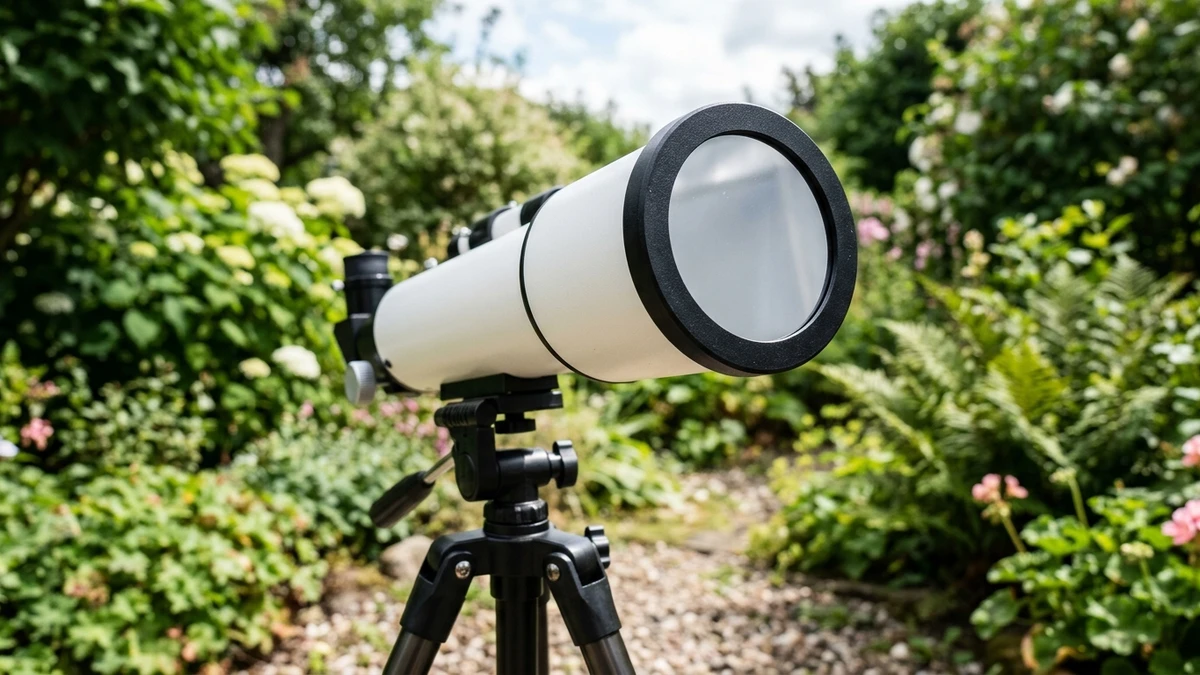
This is the single most dangerous mistake in solar observing, so it gets its own heading: never look at the Sun through a telescope, binoculars, a finder scope or a camera viewfinder unless a certified solar filter is fitted over the front (objective) end. Optics concentrate sunlight enough to burn through eclipse glasses instantly, so wearing your glasses while looking through an unfiltered eyepiece is not protection: it just adds a false sense of safety.
Cap or remove any finder scope before you start, since it's easy to forget it's still pointing at the Sun while you're focused on the main tube. If you've inherited a vintage telescope with a small screw-in "SUN" filter that fits onto the eyepiece, throw it away. Filters mounted there sit exactly where the heat and light are concentrated, with your eye a few centimetres behind, and they're known to crack under that heat.
Front-Mounted Filter Options
For the front end, two options work well. Certified solar film, the widely used Baader AstroSolar film is a popular choice, shows the Sun's white-light face clearly. Alternatively, a purpose-made glass or film filter sized to your telescope, binoculars or camera lens does the same job. Either way, it needs to fit snugly enough that a gust of wind can't dislodge it mid-session, and it's worth checking for pinholes before each session by holding it up to a normal light and looking for tiny points of light coming through.
Certified eclipse glasses and filters
ISO 12312-2 certified kit from First Light Optics
These are the certified options this guide describes. Glasses sell out everywhere in the run-up to an eclipse, so a spare pair in the drawer beats a scramble later.
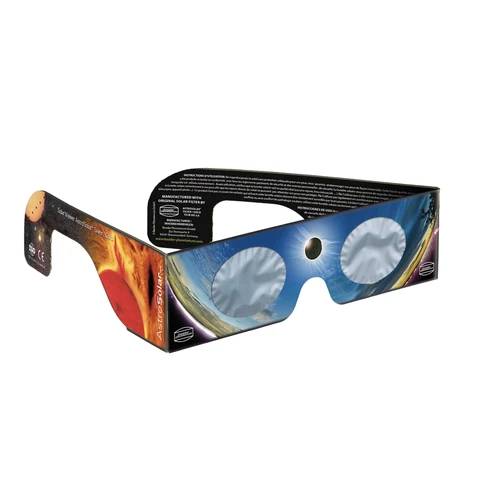
Baader Solar Eclipse Observing Glasses
The classic £3 pair, CE-certified to ISO 12312-2 with Baader's AstroSolar silver/gold film. Inspect before each use and they're safe for sunspots and eclipses alike.
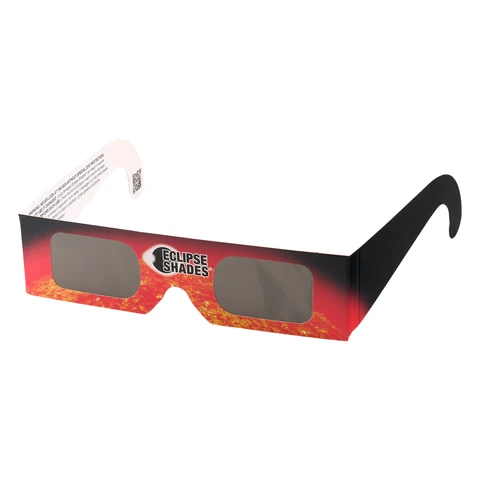
Astro Essentials Safe Solar Eclipse Handheld Viewer
The same certified film in a handheld paddle rather than glasses, which is easier to share round if you tend to have company when the Sun is doing something.
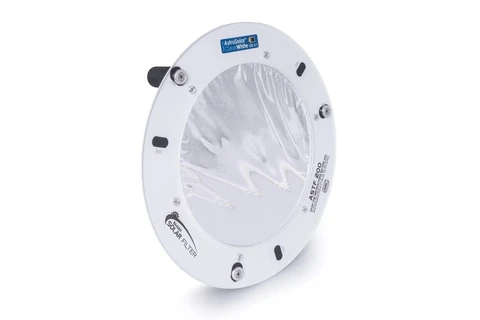
Baader AstroSolar Telescope Filter (ASTF)
Baader's front-mounted AstroSolar filter in a ready-made cell, sized to fit apertures from 80mm to 280mm. The proper way to point a telescope at the Sun.
Affiliate links: you pay the same price, we earn a small commission that helps keep WatchTheStars free.
How to Watch the Eclipse Without Glasses: Projection
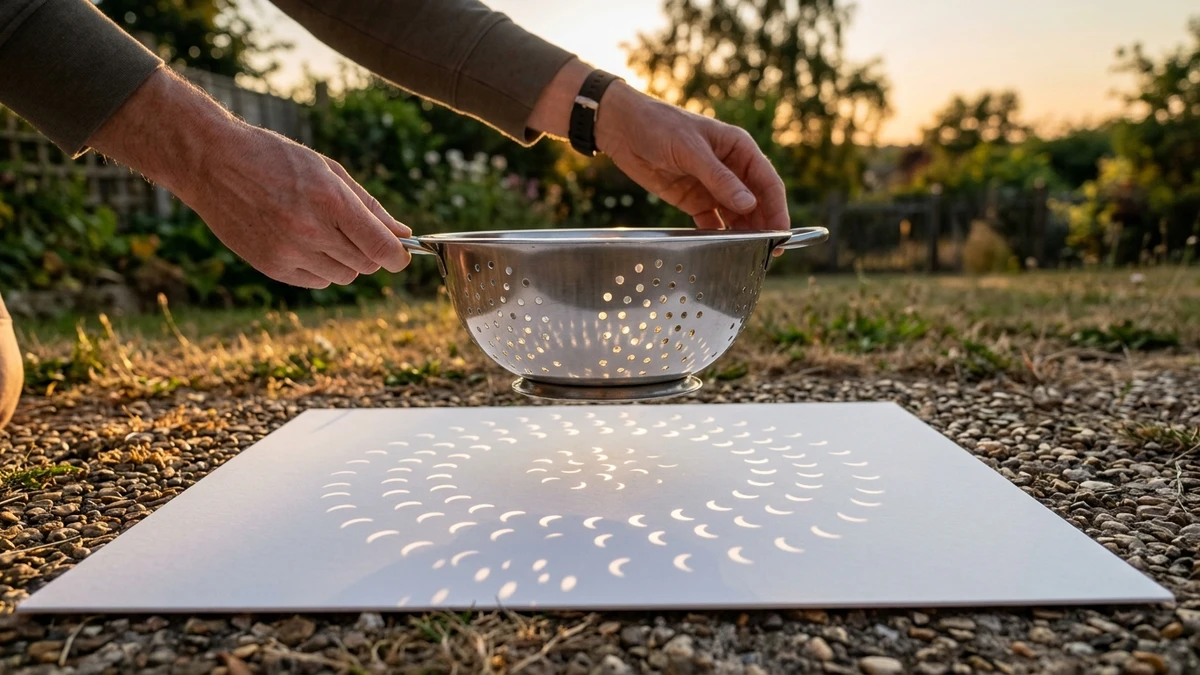
If you don't have eclipse glasses, projection lets you watch the Sun safely without looking at it at all. Punch a small pinhole in a piece of card, hold it up so sunlight passes through, and let the image fall onto a second card held below: you'll see a small but clear image of the Sun's disc, crescent-shaped during a partial eclipse.
A kitchen colander does the same trick on a bigger scale: hold it up to the Sun and its dozens of holes throw dozens of tiny crescent suns onto the ground or a wall at once. Gaps between overlapping tree leaves create the same effect naturally, so keep an eye on dappled shade during the eclipse: you'll often spot crescent suns scattered across the pavement without doing anything at all.
For a bigger image, you can project through binoculars or a telescope onto a sheet of white card, but a few cautions apply. Never look through the instrument while you're aiming it: point it by watching its shadow shrink to its smallest, roundest shape instead. Never leave it unattended, especially around children, since anyone who does look through it risks the same eyepiece-concentrated damage described above. The heat can also damage eyepieces with cemented glass elements, and this method isn't suitable for Schmidt-Cassegrain or Maksutov telescopes such as the Sky-Watcher Skymax 127 at all, because heat builds up inside the closed tube.
Which Smart Telescopes Are Safe for Solar Viewing?
A smart telescope is currently the easiest safe route to seeing and photographing sunspots. The ZWO Seestar S50, Seestar S30 Pro and Dwarf 3 all come with a clip-on solar filter and a dedicated solar observing mode built into their apps. Fit the filter before you point the telescope anywhere near the Sun, not after, the app walks you through it, and the telescope tracks the Sun automatically once it's set up.
Smart telescopes built for solar viewing
Kit we've reviewed in full
Each of these ships with a clip-on solar filter and a dedicated solar mode, so you can point one at the Sun on any clear day without sourcing kit separately.
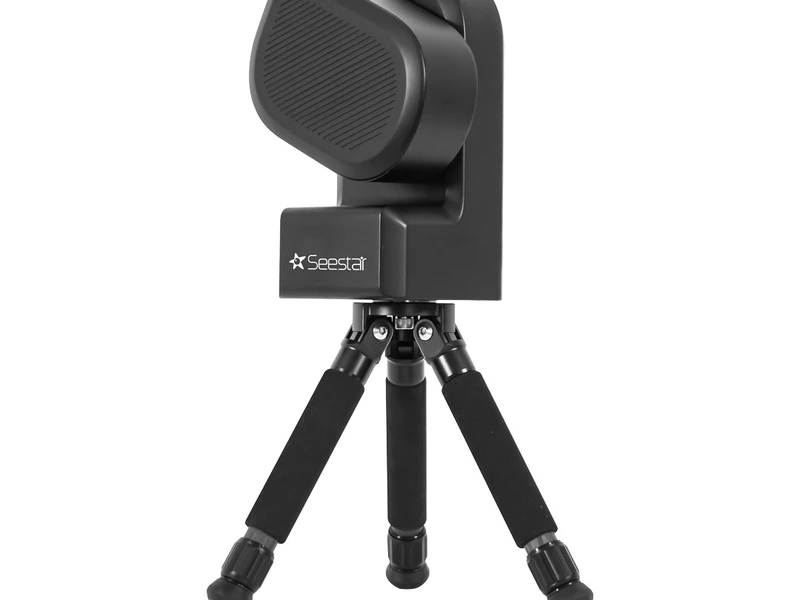
Comes with a clip-on solar filter and a solar observing mode in the app: fit the filter before you point it anywhere near the Sun, then let it track sunspots and partial phases automatically.
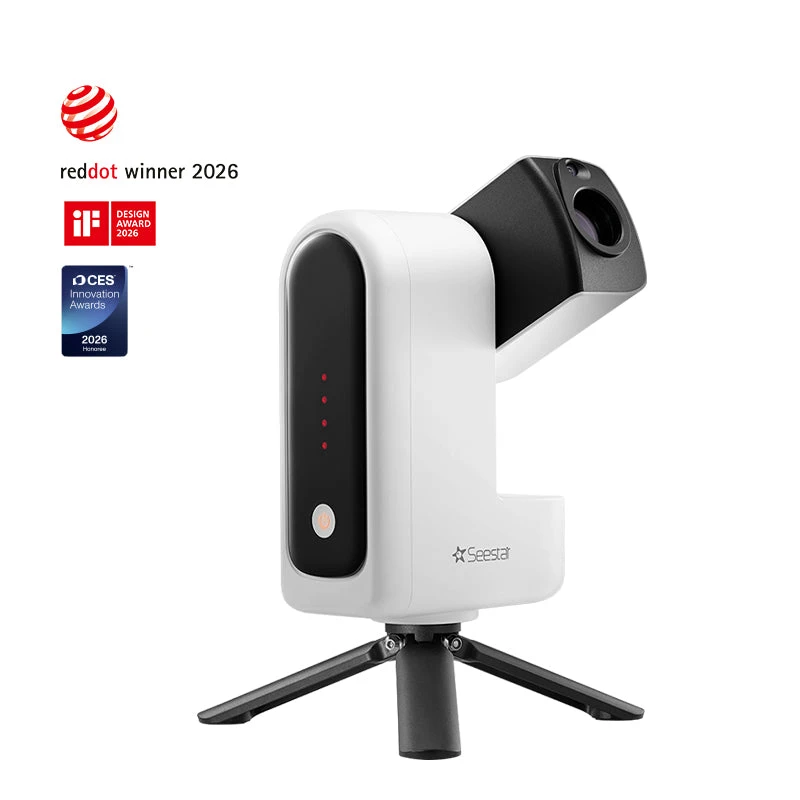
A smaller, lighter option with the same clip-on solar filter and solar mode. Easy to carry to wherever you get an open view of the Sun.
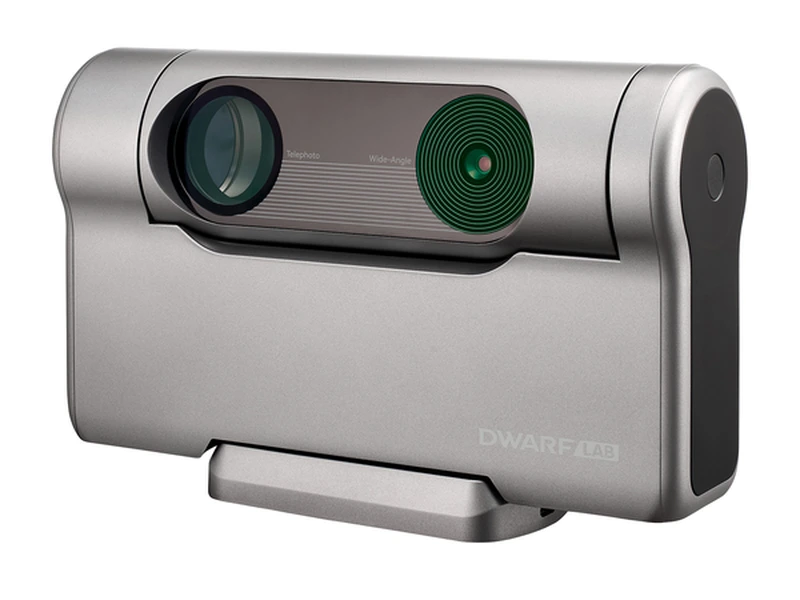
The most affordable route into solar imaging, with its own solar filter and mode. A sensible first smart telescope if the Sun is what you mainly want to watch.
Affiliate links: you pay the same price, we earn a small commission that helps keep WatchTheStars free.
Can You Take Photos of the Sun With Your Phone?
For a zoomed-in shot of the Sun itself, your phone needs a solar filter over the lens, just like a telescope: the sensor can be damaged the same way your eyes can. The exception is a brief, wide-angle landscape shot during the eclipse: framing the horizon, the crowd or the changing light doesn't put the Sun large enough in the frame to need a filter. Just don't look directly at the Sun while you're lining the shot up. For everything else on getting good phone shots of the night sky, see our phone astrophotography guide, and if you're planning ahead for the 2027 eclipse, see our eclipse photography guide.
What Will You Actually See When You Observe the Sun?
In ordinary white light, through a properly filtered telescope or binoculars, you'll see sunspots: dark blotches on the surface where the Sun's magnetic field is most active. We're near solar maximum, so the disc is usually busy with several visible at once. You'll also notice limb darkening, where the edge of the disc looks slightly dimmer than the centre, and during the eclipse itself, the sharp black edge of the Moon creeping steadily across the Sun's face.
For prominences and detail on the Sun's surface, dedicated H-alpha solar telescopes go a lot further, revealing flares and structure that are invisible in ordinary white light. They're a real step up in both capability and cost, and worth considering once you're hooked on solar observing rather than as a starting point. When you get there, our guide to hydrogen-alpha solar photography covers the kit and the method.
What Should You Do on Eclipse Day? A Five-Step Checklist
An eclipse is worth planning for properly rather than grabbing a pair of glasses on the way out the door. Work through these five things in order, whichever eclipse you're watching.
Check them against a bright light for scratches, creases or pinholes. If you spot any, bin them: a damaged pair is not safe protection, however minor the damage looks.
Look up first contact, maximum and last contact for your town, then work out where the Sun will be in the sky at those times. A low Sun is the awkward case: you need an open view in that direction, not blocked by houses, trees or hills.
A pinhole card or a colander costs nothing and means the eclipse is still visible if your glasses go missing or someone turns up without their own pair.
Give yourself a good half hour to get set up, check your filters or glasses one more time, and settle in before first contact.
Keep an eye on them the whole time the Sun's out, and make sure anyone using glasses or a filter has been shown how to check it's fitted properly first.
What did the August 2026 eclipse actually look like?
Our guide to the 12 August 2026 eclipse breaks down coverage and timings from London, Cornwall and everywhere in between.
Read the Eclipse Guide →Frequently Asked Questions
How can I look at the Sun safely?
Use eclipse glasses or a hand-held viewer certified to ISO 12312-2, fit a certified solar filter over the front of a telescope, binoculars or camera lens, or project the Sun's image onto a card instead of looking at it directly. Those are the only three genuinely safe methods: everything else, including ordinary sunglasses, is a gamble with your eyesight.
Are eclipse glasses safe?
Yes, as long as they're certified to ISO 12312-2 and in good condition. Check them for scratches, creases or pinholes before every use and bin them if you find any, and buy from a reputable astronomy retailer, since counterfeit glasses that don't meet the standard do exist.
How do I watch a solar eclipse safely?
Wear ISO 12312-2 certified eclipse glasses whenever you look directly at the Sun, or watch through projection so you're never looking at it at all. If you're using a telescope, binoculars or a camera, fit a certified solar filter over the front end before you point it anywhere near the Sun, and supervise children throughout.
What solar filter do I need for a telescope?
You need a certified solar filter fitted over the front (objective) end of the telescope, never at the eyepiece. Certified solar film such as Baader AstroSolar, or a purpose-made glass or film filter sized to your telescope, both work well: just make sure it fits snugly enough that wind can't dislodge it, and check it for pinholes before each session.
How can I watch the eclipse without glasses?
Use projection. Punch a small pinhole in a piece of card and let sunlight fall through it onto a second card: you'll see a small, clear image of the Sun's disc. A kitchen colander does the same thing on a bigger scale, throwing dozens of crescent suns onto the ground through its holes, and gaps between tree leaves create the same effect naturally.
Can I use sunglasses to look at the Sun?
No, never, at any point during an eclipse. Ordinary sunglasses, even stacked several pairs deep, smoked glass, CDs or DVDs, camera film and space blankets are all unsafe. Welder's glass only works if it's shade 14: most workshop welder's glass is far lighter than that and offers nowhere near enough protection.
Is it safe to look at a 90% eclipsed Sun?
No. Even a 96%-eclipsed Sun is bright enough to damage your eyes in seconds without protection. The remaining sliver of the Sun's surface is still intense sunlight, and your retina has no pain receptors, so the damage is painless and you won't notice it happening: you only discover it afterwards.
Can I photograph the eclipse with my phone?
For a zoomed-in shot of the Sun itself, yes, but only with a solar filter fitted over the lens: the sensor can be damaged the same way your eyes can. A brief, wide-angle landscape shot showing the horizon and the changing light doesn't need a filter, but never look directly at the Sun while framing the shot.