The STS-80 Incident
NASA's Own Photographs of an Unidentified Object in Orbit
For nearly thirty years, STS-80 has been a name UFO researchers argue about: a 1996 shuttle mission whose grainy payload-bay video seemed to show discs manoeuvring below Columbia. In July 2026, NASA finally added something solid to the argument: three of its own photographs, taken by the astronauts themselves, of an object it still labels unidentified.
| Mission | STS-80: Space Shuttle Columbia, 19 November to 7 December 1996 |
| Mission record | Longest shuttle flight in history: 17 days, 15 hours |
| Crew | Cockrell · Rominger · Jernigan · Jones · Musgrave |
| What was captured | Three photographs of a bright, elongated unidentified object in low-Earth orbit |
| Observed behaviour | Appears to rotate or tumble about its major axis between frames; passes between Columbia and Earth |
| NASA's description | 'An unidentified object': tumbling 'consistent with the behavior of a free-floating object' |
| Status | Unidentified: no attribution offered in the official release |
| Released | 10 July 2026: NASA-UAP-D030 / D031 / D032, via the PURSUE programme |
The STS-80 incident refers to an unidentified object photographed by astronauts aboard Space Shuttle Columbia between 19 November and 7 December 1996, during the longest shuttle mission ever flown. NASA released the three photographs on 10 July 2026 as part of the US government's fourth batch of UAP records. The object, small, white, tapered, and tumbling, has never been identified. The photos on this page are the actual NASA frames from that release.
STS-80 already had a place in UFO history before these photographs existed publicly. Video downlinked from the mission in 1996 became a staple of late-night documentaries: pale circular shapes drifting near the Earth's horizon, apparently manoeuvring. NASA said ice and debris. Researchers said the motion didn't look like either. What nobody outside the agency knew was that the crew had also photographed something on film, and that thirty years later, the US government would publish it under the heading "unidentified."
The Three NASA Photographs: What They Show
The photographs were taken in sequence through Columbia's windows, on 35mm film, you can see the frame numbers burned into the edges. NASA catalogued them as NASA-UAP-D030, D031 and D032.
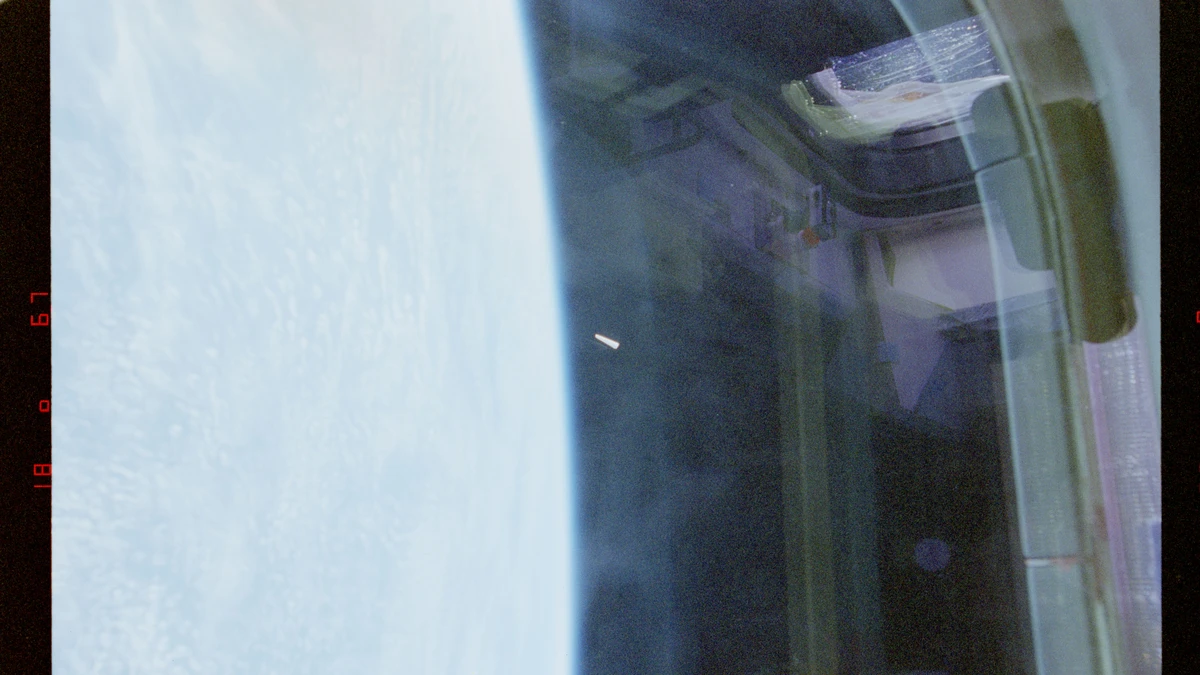
In the first frame, the object is a bright sliver beside the blue arc of the Earth. It could be dismissed as a film blemish, until you look at the next two frames, where it moves and turns.
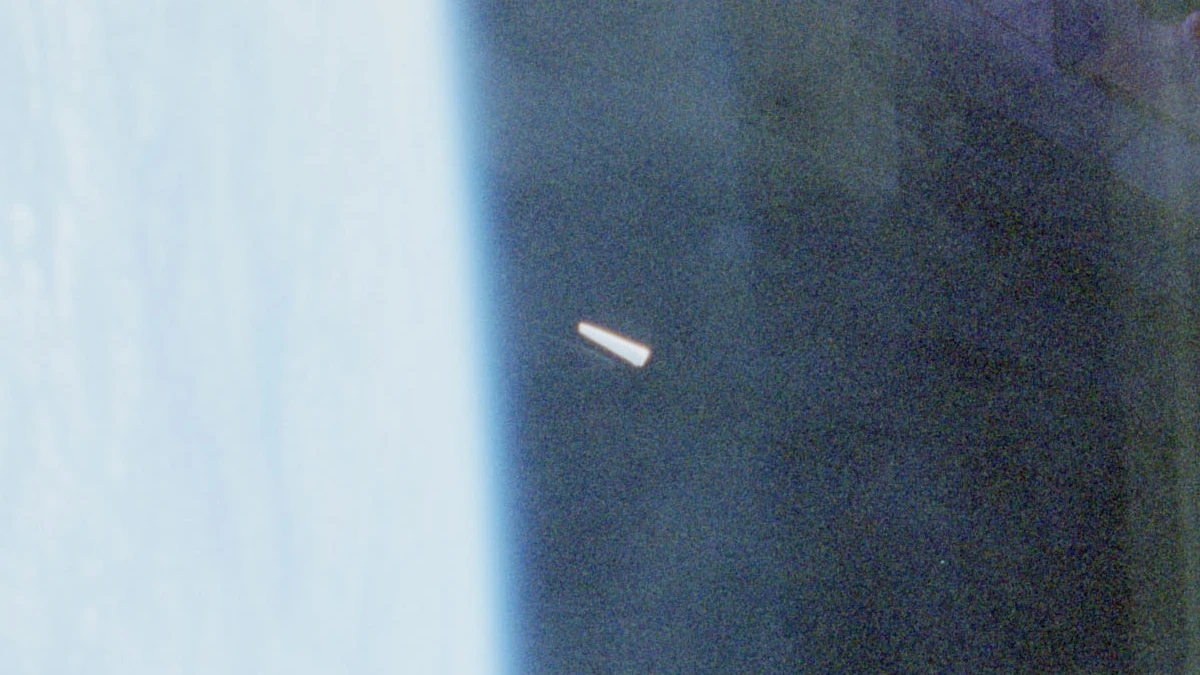
The second frame is where NASA's own caption becomes interesting. The agency notes the object "appears to have rotated or tumbled about its major axis, which is consistent with the behavior of a free-floating object." That's a careful sentence. It describes the motion without naming the thing doing the moving.
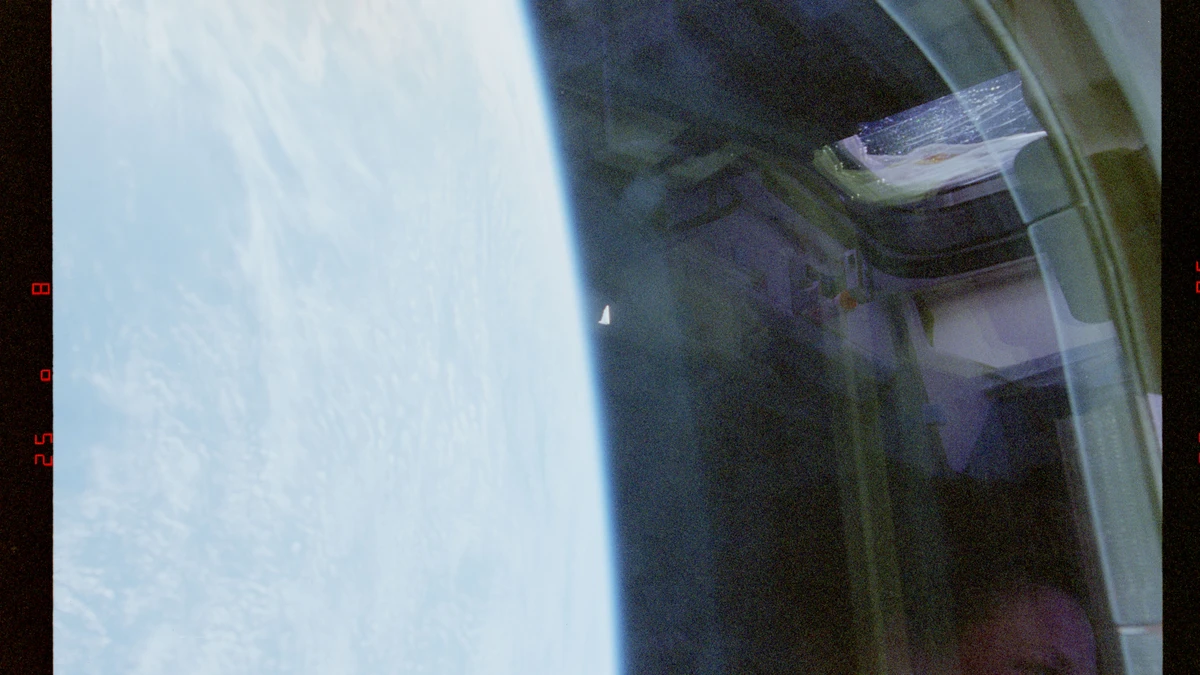
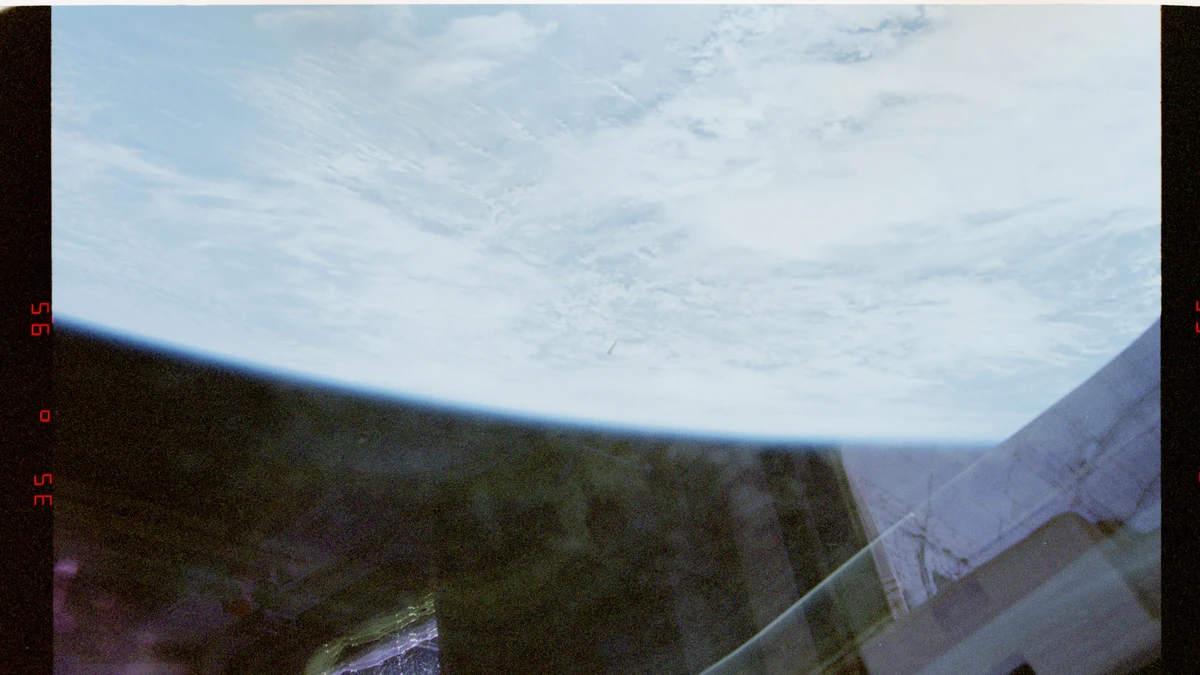
By the third frame the object has crossed from dark sky to bright Earth, passing between the shuttle and the cloud tops below. Three frames, one consistent story: something solid, sunlit and tumbling, moving relative to Columbia in low-Earth orbit.
The 1996 STS-80 UFO Video: The Case That Came First
The reason "STS-80" means anything to UFO researchers is the video. During the mission, cameras recorded pale, roughly circular objects near the Earth's horizon, most famously a sequence in which one object appears to descend towards the planet during thunderstorm activity, near a flash of lightning. The footage circulated on VHS, then online, for decades.
It also attracted serious analysis. Dr Mark Carlotto, an image scientist, published a technical study of the footage in 1999 and argued some of the objects' motion was hard to square with nearby debris. NASA's explanation has stayed consistent: shuttle missions are accompanied by a small cloud of ice flakes and shed particles, which catch the sun, drift through thruster plumes, and, filmed by a distant-focused camera, can look like large objects moving far away. Most analysts accept that explanation for most of the footage. Not all of them accept it for all of it.
The 2026 release doesn't settle the video argument, because the video wasn't in it. But it changes the context: the same mission produced still photographs that NASA itself, thirty years on, files under "unidentified."
Is the STS-80 Object Space Debris? The Honest Answer
Probably, and this page won't pretend otherwise. Shuttles shed things: ice from waste-water dumps, thermal insulation fragments, the odd washer or bolt from the payload bay. A centimetres-long fragment tumbling a few dozen metres from the orbiter would photograph exactly like this: bright, tapered, catching the sun, drifting across the Earth's limb. NASA's "free-floating object" phrasing leans the same way.
What keeps this case on the books is what's missing. There is no identification: not "ice particle," not "insulation fragment," just unidentified. The crew considered it worth photographing three times. And when the US government assembled its official releases of UAP records in 2026, NASA chose to put these frames in, alongside military sensor videos of genuinely unresolved incidents. Either the object couldn't be identified, or nobody tried very hard. Both possibilities are worth knowing about.
"It appears to have rotated or tumbled about its major axis, which is consistent with the behavior of a free-floating object."
· NASA's official description of the second STS-80 photograph, released 10 July 2026Columbia Launches
STS-80 lifts off from Kennedy Space Center carrying Cockrell, Rominger, Jernigan, Jones and Musgrave, plus two deployable research satellites. It will become the longest shuttle mission ever flown.
The Photographs
At an unspecified point in the mission, the crew photograph a small, bright object on three frames of 35mm film: beside the Earth's limb, then tumbling, then passing between Columbia and the Earth.
The Video Circulates
Downlinked mission footage showing circular objects near the horizon becomes one of the most-discussed 'shuttle UFO' videos of the decade. Dr Mark Carlotto publishes a technical analysis in 1999. NASA attributes such footage to ice and debris.
Landing
Columbia lands after 17 days, 15 hours and 53 minutes, a record never broken before the shuttle retired in 2011. The mission's film goes into NASA's archives.
The Photographs Released
NASA publishes the three frames through the Pentagon's PURSUE programme as NASA-UAP-D030–D032, describing 'an unidentified object in low-Earth orbit' and offering no identification.
The STS-80 Crew
Kenneth Cockrell
Navy test pilot on his third spaceflight, commanding the longest shuttle mission ever flown. The photographs were taken from the flight deck he commanded.
Story Musgrave
The only astronaut to fly on all five shuttles, flying his last mission at 61. After retiring, Musgrave spoke openly about unexplained sights in orbit, which permanently attached his name to the STS-80 story. He has never claimed the mission's objects were extraterrestrial.
Tamara Jernigan & Thomas Jones
Both were scheduled to perform spacewalks during STS-80, cancelled when the airlock hatch jammed: one of the mission's genuine anomalies. Jones later wrote candidly about mission events in his memoir.
Kent Rominger
Naval aviator on his first spaceflight, later chief of the NASA Astronaut Office. Like the rest of the crew, he has never publicly identified what the photographed object was.
Evidence Assessment
CONFIRMED
The photographs are real NASA recordsThree sequential 35mm frames, released by NASA itself through an official government programme, with frame numbers and full provenance.
CONFIRMED
The object moved and tumbledAcross the sequence the object rotates about its axis and crosses from dark sky onto a track between Columbia and the Earth. It is a solid, sunlit, moving thing, not a film artefact.
CONFIRMED
NASA still calls it unidentifiedThirty years of analysis capability later, the official caption offers no identification and the frames were included in a UAP release.
PROBABLE
Debris is the best mundane fitShuttle missions shed ice and hardware, and the tumbling is consistent with a free-floating fragment. This remains the most likely explanation.
UNRESOLVED
No link to the 1996 videoWhether the photographed object relates to the objects in the mission's famous downlinked footage is unknown. The video was not part of the 2026 release.
UNKNOWN
Distance and sizeWith no range data, the object could be centimetres long and nearby or metres long and distant. Nothing in the release constrains it.
Why the STS-80 Photographs Matter
On their own, three frames of a tumbling white object prove nothing except that something unidentified crossed a camera's view in 1996. What makes them significant is institutional. NASA has spent decades batting away shuttle UFO claims built on blurry video. With this release, the agency put its own photographs, sharp, sequential, provenance intact, into the official record of unidentified phenomena, and declined to explain them.
That's the pattern across the 2026 releases, from the Pantex report to the Apollo 17 records: the government isn't claiming these things are extraordinary. It's admitting, case by case, that it never worked out what they were. For STS-80, after thirty years of argument, that admission is new, and it came with the negatives.
Watch orbit from your garden
Kit we've tested and reviewed in full
You don't need a shuttle window to see sunlit objects in low-Earth orbit. Satellites, the ISS and tumbling rocket bodies are visible most clear evenings: binoculars show their motion and flashes beautifully.
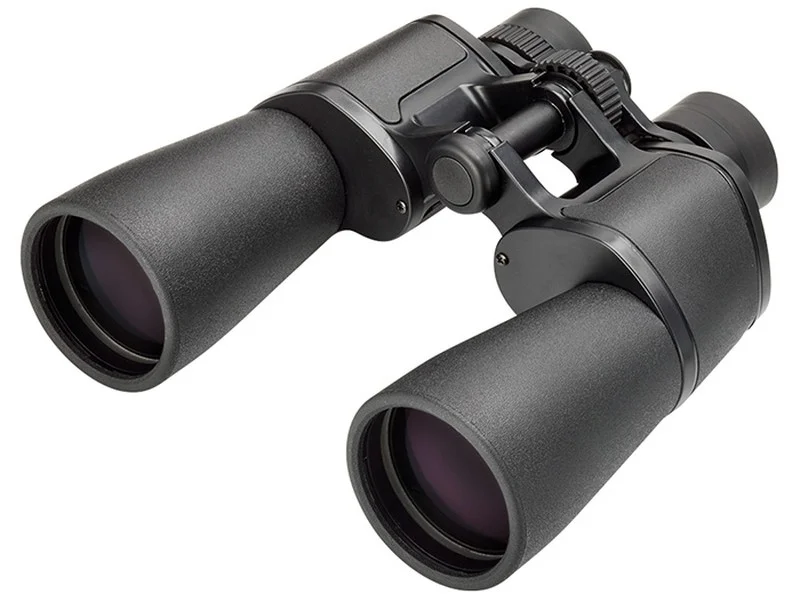
Wide, bright view that makes it easy to track a moving satellite, and to catch the periodic flash of a tumbling rocket body, the same behaviour NASA describes in these photos.
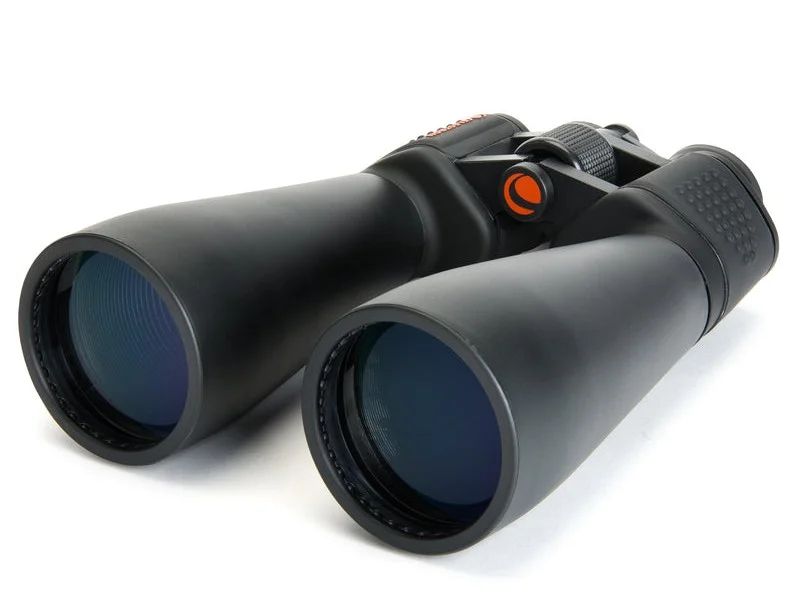
Enough aperture to follow dimmer satellites and pick up detail on the ISS as it crosses: the closest a garden gets to a flight-deck window.
Affiliate links: you pay the same price, we earn a small commission that helps keep WatchTheStars free.
Primary Source Documents
STS-80 Photograph 1
NASA-UAP-D030 · 1996 · released 10 Jul 2026
The original full-resolution frame: the object near the centre, right of the Earth's limb.
View Full ResolutionSTS-80 Photograph 2
NASA-UAP-D031 · 1996 · released 10 Jul 2026
The second frame, in which the object appears to have rotated or tumbled about its major axis.
View Full ResolutionSTS-80 Photograph 3
NASA-UAP-D032 · 1996 · released 10 Jul 2026
The final frame: the object superimposed against the Earth, passing between Columbia and the surface.
View Full Resolution📌 Note: These are official NASA photographs released through the US government's PURSUE declassification programme (Release 04, 10 July 2026, war.gov/ufo). Full-resolution copies are hosted here to ensure permanent availability.
Related Cases
More UAP cases
- The Varginha Incident20 January 1996 · Varginha, Minas Gerais, Brazil · Status: Officially Explained · Disputed
- The Phoenix LightsNevada · Arizona · Sonora, Mexico · ~8:15 PM and ~10:00 PM MST
- The Ariel School Incident16 September 1994 · Ariel School, Ruwa, Zimbabwe · Status: Unexplained · Disputed
- USS Nimitz UAP Incident: The Tic-Tac EncounterPacific Ocean · 14 November 2004 · ~100 miles SW of San Diego
- The Rendlesham Forest IncidentDecember 1980 · RAF Woodbridge, Suffolk, England
- The Northeastern Orb ClusterINCIDENT WINDOW: NOV 2021 – 2026 | LOCATION: NORTHEASTERN UNITED STATES | STATUS: ONGOING / UNRESOLVED