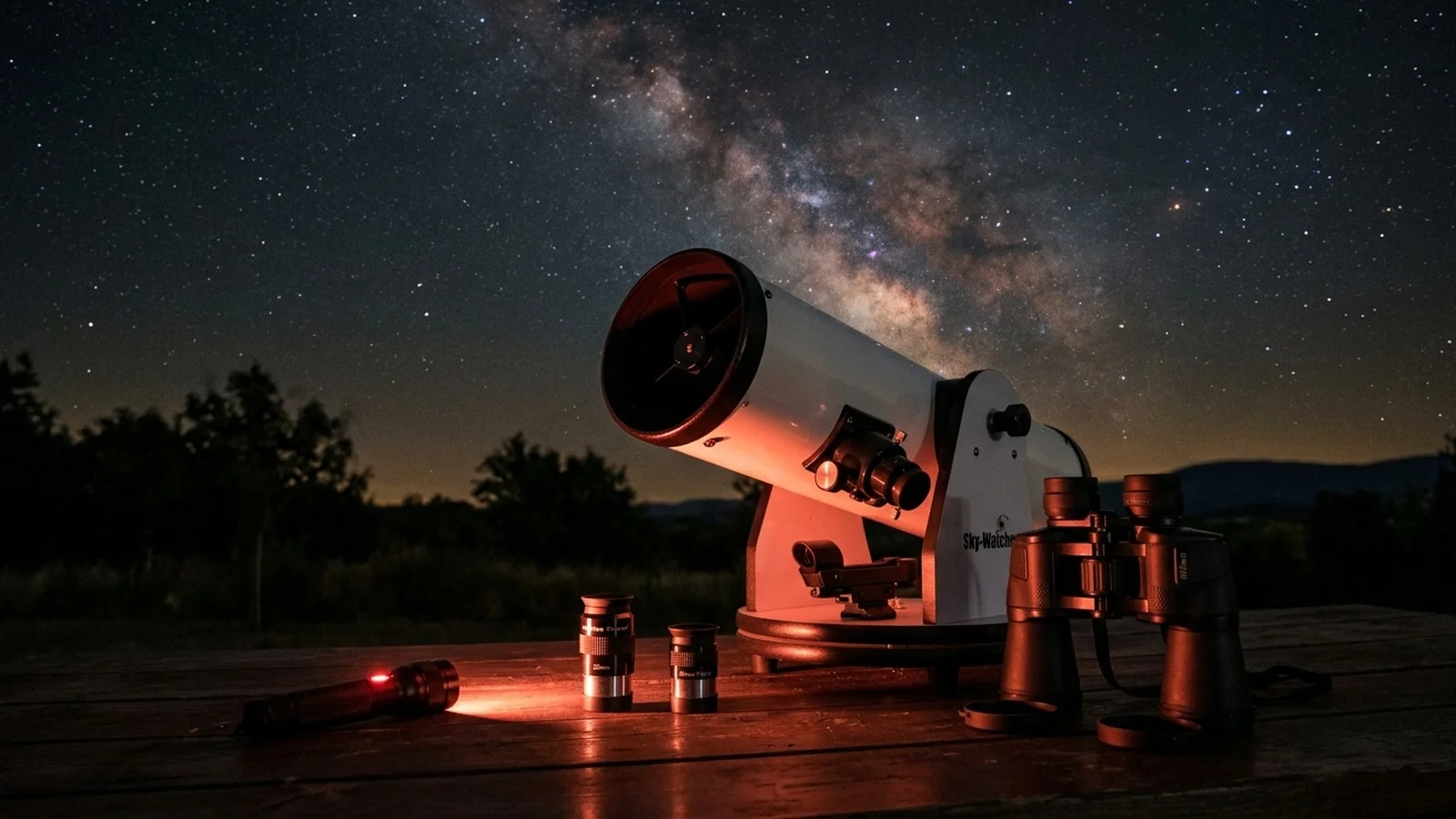
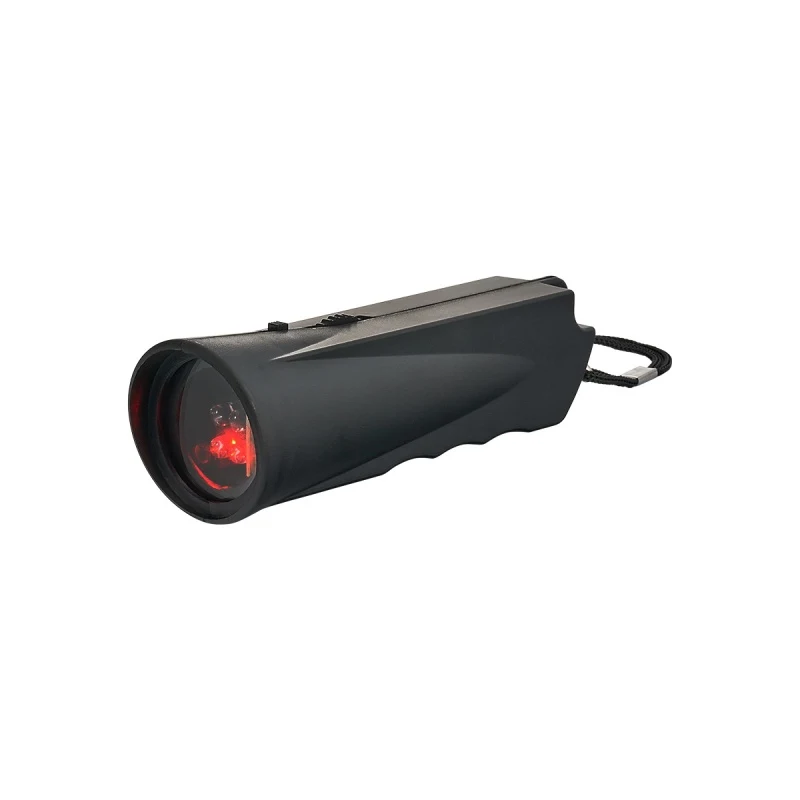
Astro Essentials Red Light Torch
| Key Specifications | |
|---|---|
| Light Modes | Red LED and white LED |
| Brightness | Adjustable thumbwheel |
| Best Use | Reading charts and operating equipment at night |
| Power | Battery included |
| Price | ~£16 |
Why Use a Red Light Torch for Astronomy?
Your eyes gradually become more sensitive in the dark, allowing you to see fainter stars and more detail through the eyepiece. A burst of white light can undo much of that dark adaptation just when your observing session is getting interesting.
The Astro Essentials torch gives you a dim red light for the practical jobs that still need illumination: reading a paper chart, finding an eyepiece, checking a mount scale or adjusting telescope controls. Red light is not completely invisible to dark-adapted eyes, so the brightness control matters. Turn it down until it is only just bright enough for the task.
Red and White Modes
The selector switch changes between red and white LEDs. Red is the observing mode. The brighter white light is useful while setting up, packing away, checking the ground for a dropped dust cap or walking safely after the session has finished.
Having both modes in one small torch keeps the kit bag simple, though it is worth checking the switch before turning it on near other observers. At a shared dark-sky site, always point the torch down and ask before using white light.
Who Is It For?
- Beginners assembling their first practical observing kit
- Visual observers using printed star charts or manual telescope controls
- Dobsonian owners who need to swap eyepieces and collimate outdoors
- Dark-sky visitors who want a considerate low-level light around other observers
If you use a phone or tablet at the telescope, also enable its red night mode and turn the screen brightness down. A red torch handles the physical tasks without needing to unlock a bright screen.
Limitations to Know
- Red light still affects night vision. Use the lowest brightness that lets you complete the task.
- The white mode needs care. Check the selector before switching it on around other observers.
- Changing the battery requires a small screwdriver. The supplied battery gets you started, but battery access is less convenient than a tool-free compartment.