Moons of the Solar System
Ocean moons that might hold life, the most volcanic world we know, a moon with methane seas and one that orbits backwards. These are the moons worth knowing, and how many of them you can see for yourself from the UK.
How Many Moons Are in the Solar System?
More than 450 moons orbit the eight planets, and the count keeps climbing as telescopes find more small ones. Most are rocky or icy fragments a few kilometres across. About 20 are big enough to have pulled themselves into a ball, and some of those are among the strangest worlds we know. Our own Moon is the fifth largest of them all.
| Planet | Known moons | Best known |
|---|---|---|
| Mercury | 0 | None |
| Venus | 0 | None |
| Earth | 1 | The Moon |
| Mars | 2 | Phobos, Deimos |
| Jupiter | 115 (April 2026) | Io, Europa, Ganymede, Callisto |
| Saturn | 293 (June 2026) | Titan, Enceladus, Mimas, Iapetus |
| Uranus | 29 (August 2026) | Miranda, Titania, Oberon |
| Neptune | 16 | Triton |
| Pluto (dwarf planet) | 5 | Charon |
Saturn's total jumped in 2026 as astronomers confirmed batches of small, distant moons, most of them orbiting backwards. Our story on the 15 new moons found in March 2026 explains where they come from.
Moons of Jupiter: Io, Europa, Ganymede and Callisto
Galileo found these four in January 1610, and they were the first moons ever seen orbiting another planet. Each is a world in its own right, and all four show up as points of light beside Jupiter in steady binoculars.
Io
The most volcanic world in the Solar System, with about 400 volcanoes kept erupting by Jupiter's tides.
Europa
A cracked shell of ice over a salty ocean that may hold twice as much water as all of Earth's oceans. Europa Clipper is on its way.
Ganymede
The largest moon in the Solar System, wider than Mercury, and the only moon known to make its own magnetic field.
Callisto
The most heavily cratered object known, with a surface that has barely changed in billions of years and very likely an ocean below.
Moons of Saturn: Titan, Enceladus and More
Saturn has more moons than any other planet, from Titan, which is larger than Mercury, down to fragments a few kilometres wide.
Titan
Hazy orange air thicker than Earth's and seas of liquid methane. Huygens landed there in 2005 and Dragonfly is next.
Enceladus
Geysers at its south pole spray a hidden salty ocean into space, making it one of the best places to look for life.
Mimas
One giant crater makes it look like the Death Star, and Cassini data point to a young ocean hidden under its ice.
Iapetus
Jet black on one side, bright on the other, with a ridge of mountains along its equator.
Saturn's other big moons
- Rhea: Saturn's second-largest moon, about 1,527 km across. In 2010 Cassini found a very thin layer of oxygen and carbon dioxide around it.
- Dione: about 1,123 km across. Its bright streaks turned out to be cliffs of ice, and it shares its orbit with two tiny moons, Helene and Polydeuces.
- Tethys: about 1,062 km across and almost pure ice, with a density just under that of water. Its crater Odysseus is about 400 km wide.
- Hyperion: a sponge-like lump about 360 by 266 by 205 km, more than 40% empty space, that tumbles unpredictably instead of keeping one face towards Saturn.
Moons of Mars, Uranus, Neptune and Pluto
From the two tiny moons of Mars to the frozen worlds Voyager 2 and New Horizons flew past at the edge of the Solar System.
Phobos and Deimos
Two small, dark, lumpy moons. Phobos is slowly spiralling in towards Mars and will one day break up or crash.
Miranda
A jumble of mismatched terrain and Verona Rupes, the tallest known cliff in the Solar System.
Triton
Orbits Neptune backwards, probably a captured Kuiper Belt world, with nitrogen geysers seen by Voyager 2.
Charon
Half Pluto's width, with a red north pole. The two orbit a point in the space between them.
Uranus's other big moons
- Titania: the largest moon of Uranus, about 1,578 km across, with valleys up to about 75 km wide. William Herschel found it on 11 January 1787.
- Oberon: about 1,523 km across and the outermost of the five big moons, found by Herschel the same night as Titania. Voyager 2 caught a mountain about 6 km high on its edge.
- Ariel: about 1,158 km across. In 2024 the James Webb Space Telescope found strong signs of carbon dioxide ice on the side that trails behind it in its orbit.
- Umbriel: about 1,169 km across and the darkest of the five, reflecting only about 16% of the sunlight that reaches it.
Largest Moons in the Solar System
Two moons, Ganymede and Titan, are wider than the planet Mercury (4,879 km), though both are less massive.
| Rank | Moon | Planet | Diameter |
|---|---|---|---|
| 1 | Ganymede | Jupiter | About 5,260 km |
| 2 | Titan | Saturn | 5,149 km |
| 3 | Callisto | Jupiter | About 4,820 km |
| 4 | Io | Jupiter | About 3,643 km |
| 5 | The Moon | Earth | 3,474 km |
| 6 | Europa | Jupiter | About 3,122 km |
| 7 | Triton | Neptune | About 2,707 km |
| 8 | Titania | Uranus | About 1,578 km |
| 9 | Rhea | Saturn | About 1,527 km |
| 10 | Oberon | Uranus | About 1,523 km |
Which Moons Could Have Oceans or Life?
No life has been found beyond Earth, but several moons hide liquid water under their ice, and that makes them the first places scientists want to look.
- Enceladus: geysers spray its salty ocean into space, and Cassini found water, energy and the chemistry life needs.
- Europa: an ocean under the ice that may hold twice as much water as Earth's oceans. Europa Clipper is on its way.
- Ganymede: very probably a salty ocean buried deep under thick ice. ESA's Juice will go into orbit around it.
- Callisto: a 2025 study found it very likely has an ocean too.
- Titan: methane seas on the surface and rich chemistry in its air. Whether it has a deep water ocean is now being debated.
- Mimas: Cassini data point to a young ocean under the ice of a moon that looked frozen solid.
Which Moons Can You See from the UK?
More than you might think. Jupiter's four big moons are a great first target for binocular astronomy, and every moon page has computed viewing figures for UK skies.
| Moon | What you need |
|---|---|
| Io, Europa, Ganymede, Callisto | Steady 10x50 binoculars or any telescope |
| Titan | Good binoculars or any small telescope |
| Iapetus | A 4 to 6-inch telescope when its bright side faces us |
| Enceladus, Triton | About an 8-inch telescope on a steady night |
| Mimas, Phobos, Deimos | Very hard, even with large telescopes |
| Miranda, Charon | Beyond most amateur kit |
To find out which planets are up tonight, check what you can see in the sky tonight, and the UK night sky this week rounds up the best sights. New to this? Start with our guide to stargazing for beginners.
What you need to see other planets' moons
Kit we've reviewed in full
Jupiter's four big moons are a binocular target, Titan needs only a small telescope, and the faint ones reward aperture and patience.
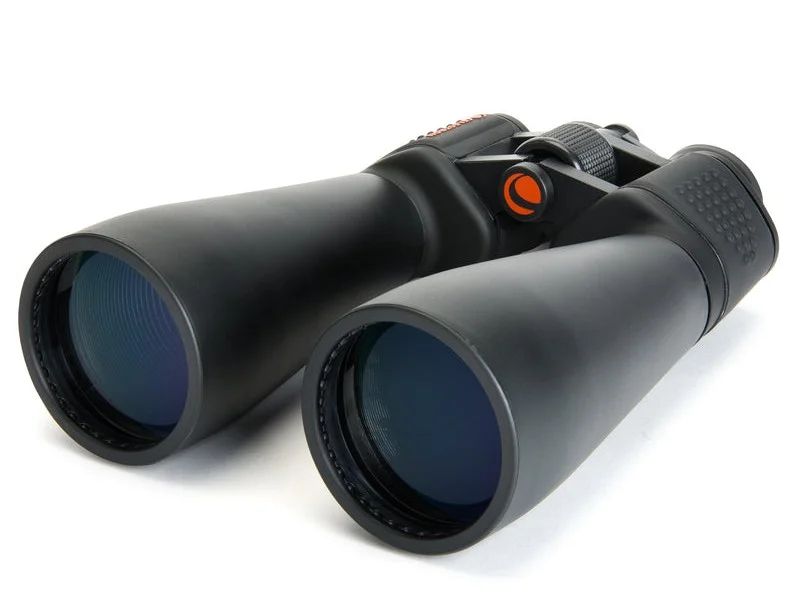
Mounted on a tripod, big binoculars show Io, Europa, Ganymede and Callisto as tiny points lined up beside Jupiter, changing position from night to night.
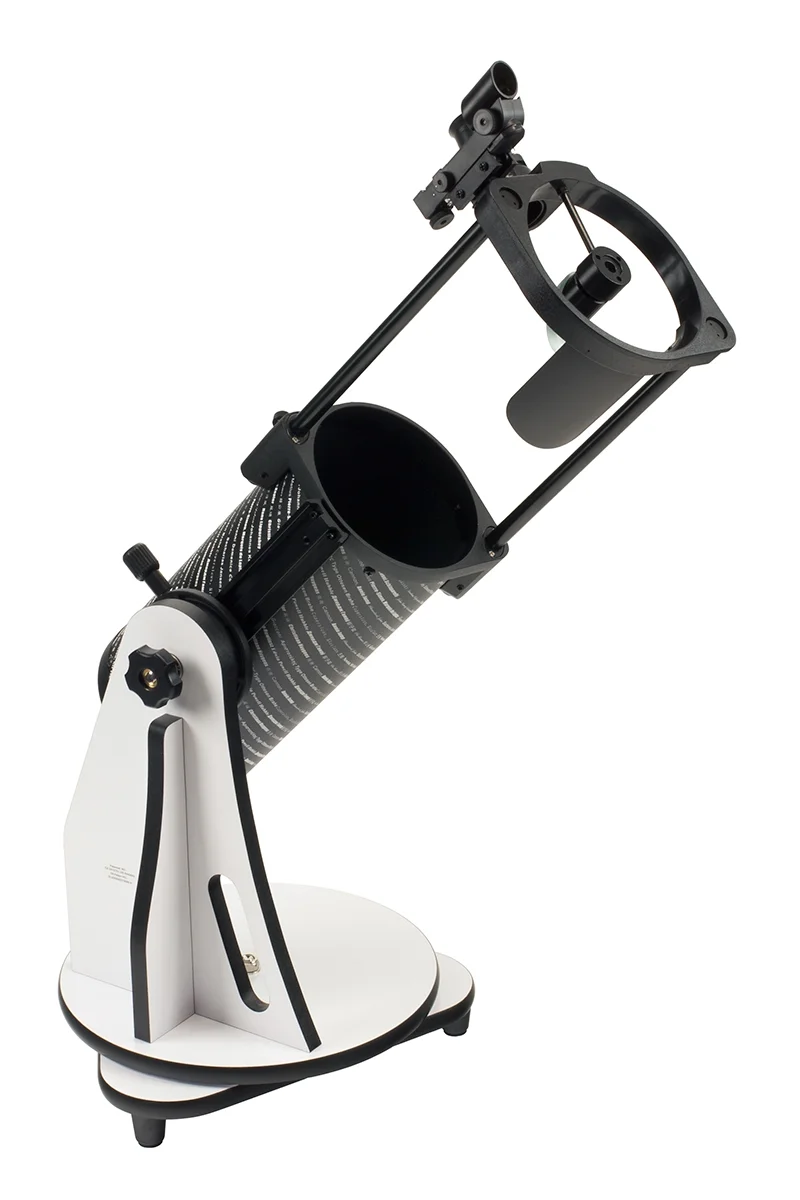
A small tabletop telescope picks out Titan beside Saturn without trouble, and Iapetus when its bright side faces us.
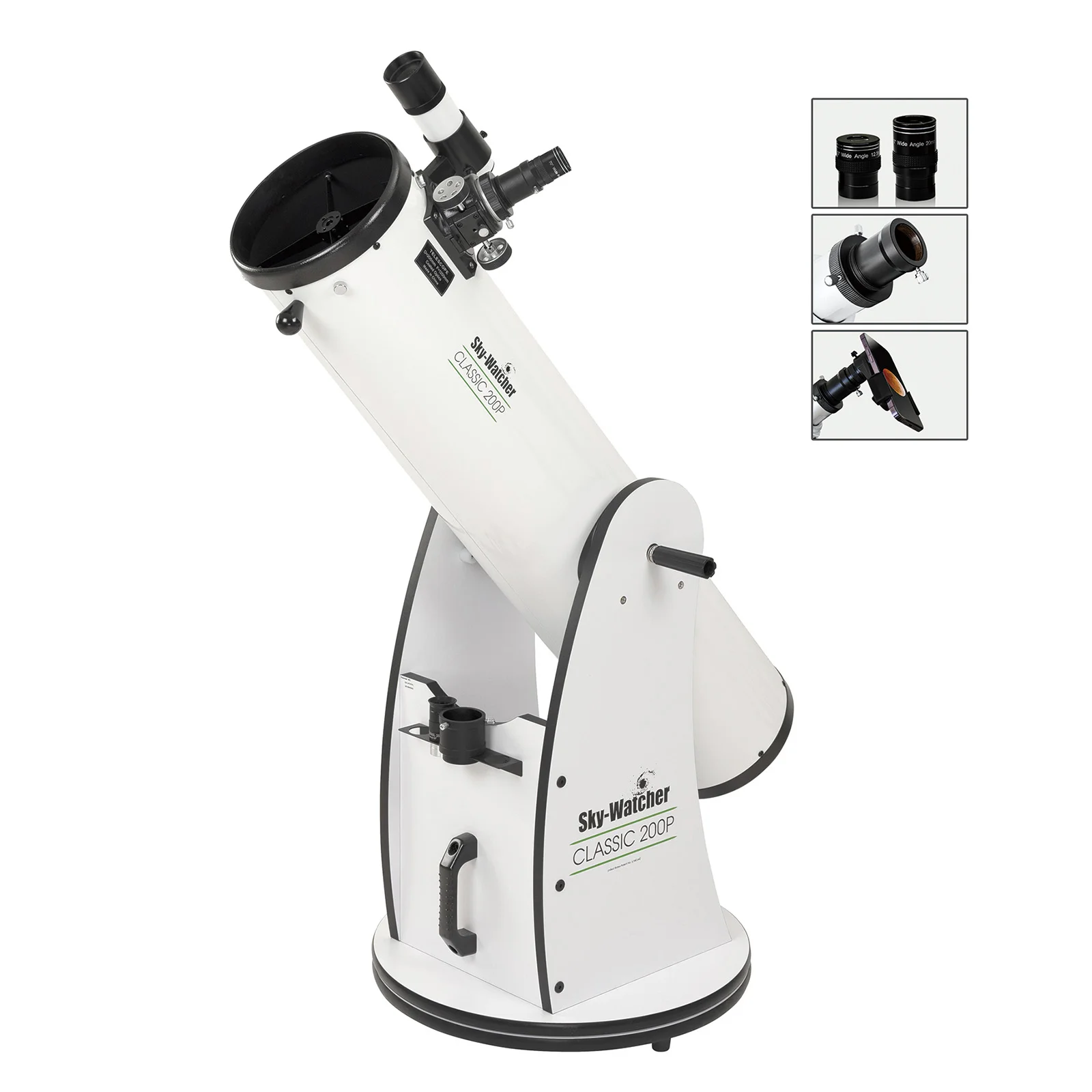
Eight inches is a sensible minimum for Enceladus and Neptune's moon Triton, on a steady night at 150x or more.
Affiliate links: you pay the same price, we earn a small commission that helps keep WatchTheStars free.