Northern Lights Tonight UK
The current UK aurora alert in plain English: how strong, which night, which regions, and what time to look.
No aurora alert for the UK right now
No storm watch strong enough to bring the northern lights to UK skies has been flagged here since the last alert. This page changes as soon as the Met Office or NOAA issues one. Space weather can shift within hours, so for the live Kp and solar wind numbers right now, see our UK aurora forecast.
Where in the UK Can You See the Northern Lights?
Your latitude decides most of this. For the G1 to G2 storms that make up most UK alerts, the honest picture looks like this.
Scotland: the best chance by a distance. Caithness, Sutherland, Orkney and Shetland have the strongest odds, and the whole of the Highlands and Aberdeenshire are in play from G1 upwards. From a dark spot outside Edinburgh or Glasgow you can catch a green arc low on the northern horizon at G2, sometimes with faint pillars to the naked eye.
Northern England and Northern Ireland: the realistic southern edge. Northumberland, the Lake District, the North York Moors and the Antrim coast are the places to be at G2. Expect a glow rather than a show, and let a long-exposure phone shot confirm what your eyes half-suspect. Our UK dark sky sites map lists the darkest spots with an open view north.
Wales, the Midlands and southern England: G3 or nothing. A G2 storm rarely produces anything visible this far south. When a storm reaches G3, a camera pointed north from a dark hill can pick up a red or green band on the horizon. G4 and G5 storms, which come a few times per solar cycle, have put the aurora overhead in Cornwall and Kent.
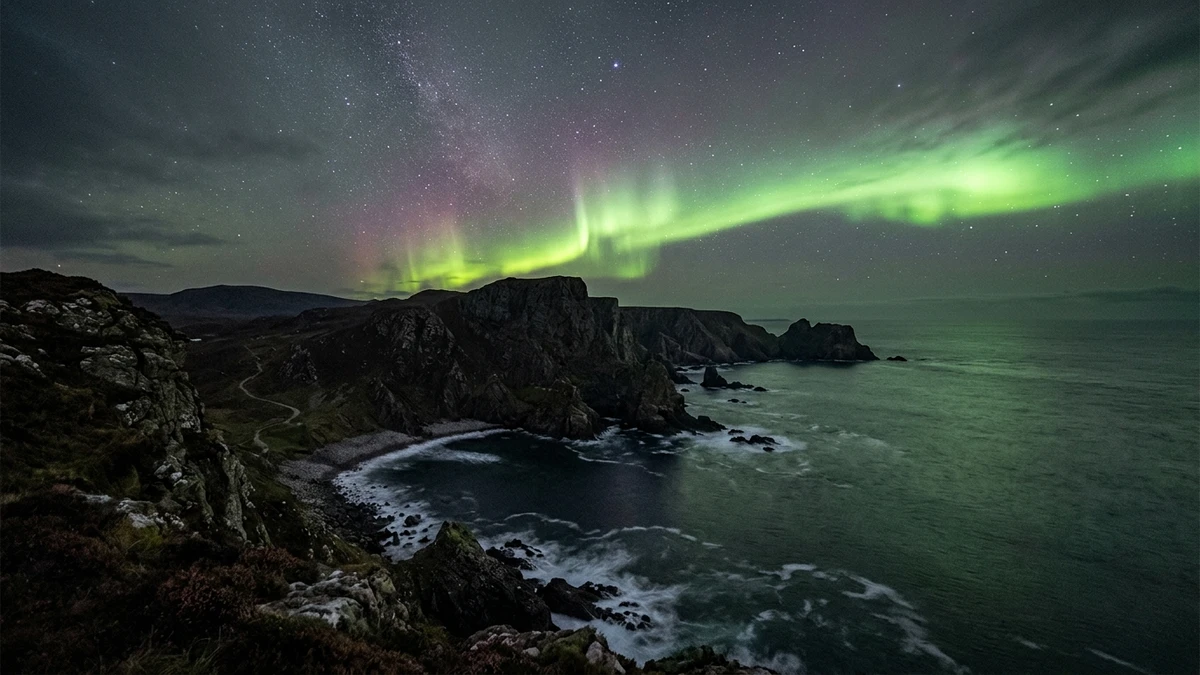
What Time to See the Northern Lights Tonight (UK Times)
Aurora does not run to a schedule. It comes in bursts, called substorms, that can build and fade inside 20 or 30 minutes. The hours from 22:00 to 02:00 are the statistically best window, because that is when the UK is rotated under the auroral oval and the sky is darkest, but a strong burst can come at any time after dark.
Darkness is the real limiter. From late September to March the sky is fully dark by about 20:00 and the window is long. In late May, June and early July the UK never reaches astronomical darkness north of about Manchester, so even a G2 storm is a camera-only event. Check tonight's Moon phase too: a bright Moon washes out a faint arc, while a New Moon leaves the northern horizon properly black.
The practical approach is to have AuroraWatch UK alerts switched on and our UK aurora forecast open, then step outside when the readings jump. Amber means look now from Scotland and northern England. Red means the whole country should step outside.
How to See the Northern Lights: A Realistic Plan
You need three things: a dark spot with a clear view to the north, no Moon, and a clear sky. Get away from streetlights, face north, and give your eyes at least 20 minutes to adjust before you decide there is nothing there.
Know what you are looking for. From most of the UK a G1 or G2 aurora is not the dancing curtain in the photos. It is a pale grey-green band low over the northern horizon that could easily pass for thin cloud. If the band has a sharp lower edge, if it slowly brightens and fades, or if faint vertical rays appear in it, that is aurora. Stars shine through aurora; cloud hides them. Binoculars help: cloud goes fuzzy, aurora stays a smooth glow.
Your phone sees more than you do. Switch to night mode, prop it on a wall or a fence, point it north and take a 5 to 10 second exposure. Green and red that are invisible to the eye show up clearly. Our guide to phone astrophotography has the settings. While you are waiting, it is worth checking ISS passes tonight, because a bright dot sliding across the sky at 22:00 is more likely to be the space station than anything exotic.
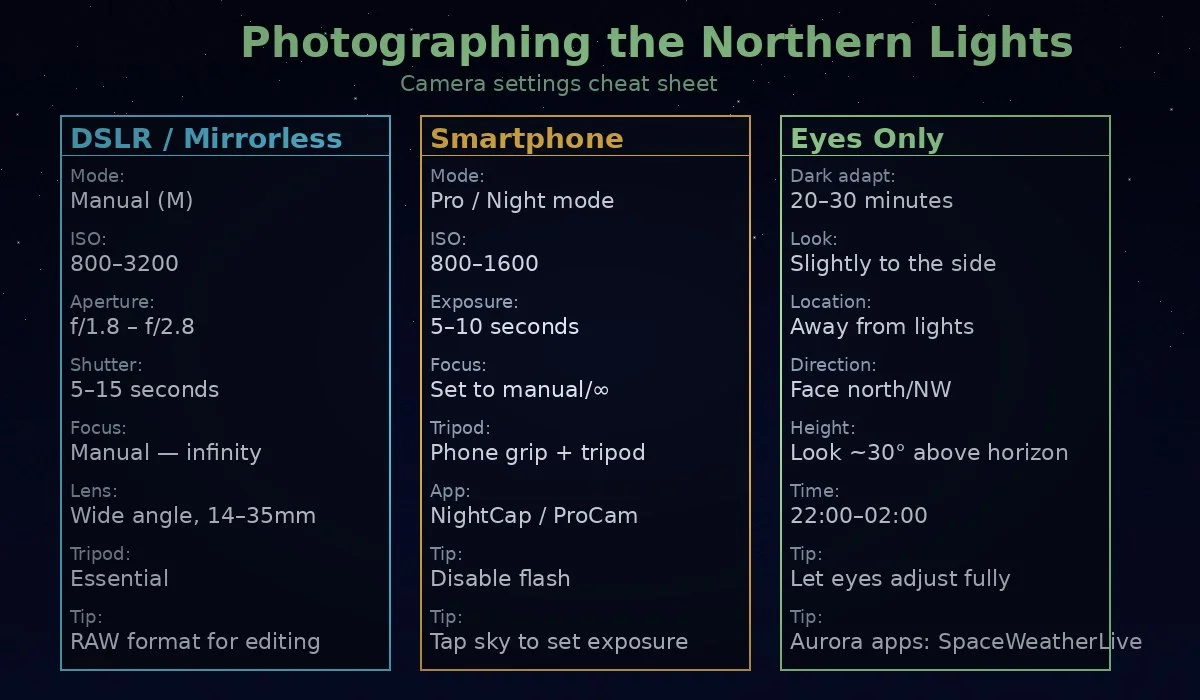
Kit for an aurora night
Kit we've tested and reviewed in full
You do not need a telescope for the northern lights. A pair of binoculars helps you check a faint glow on the horizon, and a red torch keeps your night vision while you wait. Our northern lights guide covers the rest.
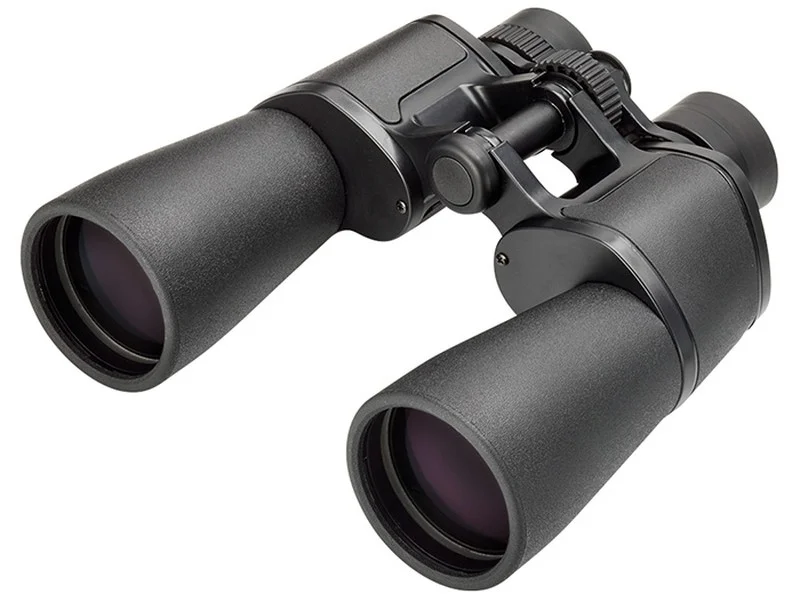
Light enough to keep in the car for a midnight dash north, with a wide field for sweeping the horizon.
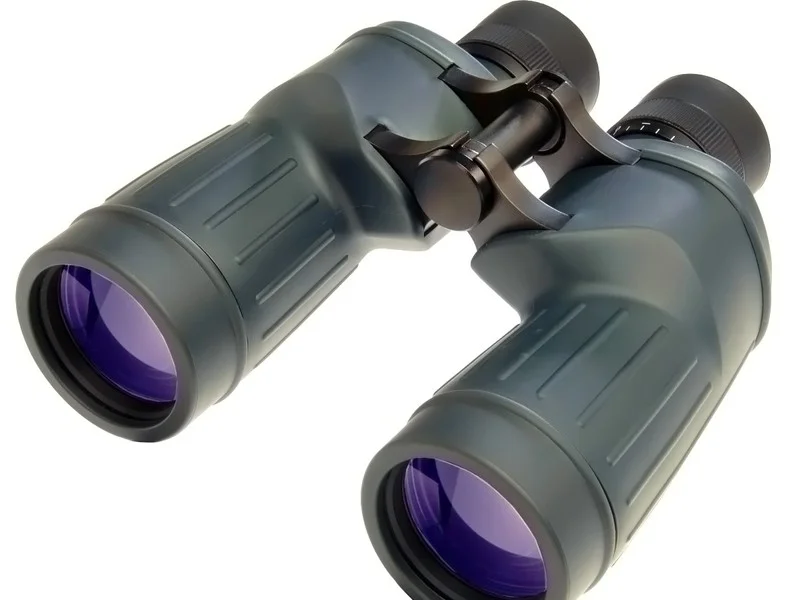
A solid pair for confirming whether that pale band is aurora or thin cloud.
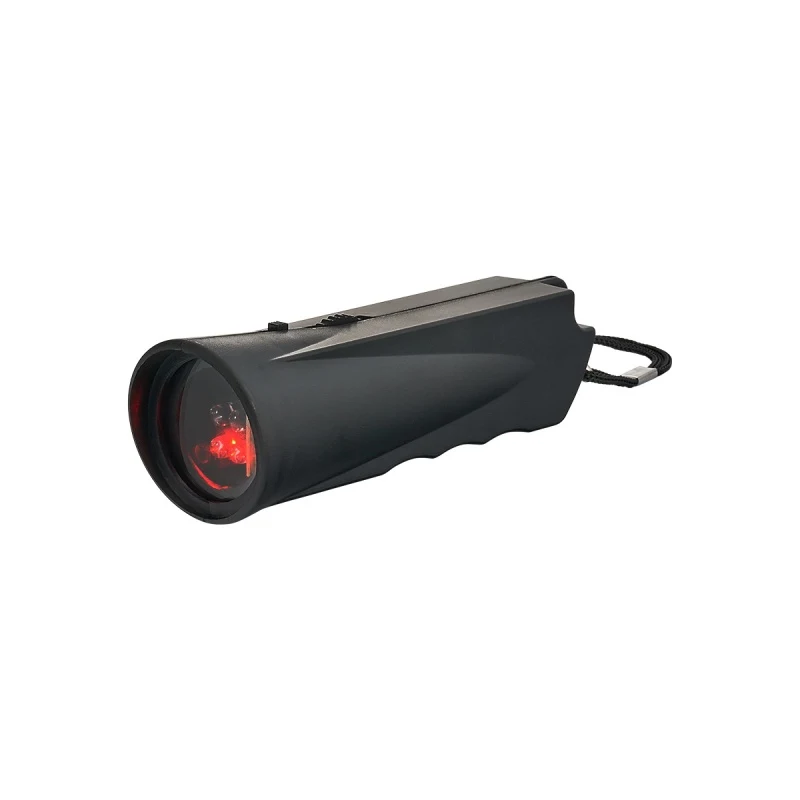
Astro Essentials Red Light Torch
A faint arc disappears the moment you check your phone. Red light lets you see the ground without wrecking your eyes.
Browse all our binocular reviews
Honest, research-based recommendations for every budget.
Browse all →Affiliate links: you pay the same price, we earn a small commission that helps keep WatchTheStars free.
If you are new to this, our how to see the northern lights from the UK guide explains what a faint display actually looks like and how to tell it from light pollution. If the aurora stays away, there is plenty else up there: see what you can see in the sky tonight and the UK night sky this week.
Why Aurora Alerts Happen: CMEs, Coronal Holes and Bz
Most UK aurora alerts start with a coronal mass ejection, a cloud of charged particles thrown off the Sun by an erupting sunspot region. If part of the cloud is aimed at Earth it arrives one to three days later and rattles our magnetic field. The bigger and faster the cloud, and the more directly it hits, the stronger the storm. Forecasters grade storms G1 (minor) to G5 (extreme), matching Kp 5 to Kp 9.
The other driver is a coronal hole, a gap in the Sun's outer atmosphere that lets fast solar wind escape. These streams sweep past Earth every 27 days as the Sun rotates, and they produce the smaller, more predictable G1 events. When a CME lands on top of a coronal hole stream, the combined push often nudges a forecast up a level.
The wildcard is Bz, the north-south direction of the magnetic field carried inside the solar wind. When Bz points south it opens a door in Earth's magnetic shield and the aurora switches on. When it points north, even a fast CME can pass with barely a flicker. Bz cannot be forecast in advance. It can only be watched in real time, which is why a forecast written the day before is only ever a "maybe".
UK Aurora Alert Log
Every storm watch we have covered, newest first, with how it turned out where we know. Bookmark this page: it is updated with each fresh alert rather than a new post each time.
- 9–13 Oct 2026 · Met Office: active to G1 likely on 9 Oct, eased on 10 Oct to a chance of G1 with a slight chance of G2 (G3 dropped), then re-strengthened on 11 Oct to G1 likely with a chance of G2 and a slight chance of G3 for 11–13 Oct, Scotland and northern England. NOAA: G2 watch issued 6 Oct for 9 Oct, downgraded to G1 on 9 Oct, rolled forward as a G1 watch for 10 Oct and a G2 watch for 11 Oct. A slow CME left the Sun on 6 Oct and missed its Friday arrival, keeping Friday quiet, but it reached Earth on Saturday 10 Oct; two more glancing CMEs and a coronal hole stream follow. New Moon on 10 Oct, so dark Moon-free skies. Outcome so far: delivered — peaked Kp 7 (G3, strong) during 10 Oct, well above the eased G1 forecast, with aurora reported across Scotland and into northern England; quiet again by Sunday, with only minor activity afterwards (Kp 4 on 11 Oct, Kp 3.33 on 12-13 Oct, short of the forecast G1 tail) and AuroraWatch UK green overnight 12-13 bar a brief yellow around 03:00 BST on 13 Oct. Outcome: delivered on 10 Oct only - a strong G3 (Kp 7, peak 16:00 BST 10 Oct) storm seen across Scotland and into northern England; the residual G1 tail the Met Office allowed for underdelivered, so no further widespread UK display.
- 4 Oct 2026 · Met Office: G1 likely, slight chance of G2. NOAA: G1 likely, Kp peak ~4.7. Fast solar wind stream from a coronal hole plus waning effects of an earlier CME. Aurora possible as far south as the northern half of Scotland; central and southern Scotland an outside chance, rest of UK unlikely. Waning crescent Moon (35%) down until ~midnight, so dark evening skies. Outcome: delivered — peaked Kp 5.67 (G1) at 19:00 BST on 4 Oct, with further G1 periods overnight (Kp 5 again at 04:00 BST on 5 Oct), so northern Scotland and the Isles had their forecast chance; no G2, so no widespread display further south.
- 16–17 Sep 2026 · Met Office: likely G1, chance of G2, slight chance of G3. NOAA: G1 likely. Coronal hole fast wind (solar wind ~800 km/s) plus two glancing CMEs from filament eruptions on 13–14 Sep. Aurora possible across Scotland, slight chance for northern England. Waxing crescent Moon sets ~20:15 BST, so dark skies after. Outcome: underdelivered — observed Kp peaked at 4 (active), only brushing G1 (Kp 4.67) in the early hours of 17 Sep, short of the forecast G2; no widespread UK display, far-north Scotland camera-only at best.
- 8–9 Sep 2026 · Met Office: G1–G2 likely, slight chance of G3. NOAA: G1 watch. Four CMEs from AR4524 plus a coronal hole stream. Scotland likely, northern England a chance. First CME arrived early on 9 Sep and reached G1; 9 Sep the peak window. Outcome: underdelivered — only one CME arrived, later and weaker than forecast; peaked at Kp 3–4 (unsettled to active) overnight 8–9 Sep, no widespread UK display, far-north Scotland camera-only at best.
- 28–29 Aug 2026 · NOAA G2 watch after an M6.9 flare from AR4513 fired Earth-directed CMEs, with a coronal hole stream alongside. Met Office named Scotland, with a chance for northern England and Northern Ireland.
- 19 Mar 2026 · Equinox-season alert; see our 19 March aurora alert.