UK Aurora Forecast: Live Kp, Bz and 3-Day Outlook
Live Kp, solar wind and AuroraWatch UK data, turned into a plain answer: can you see the Northern Lights from where you are tonight?
Aurora alert: after Saturday's G3 (Kp7) storm the northern lights remain possible over Scotland and northern England on the night of Monday 12 October, though the Met Office has activity easing to a G1 chance through 13 October
Saturday 10 October delivered the real show. The coronal mass ejection that forecasters had almost written off arrived two days late and pushed the geomagnetic field to G3 (Kp7), a strong storm, with aurora reported across Scotland and into northern England. Activity has eased a lot since. The Met Office forecast issued on Sunday evening keeps a minor G1 storm likely with a chance of G2 through the night of Monday 12 October, and says sightings are possible across Scotland and similar latitudes where skies are clear up to 13 October, but NOAA's model puts the strongest periods in the early hours of Monday and has the field settling back to unsettled levels by Monday night. The honest version: Scotland keeps a real but fading chance tonight, best earlier in the night, northern England only if a brief G2 period lands while your sky is dark, and the rest of the UK is unlikely now that Saturday's strong storm has passed. New Moon fell on 10 October, so the skies are dark and Moon-free, with full dark in northern Scotland running from about 20:30 BST to 05:35 BST, so keep an alert running rather than standing out all night. For which regions and what time, see northern lights tonight.
Three-day Kp forecast
NOAA's forecast in three-hour blocks, UK time. Grey bars are what's already been observed; coloured bars are the forecast. Yellow means Kp 5 or more (a G1 storm, worth watching from Scotland and the north); red means Kp 7 or more (G3, a chance for the whole of the UK). Forecasts are updated several times a day and are much better at "a storm is coming" than at the exact hour.
How to read an aurora forecast for the UK
Three numbers matter. Kp is a 0 to 9 scale of how disturbed Earth's magnetic field is, averaged over three hours and the whole planet. It tells you how far south the aurora has pushed: the higher the Kp, the further south you can be and still see it. Bz is the north-south direction of the solar wind's magnetic field, and it is the trigger. A strongly southward Bz (a big negative number) opens the door; a northward Bz keeps it shut no matter what the Kp forecast said. Solar wind speed is the energy supply: 300 to 400 km/s is quiet, 500 or more means a coronal hole stream or a coronal mass ejection has arrived.
The catch with the Kp forecast is that it's a prediction of an average. A CME can arrive twelve hours early or late, and a display often comes as a 20-minute substorm inside a three-hour block that looks unremarkable. That's why the live Bz and the AuroraWatch UK alert level (measured by magnetometers in the UK itself) are on the panel above: they tell you what's happening now, not what was expected. If Bz drops below about minus 10 for more than half an hour and AuroraWatch goes amber or red, go outside.
What Kp you need for each part of the UK
These are rules of thumb for the naked eye under a clear, dark northern horizon. A camera on a tripod, or a phone in night mode, will pick up the aurora about one Kp level earlier than your eyes.
| Where | Kp for a possible naked-eye view | What you'll typically see |
|---|---|---|
| Shetland, Orkney, far north Scotland | Kp 4 | Green arc in the north, rays and movement on good nights |
| Rest of Scotland, Northern Ireland | Kp 5 (G1) | Glow or arc low in the north; colour mostly on camera |
| Northern England, north Wales, Isle of Man | Kp 6 (G2) | Pale arc or pillars low in the north; needs a dark site |
| Midlands, mid Wales, East Anglia | Kp 7 (G3) | Red and green pillars during a real storm; a few nights a year at solar max |
| Southern England, south Wales, Cornwall | Kp 8–9 (G4–G5) | Only in major storms like May 2024; then it can reach overhead |
For the current storm watch in plain English, with the better night and which regions are in play, see northern lights tonight. When the numbers line up, our guide to seeing the Northern Lights from the UK covers where to go, how to photograph it and what to expect, and the UK dark sky sites list has north-facing spots for every region. Check cloud and Moon for your postcode with the stargazing tonight tool.
Kit for an aurora night
Kit we've tested and reviewed in full
You don't need optics for the aurora, and binoculars make it worse. What helps is a camera that can hold a shutter open for a few seconds and a way to keep it still. Our guide to seeing the Northern Lights from the UK covers the rest.
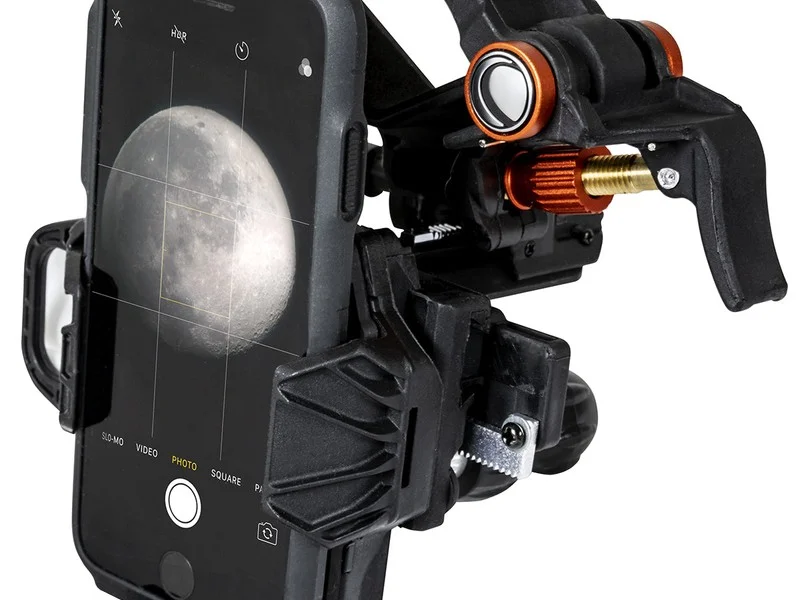
Celestron NexYZ Smartphone Adapter
A phone in night mode on a steady mount catches aurora your eyes can't. This clamp holds it rock-steady on any tripod, and doubles as a phone-to-eyepiece adapter for the Moon.
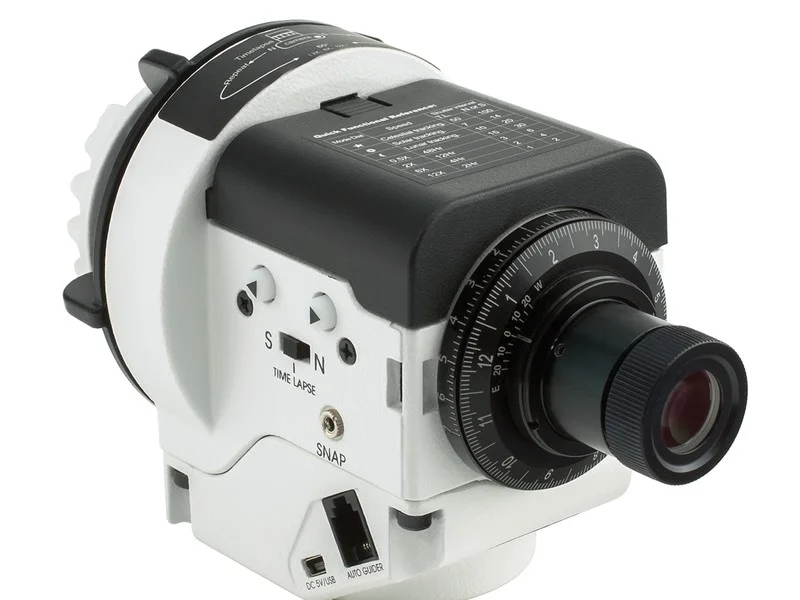
Sky-Watcher Star Adventurer 2i
Not needed for aurora itself, but if you're out under a dark northern sky anyway, a tracker turns the same camera into a Milky Way and deep-sky imager.
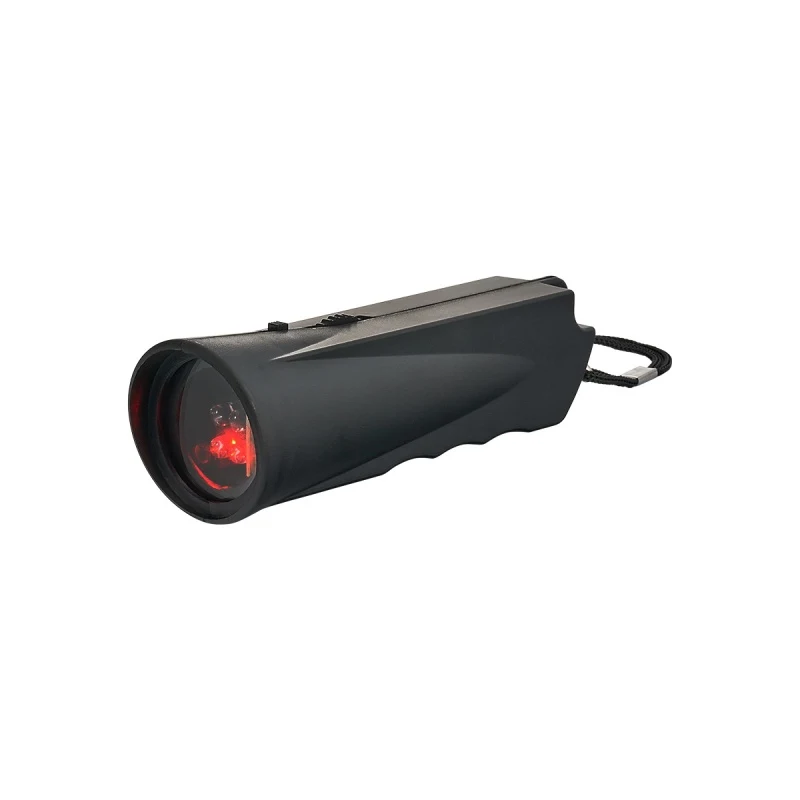
Astro Essentials Red Light Torch
Faint aurora is easy to miss if you've just looked at a phone screen. A red torch keeps your eyes adapted.
How to see the Northern Lights from the UK
Honest, research-based recommendations for every budget.
Browse all →Affiliate links: you pay the same price, we earn a small commission that helps keep WatchTheStars free.