Key takeaways
- Congressman Eric Burlison says MIT Lincoln Laboratory has agreed to hand over a 1952 recording catalogued 'AF-ATIC-FILM, 03/52' and labelled a 'flying saucer talk'
- The briefer on the recording is Edward Ruppelt, the Air Force officer who ran Project Blue Book and coined the term 'UFO'
- The briefing dates to March 1952, a few months before the famous 'Invasion of Washington' UFO wave over the US capital that July
- Burlison's letter asks the lab to confirm the recording exists, preserve it, and work with the National Archives, not to dump it online tomorrow
- The lab reportedly agreed to comply within 30 days, putting a response due in early summer 2026
Jump to section 7 sections
- MIT Lincoln Lab Agrees to Hand Over the 1952 Tape
- What Is the 1952 'Flying Saucer Talk'?
- Who Was Edward Ruppelt, the Man on the Recording?
- The 1952 Invasion of Washington: The UFO Wave Behind It
- Why a Private Lab Is Holding a Government UFO Tape
- What Burlison Asked For, and What Happens Next
- What This Means for UFO Disclosure in 2026
MIT Lincoln Lab Agrees to Hand Over the 1952 Tape
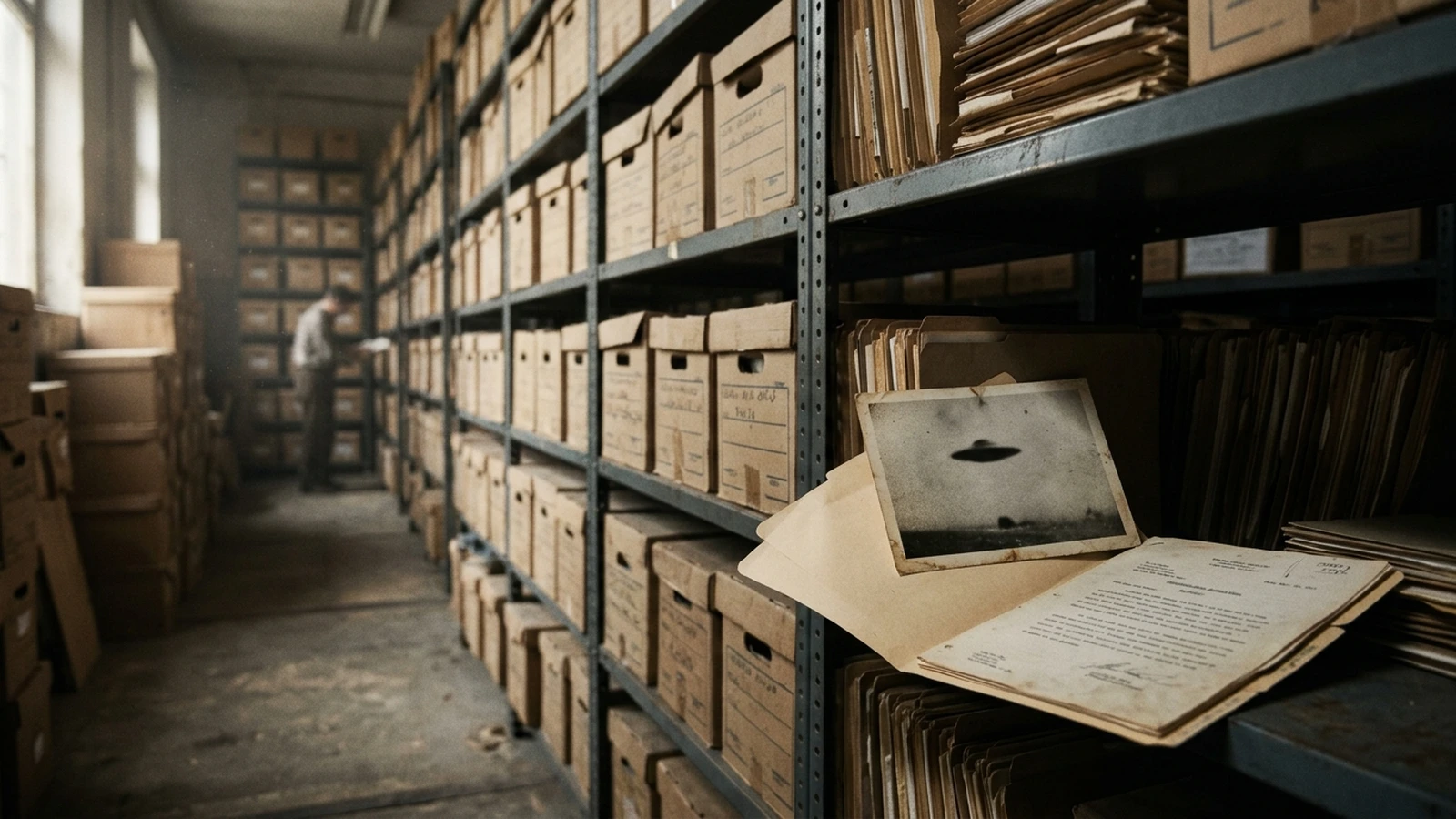
There is a recording from 1952 that almost nobody alive has heard, and a US congressman has just prised it loose. On 24 June 2026, Representative Eric Burlison said MIT Lincoln Laboratory had agreed to hand over a 74-year-old recording of a "flying saucer talk". It is a briefing given by the man who ran the Air Force's first serious study of UFOs.
"We told MIT Lincoln Labs we know the exact video file you are holding, by name, and we want it," Burlison wrote on X. "They admitted it exists and agreed to turn it over. That is what happens when you stop asking politely and start naming names."
It is a small thing on the face of it. One reel, one briefing, one afternoon in 1952. But it has become a neat test of a much bigger idea running through this year's disclosure push: that some of the government's oldest UFO material was quietly parked with private contractors, where the usual rules do not reach.
What Is the 1952 'Flying Saucer Talk'?
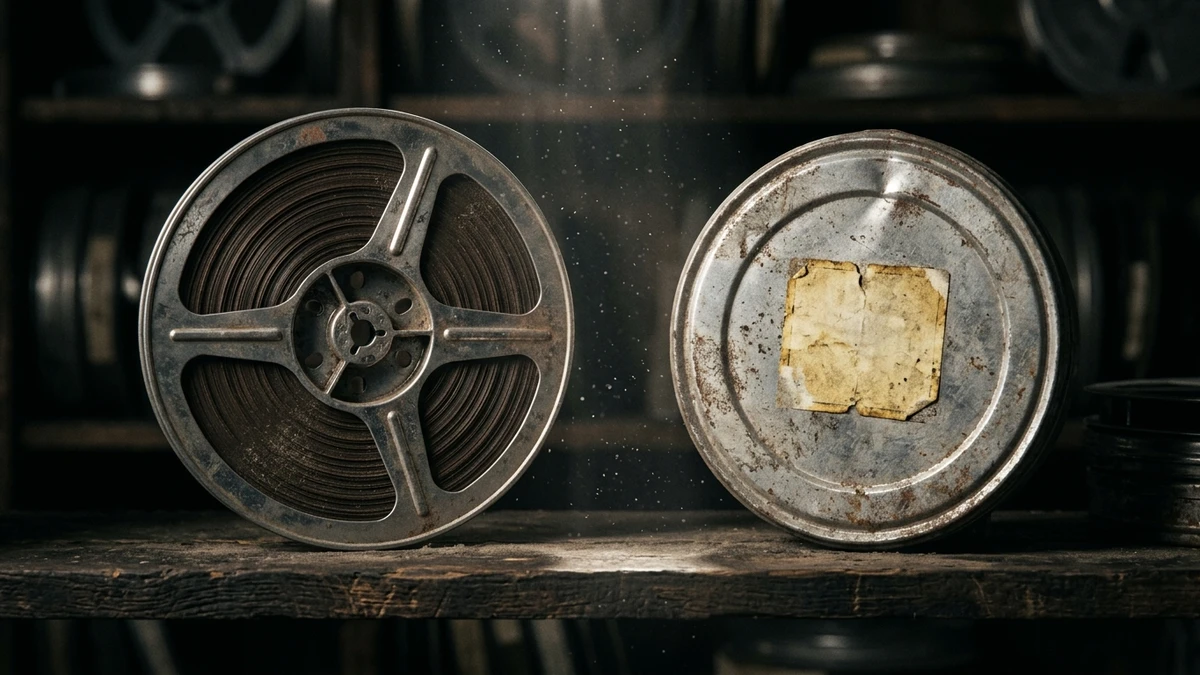
The recording is catalogued as "AF-ATIC-FILM, 03/52" and labelled, in the plain wording of the time, a "flying saucer talk." The "ATIC" stands for the Air Technical Intelligence Center, the Air Force unit that handled UFO reports in the early 1950s. The "03/52" points to March 1952.
There is a small wrinkle worth being straight about. Burlison's original letter describes it as a reel-to-reel recording, while several news outlets have called it a film or video. The catalogue tag itself says "FILM." Until the lab produces it, the exact format is not nailed down. What is clear is the content: a briefing on the Air Force's UFO investigations, given to a Cold War scientific advisory group known as the Beacon Hill study.
Who Was Edward Ruppelt, the Man on the Recording?
The man giving the talk is not a minor figure. Edward J. Ruppelt was the Air Force officer who ran Project Blue Book, the military's systematic effort to work out whether UFOs were a threat to national security. He is the person usually credited with coining the term "unidentified flying object," partly because he was tired of the loaded, tabloid feel of "flying saucer."
Ruppelt was the closest thing the early UFO era had to a straight dealer. He later wrote "The Report on Unidentified Flying Objects" in 1956, one of the first calm, insider accounts of the whole business. In it he described spending entire days briefing scientists and senior officers, sifting tens of thousands of reports down to the few hundred that genuinely could not be explained.
So a 1952 recording of Ruppelt briefing scientists is not just an old curio. It is a primary-source window into how the military actually talked about the phenomenon at the very start, before decades of denial and ridicule set in. That is why a 74-year-old reel has become congressional business.
The 1952 Invasion of Washington: The UFO Wave Behind It
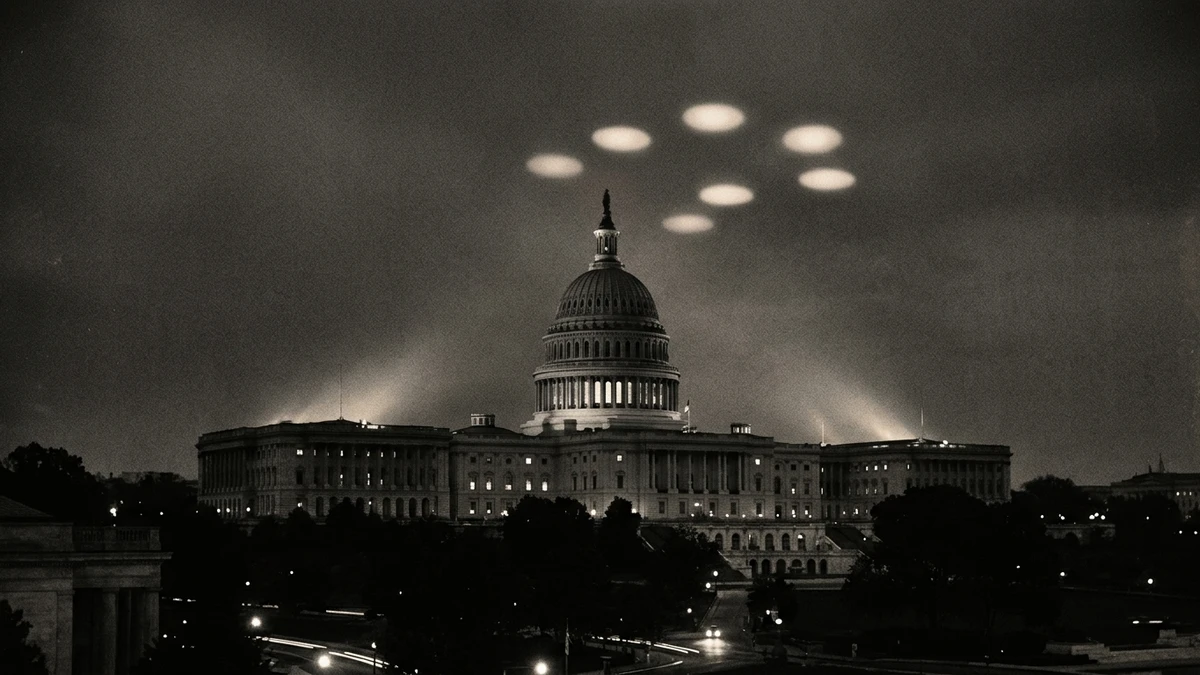
The timing is the part that makes people sit up. The briefing was recorded in March 1952. A few months later, in July, came the events that turned UFOs into a national story: the "Invasion of Washington."
Over two weekends that summer, unidentified objects were tracked on radar at Washington National Airport, seen by airline pilots, and reported by observers on the ground across the US capital. Jet fighters were scrambled. The story ran on front pages, and the Air Force held its largest press conference since the Second World War to try to calm things down. To this day it is one of the most famous and least tidily explained episodes in the official record, sometimes called the "Washington flap."
The Ruppelt tape sits right on the edge of all that. It captures the official mindset in the months just before the capital's own skies lit up with radar returns nobody could account for.
Why a Private Lab Is Holding a Government UFO Tape
Here is the detail that turns a history project into a live political fight: where the recording lives. MIT Lincoln Laboratory is a federally funded research and development centre. In plain terms, it is a private institution that does highly sensitive work for the government.
Burlison's wider argument is that this is not an accident. "If you really want to hide something from Congress, you don't put it in a government file cabinet," he posted in May. "You hand it to a private contractor." His investigation, he says, is following that trail into the big names of defence research, including RAND, MITRE, Aerospace Corporation and Northrop Grumman.
The reason this matters is dull but important: private contractors are generally exempt from the Freedom of Information Act. Congress can lean on a government agency through public-records law and oversight powers. A private corporation is a far harder thing to compel. So if early UFO material did end up in contractor archives, the story of the cover-up is partly a story about paperwork and plumbing: about moving records to where the normal rules do not apply. That theory lines up with what whistleblower David Grusch has argued about sensitive UAP programmes being tucked inside contractor networks.
Want to scan the skies yourself?
Kit we've tested and reviewed in full
Most "flying saucer" reports turn out to be aircraft, satellites, planets or weather balloons, and a decent pair of binoculars is the quickest way to tell the difference for yourself. Here's what we'd grab to start watching the night sky.
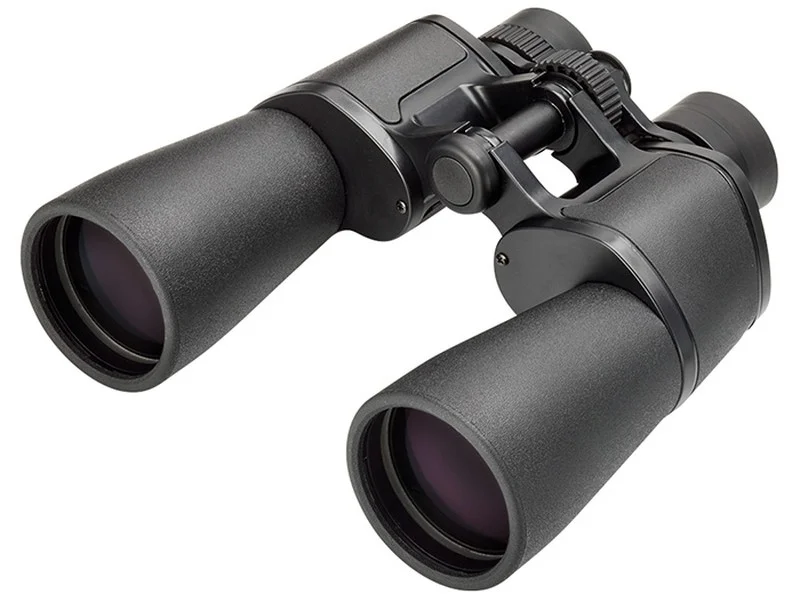
Light enough to hold steady, with enough aperture to pick out aircraft lights, satellites and the moons of Jupiter. A great first pair.
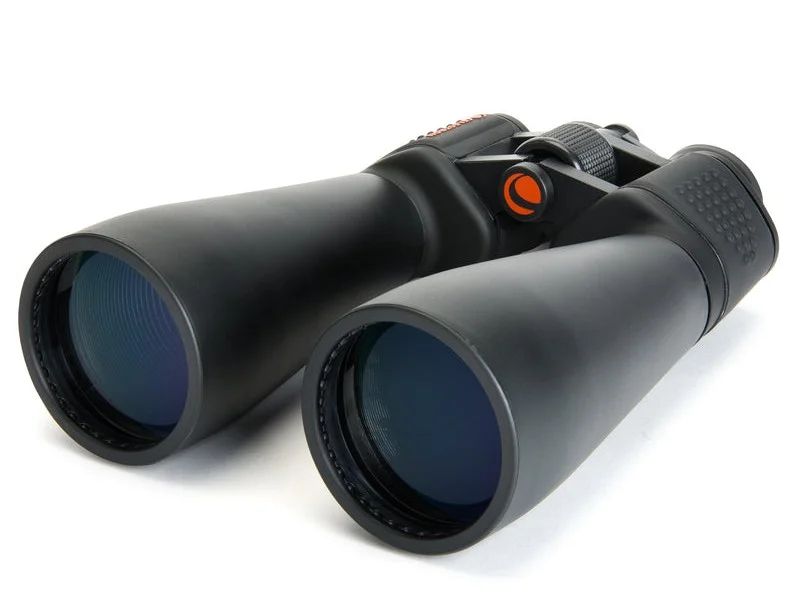
Bigger lenses gather more light, so faint objects and star fields come alive. Best rested on a tripod or a wall to keep the view still.
Affiliate links: you pay the same price, we earn a small commission that helps keep WatchTheStars free.
What Burlison Asked For, and What Happens Next
It is worth being clear about what Burlison actually requested, because it is more careful than the headlines suggest. He did not demand the lab declassify the recording and post it online by Friday. His letter asked MIT Lincoln Laboratory to confirm the recording's current status, preserve it, and coordinate with the National Archives and Records Administration on archival review.
"The American people deserve transparency and proper preservation of historically significant government records," he said.
That measured approach is the smart part. A reel that is acknowledged, located and handed to the National Archives is much harder to lose than one whose existence is never formally on the record. In effect, Burlison is trying to make the recording a matter of public record before anyone starts arguing about what is on it.
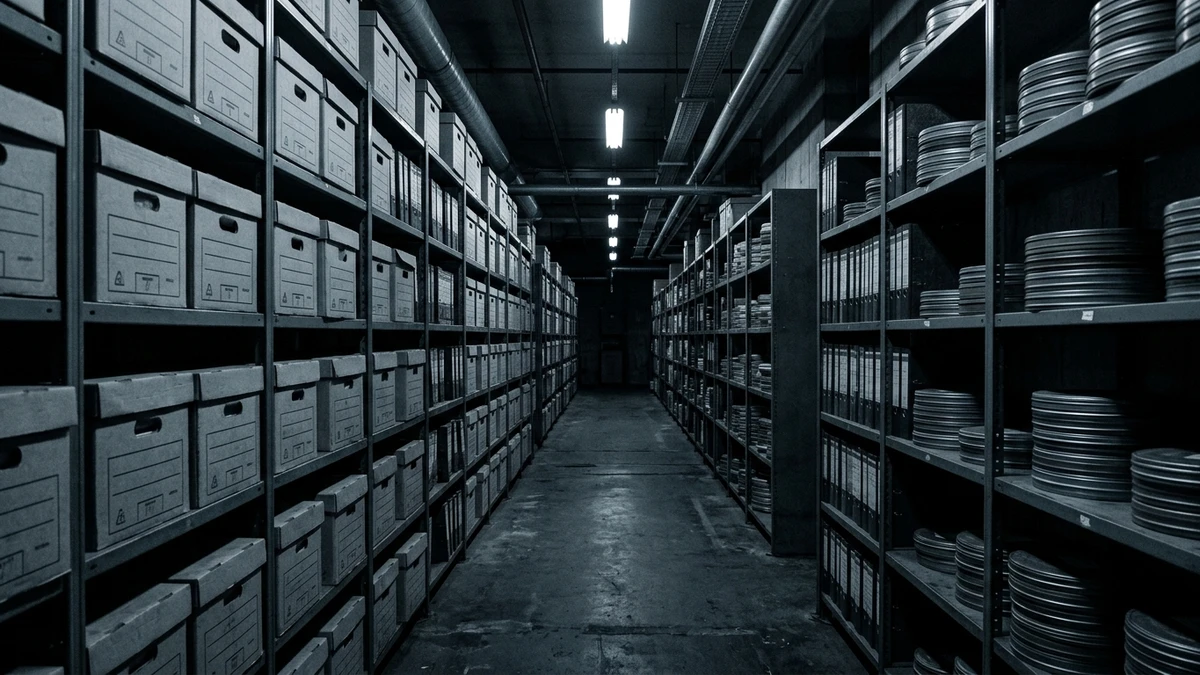
According to Burlison, the lab agreed to comply within 30 days. That puts a response due in early summer 2026. The thing to watch is not just whether the recording is found, but whether it actually reaches the National Archives in a form the public can one day hear. A reel confirmed to exist but kept sealed would be its own kind of answer.
What This Means for UFO Disclosure in 2026
For UK readers wondering why a single American reel matters, it is worth zooming out. Most of this year's disclosure story has been about modern encounters: Navy cockpit footage, federal agents watching orbs, the files released through the government's 2026 programme. This is the opposite end of the timeline. It reaches back to the very start of the official UFO era, to the moment the Air Force was first working out how to even talk about the subject.
One 1952 recording will not settle the question of what is flying around our skies. It almost certainly contains careful, sceptical analysis rather than little green men. But that is rather the point. If the recording is found, preserved and eventually released, it shows the hidden historical record really can be reached. If it vanishes or stays sealed, that tells you something too.
Either way, it fits the pattern of a year in which the disclosure fight has moved from fringe forums to formal letters, named files and 30-day deadlines. The names are on the record. The clock is running. Now we wait to see what comes back.
Sources:
- Burlison Requests Review of Identified 1952 UAP Recording · Office of Rep. Eric Burlison
- "This is what happens when you stop asking politely:" Burlison demands 1952 UFO video · Cybernews
- A Congressman Is Hunting a Classified 1952 Film of a 'Flying Saucer' Briefing · Infinity Explorers
- UFO disclosure: GOP Rep. Eric Burlison targets private labs in search of information · The Hill
- UAP Disclosure Forum in DC: Key takeaways · NewsNation
Frequently Asked Questions
Equipment guides
Related topics

Ian ClaytonAmateur astronomer and founder of WatchTheStars.co.uk, dedicated to helping others explore the wonders of our universe. Full profile →