Key takeaways
- The spent Falcon 9 upper stage hit the Moon at about 06:35 UTC (07:35 BST) on 5 August 2026, near the crater Einstein on the Moon's western edge
- South Korea's Danuri orbiter made an ultra-close flyby just two minutes before impact, giving it the closest view of any spacecraft
- Telescopes across the Americas watched for a brief flash and a plume of debris rising off the Moon's sunlit edge
- Simulations suggest the 4,900kg stage dug a crater 17 to 30 metres wide and threw over a thousand tonnes of lunar soil out of the ground
- NASA's Lunar Reconnaissance Orbiter will photograph the fresh crater in the coming weeks, and we'll cover the images here when they arrive
Jump to section 6 sections
SpaceX Rocket Hits the Moon: What Happened This Morning
At about 06:35 UTC this morning, 07:35 BST, a spent SpaceX Falcon 9 upper stage crashed into the Moon near the crater Einstein, right on the western edge of the side we see from Earth. It came in at 5,400mph and released roughly the energy of three tonnes of TNT, digging a fresh crater into ground that has sat undisturbed for billions of years.
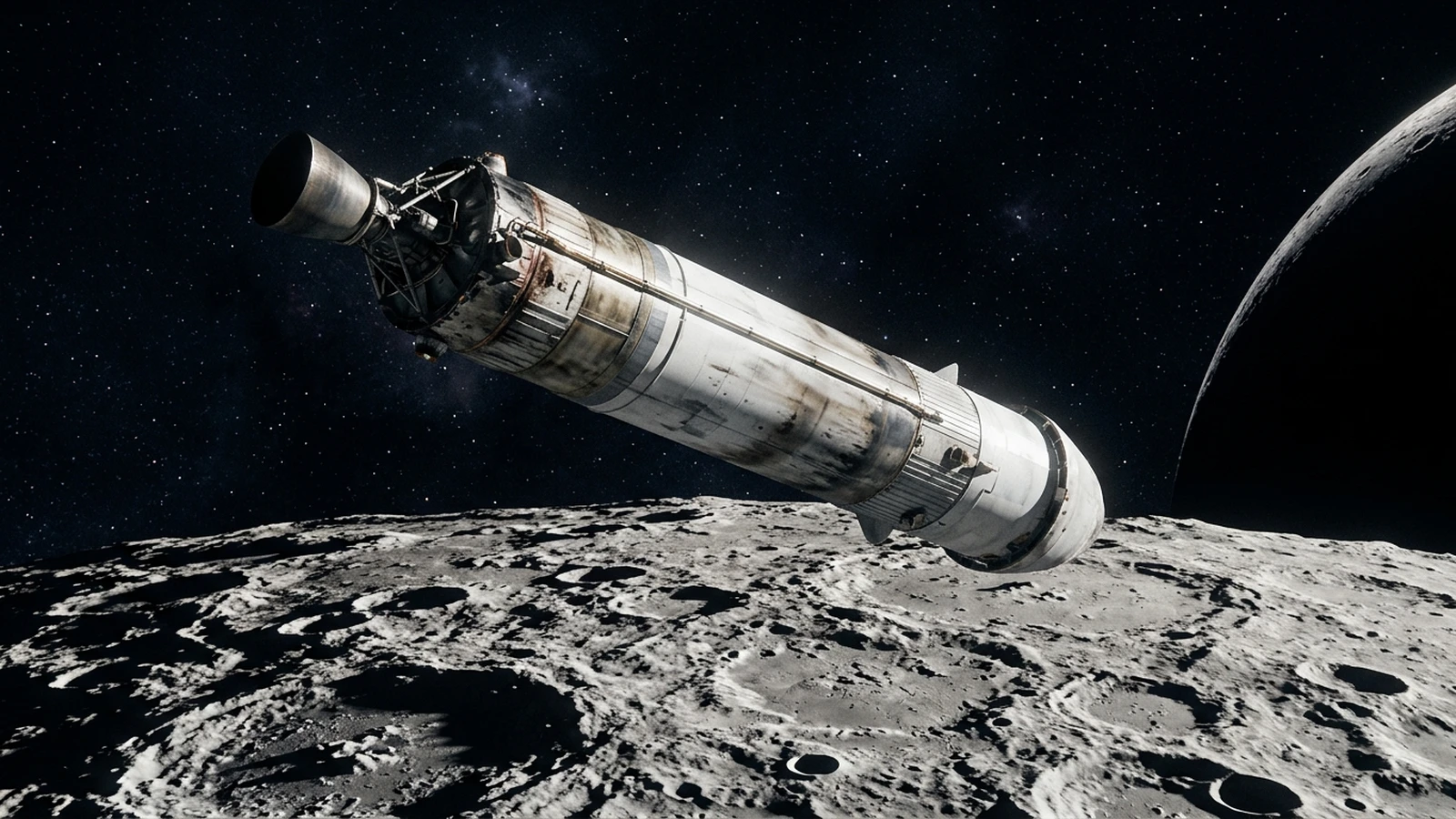
Nobody aimed it there. The stage, catalogued as 2025-010D, launched on 15 January 2025 carrying two commercial Moon landers, then spent 18 months looping around Earth as a piece of space junk. Astronomer Bill Gray of Project Pluto spotted the coming collision back in September 2025, and his final prediction pinned the impact down to within a few seconds and a few kilometres. If you read our preview of the impact, this is the morning it all happened.
What made today special wasn't the crash itself. Rockets and rocks have hit the Moon plenty of times before. It was that astronomers knew the time and place in advance, so for once the telescopes were pointing the right way.
Did Anyone See the Impact?
From the UK, no. The impact happened in broad daylight here, with the Sun already well up at 07:35 BST. The best seats were across the Americas, where the Moon hung in a dark sky in the small hours.
That's where the observing campaign was waiting. A team of 23 astronomers published a formal observing plan, and three big professional instruments were lined up: the 3.5-metre telescope at Apache Point in New Mexico, the 4.3-metre Lowell Discovery Telescope in Arizona and one of the 8.2-metre units of the Very Large Telescope in Chile. Plenty of advanced amateurs joined in too.
They were chasing two things. First, the flash of impact, expected to last under a second and to be very dim, because at 2.43km/s the stage hit slowly by lunar standards and most of its energy went into moving rock rather than making light. No flash, natural or artificial, had ever been recorded on the Moon's sunlit side before, so even a marginal detection would be a first. Second, the plume: debris thrown up from the surface that might climb high enough to catch the sunlight and appear, just for a few minutes, as a faint haze off the Moon's edge.
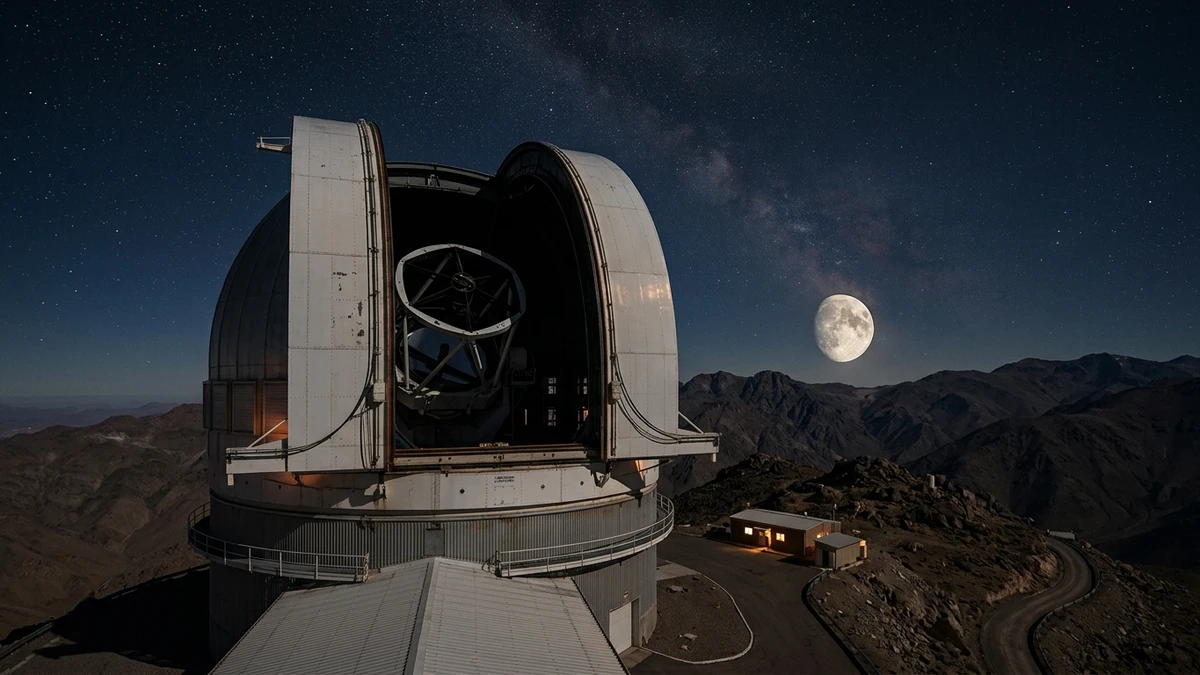
The teams will need time to comb through their data before announcing anything, and a null result is entirely possible. When NASA deliberately crashed a rocket stage into the Moon in 2009, watchers on Earth saw nothing at all. We'll report what the campaign found as soon as the results are out.
Danuri's Two-Minute Warning: The Closest View of the Crash
The most remarkable view belonged to a spacecraft. South Korea's Danuri lunar orbiter was manoeuvred so that its path carried it close to the incoming stage roughly two minutes before impact, an extraordinary bit of orbital choreography by the Korea Aerospace Research Institute.
That flyby gave Danuri a chance no telescope on Earth could match: a close-up look at the stage in its final minutes, and a ringside seat for the impact itself. Its ShadowCam instrument, built to photograph the darkest parts of the Moon, is also tasked with imaging the impact zone before and after.
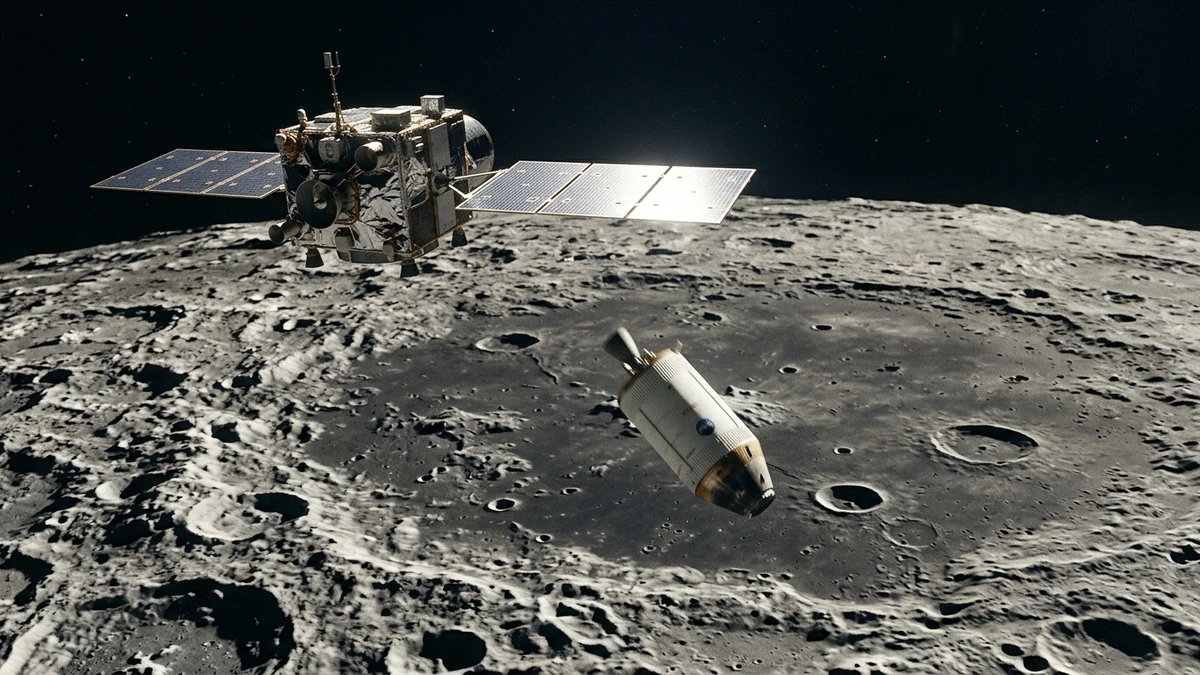
Korean engineers spent weeks planning the pass, and any pictures will need to be downlinked and processed before release. If they come out, they could be among the most unusual spacecraft images ever taken: humanity's first proper look at a piece of its own junk in the act of hitting another world.
The Moon has a brand-new crater, go and explore the old ones
Kit we've reviewed in full
You won't spot a 20-metre crater from your garden, but the battered western edge where the stage came down is a lovely region to sweep with binoculars. Our 2026 Moon calendar lists the best nights to look.

Steady 10× views show the Moon's great craters and dark seas, including the limb region near Einstein where the rocket struck.
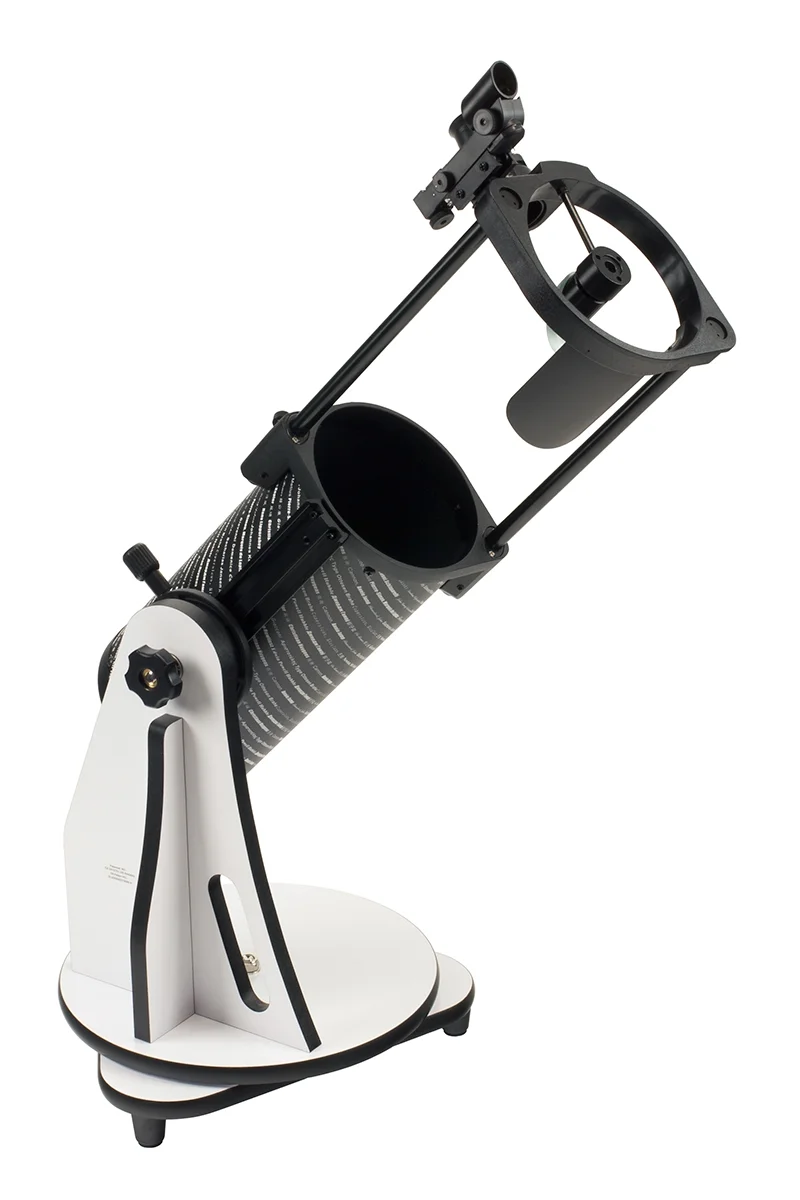
Enough aperture to pick out individual crater walls along the day/night line, the same kind of terrain the new crater now sits in.
Affiliate links: you pay the same price, we earn a small commission that helps keep WatchTheStars free.
How Big Is the New Moon Crater?
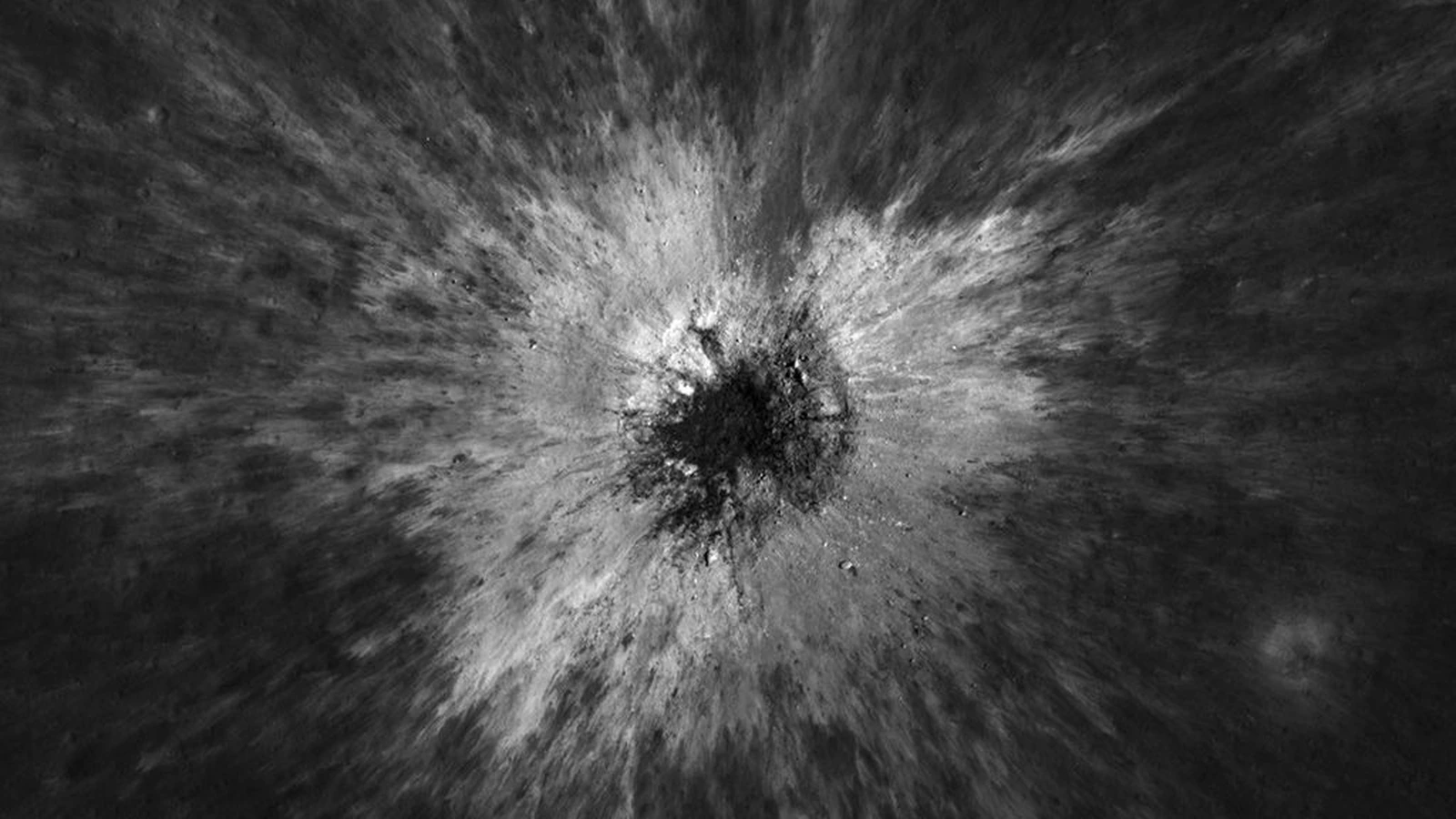
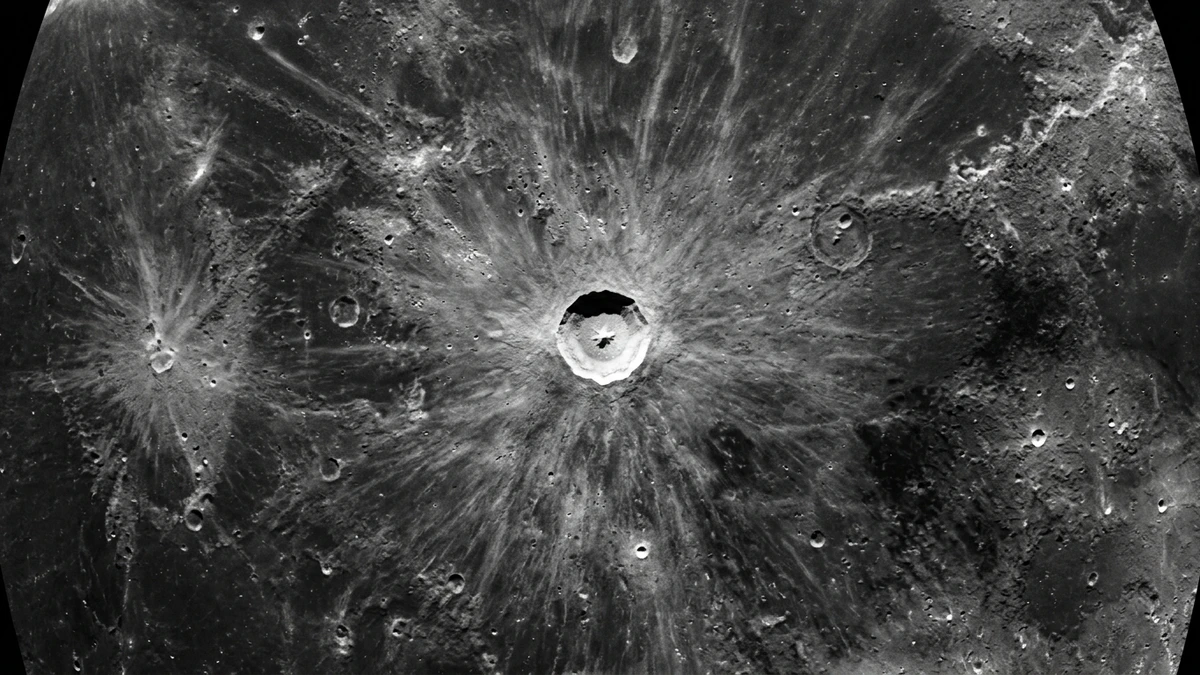
The short answer: probably 17 to 30 metres across, about the width of a tennis court, and around 5 metres deep.
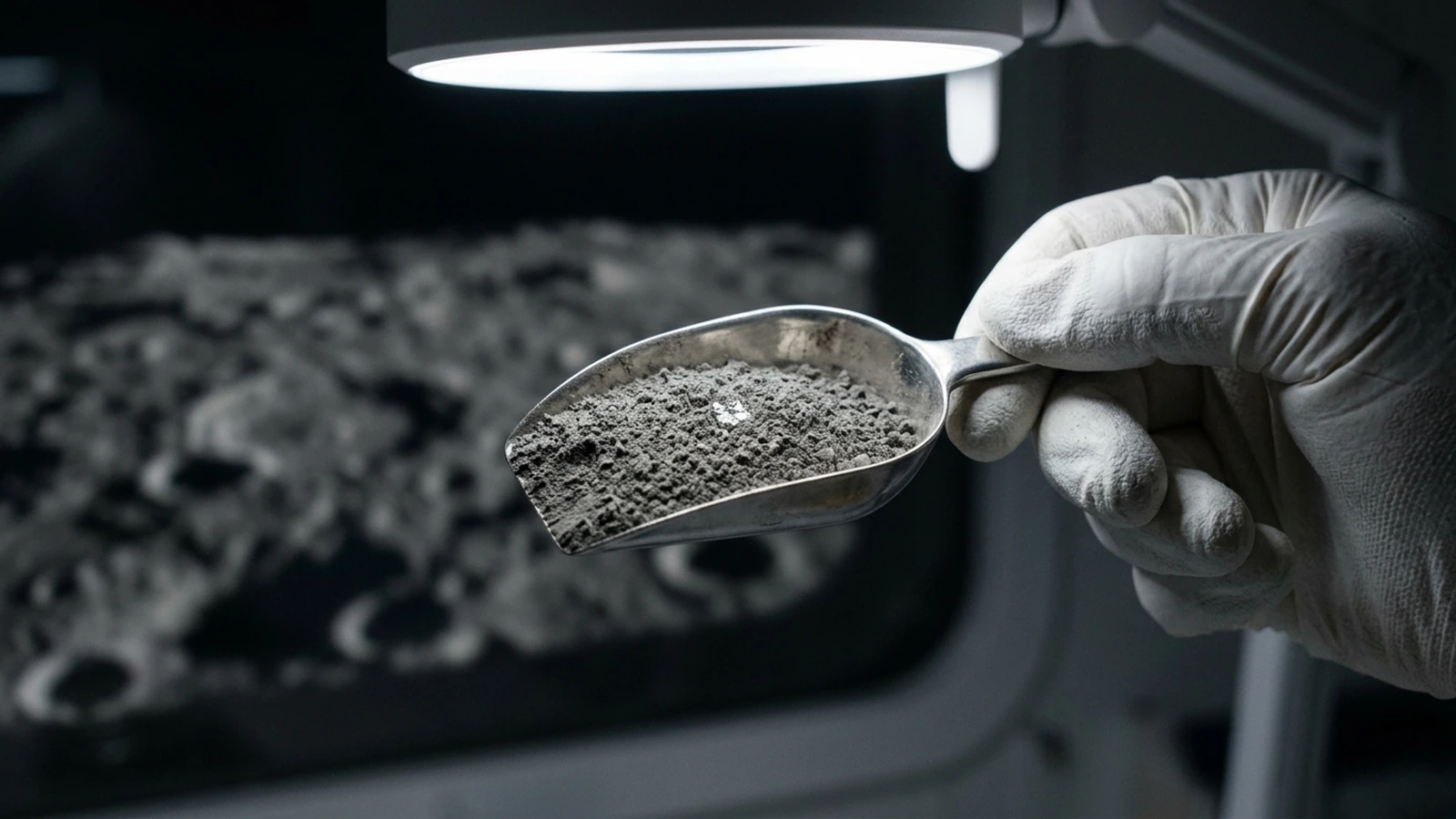
The longer answer depends on which model you ask. Bill Gray's comparison with the 2022 Chinese rocket impact suggests a single crater of roughly 17 metres. A University of Texas team ran a detailed simulation and came out larger, at 20 to 30 metres, with over a thousand tonnes of lunar soil excavated and a share of it thrown kilometres above the surface.
The 4,900kg stage hit at an angle of about 31 degrees above the horizontal, steep enough that the crater should be fairly round rather than smeared out. And unlike the 2022 impact, which puzzlingly produced a double crater, this stage carried no payload, so scientists expect a single, tidy hole. If it turns out to be a double again, that's a genuinely interesting result about how rocket stages break up on impact.
When Will We See Pictures of the Crater?
Within weeks, most likely. NASA's Lunar Reconnaissance Orbiter has been photographing the Moon in fine detail since 2009 and holds "before" images of the impact zone. Its team will re-image the area and hunt for the new scar, helped enormously by the fact that the impact point was predicted to within a few kilometres.
When the Chinese stage hit the far side in 2022, the crater photos took about two months to arrive, partly because nobody knew exactly where to look. This time the search area is tiny. Danuri's ShadowCam will be looking too, so we may even get two independent sets of crater pictures.
Those images matter beyond the spectacle. Because we know the stage's mass, speed and angle precisely, the crater becomes a calibration point: a controlled experiment that helps scientists work backwards from craters to impactors across the rest of the Moon. That feeds into everything from dating lunar surfaces to protecting future astronauts and Moon bases from debris strikes.
What the Impact Means for Space Junk
Today's crash harmed nobody and damaged nothing, but it's a pointed reminder that we're leaving hardware scattered across the Solar System with no plan for most of it. This is the second piece of space junk to hit the Moon in four years, and the amount of hardware heading moonwards is only growing.
There's already a better way, at least for lunar missions. Upper stages can be given a final nudge into orbit around the Sun, safely out of the way for centuries. The stage that launched the James Webb Space Telescope was disposed of like that, and so was a Falcon 9 stage launched in November 2025. Today's impact is a good argument for making that the rule rather than the exception.
For now, the Moon has one more crater among its billions, and this one comes with a full biography: we know what made it, when, where, how fast and at what angle. That's never been true of a lunar crater before today. We'll bring you the first pictures of it, and whatever the flash-hunters found, as soon as they're released.
Sources:
- Upper stage impacting the moon on 2026 August 5 · Bill Gray, Project Pluto
- NASA Will Attempt to Observe Rocket Part's Lunar Impact · NASA
- New crater likely to form after SpaceX rocket slams into the moon · CNN
- A 9,000-pound SpaceX rocket will crash into the moon tonight. Will you be able to see it? · Space.com
- Danuri to Capture SpaceX Debris Crashing Into the Moon · Seoul Economic Daily
- Observational planning for the 2026 August 5 Falcon 9 Upper Stage lunar impact · arXiv preprint
Frequently Asked Questions
Equipment guides
Related topics

Ian ClaytonAmateur astronomer and founder of WatchTheStars.co.uk, dedicated to helping others explore the wonders of our universe. Full profile →