Key takeaways
- The White House has confirmed Harvard astrophysicist Avi Loeb as head of its new UAP Science Advisory Council, and the appointment went national through an Associated Press story on 30 June 2026
- Named scientists are openly critical: astrophysicist Steve Desch says Loeb uses flawed methods, and former AARO chief Sean Kirkpatrick says Loeb is 'not viewed favourably' by his peers
- The council has no budget beyond travel costs and no access to classified files, so it works only from the Pentagon's public releases
- Loeb's answer to critics: start from the assumption that UAP are human-made, follow the data, and publish everything openly
- Viral 'UFO' clips from the Philippines this year, including the Manila 'space jellyfish', were traced by the national space agency to Chinese rocket launches, a reminder of why the council's evidence-first approach matters
Jump to section 6 sections
Two weeks ago the White House gave Harvard astrophysicist Avi Loeb a science council to help it investigate UFOs. I wrote about it at the time. What has changed since is the reaction. The appointment went national through the Associated Press on 30 June, and with the bigger spotlight came the pushback: named scientists, on the record, saying the man now leading the government's UFO science is exactly the wrong choice.
That is the story worth telling this week. Not "a council exists", which we already knew, but the row that has broken out over who is running it. If you want the full picture of the board and its structure, my earlier piece on the UAP Governance Board covers that. Here I want to look at the argument itself, what the critics are actually saying, and why a viral clip from the Philippines fits neatly into the whole debate.
Why Scientists Are Pushing Back on the White House UFO Council
The council in question is the UAP Science Advisory Council, a group of a dozen or so scientists and advocates that feeds recommendations up to a White House UAP Governance Board. Loeb was asked to build the team and lead it. For a few weeks that was mostly an insider story, reported by defence outlets and by Loeb himself on his blog.
Then the Associated Press picked it up, and the framing shifted. The AP headline called Loeb a "polarizing Harvard professor with polarizing alien theories". Scientific American followed with its own piece a couple of days later. Once the story reached that kind of audience, other scientists felt free to say in public what plenty had been muttering privately: putting Avi Loeb in charge, they argue, tells you the White House is more interested in a good headline than in careful science.
It is worth being fair about what is new and what is not. The council, the board and Loeb's role were all announced in June. The genuinely new part is this open disagreement among scientists about whether the whole thing is credible. When the referees start arguing about the referee, that is a story.
Who Is Avi Loeb, and Why He Divides Astronomers
To understand the fight you have to understand the man. Avi Loeb is not a fringe figure who wandered in off the internet. He chaired Harvard's astronomy department for the best part of a decade, has written hundreds of papers on black holes and the early universe, and served on the President's Council of Advisors on Science and Technology. By any normal measure he is a serious scientist.
His reputation changed in 2017, when the first known interstellar object, 'Oumuamua, passed through the solar system. Most astronomers saw an odd comet or a chunk of rock. Loeb suggested out loud that it might be a thin "light sail" from an alien craft. He founded the Galileo Project to look for exactly that kind of artefact, and in 2023 his team pulled tiny metallic spheres off the Pacific seabed near a meteor's crash site and floated the idea they could be alien technology. Other scientists said the spheres were more likely volcanic rock or coal ash.
He did something similar more recently with the interstellar comet 3I/ATLAS, wondering in public whether it might be more than a rock. It wasn't. That is the pattern his critics point to: a habit of raising the alien possibility early and loudly, taking it straight to the public, and moving on when the evidence doesn't hold. His defenders point to the same pattern and call it courage, a willingness to ask the awkward question that other scientists are too cautious to voice.
What Avi Loeb's Critics Actually Say
The criticism is not vague grumbling. Two names stand out because both went on the record with the AP.
The first is Steve Desch, an astrophysicist at Arizona State who has tangled with Loeb's claims before. He says Loeb "uses flawed methods to reach wild conclusions about alien life", all while sidestepping the more established scientific search for life beyond Earth. His verdict on the appointment was blunt: "We're not going to get any closer to answering these questions with him in charge." In his view, having Loeb lead the effort casts doubt on the whole thing.
The second is Sean Kirkpatrick, who used to run the Pentagon's All-domain Anomaly Resolution Office, or AARO, the very office this council is meant to support. He says Loeb is "not viewed favourably" by the scientific community and has no national security background. Look at who Loeb has picked for the team, Kirkpatrick argues, and you can see the White House leaning towards fringe ideas rather than hard science.
There is something to that last point about the roster. Alongside genuine scientists, the team includes Tim Gallaudet, a retired rear admiral who has spoken about UAP controlled by "nonhuman intelligence", and Ben Lamm, a billionaire whose main project is trying to bring extinct animals back to life. It is an unusual mix for a government science panel.

To be clear, the team isn't a believers' club. It also includes Michael Shermer, who founded Skeptic magazine and is one of the best-known debunkers alive. Shermer has been refreshingly plain about his role. Most of his colleagues on the council, he says, are open to the idea that UAP could be "something other than ordinary terrestrial phenomena. Not just space aliens, by the way, but space-time bubbles and multi-dimensional beings and far future human time travelers." His flat response: "None of that is going to pan out." His job, as he sees it, is to keep everyone grounded. Whether one professional sceptic can balance the rest is an open question, but his presence does suggest Loeb wanted an argument in the room rather than an echo chamber.
Avi Loeb's Response to the Backlash
Loeb has never been shy, and he isn't now. His critics, he says, simply lack the imagination to consider new ideas. He describes the work as "a lot of fun, as long as you don't pay too much attention to the critics", and he signed off one interview with a line that is pure Loeb: "Let's keep our eyes on the orbs, not the social media."
Underneath the showmanship, though, his stated approach is more careful than the headlines suggest. He says he is starting from the assumption that UAP are made by humans and looking at them as a national security question first. If a foreign power is flying hardware over sensitive sites that the US can't identify or catch, that matters whether or not aliens are ever involved. He wants the council to work only from evidence, to say plainly when the evidence is too thin, and to publish its findings openly, including in peer-reviewed journals. "There might be some diamonds in the rough," he told Scientific American, among all the unsubstantiated claims floating around online.
That is the honest tension at the heart of this. The same man who once suggested a passing rock might be an alien sail is now promising a sober, data-first inquiry. You can read that as a contradiction or as a scientist who genuinely wants the data to settle the argument. Time, and whatever the council actually publishes, will tell.
Manila Bay, the 'Space Jellyfish' and Why Rigour Matters
While all this was going on in Washington, a video from the Philippines was doing the rounds, showing strange lights over the coast and drawing the usual "UFO" captions. It is a good example of exactly why a careful, evidence-first council is worth having, because the Philippines has already shown how these stories usually end.
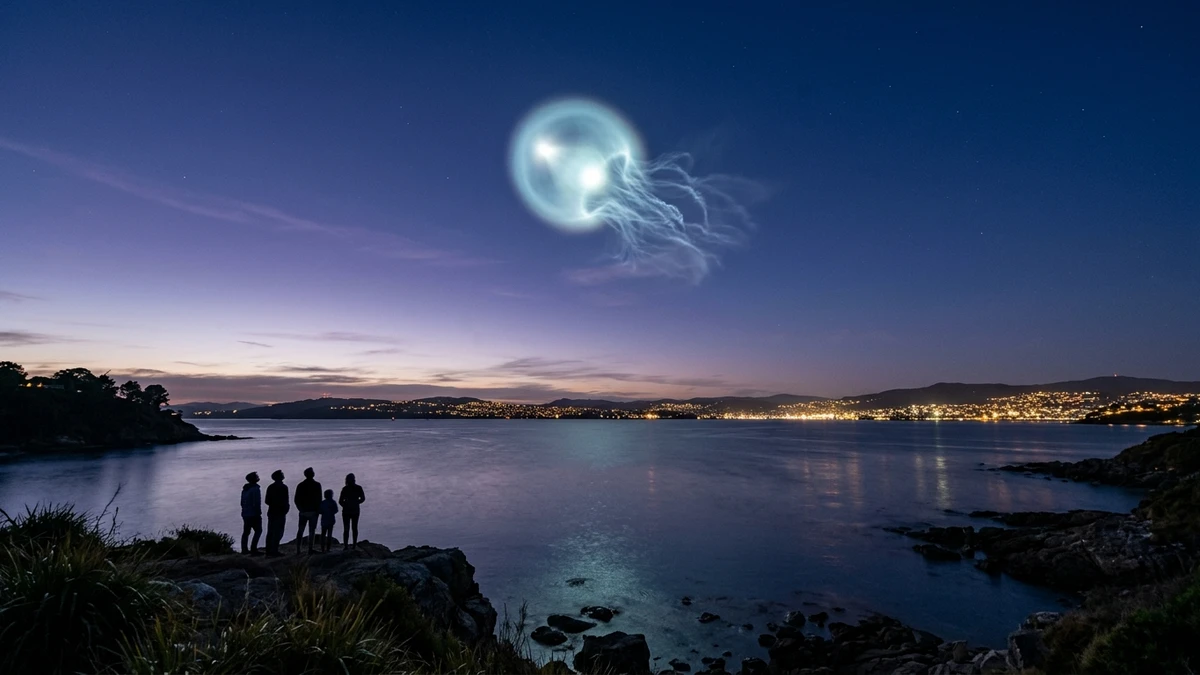
Twice this year, glowing shapes appeared over the country that people quickly labelled a "space jellyfish". Both times the Philippine Space Agency, PhilSA, ran the numbers and gave the same answer. The lights on 11 April lined up with a Chinese Jielong-3 rocket launched minutes earlier from the South China Sea. The lights on 12 May matched a Long March 6A launch from the Taiyuan centre. The "jellyfish" shape is a known effect: a rocket's exhaust plume, released high up, catches sunlight while the ground below is already in darkness, and the fuel fans out into that eerie glowing bell.
Loeb, for what it is worth, has been on the sober side of these Philippine sightings too. When a mysterious light rose after a meteor strike near a volcano there earlier in the year, he wrote a piece with a title that leaves no doubt: it was not aliens. That is the version of Loeb his supporters want on the council, the one who does the maths and follows it wherever it goes, even when the boring answer is the right one.
So when the next clip goes viral, the honest move is the unglamorous one. Check the rocket launch schedules. Check the time and the direction. Most of the time there is a plain explanation waiting, and a group whose whole job is to insist on that check is more useful than another round of breathless captions.
Check the Sky for Yourself
Kit we've tested and reviewed in full
Loeb's council is stuck with public data, and so is anyone with a decent pair of binoculars and a clear night. Here's what we'd grab to get a proper look at anything odd overhead.
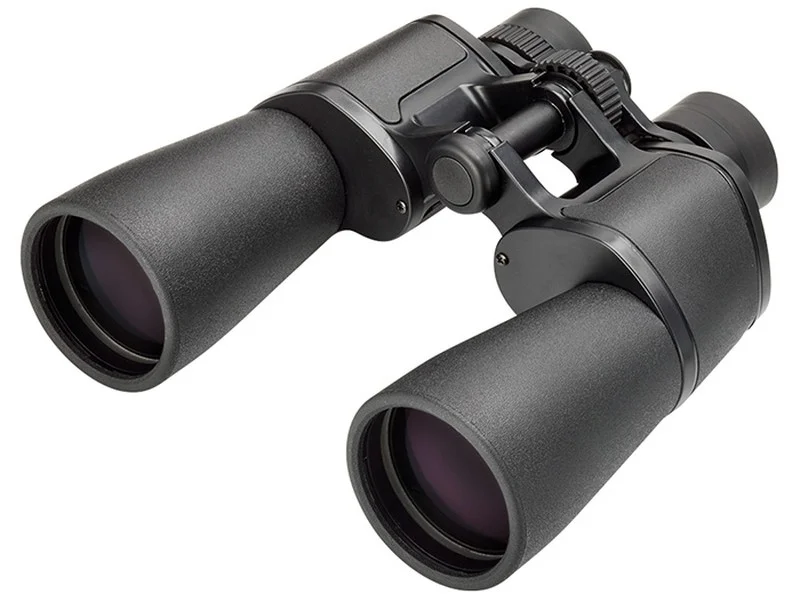
A dependable everyday pair for a quick look at anything strange in the sky, no clearance required.
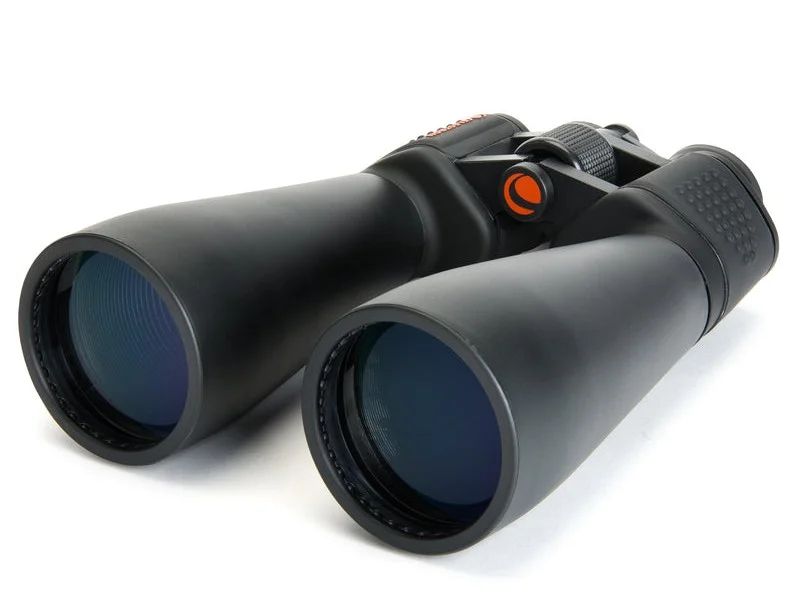
Bigger objectives help you track something moving across the sky, like a slow-fading rocket plume.
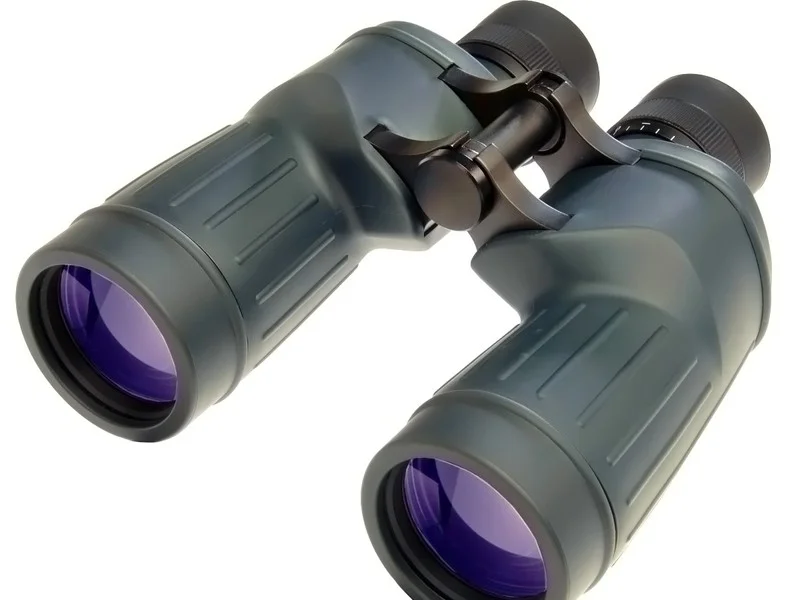
Better glass for anyone keeping a long-term watch as more files and sightings come out.
Affiliate links: you pay the same price, we earn a small commission that helps keep WatchTheStars free.
What the UFO Council Row Means for UK Skywatchers
None of this is British. The council, the board and the argument are all American. But two things reach across the Atlantic.
The first is that the science is meant to be public. Because the council works in the unclassified space and Loeb has promised a website and peer-reviewed papers, whatever it produces will be readable by anyone here, no clearance and no Freedom of Information request needed. If it does good work, UK researchers and amateurs get to read it too. If it produces nothing but noise, we get to see that as well.
The second is the reminder in that Philippine footage. Wherever you watch from, the discipline is the same. A strange light is not a mystery until you have ruled out the ordinary explanations, and most of the time one of them fits. That is not me being a killjoy about the genuinely unexplained cases, and there are some. It is just the difference between watching the sky and jumping at it. A council built around that principle, argued over by serious scientists, is a healthier place for this subject to be than where it sat a few years ago, when no one in government would put their name near it at all.
Whether Avi Loeb is the right person to lead it is a fair question, and clearly a contested one. But the fact that respected scientists are willing to argue about it in the open, in the pages of the Associated Press and Scientific American, is itself a sign of how far this has come.
Sources:
- White House picks Harvard professor with polarizing alien theories to lead new UFO council · PBS NewsHour / Associated Press
- The White House goes all in on aliens with new UAP Science Advisory Council · Scientific American
- 'Space jellyfish' seen over PH likely caused by Chinese rocket · PhilSA / GMA News
- Advisory on "Space Jellyfish" sighting on May 12 · Philippine Space Agency (PhilSA)
- The Mysterious Rising Light After a Meteor Strike Near a Volcano in the Philippines is Not Aliens · Avi Loeb (Medium)
Frequently Asked Questions
Equipment guides
Related topics
Ian ClaytonAmateur astronomer and founder of WatchTheStars.co.uk, dedicated to helping others explore the wonders of our universe. Full profile →