Key takeaways
- A deep partial lunar eclipse happens before dawn on Friday 28 August 2026, with 93% of the Moon's diameter inside Earth's shadow at maximum
- From the UK, the partial phase starts at 3:33am BST and maximum comes at 5:12am, with the Moon very low in the west-south-west
- The Moon sets while still eclipsed, so a completely clear, flat western horizon is essential: the further west you are in the UK, the more you'll see
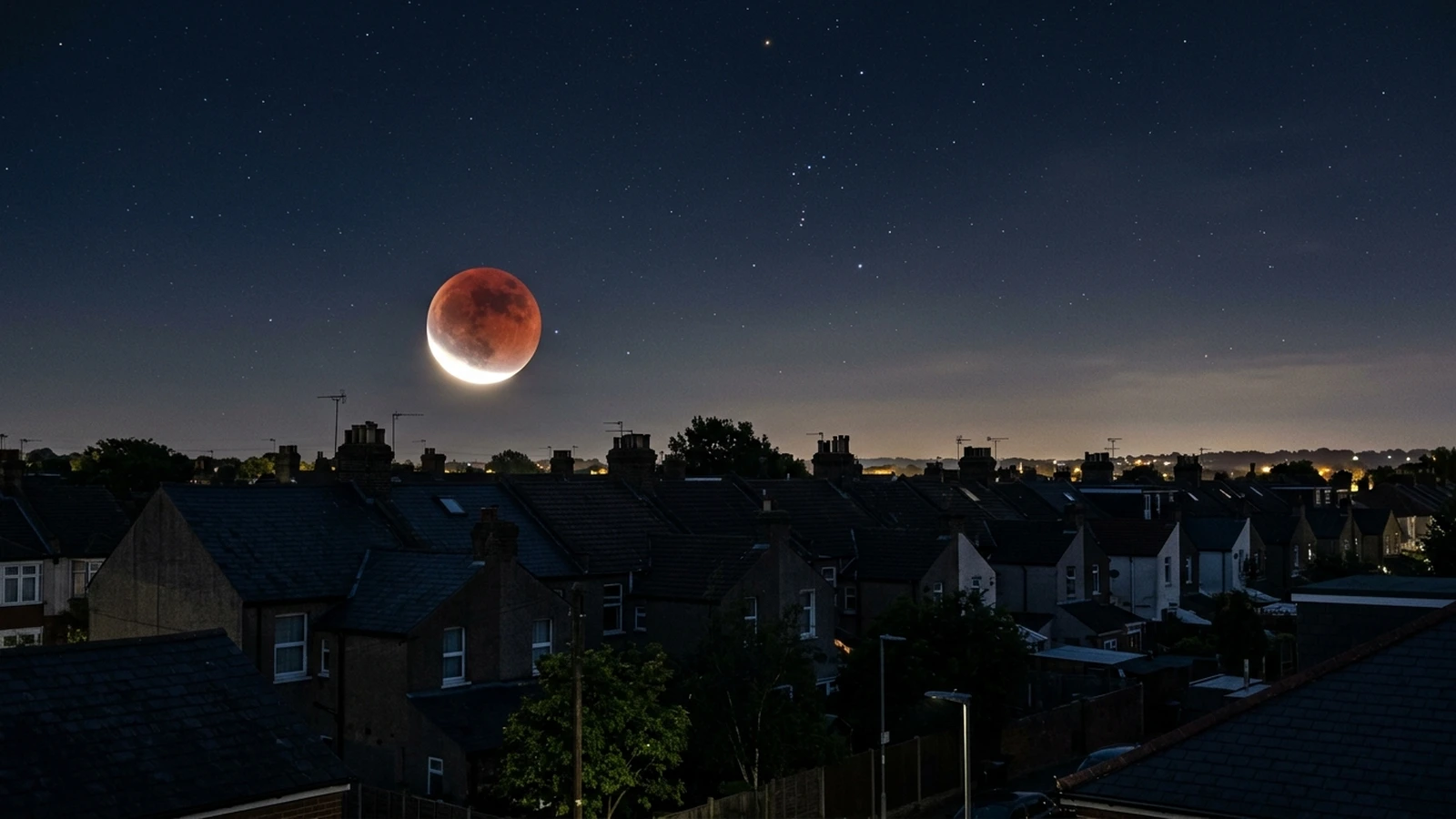
- The shadowed part of the Moon should glow a coppery red, though this is a partial eclipse, not a true blood moon
- No eclipse glasses needed: lunar eclipses are completely safe to watch with the naked eye, and binoculars make them better
Jump to section 7 sections
Short version: alarm for 3:15am on Friday 28 August, find a flat western horizon, and watch the Moon slide into Earth's shadow before it sets. Check what else is in tonight's sky before you head out.
What Time Is the Lunar Eclipse on 28 August 2026?
The partial lunar eclipse of 28 August 2026 begins for the UK at 3:33am BST, when the Moon starts entering Earth's dark inner shadow. Maximum eclipse comes at 5:12am BST, with 93% of the Moon's diameter in shadow. The Moon sets around an hour later, still eclipsed, so the show ends at moonset rather than running its full course.
Strictly speaking things get under way earlier, at 2:23am, when the full Moon enters the penumbra, the faint outer part of Earth's shadow. You'll struggle to see any difference for the first half hour or so. From around 3am one side of the Moon starts to look greyish and smudged, and then at 3:33am the real eclipse begins: a dark, curved bite that grows steadily across the lunar surface for the next hour and a half.
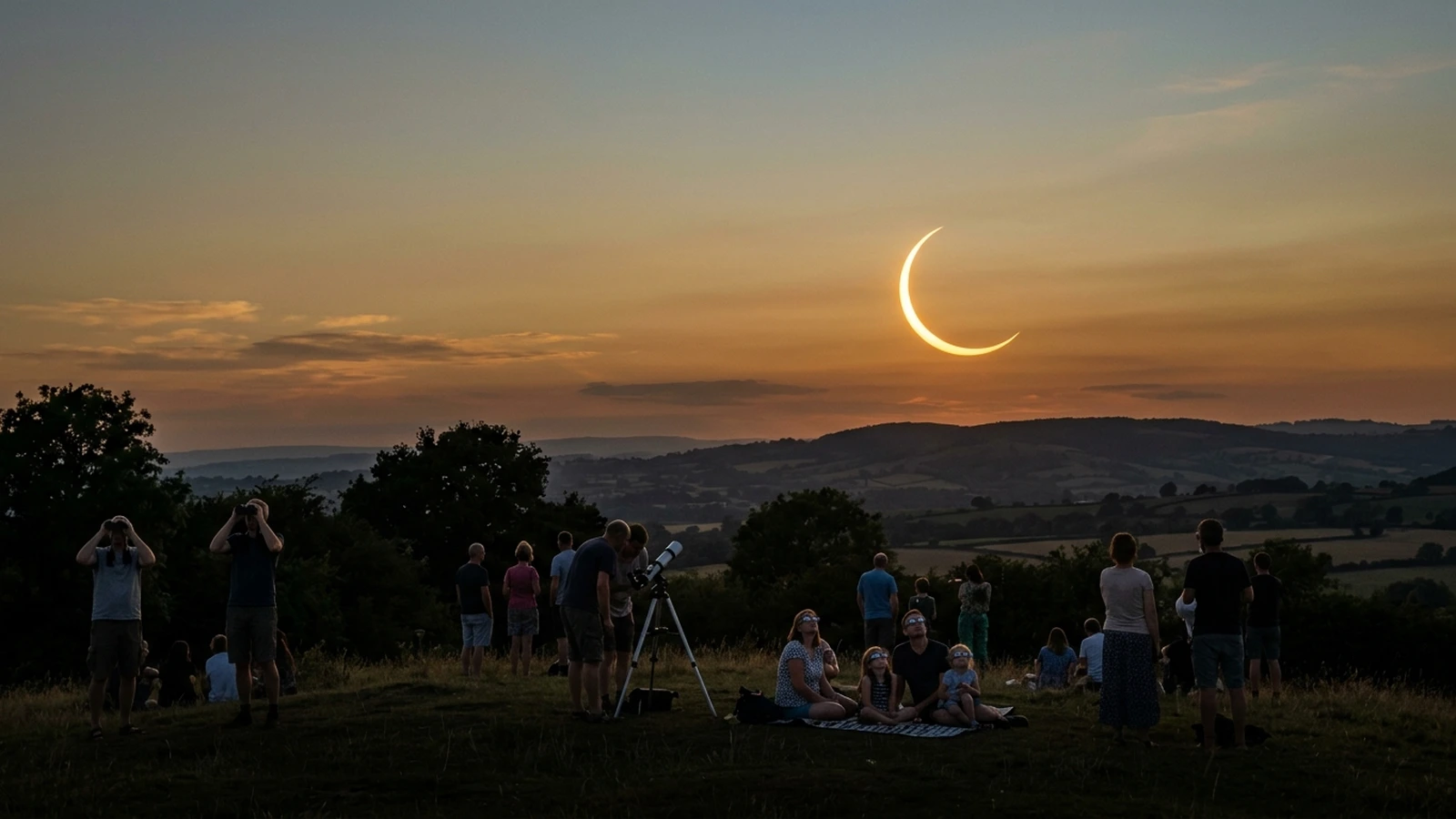
By 5:12am nearly all of the Moon sits inside the shadow, with just a bright sliver left along one edge. From London the Moon is only about 8 degrees above the west-south-western horizon at that point, in brightening dawn twilight. It's a low, atmospheric spectacle rather than a high dark-sky one, closer in feel to the solar eclipse we watched sink towards the horizon on 12 August than to a midnight eclipse.
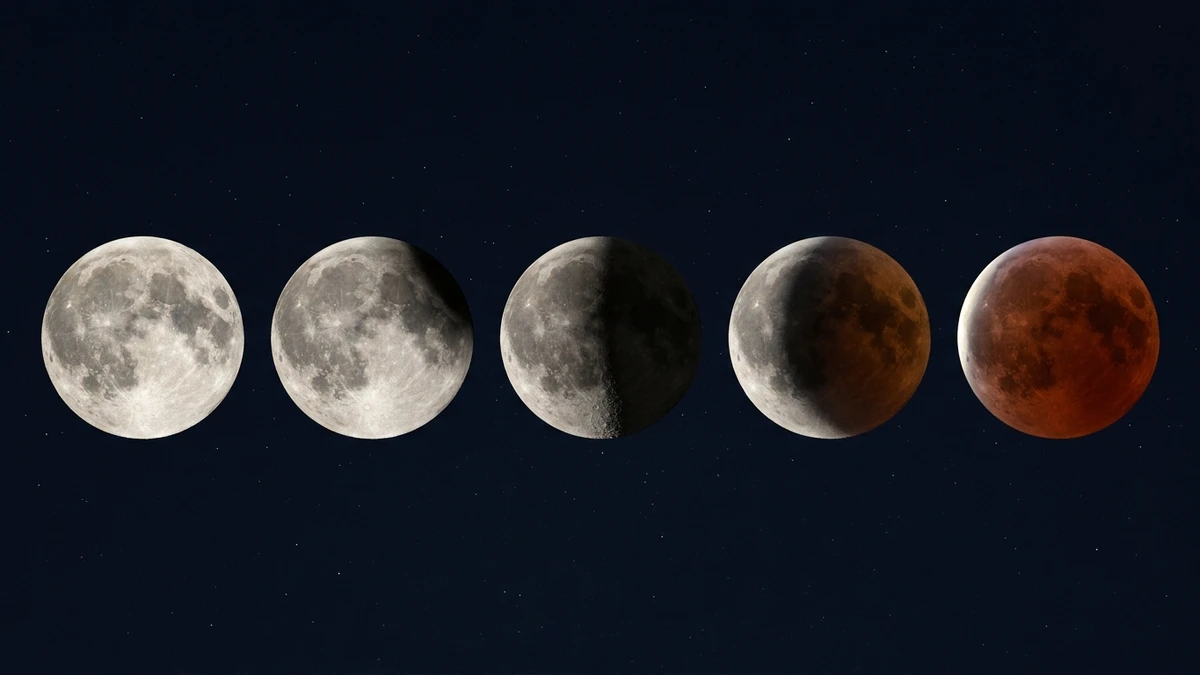
That timing is the catch, and it's worth being honest about. The Moon sets from most of the UK between about 6:10am and 6:40am, before the partial phase finishes at 6:52am. You'll see the eclipse deepen all the way to maximum and a little beyond, then lose the Moon to the horizon with the shadow still on it. Observers in the Americas get the whole thing; we get the dramatic first half, low over the landscape.
Where to See the Lunar Eclipse in the UK: West Is Best
Two things decide how much of this eclipse you'll see: your horizon and your longitude.
The horizon matters most. Because the Moon is so low during the deepest phases, anything in the way, houses, trees, a hill, will hide it completely. You need a genuinely flat, open view to the west-south-west. A west-facing coastline is perfect. So is a hilltop looking out over low ground, or the shore of a large lake or reservoir. Check the view the evening before; the Moon will set at almost the same spot on the horizon where the Sun sets in late February, well south of due west.
Longitude gives a smaller but real advantage. The further west you are, the later the Moon sets, and the more eclipse you get. Northern Ireland, western Scotland, Wales and Cornwall all hold onto the Moon for extra minutes compared with the east coast, and from Belfast or the western isles the Moon sits usefully higher at maximum than it does from London. Nobody in the UK misses maximum on account of longitude alone, but if you're already planning a trip west that morning, it helps.
Weather trumps all of it. Late August dawns can be misty, and haze near the horizon is this eclipse's biggest enemy. Keep an eye on the forecast and be prepared to drive to clearer skies. Our weekly night sky guide will carry a final forecast-eve reminder.
Will the Moon Turn Red? The Blood Moon Question
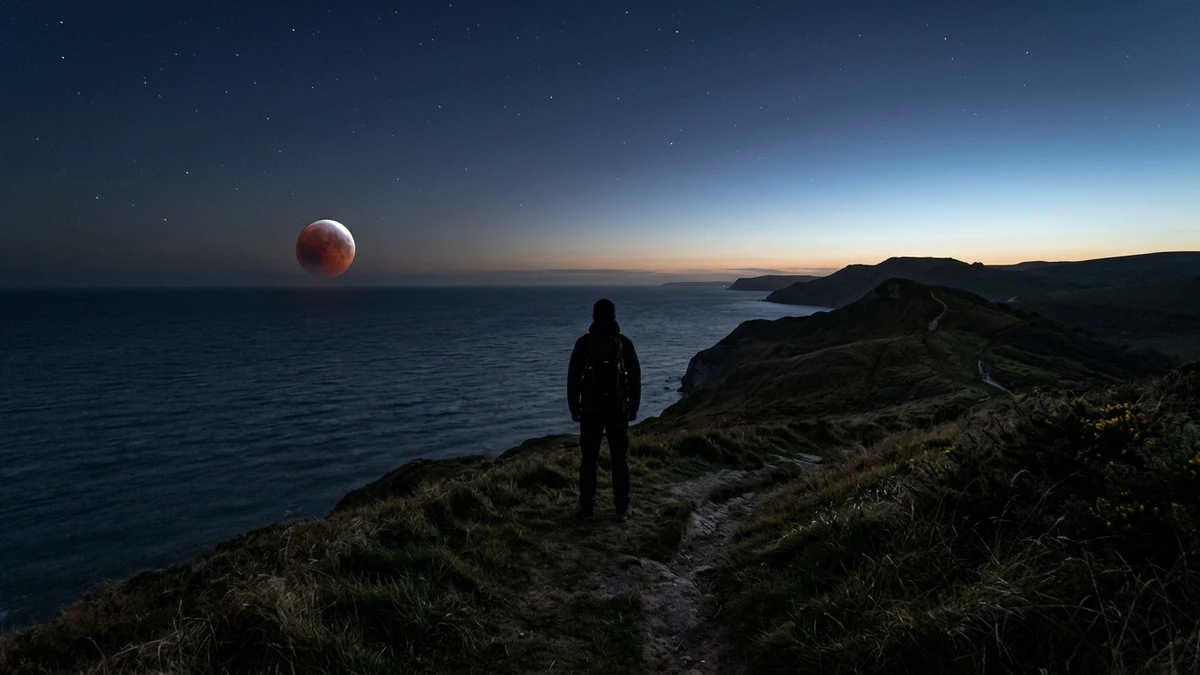
Mostly, yes. The shadowed portion of the Moon should take on the familiar red-brown "blood moon" colour, though purists will point out this isn't a true blood moon, because that name belongs to total eclipses.
The colour comes from Earth itself. The umbra, our planet's dark inner shadow, isn't completely black. Sunlight bends through Earth's atmosphere on its way past, and the atmosphere scatters away the blue light while letting the red through. What reaches the eclipsed Moon is, in effect, the light of every sunrise and sunset on Earth at once. During this eclipse that coppery glow will fill 93% of the Moon's diameter at maximum, with one thin brilliant edge still in direct sunlight.
How red it actually looks on the morning depends on two things: the clarity of Earth's atmosphere, and the fact that the Moon will be sitting low in bright twilight. Colours near the horizon are always more muted. Expect something subtler than the deep crimson of a high total eclipse, an old penny rather than a warning light, and let binoculars bring the colour out.
One nice bit of context: this is the second eclipse in a fortnight. The 12 August solar eclipse happened at new Moon, and now the same alignment, with the Moon swung round to the opposite side of Earth, produces a lunar eclipse at the very next full Moon. Eclipses always travel in these pairs, during windows astronomers call eclipse seasons. This particular full Moon is August's Sturgeon Moon, the eighth of the year in our 2026 full Moon calendar.
How to Watch the Lunar Eclipse: No Equipment Needed
A lunar eclipse asks almost nothing of you. There's no need for eclipse glasses or filters. You're looking at the Moon, which is always safe, and the whole event unfolds slowly enough to watch with a cup of tea in hand.
A realistic UK plan for the morning:
- Scout your spot the day before. Flat western horizon, somewhere you're happy to stand alone at 4am.
- Alarm at 3:15am. Outside by 3:30am to catch the first bite at 3:33am.
- Watch the shadow grow from 3:33am to 5:12am. This is the best stretch, with the Moon sinking as the shadow spreads.
- Stay for maximum and beyond. The Moon hangs low and red until it sets between roughly 6:10am and 6:40am depending on where you are.
Binoculars improve a lunar eclipse more than you might expect. The advancing edge of Earth's shadow isn't a sharp line but a soft, curved boundary, and through even modest binoculars you can watch it swallow individual craters. If you've never tried binocular astronomy, a slow-motion eclipse is about the friendliest possible start.
Kit for eclipse morning
Kit we've tested and reviewed in full
You don't need anything to enjoy a lunar eclipse. But a decent pair of binoculars shows Earth's shadow creeping across craters in real time, and turns a low red Moon into something you'll remember.
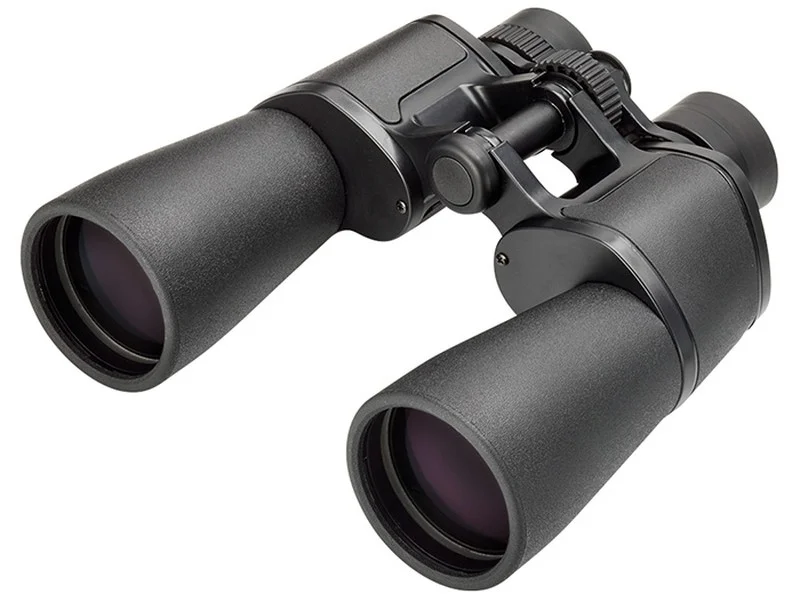
Wide, bright views that frame the whole Moon with room to spare. Perfect for following the shadow's edge as it advances, and the pair we recommend to most UK beginners.
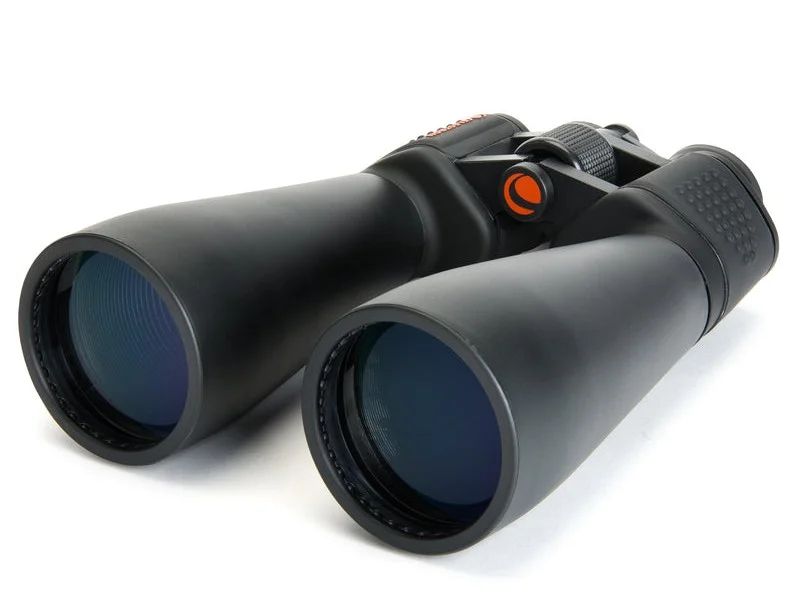
The extra magnification makes the curve of Earth's shadow obvious and picks out craters along the shadow line. Use a tripod: at 5am your arms will thank you.
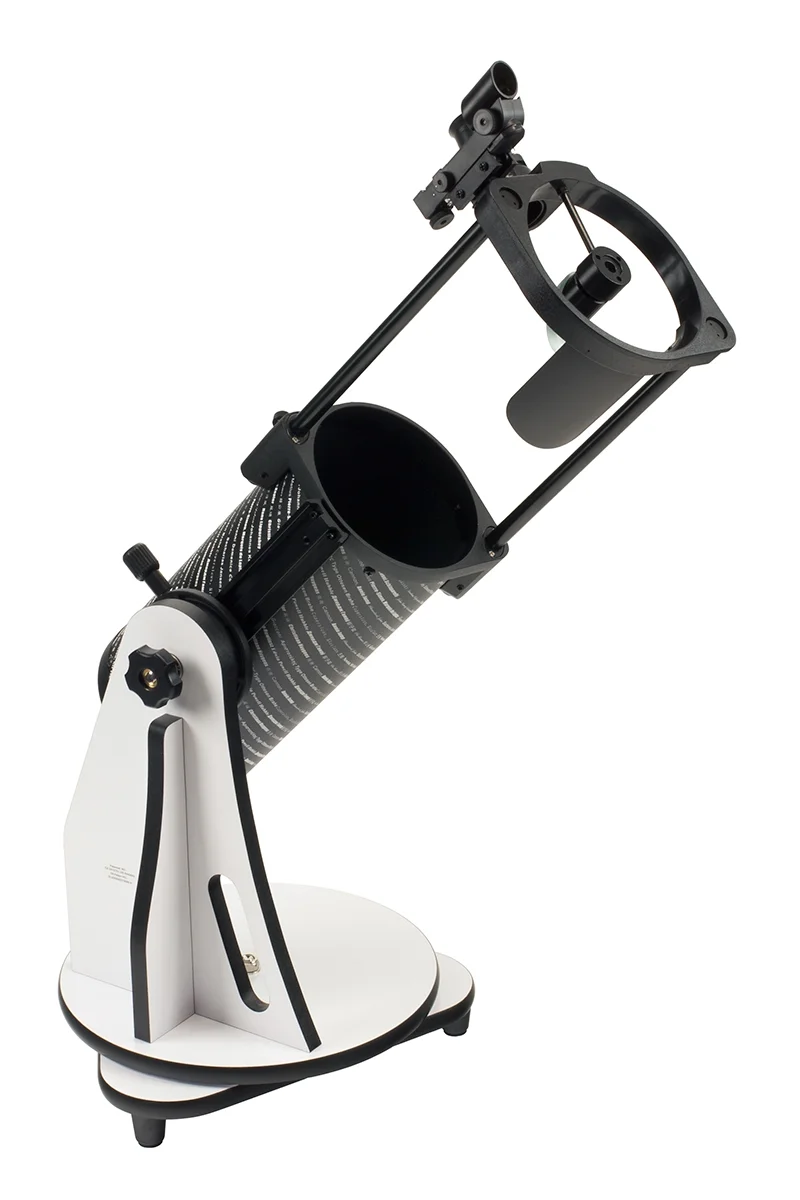
A low eclipsed Moon is a lovely telescope target, and this little Dobsonian sets up in seconds. Afterwards, swing it to Saturn higher in the south-west.
Affiliate links: you pay the same price, we earn a small commission that helps keep WatchTheStars free.
How to Photograph the Eclipsed Moon
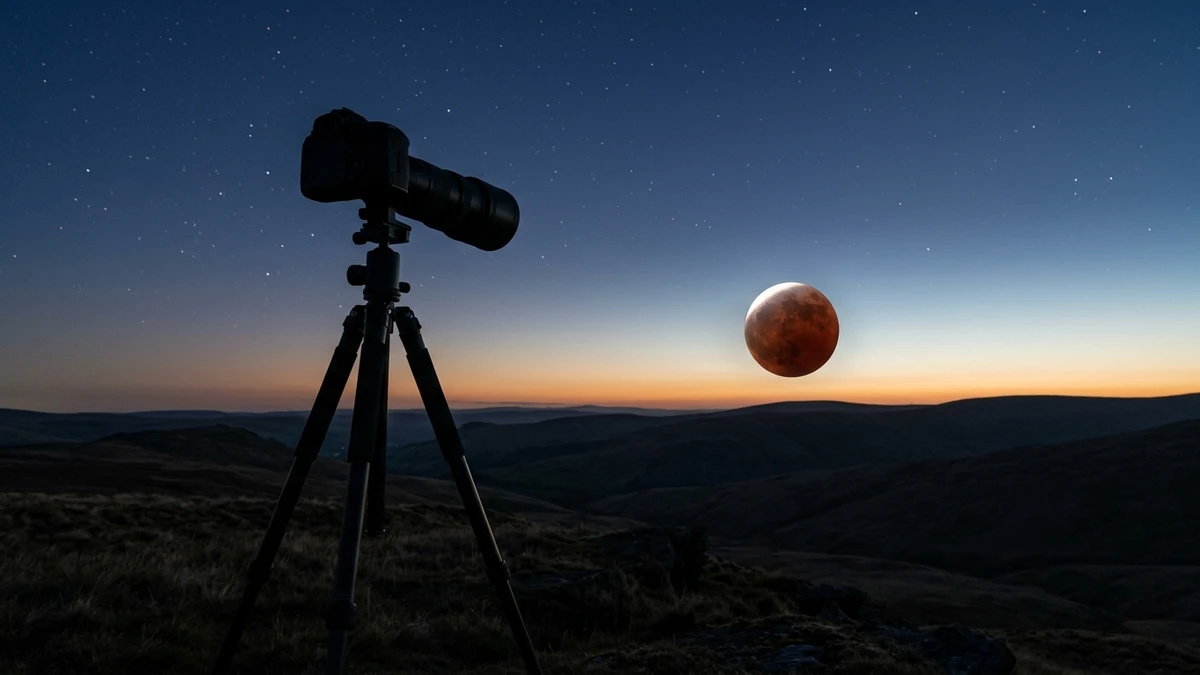
A low eclipsed Moon over a landscape is one of the most photogenic sights in astronomy, and far easier to shoot than a high one. You can frame it against trees, buildings or the sea rather than empty sky.
Smartphone: brace the phone on a wall or small tripod and turn night mode off if it burns the Moon into a white blob. Tap the Moon on screen to set exposure, then drag the exposure down until you see detail. Our phone astrophotography guide covers the basics. Phones struggle with the Moon at the best of times, so aim for a wide scene with the red Moon over the landscape rather than a close-up.
Camera: a telephoto lens (200mm upwards) on a tripod is the classic setup. Start around 1/125s, f/8, ISO 400 for the sunlit sliver, then lengthen the exposure as the shadow deepens; the eclipsed portion needs far more light than the bright edge. Bracket everything. As the Moon drops towards the horizon, switch to wider compositions and let the dawn colours in. There's more detail in our full guide to photographing the Moon.
Shoot a frame every ten minutes or so and you'll have a sequence showing the shadow's progress, which tells the story better than any single image.
What Else to Look For in the Dawn Sky
While you're out, the pre-dawn sky has a few extras. The eclipsed Moon sits in Aquarius, a faint constellation that will be mostly washed out by twilight, but look up and left of the Moon and you'll find Saturn, shining steadily in Pisces and noticeably higher than the Moon. It's a fine binocular target while you wait, and 2026 is a good year for observing Saturn as it heads towards opposition.
Below the Moon, if your horizon is exceptionally clear, the bright star Fomalhaut may just be visible before twilight takes it. And behind you, to the east, the winter constellations are quietly returning: Orion clears the horizon before dawn in late August, a first hint of the seasons turning.
Key Timings at a Glance
All times BST, morning of Friday 28 August 2026.
| Time (BST) | Event | What you'll see |
|---|---|---|
| 2:23am | Penumbral eclipse begins | Nothing obvious at first; subtle shading from ~3am |
| 3:33am | Partial eclipse begins | Dark bite appears and grows across the Moon |
| 5:12am | Maximum eclipse | 93% of the Moon's diameter in shadow, low in the WSW |
| ~6:10–6:40am | Moonset (varies by location) | The still-eclipsed Moon sinks below the western horizon |
| 6:52am | Partial eclipse ends | Below the horizon from the UK |
An eclipse at 5am is a big ask, but this one earns the alarm. The next lunar eclipse, in February 2027, is a penumbral event most people won't even notice, so this is the last proper look at Earth's shadow on the Moon for some time. Set the alarm, find your western horizon, and if the clouds win, there's always the rest of tonight's sky.
Sources:
- How to see August's Blood Moon event · BBC Sky at Night Magazine
- Partial Lunar Eclipse August 2026 · Star Walk
- August 28, 2026 Partial Lunar Eclipse in London · timeanddate.com
Frequently Asked Questions
Equipment guides
Related topics
Ian ClaytonAmateur astronomer and founder of WatchTheStars.co.uk, dedicated to helping others explore the wonders of our universe. Full profile →