Key takeaways
- The 12 August 2026 solar eclipse covered 91–96% of the Sun from the UK, the deepest partial eclipse seen from Britain since 1999
- Totality crossed Greenland, Iceland and northern Spain; Reykjavík saw its first total eclipse from the city since 1433
- Most of England enjoyed clear or partly clear skies at maximum, while parts of Scotland lost the peak to cloud
- Stargazers Lounge members reported razor-thin crescents and village greens full of neighbours queueing at telescopes
- The next solar eclipse visible from the UK is a partial on 2 August 2027; the next total eclipse from British soil is not until 2090
Jump to section 5 sections
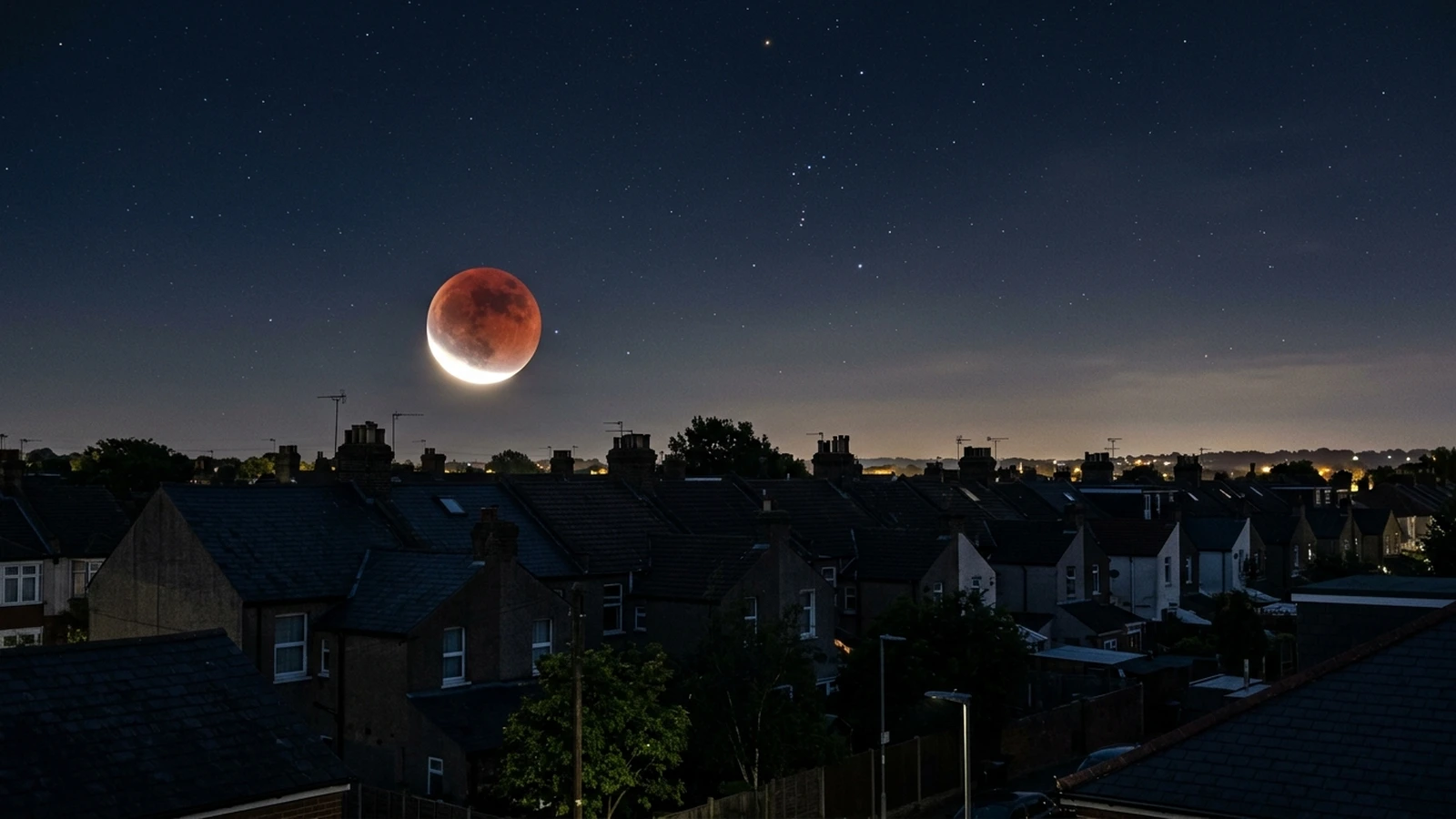
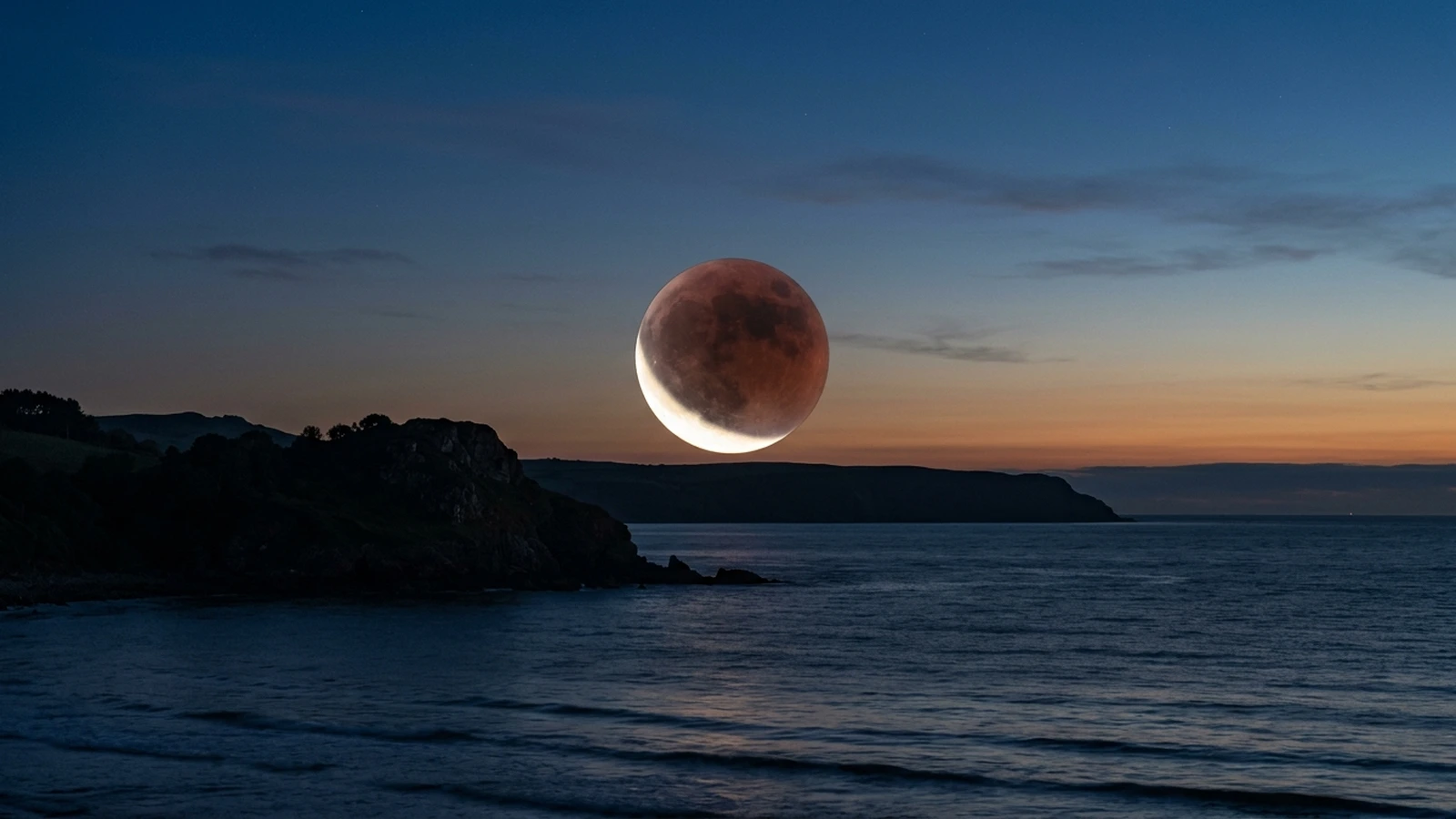
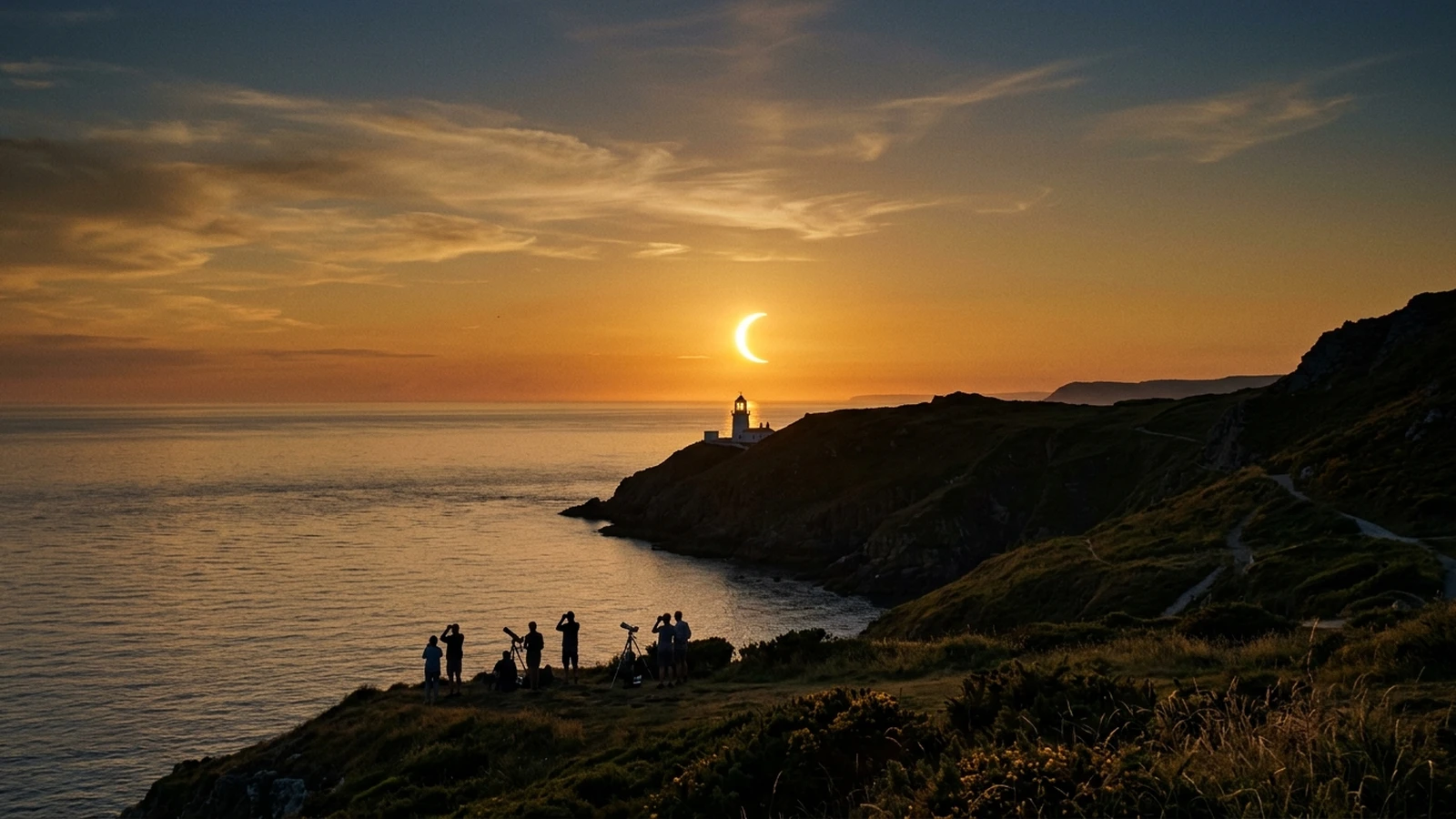
The solar eclipse of 12 August 2026 delivered. From the UK it was the deepest eclipse since the famous total of 1999, with up to 96% of the Sun hidden behind the Moon, and for once the British weather largely played along. Hilltops, beaches and village greens across the country filled up on a warm Wednesday evening, and the photos have been pouring in ever since.
This post rounds up what actually happened, how amateur astronomers experienced it from UK back gardens and parks, what observers saw from the path of totality in Spain, and the answer to the question everyone asked on the way home. When do we get another one?
Solar Eclipse 2026: What Happened on 12 August
The eclipse ran from about 6.10pm to just after 8pm BST across the UK, peaking between 7.05pm and 7.15pm depending on where you stood. At maximum the Moon covered roughly 91% of the Sun's area from London, Manchester and Glasgow, 93% from Cardiff and Belfast, and up to 96% from Land's End and the Isles of Scilly. Everything happened low in the west-north-west, barely 10 to 14 degrees above the horizon, which is why so many people headed for hills and open ground. We covered the timings and safety detail in our full eclipse guide beforehand.
The path of totality itself crossed Greenland, western Iceland and northern Spain. Reykjavík hadn't seen a total eclipse from the city since 1433, and up to 20,000 extra visitors flew in for it, with hotel rooms averaging over $1,000 a night. NASA even flew a high-altitude aircraft above the cloud to study the Sun's corona during totality.
And the weather at home? Better than anyone dared hope. Most of England had clear or partly clear skies at the peak. Scotland drew the short straw: observers around Edinburgh caught the early partial phases through gaps, then watched the maximum vanish behind cloud, with the sky clearing again about ten minutes too late.
Eclipse day was also the start of an extraordinary 24 hours we previewed in our 12 August triple-header guide: the same new moon that caused the eclipse gave the Perseid meteor shower a perfectly dark peak night straight afterwards.
Solar Eclipse Reports From Around the UK
In the run-up to eclipse day we ran a planning thread over on Stargazers Lounge, the UK's friendliest astronomy forum. Once the Moon started moving, members filled it with photographs and observing reports. Do click through to the original thread to see what people captured.
Observers used everything from phones and eclipse glasses to compact smart telescopes and dedicated solar wedges. Reports arrived from the New Forest, Suffolk, London, Cambridgeshire and Scotland, recording the event from first contact through to the thin crescent at maximum.
Near maximum, with the Sun sinking towards the treeline, PeterStudz caught this thin orange crescent from Brockenhurst in the New Forest with a Seestar S30 smart telescope.
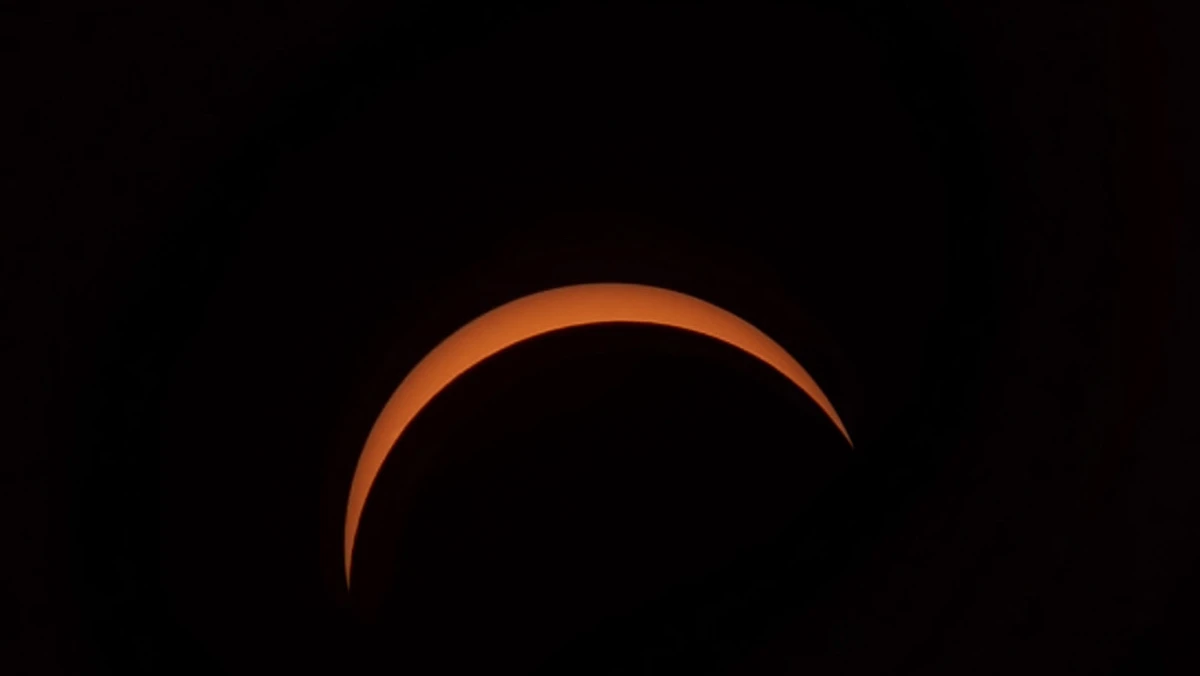
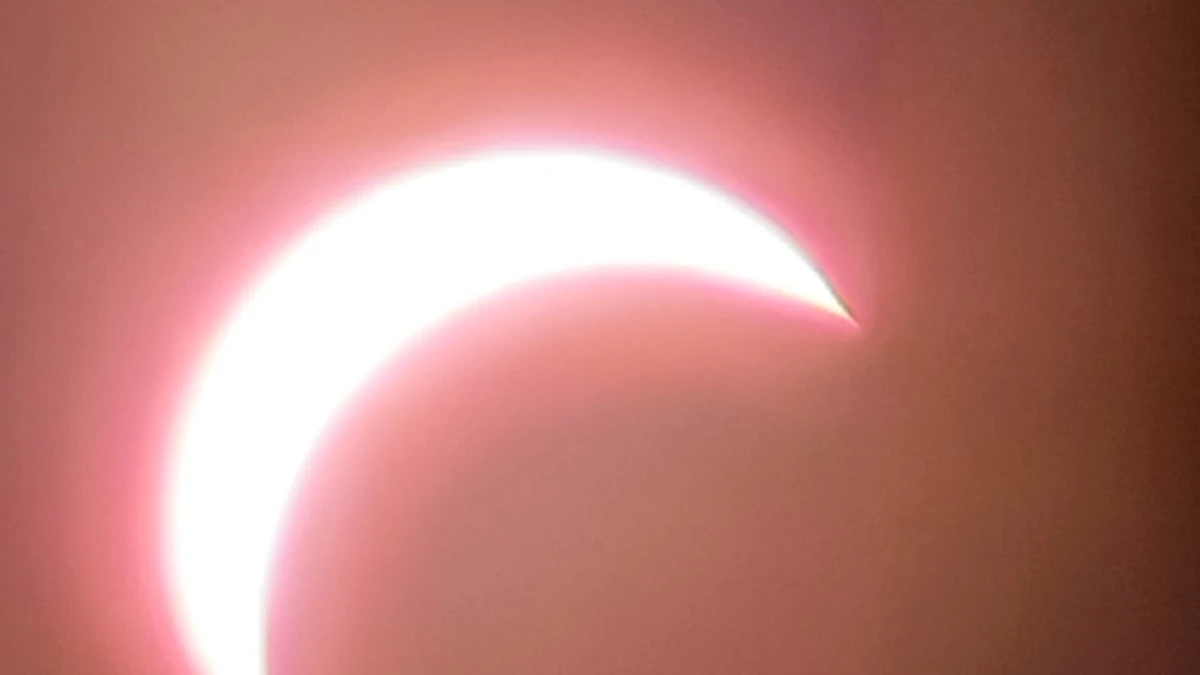
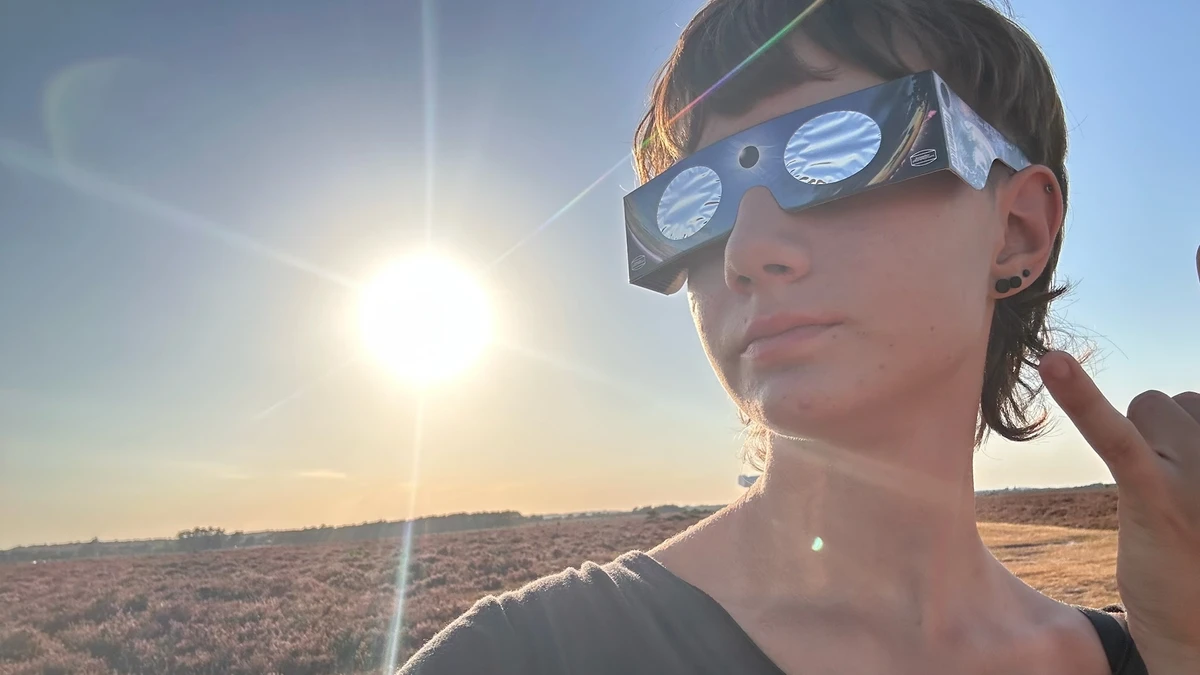
Phones had a good evening too. This is the view I got from Dunstable Downs, shot through eclipse glasses held over a phone camera as thin cloud drifted across. Our phone astrophotography guide has the technique.
Eclipse Day on the Ground: Village Greens and Busy Hilltops
The reports that stick with you from the thread aren't all about the Sun. Plenty are about people, because 12 August turned into an impromptu national street party.
Trillion planned to watch quietly from her front path in Cambridgeshire. Her other half posted on the village Facebook page, and nearly 100 people turned up with picnic blankets. She ran a continuous queue at the telescope and got her three pairs of eclipse glasses back at the end, which counts as a minor miracle.
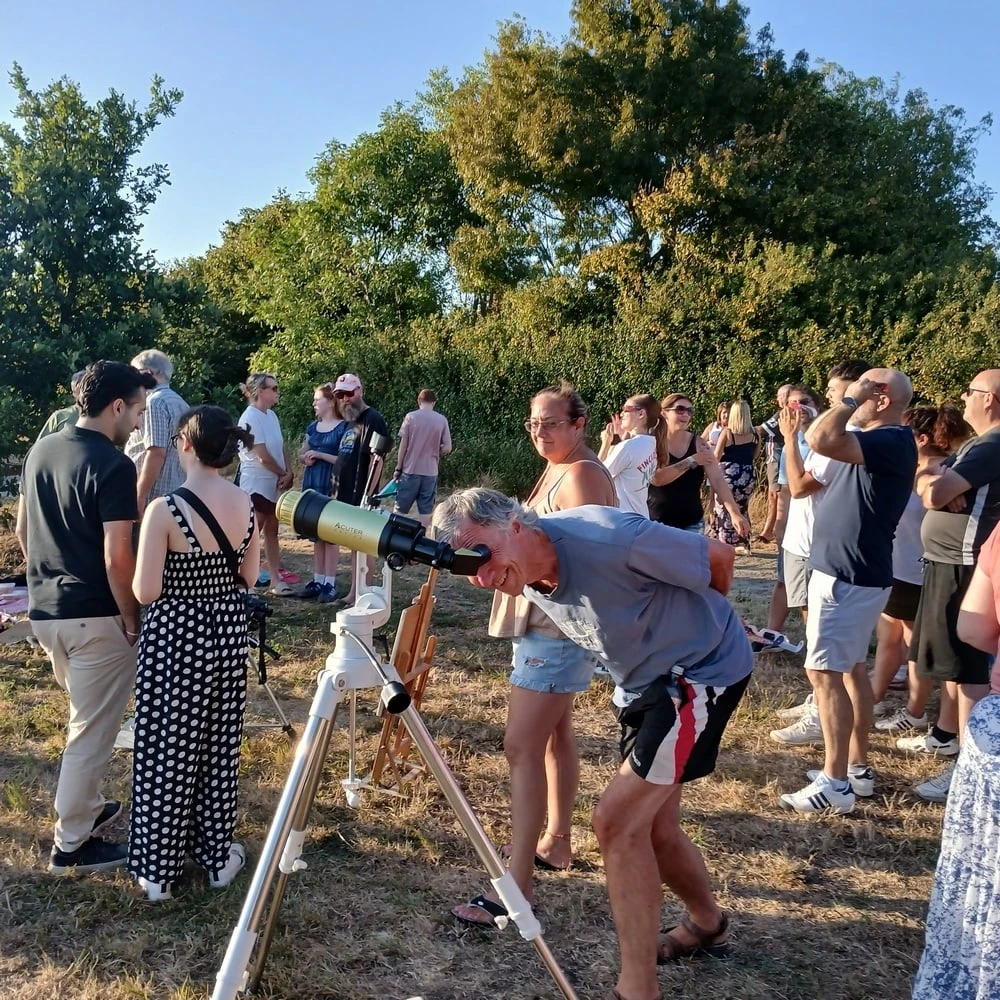
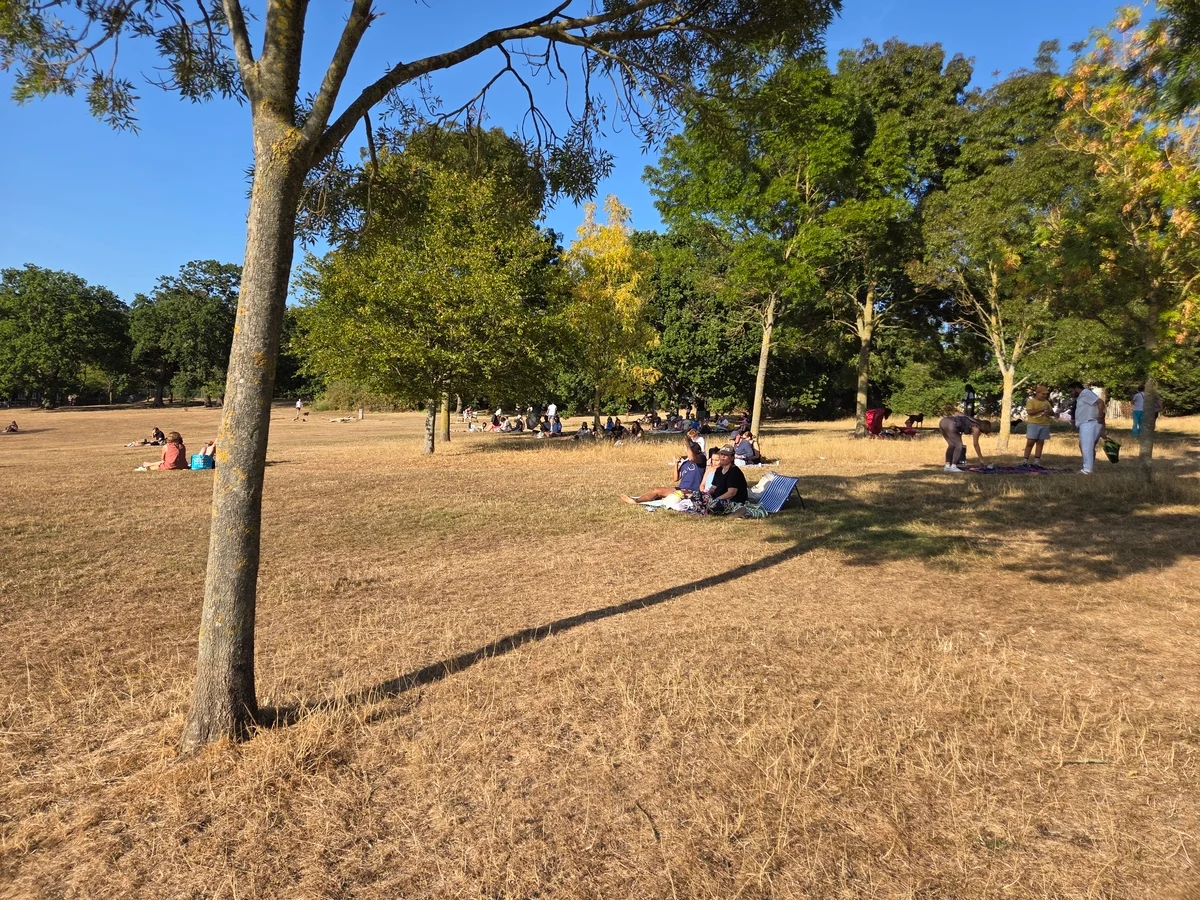
The same scene repeated everywhere. powerlord had 20 or 30 people settle in around his telescopes in a Suffolk park, watching the live feed with a beer while his jack russell worked the crowd. JeremyS was at a packed Jodrell Bank event that made it onto BBC North West Tonight. Up on Dunstable Downs, where I was, the hillside was as busy as I've ever seen it. And in Streatham, LondonNeil took his scope to a small rise off the common and spent the evening sharing the eyepiece.
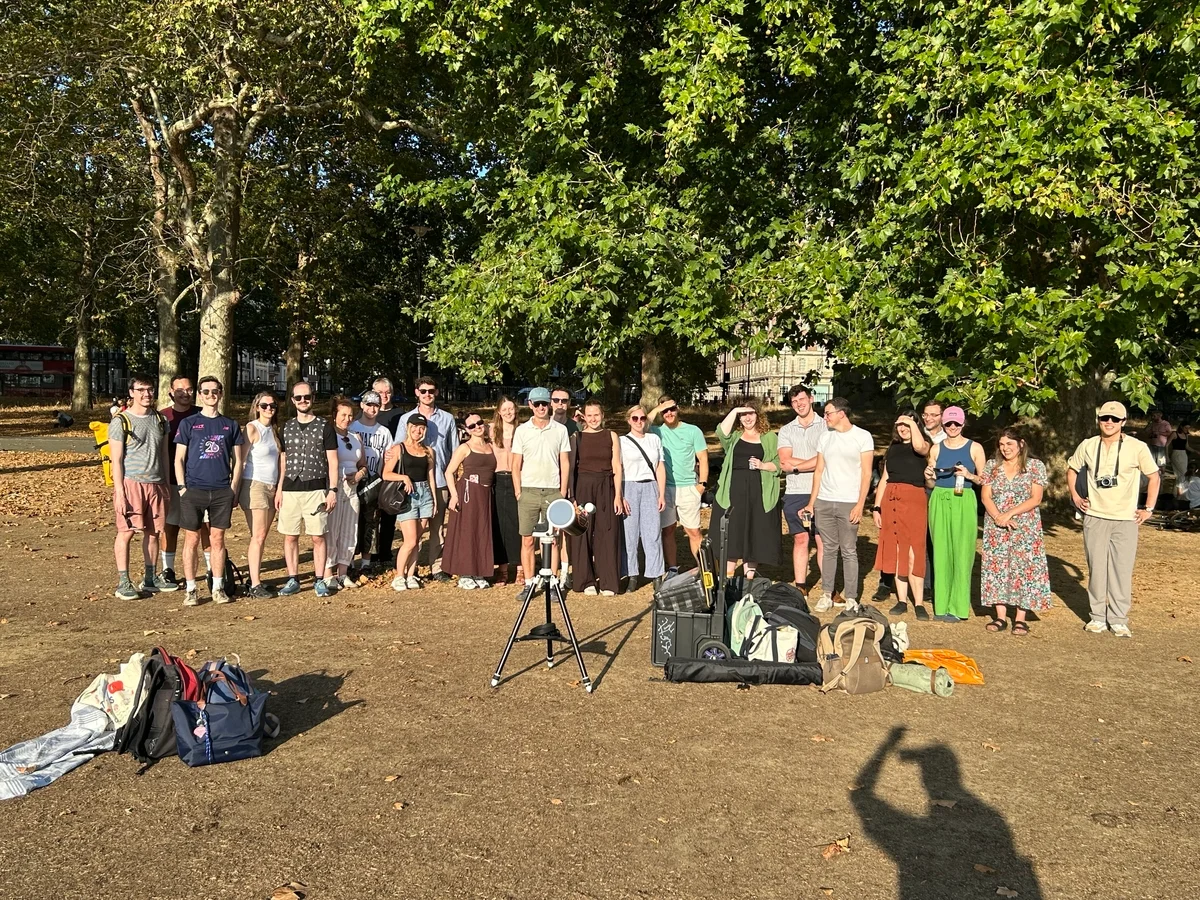
LondonNeil also chairs the SPARTA Astronomy Society, whose members set up a Maksutov telescope in Hyde Park and turned the eclipse into a group observing session. It's a young club, started in 2025, and it's open to any current or former civil servant, whatever department you were in.
PeterStudz made it a family evening on the New Forest heather, kit and daughter both performing perfectly.
Not everyone got the fairy-tale ending. Les Ewan in Midlothian fought cloud all evening, grabbed the early phases through gaps, and then watched the maximum happen behind a grey blanket. After five decades in the hobby he took it well. As he put it, at least he got something when he thought he'd see nowt.
There's a reason so many people had safe glasses to hand. Astronomers Without Borders, Go Stargazing and First Light Optics put 300,000 pairs into circulation across the UK in the months before the eclipse. FLO imported them from the States at their own expense and posted them out from Exeter. Go Stargazing, a non-profit, coordinated the campaign, and a lot of the schools, societies and back-garden crowds in this article were looking up through those glasses.
Equipment for observing a solar eclipse
Kit we've tested and reviewed in full
Small smart telescopes can track and photograph the Sun when their proper solar filters are securely fitted. Never point any telescope, binoculars or camera at the Sun without the correct filter.

A portable smart telescope with automated solar tracking and a supplied solar filter, capable of recording a timelapse of an eclipse.
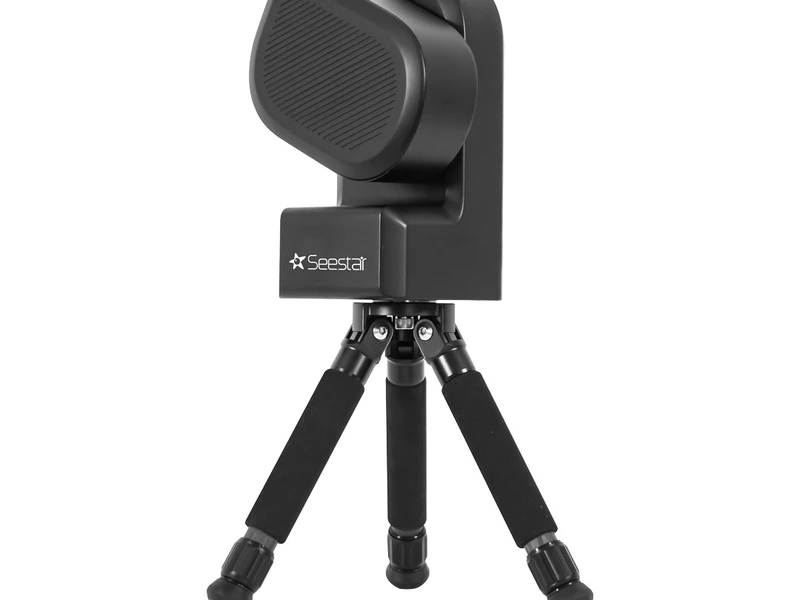
The S30's big brother pulls in more detail on sunspots and the lunar limb when used with the correct solar filter.
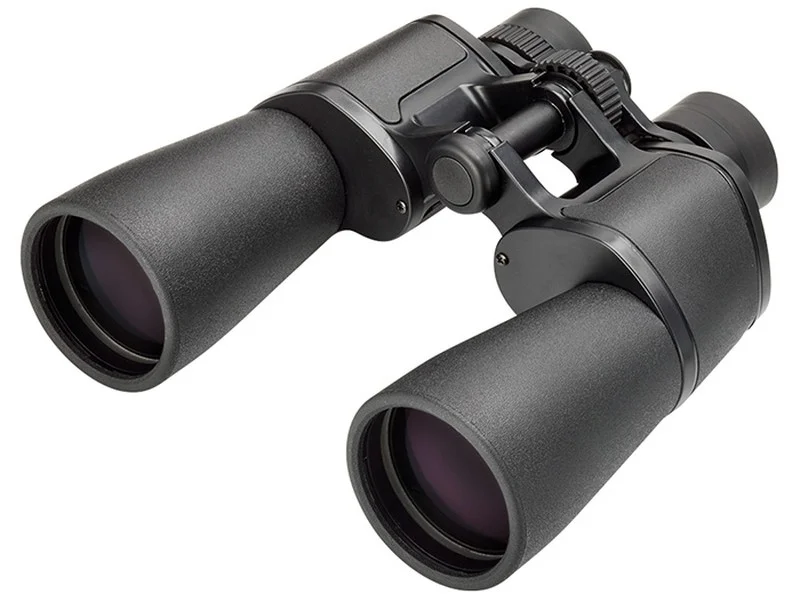
No good for the Sun, but the pair to keep in the car for conjunctions, comets and meteor-shower nights. Never point binoculars anywhere near the Sun.
Affiliate links: you pay the same price, we earn a small commission that helps keep WatchTheStars free.
Totality in Spain: The View From the Path
For the full spectacle you had to be under the Moon's shadow, and SGL members made the trip. Dave scutt watched from Valencia and caught the diamond ring blazing at the edge of the black lunar disc, low over the pylons and haze of a Spanish evening. This is the moment totality breaks, when the first bead of sunlight bursts back through the valleys on the Moon's limb.
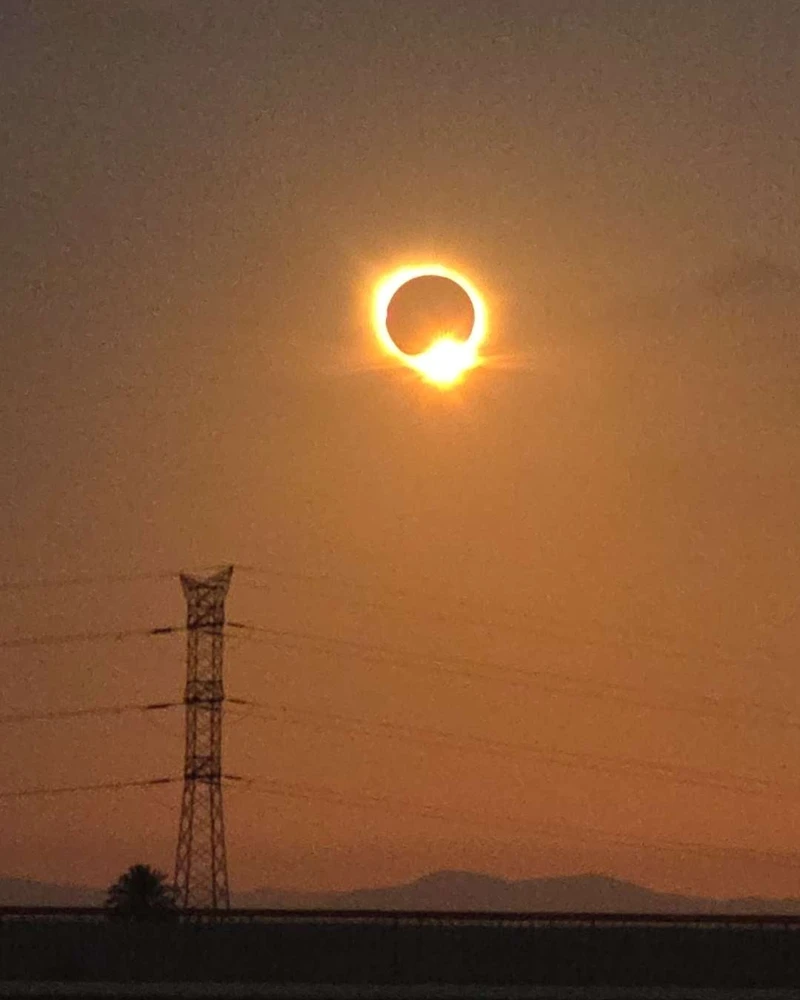
Along the Spanish path, totality lasted up to 2 minutes 18 seconds. The professional images are worth your time too: National Geographic and NPR both published superb galleries within hours, and the sharpest solar telescope on Earth spent the summer showing us what that same solar surface looks like up close.
When Is the Next Solar Eclipse Visible From the UK?
The next solar eclipse visible from the UK is a partial on 2 August 2027. It's a much shallower event for Britain, around 42% coverage from London, 47% from Penzance, while Gibraltar, southern Spain and North Africa get up to 6 minutes 23 seconds of totality, the longest on easily reachable land until 2114. A deeper partial follows on 26 January 2028, low in the winter sky.
The one to circle in the diary, if you're patient, is 23 September 2090: the next total solar eclipse visible from British soil. Until then, the 1999 and 2026 eclipses will stay the benchmark for a generation of UK skywatchers.
If Wednesday evening got you hooked, you don't have to wait for the next eclipse to point kit at the Sun. Sunspots, and the odd monster sunspot group, are visible any clear day with the right filter. Start with our guide to observing the Sun safely, then check what's in tonight's sky and this week's night sky to keep the momentum going.
Huge thanks to the Stargazers Lounge members who shared their photographs and their evenings in the original thread. Photographs by Dave scutt, Trillion, PeterStudz and LondonNeil are reproduced above with their permission; the other members' images are not reproduced here while individual permissions are being confirmed. If you got a shot you're proud of, the thread is still open.
Sources:
- 12 August eclipse from the UK: the planning and photos thread · Stargazers Lounge
- 2026's only total solar eclipse darkens skies across the Northern Hemisphere · CBS News
- See the best photos from the solar eclipse · NPR
- See stunning images of the 2026 total solar eclipse from Nat Geo photographers · National Geographic
- Solar glasses for the August 2026 partial eclipse · Go Stargazing
- SPARTA Astronomy Society · SPARTA
- Total solar eclipse darkens skies over Spain, Iceland · PBS News
- 12 August 2026 partial solar eclipse · Royal Observatory Greenwich
Frequently Asked Questions
Equipment guides
Related topics
Ian ClaytonAmateur astronomer and founder of WatchTheStars.co.uk, dedicated to helping others explore the wonders of our universe. Full profile →