Key takeaways
- A declassified 1948 exchange in the Pentagon's fifth UFO file release shows the US Air Force asked for readers' UFO letters held by Amazing Stories, a pulp science fiction magazine
- The Air Force wouldn't approach the publisher itself for fear of 'unfavorable publicity', so the CIA was sent instead, five years before the agency's first acknowledged UFO involvement
- The CIA reported the letters were worthless and the planned flying saucer article was by a man claiming the discs came from an underground city he had visited
- The publisher spiked the flying saucer article 'because it is not amazing enough', in favour of a story about a huge red spider from Mars collecting humans for a Martian museum
- The CIA was then told to stop, a decision recorded in the file as being 'to their relief'
Jump to section 5 sections
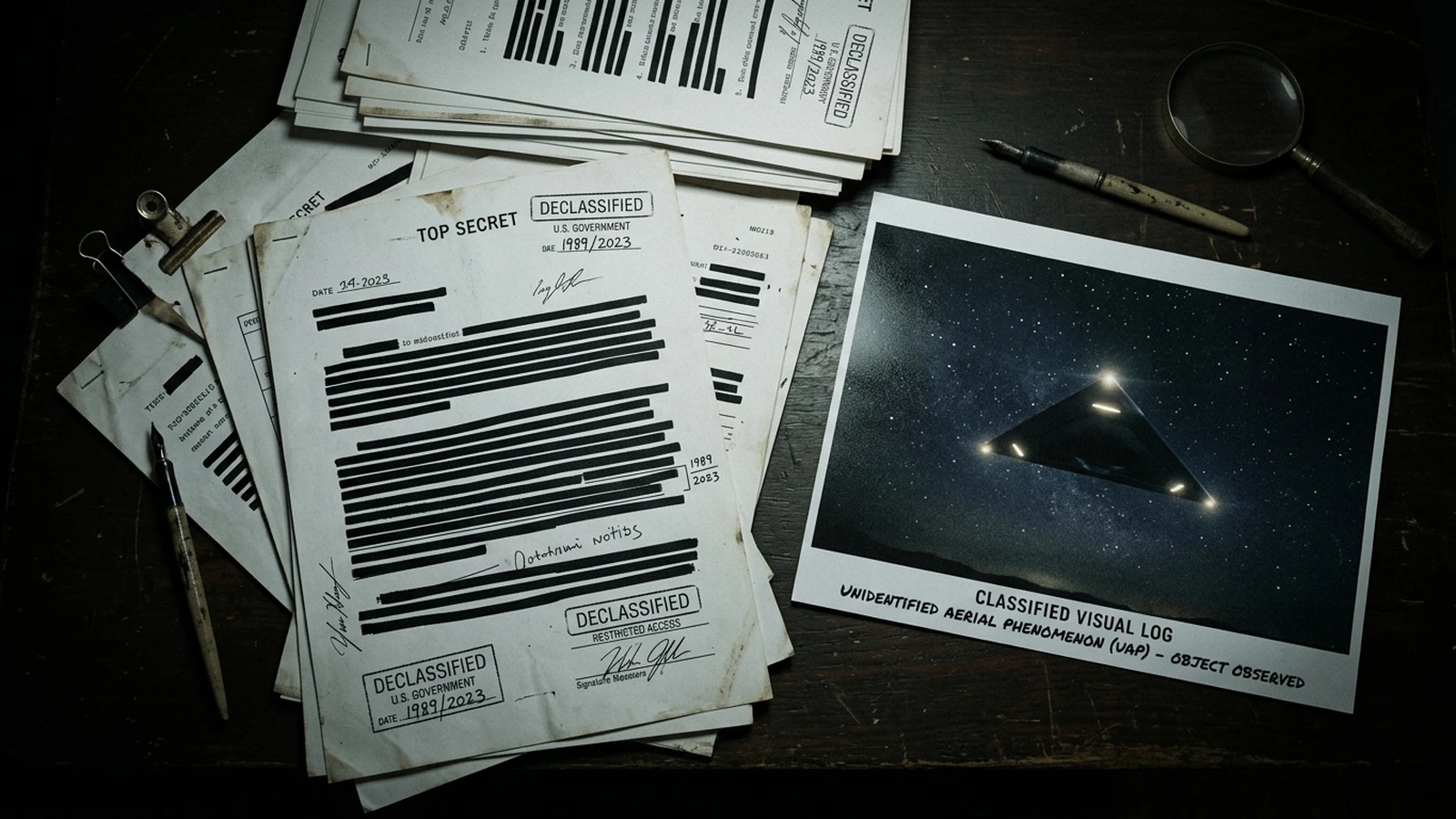
Buried on page after page of cover sheets and carbon copies in the Pentagon's newest UFO release is the funniest exchange ever declassified on the subject. It involves the US Air Force, the CIA, a pulp science fiction magazine, and an editorial decision about a giant red spider from Mars.
It's a true story, it's documented across two official letters from 1948, and almost nobody has reported it. Here it is in full.
Why the Air Force Was Reading Amazing Stories in 1948
In January 1948, the US Air Force was seven months into the flying saucer problem. Kenneth Arnold's sighting had made headlines the previous June, hundreds of reports had followed, and the Air Force had just stood up Project SIGN, its first official UFO investigation, at Wright-Patterson. We've unpacked the whole 245-page file behind it in our page on the Project SIGN file; this story hides in its correspondence.
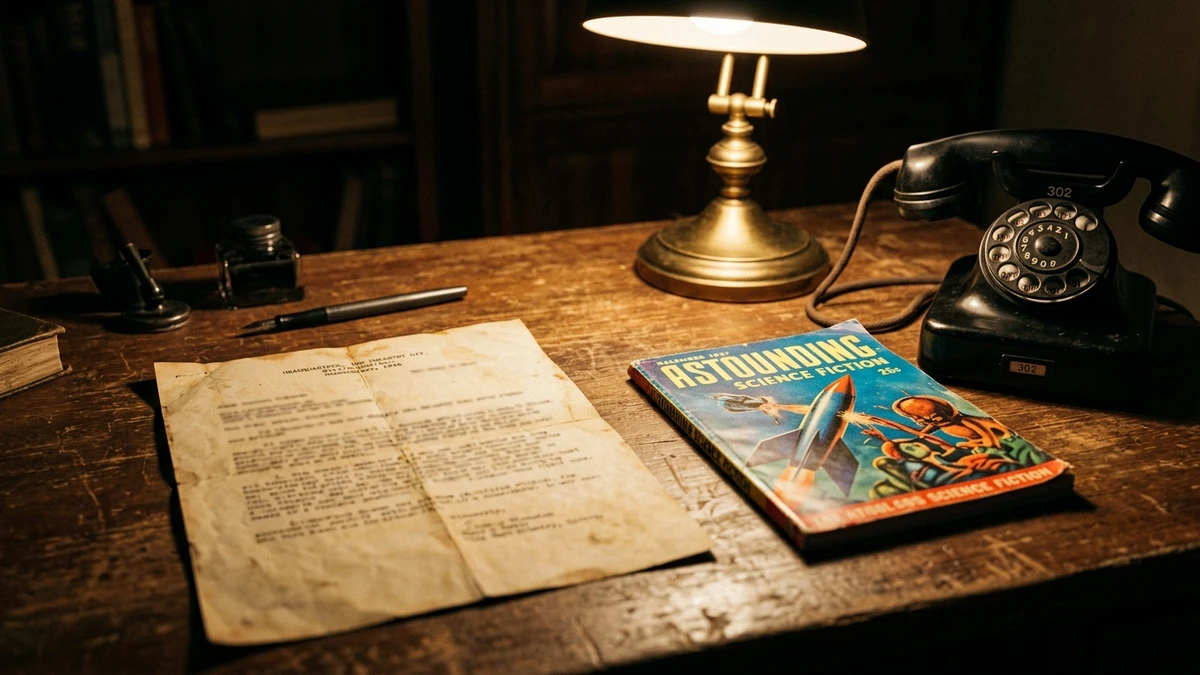
On 16 January 1948, Colonel Howard McCoy (chief of intelligence at Air Materiel Command, and the same officer who later wrote that "vehicles from another planet" could not be ignored) sent a letter to the Chief of Staff of the Air Force. An employee had noticed something interesting: readers of Amazing Stories magazine were writing in with flying disc sightings the Air Force had never received. Better still, the magazine had a feature article on flying discs in preparation.
McCoy wanted the letters and an advance copy of the article. But there was a snag, and he spelled it out: because of "the nature of the publication" and "the unfavorable publicity which might accrue to the Air Force if an official request were made", his headquarters couldn't contact the publisher directly. Could arrangements be made "through appropriate channels"?
He added, a little defensively, that he knew the request was unusual, but "until such time as the so-called 'Flying Disc' phenomenon is laid to rest, all possible sources of information should be utilized."
The CIA's Visit to a Science Fiction Publisher
The "appropriate channels" turned out to be the Central Intelligence Agency.
The reply came back on 9 February 1948 from Lieutenant Colonel Douglass W. Eiseman of Air Intelligence Requirements. The CIA, it confirmed, had contacted the New York office of the Ziff-Davis Publishing Company about Amazing Stories and its flying disc material. This is remarkable in itself: the CIA's first acknowledged brush with the UFO subject is usually dated to 1952, ahead of the Robertson Panel. Here is the agency working a UFO tasking in early 1948, five years earlier, and the target is a science fiction magazine.
What did America's newest intelligence agency find? In the file's own words, the readers' letters were "of no value inasmuch as they are from schoolchildren, illiterates, 'crackpots', etc. None had a sensible report in connection with sightings, and most bordered on the fantastic side."
The feature article was no better. It had been written, the CIA reported, by "a man who claims the discs emanate from a buried underground city in the bowels of the earth, which he has visited."
Look at Mars yourself, no spiders included
Kit we've tested and reviewed in full
The pulps put monsters on Mars. A decent pair of binoculars or a small telescope shows you the real thing: a steady amber point that resolves into a tiny disc with surprisingly little kit.
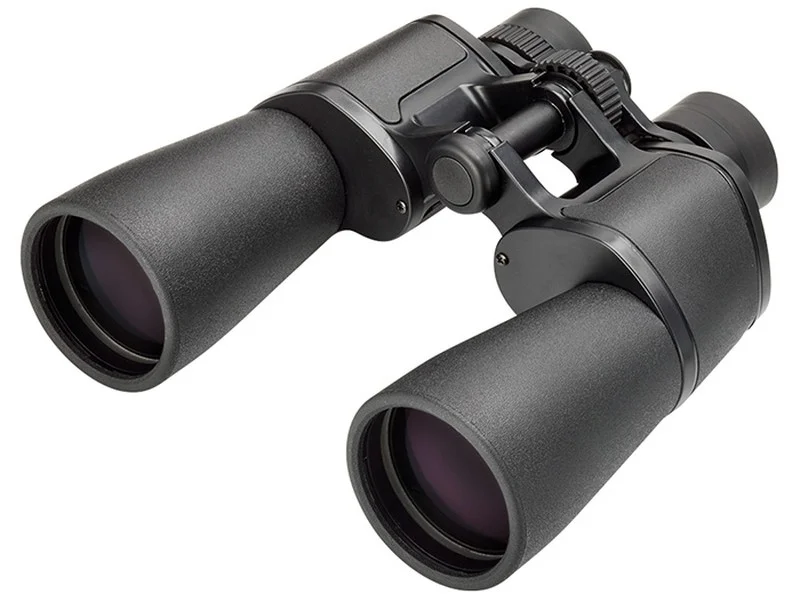
Shows Mars as an unmistakably steady, amber point and pulls in star fields the naked eye misses. The easiest first step into the hobby.
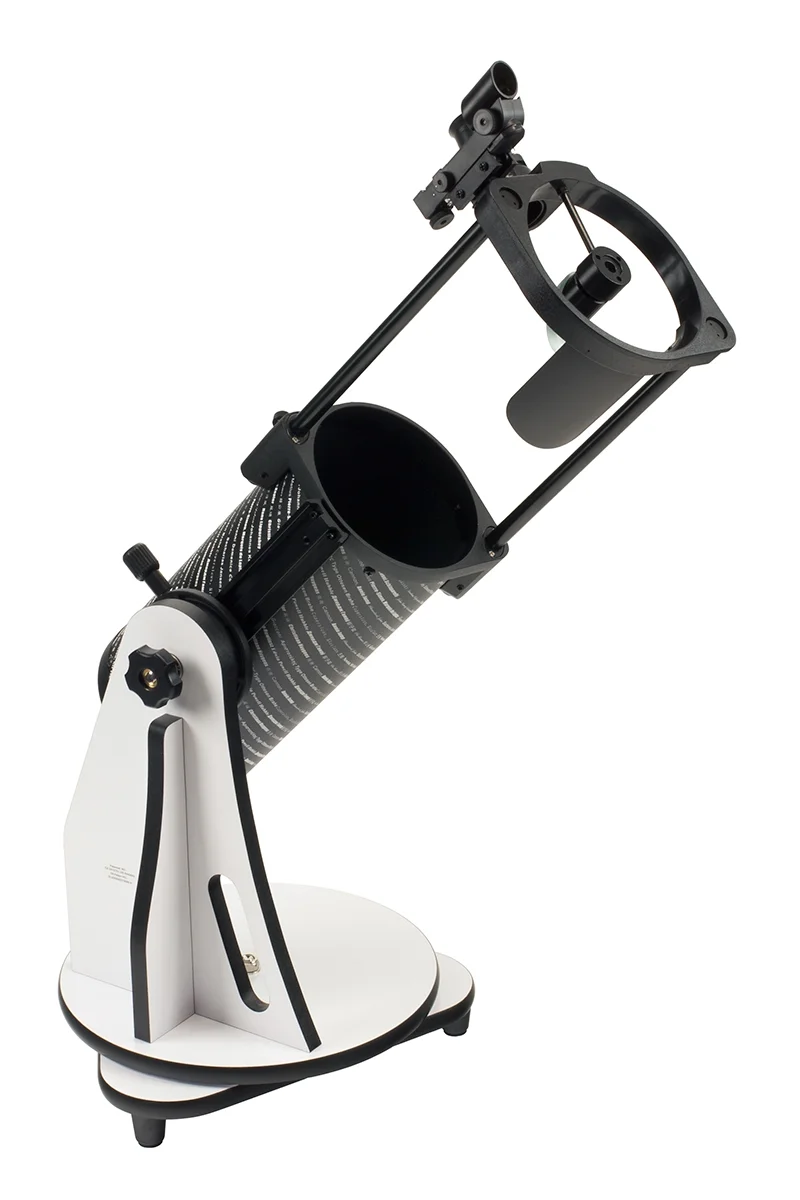
Enough aperture to turn Mars from a dot into a small disc at high power, and it will show you Jupiter's moons and Saturn's rings while you wait.
Affiliate links: you pay the same price, we earn a small commission that helps keep WatchTheStars free.
'Not Amazing Enough': The Red Spider From Mars
Then comes the sentence that makes the whole 245-page file worth the download. The publisher, the CIA learned, had cancelled the flying saucer article entirely: "because it is not amazing enough."
What was amazing enough? The magazine was going to run, instead, "a story about a huge red spider which comes down to earth from Mars and captures humans for a Martian museum."
Sit with that for a moment. In February 1948, the US Air Force's official flying saucer investigation was being briefed, via the CIA, on the editorial calendar of a pulp magazine, and the intelligence takeaway was that flying saucers had been bumped for a Martian spider with a museum collection. If you'd like to see what's actually on the planet Mars, we can promise you it contains no spiders and no museums, though the real place is strange enough in its own right.
The file closes the episode with unusual candour. The Air Force instructed the CIA representatives "to stop any further efforts in this matter", and the officer drafting the letter couldn't resist recording their reaction: the instruction came "(to their relief)".

The Shaver Mystery: The Underground City Connection
The detail about a "buried underground city" isn't random nonsense. It points straight at one of the oddest chapters in publishing history. Through the mid-1940s, Amazing Stories editor Ray Palmer had built enormous circulation on the so-called Shaver Mystery: stories by Richard Shaver, presented as substantially true, about ancient underground civilisations and their surviving machinery. Readers wrote in by the thousand claiming their own strange experiences.
That's why the magazine had a pile of flying disc letters in the first place, and why the Air Force, starved of data, briefly wondered whether a pulp's postbag held sightings its own channels had missed. The CIA's blunt assessment of those letters effectively closed the loop: the postbag was full, but not with evidence.
There's a neat historical irony here too. Palmer went on to co-found Fate magazine in 1948, whose first issue carried Kenneth Arnold's own account of his sighting. The line between pulp fiction and saucer culture was never a line at all. It was a revolving door, and for one strange month in 1948, the CIA was standing in it.

What the CIA's Amazing Stories File Tells Us
It would be easy to file this away as a joke, and it is funny. But it earns its place in the record for three reasons.
First, it shows how seriously the early Air Force took the disc problem. Intelligence officers don't ask the CIA to work a source they're embarrassed about unless they're short of better ones. The same file shows the Air Force asking for fighters with gun cameras on continuous alert that same spring. These people thought something real was in their skies, and they were scraping for data.
Second, it documents CIA involvement in the UFO subject in early 1948, well before the agency's role in the Robertson Panel and the famous film analyses of 1952–53, and long before Cold War cases like the green object over a Soviet missile range that the agency tracked in later decades.
And third, it's a healthy reminder that the UFO story has always been tangled up with the entertainment business. Some of the noise in the 1948 postbag came from people primed by a decade of pulp covers. Some of today's noise comes from streaming documentaries. The job of a careful reader, then and now, is telling the letters from the spider stories. The scientists at Los Alamos managed it when green fireballs started crossing New Mexico a year later; the files that survive show officialdom trying, clumsily and sometimes hilariously, to do the same.
The full exchange sits inside DOW-UAP-D100 in the fifth Pentagon file release, free at war.gov/ufo, and our UAP document archive collects the rest of the release's standout cases.
Sources:
- Department of War UAP file release (PURSUE), Release 05 · DOW-UAP-D100, Air Materiel Command correspondence file, letters of 16 January and 9 February 1948
- Project Sign: Wikipedia background on the 1948 investigation
- Amazing Stories and the Shaver Mystery: public record
Frequently Asked Questions
Equipment guides
Related topics

Ian ClaytonAmateur astronomer and founder of WatchTheStars.co.uk, dedicated to helping others explore the wonders of our universe. Full profile →