Key takeaways
- The White House has created a UAP Governance Board (an interagency body run jointly by ODNI, the FBI and the Department of War) which met for the first time on Tuesday 16 June 2026
- Harvard astrophysicist Avi Loeb has been asked to chair a UAP Science Advisory Council that reports to the board, with a 12-strong team of scientists
- The test case everyone's pointing to is the October 2023 'mother orb' event, but its location is officially redacted, and the Cheyenne Mountain link comes from the press, not the files
- The board has no budget and only sees declassified material, so the scientists advising on the mystery can't actually read the classified files
- It all flows from Trump's February 2026 disclosure directive and the three PURSUE file releases that followed
Jump to section 6 sections
For years, the UFO question has lived in a strange place: serious enough to fill congressional hearings, fringe enough that nobody in government wanted their name on it. That just changed. The White House has built a formal body to deal with unidentified anomalous phenomena, a UAP Governance Board, and handed a Harvard astrophysicist a science council to advise it. The whole thing met for the first time last week, with a straight face.
If you've followed my coverage of the PURSUE file releases, this is the next logical step. The files were the disclosure. This is the machinery being built around them. Here's what the board actually is, who Avi Loeb has put on his team, and the catch that most of the headlines have skipped over.
What Is the UAP Governance Board?
Strip away the UFO drama and the Governance Board is, on paper, a fairly ordinary piece of Washington plumbing. It's an interagency body: meaning it pulls together people from across the government rather than sitting inside any one department. According to an official from the Office of the Director of National Intelligence (ODNI), it was set up jointly by ODNI, the FBI and the Department of War to "provide guidance, recommendations and coordination at the interagency level, bringing together military, law enforcement, the intelligence community, and other civilian agencies."
Its job is coordination. The mission statement says members will "integrate and optimise interagency processes involved in the investigation of UAP incidents" and the way UAP data is collected and analysed, all in support of AARO, the All-domain Anomaly Resolution Office, which is the Pentagon outfit that actually runs the case files. The board also helps coordinate the timely declassification of UAP material, working within Executive Order 13526, the existing rulebook for classifying and releasing national security information.
In plain terms: until now, a UFO report might land with the FBI, or the Navy, or AARO, or a local police force, and there was no single place where those threads got pulled together. The board is meant to be that place. It met for the first time on Tuesday 16 June 2026. The ODNI official wouldn't say who was in the room.
All of this traces back to Trump's February 2026 directive ordering agencies to start identifying and releasing government files on UAP. Three batches of files have come out since (on 8 May, 22 May and 12 June) under the PURSUE programme. The board is the institutional response to all that material suddenly being in public.
Why Avi Loeb Is Leading the Science Council
Sitting alongside the board, but not inside it, is a separate group: the UAP Science Advisory Council. This is the part with a famous name attached. The White House, the Pentagon, ODNI, the FBI and the wider intelligence community asked Harvard's Avi Loeb to assemble and chair it.
If you don't know Loeb, he's the closest thing modern astrophysics has to a lightning rod. He chaired Harvard's astronomy department for nine years, served on the President's Council of Advisors on Science and Technology, and runs the Galileo Project, which operates three observatories scanning the sky for objects that don't behave like anything humans have built. He's also the man who keeps publicly wondering whether interstellar visitors might be artificial: first with 'Oumuamua, and more recently with the comet 3I/ATLAS, which he suggested could be something more than a rock. That claim didn't hold up to scrutiny, but it tells you exactly why he was picked: he is perfectly willing to ask the awkward question out loud and then insist the answer come from data.

His framing is worth quoting because it's the opposite of the usual hype. The government, he points out, is "not a scientific organisation," so outside experts can help fill the gaps. The point, in his telling, isn't to feed the public mood or chase the drama: it's to work from evidence and to say plainly when the evidence is too thin to support a conclusion. He summed up the council's job with a line that's pure Loeb: "keep our eyes on the orbs." It's theatrical enough to make the whole enterprise feel slightly mad, which may be the point.
Who's on the UAP Science Advisory Council?
Loeb published the roster himself, which is refreshingly transparent for something with this many three-letter agencies attached. As it stands, the council has twelve members, deliberately spread across fields, because, as Loeb puts it, "UAPs are physical objects that interact with humans," so you need physical scientists, but also psychologists and biologists.
The line-up: Prof. Carol Cleland (anomaly identification); Dr Richard Cloete (data analysis and AI tools); Dr Omer Eldadi (data management, AI and human psychology); Dr Tim Gallaudet (oceanography); Ross Howard (communication); Ben Lamm (oceanography and biology); Dr Devesh Nandal (numerical analysis and astrophysics); Prof. Garry Nolan (molecular biology and materials science); Dr Michael Shermer (the study of anomalies); Dr Peter Skafish (anthropology); Prof. Matthew Szydagis (instrumentation and data collection); and Dr Jennice Vilhauer (quantitative psychology).
Two names stand out. The first is Michael Shermer, founder of Skeptic magazine and one of the best-known debunkers alive. Putting him on a government UFO council alongside disclosure-friendly scientists is either a masterstroke or a recipe for permanent argument, depending on your mood. Having a professional sceptic in the room is exactly how you stop a body like this drifting into wishful thinking, which suggests Loeb is serious about the "evidence first" line.
The second is Tim Gallaudet, a retired US Navy rear admiral who used to command the Naval Meteorology and Oceanography Command and served as a senior official at NOAA. He's a longstanding disclosure advocate, and he told reporters the government has been overdue in treating UAP as a scientific problem "rather than a punchline." His presence is a reminder that the orb cases aren't only an aerial story: a lot of the stranger reports are transmedium, meaning objects that move between air and water.
Keep Your Own Eyes on the Orbs
Kit we've tested and reviewed in full
Avi Loeb's council is stuck with unclassified data, but so is anyone with a pair of binoculars and a clear night. Here's what we'd use to check out anything unusual overhead.
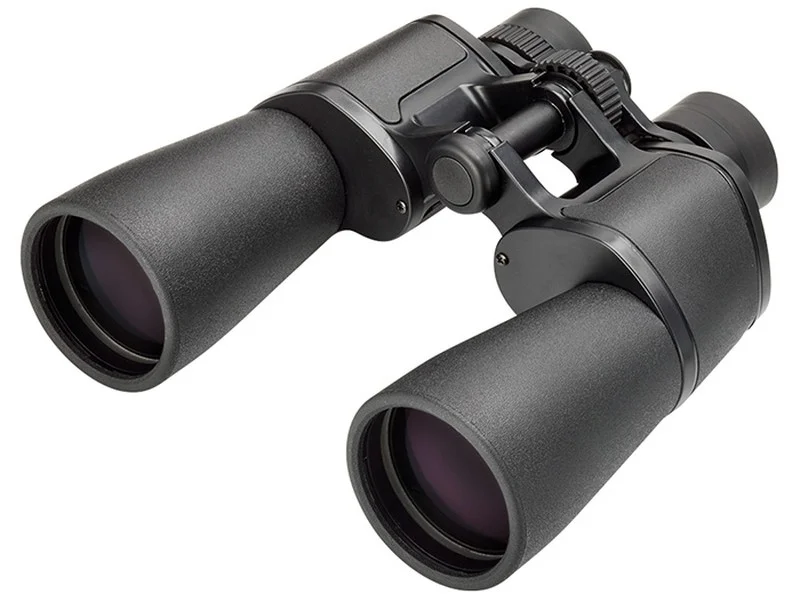
A dependable everyday pair for a quick look at anything strange in the sky, no classified access needed.
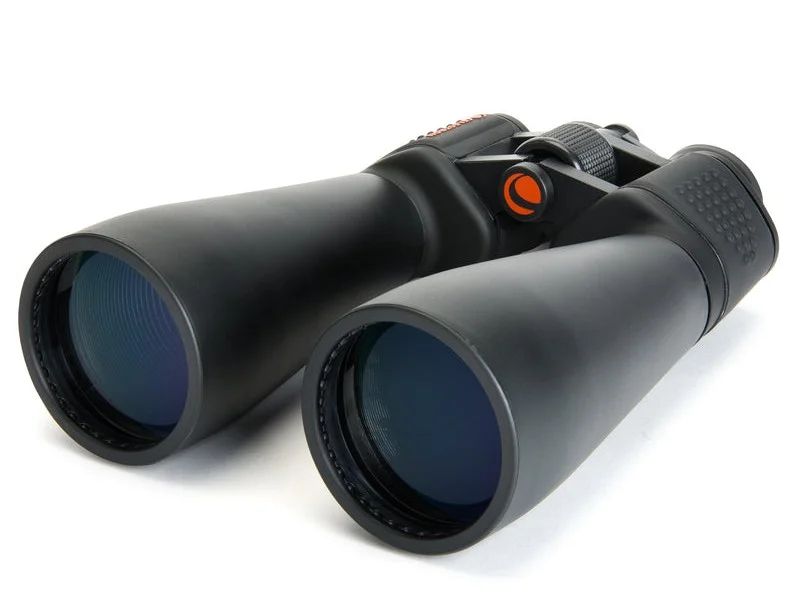
Bigger objectives help track something moving across the sky, exactly the kind of behaviour the AARO reports describe.
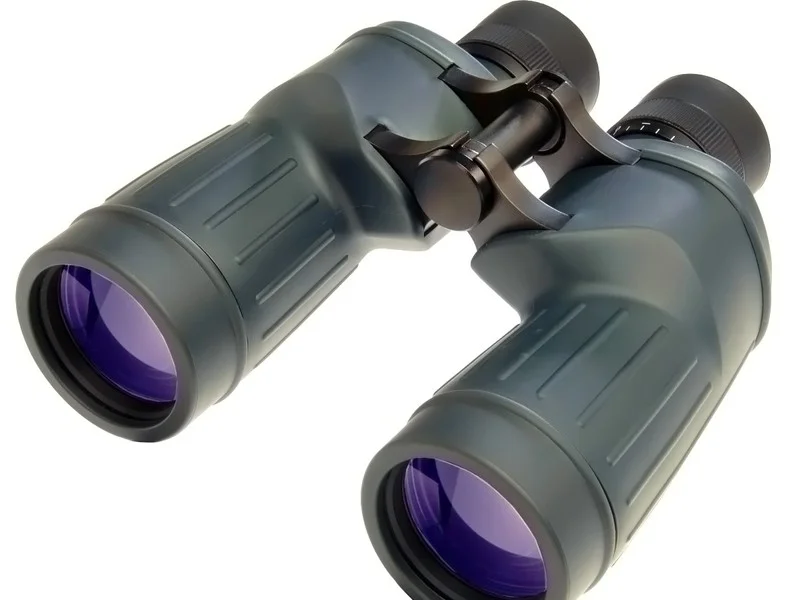
Better glass for anyone keeping their own long-term watch on this story as more releases come out.
Affiliate links: you pay the same price, we earn a small commission that helps keep WatchTheStars free.
The 'Mother Orb' and the Cheyenne Mountain Confusion
Every new body needs a test case, and Loeb has pointed to an obvious one: the October 2023 event in which law enforcement officials reported an orange "mother" orb launching smaller red orbs over two days near a sensitive national security site. It comes from an AARO report dated 5 June 2026 and signed by the office's director, Jon Kosloski: the same report that found roughly 40% of the observed phenomena can't be explained by any technology the US has, or believes its adversaries have. I went through that case in detail in my piece on the federal agents who watched orbs launch orbs.
Here's where I'd urge a bit of care, because the coverage has got muddled. Several outlets, including the report that put this story on Ian's radar, have placed the mother orb "near Cheyenne Mountain" in Colorado: the home of NORAD. That's a tidy, dramatic detail. The problem is that the official AARO report keeps the location of the orb event redacted; it says only "a sensitive national security site" in the western United States. Cheyenne Mountain is famous in the UAP files for a different case: five US Army soldiers who watched a silent, potato-shaped object hang over the mountain in February 2022, which I covered in the third file release. The two have been blended together in the retelling. The orb case is real and unexplained; the specific Cheyenne Mountain label is press shorthand, not something the documents confirm.
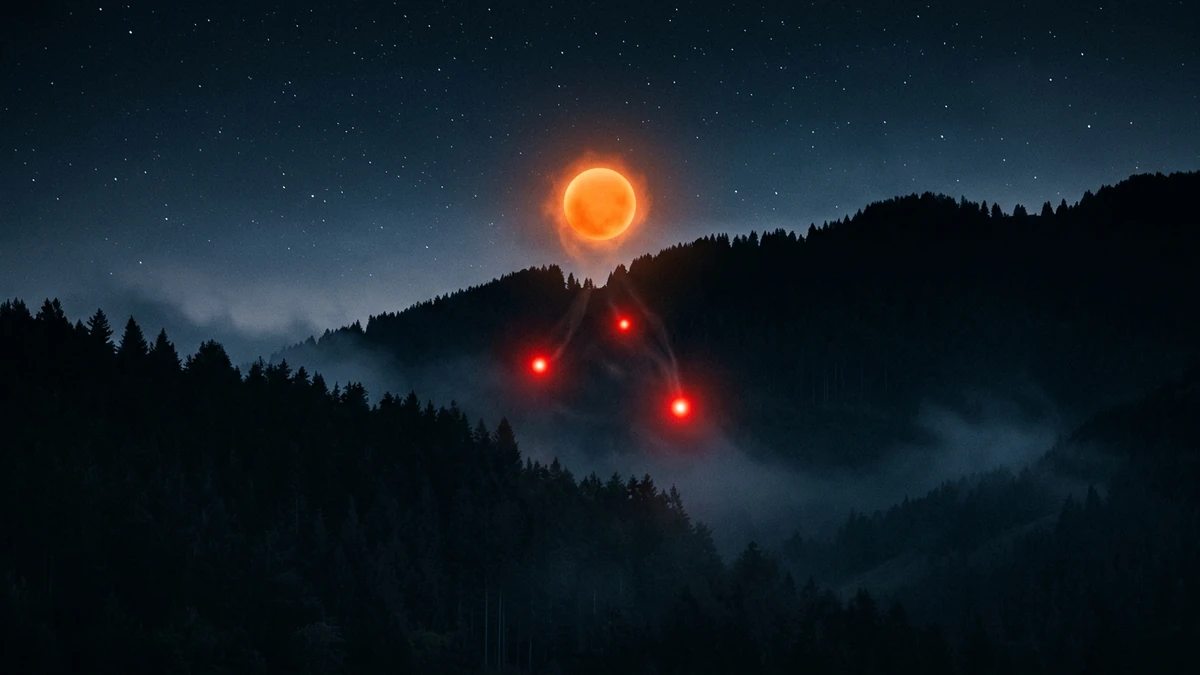
Loeb's own reading of the orbs is sober. The simplest explanation, he says, might be drones capable of deploying smaller drones, and if that's what they are, it's not comforting at all. It would mean a foreign power was flying uncatchable hardware over American strategic sites. He reaches for an analogy: finding "an ant on the kitchen cabinet" should alarm you, because it means there are more you haven't seen. He points to the Chinese spy balloon shot down in 2023 as proof the worry isn't hypothetical. Either the orbs are someone's advanced drones, a serious breach of national security, or they're something genuinely new. Both, in his words, deserve a high priority. Neither requires you to believe in aliens to take it seriously.
The Catch: No Budget, No Classified Files
Now the part the headlines glide past. For all the official-looking structure, this board is working with its hands tied in two important ways.
First, it has no budget. It's a coordinating body, not a funded programme, so it can recommend and convene, but it can't go out and build the better sensors and AI tools that Loeb keeps saying the problem actually needs.
Second, and more striking, the science council only has access to unclassified material. Loeb confirmed this himself: every piece of data shared with his team will be unclassified. Sit with that for a second. The government has assembled a panel of serious scientists to help resolve the UAP mystery, and the files that might actually contain the answer, the classified ones, are exactly the files they're not allowed to read. They're being asked to solve a detective story while the most important evidence stays locked in a drawer down the hall.
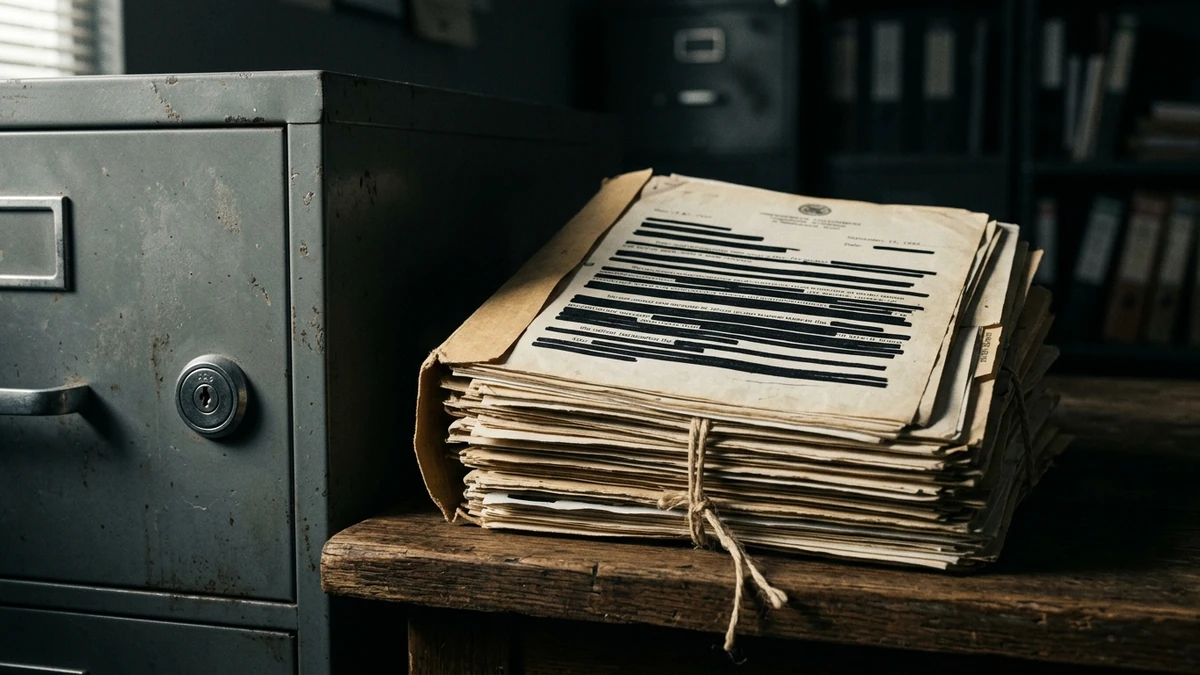
I don't say this to sneer at it. A body that works only from open data, says clearly when the data is too thin, and pushes for better instruments is genuinely more useful than another round of leaks and insinuation. But it does set the ceiling on what this can achieve. If the real answers are classified, an unclassified council can't reach them: it can only make the public case that someone with clearance should. Whether the administration lets it grow past that is the question worth watching. For now, this is a serious-looking stamp on a subject that has spent decades being mocked, and not much more than that yet.
What It Means for the UK
None of this is British, obviously. The Governance Board is a US body, working US cases, on US sites. But it matters here for two reasons.
The first is pressure. Every time Washington takes another visible step (releasing files, standing up a board, putting a Harvard name on the masthead) the contrast with London grows. Britain's own Ministry of Defence UFO files were released years ago to the National Archives and then the shutters came down; there's no PURSUE programme here, no board, no directive. As I wrote in my piece on what the Pentagon files mean for the UK, the more the US treats this as a normal national security matter, the harder it is for the UK to keep treating it as a closed subject.
The second is simpler: the data will be public. Because the board and Loeb's council work in the unclassified space, whatever they eventually publish (case analyses, statistics, recommendations) will be readable by anyone, including UK researchers, amateur astronomers and the merely curious. You won't need a clearance or a Freedom of Information request. For those of us who watch the sky from this side of the Atlantic, that's the part that actually changes things. The orbs may be over Colorado, but the homework gets handed to all of us.
Whether the board amounts to real change or just a tidier filing system depends entirely on what happens next, and on whether a council of scientists working without a budget or a clearance can do anything more than ask, loudly and in public, for the rest of the file. For now, someone in Washington has decided to open it again. That's not nothing.
Sources:
- Trump Forms UFO Board to Investigate 'Mothership' Orb Threat Over Sensitive National Security Site · IBTimes UK
- New science advisory council forms to help US government 'resolve the UAP mystery' · DefenseScoop
- More Details on the UAP Science Advisory Council · Avi Loeb (Medium)
- UAP Disclosure #3 is the Most Intriguing Release Thus Far · Avi Loeb (Medium)
- Pentagon releases 3rd batch of UFO files, detailing mysterious orb sightings · CBS News
- Department of War UAP file release (PURSUE)
Frequently Asked Questions
Equipment guides
Related topics
Ian ClaytonAmateur astronomer and founder of WatchTheStars.co.uk, dedicated to helping others explore the wonders of our universe. Full profile →