Key takeaways
- AARO's Fiscal Year 2025 report logged 319 new UAP cases, bringing the Pentagon's total holdings to 1,870
- Only 114 cases were resolved. 191 went into an 'active archive' because there wasn't enough data to judge them
- Reports of drones near US nuclear facilities jumped 178% in a year, with 50 incidents referred by nuclear agencies
- A new 3D modelling tool identified 238 reported UAP as satellite flares: sunlight glinting off satellites
- The report was due last October and arrived nine months late, roughly three months before the next one is owed
Jump to section 8 sections
- Pentagon UFO Report 2026: What AARO Published
- Why the AARO UAP Report Arrived Nine Months Late
- UFO Sightings 2026: The Numbers Behind the Report
- Satellite Flares: Why Most UFO Sightings Are Not UFOs
- Drones Over Nuclear Sites Rose 178% in a Year
- UFOs Near Military Bases: The Report's Most Serious Line
- Did the Pentagon Find Evidence of Alien Technology?
- What the Pentagon UFO Report Means for UK Skywatchers
Pentagon UFO Report 2026: What AARO Published
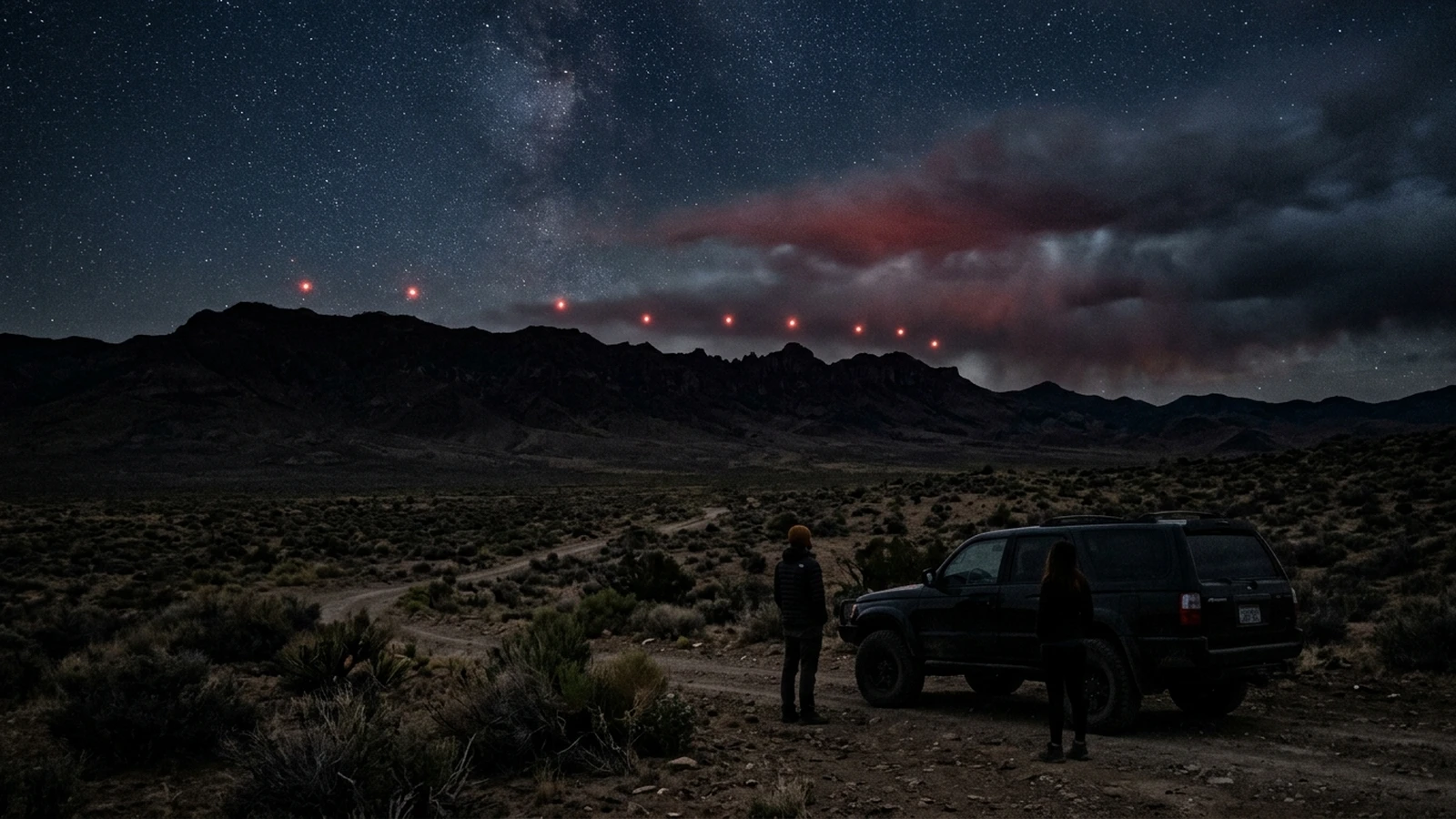
The Pentagon UFO report for 2026 is out, and the most interesting number in it isn't the one about aliens. It's 191.
That's how many of the 319 new cases logged by the All-domain Anomaly Resolution Office could not be resolved. Not debunked, not confirmed as anything unusual, just filed away because there wasn't enough information to say what happened. AARO calls this the "active archive". Most of us would call it a shrug.
The Fiscal Year 2025 Consolidated Annual Report on Unidentified Anomalous Phenomena runs to 14 pages and covers cases logged between 2 June 2024 and 30 May 2025. It's the document Congress requires AARO to publish every year so the public can see what the Pentagon's UFO office is actually dealing with.
The headline finding is the same as every year: nothing AARO has solved points to alien technology or to a foreign adversary flying something nobody else can build. What's more interesting is everything the office admits it still can't account for.
Why the AARO UAP Report Arrived Nine Months Late
Start with the timing, because it says something.
This report was due last October. It appeared in late July 2026, roughly three months before the next annual report is owed. The requirement isn't a suggestion either. It's written into US law under 50 U.S.C. § 3373, which obliges the Director of National Intelligence and the Secretary of Defense to give Congress an annual unclassified summary of UAP incidents.

Nine months of slippage on a legally mandated report isn't a scandal on its own. Government paperwork runs late all the time. But it lands badly in a year when Congress has been leaning hard on the Pentagon over UAP transparency, with Senate subpoenas aimed at defence contractors and a new whistleblower talking to lawmakers. If you already suspect the Pentagon of dragging its feet, a report that turns up three quarters of a year late is not going to change your mind.
UFO Sightings 2026: The Numbers Behind the Report
Here's the caseload in plain figures.
AARO took in 319 new reports. Of those, 284 described events inside the reporting year and 35 were older incidents that had never made it into a previous report. The office's total holdings now stand at 1,870 cases since it was set up in 2022.
By domain: 274 in the air, 44 in space, and one at sea. That single maritime case is the one that made headlines: a US Navy report of roughly 100 airborne objects and two likely uncrewed boats off the Virginia coast, which we covered in our piece on the Navy UFO swarm.
The outcomes break down like this:
| Outcome | Cases | What it means |
|---|---|---|
| Resolved | 114 | Balloons, birds, satellites, aircraft, drones, one rocket launch and one man in a jet pack |
| Active archive | 191 | Not enough data to reach any conclusion |
| Referred onward | 9 | Sent to intelligence agencies and technical partners for deeper analysis |
There's some useful trend data too. Spheres are still the most reported shape at around 40%, with plain lights making up roughly a third. About a quarter of reports don't contain enough detail to say anything about shape. Most airborne sightings sat between 10,000 and 35,000 feet, and reports above 45,000 feet dropped sharply compared with the year before.
That last detail isn't a mystery. It's a measurement problem being fixed.
Satellite Flares: Why Most UFO Sightings Are Not UFOs
The single biggest explanation in this year's report is sunlight bouncing off metal.
AARO brought in a new capability during the year that does three-dimensional modelling and simulation, letting analysts reconstruct where an object was, where the observer was, and where the Sun was at the time. Using it, the office resolved 238 reported UAP as satellite flaring.

If you've never seen one, a satellite flare is a short, startling flash as sunlight catches a flat reflective surface at just the right angle. It can be brighter than any star in the sky and it's gone in a couple of seconds. With tens of thousands of satellites now in orbit, they've become one of the most common causes of "what on earth was that?" moments.
This isn't new. Back in 2022, a run of pilot reports describing objects flying in a strange oval "racetrack" pattern turned out to be an optical illusion produced by Starlink satellites. What's new is that AARO can now prove it case by case, which is why sightings at very high altitude have fallen off so sharply. The objects didn't go away. The explanation caught up.
There's a slightly awkward footnote here. None of the 44 space-domain cases came from space-based sensors. Most came from civilian pilots reporting through the FAA, and two came from US Space Command ground sensors. For an office charged with monitoring the space domain, that's a thin evidence base.
Before you report a UFO, check it with binoculars
Kit we've tested and reviewed in full
AARO's own figures make the point nicely: the vast majority of reported UAP turn out to be satellites, aircraft, drones or planets. A decent pair of binoculars will settle most strange lights in about ten seconds. Here's what we'd grab.
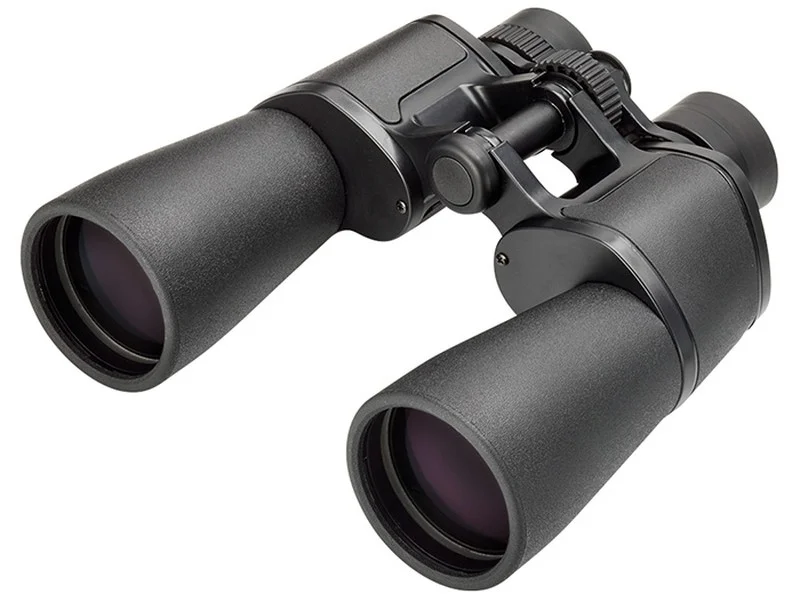
Light enough to hold steady while you track a moving light, and sharp enough to show aircraft strobes, satellite trains and Jupiter's moons for what they are.
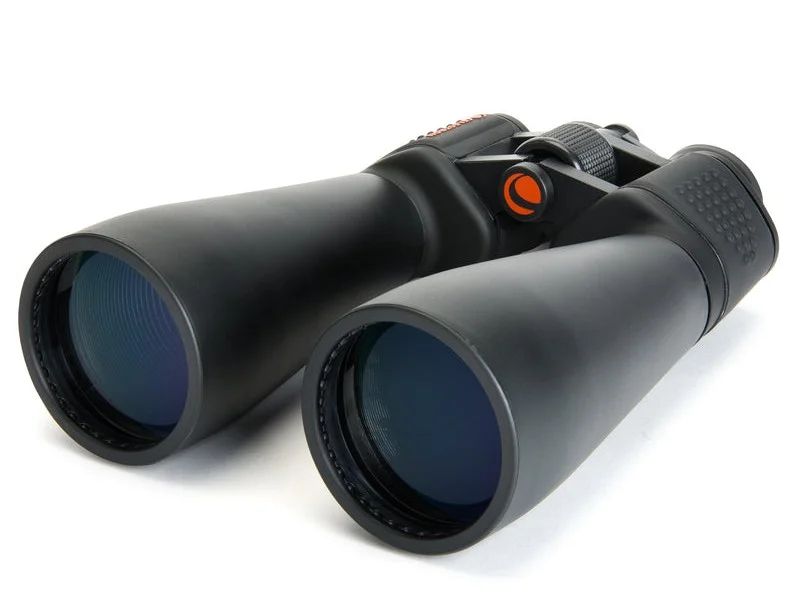
The 70mm lenses gather far more light, so faint or distant objects resolve properly. Brace them on a wall or a tripod and most mysteries evaporate.
Affiliate links: you pay the same price, we earn a small commission that helps keep WatchTheStars free.
Drones Over Nuclear Sites Rose 178% in a Year
Reports of drones near US nuclear facilities rose 178% in a single year. AARO logged 50 incidents referred to it by the National Nuclear Security Administration and the Nuclear Regulatory Commission, the two US bodies responsible for nuclear weapons facilities and civilian nuclear power. It's the finding in this report that deserved more attention than it got.
The report is clear that none of these were genuine unknowns. They were drones, described as ranging from "small hobbyist-sized UAS to larger multi-rotor models", with quadcopters the most common type. Nothing about their flight behaviour was unexplainable.
Which rather raises the obvious question: who was flying quadcopters over American nuclear facilities, nearly three times as often as the year before?
The report doesn't say. It may not know. Drone incursions over nuclear sites have been a live security worry in the US for years, and the Nuclear Regulatory Commission only began requiring operators to report them in 2024, so part of the rise will simply be better record-keeping. But identifying an object as a quadcopter tells you what it was, not who sent it or what they wanted. On the list of things in this report that should worry a defence planner, this one is near the top, and it has nothing to do with aliens.
UFOs Near Military Bases: The Report's Most Serious Line
AARO received several reports of objects in or near US national security sites and critical infrastructure, and says "some narrative reports were suggestive of phenomena whose performance characteristics exceed the known state-of-the-art within a given domain." It adds, immediately: "No technical data accompanied these reports."
And then this: "If validated, the attendant phenomena underlying these reports may represent a currently unmitigated threat vector."
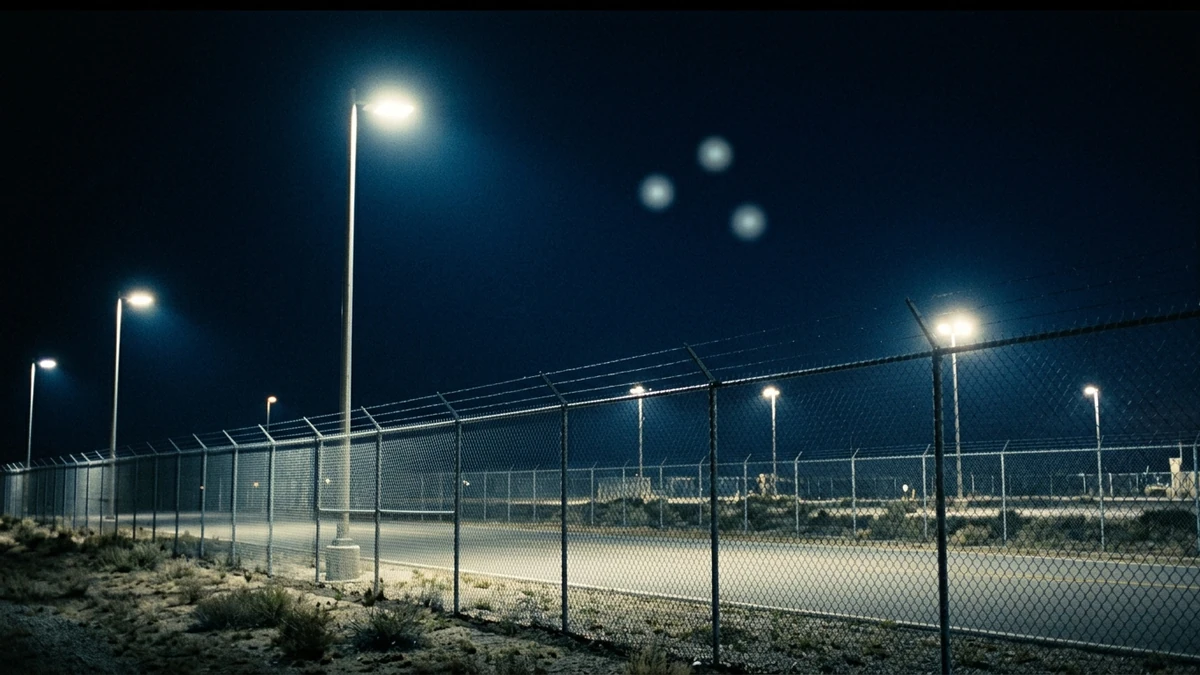
Strip out the officialese and it reads like this. Trained personnel described objects outperforming anything we know how to build, near places that matter. If they were right, nothing currently stops them.
That's a serious admission. It's also carefully hedged. "Narrative reports" means eyewitness accounts. "No technical data" means no radar tracks, no sensor logs, nothing to check the accounts against. AARO isn't saying it believes the descriptions. It's saying it can't test them, and it's flagging what it would mean if they held up.
The same pattern shows up in a smaller detail. Two cases involved aircrews reporting electronic or avionic interference while an unidentified object was near their aircraft. AARO says it hasn't determined whether the object caused it. If it ever concludes that one did, this stops being a curiosity and becomes an aviation safety problem.
Running underneath all of this is one line the office repeats: "A lack of timely and actionable sensor data continues to constrain AARO's ability to resolve cases." That single sentence explains the 191.
Did the Pentagon Find Evidence of Alien Technology?
No. For anyone hoping this was the year of the big reveal, the report is blunt.
None of the cases AARO has resolved indicates advanced foreign capability or breakthrough technology. The office has found no evidence that the US government, or any private company, has ever recovered or reverse-engineered material from a UAP. And it has received no verified reports of health effects caused by a UAP encounter. Those three statements have appeared in every AARO annual report, and they appear again here.
One line does stand out, though. AARO says it is building a formal process for handling UAP-derived materials, "should such materials ever come into" the government's possession.
Read it carefully and it's a procedural note, not a hint. Governments write handling procedures for hypotheticals all the time. But it's still a striking thing to find in a Pentagon document, and it hasn't gone unnoticed by the people pushing for wider disclosure or by the scientists now advising the government on UAP.
So the honest summary isn't "aliens", and it isn't "nothing to see here" either. The Pentagon is tracking a growing pile of reports. It has got much better at explaining the ordinary ones. And it's left with a couple of hundred it can't judge either way, because nobody pointed a decent sensor at them in time.
What the Pentagon UFO Report Means for UK Skywatchers
Britain doesn't have an AARO. The Ministry of Defence shut its UFO desk in 2009 on the grounds that in over 50 years no report had revealed a threat, and nothing has replaced it. If you see something strange over Sussex tonight, there is no official body waiting to hear about it.
That makes reports like this one the closest thing we have to a proper public account of what military sensors actually pick up. And the most useful part of it is the explanation list.
Balloons. Birds. Satellites. Aircraft. Drones. Satellite flares, 238 of them. One rocket launch. One man in a jet pack. That's what the Pentagon's UFO caseload mostly turns out to be once someone has time to look properly.
Worth taking that outside with you. If you spot a light doing something odd, the odds heavily favour something ordinary. The quickest way to settle it is to get some magnification on it. A Starlink train, an aircraft's strobes and a satellite flare all look completely different through binoculars.
Then there's whatever's left over. It isn't proof of anything. But 191 cases sitting in a Pentagon archive marked "we don't know" is a decent reason to pay attention to your own patch of sky.
Keep looking up.
Sources:
- AARO Fiscal Year 2025 Consolidated Annual Report on UAP (PDF) · US Department of War
- AARO Releases FY2025 UAP Report Months After Statutory Deadline · The Black Vault
- AARO's Latest UAP Report Finds No Evidence of Exotic Technology, But Mysteries Remain · The Debrief
- Pentagon investigating mysterious UAP event reported by the Navy near Virginia's coast · DefenseScoop
Frequently Asked Questions
Equipment guides
Related topics

Ian ClaytonAmateur astronomer and founder of WatchTheStars.co.uk, dedicated to helping others explore the wonders of our universe. Full profile →