Key takeaways
- A new peer-reviewed study has modelled the light pollution from Reflect Orbital's proposed space mirrors, and the numbers are stark
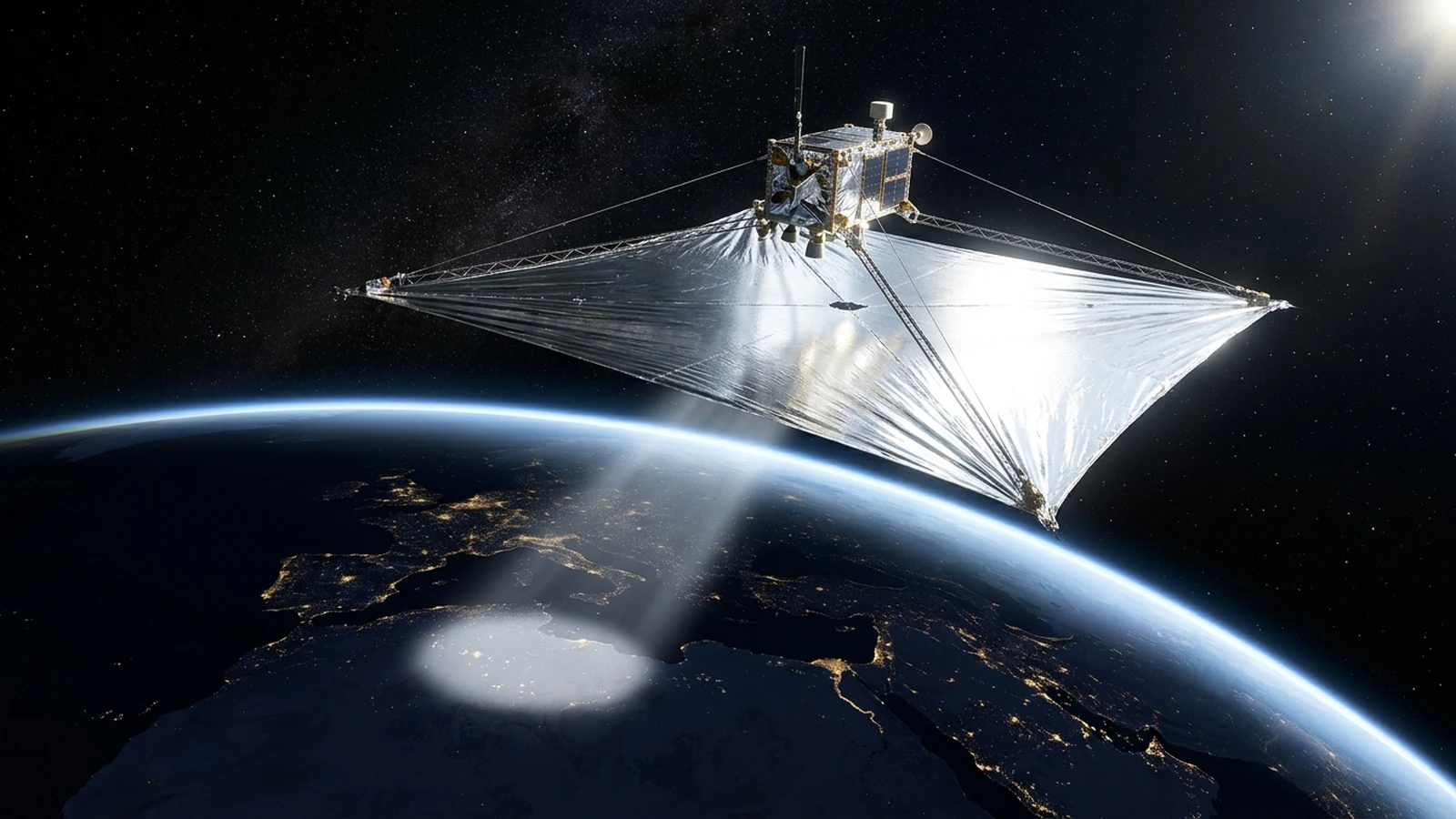
- Inside the beam, a single 54-metre mirror would appear at magnitude −16.7, about 40 times brighter than the full moon
- The scattered glow would outshine full moonlight across most of the sky from 14km away, and stay noticeable past 30km
- With 400 mirrors lighting the same spot, as the constellation plan requires, the glow would be obvious from 80km
- No regulator currently has responsibility for light pollution from space: the FCC approved the pilot satellite saying it isn't its job
Jump to section 6 sections
Space Mirror Light Pollution: What the New Study Found
When we covered the approval of Reflect Orbital's first space mirror in July, the honest answer to "how bad will it be?" was that nobody had done the sums. Now somebody has. A new study, accepted for publication in the Astrophysical Journal Letters, has modelled exactly what one of these mirrors would do to the night sky. The short version: a single mirror would outshine the full moon roughly 40 times over, and you wouldn't need to be anywhere near the beam to notice it.
The paper comes from Miroslav Kocifaj and František Kundracik, two of Europe's most experienced light-pollution modellers, working with Princeton astronomer Gáspár Bakos. They calculated how sunlight bounced off a mirror would scatter through the atmosphere, both the beam itself and the glow it throws into the surrounding sky, under clear, cloud-free conditions.
A quick recap of what's being proposed. Reflect Orbital's pilot satellite, Eärendil-1, carries an 18-metre square mirror and will orbit at about 600km, steering a patch of reflected sunlight around 2.5km in radius onto paying customers below. It's the pathfinder for a planned constellation of around 50,000 production mirrors, each 54 metres across, selling "sunlight on demand" to solar farms, construction sites and disaster zones.
The study looked at what one of those 54-metre production mirrors does to the sky around its target. The numbers deserve a close look.
How Bright Would a Space Mirror Be?
Inside the beam, the mirror would appear as a point of light at magnitude −16.7. For comparison, the full moon is about magnitude −12.7. The magnitude scale is logarithmic, so those four magnitudes mean the mirror would look roughly 40 times brighter than a full moon.
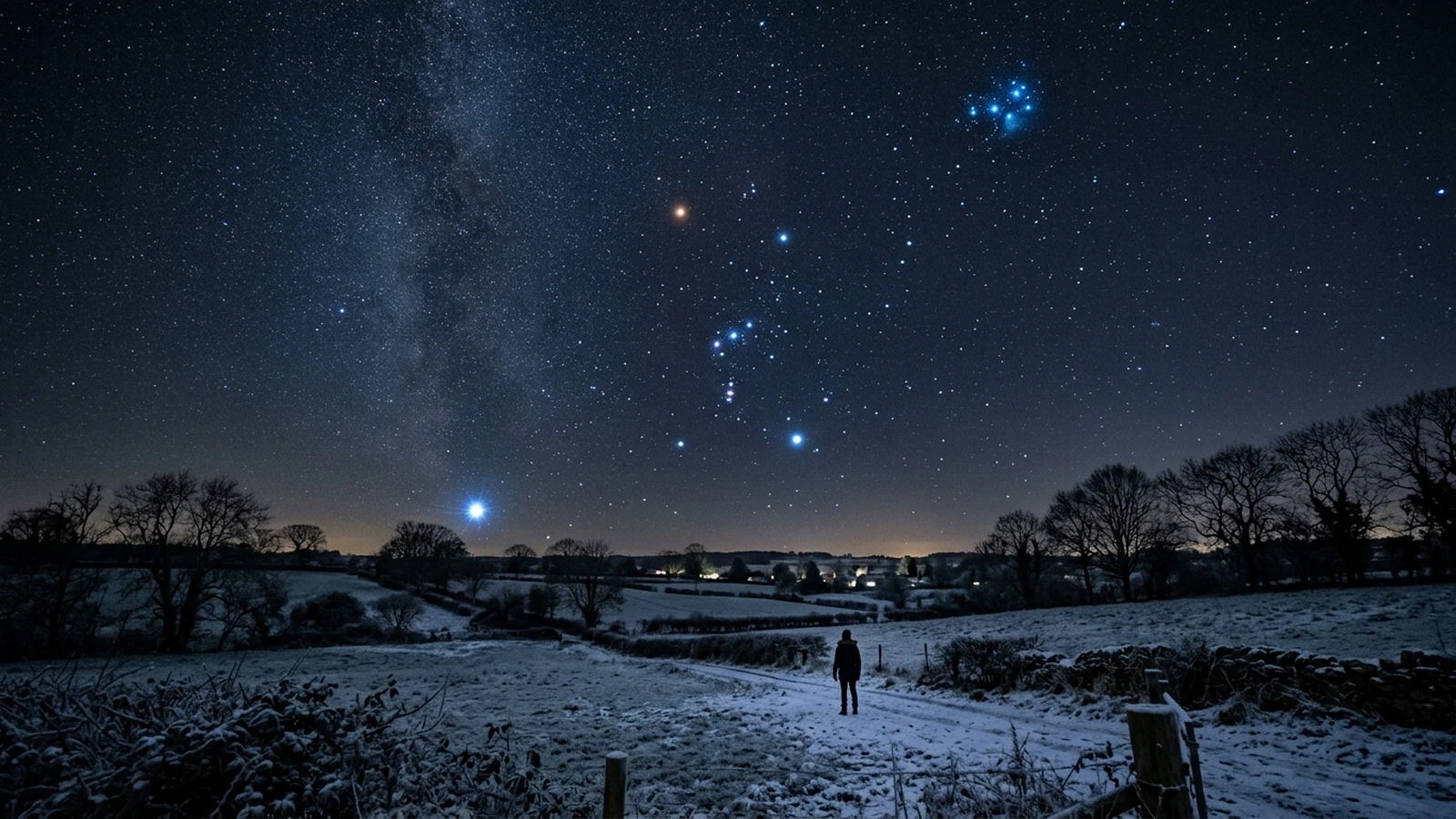
That's not a subtle change to the night. The researchers found the diffuse sky background inside the beam would resemble dusk shortly after sunset: bright enough to wash out every star in the sky, including the brightest ones. Stand in the target zone and the night effectively ends. No Saturn, no Plough, nothing.
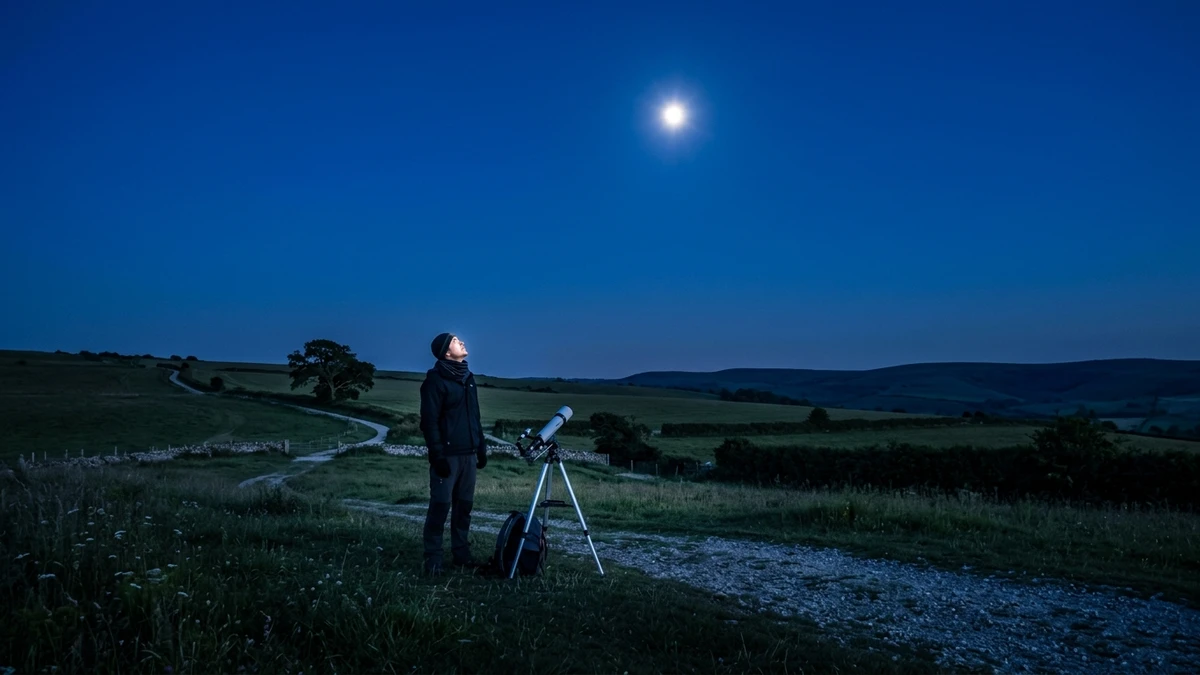
Worth pausing on how far beyond the company's own figures this is. Reflect Orbital has said a single mirror delivers about 0.1 lux, similar to a full moon. The new modelling, which is of the larger 54-metre production mirrors rather than the pilot, puts the in-beam brightness a factor of 40 above that. The pilot satellite will settle the argument. That's partly what test flights are for.
How Far Does the Glow Reach?
The beam is the headline, but the scatter is the story. Air molecules and aerosols redirect some of the beam's light sideways as it passes through the atmosphere, and the illuminated ground bounces more of it back up. The result is a dome of artificial skyglow centred on the target, and it reaches a long way:
- From 14km away, the scattered glow alone would outshine the full-moon sky across most of the sky
- From 34km away, the sky would still look brighter than a moonlit night in the direction of the beam
- Overall, one mirror alters the night-time environment out to around 30km
- With 400 mirrors lighting the same patch at once, which the constellation's long-term service model requires, the glow would be obvious from 80km
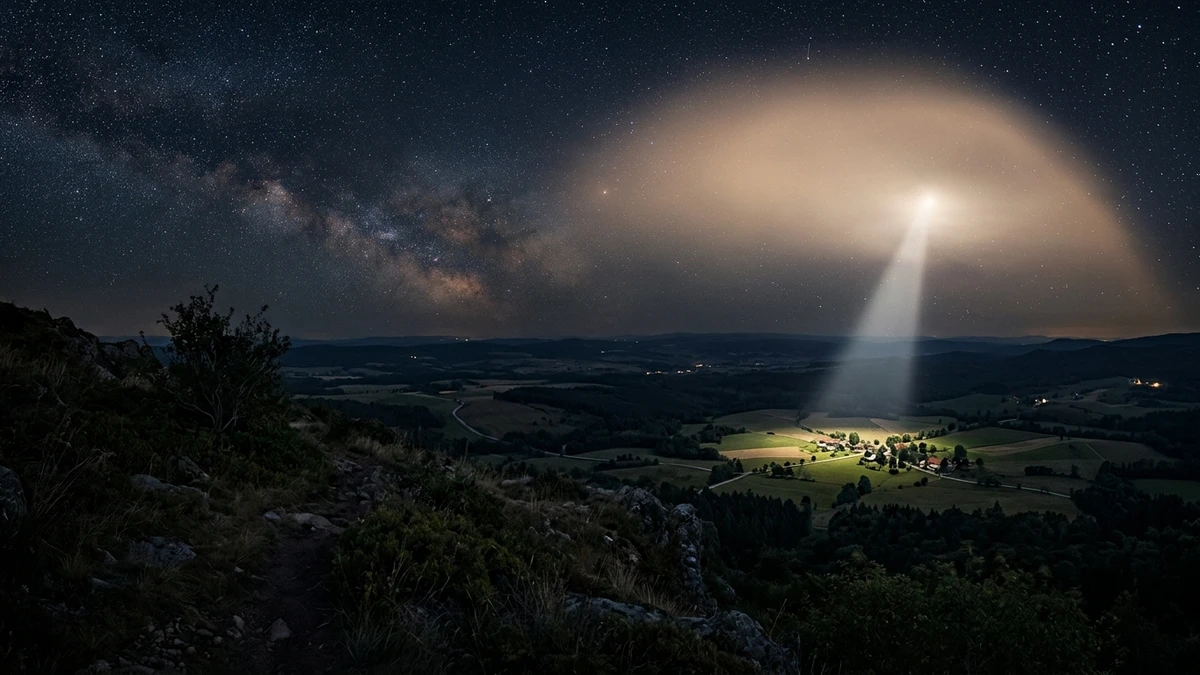
To put 30km in perspective: that's a circle covering roughly 2,800 square kilometres around every target. Light one solar farm in the Midlands and you've changed the sky over several counties' worth of gardens, campsites and observatories. The company's promise to steer beams away from sensitive sites starts to look rather thin when a single beam's side-effects cover that much ground.
Will Space Mirrors Affect Stargazing in the UK?
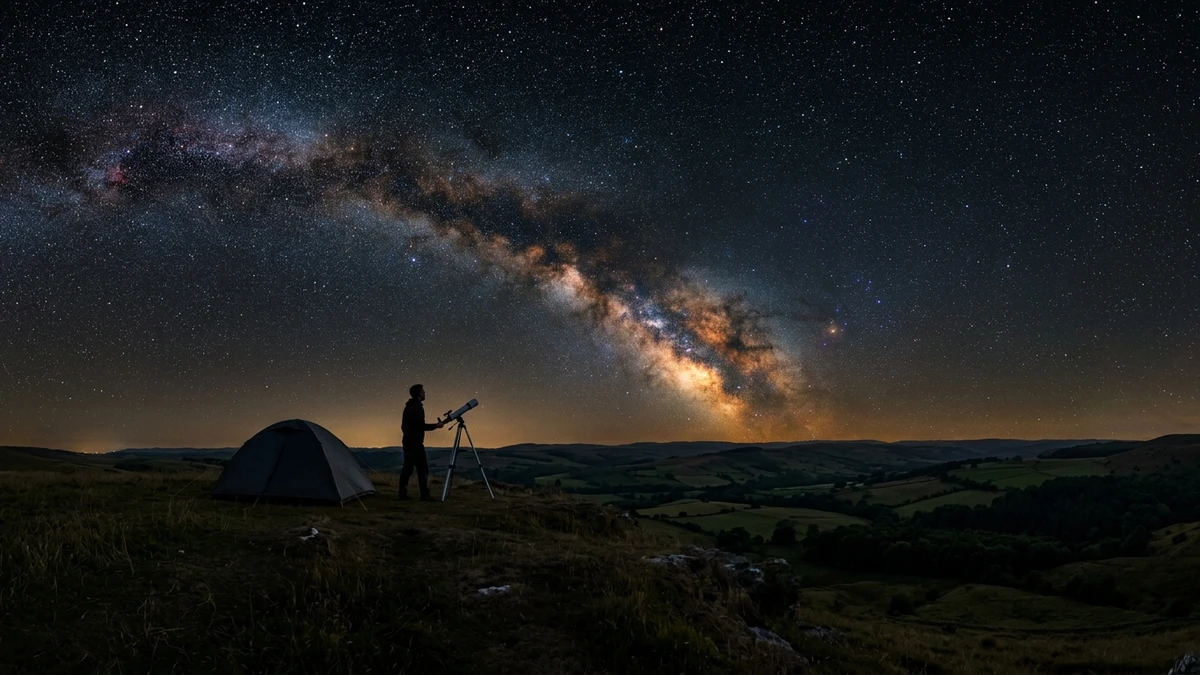
Nothing changes tonight, and it's worth saying so plainly. The Perseid meteor shower has just peaked, Saturn is climbing back into the evening sky, and if you can get somewhere properly dark, the Milky Way is at its summer best. None of that is under threat this year.
The risk sits a few years out, and the UK is awkwardly placed for it. Satellite light pollution peaks for observers near 50 degrees latitude, where orbital geometry concentrates sunlit satellites in the twilight sky. That's the south coast of England. Add a fleet of large flat reflectors that flare when they catch the Sun, plus 30km glow domes around any European target that buys light, and Britain's dark sky sites start to feel very exposed. These are places people drive hours to reach. A study like this one is how we find out what they'd lose, before it happens rather than after.
Make the most of the dark we've still got
Kit we've tested and reviewed in full
Every target in our weekly night sky guide is still up there waiting, and none of it needs more than modest glass.
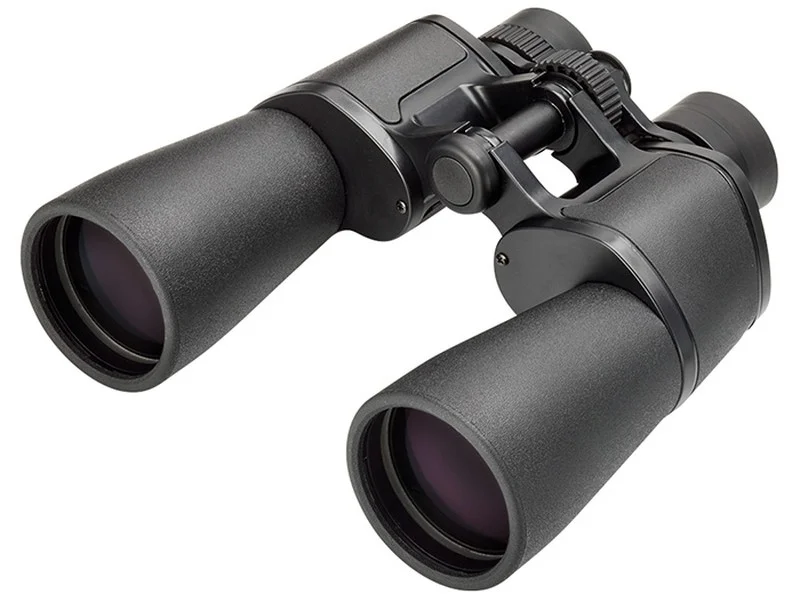
Wide, bright views of star clusters and the summer Milky Way, the faint stuff a brighter sky would erase first.
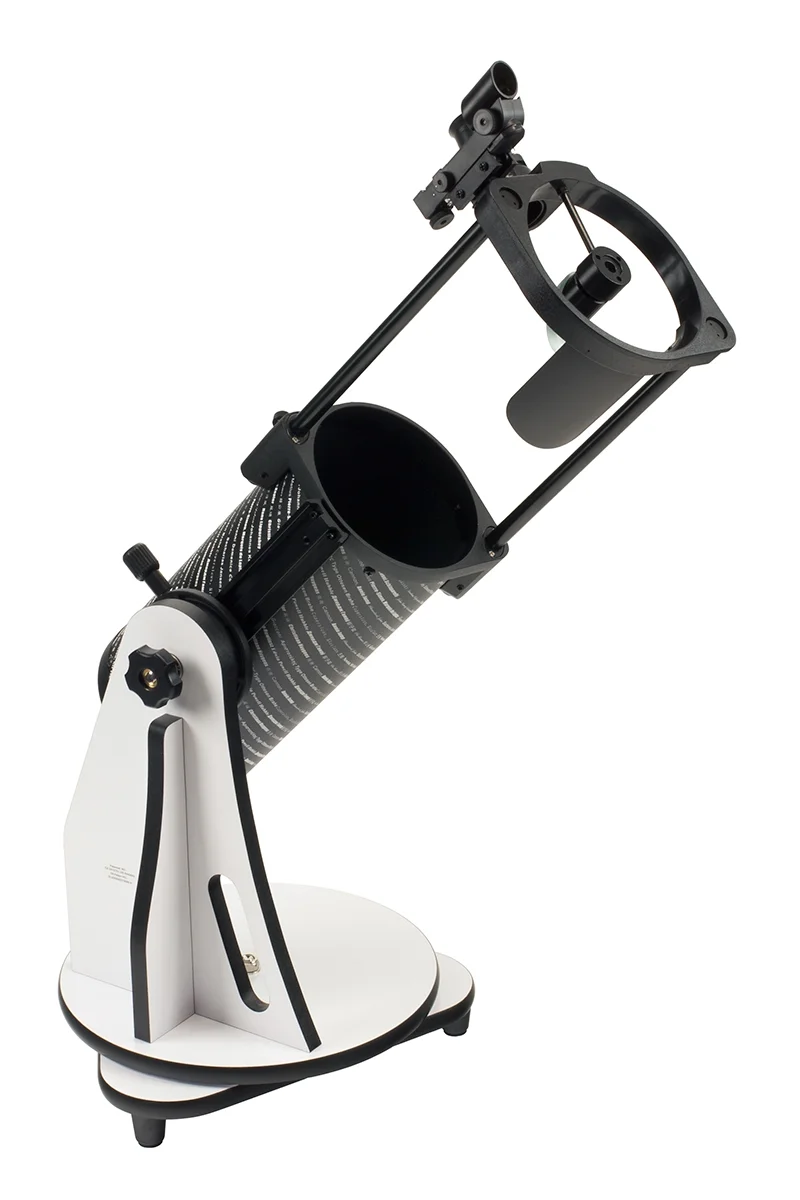
A brilliant first telescope for Saturn's rings and deep-sky objects from a dark garden.
Affiliate links: you pay the same price, we earn a small commission that helps keep WatchTheStars free.
Who Regulates Light Pollution From Space?
Here's the uncomfortable part: nobody, currently, has the job.
The FCC licensed Eärendil-1 in July despite more than 1,800 public comments and formal objections from the American Astronomical Society and dark-sky organisations. Its reasoning wasn't that the concerns were wrong. It was that light pollution and interference with astronomy aren't the FCC's problem to regulate. No other agency, in the US or internationally, has claimed that responsibility either. A company can be licensed to illuminate the night side of Earth without any regulator ever weighing what that does to the sky.
That's what makes this paper matter beyond its numbers. It's peer-reviewed evidence, on the record before the constellation decision gets made. The authors have also published visual renderings of what the beams would look like, which make the point more vividly than any magnitude figure.
The UK's astronomy establishment flagged this gap last month, when the Royal Astronomical Society said it was seriously concerned about the precedent the licence sets. This study hands that argument its evidence base.
What Happens Next: Eärendil-1 and the 50,000-Mirror Question
Eärendil-1 is still expected to launch before the end of 2026. It will try to unfurl its mirror, hold a beam on about ten test locations, and switch off cleanly. Those tests will produce the first real-world brightness measurements, and you can be sure astronomers will be measuring alongside the company.
Then comes the real decision: whether a 50,000-mirror constellation gets approved by the mid-2030s. This study means that decision can no longer be made in the dark, so to speak. The numbers are published: 40 times the full moon in the beam, moonlight beaten from 14km, glow past 30km, and 80km when mirrors gang up.
In the meantime, the sky is still free and still dark, most nights, if you pick your spot. Check what's worth seeing tonight, or start with our beginner's guide to stargazing if you've never pointed binoculars up before. The best argument for protecting the night sky has always been the view itself.
Sources:
- Atmospheric Light Pollution by Proposed Reflect Orbital Space Mirrors · Kocifaj, Bakos & Kundracik, accepted in ApJL
- Visual renderings of the modelled beams · Starry Princeton
- The Brightened Night Sky Nobody Actually Wanted · Universe Today
- U.S. approval of giant 'space mirror' satellite alarms astronomers · Scientific American
Frequently Asked Questions
Equipment guides
Related topics
Ian ClaytonAmateur astronomer and founder of WatchTheStars.co.uk, dedicated to helping others explore the wonders of our universe. Full profile →