Key takeaways
- Mercury has six elongation periods in 2026: three evening and three morning apparitions
- Greatest elongations: February 19, June 15, October 12 (evening) and April 3, August 2, November 20 (morning)
- Best evening apparition was February 19. The steep spring ecliptic put Mercury well clear of the horizon from the UK
- Best morning apparition is November 20. The steep autumn ecliptic makes this a good UK target, with Mercury at mag −0.6
- June 15 is the biggest angular separation (24°31′) but lower from the UK, still worth it for the Venus and Jupiter grouping nearby
Jump to section 6 sections
Mercury is one of the most satisfying planets to track down precisely because it's awkward. It never wanders far from the Sun, so you're always hunting for it low in twilight with a narrowing window, but when you catch it, bright and steady above the horizon glow, it feels like a proper reward.
2026 gives you six chances: three evening apparitions and three morning ones. From the UK the quality varies a lot depending on the ecliptic angle at the time of year. This guide covers each one: what to expect, when to go out, and which are actually worth the effort.
2026 Mercury Overview
Here are all six greatest elongations, with the type confirmed from the JPL ephemeris via in-the-sky.org:
| Date | Type | Sky | Separation | Magnitude |
|---|---|---|---|---|
| February 19 | Greatest Eastern Elongation | Evening | 18° east | −0.6 |
| April 3 | Greatest Western Elongation | Morning | 27.8° west | +0.4 |
| June 15 | Greatest Eastern Elongation | Evening | 24°31′ east | +0.5 |
| August 2 | Greatest Western Elongation | Morning | 19°28′ west | +0.1 |
| October 12 | Greatest Eastern Elongation | Evening | 25° east | −0.1 |
| November 20 | Greatest Western Elongation | Morning | 19° west | −0.6 |
UK verdict at a glance:
- February 19 (past): the stand-out evening showing. Smallest angular separation of the evening trio, but the steep spring ecliptic lifted Mercury well clear of the horizon. Set over 1.5 hours after the Sun.
- April 3 (past): largest separation of any 2026 elongation at 27.8°, but wasted on the UK. The shallow spring morning ecliptic kept Mercury very low.
- June 15: good angular separation, but a summer evening ecliptic that runs shallow across northern skies. Mercury is lower than the angle suggests. The real draw is the three-planet grouping with Venus and Jupiter.
- August 2: a reasonable summer morning showing, not spectacular from the UK.
- October 12: 25° separation but the autumn evening ecliptic is almost flat from the UK. Mercury is only 3° up at sunset and sets about 25 minutes later, so this one is effectively invisible from Britain.
- November 20: the morning apparition to plan for. The winter ecliptic stands steeply from the UK horizon, so Mercury climbs well despite only 19° separation. Bright at mag −0.6.
How Mercury's Elongations Work
Mercury's orbit lies inside Earth's, which means we can only ever see it near the Sun. It swings from one side to the other in a repeating cycle:
Eastern elongation (evening star): Mercury lies east of the Sun and sets after it. Look in the western sky during evening twilight. From the UK these are best in late winter and spring, when the ecliptic stands steeply at sunset.
Western elongation (morning star): Mercury lies west of the Sun and rises before it. Look in the eastern sky during morning twilight. From the UK these are best in autumn and early winter, when the ecliptic stands steeply at sunrise.
The rule of thumb is simple: the ecliptic angle matters more than the angular separation. A 27° elongation in spring morning twilight (April 3) can be harder to see from the UK than an 18° elongation in spring evening twilight (February 19), purely because of where the ecliptic sits.
Month-by-Month Viewing Guide
February 2026: Best Evening Apparition (past)
- Key date: February 19, Greatest Eastern Elongation, 18° east of the Sun
- Sky: Western sky after sunset, in Aquarius
- Viewing window: February 14–27
- Magnitude: −0.6 at greatest elongation
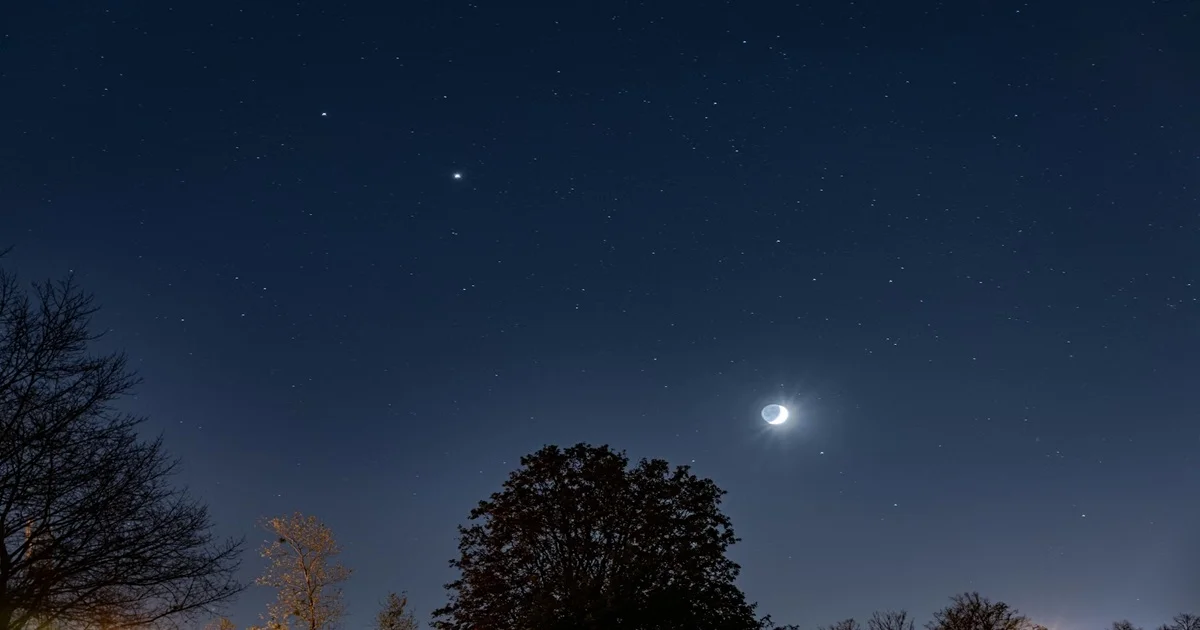
The spring evening ecliptic from the UK is nearly perpendicular to the horizon, so even with only 18° of separation Mercury stood well clear of the dusk glow and set over 1.5 hours after the Sun. This was the best evening showing of the year. If you caught it around February 19, Mercury appeared as a half-lit disk in the telescope, around 7 arcseconds across. Earlier in the window it was gibbous; later it thinned toward crescent as it swung toward inferior conjunction on 7 March.
April 2026: Western Elongation, Poor from UK (past)
- Key date: April 3, Greatest Western Elongation, 27.8° west of the Sun
- Sky: Eastern sky before sunrise
- Viewing window: March 30–April 10
- Magnitude: +0.4
The largest angular separation of any 2026 elongation, but it coincides with the spring morning ecliptic lying almost flat against the UK horizon. Mercury never climbed more than a few degrees before sunrise, making it a binoculars-in-the-murk exercise at best. From southern Europe or lower latitudes this was a much easier target.
June 2026: Three-Planet Grouping in the West
- Key date: June 15, Greatest Eastern Elongation, 24°31′ east of the Sun
- Sky: Northwestern sky after sunset
- Viewing window: June 8–24
- Magnitude: +0.5
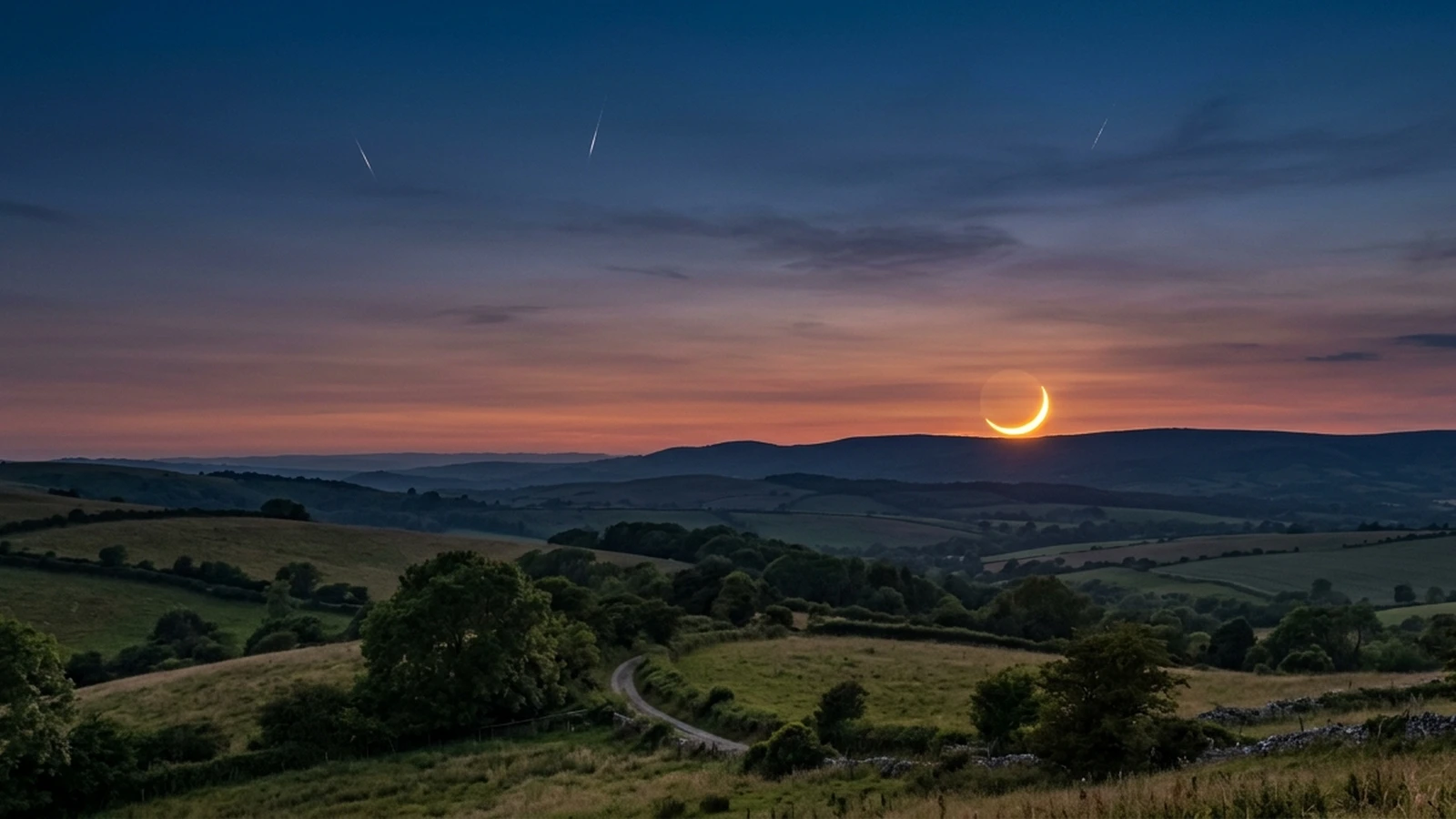
The largest angular separation of the evening apparitions, but the summer ecliptic runs very shallow from the UK, so Mercury is lower in the sky than that figure suggests. Still worth going out for. The big draw here is the company: Venus (around mag −3.9) and Jupiter (around mag −1.8) are nearby, spread across Gemini and Cancer, giving you a rare three-planet grouping in a small patch of sky. Find Venus first (you cannot miss it), then Jupiter, then look for Mercury in the same general area, lower down. Binoculars first, 30–45 minutes after sunset.
Through a telescope around June 15, Mercury shows a half-lit disk at roughly 8–9 arcseconds. Earlier in June it is more gibbous; by late June it thins toward crescent. Seeing will be patchy this low, so observe as early in the window as you can while Mercury is still reasonably high.
August 2026: Morning in Gemini
- Key date: August 2, Greatest Western Elongation, 19°28′ west of the Sun
- Sky: Eastern sky before sunrise, in Gemini
- Viewing window: July 26–August 10
- Magnitude: +0.1
A summer morning showing. The ecliptic still runs fairly shallow at this time of year, but the 19° separation and reasonably bright magnitude make it a workable target. Look 45–60 minutes before sunrise with binoculars. The brightening dawn will be your main obstacle. A clear, open eastern horizon makes a real difference.
October 2026: The One to Skip from the UK
- Key date: October 12, Greatest Eastern Elongation, 25° east of the Sun
- Sky: Southwestern sky after sunset, in Libra
- Viewing window: None worth the effort from the UK
- Magnitude: −0.1
The widest separation of the evening trio at 25°, and on paper the best of them. In practice the autumn evening ecliptic lies almost flat along the UK horizon, and it makes no difference where you are between Plymouth and Edinburgh: Mercury is barely 3° up as the Sun sets and it is below the horizon about 25 minutes later, before the sky has darkened at all. The thin crescent Moon that sits 3° from it on 12 October is on the horizon at sunset too. This is a Southern Hemisphere apparition. Save your early night for November.
November 2026: Best Morning Apparition
- Key date: November 20, Greatest Western Elongation, 19° west of the Sun
- Sky: Southeastern sky before sunrise, in Libra
- Viewing window: November 14–28
- Magnitude: −0.6 (brightest morning apparition of the year)
This is the one to put in the diary. The autumn/winter morning ecliptic stands steeply from UK horizons, so Mercury climbs well above the murk despite not having a large angular separation. Look 45–60 minutes before sunrise in the southeast. Venus will be the obvious bright object higher up; Mercury is the steady bright point lower down. Clear, unobstructed southeastern horizon required. On 20 November itself Mercury shows a half-lit phase in the telescope, around 6–7 arcseconds.
The window runs from roughly mid-November through late November. Earlier in that period Mercury is still a thin crescent and faint; around greatest elongation and just after, it brightens rapidly as the phase fills out. If you're wondering why Mercury does this at all while Mars never does, see why Mercury and Venus have phases but Mars doesn't.
December 2026
Mercury fades back toward the Sun after November 20, heading for superior conjunction on 1 January 2027. By late December it's unobservable. Next up after that is an evening apparition on 2 February 2027.
What You Can See
Naked eye: Mercury looks like a bright, steady star-like point, cream-coloured rather than the pure white of Venus. Brightness ranges from around mag −0.6 to +1.5 across the year depending on phase and distance. Being low on the horizon it twinkles quite a bit, but it's genuinely visible to the naked eye during the better elongations. The February and November apparitions this year are both brighter than the summer ones.
Binoculars: The biggest benefit is just finding Mercury in the first place. A pair of 10x50s makes hunting for it in murky twilight much easier. Mercury doesn't show a disk in binoculars, but it will look noticeably steadier than the twinkling stars around it.
Small telescope (60–100mm): Mercury's phases are worth seeing. At greatest elongation it appears half-lit (dichotomy), like a tiny version of a quarter Moon. Earlier in the window it shows a gibbous phase; later, a crescent. The disk is 5–10 arcseconds across depending on how close Mercury is to Earth. Magnification of 50–100x is the practical range. Pushing higher is often counterproductive at this low altitude due to atmospheric turbulence.
Larger telescope (150mm+): More aperture helps in terms of resolving the phase cleanly, but seeing is the real limiting factor this close to the horizon. The improvement over a smaller scope is less dramatic than it would be for a higher-altitude target. Surface features remain out of reach from the ground.
What to take outside for Mercury
Kit we've tested and reviewed in full
Mercury is always low and always in twilight, so light-gathering optics and a clear horizon matter more than aperture. Binoculars are the best starting point for every elongation.
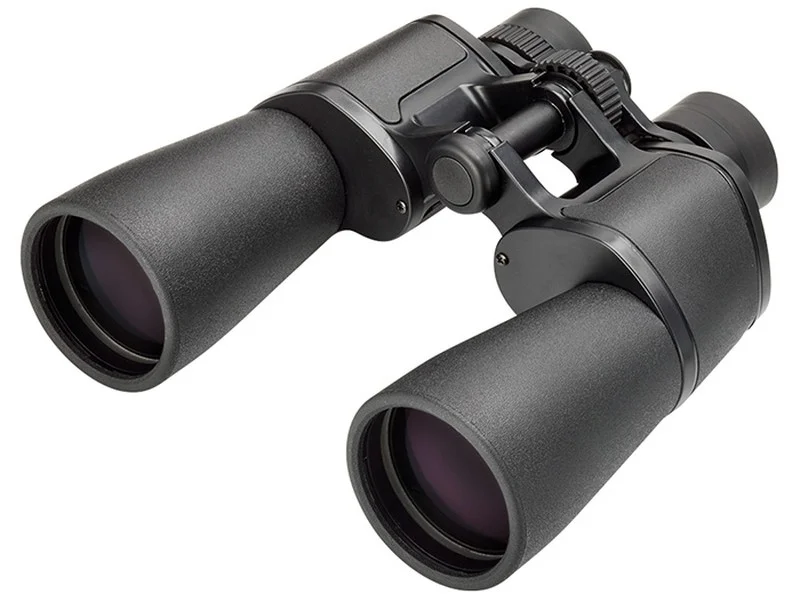
A solid all-round 10×50 that works well in twilight, with good light grasp and a wide enough field to sweep the horizon area quickly when hunting Mercury.
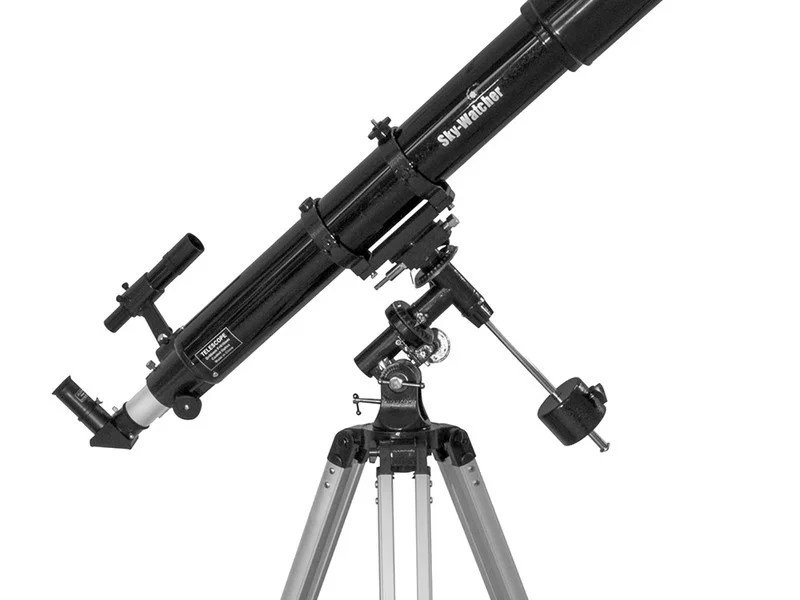
A small refractor is ideal for Mercury. Sharp, contrasty views of the phase, and the EQ2 mount lets you track it across the twilight window without constantly nudging.
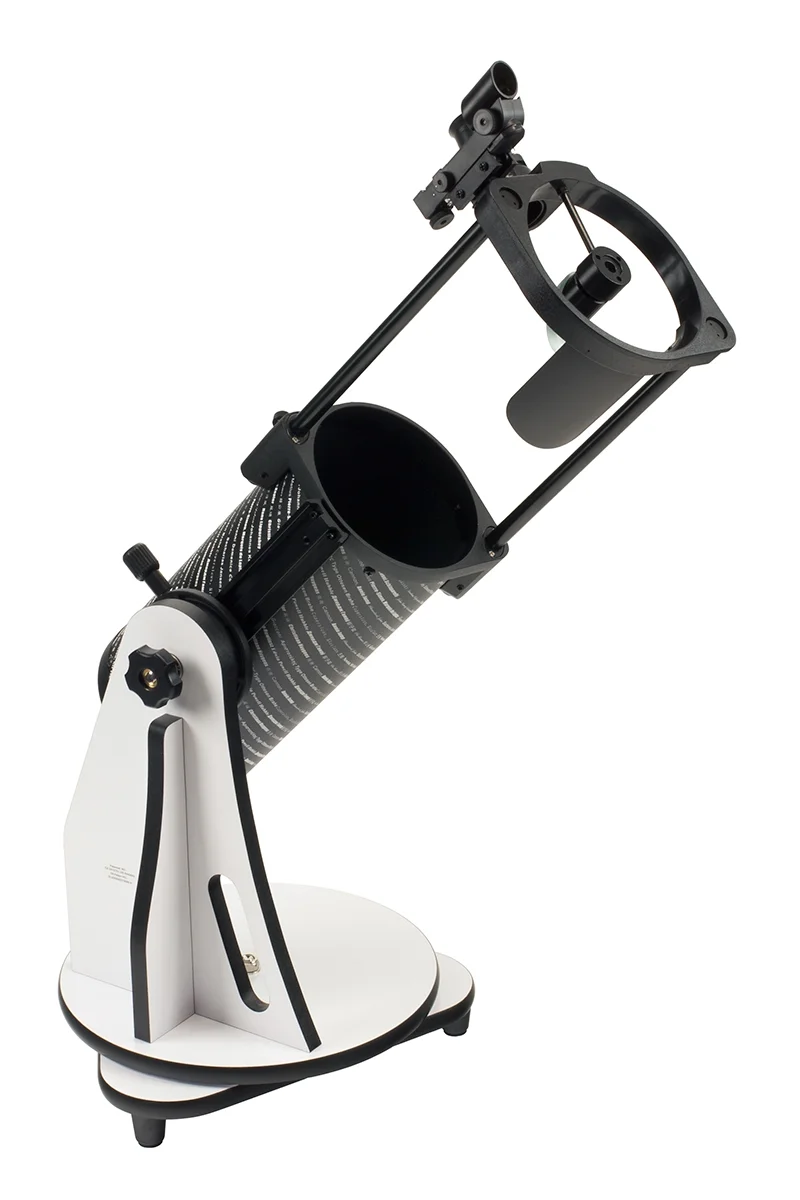
A compact Dobsonian that doubles up for the Moon and planets. At 50–75x it will show Mercury's phase clearly, and it's easy to take to a spot with a good low horizon.
Affiliate links: you pay the same price, we earn a small commission that helps keep WatchTheStars free.
Equipment for Mercury
You don't need much to see Mercury. The requirements are practical rather than optical:
For naked-eye observing: A clear horizon, accurate sunset and sunrise times for your location, and a planetarium app (Stellarium or SkySafari) to show you where Mercury is relative to the horizon. Mercury won't be obvious if you don't know roughly where to look.
For binoculars: 10×50 is the sweet spot: good light grasp in twilight, and wide enough to scan the horizon area. A tripod or fence post to steady them helps a lot, especially when Mercury is low. The Opticron Adventurer 10×50 and Helios Stellar II 10×50 are both solid choices. Start with binoculars even if you're planning a naked-eye observation. Once you've pinned Mercury's exact location, switching to naked eye is easy.
For a telescope: Portability matters here. You won't want to haul a large Dobsonian to a specific location with a clear western or eastern horizon and then set up for a 45-minute window. A small, quick-to-deploy scope works much better. The Sky-Watcher Evostar 90 EQ2 is ideal: a refractor's sharp, high-contrast views suit Mercury's phase well, and the equatorial mount lets you track smoothly. The Sky-Watcher Heritage 130P also works fine if you don't need tracking. Magnification: 50–100× is practical; higher than that and atmospheric turbulence near the horizon starts degrading the image.
Safety: Never observe Mercury when the Sun is above the horizon. For evening elongations, wait until 20+ minutes after sunset. For morning ones, stop 20+ minutes before sunrise. Don't sweep toward the Sun with a telescope or binoculars. Even a brief accidental look at the Sun can cause permanent eye damage.
Observing Tips
Timing is the main thing. Too early and you risk the Sun still being up or Mercury being in very bright sky; too late and Mercury is below the horizon or lost in haze. The sweet spot for evening elongations is 30–50 minutes after sunset. For morning elongations, 45–70 minutes before sunrise.
Your horizon matters more than your telescope. Trees, houses, or hills will cost you Mercury entirely. It's worth a short drive to a field or hilltop with a clear view in the right direction. For evening elongations that's west or northwest; for morning ones it's east or southeast. Check on a map before you go.
Use an app. Stellarium or SkySafari will show you exactly where Mercury sits relative to the horizon at any given time. Set your location, check the altitude and azimuth for tonight, and know what you're looking for before you step outside. Trying to locate Mercury by scanning randomly is much harder than knowing it's at 8° altitude due west at 9:15pm.
Start with binoculars, then go to naked eye. Scan the area where Mercury should be, identify it (bright, steady, not twinkling much), and note a landmark (a rooftop, a tree line) that you can use to relocate it with the naked eye. Then put the binoculars down and see if you can spot it directly.
UK-specific seasonal advice. Evening elongations in late winter and early spring (like February 19) are the best from the UK because the ecliptic stands steeply at sunset. Morning elongations in autumn and early winter (like November 20) work well for the same reason in reverse. Summer evening elongations look generous on paper but the shallow ecliptic keeps Mercury frustratingly low. Adjust your expectations accordingly.
Clear, transparent sky is more important than dark sky. Mercury is in twilight regardless, so light pollution barely matters. What kills you is haze, mist, or a thick layer near the horizon. If the horizon looks murky, it usually is. Save your time for a clearer night.
Observe over several evenings. Mercury changes noticeably from night to night: it moves against the stars, its brightness shifts, its phase changes. Watching it over a week gives you a much better sense of what's happening, and it's satisfying to track.
Log what you see. A quick note of date, elongation type, conditions, and what the planet looked like is worth keeping. The phases in particular are interesting to record. You can follow Mercury from gibbous to half-lit to crescent across an apparition.
Your 2026 Mercury Calendar
| Date | Event | Direction | UK rating |
|---|---|---|---|
| February 19 | Greatest Eastern Elongation (18° E) | Evening | Excellent, past |
| April 3 | Greatest Western Elongation (27.8° W) | Morning | Poor from UK, past |
| June 15 | Greatest Eastern Elongation (24°31′ E) | Evening | Moderate, planet grouping |
| August 2 | Greatest Western Elongation (19°28′ W) | Morning | Fair |
| October 12 | Greatest Eastern Elongation (25° E) | Evening | Poor: sets 25 min after the Sun from the UK |
| November 20 | Greatest Western Elongation (19° W) | Morning | Good, steep winter ecliptic |
Two of the six are already past. June 15 is next: get the binoculars out and find Venus first, then work right. November 20 is the one to properly plan for. Clear skies.
Sources:
- Mercury at greatest elongation east, 19 Feb 2026 · In-The-Sky.org (JPL DE440 ephemeris)
- Mercury at greatest elongation east, 11 Oct 2026 · In-The-Sky.org
- Mercury at greatest elongation west, 20 Nov 2026 · In-The-Sky.org
- Mercury farthest from the morning sun on August 2 · EarthSky
- Mercury farthest from the sunset on June 15 · EarthSky
Frequently Asked Questions
Equipment guides
Related topics
Ian ClaytonAmateur astronomer and founder of WatchTheStars.co.uk, dedicated to helping others explore the wonders of our universe. Full profile →