Key takeaways
- The Inouye Solar Telescope in Hawaii has captured the sharpest image of the Sun's surface ever taken, at a wavelength of 416 nanometres
- The photos reveal Kelvin-Helmholtz instability: tiny whirlpools of plasma, spaced 50 to 65 km apart, swirling at the edges of magnetic regions
- It's the first time this long-predicted effect has been confirmed on the Sun's visible surface, published in Nature on 5 August 2026
- The swirls may be the 'engine' that twists up magnetic energy, powering solar flares and helping explain the million-degree corona
- Better understanding of this process should improve space weather forecasts, the same forecasts that predict UK aurora nights
Jump to section 7 sections
- The Sharpest Image of the Sun Ever Captured
- What Is Kelvin-Helmholtz Instability?
- Why Is the Sun's Corona So Hot? A Clue at Last
- The Inouye Solar Telescope: The World's Largest Solar Telescope
- What It Means for Space Weather and Aurora Forecasts
- How to Observe the Sun Safely From the UK
- The Bottom Line
We've been staring at the Sun for all of human history, and it can still surprise us. On 5 August 2026, scientists released the sharpest image of the Sun's surface ever captured, and hiding in it was something never seen before: the whole surface is covered in tiny whirlpools.
Those swirls might be the missing piece in one of astronomy's oldest puzzles.
The Sharpest Image of the Sun Ever Captured
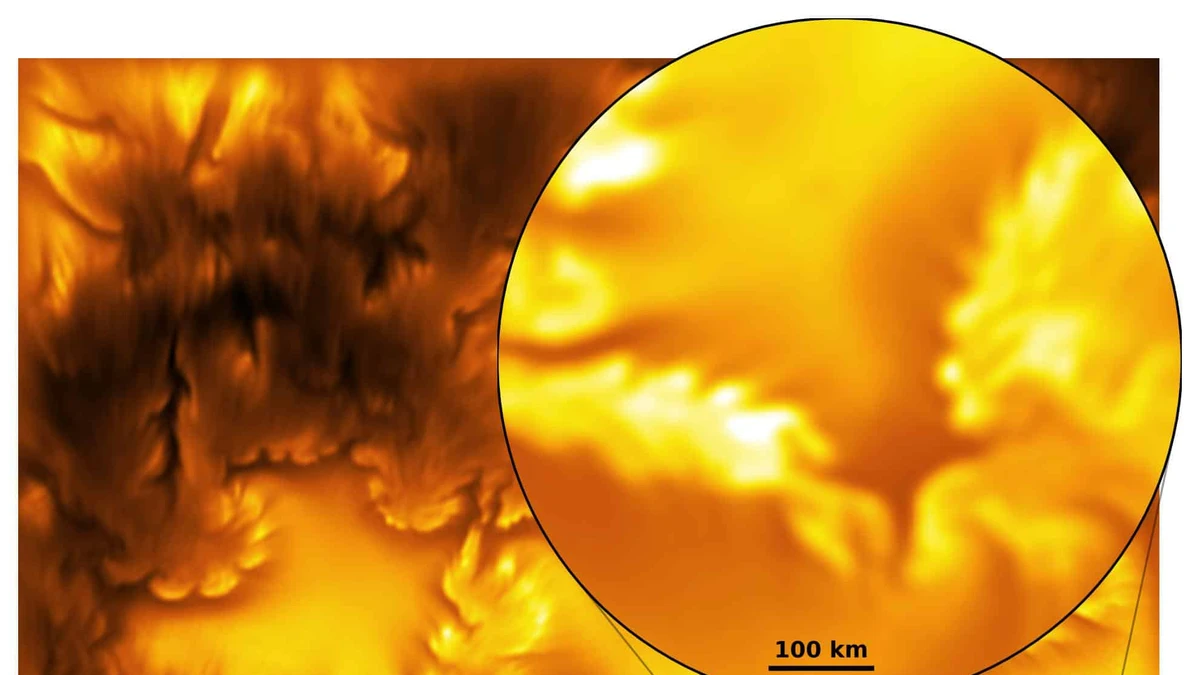
The image comes from the NSF Daniel K. Inouye Solar Telescope, perched near the summit of Haleakalā on the Hawaiian island of Maui. Taken at a wavelength of 416 nanometres, it shows the Sun's visible surface, the photosphere, in finer detail than any photo before it. Features just a few dozen kilometres across are crisp. On a star 1.4 million kilometres wide, that's like reading a car number plate from 90 miles away.
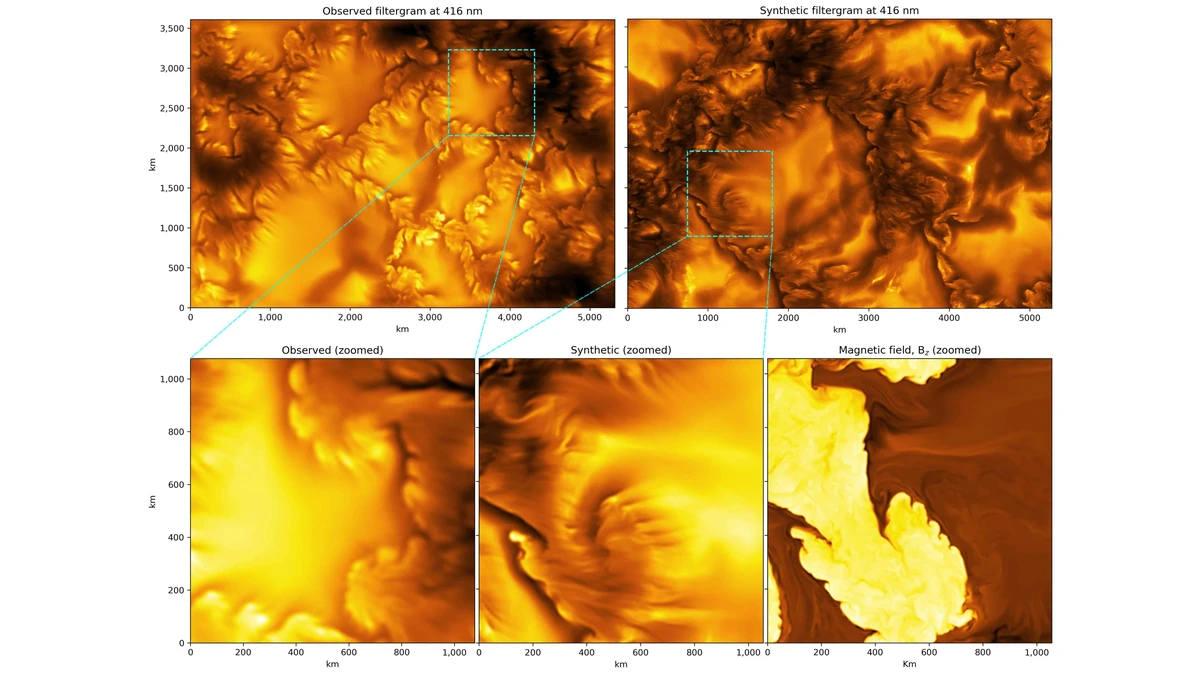
What the researchers found in that detail stunned them. The bright magnetic patches that freckle the Sun's surface don't have smooth edges. They're deformed, curled and fringed with fast-moving dark stripes. Everywhere the team looked, tiny vortices were spinning along the boundaries, spaced 50 to 65 kilometres apart.
The team, drawn from the US National Solar Observatory, the High Altitude Observatory and Germany's Max Planck Institute for Solar System Research, published the discovery in the journal Nature on 5 August. Their title says it plainly: these swirls are everywhere.
What Is Kelvin-Helmholtz Instability?
The swirls are the signature of something physicists call Kelvin-Helmholtz instability, or KHI. It happens wherever two flows slide past each other at different speeds. The boundary between them can't stay smooth, so it curls up into vortices that look like breaking ocean waves.
You've probably seen it yourself. Wind blowing over a lake raises ripples that way. On rare days, UK skies produce curling wave-clouds that look like a surfer's dream; that's KHI too. The effect turns up on Jupiter and Saturn, where bands of atmosphere shear past each other, and where the solar wind rubs against planetary magnetic fields.
Lord Kelvin and Hermann von Helmholtz worked out the physics around 1870. Theory has long said the same thing should happen on the Sun's surface, where hot bubbling plasma flows past the edges of magnetic regions. But the swirls were predicted to be so small that no telescope could resolve them. For 150 years, they stayed invisible.
Not any more. The Inouye images caught dozens of them, and computer simulations run by the same team produced near-identical swirls with the same spacing. Observation, simulation and theory all agree: the Sun's surface is churning with Kelvin-Helmholtz whirlpools.
Why Is the Sun's Corona So Hot? A Clue at Last
Here's why solar physicists are excited about some very small whirlpools.
The Sun's surface is about 5,500°C. Its outer atmosphere, the corona, is over a million degrees. That makes no obvious sense; it's like walking away from a campfire and getting hotter. The coronal heating problem has nagged at astronomers for the better part of a century.
The leading idea involves the Sun's magnetic field. Field lines get twisted around each other like braided hair, storing energy. When the tension snaps and the lines reconnect, the stored energy is released, heating the corona and powering solar flares. The missing link was what does the braiding in the first place.
The new discovery offers an answer. The KHI vortices sit exactly where the magnetic field lines emerge, and they're spinning constantly, all over the Sun. They could be the everyday engine that keeps twisting the field, loading it with energy for later release.
"Kelvin-Helmholtz instability is likely a mechanism that contributes to the heating of the outer atmosphere," says Dr Thomas Rimmele, chief technologist at the National Solar Observatory, "and is part of the solution of the longstanding enigma of why stars have a million degrees Kelvin hot corona."
Note the word "stars", plural. What's true of the Sun should be true of billions of others.
The Inouye Solar Telescope: The World's Largest Solar Telescope
None of this was possible before the Inouye Solar Telescope came online. Its 4-metre mirror is the largest ever pointed at the Sun, gathering seven times more light than any previous solar telescope.
Building it was an engineering headache of a special kind. A big mirror aimed at the Sun collects enough heat to cook itself, so the observatory pumps coolant around the structure and uses a heat-stop that dumps around 13 kilowatts of heat, roughly four electric kettles running flat out. Adaptive optics then correct for the shimmer of Earth's atmosphere hundreds of times a second.
The reward is images like this one. The telescope only began science operations in 2022, and it has already photographed sunspots in unprecedented detail, traced magnetic fields in the corona and now confirmed a 150-year-old prediction. Its next task is to measure how much energy the newly found vortices pump upwards, using software that spots the swirls automatically.

What It Means for Space Weather and Aurora Forecasts
There's a practical side to all this. The same magnetic energy that heats the corona also drives solar flares and coronal mass ejections, the eruptions that fling billions of tonnes of plasma across space.
When one of those eruptions hits Earth, the effects range from glorious to expensive. The glorious part is the aurora; big solar storms are why we occasionally get to see the Northern Lights from the UK, as happened during May's solar flare alert. The expensive part is the damage severe space weather can do to satellites, GPS, radio communications and power grids.
Forecasting those storms means understanding how the Sun builds up and releases magnetic energy. If KHI vortices really are the engine doing the winding, watching them could eventually tell forecasters how much energy the Sun is loading, and where. The team's follow-up work will measure exactly that.
How to Observe the Sun Safely From the UK
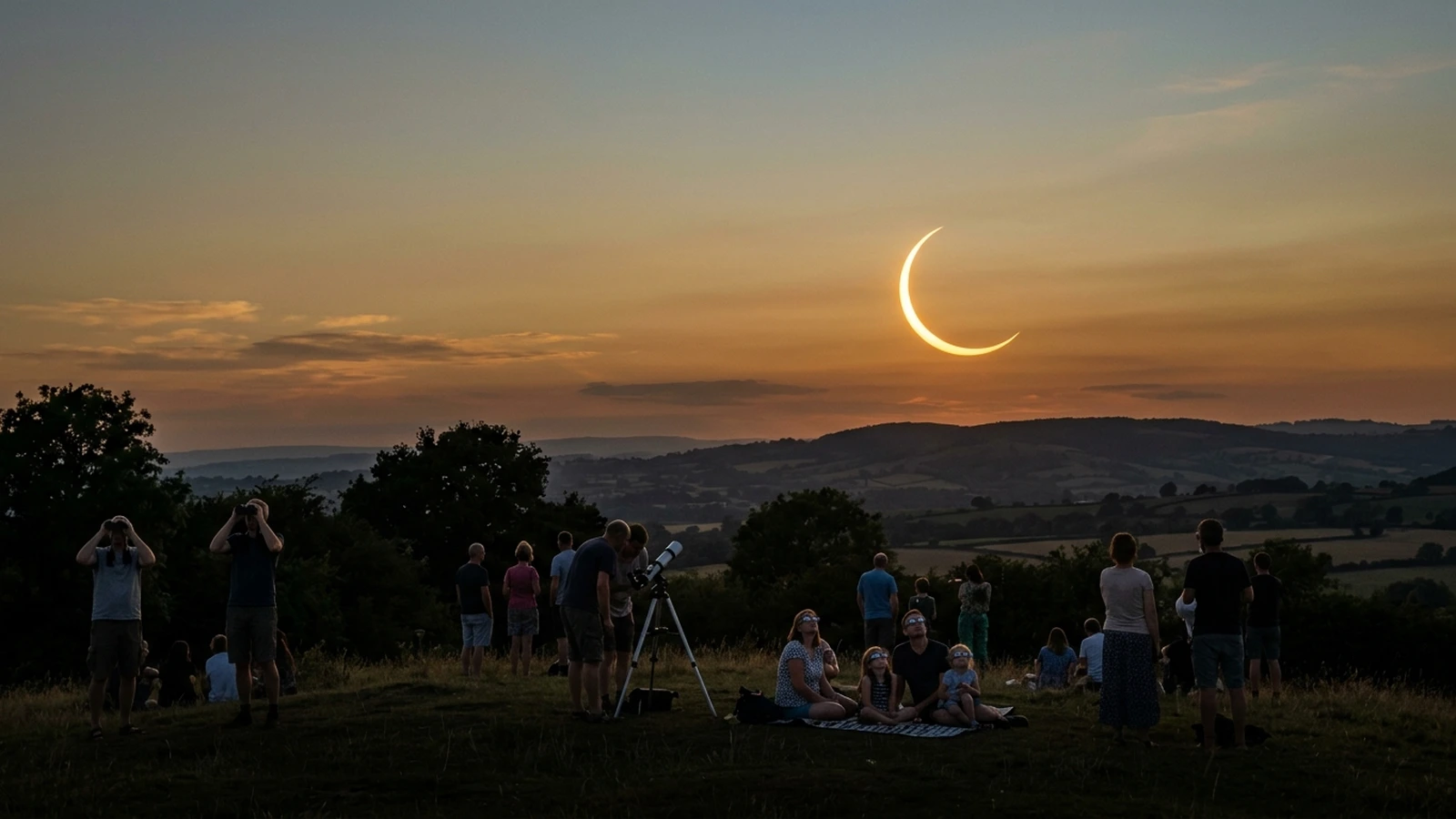
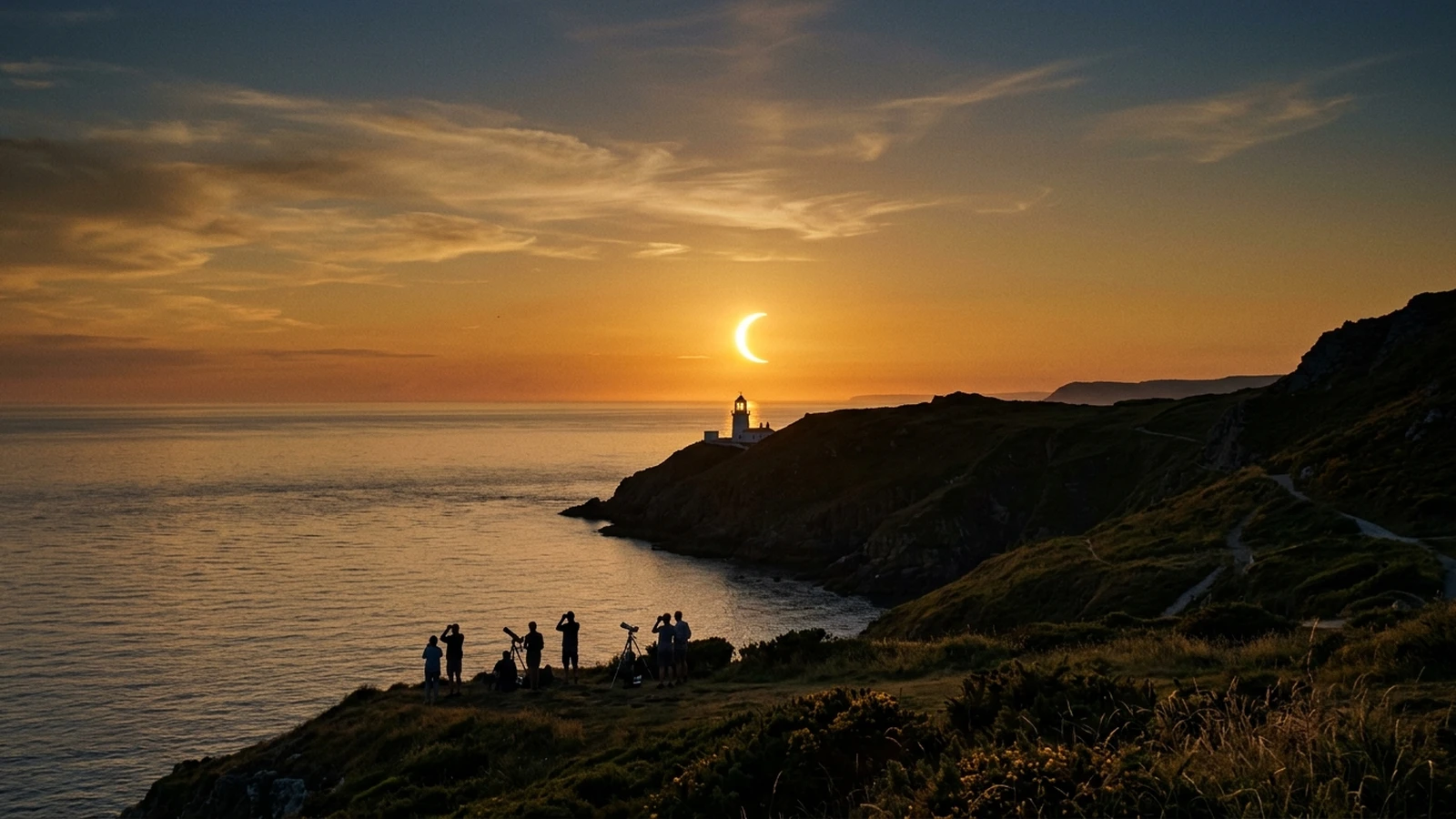
All this Sun science lands at a fitting moment, because tomorrow the Sun puts on its own show. On 12 August 2026, a solar eclipse covers up to 90% of the Sun from the UK, the deepest partial eclipse here for years. The same evening brings a planet parade and the peak of the Perseids. The sky is having quite a week.
One rule matters above all the others: never look at the Sun directly, and never point binoculars or a telescope at it without a certified solar filter fitted at the front. Ordinary optics concentrate sunlight enough to permanently damage your eyes in an instant. Eclipse glasses, filters and projection methods are all covered in our guide to observing the Sun safely.
Do it properly and the Sun is a rewarding target. Even a small filtered telescope shows sunspots, the dark magnetic blemishes that are cousins of the very structures in the Inouye images. You won't resolve 50-kilometre whirlpools from your garden. But you'll be looking at the same restless surface, and now you'll know what's swirling down there.
Gear for a big week in the sky
Kit we've tested and reviewed in full
Never point binoculars or a telescope at the Sun without a certified solar filter. But once it sets this week, the Perseids take over, and there's an eclipse to catch too.

Ideal for sweeping the Perseid radiant and picking planets out of the twilight this week. Light enough to hold steady for hours.

This smart telescope ships with its own solar filter, so you can safely image sunspots by day and nebulae by night.
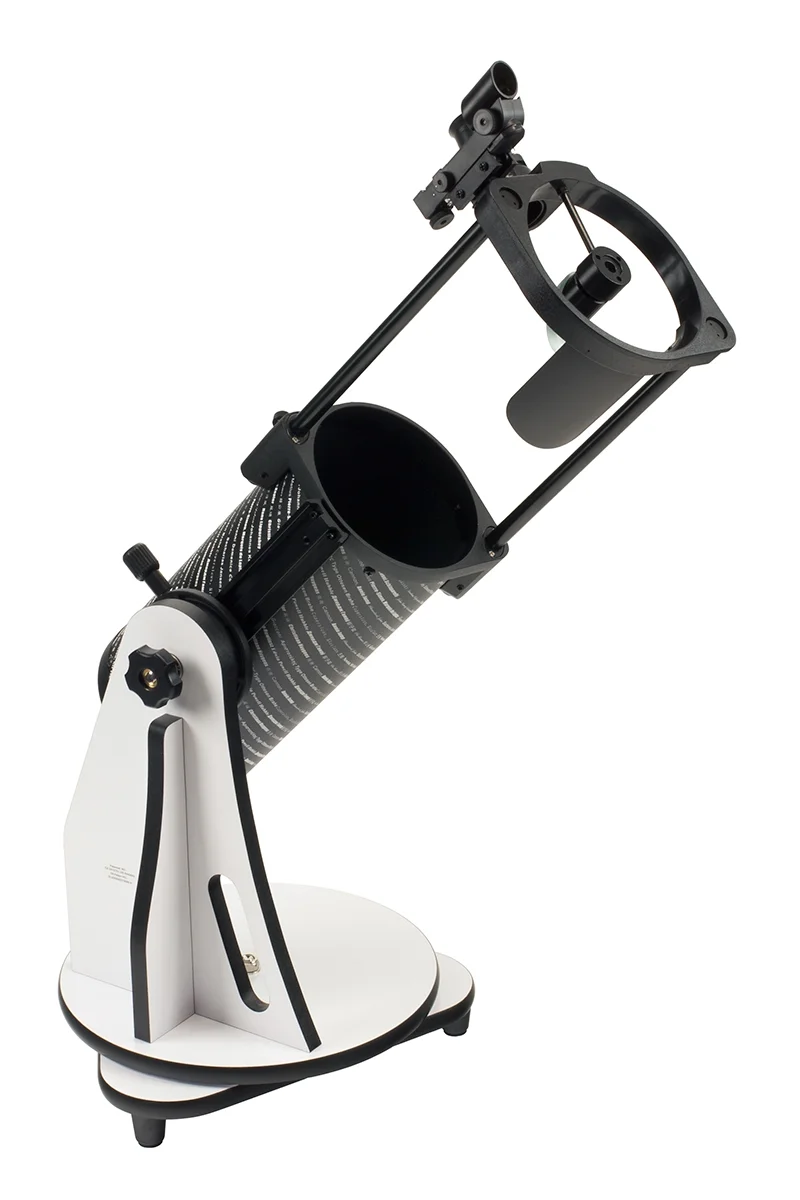
A brilliant starter scope for the autumn's planets. Add a certified solar filter and it doubles as a sunspot watcher.
Affiliate links: you pay the same price, we earn a small commission that helps keep WatchTheStars free.
The Bottom Line
The sharpest image of the Sun ever captured has turned a 150-year-old prediction into an observation. The Sun's surface is covered in tiny Kelvin-Helmholtz whirlpools, and they may be the engine that winds up the magnetic energy behind flares, eruptions and the impossibly hot corona.
It's a reminder of how much our own star still hides. The nearest star to Earth, the one we see every clear day, only gave up this secret last week. Tomorrow, the Moon takes a bite out of it over the UK. Filter on, eyes protected, enjoy the show. Clear skies.
Sources:
- NSF Inouye Solar Telescope Enables Major Discovery of a Hidden Solar Process · National Solar Observatory
- Ubiquitous Kelvin-Helmholtz Instabilities Driving Plasma Mixing on the Sun · Nature
- Highest-resolution images of the sun's surface here! · EarthSky
- Unprecedented views of sun's surface reveal surprising whirlpools · CNN
Frequently Asked Questions
Equipment guides
Related topics

Ian ClaytonAmateur astronomer and founder of WatchTheStars.co.uk, dedicated to helping others explore the wonders of our universe. Full profile →