Key takeaways
- Wednesday 12 August 2026 packs three major sky events into 24 hours: a six-planet parade before dawn, the UK's deepest solar eclipse since 2015 in the evening, and the Perseid peak overnight
- The planet parade needs a clear eastern horizon before about 5am; Mercury, Jupiter, Mars and Saturn are naked-eye targets, with Uranus and Neptune for binoculars
- The eclipse runs from about 6.17pm to about 8.06pm BST, peaking at 7.13pm from London with roughly 91–96% of the Sun's area covered depending on where you are
- A new moon means the Perseids peak under fully dark skies, the best conditions until 2045
- Order ISO 12312-2 eclipse glasses by Monday for next-day delivery; they sold out nationwide before previous eclipses, and pinhole projection is the free fallback
Jump to section 5 sections
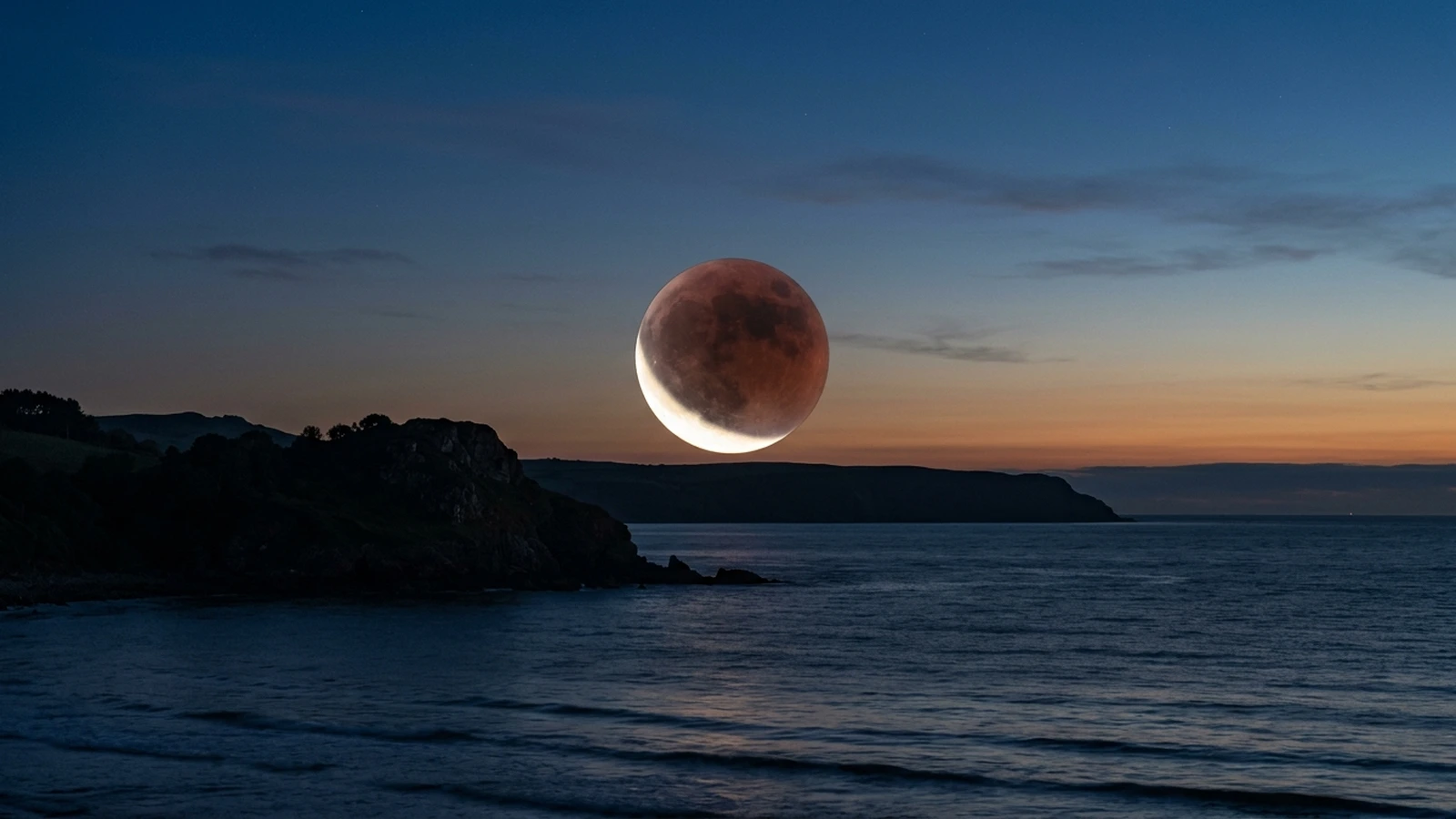
This Wednesday, 12 August 2026, the UK gets its busiest day of sky-watching in decades. A six-planet parade before sunrise, the deepest solar eclipse seen from Britain since 2015 in the early evening, and the Perseid meteor shower peaking under a moonless sky that night. Any one of these would be worth planning around. All three land inside the same 24 hours.
We've already published full guides to the solar eclipse and the Perseids. This post is the short version: what happens when, and what you need to sort out now.
Planet Parade August 2026: Six Planets Before Sunrise
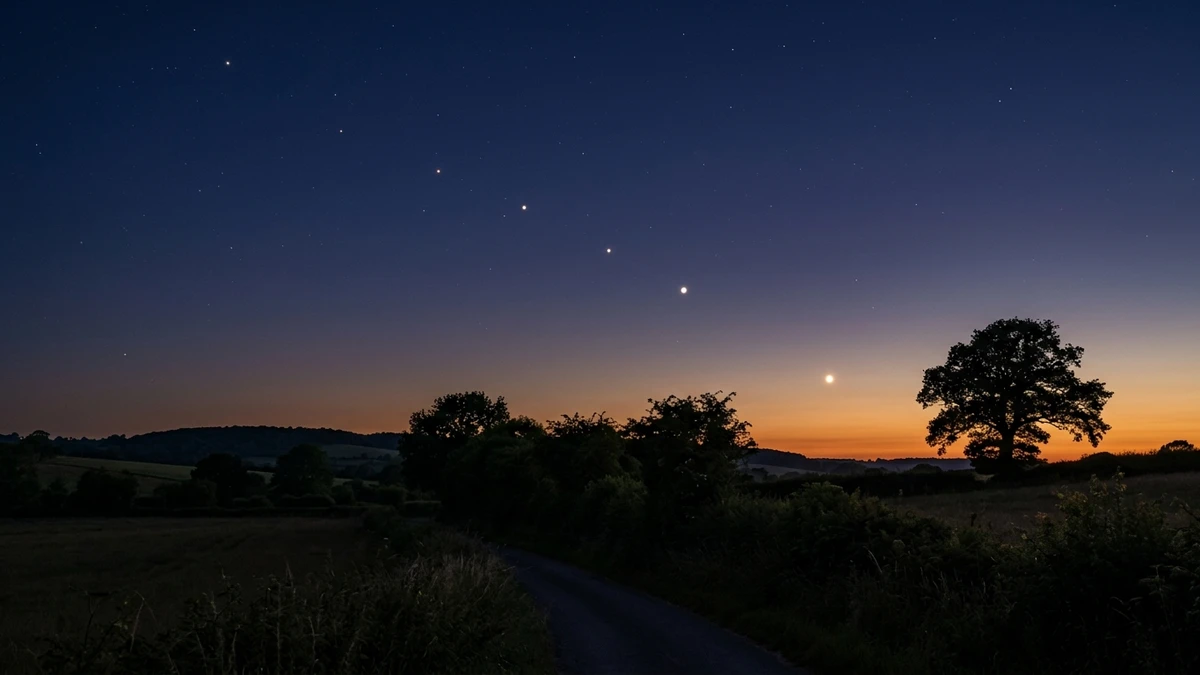
In the hours before dawn on 12 August 2026, six planets stretch across the sky at once: Mercury, Jupiter, Mars, Saturn, Uranus and Neptune. Astronomers call it a planet parade, and this is the best morning line-up of the year. The day starts early, in other words.
Four of the six are naked-eye objects. Saturn sits highest, well placed in the south. Jupiter blazes lower in the east with fainter Mars nearby, and Mercury hangs closest to the horizon in the brightening north-east. Uranus and Neptune complete the set, but you'll need binoculars and a finder chart for those two.
The window that matters is roughly 4am to 5am BST. Any later and dawn starts washing out the low planets; Mercury goes first. Find somewhere with a flat, open view to the east: the same rule that applies to every low-horizon event. Our 2026 planet parade guide has finder details for each planet.
Solar Eclipse 12 August 2026: Evening Times for the UK
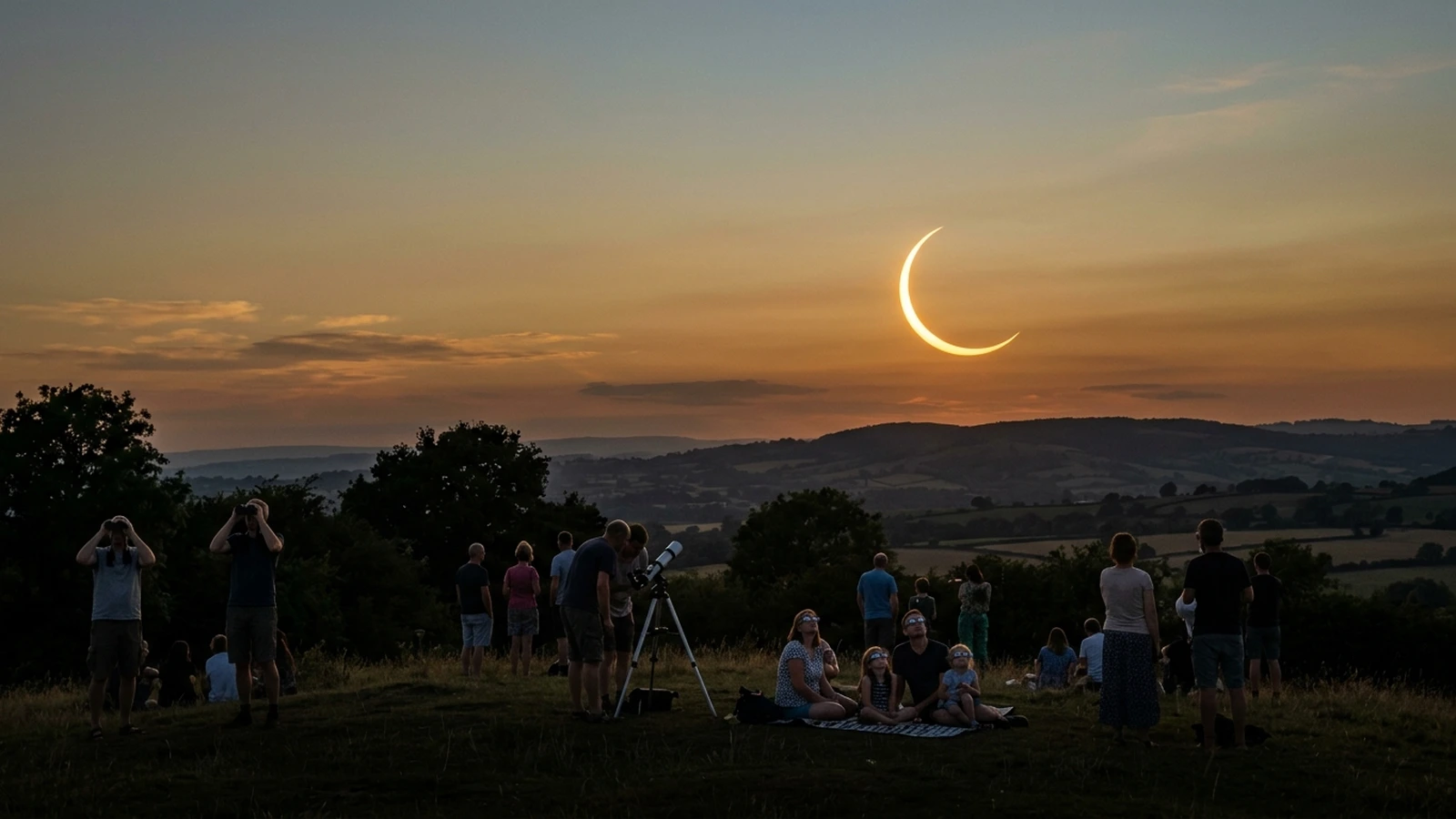
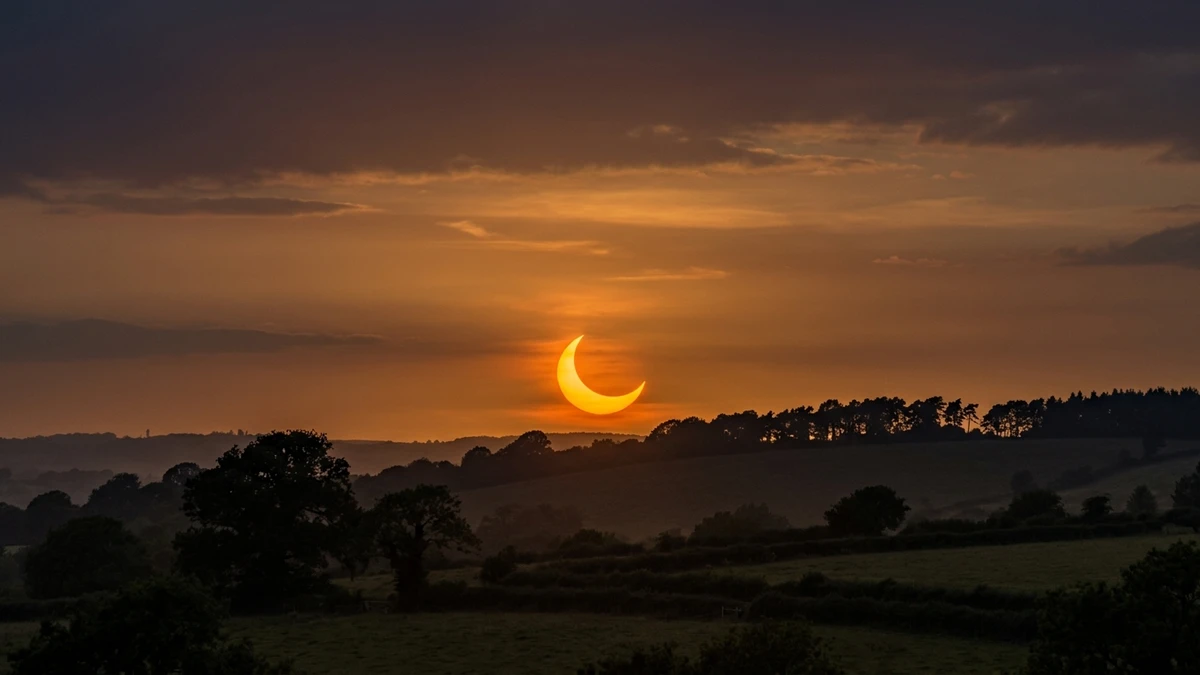
The solar eclipse of 12 August 2026 runs from about 6.17pm to just after 8pm BST, and it's the headline act. Maximum is at 7.13pm from London, when about 91% of the Sun's area is covered. Cornwall and the far south-west do best at roughly 95–96%. The eclipse ends at 8.06pm in London, with the crescent Sun still a good 20 minutes above the western horizon. It finishes before sunset everywhere in the UK, so don't let anyone tell you it's a sunset eclipse.
That low altitude is the practical catch. By maximum the Sun is only about 10 degrees up, so a clear western horizon is essential. A hilltop, a west-facing beach or an open park will make the difference between watching the whole event and losing the second half behind rooftops.
Safety is not negotiable here. Even a 96%-eclipsed Sun can permanently damage your eyes in seconds. Eclipse glasses certified to ISO 12312-2 are the only safe way to look directly, and sunglasses do not come close. All the detail, including city-by-city times and safe viewing methods, is in our full eclipse guide.
Sort your kit this week, not next Wednesday
Kit we've reviewed in full
Eclipse glasses are the one item you cannot improvise on the day, and they sold out across the UK before the 2015 and 2025 eclipses. A pair of binoculars covers everything else on the bill, from the morning ice giants to the gaps between meteors.
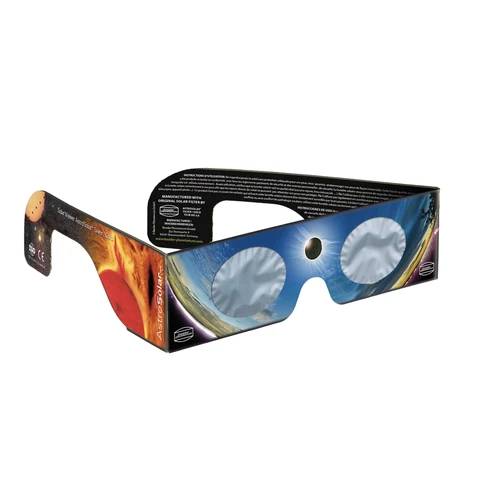
Baader Solar Eclipse Observing Glasses
Certified to ISO 12312-2, the only safe way to look at the eclipse directly. One pair per person, and check each pair for scratches or pinholes before use.
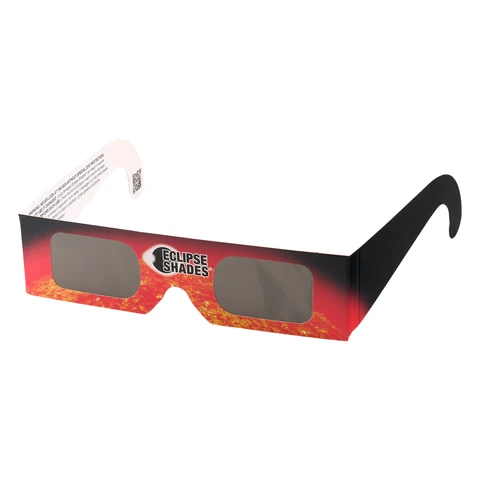
Astro Essentials Safe Solar Eclipse Handheld Viewer
The same certified protection in multi-packs, which is the sensible buy if you're watching with children or making an evening of it with neighbours.
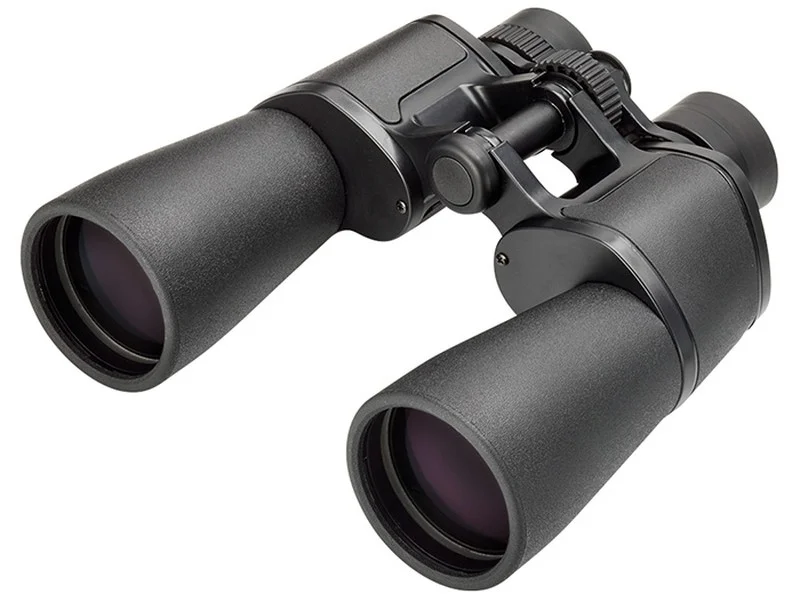
Picks up Uranus and Neptune in the pre-dawn parade, then sweeps the Double Cluster and Andromeda while you wait for Perseids. Never point them anywhere near the Sun.
Affiliate links: you pay the same price, we earn a small commission that helps keep WatchTheStars free.
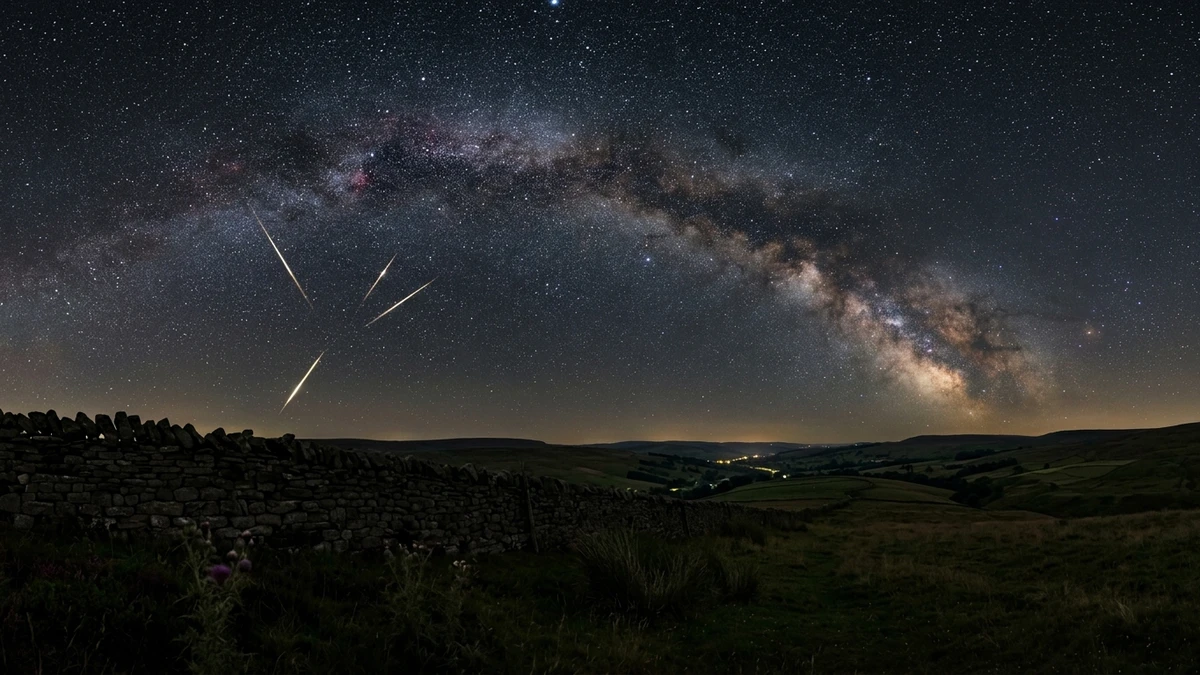
Perseid Meteor Shower Peak: 12–13 August Under a New Moon
Here's the connection that makes the day special. A solar eclipse can only happen at new moon, and a new moon means no moonlight. So the very thing causing the evening's eclipse also guarantees that the Perseids, peaking that night, get the darkest sky possible.
That combination is rare. The Perseids peak on a new moon roughly once every 19 years, and the next time after 2026 is 2045. Under a dark rural sky you can expect 50 or more meteors an hour in the early hours of 13 August, with the maximum predicted for around 3am BST.
The recipe hasn't changed: face north-east to east, look about halfway up the sky, give your eyes 20 minutes to adapt, and get comfortable. No telescope needed. Everything else, from radiant maps to photography settings, is in our Perseid guide, and our meteor shower calendar has every other peak for 2026 and 2027 if you want to plan further ahead.
How to Prepare This Week
A few jobs are worth doing today and tomorrow rather than on the morning of the 12th.
Order eclipse glasses today. This is the urgent one, and it's now a deadline rather than a suggestion. Order by Monday and next-day delivery still gets them to you in time. After that you're relying on the shops, and certified glasses sold out nationwide before both the 2015 and 2025 eclipses. If you already have a pair, hold them up to a bright light and check for scratches or pinholes: any damage and they go in the bin. If they don't arrive, don't improvise: skip to pinhole projection, which costs nothing and is completely safe.
Scout two horizons. You need east for the morning planets and west for the evening eclipse. They don't have to be the same place. Check both now while there's no pressure, and note where the Sun actually sets from your eclipse spot.
Watch the forecast properly. We're close enough now that the forecasts mean something. If cloud threatens, remember it varies a lot across the country: an hour in the car on the day could rescue the eclipse. Our stargazing tonight tool scores your local sky for cloud and light pollution if you want a quick read before you commit. The Perseids are more forgiving, staying strong for a night or two either side of the peak, and checking is it a full moon tonight on those other nights tells you fast whether it's worth going out.
Plan the nap. Seriously. Dawn start, evening eclipse, 3am meteor peak: nobody does all three on eight hours' sleep. An afternoon rest on the 12th is part of the plan, not cheating.
12 August 2026 Hour-by-Hour Timeline
Here's the full day at a glance, times for London (elsewhere in the UK shifts by only a few minutes):
- 4.00–5.00am: Planet parade at its best. Saturn high in the south, Jupiter, Mars and Mercury strung towards the east and north-east.
- 5.45am (approx): Sunrise. Parade over.
- Afternoon: Rest. Recheck the weather, pick your final eclipse spot, pack glasses and binoculars.
- 6.17pm: First contact. The Moon takes its first bite out of the Sun.
- 7.13pm: Maximum eclipse. About 91% covered from London, the light gone strange and the temperature dipping.
- 8.06pm: Eclipse ends, low in the west.
- 8.28pm: Sunset, into a moonless night. Early Perseids start appearing once it's properly dark.
- 11pm–4am: Prime Perseid hours, building to the predicted maximum around 3am on the 13th.
Nothing like this comes round again from the UK for a very long time. Put it in the diary and order the glasses this week. Then hope for clear skies. For every other date worth knowing about before and after it, see our astronomy events calendar.
Sources:
- How to see the 12 August 2026 partial solar eclipse · Royal Observatory Greenwich
- August 12, 2026 solar eclipse UK guide · BBC Sky at Night Magazine
- How to see the six-planet alignment around August 12, 2026 · Star Walk
- August 12, 2026 sky events · Star Walk
- Partial solar eclipse times for London · timeanddate.com
Frequently Asked Questions
Equipment guides
Related topics
Ian ClaytonAmateur astronomer and founder of WatchTheStars.co.uk, dedicated to helping others explore the wonders of our universe. Full profile →