Key takeaways
- Rocks brought back from the Moon's far side by China's Chang'e-6 mission show no burst of impacts 3.9 billion years ago
- The Late Heavy Bombardment theory, proposed in 1974, was built entirely on Apollo samples from the near side
- Only 2 of the 21 dated fragments fall in the window the theory needs to be crowded with impacts
- Every Apollo landing site sat within debris range of one huge impact, Imbrium, which may have skewed the original evidence
- If there was no bombardment, early Earth had a calmer, longer window in which life could get started
Jump to section 7 sections
- What Was the Late Heavy Bombardment?
- Why Apollo Moon Rocks Could Never Settle the Debate
- Chang'e-6: The First Far Side Moon Samples Ever Returned
- What the Chang'e-6 Far Side Moon Rocks Actually Show
- Where Scientists Still Disagree About the Findings
- What It Means for the Origin of Life on Earth
- See the Moon's Impact Scars From the UK
What Was the Late Heavy Bombardment?
If you've read a book about the early solar system in the last fifty years, you've met the Late Heavy Bombardment. It's the bit where everything goes wrong.
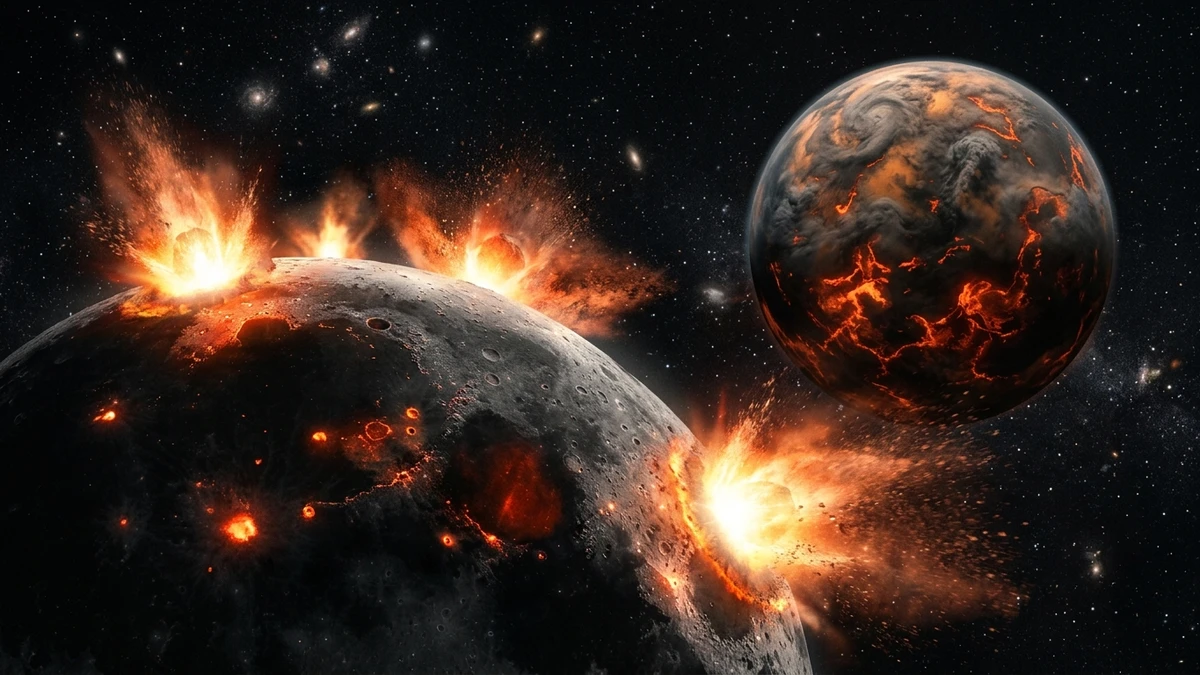
The story runs like this. Around 3.9 billion years ago, roughly 600 million years after the planets formed, the inner solar system was suddenly pounded by asteroids. The Moon took a battering that carved out most of the huge dark basins we can still see tonight. Earth got the same treatment, but plate tectonics and weather have long since scrubbed the evidence away. The most popular explanation, known as the Nice model, blames the giant planets: Jupiter, Saturn, Uranus and Neptune shuffled their orbits, and the gravitational disturbance flung a swarm of asteroid belt debris inwards.
It's a dramatic idea, and it has shaped far more than lunar geology. Because a planet being repeatedly resurfaced by giant impacts is no place for anything delicate, the bombardment set the earliest date anyone would accept for life on Earth. It also underpins how we work out the age of surfaces on Mars and Mercury. You'll find it in documentaries, museum displays and A-level textbooks.
A study published in Science Advances on 23 July has just knocked a serious hole in it.
Why Apollo Moon Rocks Could Never Settle the Debate
Apollo samples could never prove the Late Heavy Bombardment because all six landing sites sat on the Moon's near side, within debris range of a single enormous impact. That one event may have stamped the same age onto every rock the astronauts collected.
The theory was born in 1974, and it came from moon rocks. Scientists dating samples from Apollo 15, 16 and 17 kept getting the same answer: around 3.9 billion years. Rock after rock, site after site. That looked like the signature of a single planet-wide event.
But there was a problem sitting in plain sight, and critics spotted it almost immediately.
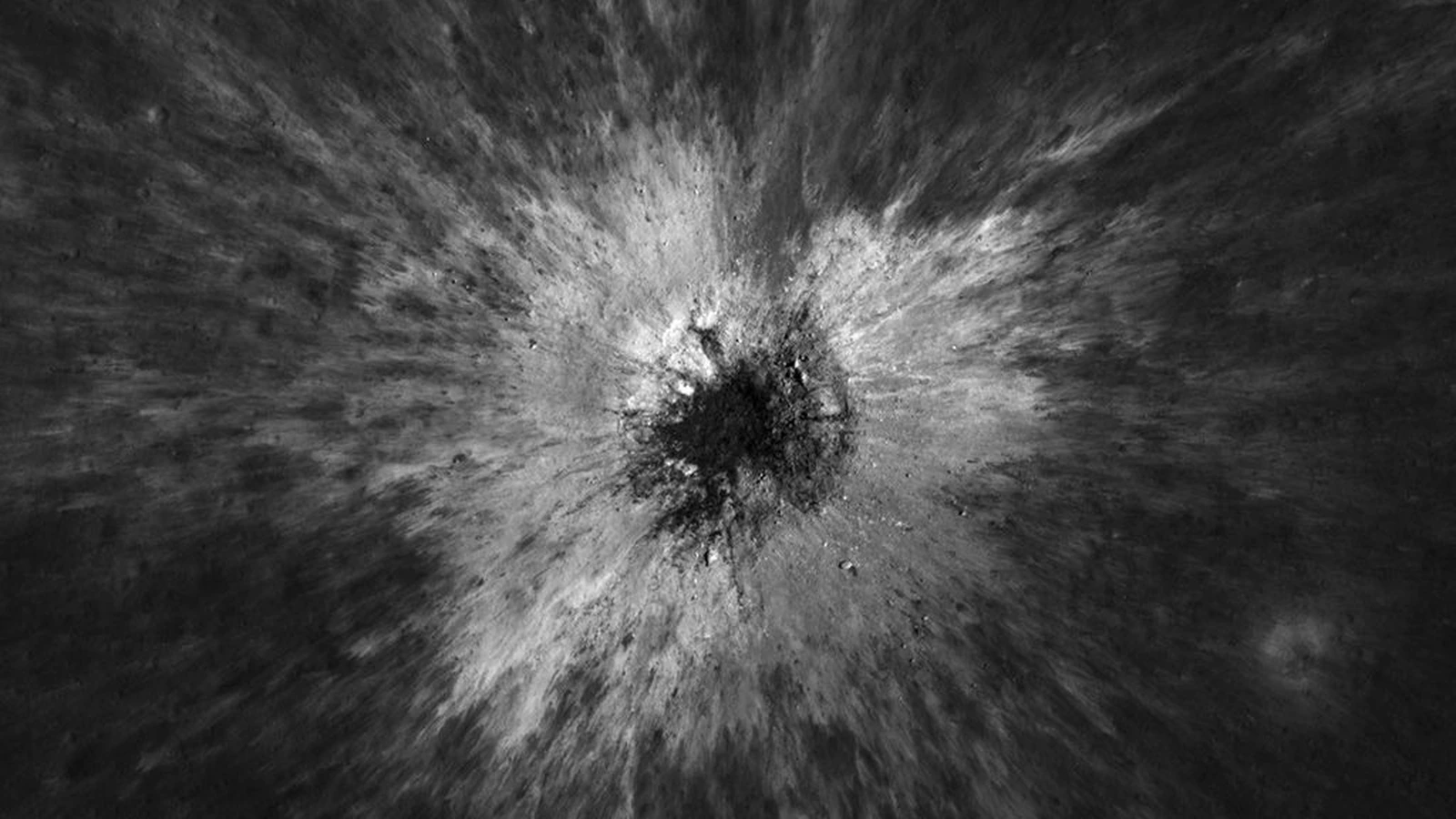
All six Apollo landings happened on the near side of the Moon, the hemisphere that permanently faces us. And every one of those sites sits within debris range of Mare Imbrium, the vast dark plain in the Moon's upper left that you can see with your eyes alone. Imbrium was blasted out by one colossal asteroid strike about 3.92 billion years ago, and the blast threw material clear across the near hemisphere.
Here's why that matters. When a rock is heated hard enough, its radioactive clock resets to zero. If Imbrium's ejecta reheated rocks at all six Apollo sites, then every sample would read the same age, and it would be Imbrium's age. Not evidence of a global bombardment. Evidence of one very big bang, measured six times.
That objection has been on the record for decades. William Hartmann published a paper in 2003 with the wonderfully blunt title "Lunar cataclysm as a misconception (28 years later)". In 2016, Patrick Boehnke and Mark Harrison at UCLA argued in PNAS that the Apollo dating data simply could not be read as proof the bombardment ever happened. In 2017 came a review called "Cataclysm No More". The dissent was there. What it lacked was a rock from somewhere Imbrium couldn't reach.
Chang'e-6: The First Far Side Moon Samples Ever Returned
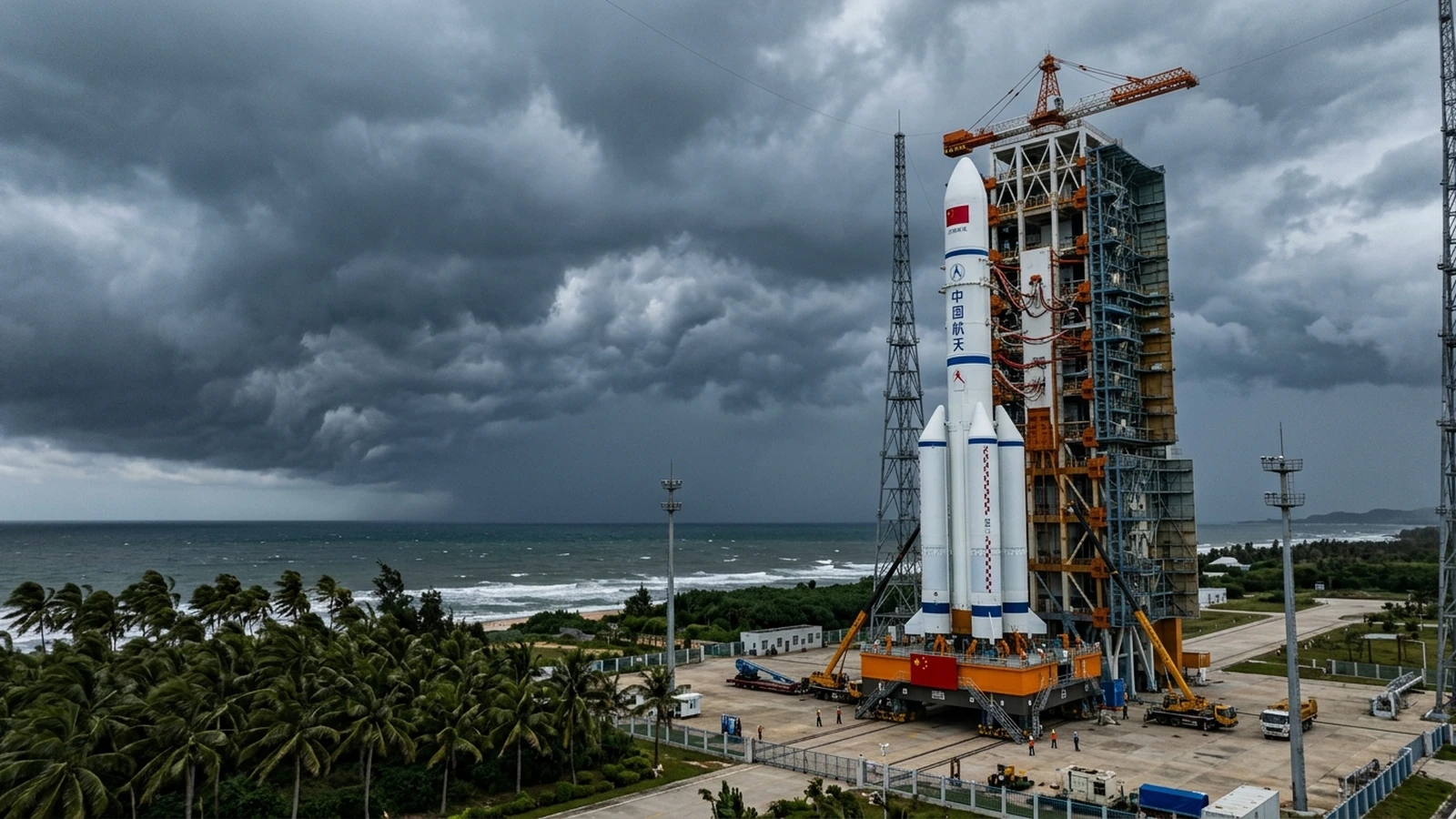
That rock finally arrived in June 2024.
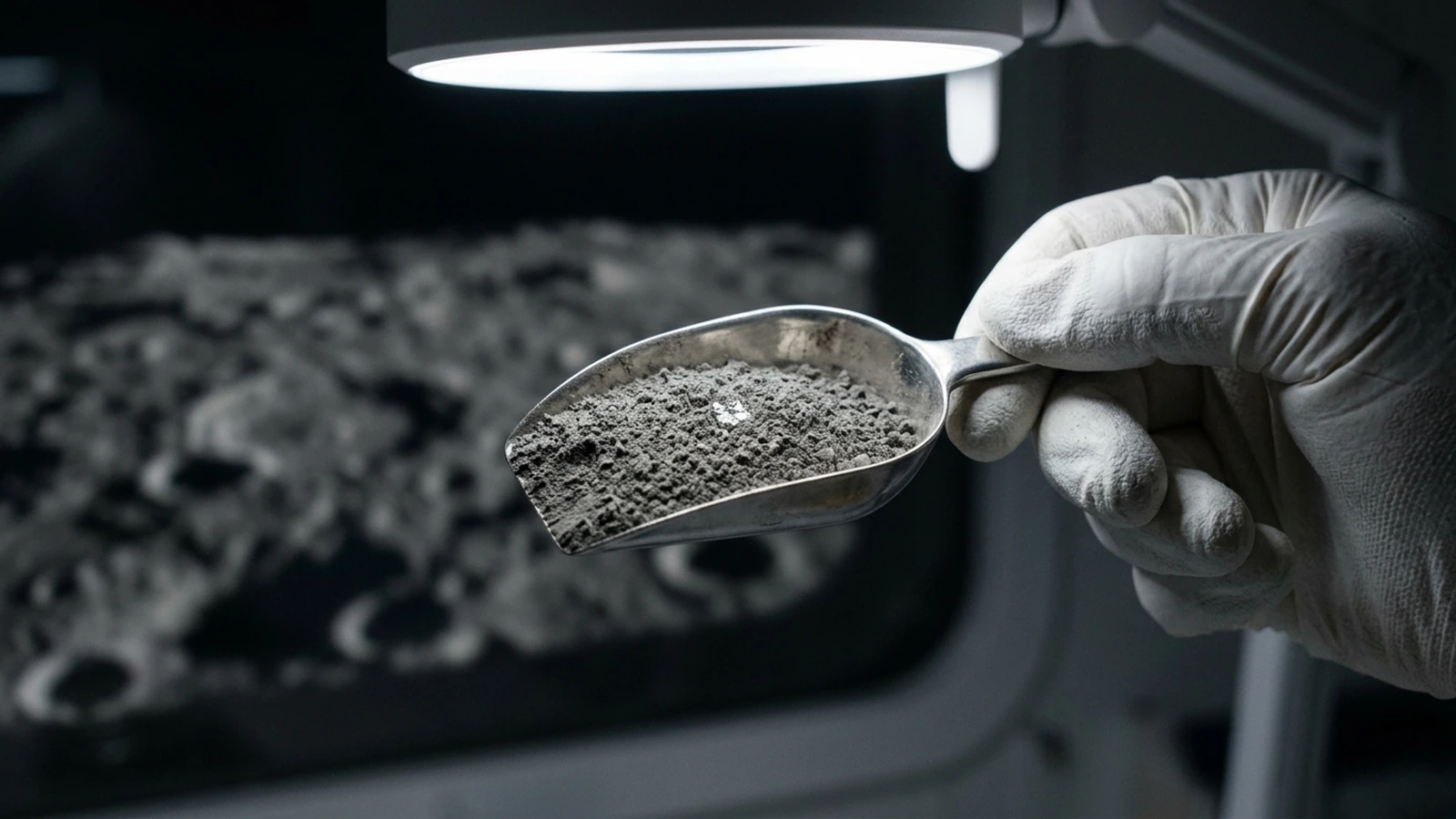
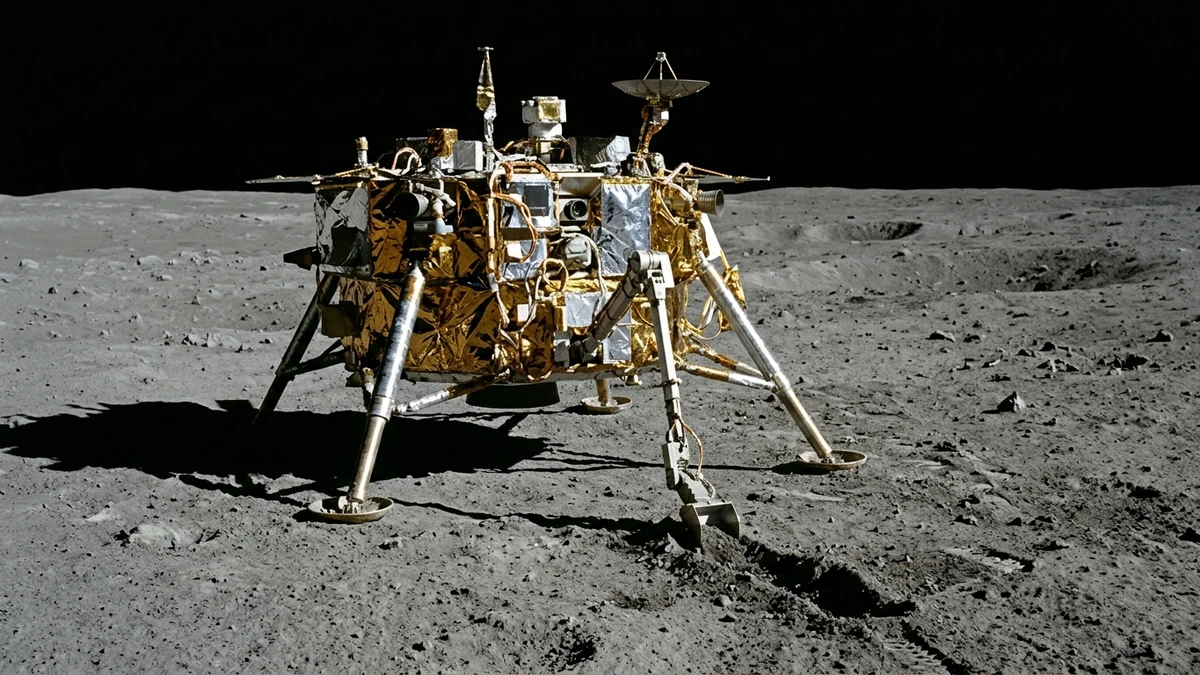
China's Chang'e-6 set down inside the Apollo crater, a 480-kilometre-wide bowl nested within the South Pole–Aitken basin, on 1 June 2024. The return capsule landed in Inner Mongolia on 25 June carrying 1,935.3 grams of rock and soil. It was the first material ever brought back from the far side of the Moon, and getting it required a relay satellite parked beyond the Moon simply to talk to the lander.
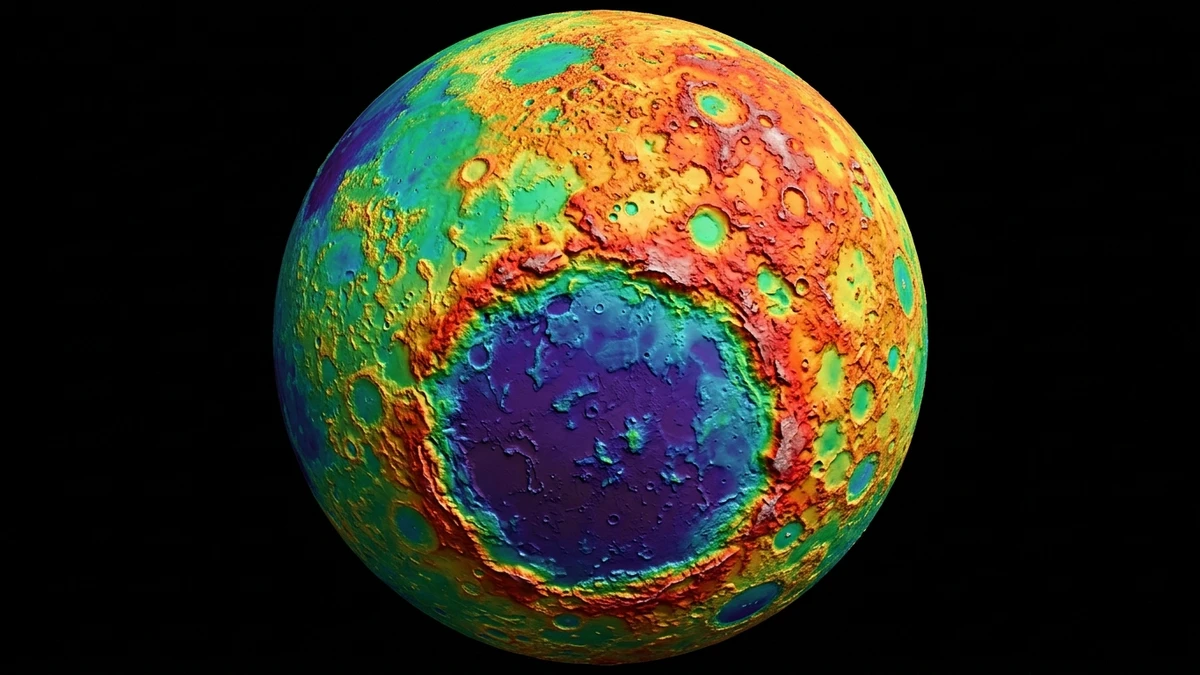
The South Pole–Aitken basin itself is worth pausing on. It's about 2,500 kilometres across and up to 8.2 kilometres deep, the biggest and oldest confirmed impact scar on the Moon and one of the largest anywhere in the solar system. It formed roughly 4.33 billion years ago, some 400 million years before the bombardment was supposed to start.
And here's the important bit. The Apollo crater sits well outside Imbrium's reach, so rocks collected there have never been contaminated by the event that muddied the near side record. For the first time, scientists had a clean second opinion.
What the Chang'e-6 Far Side Moon Rocks Actually Show
The Chang'e-6 far side samples show no burst of impacts 3.9 billion years ago. Of 21 dated fragments, only two fall in the window the Late Heavy Bombardment requires. The rest spread thinly across billions of years, which points to a steady decline in impacts rather than a sudden catastrophe.
A team led by Wan-Feng Zhang at the Guangzhou Institute of Geochemistry, part of the Chinese Academy of Sciences, picked out 28 fragments of impact melt from the returned material. Impact melt is rock that was liquefied by the heat of an asteroid strike and then froze solid again, so its age tells you when the strike happened. Twenty-one of the fragments gave reliable dates.
They used argon-argon dating, the same technique that produced the original 3.9-billion-year cluster in the Apollo samples. That choice was deliberate. Use the same method on uncontaminated rocks and you get a fair comparison rather than an argument about instruments.
The technique works because potassium in the rock slowly decays into argon, a gas that gets trapped in the crystal structure as the rock cools. Heat the rock past about 400°C and the argon escapes, wiping the clock. So a fragment reading 4.33 billion years has sat undisturbed and unheated for 4.33 billion years, which is a demanding thing for a rock to manage.
The results run from 4.33 billion years old down to 1.13 billion. And the headline finding is an absence.
Here's what the 21 dated fragments look like:
- 1 fragment at 4.33 billion years. Matches the age of the South Pole–Aitken basin itself.
- 3 fragments at 4.16 billion years. Matches the formation of the Apollo crater.
- Only 2 fragments, about 10%, between 4.0 and 3.7 billion years. This is the window the bombardment needs to be crowded.
- A gap between 3.7 and 3.0 billion years. No large basin-forming impacts at all.
- Scattered smaller impacts down to 1.13 billion years. The tail end of a long decline.
That's not a spike. It's a slow fade, which is what you'd expect from a young solar system gradually sweeping up its own leftover rubble.
One nice detail: to confirm a fragment really came from an asteroid rather than a volcano, the team measured iridium. Iridium is scarce in the Moon's crust but common in asteroids, and one fragment came back at nearly 440 parts per billion. It's the same chemical fingerprint that first revealed the asteroid that killed the dinosaurs in Earth's rocks.
A second team at the Institute of Geology and Geophysics reached the same conclusion by an entirely different route, counting crater densities on the surface around the landing site and recalibrating them against the new ages. Two independent methods landing on the same answer is what makes this result hard to wave away.
Mark Harrison, the UCLA geochemist who argued a decade ago that the Apollo evidence didn't hold up, put it plainly to Science News: "The mood in the room has changed. The paradigm is shifting, or has shifted."
Look at the craters this argument is built on
Kit we've tested and reviewed in full
Mare Imbrium, the impact at the centre of this whole debate, is the big dark oval in the Moon's upper left. You can pick it out with your eyes alone, and binoculars turn it into a proper landscape. Our 2026 Moon calendar has the best dates for craters near the terminator.

Steady enough to hold by hand and sharp enough to show Imbrium, Copernicus and the Apennine mountains along the terminator.
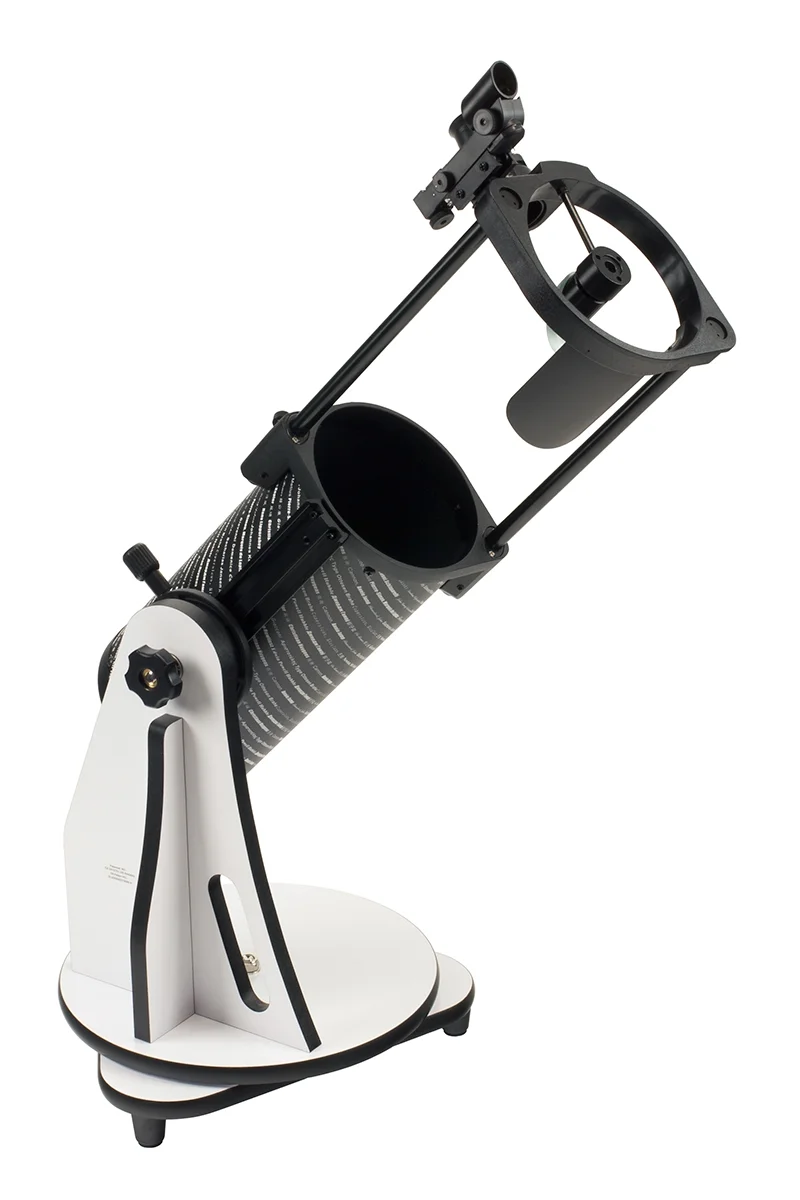
Brings out crater floors, central peaks and ejecta rays. The best sub-£200 way to see impact geology for yourself.

Astro Essentials ND96 Moon Filter
A full Moon through a telescope is genuinely dazzling. This cuts the brightness so you can pick out detail.
Affiliate links: you pay the same price, we earn a small commission that helps keep WatchTheStars free.
Where Scientists Still Disagree About the Findings
This is not a closed case, and the researchers quoted in the coverage are careful to say so.
Simone Marchi, a planetary scientist at the Southwest Research Institute in Colorado, accepts that the old data were compromised by Imbrium. But he points out that Chang'e-6 sampled one location. Drawing conclusions about impacts across the whole solar system from a single spot on one hemisphere of one moon is a stretch, however clean that spot is.
Harrison raised a different concern. Some of the fragments, he thinks, lack the physical features he'd expect from impact melt, and might be ordinary volcanic rock instead. If so, their argon ages record when lava cooled rather than when an asteroid hit. That wouldn't rescue the bombardment, since the absence of a 3.9-billion-year cluster stands either way, but it would change what the individual dates mean.
Both objections point the same way. What's needed now is more far side rock, collected from other basins and checked against different dating methods. That's coming. China's Chang'e-7 is due in the second half of this year, aiming a hopping probe at the rim of Shackleton crater near the lunar south pole to look for water ice. Chang'e-8 follows around 2029. And NASA's Artemis programme is heading for the same polar region, where crews will be walking over the very geology this argument is about.
What It Means for the Origin of Life on Earth
Two things follow from this, and neither of them is really about the Moon.
The first is dating. Planetary scientists work out the age of surfaces on Mars, Mercury and the asteroids by counting craters and comparing the density against lunar rocks of known age. The Moon is the ruler everything else is measured with. If that ruler was calibrated on samples skewed by one impact, then ages across the solar system could be out by hundreds of millions of years.
The second is more personal. The bombardment was the main reason for believing life couldn't have got started on Earth before about 3.8 billion years ago. A surge of giant impacts on that scale would repeatedly boil off oceans and sterilise the surface, so anything that had begun would be wiped out and forced to start again.
Take the surge away and that constraint goes with it. Instead of a young Earth being smashed flat every few million years, you get a planet cooling steadily while impacts tail off, with a much longer stretch of quiet in which chemistry could do its slow work. The window for life's beginnings widens back towards 4.2 billion years and possibly further.
That isn't proof life started earlier. It removes the reason for saying it couldn't.
See the Moon's Impact Scars From the UK
Here's the part I like. The single impact at the heart of a fifty-year scientific argument is visible from your back garden tonight.
Mare Imbrium is the large dark oval in the Moon's upper left as you look at it from the UK. You can see it without any equipment at all. Through binoculars it becomes a flooded plain ringed by mountains, with the Apennine range curving along its southeastern edge. That's the rim of the crater Imbrium punched out, and it's where Apollo 15 landed.
The best time to look is not the full Moon, when everything is flattened by glare, but a few days either side of first or last quarter. Along the terminator, the line between lunar day and night, the low sun throws long shadows and craters stand up in relief. Our 2026 Moon calendar lists the dates.
What you'll never see, of course, is the other half. The Moon is tidally locked, so the same face has stared at us for billions of years. We only learned what the far side looked like in 1959, when Luna 3 sent back a handful of grainy photographs. Sixty-five years later, a lander scooped up two kilograms of it, brought it home, and started rewriting the history of the solar system.
Not bad for a bag of rocks.
Sources:
- Far-Side Moon Rocks Challenge the Late Heavy Bombardment · Tech Times
- Zhang et al., Science Advances (23 July 2026) · Science Advances
- Yue et al., Lunar chronology model with the Chang'e-6 farside samples · Science Advances
- New Lunar Samples Challenge the "Late Heavy Bombardment" · Universe Today
- Boehnke & Harrison, Illusory Late Heavy Bombardments (2016) · PNAS
- What is the Late Heavy Bombardment? · NASA
- Samples From China's Chang'e Mission Rewrite Moon's Violent History · Sixth Tone
Frequently Asked Questions
Equipment guides
Related topics
Ian ClaytonAmateur astronomer and founder of WatchTheStars.co.uk, dedicated to helping others explore the wonders of our universe. Full profile →