Key takeaways
- NASA Administrator Jared Isaacman held a Moon Base briefing on 30 June 2026 to announce the next round of commercial lunar lander awards and preview upcoming missions
- The Moon Base is a roughly $30 billion, three-phase plan to build a permanent base near the Moon's south pole, replacing the cancelled Lunar Gateway station
- The first robotic missions (Moon Base I, II and III) are meant to deliver rovers and science payloads before any astronauts arrive
- Two new Moon rovers from Astrolab and Lunar Outpost must drive at least 900 km and survive a year on the surface, far beyond anything Apollo managed
- Artemis IV, targeted for early 2028, is set to be the first crewed Moon landing since Apollo 17 in 1972: a 56-year gap
Jump to section 7 sections
- What Did NASA Announce About the Moon Base?
- NASA Moon Base Plan: How the Whole Thing Works
- The First Moon Base Missions: I, II and III
- The New Moon Rovers From Astrolab and Lunar Outpost
- Why NASA Is Building the Moon Base at the Lunar South Pole
- Blue Origin's New Glenn Explosion and the Moon Base Delay
- When Will NASA Land Astronauts on the Moon Again?
What Did NASA Announce About the Moon Base?
NASA's plan to build a permanent base on the Moon took another step forward today. On the afternoon of Tuesday 30 June 2026, Administrator Jared Isaacman hosted a live briefing to share where the Moon Base programme has got to, alongside Carlos García-Galán, the man running it day to day.
The headline was a fresh round of awards for new lunar lander missions. These are the commercial spacecraft that will fly NASA's cargo, science kit and rovers down to the surface in the run-up to astronauts returning. It follows the first batch of rover and lander contracts that NASA signed back in May, and it widens the field of companies now building hardware for the Moon.
If you have lost track of where NASA's Moon plans stand right now, you are not alone. The programme has changed shape twice in the past year. So before we get into the new missions, here is the simple version of what the Moon Base actually is.
NASA Moon Base Plan: How the Whole Thing Works
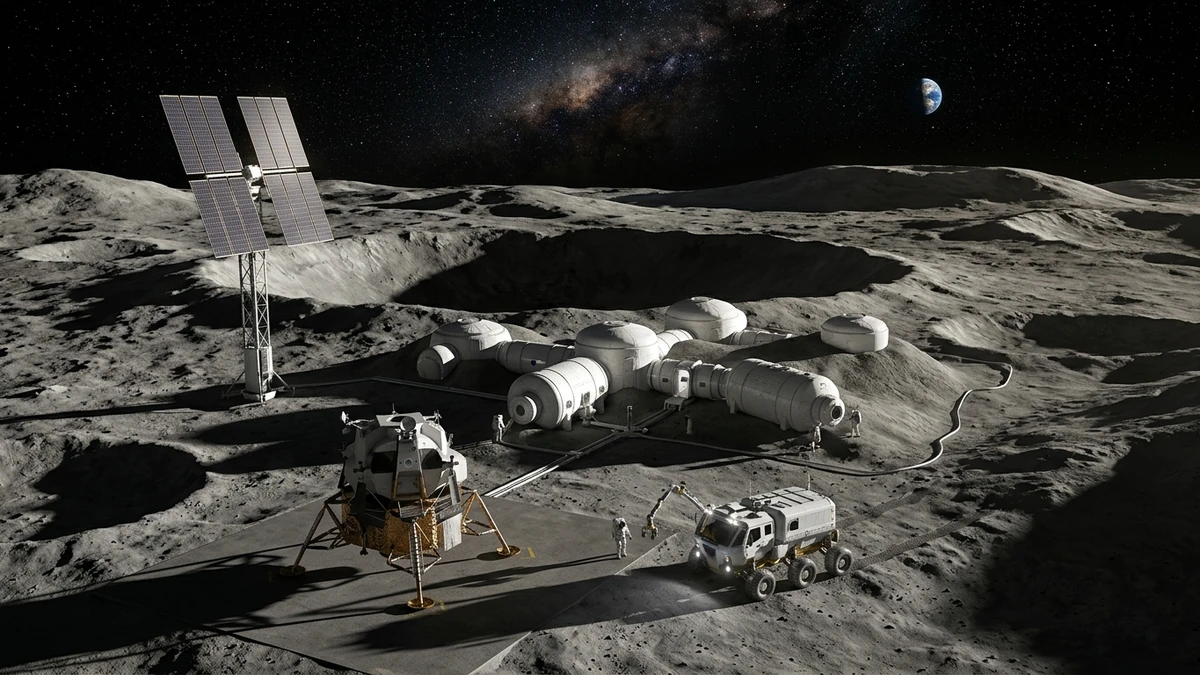
For most of the last decade, NASA's plan for the Moon centred on a small space station called Gateway, which would orbit the Moon and act as a staging post. In March 2026, Isaacman paused that idea and pointed everything at the surface instead. The new goal is a base, on the ground, near the Moon's south pole.
The Moon Base is a big, long programme. The full plan is estimated at around $30 billion and runs in three phases, each costing roughly $10 billion and each lasting several years.
Phase one, which runs through 2028, is all about robots. NASA wants a steady stream of landers and rovers reaching the surface to scout the terrain, test technology and drop off science instruments before any crew arrives. Phase two, from about 2029 to 2032, brings the first habitats and the start of regular crewed visits to the south pole. Phase three, from 2033 onwards, is the ambitious bit: a semi-permanent human presence, a small nuclear power station to keep the lights on through the long lunar night, and machinery that can mine water ice and turn it into fuel and air.
García-Galán summed up the scale of the ambition at the May event. "We envision the Moon Base to be hundreds of square miles," he said. This is not a single hut on the surface. It is meant to grow into something closer to a small industrial site.
The First Moon Base Missions: I, II and III
The early robotic missions are numbered simply: Moon Base I, II and III. Each one rides on a different company's lander, which is deliberate. NASA wants several suppliers competing rather than betting everything on one.
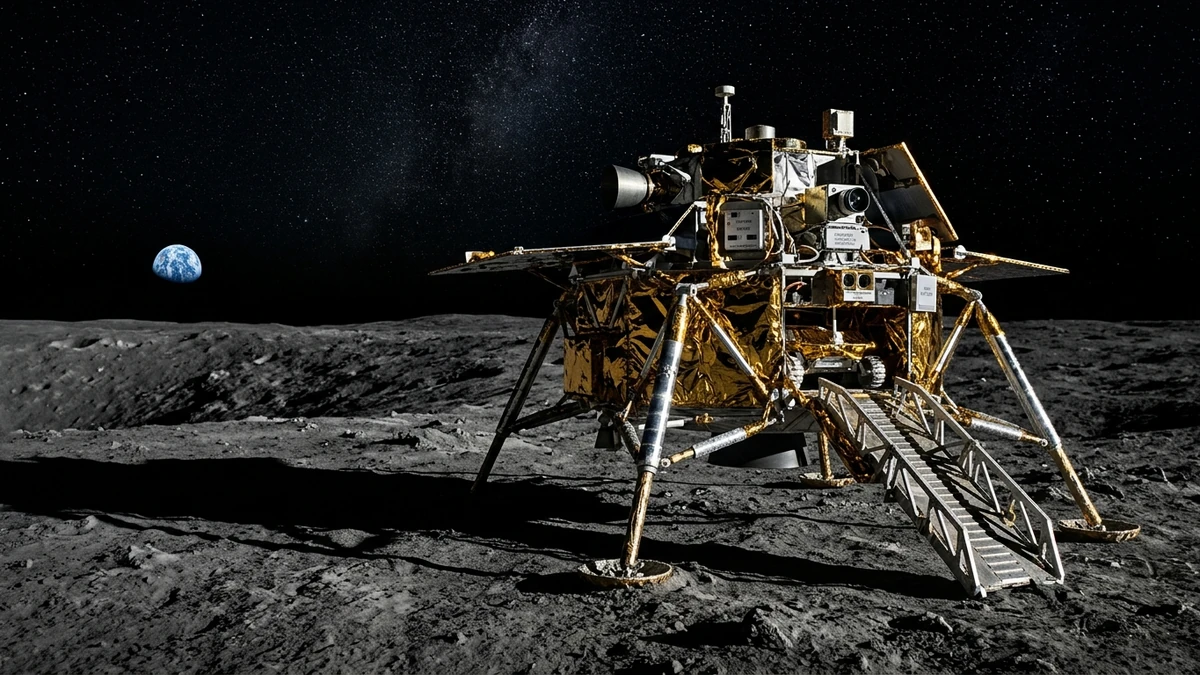
Moon Base I is set to fly on Blue Origin's Blue Moon Mark 1 lander and head for a spot called the Shackleton Connecting Ridge. It carries instruments to study how a lander's engine kicks up dust as it touches down, which matters a lot when you are planning to land people there later. Moon Base II is due to fly on Astrobotic's Griffin lander, launched by a SpaceX Falcon Heavy, carrying more than 1,100 pounds of cargo including a small rover to test how machines get around. Moon Base III is set to fly on Intuitive Machines' Nova-C Trinity lander, with a science package that includes a study of the Moon's strange "swirls" and instruments contributed by the European Space Agency and the Korea Astronomy and Space Science Institute.
That last detail is worth holding onto. Europe has a real stake in this, which is reassuring after Gateway, where Europe's planned role largely vanished when the station was shelved.
The New Moon Rovers From Astrolab and Lunar Outpost
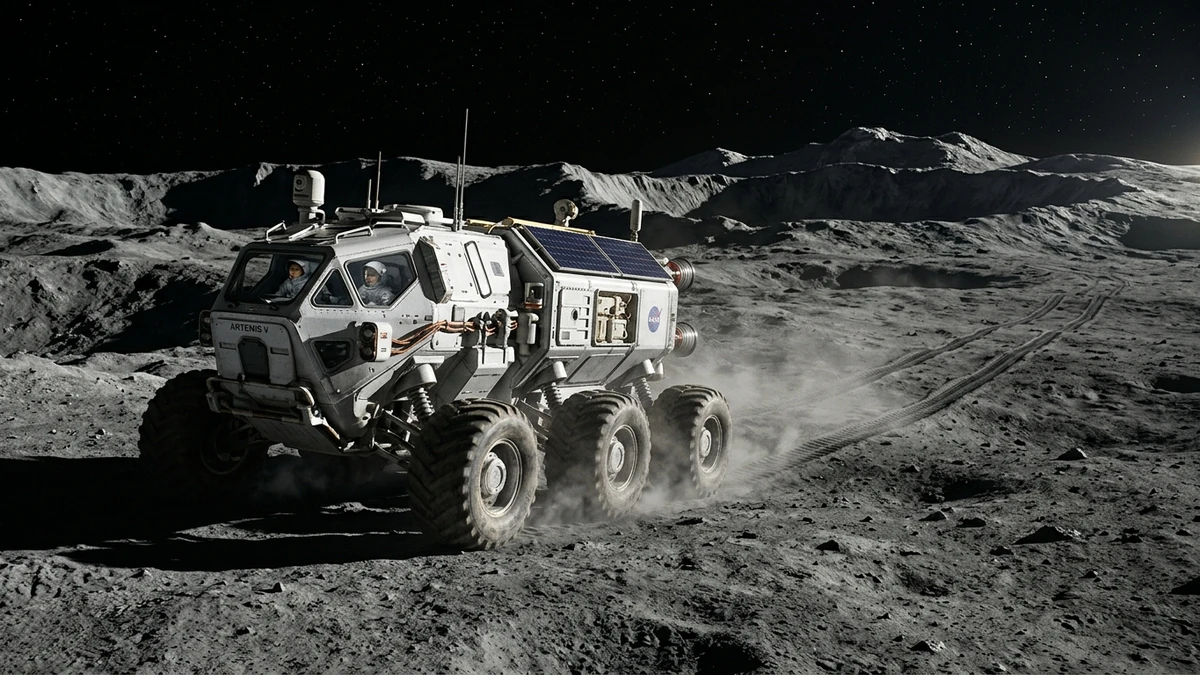
Some of the most eye-catching hardware is the new generation of Moon rovers. In May, NASA awarded two contracts worth around $220 million each to Astrolab and Lunar Outpost to finish building crewed lunar terrain vehicles and get them to the surface.
These are a serious leap beyond the Apollo Moon buggies. Across three missions, Apollo astronauts drove a combined 56 miles. The new rovers are each required to cover at least 900 kilometres, more than fifteen times that total, and to keep working for at least a year. They also have to do three jobs: carry astronauts when crew are present, be driven remotely from Earth in between visits, and find their own way around when nobody is steering at all.
Lunar Outpost's rover, named Pegasus, was built with help from General Motors and Goodyear and has a driving range of about 560 miles on a charge, roughly a full tank in a family car, except on the Moon. Astrolab's vehicle folds down small enough to fit inside a lander, then unfolds to four metres long once it is on the surface. Both are meant to land before the first crew, mapping the ground and pre-positioning supplies so the astronauts arrive to a site that is already partly prepared.
Want a closer look at the Moon yourself?
Kit we've tested and reviewed in full
You cannot see a Moon Base from your garden, but you can study the very region NASA is heading for. The Moon's south pole sits along the bottom edge of the disc, and even modest kit brings its craters and mountains to life.
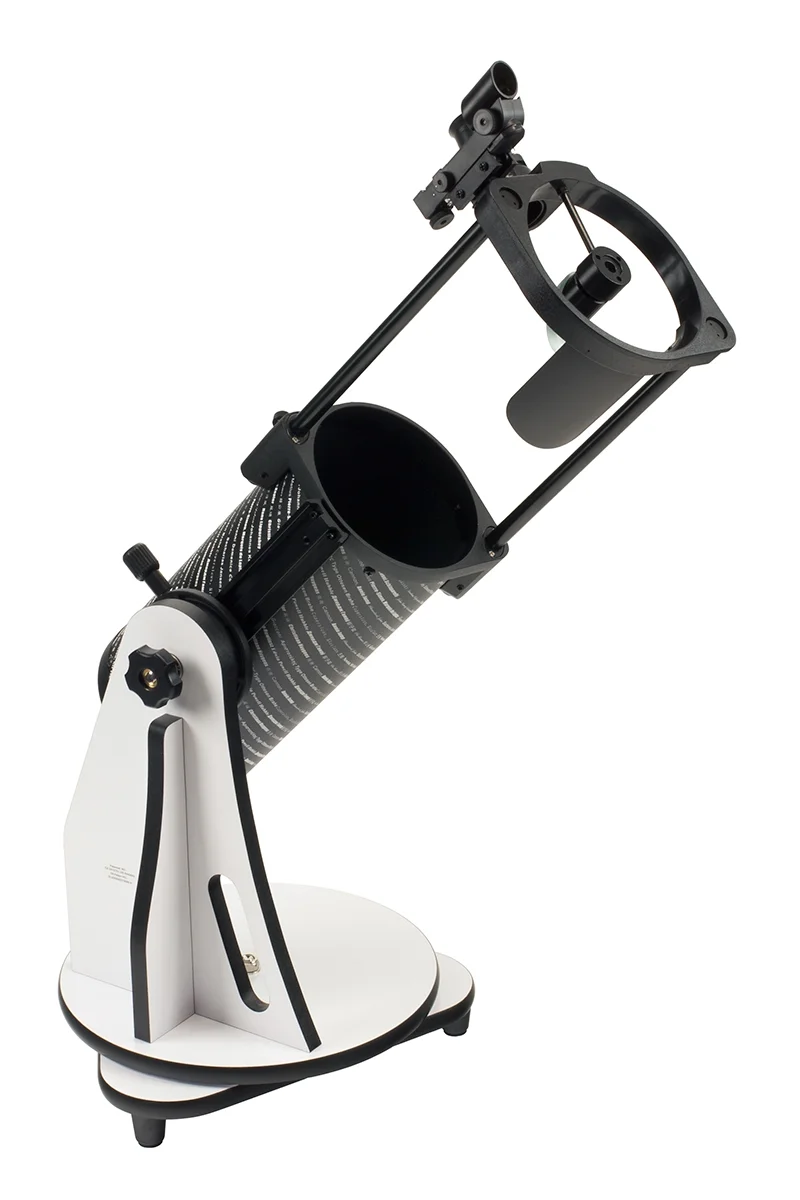
A compact tabletop telescope that shows the craters and ridges along the lunar terminator in lovely detail. The best first scope for the Moon on a budget.

Big 70mm binoculars that reveal the Moon's larger craters and dark seas, and double up nicely for sweeping the Milky Way on a clear night.
Affiliate links: you pay the same price, we earn a small commission that helps keep WatchTheStars free.
Why NASA Is Building the Moon Base at the Lunar South Pole
Every part of this plan points at one small region: the Moon's south pole. That is not a coincidence, and it is not just about the view.
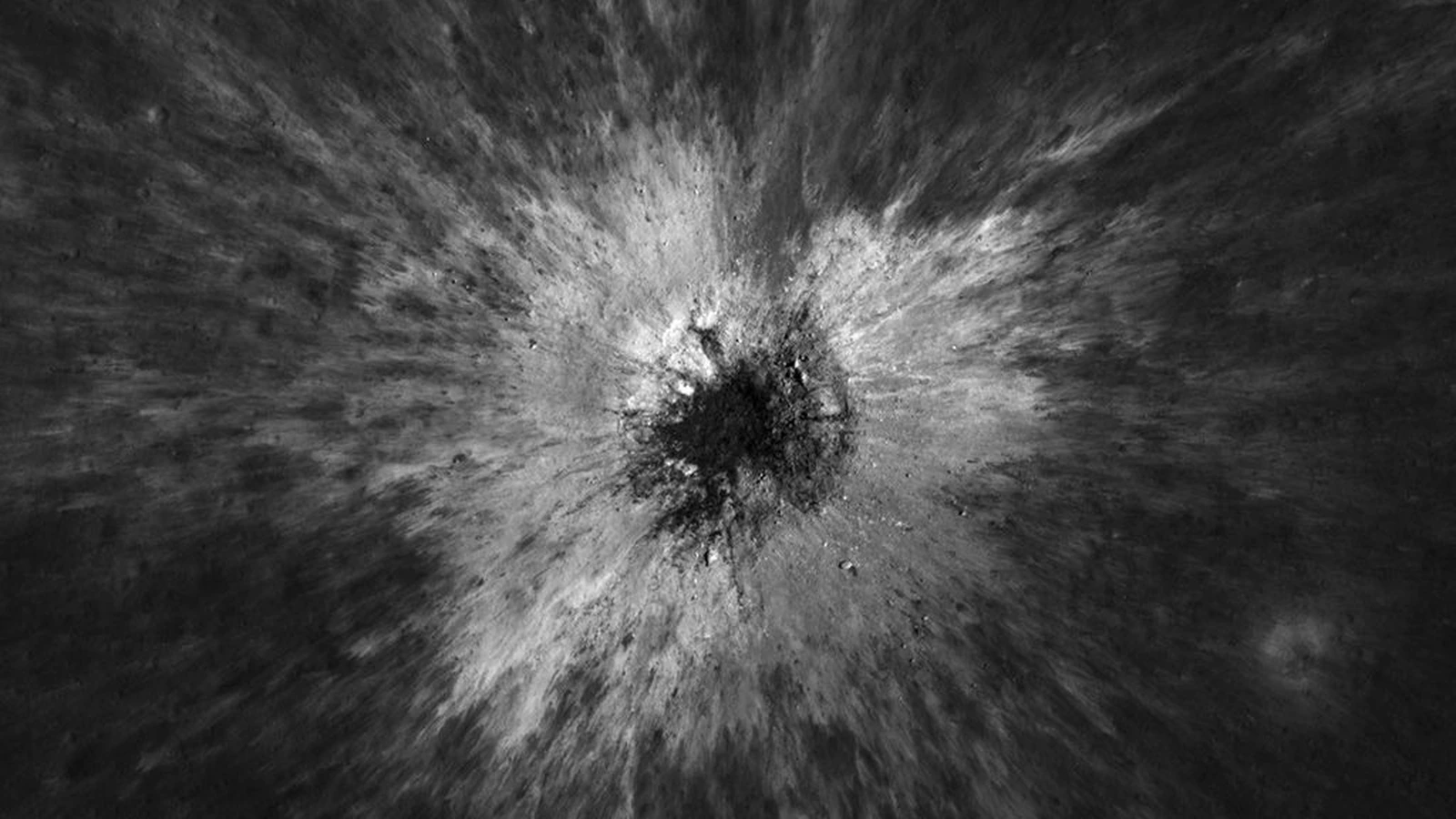
Tucked inside craters near the pole, in spots that have not seen sunlight for billions of years, there is water ice. Several orbiting missions have confirmed it. That ice is the whole reason the south pole matters. Melt it and you have drinking water. Split it apart and you get oxygen to breathe and hydrogen and oxygen for rocket fuel.
This is the idea behind a clunky phrase you will hear a lot: in-situ resource utilisation, or ISRU. It simply means making what you need from what is already there. If a base can produce its own water, air and fuel, you no longer have to launch every drop of it from Earth at enormous cost. The Moon stops being just a destination and starts being a filling station for journeys further out, Mars included.
That is also why the south pole has become crowded in the plans of every major space agency. Everyone wants the same shoreline of ice.
Blue Origin's New Glenn Explosion and the Moon Base Delay
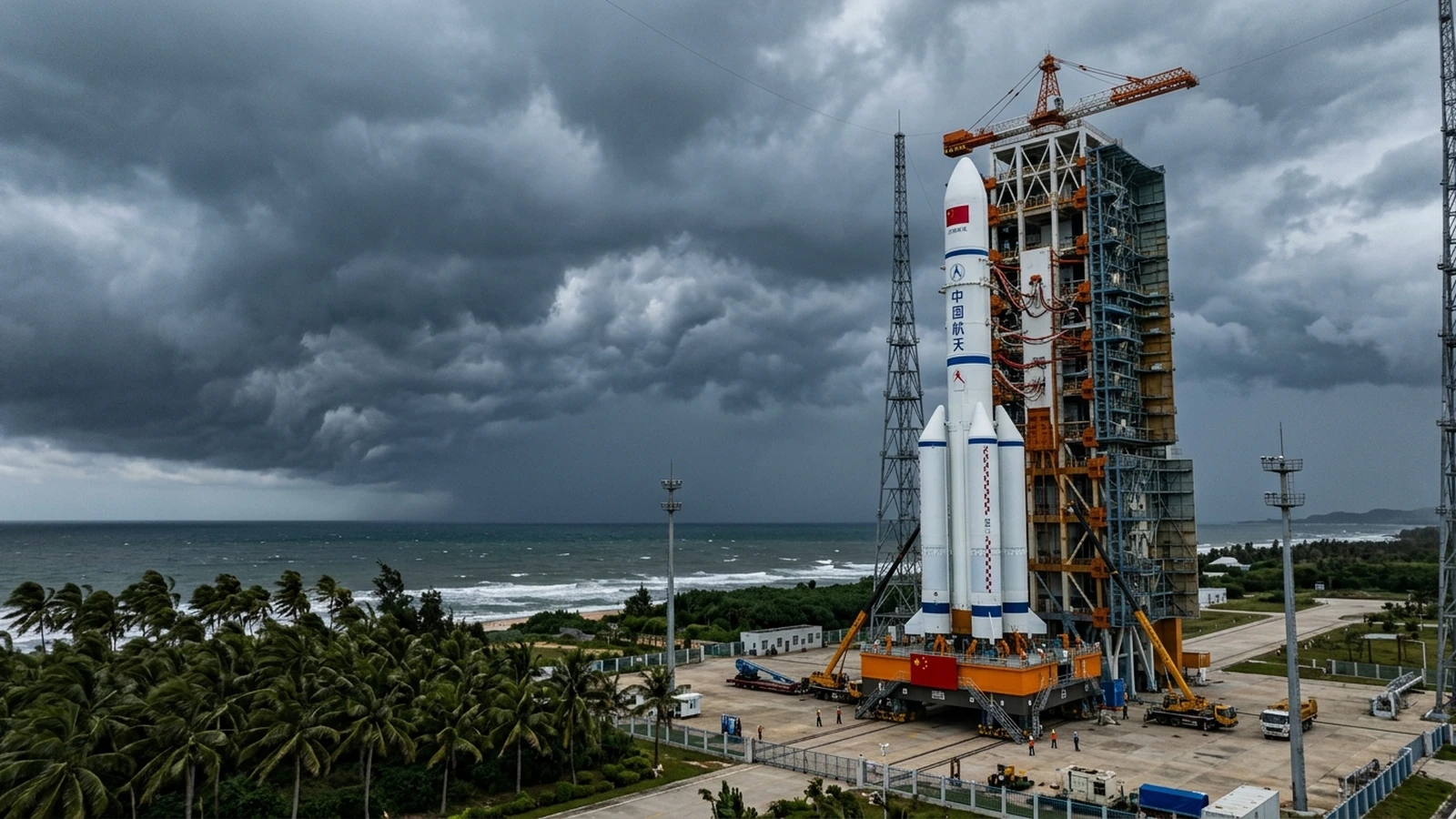
It has not all gone smoothly. Three days after NASA announced the first Moon Base contracts in May, Blue Origin's New Glenn rocket exploded during a ground test at Cape Canaveral, destroying the company's only launch pad and triggering an investigation.
That is a problem, because New Glenn is the rocket meant to launch Moon Base I. With the pad gone, the first mission has slipped from its original autumn 2026 target. Isaacman has since talked about Blue Origin's deliveries landing in a "2028 time frame," and the company's boss, Dave Limp, now expects the lander to fly in early 2027 rather than this year.
Blue Origin has moved fast on the rebuild and cleared the wrecked pad within days, and its lander engine recently passed its longest ever test firing, so the work is continuing. Helpfully, the other two missions are not affected. Moon Base II and III both launch on SpaceX rockets and are still aiming for this year.
When Will NASA Land Astronauts on the Moon Again?
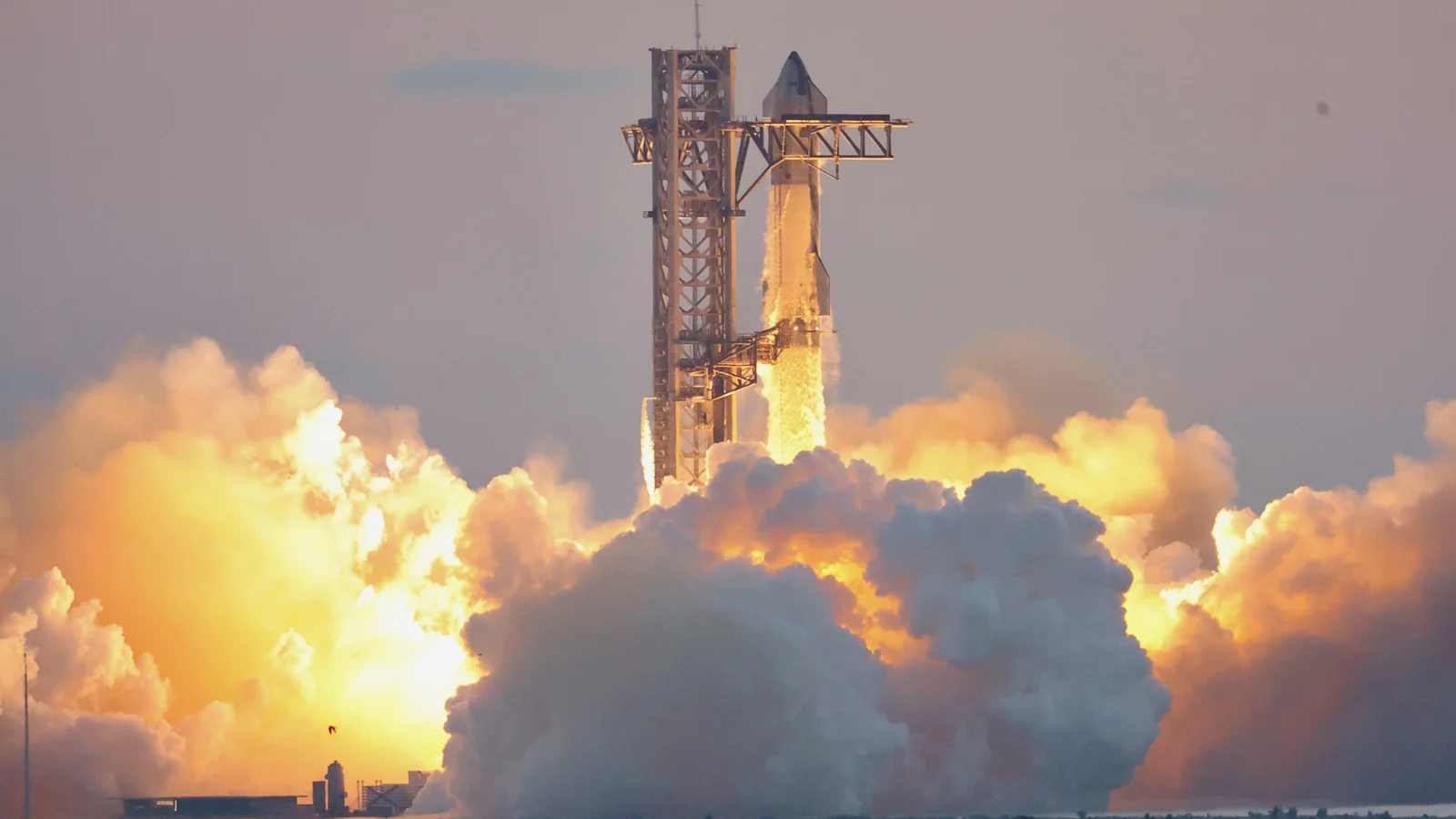
This is the question most people actually want answered, so here it is plainly. The next crewed Moon landing is Artemis IV, targeted for early 2028.
There is a step before it. Artemis III, in late 2027, will carry a crew but stay in Earth orbit, where the astronauts will dock with the new commercial landers to make sure they work before anyone trusts them to reach the surface. It is the same careful approach NASA took with Apollo 9 before Apollo 11. Find the faults close to home. We covered that mission and its crew, including the first European pilot, in our Artemis III crew announcement.
If Artemis IV holds, it will end a remarkable gap. No human has stood on the Moon since Apollo 17 in December 1972. By 2028 that is 56 years, longer than most people reading this have been alive.
A note of honesty to finish on. Every American president since the Space Shuttle has promised a return to the Moon, and every timeline so far has slipped. The biggest cloud over this one is money: NASA's proposed budget for 2027 would cut its funding by almost a quarter, and Congress has already pushed back. Isaacman's own line is that "success or failure will be measured in months, not years." Today's briefing was another sign the hardware is genuinely coming together. Whether the funding holds up long enough to finish the job is the part still being written.
The Moon Base grew out of NASA's wider Artemis programme. Here's the background on how it all fits together.
Why NASA Cancelled Its Moon Space Station →
Sources:
- NASA to Share Latest Moon Base Mission Progress · NASA
- NASA Provides Update on Moon Base Rovers, Landers, Missions · NASA
- NASA selects four companies for initial moon base awards · SpaceNews
- NASA Moon Base Briefing Tuesday: New Lander Contracts Signal 2028 Return to Lunar Surface · Tech Times
- NASA outlines nearly $1 billion investment into initial Moon Base missions · Spaceflight Now
Frequently Asked Questions
Equipment guides
Related topics

Ian ClaytonAmateur astronomer and founder of WatchTheStars.co.uk, dedicated to helping others explore the wonders of our universe. Full profile →