Key takeaways
- Mars passes closest to the Pleiades on the morning of Monday 29 June 2026, sitting about 4.4° from Alcyone, the cluster's brightest star
- Look low in the east-northeast in the hour or so before sunrise: roughly 3.30am to 4.15am BST from the UK
- Mars and the Pleiades fit in the same binocular view, which is the best way to see this pairing
- Mars is faint for a planet right now (magnitude 1.3) because it's on the far side of its orbit, so the low altitude makes binoculars worth having
- This is the closest Mars–Pleiades meeting until 2034, though the two stay near each other from 23 June to 2 July
Jump to section 6 sections
Mars and the Pleiades: The Closest Pairing Until 2034
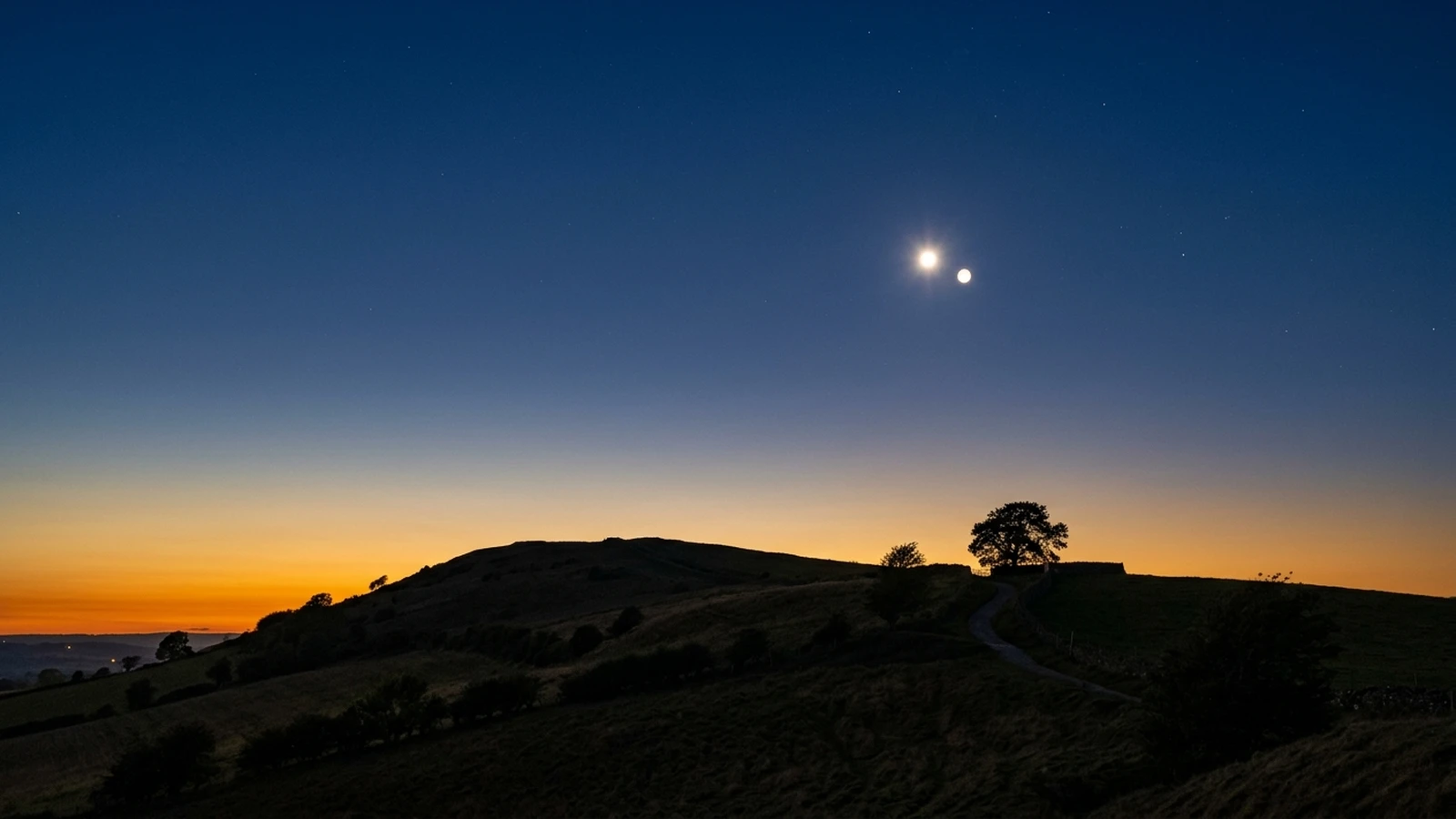
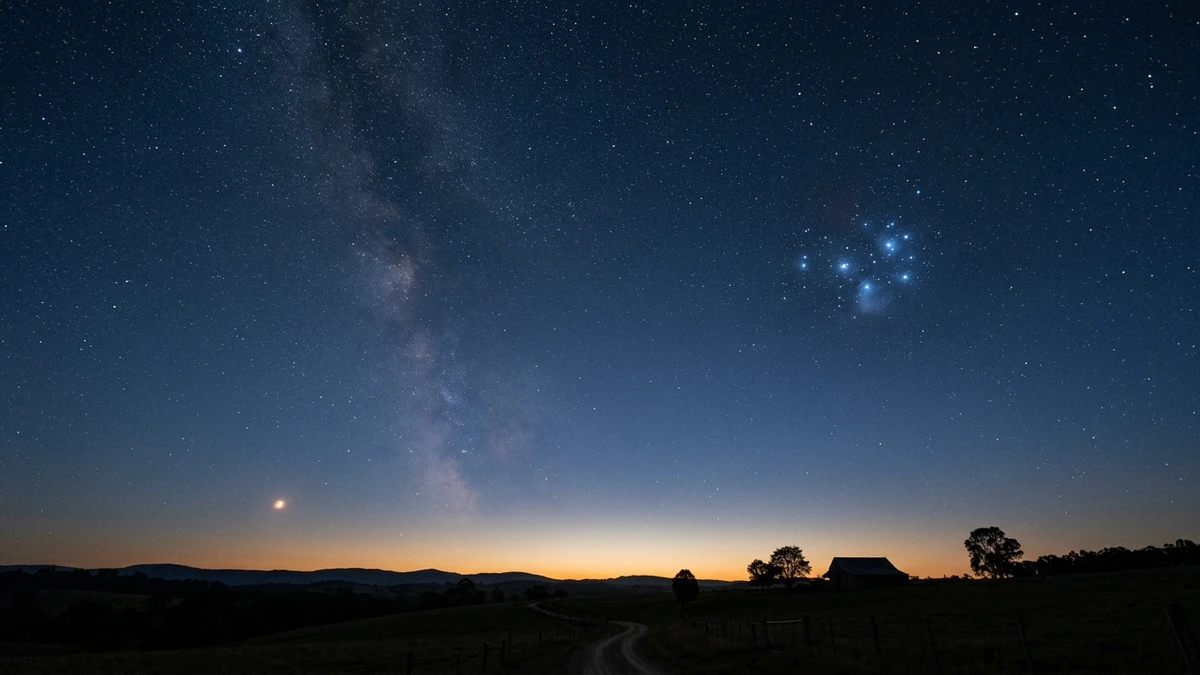
For the next few mornings, the Red Planet is sitting right next to one of the prettiest sights in the whole sky. Mars has been creeping up on the Pleiades, the little cluster of blue stars also known as the Seven Sisters, and this morning, Monday 29 June 2026, it makes its closest pass. The two are about 4.4° apart, roughly the width of three fingers held at arm's length.
It's the kind of pairing that makes you stop on your way to the car. A warm orange spark of a planet, parked beside a sparkling clump of blue-white stars. They've got nothing to do with each other really (Mars is a few light-minutes away, the Pleiades are over 400 light-years off) but lined up like this they look like they belong together.
There's a reason to make the effort too. Mars only lines up nicely with the Pleiades like this every few years, and this is the closest the two will appear until 2034. Miss it and you're waiting the best part of a decade for another easy view. The good news is you've got a small window of mornings to play with, not just one.
When and Where to See Mars and the Pleiades From the UK
This is an early-morning sight, not an evening one, so set an alarm. Mars and the Pleiades rise in the east-northeast in the small hours and climb through the dawn twilight. You want to be looking in the hour or so before sunrise, which from the UK means roughly 3.30am to 4.15am BST.
The thing to watch for is height. Right at first you'll find the pair very low, and low sky is murky sky. Give them time to lift to about 10° up: that's a clenched fist held out at arm's length, resting on the horizon. By around 4am they're high enough to pick out cleanly, but the sky is also brightening fast by then, so it's a balancing act between altitude and twilight.
Two things matter more than anything else here. First, a clear, low horizon to the east-northeast: a hilltop, a beach, an open field, anywhere without trees and rooftops in the way. Second, the weather, which is the usual British gamble. If Monday morning clouds over, the pairing holds up well from about the 27th right through to the 2nd of July, so any clear morning that week will show Mars sitting close to the cluster.
One honest word of warning. This isn't a blazing, can't-miss event like a bright Venus. Mars is on the far side of its orbit at the moment and only shines at magnitude 1.3, which is fainter than the planet at its best. Combine that with the low altitude and the short, bright summer nights, and it's a sight that rewards a bit of effort and a pair of binoculars rather than a quick glance out the window.
How to Find Mars Next to the Pleiades
The Pleiades are your anchor, so find them first. Even in twilight the cluster shows up as a small, misty smudge of stars: not a single point, but a little tight knot, almost like a tiny dipper. Plenty of people have mistaken it for a faint patch of cloud. Once you've locked onto that, Mars is the lone reddish "star" close beside it, steadier and warmer in colour than anything around it.
If you're not sure which way is east-northeast, a phone compass sorts it in seconds. Face that way, look low, and sweep slowly upward. This is exactly the moment binoculars earn their keep: a standard 10x50 pair shows a field of view a little wider than 6°, so Mars and the Pleiades drop into the same circle together, the planet glowing on one edge and the cluster's stars scattered like sparks on the other. It's genuinely one of the best binocular scenes of the summer.
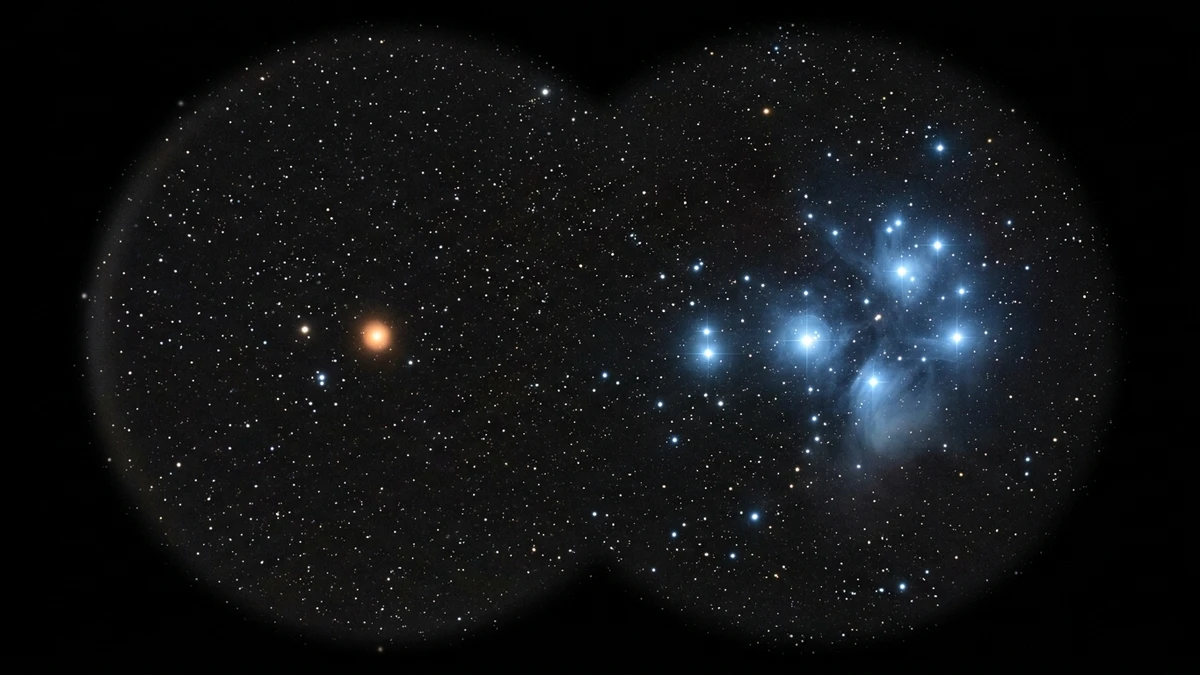
Binoculars for this one
Kit we've tested and reviewed in full
Mars and the Pleiades are made for binoculars: the pair fits in one field of view, and a bit of light-gathering pulls faint Mars out of the bright dawn sky. These are the three we'd grab before heading out.
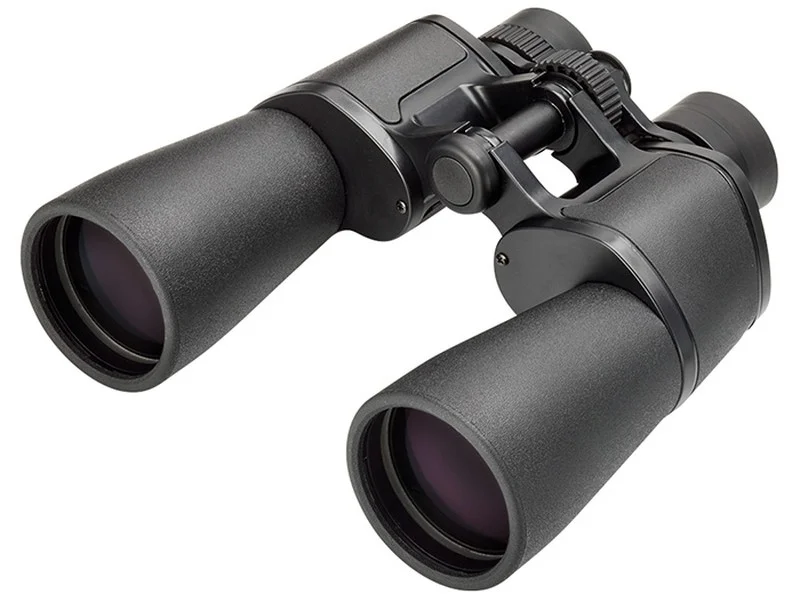
A wide field fits Mars and the whole cluster in one view, and the 50mm lenses gather enough light to lift faint Mars out of the twilight. Light enough to hand-hold, and the binocular most often recommended to UK beginners.
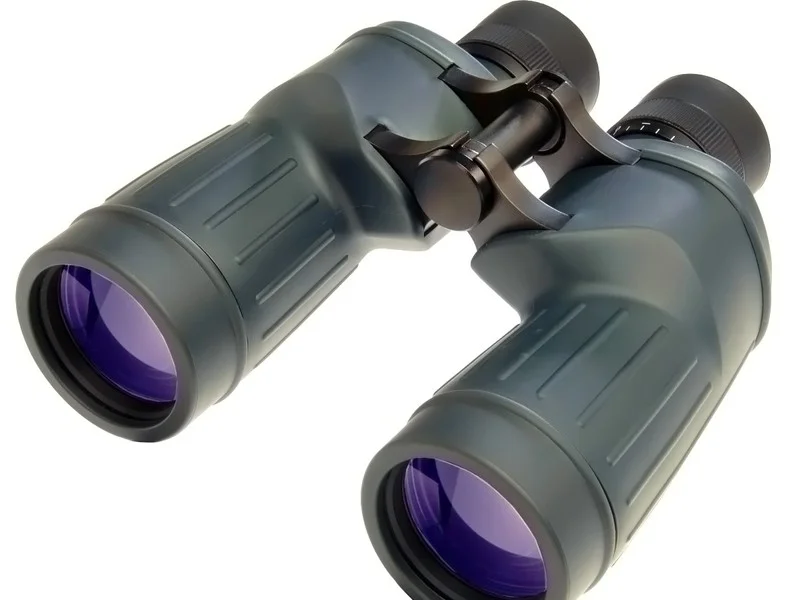
A step up in contrast and edge sharpness, so the Pleiades resolve into crisp blue points rather than a soft blur, and Mars holds its colour cleanly. The pick if you want one pair of astronomy binoculars to last years.
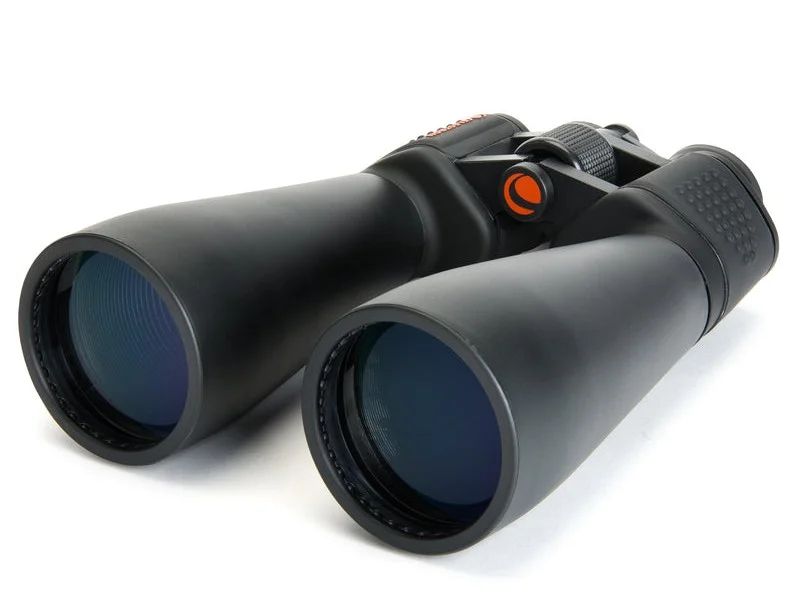
The big 70mm lenses really help with a faint, low target like Mars, and 15× pulls the Pleiades in close. You'll want a tripod at this power, especially this low to the horizon.
Affiliate links: you pay the same price, we earn a small commission that helps keep WatchTheStars free.
What Are the Pleiades, the Seven Sisters?
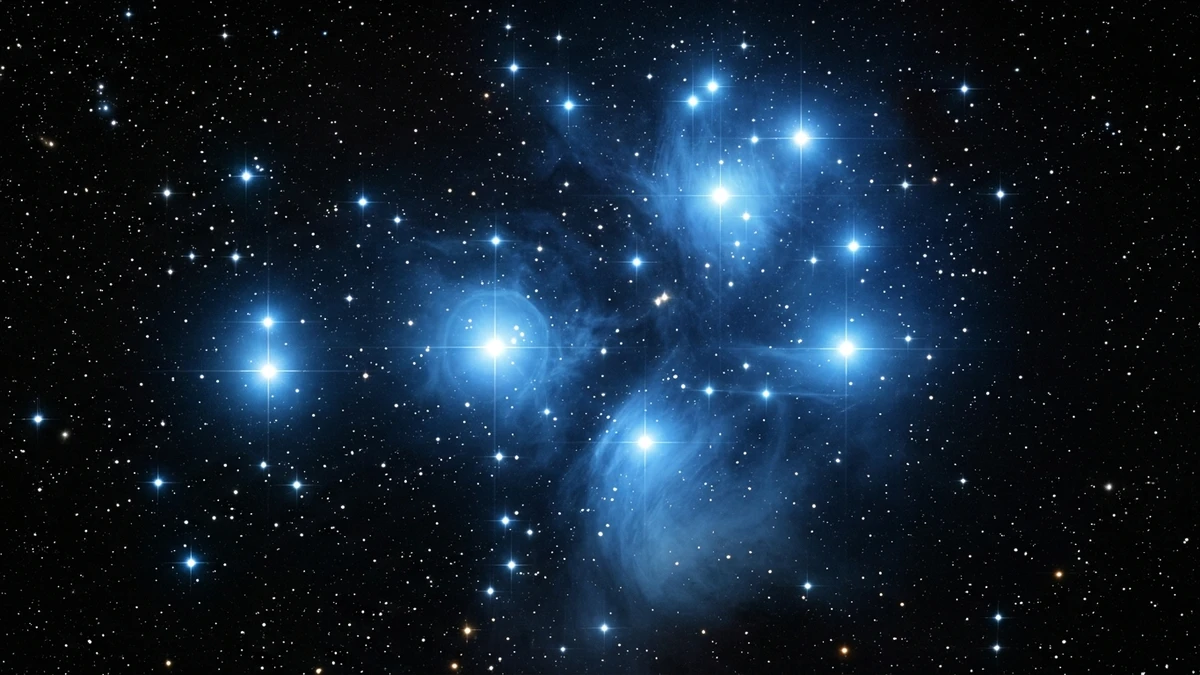
The Pleiades are a cluster of young stars about 440 light-years away, in the constellation Taurus. Most people can pick out six or seven stars with the naked eye, which is where the old name the Seven Sisters comes from, but the cluster actually holds well over a thousand stars all born from the same cloud of gas. They're young as stars go: only around 100 million years old, babies next to our middle-aged Sun.
That youth is why they look blue. The brightest Pleiads are hot, fast-living stars, and hot stars burn blue-white. Look closely through binoculars and you might even catch a faint haze around them, the last wisps of the cloud they formed in, lit up like mist around a streetlamp.
The cluster turns up all over human history. It's in Greek myth as the seven daughters of Atlas, on the Subaru badge (Subaru is the Japanese name for the cluster), and in countless cultures as a marker of the changing seasons. Few sights are as widely recognised, which is part of what makes having Mars drop in beside it such a treat.
Why Mars Looks Red and the Pleiades Look Blue
The colour contrast is the best part of this pairing, and it comes down to two completely different reasons.
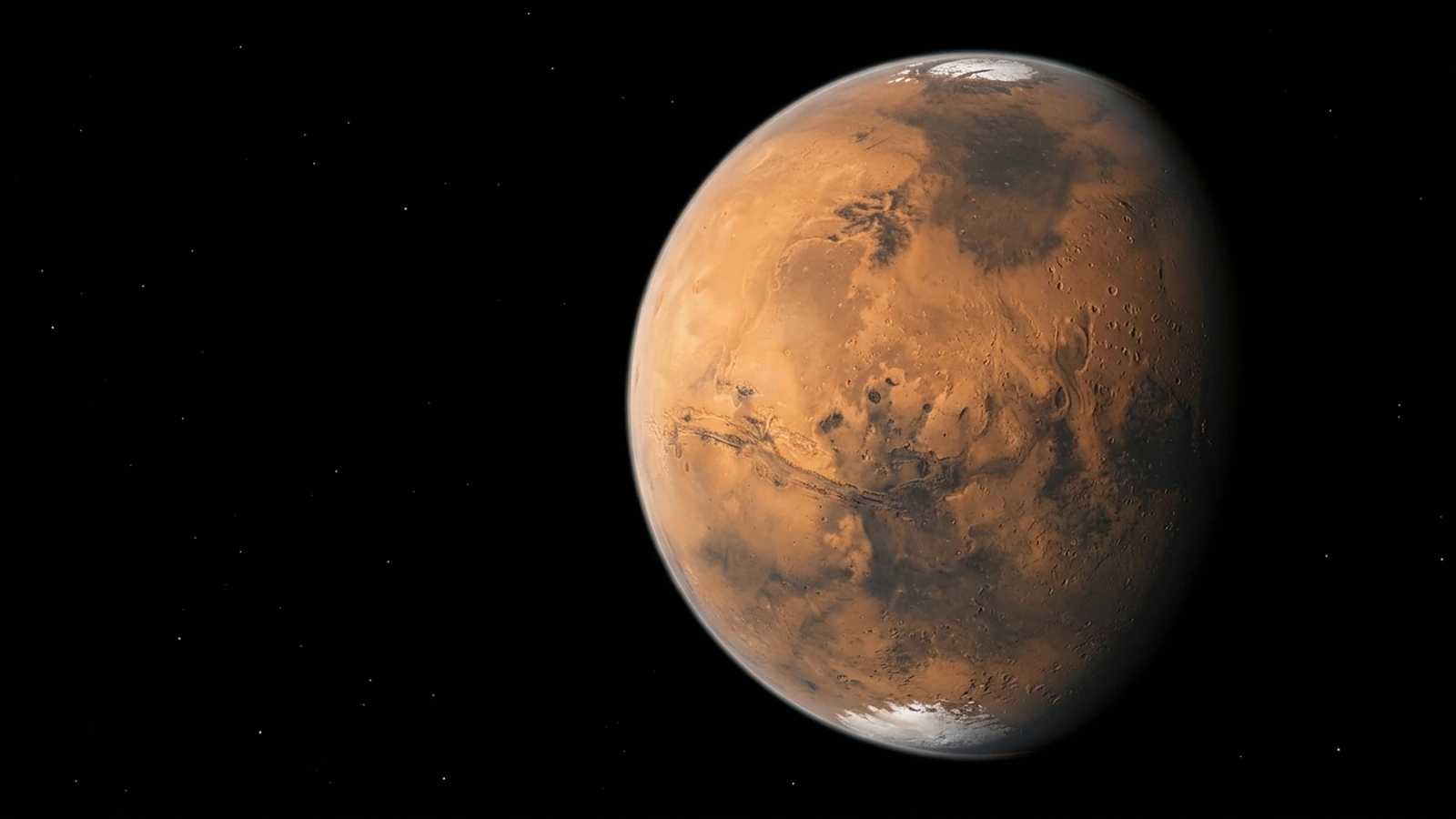
Mars looks red because of its dirt. The surface is covered in iron-rich dust that's basically rusted, and that rust is what gives the planet its warm orange tint. You're seeing reflected sunlight bouncing off a rusty desert the size of a continent. The Pleiades, on the other hand, make their own light. They look blue because the stars themselves are blisteringly hot, and the hotter a star burns, the bluer its light.
So in one little patch of dawn sky you've got a cool, reflective, rusty planet next door to a nursery of hot blue stars, and they happen to be the two classic colours of the night sky sitting side by side. It's the sort of thing that looks even better when you know why.
After This Week: Where Mars Goes Next
Mars doesn't hang around. Over the coming mornings it slides on past the Pleiades and heads towards Aldebaran, the orange eye of Taurus, drifting a little further east each day. By early July it sits between the Pleiades and Aldebaran, two famous landmarks at once, and on 4 July it has a close pass with Uranus for anyone with binoculars and a clear sky.
The planet is slowly climbing back into the morning sky after months of being lost in the Sun's glare, and it'll keep brightening through the rest of the year as Earth gradually catches up with it again. For the full picture of where to find it month by month, see our guide to observing Mars throughout 2026.
And if you'd rather a sight that doesn't need a 4am alarm, our complete UK June night sky guide rounds up the bright planets on show in the evening too.
Clear skies, and if you do get up for it, the early start is worth it.
Sources:
- Mars passes the Pleiades, 23 June–2 July 2026, When the Curves Line Up
- The Sky Today, Saturday 27 June: Mars meets the Pleiades, Astronomy.com
- Closest Mars–Pleiades conjunction, EarthSky
- June night sky events 2026, National Geographic
Frequently Asked Questions
Equipment guides
Related topics
Ian ClaytonAmateur astronomer and founder of WatchTheStars.co.uk, dedicated to helping others explore the wonders of our universe. Full profile →