Key takeaways
- June's full Strawberry Moon peaks at 23:57 UTC on 29 June 2026, just after midnight (00:57 BST) on 30 June for the UK
- As the first full moon after the summer solstice, it rides the lowest arc of any full moon all year for the Northern Hemisphere
- Skimming low across the south, its light passes through more atmosphere, which is why it so often glows warm gold or orange
- No equipment needed: it's a naked-eye sight, but a clear, unobstructed view to the south is essential
- The name comes from North American tradition marking June's wild strawberry harvest. It's not about the Moon's colour
Jump to section 7 sections
When the Strawberry Moon Peaks
June's full Moon, the Strawberry Moon, reaches peak fullness at 23:57 UTC on 29 June 2026, which for the UK lands just after midnight, at 00:57 BST on 30 June. In practice that means the Moon looks completely, convincingly full across the evenings of the 28th, 29th and 30th, so a single cloudy night won't rob you of the show.
It's one of the gentler full Moons of the year (no eclipse, no dramatic supermoon size) but it has a quiet distinction all of its own. This is the lowest full Moon of the year for everyone in the Northern Hemisphere, and that single fact shapes everything about how it looks: where to find it, why it so often glows gold, and why a clear southern horizon matters more than usual.
If you stepped outside for last week's summer solstice, this is the same piece of celestial geometry playing out in reverse, and it's well worth a look.
Why It's the Lowest Full Moon of the Year
The reason comes down to a simple rule: a full Moon always sits directly opposite the Sun in the sky. When the Sun is high, the full Moon is low, and vice versa.
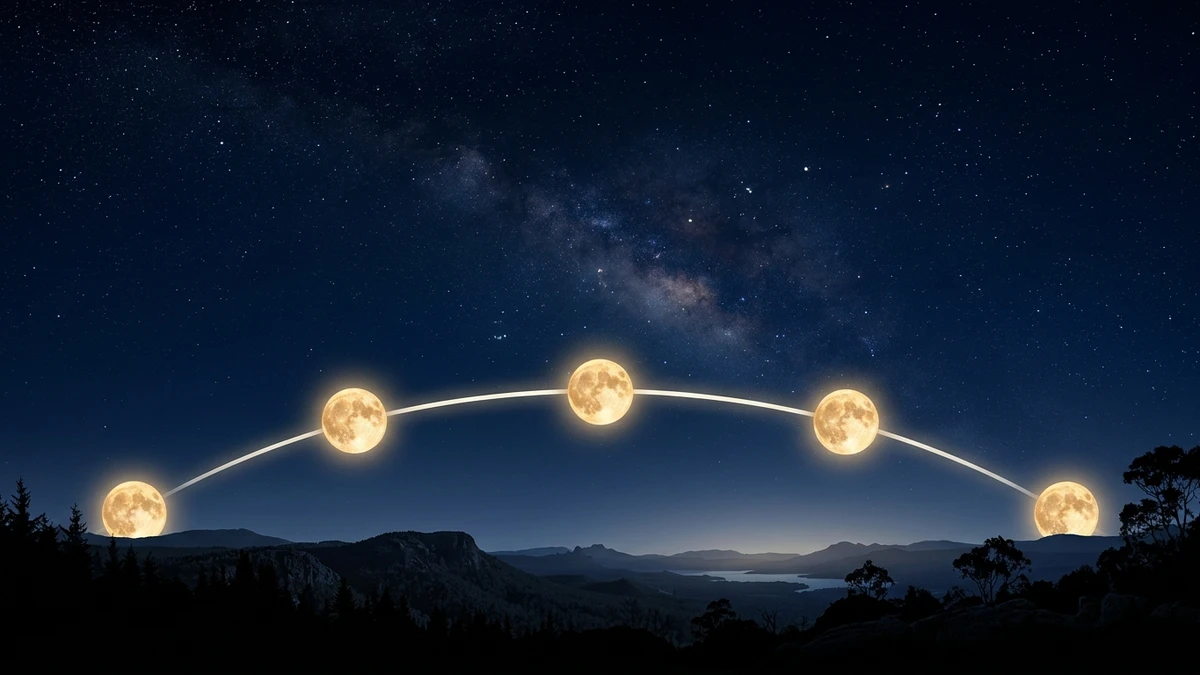
We've just passed the summer solstice on 21 June, the day the Sun climbs higher and stays up longer than at any other time of year. So when the Moon turns full barely a week later, it does the precise opposite of that towering summer Sun: it traces the lowest, shortest, flattest arc of any full Moon in 2026. It never climbs far above the southern horizon, and it's above the horizon for fewer hours than a winter full Moon.
This is the exact mirror image of December, when the full Moon soars high overhead through the long winter nights. From the UK's northern latitudes the effect is pronounced, and it's even more extreme the further north you are. From southern England the Strawberry Moon reaches perhaps 10–15° above the horizon at its highest; from Scotland, less still. That low path is the whole character of this Moon, and it's a neat reminder that the Moon's monthly journey is tied to the same seasonal rhythm as the Sun. (If the Moon's changing height and phase are new to you, our guide to how Moon phases work is a good companion read.)
Why It Looks Golden or Orange
The Strawberry Moon's name is pure folklore, not a colour forecast, but this Moon really does have a habit of looking warm, and there's solid physics behind it.
When the Moon hangs low, its light reaches your eyes through a far thicker slice of Earth's atmosphere than when it's high overhead. That thick air scatters away the shorter, bluer wavelengths and lets the longer reds, oranges and golds through: the very same effect that paints sunsets red. Because the Strawberry Moon never gets high, it spends the entire night beaming through that low, light-bending air, so it can hold a honey-gold or amber tint for hours rather than just at moonrise.
Add a little summer haze, distant cloud or moisture near the horizon and the colour deepens further. You may also notice the famous "Moon illusion": when the Moon sits near the horizon next to rooftops, hills and trees, your brain reads it as enormous, even though a ruler held at arm's length would prove it's no bigger than usual. A low Moon is a photogenic Moon, and this is about as low as a full Moon gets.
How and When to Watch From the UK
This is one of the most effortless sights in stargazing. There's no narrow window to catch and nothing to set up: just look south to south-east as the sky darkens.
For UK observers, the key timings are roughly:
- Moonrise: around 9:30–10:30pm BST on 29 June, low in the south-east
- Best viewing: late evening into the small hours, when the Moon is at its (modest) highest in the south
- Moonset: before dawn in the south-west
The single most important thing this month is your horizon. Because the Strawberry Moon stays so low, a hedge, a terrace of houses or a line of trees to the south can hide it completely. Pick a spot with an open southern view (the top of a hill, a south-facing coast, or any clear vista) and you'll be richly rewarded. A low Moon framed by a recognisable landscape is far more striking than a high one lost in a blank sky.
Like May's Blue Moon micromoon, this is a low, southern, golden Moon, so the same advice applies: get somewhere with a clean horizon and let the landscape do the framing.
Binoculars for the Strawberry Moon
Kit we've reviewed in full
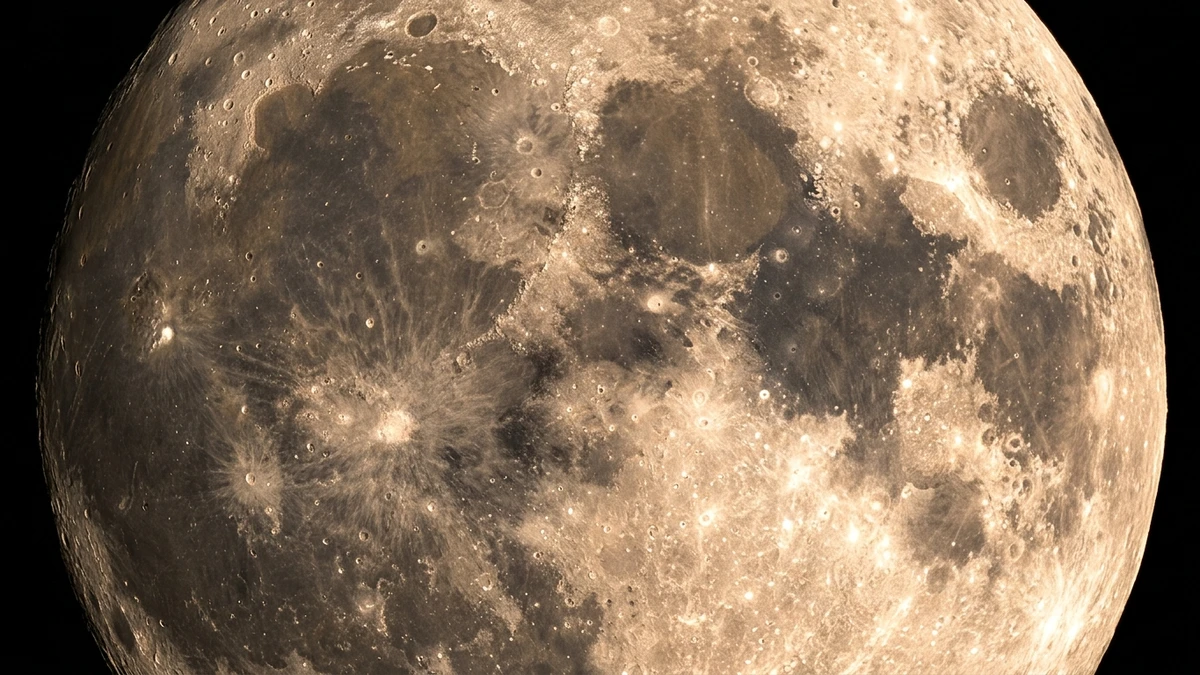
The full Moon is a naked-eye sight, but binoculars are what turn it into a proper session: the dark maria and bright cratered highlands jump out, and a low, golden Moon looks magnificent through a decent pair. These are the three we'd reach for.
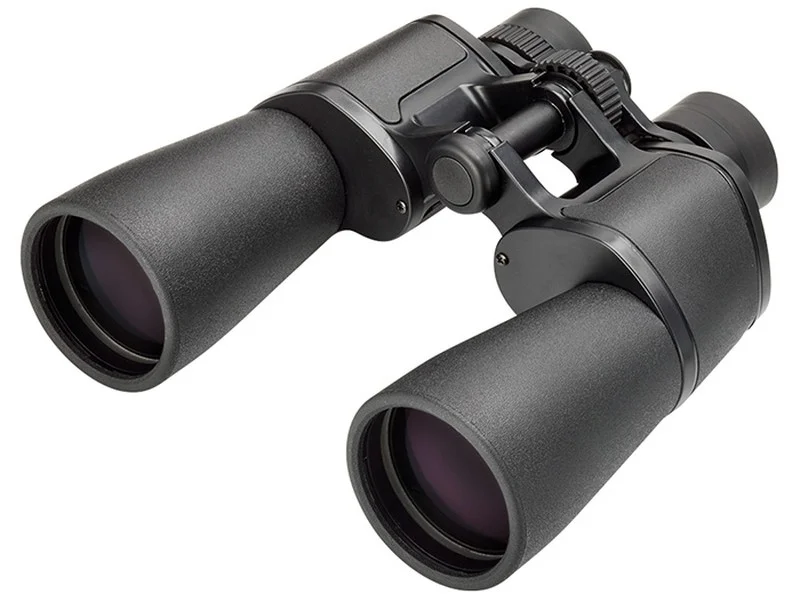
A wide field and light-gathering 50mm lenses show the Moon's face beautifully, picking out the great dark seas and the bright rays around Tycho. Light enough to hand-hold, and the most-recommended starter binocular in UK astronomy communities.
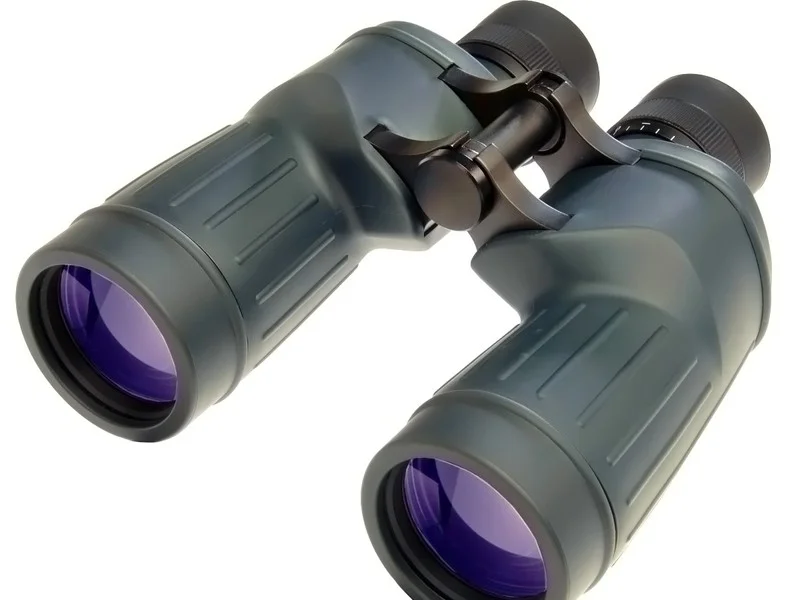
A step up in contrast and edge sharpness: the difference shows along the Moon's terminator and in the crispness of crater rims. The pick if you want one pair of astronomy binoculars to last years.
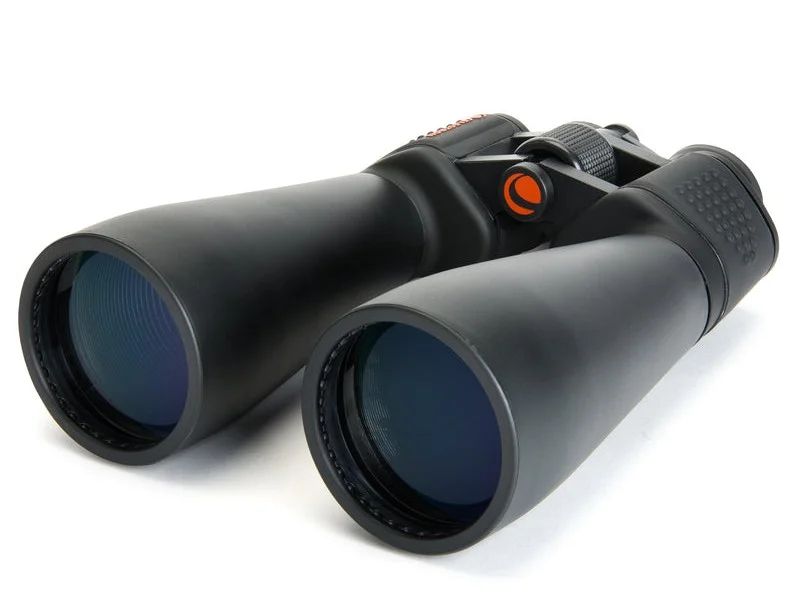
15× magnification pulls the full Moon close enough to trace individual craters and the long bright ray systems, and the big 70mm lenses make the most of a low, golden disc. You'll want a tripod at this power.
Affiliate links: you pay the same price, we earn a small commission that helps keep WatchTheStars free.
Where the Name Strawberry Moon Comes From
The name is one of the loveliest in the full-Moon calendar, and it has nothing to do with the Moon turning pink. It comes from North American tradition, widely attributed to the Algonquin peoples, marking June as the brief window when wild strawberries ripen and are ready to gather. The full Moon became a natural marker for that short harvest season.
Europe has its own names for this same Moon, and several of them lean sweet and warm: the Rose Moon, the Honey Moon and the Mead Moon all belong to June. There's a popular notion that the very word "honeymoon" traces back to this Moon and the tradition of marrying in June, a charming story, even if etymologists are divided on it.
Whatever you call it, the appeal is the same: a warm-toned Moon, low over a summer landscape, at the gentlest, most fragrant time of the year. June's is just one of twelve, our guide to the full moon names covers what every month's moon is called and why, with UK dates for 2026 and 2027. And for a deeper look at our nearest neighbour itself, our guide to the Moon covers its phases, geology and history.
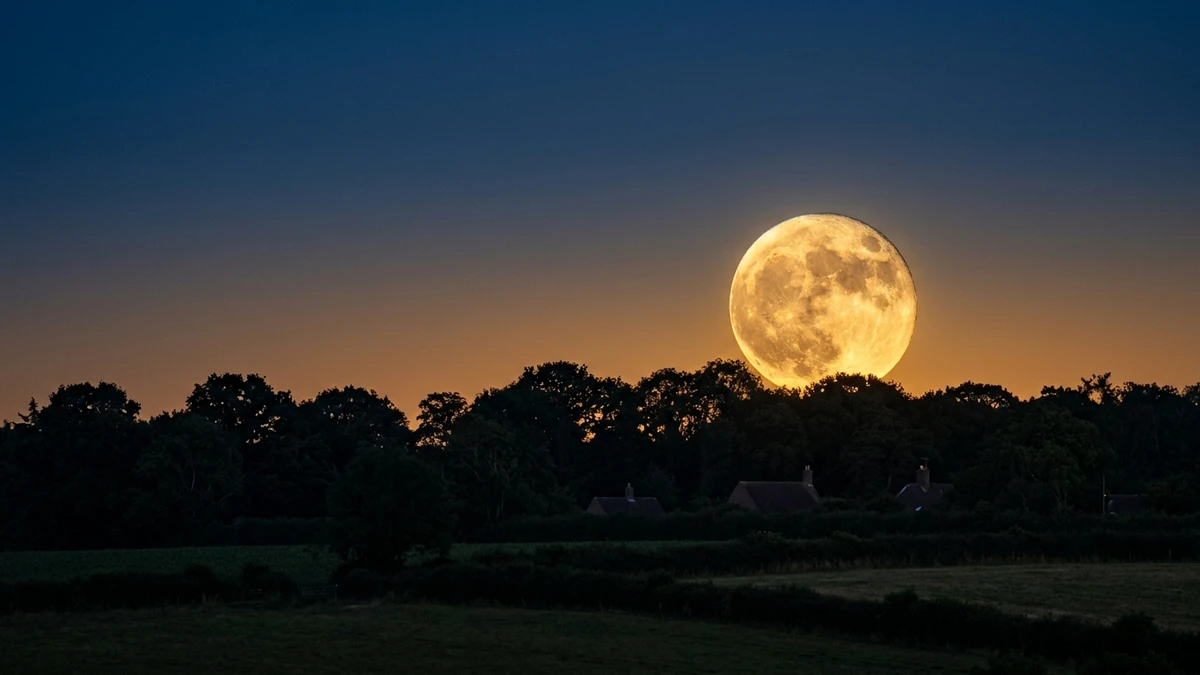
Photographing the Low Summer Moon
A low, golden Moon rising over a recognisable landscape is one of the most reliably rewarding shots in all of astrophotography, and this Moon's low path makes it an ideal subject.
For smartphone users: The trick is to lock your exposure. On most phones, tap and hold on the Moon in the viewfinder to lock focus and exposure, then drag the exposure slider down if the disc is blowing out to a featureless white blob. The Moon is far brighter than it looks, and auto-exposure almost always overdoes it.
For DSLR / mirrorless users: A solid starting point for a full Moon is ISO 100, f/8, 1/250s, then adjust to taste. If you want the Moon and a dark foreground both well-exposed, plan to blend two frames: one exposed for the landscape, one for the Moon.
Composition is everything here. Because the Strawberry Moon sits so low, you can line it up directly behind a church spire, a hilltop, a tree or a coastline. Scout your spot in advance and use an app like PhotoPills or The Photographer's Ephemeris to predict exactly where the Moon will rise: it moves faster than you expect, and the low altitude gives you that magical "Moon balanced on the rooftops" frame that a high Moon can never offer.
What's Next in the Sky
Once the Strawberry Moon has had its moment, the full Moon's path begins its slow climb back up. The next one, July's Buck Moon, will already ride a touch higher as summer deepens, and each full Moon through autumn and into winter sits higher and stays up longer, building towards the brilliant, high-riding full Moons of December.
You can find every full Moon date for the rest of the year, along with the supermoons and eclipses to watch for, in our full Moon calendar for 2026. And for everything else worth looking up for this month, including the bright planets still hanging low in the evening west, see our complete UK June night sky guide.
Clear skies, and here's hoping the great British weather gives us a clean view to the south.
Sources:
- Full Moon calendar 2026 · Royal Observatory Greenwich
- Strawberry Moon · the full Moon in June · timeanddate.com
- The Sky This Week, 26 June to 3 July 2026 · Astronomy.com
- June Full Moon 2026: Strawberry Moon date, time & meaning · Star Walk
Frequently Asked Questions
Equipment guides
Related topics
Ian ClaytonAmateur astronomer and founder of WatchTheStars.co.uk, dedicated to helping others explore the wonders of our universe. Full profile →