Key takeaways
- A spent SpaceX Falcon 9 upper stage will hit the Moon at about 06:34 UTC on 5 August 2026, near the crater Einstein on the Moon's western edge
- The rocket stage is left over from the January 2025 launch that carried the Blue Ghost and Hakuto-R landers towards the Moon
- It will strike at 5,400mph (2.43km/s), carrying roughly the energy of three tonnes of TNT, and should dig a crater around 17 metres wide
- From the UK the impact happens in daylight, so you won't see it, but astronomers across the Americas will be watching for a possible ejecta plume
- NASA's Lunar Reconnaissance Orbiter is expected to photograph the fresh crater in the weeks afterwards
Jump to section 7 sections
SpaceX Rocket Hitting the Moon: What's Happening
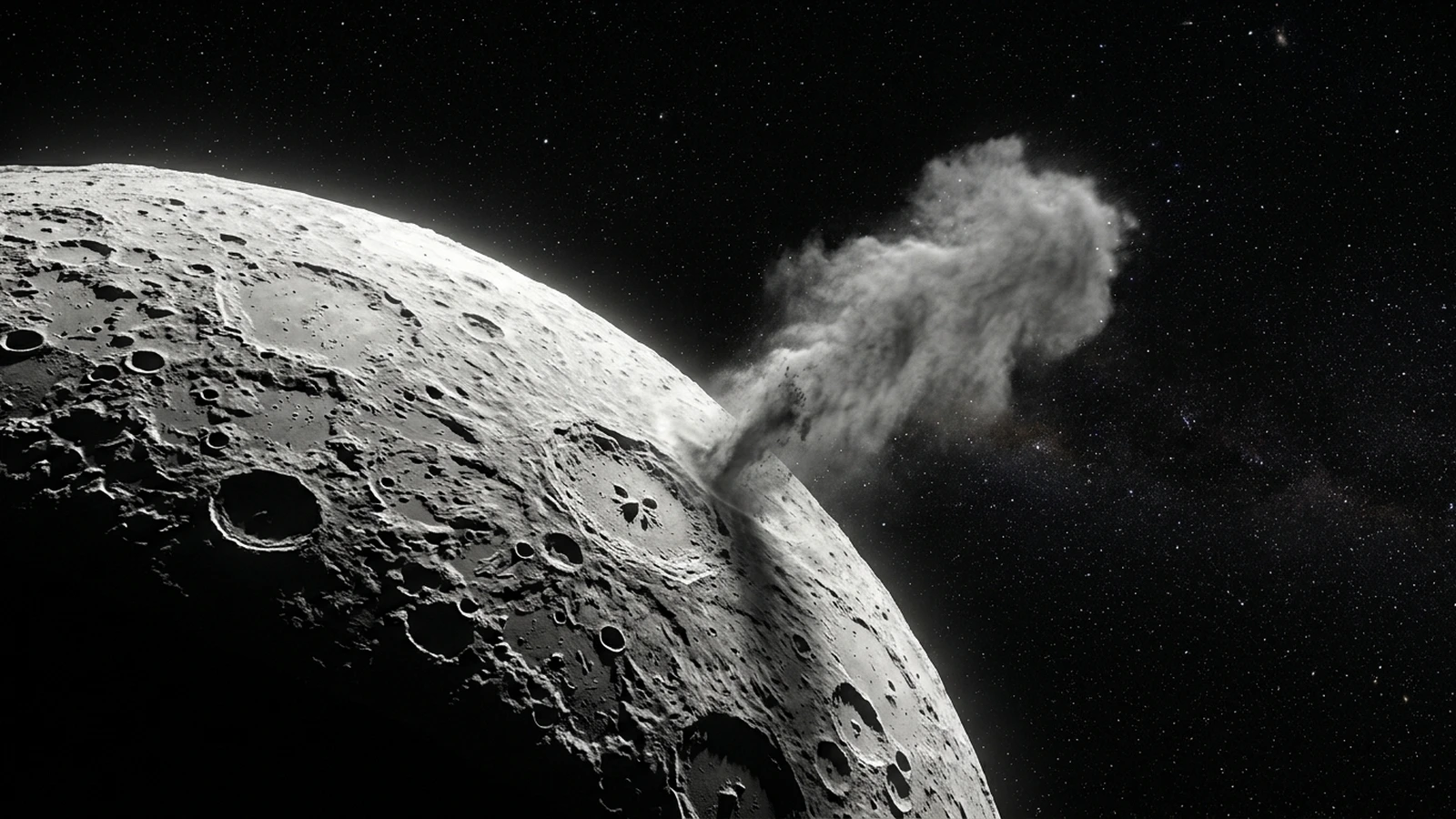
A spent SpaceX Falcon 9 upper stage will crash into the Moon at about 06:34 UTC on 5 August 2026, hitting near the crater Einstein at 5,400mph. It's not a mission and nobody planned it. It's a leftover chunk of rocket that has been quietly circling Earth for more than a year, and its looping orbit is finally about to cross paths with the Moon.
The object is the upper stage of a Falcon 9, roughly the size of a five-storey building, and it will hit at about 06:34 UTC travelling at 5,400 miles an hour. The prediction comes from Bill Gray, the astronomer behind the orbit-tracking website Project Pluto, whose software first spotted the looming collision back in September 2025.
It's a rare thing to know about in advance. We can usually only tell a rock hit the Moon after the fact, when a new crater turns up in a photo. This time astronomers have months of warning, a predicted time and place, and telescopes ready to watch.
Where the Falcon 9 Rocket Came From
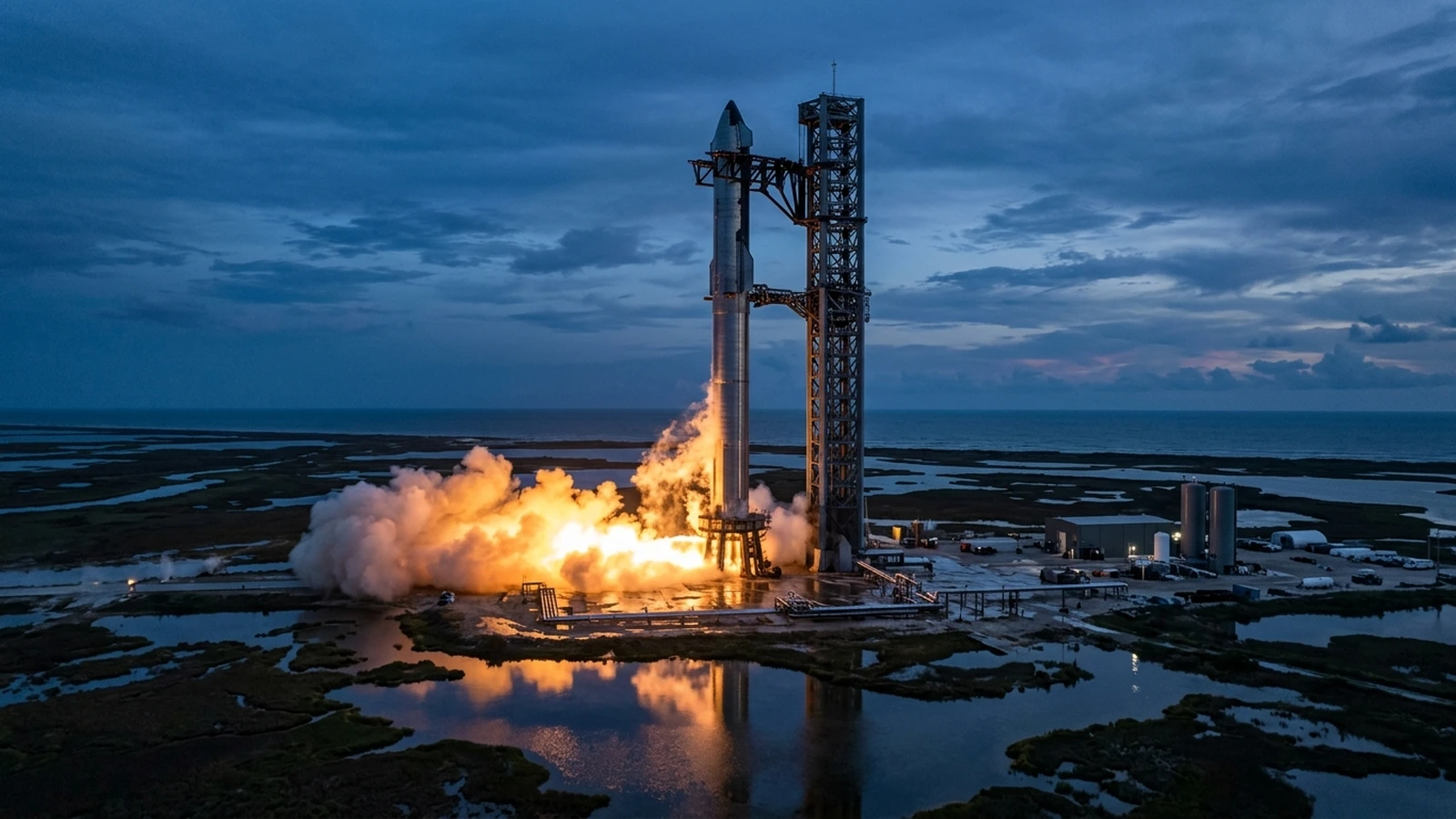
Every Falcon 9 has two stages. The big first stage does the heavy lifting off the launch pad, then flies back to Earth and lands so SpaceX can reuse it. The smaller upper stage carries the payload the rest of the way into orbit, and that one doesn't come back. It's the upper stage that's about to hit the Moon.
This particular stage, catalogued as 2025-010D, launched on 15 January 2025. Its job was to send two commercial Moon landers on their way: Firefly Aerospace's Blue Ghost, which touched down successfully that March, and ispace's Hakuto-R Mission 2, which sadly crashed during its own landing attempt in June. Once the stage had done its work and released the landers, it was left in a long, lopsided orbit around Earth.
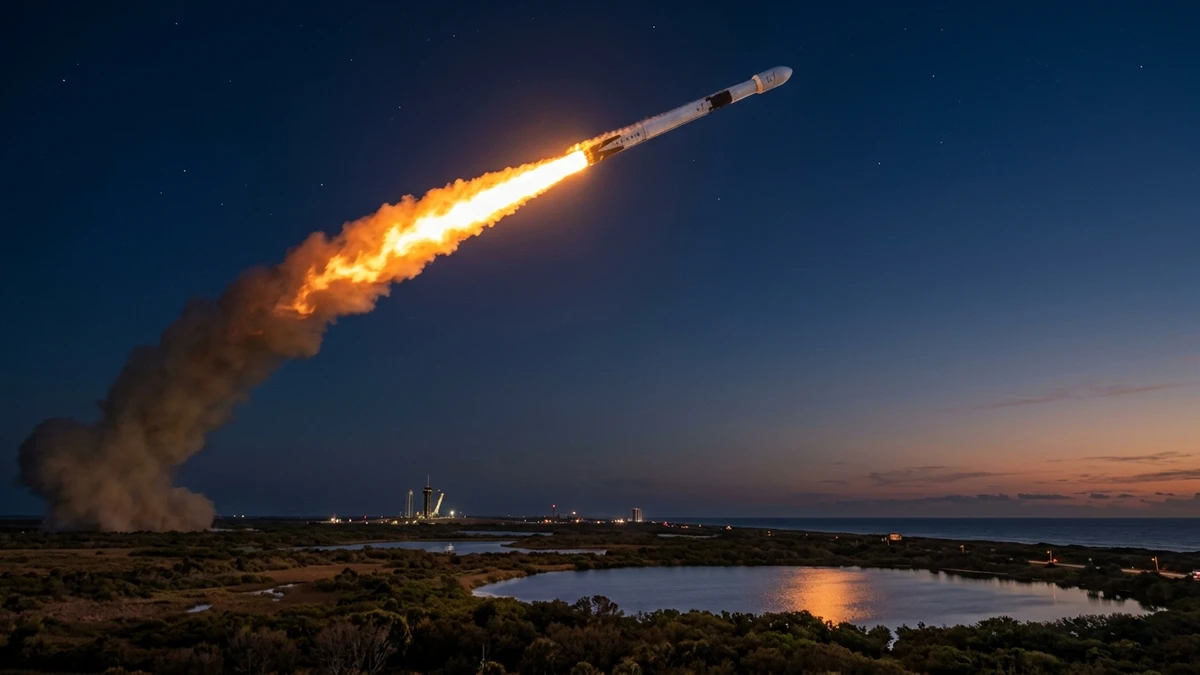
That orbit is a strange one. It takes about 26 days to go around, swinging from around 220,000km out to more than 500,000km, which is further than the Moon itself. For over a year it made close passes without anything happening. The orbits of the stage and the Moon roughly cross, and most of the time one arrives at the crossing point while the other is somewhere else. On 5 August, they both turn up at once.
When and Where Will the Rocket Hit the Moon?
The current best estimate is impact at 06:34 UTC on 5 August 2026, near the crater Einstein on the western edge of the Moon's Earth-facing side. In UK time that's 07:34 BST.
That time isn't fixed to the second yet. Sunlight gently nudges tumbling space junk in ways that are hard to predict perfectly, so the estimate has already shifted by a few minutes as more tracking data has come in. Gray expects to narrow it right down to a few seconds and a few dozen metres in the days before impact, once the stage is well placed for telescopes to watch.
The impact site sits at about the 10 o'clock position on the Moon's disc, right on the edge as we see it from Earth. It's a heavily cratered patch of ground, so the newcomer will be joining a very old crowd.
Can You See the Moon Impact From the UK?
Here's the disappointing bit for British skywatchers: no, you won't see it. At 07:34 BST the Sun is already well up across the UK, so the impact happens in broad daylight.
The people best placed to watch are in the eastern United States, Canada and much of South America, where it's the small hours of the morning and the Moon sits above the horizon in a dark sky. Even for them, seeing anything is a long shot, which we'll come to next.
The good news is that the Moon itself is well worth a look in the run-up. In early August it's around last quarter, rising late in the evening and climbing through the small hours, with the day/night line cutting across the disc to throw the craters into sharp relief. That western edge where the rocket is heading is a lovely region to explore with binoculars or a small telescope.
Get a good look at the Moon before the crash
Kit we've tested and reviewed in full
You won't see the impact itself from the UK, but the Moon it's aiming for is a wonderful sight on any clear night. Here's what we'd take outside (our 2026 Moon calendar lists the best nights to look).

Steady 10× views bring out the Moon's biggest craters and dark seas, including the battered western edge where the rocket is heading.
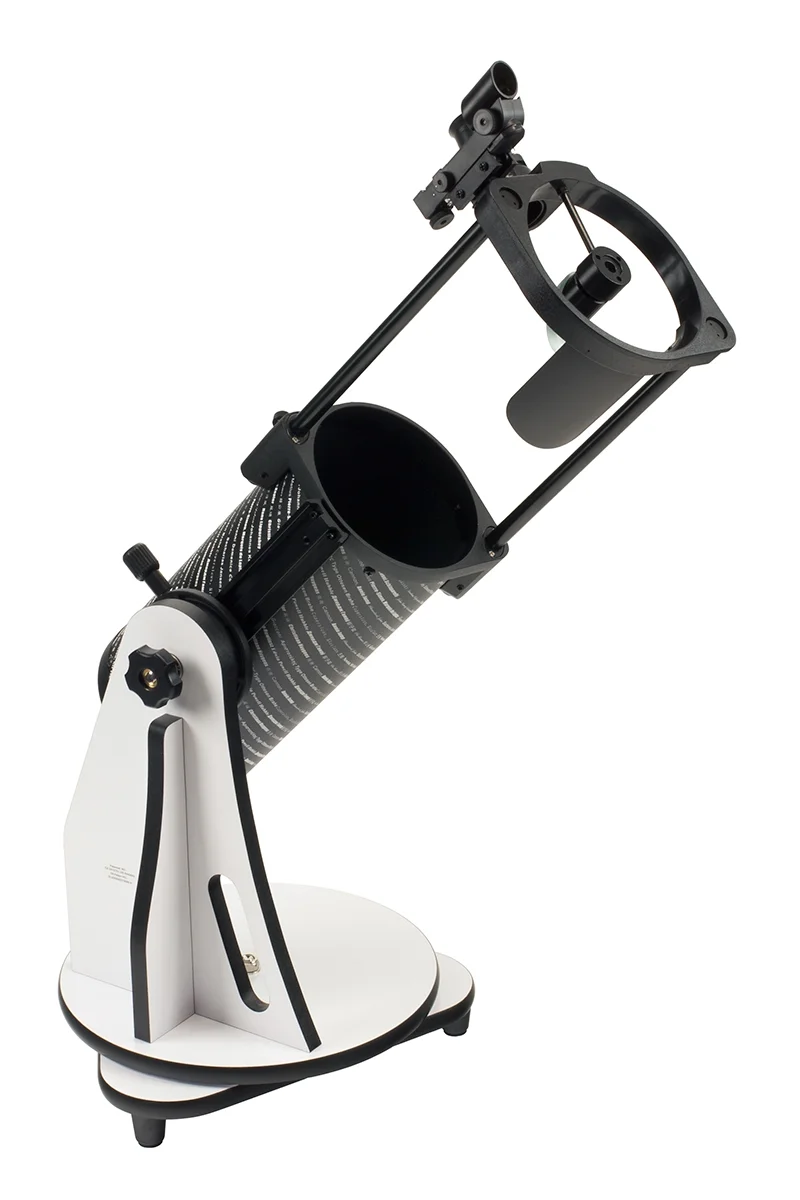
Enough aperture to show individual crater walls and mountain ranges along the day/night line, night after night.
Affiliate links: you pay the same price, we earn a small commission that helps keep WatchTheStars free.
Will the Impact Be Visible From Earth?
Even with a clear view of the Moon, catching the actual impact is a tall order. The reason comes down to speed.
At 2.43km/s, this stage is moving slowly as lunar impacts go. Natural meteorites often hit the Moon at 20km/s or more, and that extra speed is what produces the bright flashes astronomers sometimes record. A slower impact puts most of its energy into scooping out a crater and flinging rock around, and very little into light. Bill Cooke of NASA's Meteoroid Environment Office has pointed out exactly this: there's a lot of energy here, about the same as three tonnes of TNT, but only a tiny fraction is likely to show as a flash.
There's a second, more tempting possibility. Because the impact happens right on the sunlit edge of the Moon, debris thrown upwards could rise high enough to catch the sunlight and briefly show as a faint plume against the black sky, just clear of the lunar edge. It's a slim chance, and the plume would sit barely a whisker away from the bright limb, but it's not impossible.
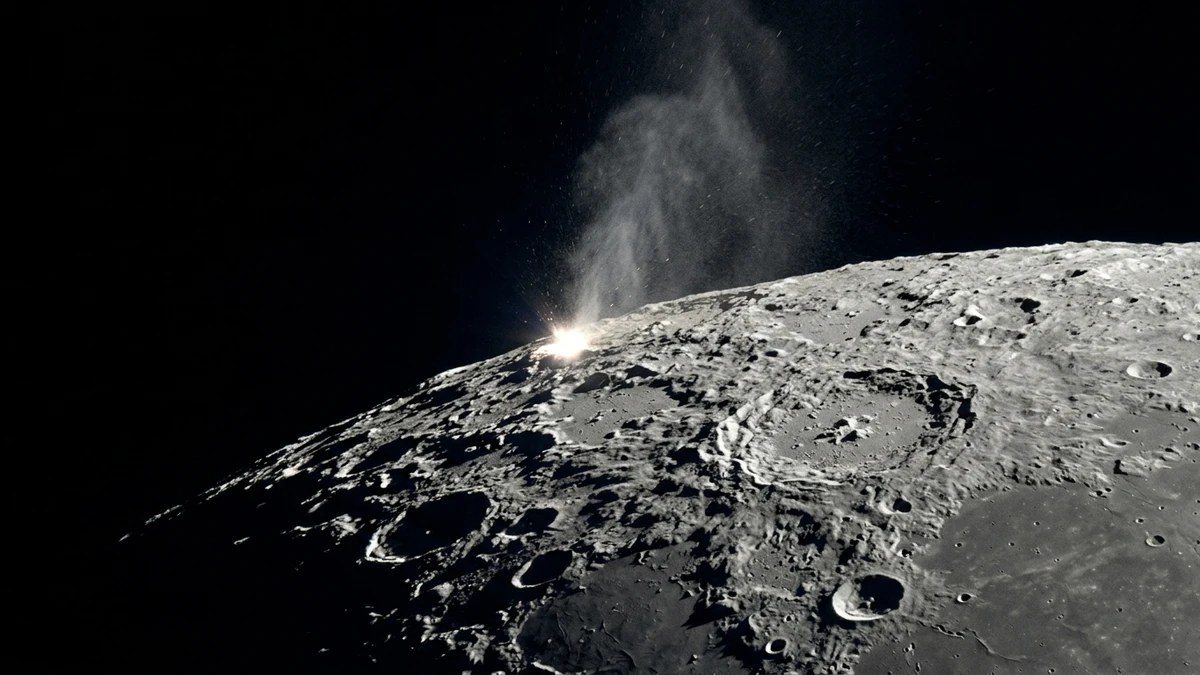
That uncertainty is precisely why so many people are getting involved. A team of 23 astronomers has published an observing plan, and a coordinated campaign of professional and amateur telescopes spanning three continents is being lined up. As Gray puts it, the honest scientific answer is "we don't know; let's find out."
Why a Rocket Hitting the Moon Matters: Space Junk
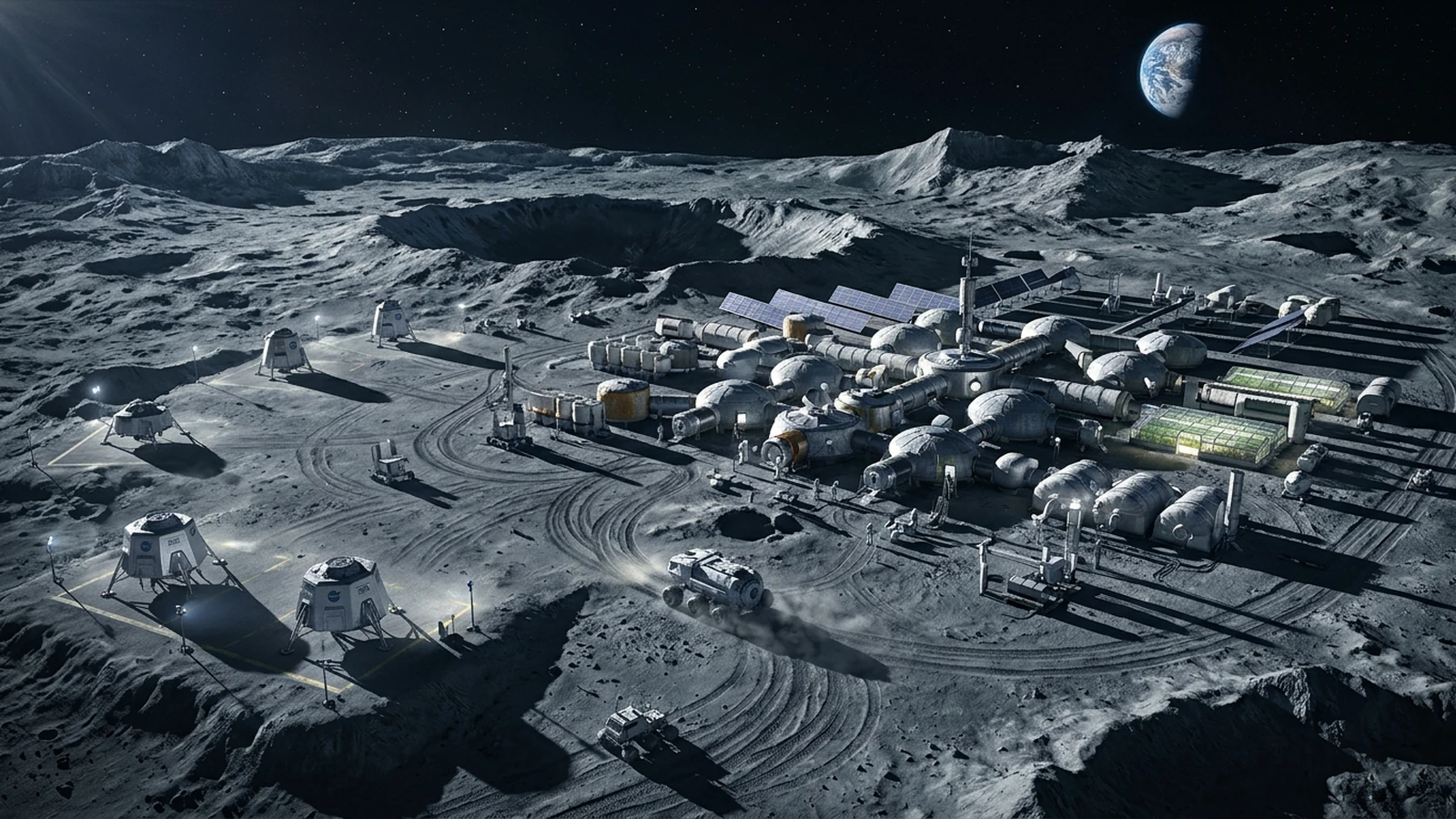
This won't hurt anyone, and the risk to the robotic landers already on the Moon is tiny. But the event is a neat illustration of a growing problem: what we do with our leftover rocket parts.
Space junk is the catch-all name for defunct satellites, spent rocket stages and other debris left in orbit around Earth. There's more of it every year, and scientists worry about a chain reaction known as Kessler syndrome, where collisions create fragments that trigger more collisions, until parts of orbit become hard to use. This particular stage is hitting the Moon rather than Earth, which is arguably the tidier outcome, but it's the same underlying issue.
It has happened before. A Chinese rocket stage struck the Moon's far side in 2022, and back in the 1970s the Apollo programme deliberately crashed spent stages into the surface to set off small "moonquakes" for its seismometers. What's different now is the sheer volume of hardware we're launching.
There is a fix for missions heading beyond Earth. When the James Webb Space Telescope launched in 2022, its upper stage was sent into an orbit around the Sun, safely out of the way for centuries. A more recent Falcon 9, launched in November 2025, was disposed of the same way. Parking a stage in solar orbit only works for missions that were already heading out towards the Moon or beyond, but for those it neatly avoids exactly this kind of collision.
What Happens After the Impact
Whether or not anyone catches the moment itself, we should get to see the aftermath. NASA's Lunar Reconnaissance Orbiter, a spacecraft that has been mapping the Moon in fine detail since 2009, is expected to photograph the fresh crater in the weeks that follow. That's how the 2022 impact site was confirmed, and the pinpoint impact prediction is partly meant to tell the orbiter's team exactly where to look.
Beyond the pictures, there's real science on offer. Because we know almost everything about this object, its mass, its speed, its angle of approach, it makes a rare controlled test. Researchers want to use it to sharpen the methods that locate impacts on the Moon, which matters for future missions that hope to listen for moonquakes, and to learn more about how debris and dust behave when something strikes the surface.
So while UK observers will have to sit this one out, it's still a moment worth marking. On 5 August a small piece of human hardware will quietly close a chapter that began with a rocket launch 18 months earlier, and we'll be watching to see what the Moon does with it. We'll cover the crater images here as soon as they arrive.
Sources:
- Upper stage impacting the moon on 2026 August 5 · Bill Gray, Project Pluto
- A SpaceX rocket is about to crash into the moon: scientists will be watching · Scientific American
- A large section of a SpaceX rocket is about to smash into the Moon · BBC Sky at Night Magazine
- Observational planning for the 2026 August 5 Falcon 9 Upper Stage lunar impact · arXiv preprint
- When a SpaceX rocket crashes into the moon, scientists will be watching · Phys.org
Frequently Asked Questions
Equipment guides
Related topics

Ian ClaytonAmateur astronomer and founder of WatchTheStars.co.uk, dedicated to helping others explore the wonders of our universe. Full profile →