Key takeaways
- Venus and Jupiter were separated by just 1.8° on the evening of 8 June, close enough to fit inside a binocular field of view
- The pair sat low in the west-northwest about 60 minutes after sunset, around 22:00–22:30 BST
- Venus was the brilliant white one; Jupiter was noticeably dimmer and sat just below it
- No equipment was needed: this was a naked-eye event, but binoculars could make it magical
- The gap closed to 1.6° the following evening, 9 June, before they drifted apart again
Jump to section 6 sections
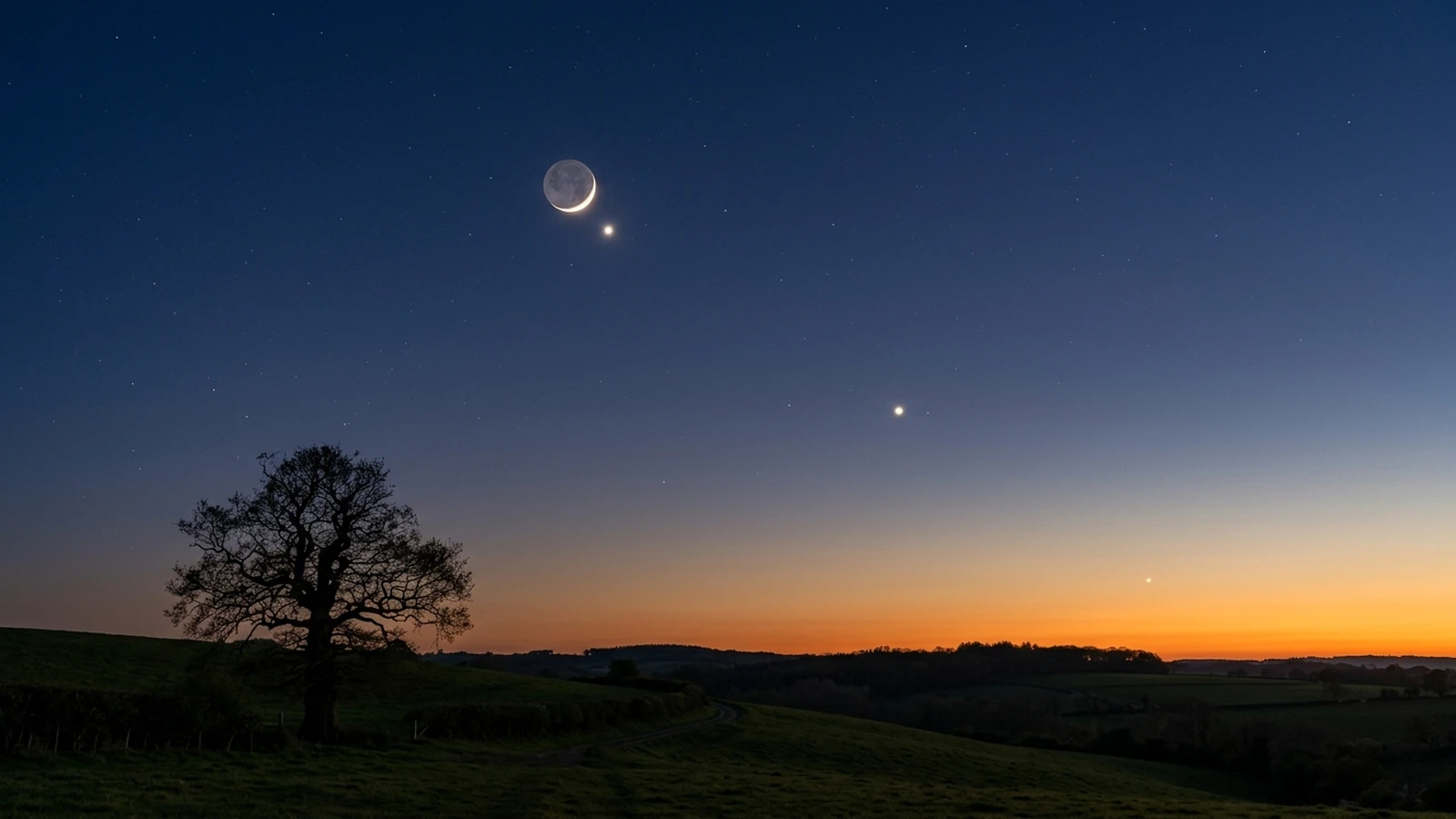
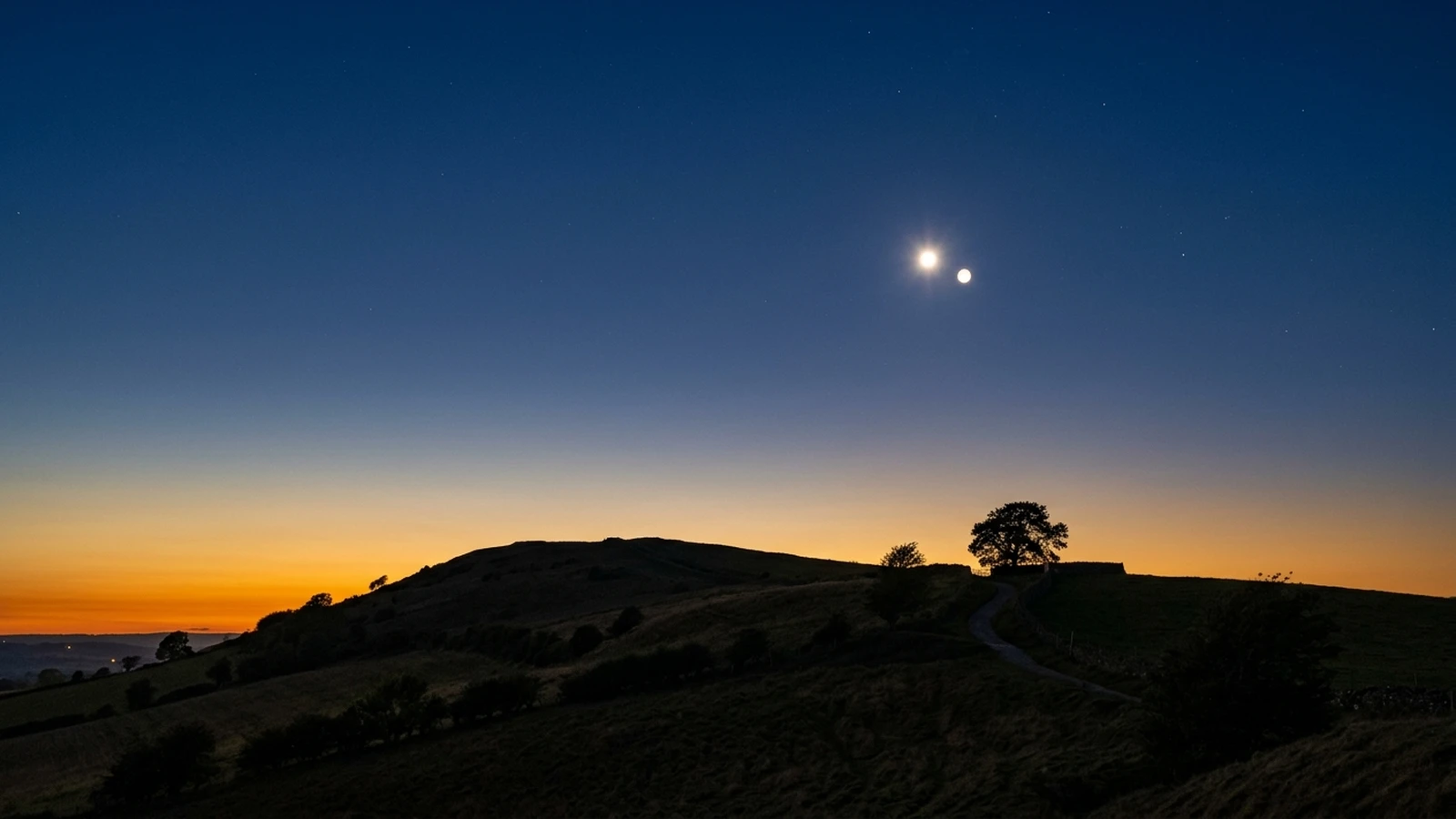
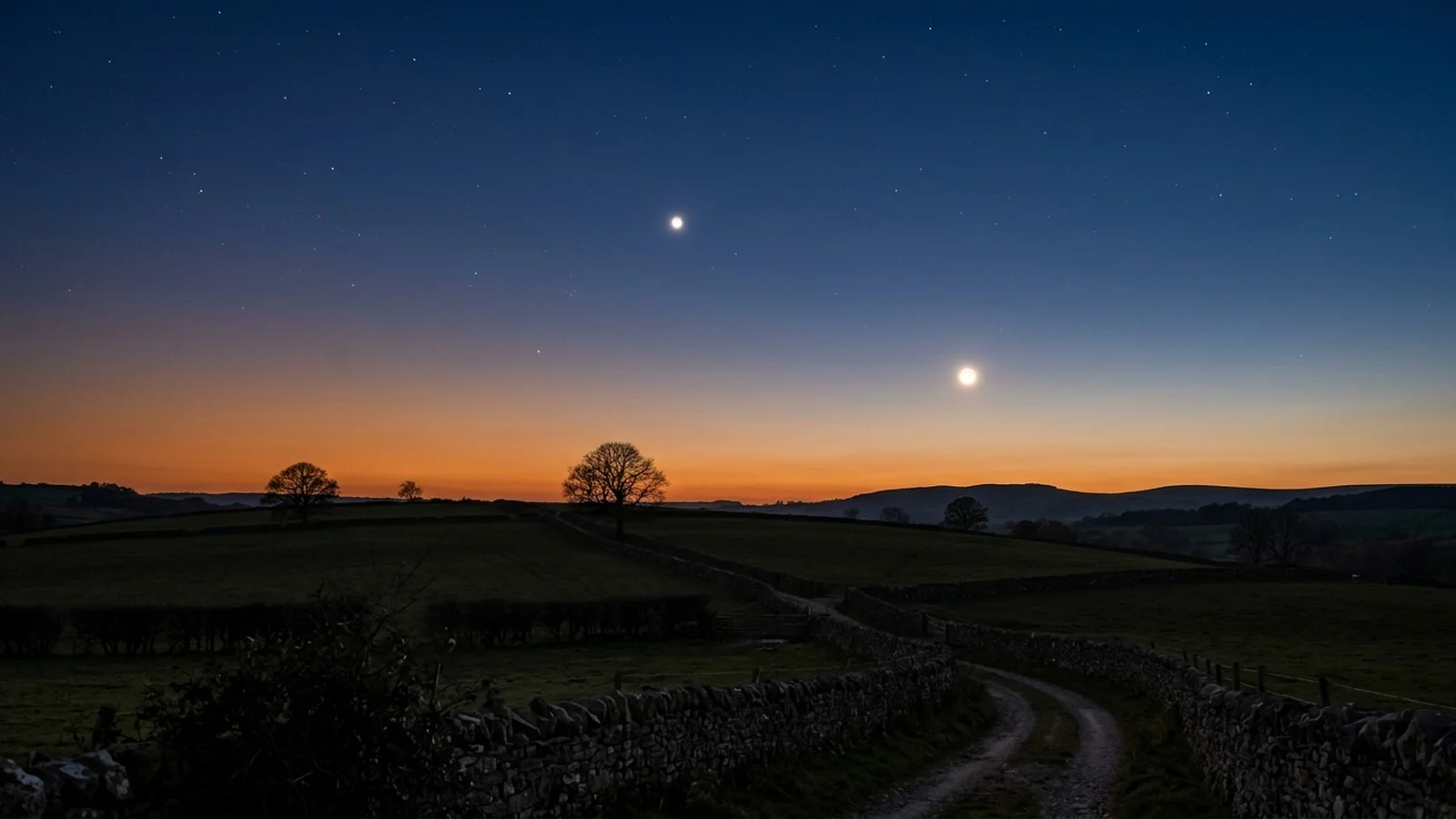
After dinner on Monday 8 June 2026, two brilliant points of light sat low in the west, so close together they could be mistaken for a wide double star. That was Venus and Jupiter, the two brightest planets in the sky, just 1.8 degrees apart, a day before their closest approach of the year.
To put that in context: the full Moon spans about 0.5 degrees. So on 8 June, Venus and Jupiter were just a handful of Moon-widths apart. Both fitted inside a single binocular field of view at the same time, a sight that would have been genuinely hard to forget.
What Was Happening on 8 June
This was what astronomers call a planetary conjunction: when two planets appear close together in the sky as seen from Earth. They weren't actually near each other in space, of course; Venus was about 1.2 AU from us at the time, while Jupiter was roughly 6.5 AU away. It was a line-of-sight alignment, a moment when both planets happened to occupy nearly the same patch of sky from our vantage point on Earth.
Conjunctions between Venus and Jupiter happen roughly once a year, but not all of them are this close or this well-placed for UK observers. At 1.8° on 8 June they were within a day of their closest approach that year (1.6° on 9 June), and both planets sat in the west-northwest after sunset, right where they could be seen during the usable window between dusk and the planets setting.
The pair had been converging over the preceding week. Anyone watching the western sky on clear evenings would have noticed Jupiter slowly creeping closer to Venus night by night. We covered the approach in our complete Venus–Jupiter conjunction guide, but 8 June was the headline act.
Where and When the Planets Were in the Sky
Direction: West-northwest. The target zone lay about 20–25 degrees to the right (northward) of the point where the sun set.
Time: The sweet spot for UK observers was between 22:00 and 22:30 BST. At that point, it was dark enough to see both planets clearly, but they were still high enough (around 10–15°) to be seen comfortably above most trees and rooftops. By 23:00 BST they were dropping fast, and by midnight they had set for most UK locations.
Altitude: The planets sat low, nowhere near high overhead. This was a western-horizon event, needing a reasonably clear western horizon, free of tall buildings or dense woodland. A hilltop, open field, or even a west-facing window could make the difference.
Venus set around 23:55 BST from London that night. Jupiter set a few minutes later. So the window was generous: the whole evening from about 22:00 onwards.
Venus or Jupiter: How to Tell Them Apart
For anyone who had never tried to identify planets before, here was a quick cheat sheet for that night:
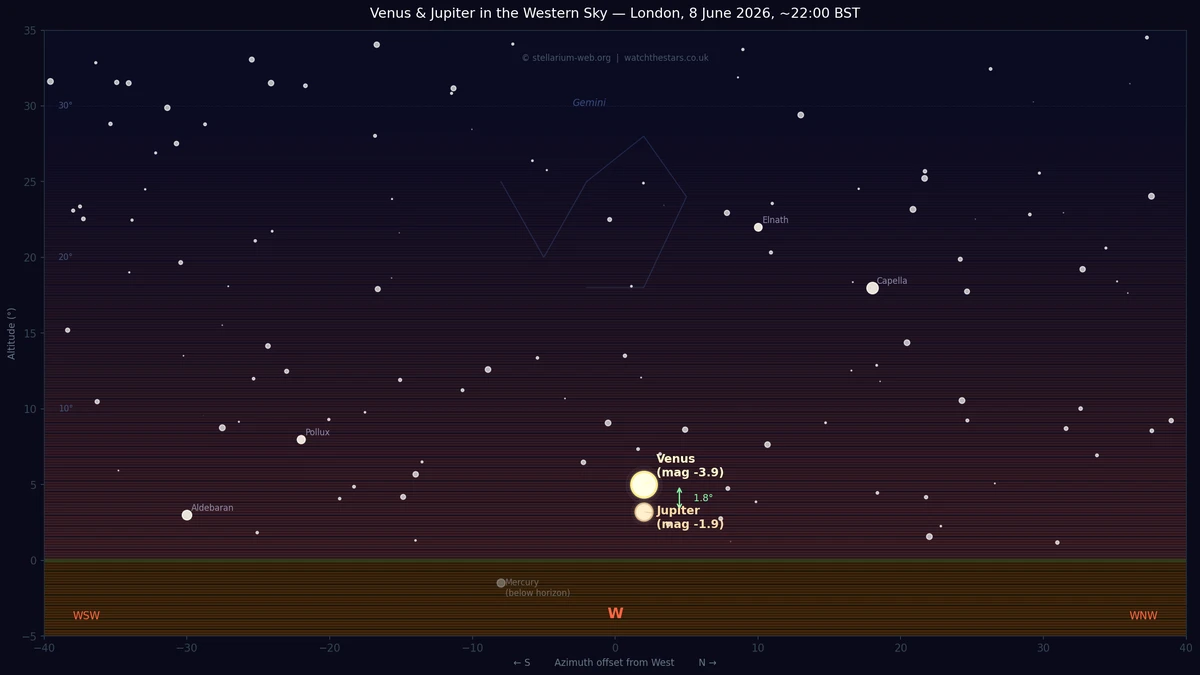
Venus was unmistakable. At magnitude −3.9 that week, it was far and away the brightest object in the sky after the Moon: brighter than any star, brighter than any aircraft light. It shone with a brilliant, slightly blue-white colour and didn't twinkle the way stars do (it's a disc, not a point source, so atmospheric turbulence smooths out its light).
Jupiter was bright too, at around magnitude −1.9, but it was noticeably dimmer than Venus, roughly six times fainter to the eye. Jupiter has a warm cream-yellow hue. That night it sat just below and slightly left of Venus when facing west. It was the one that looked like it could be Venus's smaller sibling.
A quick rule: if you saw one dazzling light and a slightly more modest one right next to it in the west, you'd found them. Venus was the dazzling one.
Finder Charts From Stellarium
These charts were generated using Stellarium Web for London, 8 June 2026, at approximately 22:00 BST. They were accurate for anywhere in the UK: local times varied by a minute or two depending on longitude, but the sky positions were essentially identical.
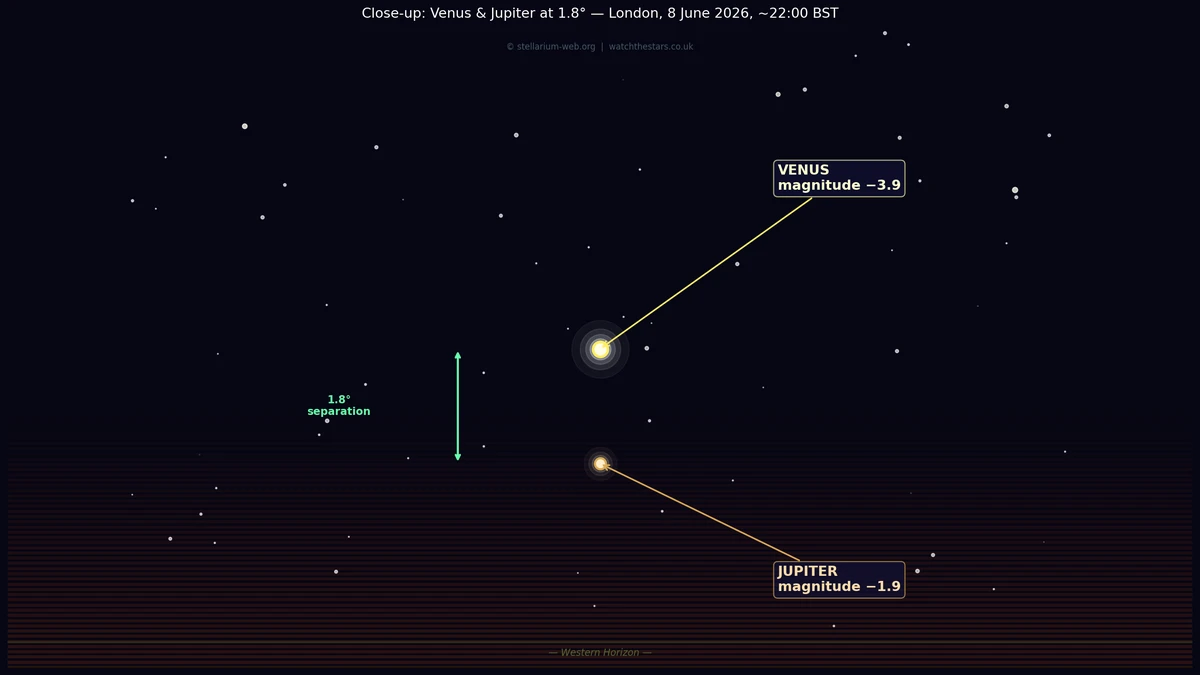
You could also have loaded up Stellarium Web yourself and set your own location: entering your town in the location search would have positioned the planets precisely for your sky.
Using Binoculars or a Telescope
This event was absolutely worth enjoying with the naked eye first: standing outside, letting the eyes adjust for a few minutes, and simply taking in the sight of two planets side by side. The sight of two planets together is genuinely moving in a way that no telescope eyepiece can quite replicate.
Binoculars would genuinely have enhanced the experience. Any 7×50 or 10×50 pair would show both planets in the same field of view, and Jupiter's four Galilean moons might be visible as tiny dots strung out beside it. Bracing them against a wall or fence stops the view shaking.
A small telescope would have revealed more: Venus showed a gibbous phase that night (about 77% illuminated and roughly 15 arcseconds across), while Jupiter, even at this distance of 6.5 AU, would show its banded cloud belts and the moons clearly at 40× or above. The challenge was the low altitude, which meant looking through a thick slice of atmosphere. Higher magnification would amplify the atmospheric wobble, so the advice was to stick to 50× or below for the sharpest views.
Recommended kit for planet pairings
Kit we've reviewed in full
You didn't need anything, but each step up added something new. Binoculars could show both planets together; a telescope could reveal Venus's phase and Jupiter's moons; a smart scope could photograph it automatically.
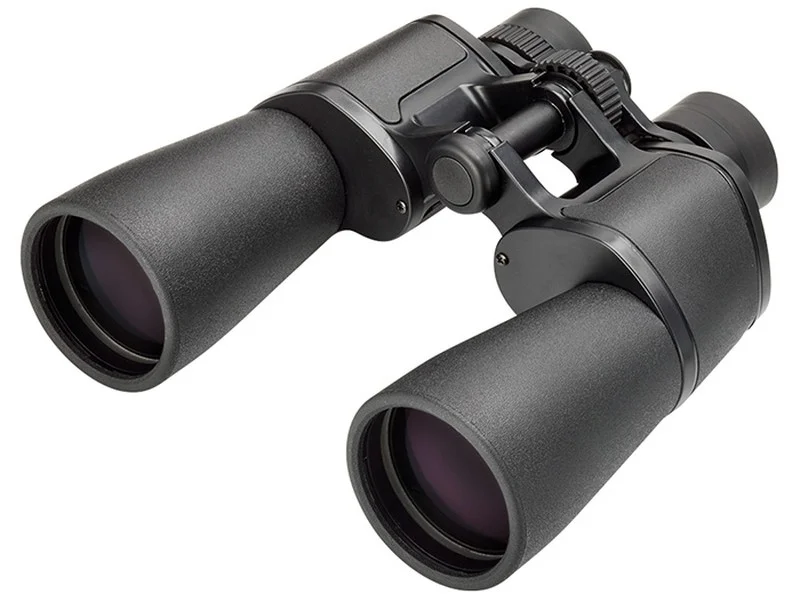
At 1.8° apart, Venus and Jupiter fitted in the same binocular view. You could also catch Jupiter's four Galilean moons as tiny points beside it: the most-recommended starter binocular in UK astronomy communities.
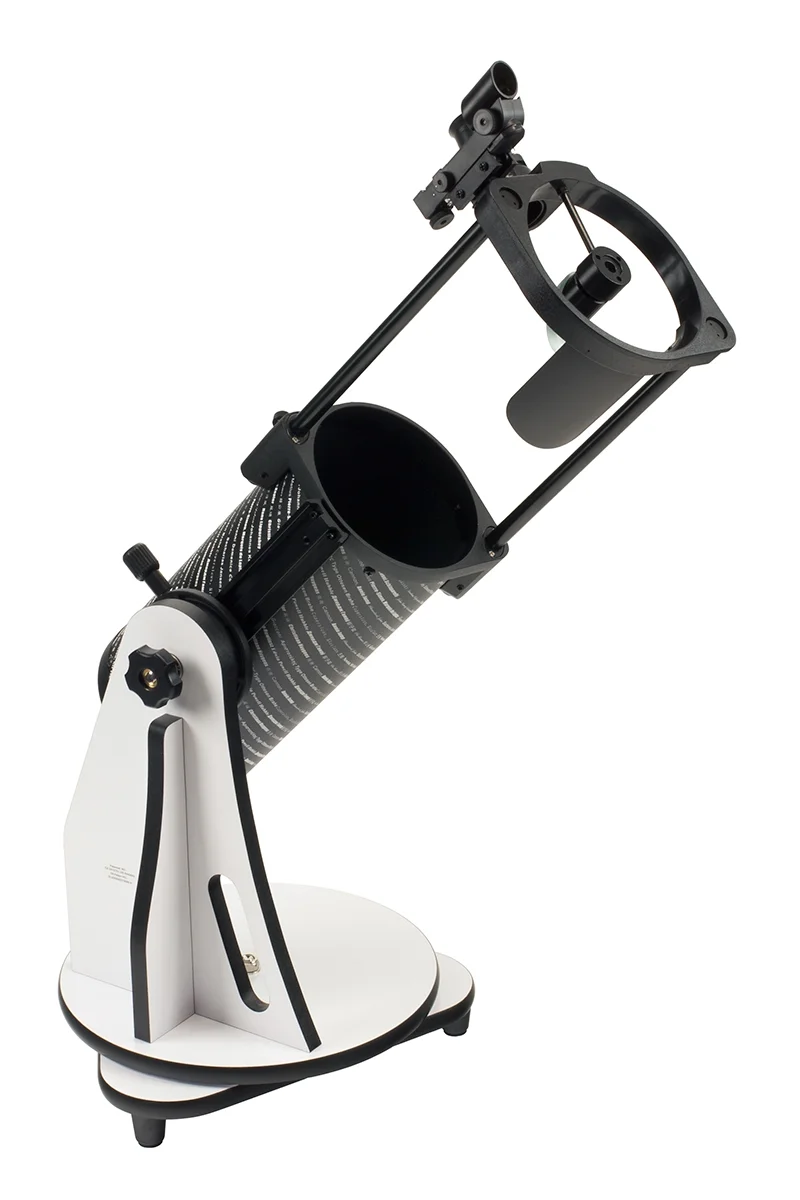
At 40× you could see Venus as a clear gibbous disc and Jupiter's cloud belts with its moons alongside: two planets, two completely different faces in the same eyepiece. Best-value first telescope for planetary viewing in the UK.
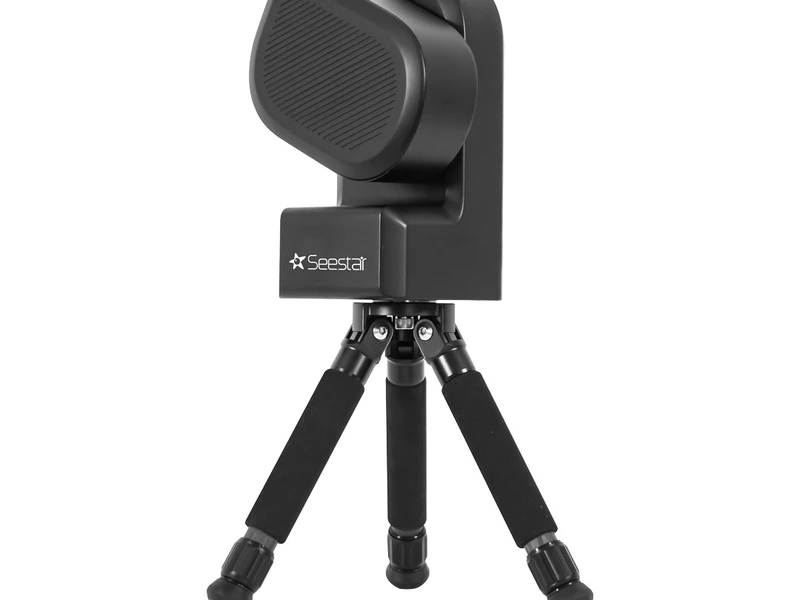
Point it at the sky, tap Venus in the app, and it locks on and stacks frames automatically. Brilliant for a conjunction: capture both planets in the same field and end the night with a real photograph. No experience needed.
Affiliate links: you pay the same price, we earn a small commission that helps keep WatchTheStars free.
What Came Next
After 8 June, the two planets slowly began to separate. The gap widened gradually over the following days, though they remained close enough to be seen together in binoculars for several more evenings.
Jupiter continued its journey eastward through the stars of Gemini through the summer, while Venus, being closer to the Sun and moving faster, pulled away and began climbing higher in the evening sky over the following weeks. By late June, Venus was set to be noticeably higher and more prominent, becoming one of the unmissable sights of the July and August evening sky.
Mercury was also in the west that evening, sitting below and to the right of the pair, though a clear, flat horizon and a sharp eye were needed to catch it, as it was much fainter and lower. Our full June night sky guide covers Mercury and the other June highlights in more detail.
Two worlds, 1.8° apart, hanging over the British countryside: it didn't get much better than that.
Sources:
- Stellarium Web · sky position data and finder charts for London, 8 June 2026
- EarthSky · Visible Planets Tonight · Venus and Jupiter June 2026 positions
- Space.com · Planet Parade Guide June 2026
Frequently Asked Questions
Equipment guides
Related topics
Ian ClaytonAmateur astronomer and founder of WatchTheStars.co.uk, dedicated to helping others explore the wonders of our universe. Full profile →