Key takeaways
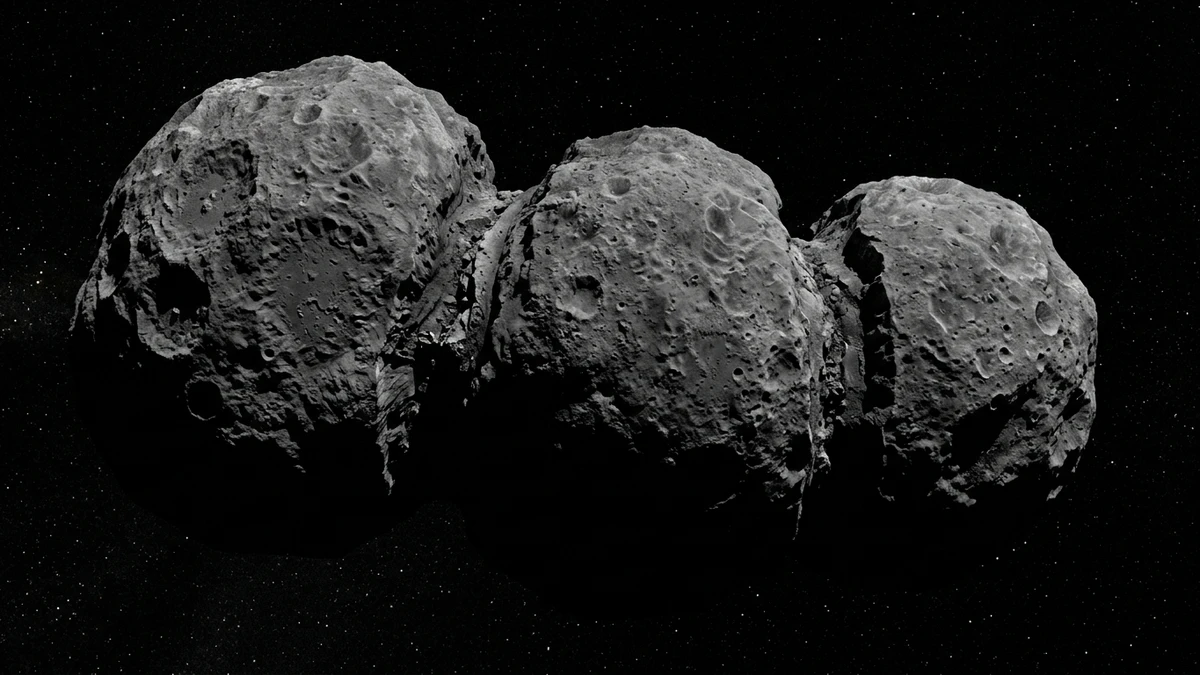
- Asteroid 44 Nysa appears to be the first three-lobed, or 'trilobate', asteroid ever found: three connected bodies about 75km across at the widest point
- The same images revealed a previously unknown moon, roughly 1km wide, orbiting at least 170km from Nysa
- Astronomers puzzled over Nysa for 169 years: it was discovered in 1857, and even Hubble couldn't resolve its shape
- The images came from Earth-based telescopes: the Large Binocular Telescope in Arizona and the Very Large Telescope in Chile, using adaptive optics sharper than Hubble
- Nysa is the biggest and brightest of the E-type asteroids, thought to be leftover building blocks of Earth and the inner planets
Jump to section 6 sections
Astronomers have found the first three-lobed asteroid known to science, and it has been hiding in plain sight since 1857. New images of 44 Nysa, a 75km-wide asteroid in the main belt between Mars and Jupiter, show what looks like three connected bodies joined by two narrow necks. Headlines are already calling it the "three-headed" asteroid. As a bonus, the same images revealed a tiny moon, about 1km wide, that nobody knew existed.
The discovery comes from an international team led by Kate Minker of Lowell Observatory, using two of the most powerful telescopes on Earth. Their paper, fittingly titled "Unmasking (44) Nysa", has been submitted to the journal Astronomy & Astrophysics.
Three-Lobed Asteroid Nysa: What the New Images Show
The images show an irregular body about 75km (46 miles) across at its widest point, wrapped by two deep valleys that circle the asteroid like the necks of a snowman. Minker's team interprets these "colli" as the joins between three separate lobes.
"The images reveal a remarkably unusual object," Minker said. The two leading explanations are that Nysa is a contact trinary, three bodies resting against each other and held together loosely by gravity, or a single coherent body more distorted than anything astronomers have seen before. Either way, it's a first.
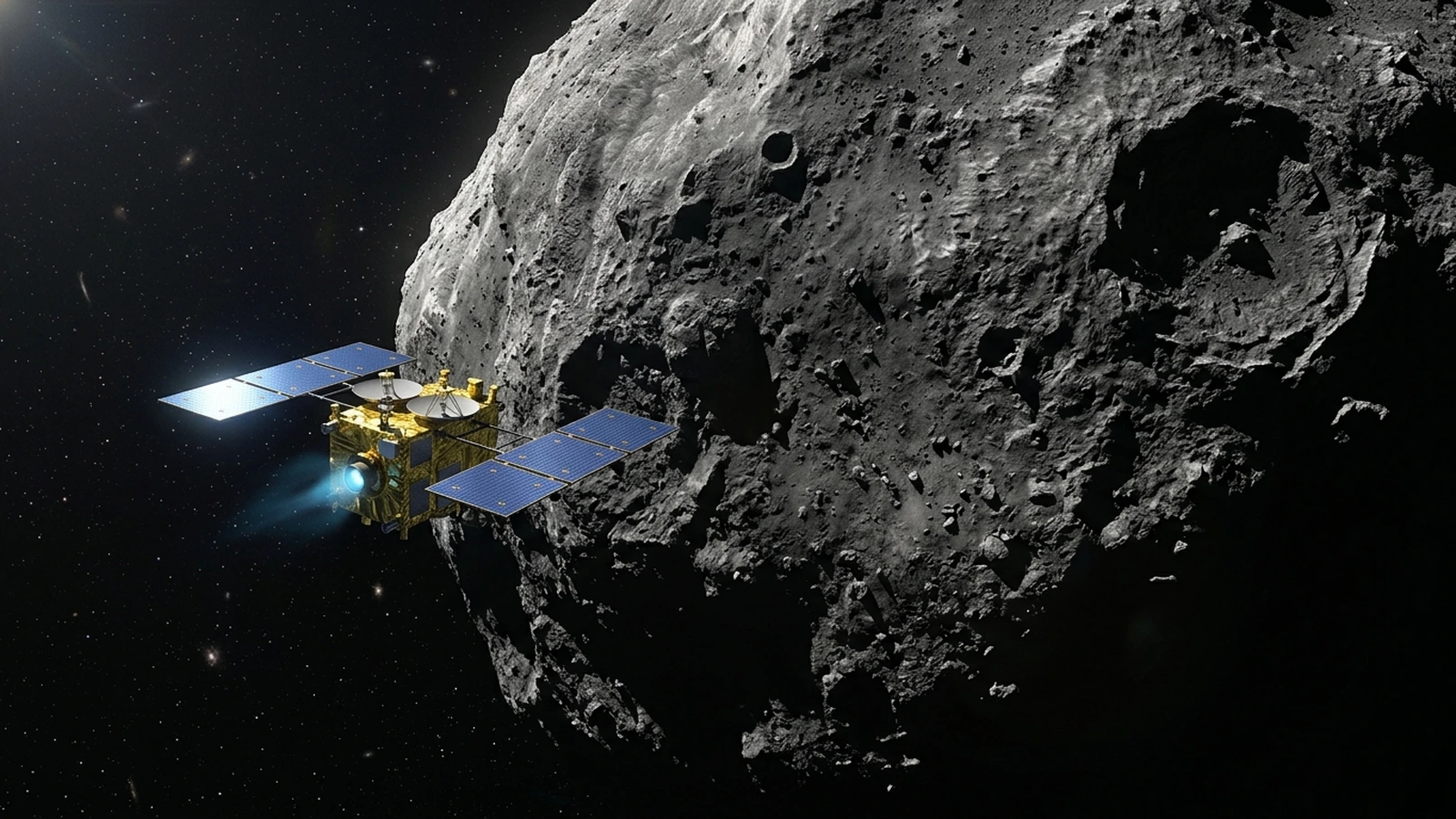
Double-lobed asteroids are common enough. Japan's Hayabusa2 probe photographed one, Torifune, on a flyby only last month. Comet 67P, of Rosetta fame, is another two-lobed body. But three lobes in one object has never been seen anywhere in the solar system.
Nysa's New Moon: S/2026 (44) 1
Tucked into the same images was a second surprise: a moon roughly 1km across, orbiting at least 170km from Nysa. It carries the provisional designation S/2026 (44) 1 until it gets a proper name.
Finding it took some clever work. The moon's faint light was drowned out by the glare of the asteroid itself, so the team borrowed a technique called high-contrast imaging, normally used to spot planets around other stars, to strip away Nysa's bright halo. Because the moon showed up in two separate observing campaigns, astronomers could track its motion around the asteroid.
That little moon matters. Watch it long enough to measure its orbit, and Newton's laws hand you Nysa's mass. Combine mass with the new shape model and you get density, and density is the number that will settle what Nysa actually is.
How Earth-Based Telescopes Beat Hubble
Nysa was discovered in 1857, and for 169 years nobody could make out its shape. Even the Hubble Space Telescope only hinted that it might be elongated, perhaps two-lobed. So how did telescopes sitting under Earth's blurry atmosphere finally crack it?
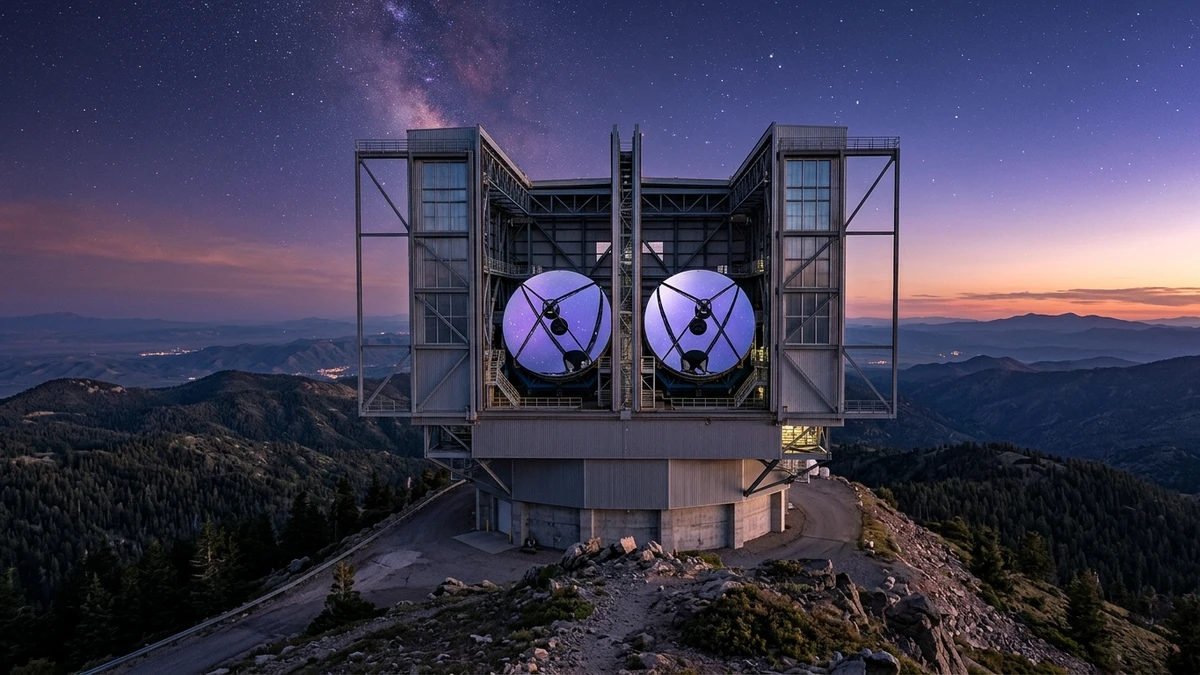
The answer is adaptive optics. The Large Binocular Telescope in Arizona uses 672 computer-controlled actuators to flex its secondary mirror hundreds of times a second, cancelling out atmospheric turbulence as it happens. Its 8.4-metre mirrors are three times the diameter of Hubble's, so with the blurring removed, its new SHARK-VIS camera delivers sharper images than the space telescope. The European Southern Observatory's Very Large Telescope in Chile confirmed the picture with its SPHERE instrument. The most detailed view came from continuous observations on 15 February 2026.
How Did Nysa Get Its Three-Lobed Shape?
Nobody knows yet, but there are two main ideas.
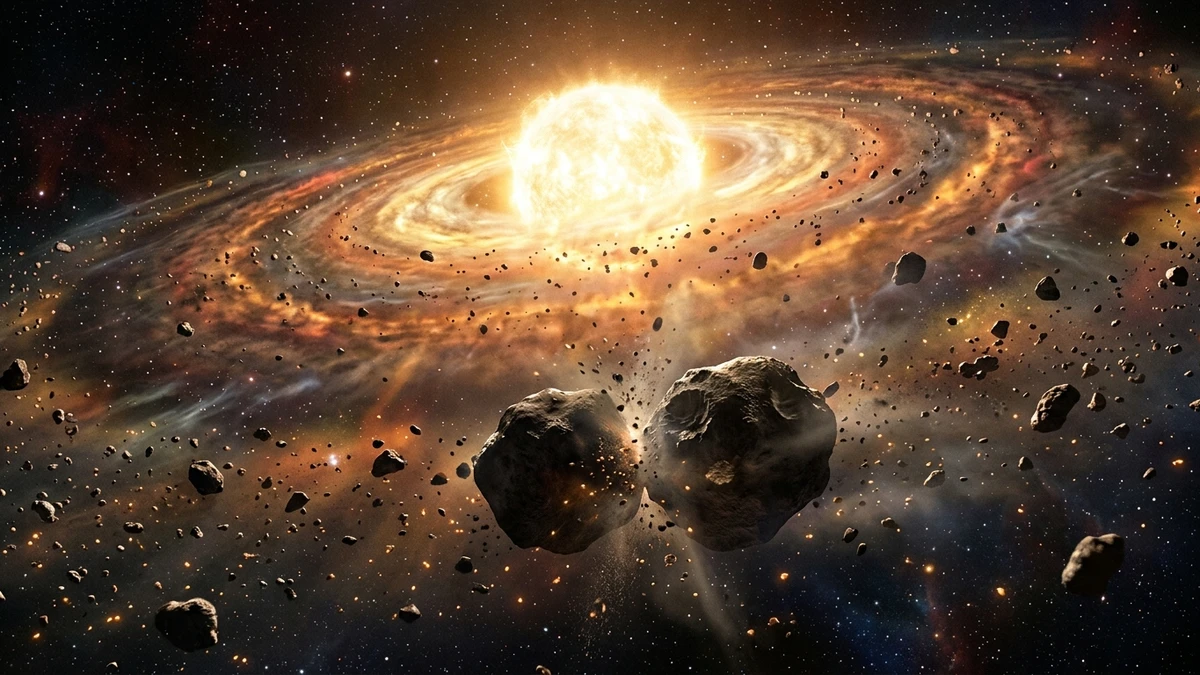
The first is gentle assembly. After an ancient collision shattered a parent body, fragments could have drifted back together at low speed and settled into a stack of three lobes rather than a single ball. Plenty of two-lobed asteroids are thought to have formed this way; Nysa would simply be the three-piece version.
The second is more violent: a hit-and-run encounter with a much larger asteroid. Modelling shows that tidal forces in such a collision can stretch and deform a body, sometimes tearing it into a string of fragments. The puzzle with this idea is that such events usually leave a family of related asteroids sharing the same composition, and Nysa appears to be alone out there, apart from its moon.
This is where the moon earns its keep. Once its orbit gives up Nysa's mass and density, astronomers can test which story fits. A loose rubble stack and a battered solid body have quite different densities.
Kit for hunting asteroids yourself
Kit we've reviewed in full
You won't resolve Nysa's three lobes from a back garden. Nobody on Earth can without adaptive optics. But spotting asteroids as moving points of light is a classic amateur project, and the right kit makes it a satisfying one.
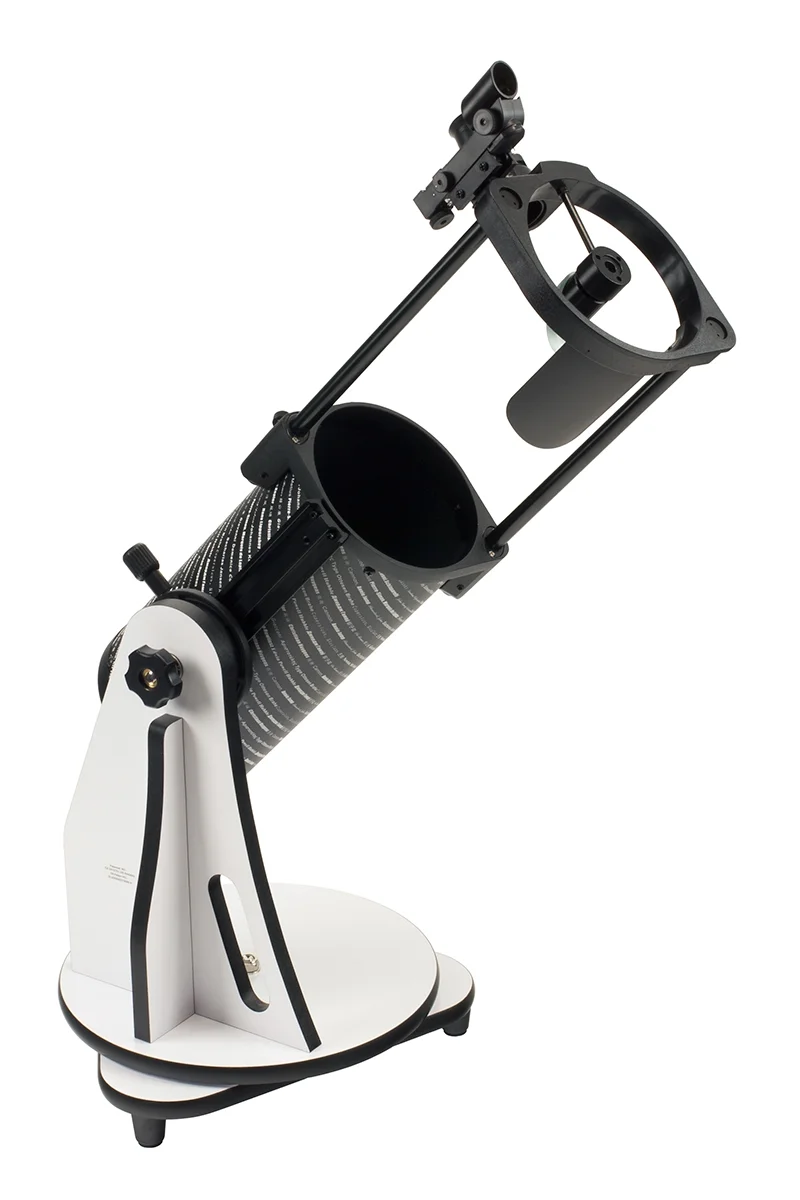
130mm of aperture reaches 10th magnitude under dark skies, which brings Nysa itself into range at a good opposition, along with dozens of brighter asteroids.
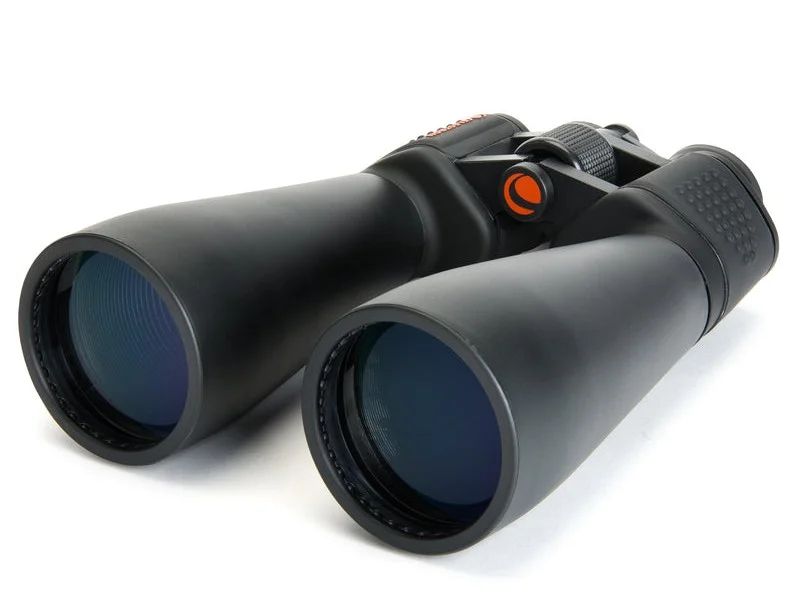
Big 70mm lenses will show Vesta, the brightest asteroid, and are superb for learning the star fields you'll be checking night to night.
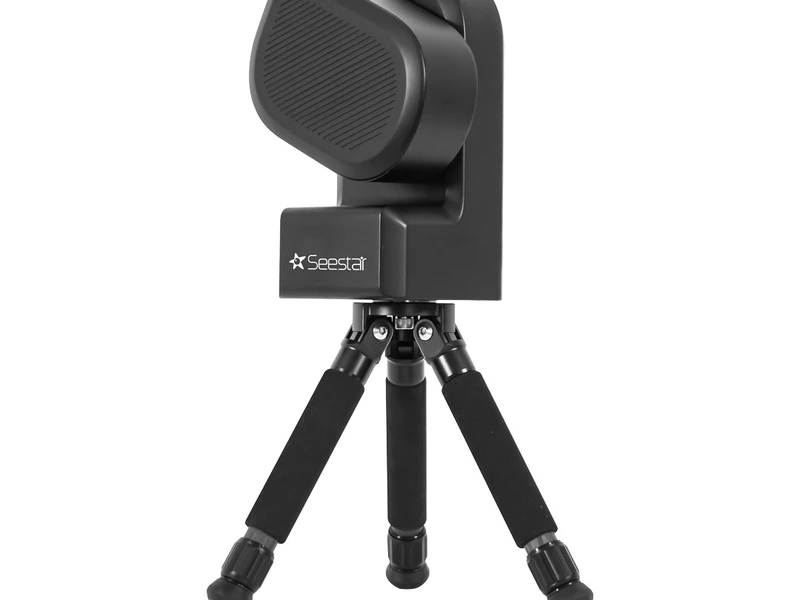
A smart telescope makes asteroid hunting almost unfairly easy: image the same field on consecutive nights and blink between frames to catch the mover.
Affiliate links: you pay the same price, we earn a small commission that helps keep WatchTheStars free.
Why Nysa Matters: Building Blocks of Earth
Nysa is the largest and brightest of the E-type asteroids, a small class named for the mineral enstatite that coats their surfaces and makes them unusually reflective. That composition matters because it matches the material thought to have built Earth and the other inner planets.
E-types are believed to have formed close to the young Sun, in the same neighbourhood where our planet was assembling 4.5 billion years ago. If Nysa is a surviving relic of that era, it's a preserved sample of Earth's raw ingredients, parked conveniently in the asteroid belt. Understanding its structure and history is a way of reading our own planet's birth certificate.
There's a nice touch in the name, too. Nysa was the mythical land where nymphs raised Dionysus, the Greek god of theatre, an art form built on masks. "In this paper, we're finally unmasking the asteroid's true nature, long after it was discovered," said co-author Al Conrad of the Large Binocular Telescope Observatory.
Can You See Asteroids From the UK?
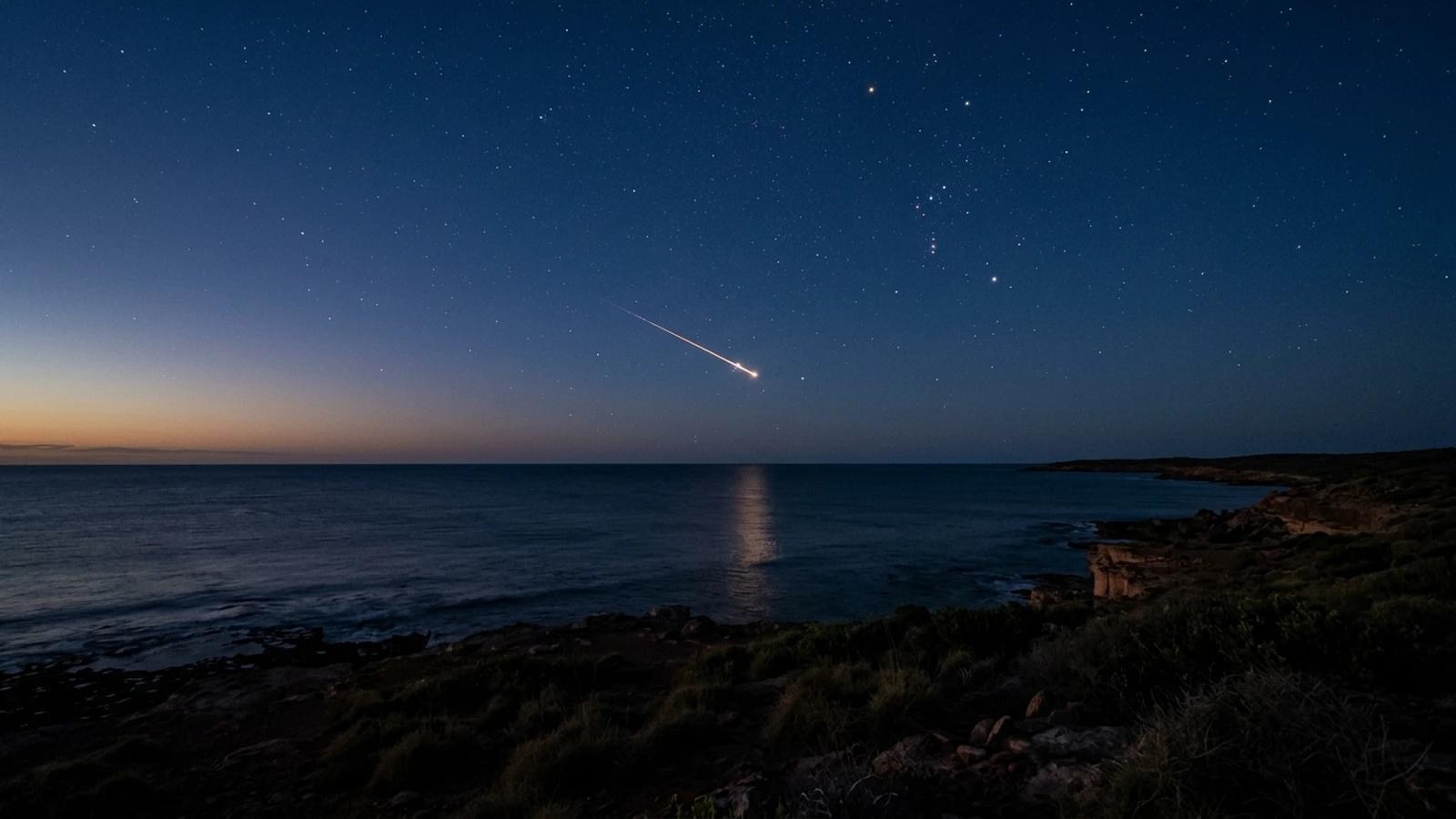
You can, and it's a satisfying project. No backyard telescope will show an asteroid as anything but a point of light, but that's the charm: the game is catching it move.
Start with Vesta, the brightest asteroid, which is binocular-visible at opposition. Nysa itself sits around 10th magnitude at a favourable opposition, within reach of a 130mm telescope under a dark sky. Find the right star field using a charting app, then sketch or photograph it on two consecutive nights. The "star" that jumped is your asteroid. It's the same principle that revealed Nysa in 1857, and frankly the Victorians had it harder.
For more asteroid stories, see how scientists finally identified the type of asteroid that killed the dinosaurs, or China's visit to Earth's quasi-moon Kamo'oalewa.
Sources:
- Three-lobed asteroid is a world unlike any other · University of Arizona News
- 1st three-headed asteroid found in our solar system, and it has a little moon · Space.com
- Unmasking (44) Nysa: Evidence for a Trilobate Structure · Minker et al., submitted to Astronomy & Astrophysics
- Lowell Observatory press release · Lowell Observatory
Frequently Asked Questions
Equipment guides
Related topics
Ian ClaytonAmateur astronomer and founder of WatchTheStars.co.uk, dedicated to helping others explore the wonders of our universe. Full profile →