Key takeaways
- NASA's Chandra X-ray Observatory has found that two of the Milky Way's outermost spiral arms are about 10% more distant than astronomers thought
- The result, published in Astronomy & Astrophysics on 1 July 2026, used X-ray 'light echoes' from gamma-ray bursts bouncing off dust clouds in the arms
- The method relies on pure geometry, so it sidesteps the usual assumptions about how the galaxy rotates
- If the arms really do stretch further, astronomers may need to revise the mass of the entire Milky Way
- Only a handful of usable gamma-ray bursts have appeared in 25 years, so each one is precious
Jump to section 6 sections
Here's an odd fact about astronomy: we can measure the distance to a galaxy 13 billion light-years away more confidently than we can map the one we live in. This week, NASA announced a result that redraws part of our home galaxy's map. Two of the Milky Way's outermost spiral arms appear to sit about 10% further out than anyone thought.
The finding comes from NASA's Chandra X-ray Observatory and ESA's XMM-Newton, and it was made in a clever way: by watching the flash of distant cosmic explosions bounce off dust clouds inside our own galaxy.
Milky Way's Spiral Arms Sit Further Out Than We Thought
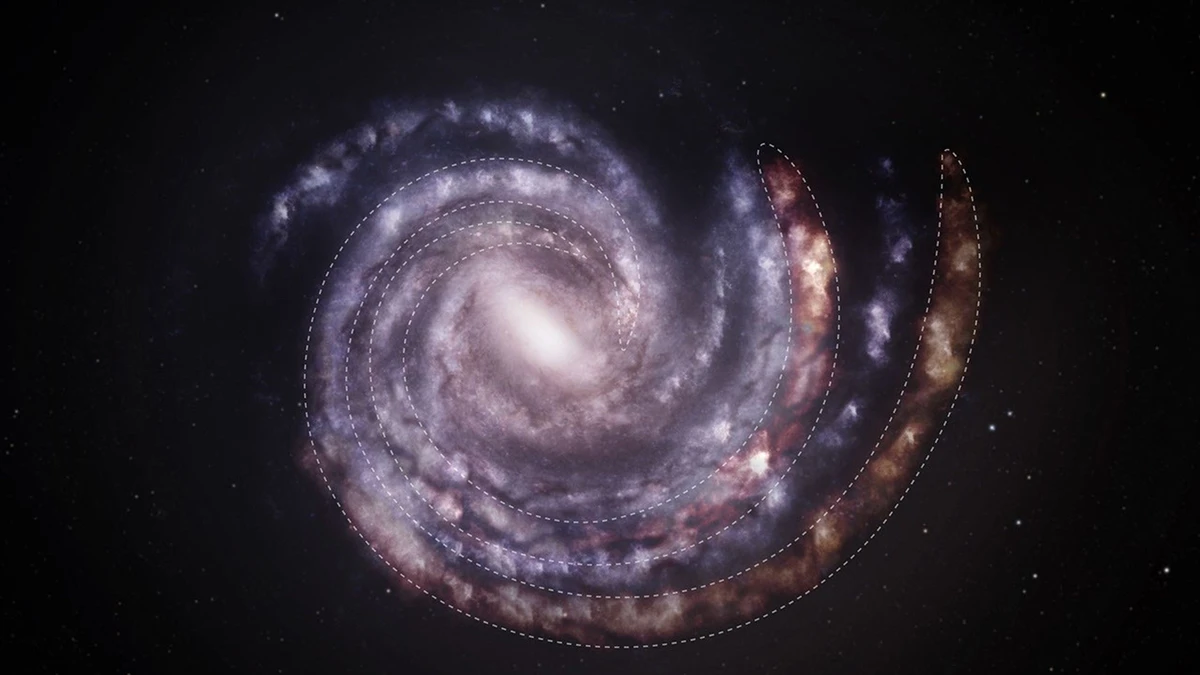
The Milky Way's outer spiral arms may reach wider than previously thought. That's the headline of a new study published in Astronomy & Astrophysics on 1 July 2026, led by Beatrice Vaia of Scuola Universitaria Superiore IUSS Pavia and the University of Trento in Italy.
Vaia's team measured precise distances to dust clouds in three of the galaxy's spiral arms: the Perseus Arm, the Outer Arm, and the Outer Scutum-Centaurus Arm. Along one line of sight, both the Outer and Outer Scutum-Centaurus arms turned out to be about 10% more distant than the accepted maps showed.
Ten per cent might not sound like much. But when the thing being measured is a structure tens of thousands of light-years long, it adds up to a serious revision.
"This is a very direct way, relying only on geometry, to precisely measure distances to the Milky Way's spiral arms," said Vaia. "Most other methods rely on assumptions about how the Milky Way rotates, which become increasingly uncertain in the outer regions of our galaxy."
How Big Is the Milky Way?
The Milky Way's bright disc of stars is roughly 100,000 light-years across, about 1,000 light-years thick at the arms, and home to somewhere between 100 and 400 billion stars. Even that headline figure comes with a shrug, and this new result shows why: measuring our galaxy is hard.
The problem is where we're sitting. The Sun lives inside the disc, on the inner edge of a minor arm called the Orion Arm, about 27,000 light-years from the centre. Imagine trying to draw a map of a forest without ever leaving it. Every other spiral arm has to be measured through clouds of dust and gas that block the view, which is why astronomers have known the Milky Way is a spiral for a century, yet still argue about exactly where its arms lie.
That's what makes this result matter. Beyond nudging two arms outwards, it hands astronomers a rare clean measurement in the part of the galaxy where the usual methods struggle most.
How Do You Measure a Galaxy From the Inside?
The team's answer: wait for the universe to set off a flashbulb.
Gamma-ray bursts are among the brightest explosions in the cosmos, triggered by the collapse of a massive star or the merger of two neutron stars. They happen far beyond the Milky Way, but their X-rays pass through our galaxy on the way to Earth. When that light grazes a dust cloud in a spiral arm, some of it reflects towards us, arriving slightly late because it took a longer path. Astronomers call this a light echo.
From Earth, the echo appears as a set of expanding X-ray rings around the burst, like ripples around a stone dropped in a pond. And here's the useful part: the size of each ring depends only on the distance to the dust cloud that made it. Bigger rings come from closer clouds. Measure the rings and the distance drops out of simple geometry, with no assumptions about how the galaxy rotates.
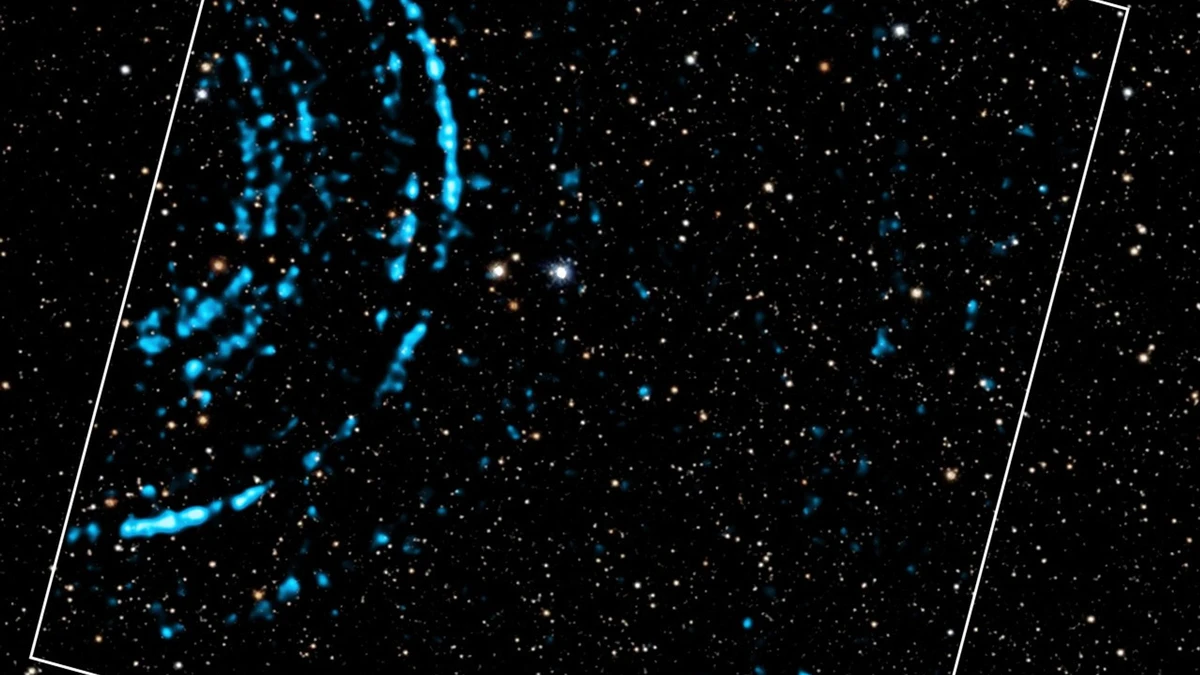
The team used three separate gamma-ray bursts to pin down three arms. The echoes even revealed the thickness of the most distant arm's dust cloud, about 3,500 light-years, showing they'd measured the full arm rather than one stray cloud.
There's a catch, though. Bursts bright enough, and lined up with the galactic plane, are vanishingly rare. "We're relying on the universe to provide us with these events, and so far, over 25 years, we've only found a handful that we can use," said co-author Andrea Tiengo. "That said, we will continue to be on the lookout for more."
Why the Milky Way's Mass May Need Revising
Shift the arms and other numbers start to wobble. How far the arms stretch feeds into estimates of how much matter the galaxy holds, and how that matter is spread through the disc.
"The differences are small, but any revision of these distances is important because they are so fundamental for understanding our galaxy," said co-author Ilaria Fornasiero. "For example, this could mean that astronomers have to revise estimates of the mass of the galaxy, because that affects how wide the arms stretch."
It fits a bigger pattern too. The Milky Way keeps turning out to be less settled than the textbook diagrams suggest. Just last month, astronomers solved a 50-year mystery about the galaxy's central black hole, and ESA's Euclid telescope is mapping the crowded galactic bulge in unprecedented detail. Piece by piece, our home galaxy is being resurveyed, and it keeps springing surprises.

Can You See the Milky Way's Spiral Arms From the UK?
You can, and you may already have done without realising.
That misty band of light crossing the sky from a dark site is the disc of our galaxy seen edge-on, from the inside. Look towards Cygnus on a late July or August night and you're staring down the length of our own Orion Arm. The bright star clouds towards Sagittarius, low in the south, are the view inwards, towards arms closer to the galactic centre. The dark lanes running through the band are the same kind of dust clouds Chandra used as its measuring posts.
Early July nights in the UK never get properly dark, so give it a couple of weeks. From late July onwards, pick a moonless night, get well away from streetlights, and let your eyes adjust for twenty minutes. No equipment needed. A pair of 10x50 binoculars, though, will dissolve that soft glow into thousands of pinpoint stars: one of the simplest and best sights in all of astronomy. For the full rundown on timing, dark-sky spots and kit, our guide to seeing the Milky Way from the UK covers everything you need.
See our galaxy for yourself
Kit we've tested and reviewed in full
The summer Milky Way is the target the pros can't stop measuring, and it's glorious in modest kit from a dark UK site.
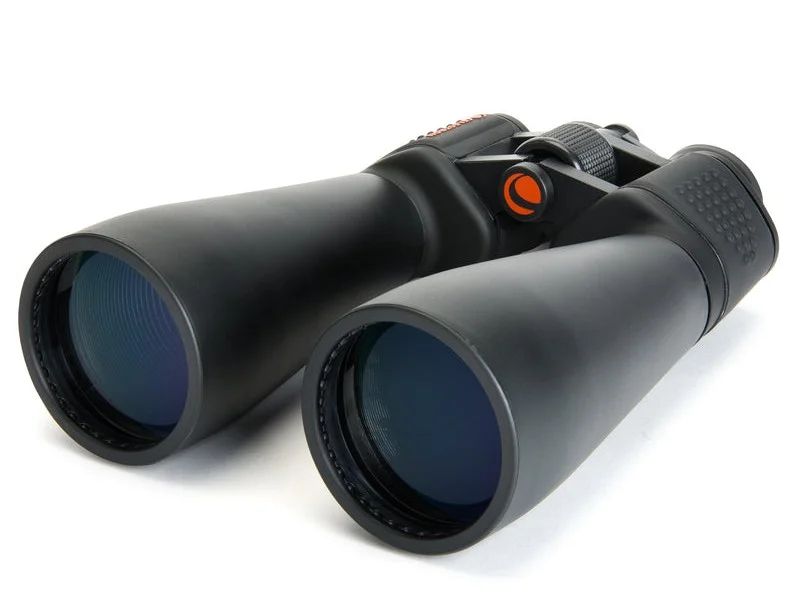
Big 70mm lenses drink in the star clouds of Cygnus and Sagittarius. Sweeping the summer Milky Way with these is unforgettable.
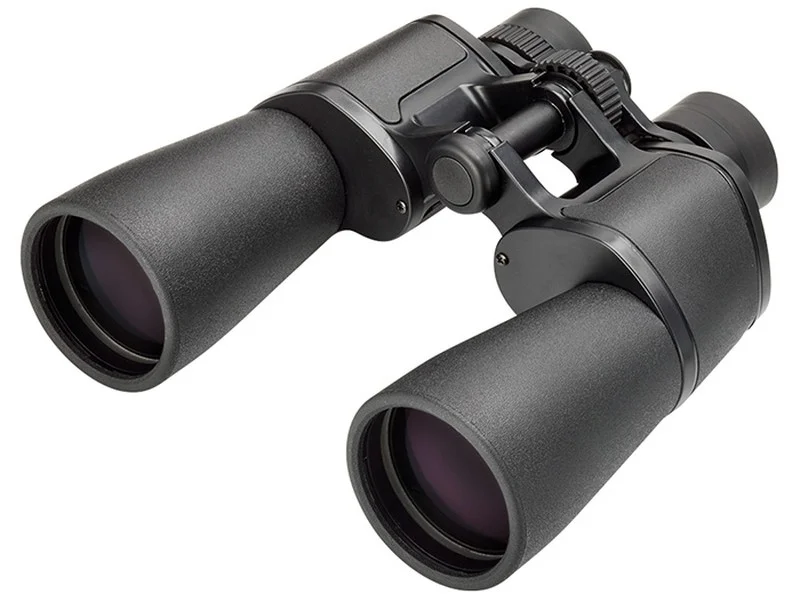
Light enough to hold steady for long sweeps along the galactic band, and a fine first pair for any stargazer.
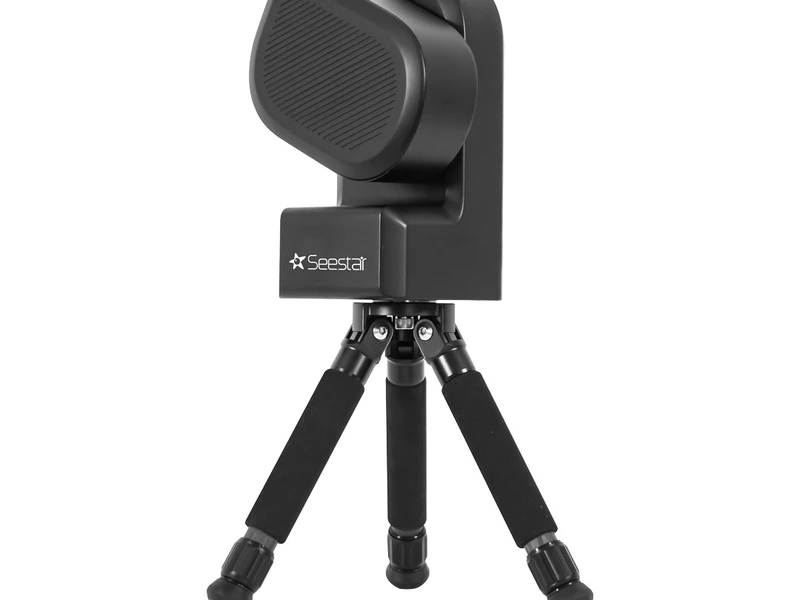
This smart telescope captures the nebulae strung along our spiral arm: the Ring, the Dumbbell and the North America Nebula are all summer targets.
Affiliate links: you pay the same price, we earn a small commission that helps keep WatchTheStars free.
The Bottom Line
A team of astronomers borrowed the flash of dying stars billions of light-years away to measure the shape of the galaxy we live in, and found that part of it sits further out than a century of careful work had placed it.
The revision is modest and it currently rests on a handful of rare events. But the method is clean, and every future gamma-ray burst that lines up with the galactic plane will sharpen the map a little more. In the meantime, the subject of all this effort is hanging in your summer sky, free to view on any clear, dark night. Worth a look, we'd say. Clear skies.
Sources:
- NASA's Chandra Examines Milky Way at Arms' Length · NASA Science
- Milky Way Spiral Arms photo album · Chandra X-ray Observatory
- Our Milky Way galaxy might be larger than we thought · Space.com
- The Milky Way's arms might not look as we thought · EarthSky
Frequently Asked Questions
Equipment guides
Related topics

Ian ClaytonAmateur astronomer and founder of WatchTheStars.co.uk, dedicated to helping others explore the wonders of our universe. Full profile →