Key takeaways
- A black hole nicknamed 'the Whippet' shredded a massive star in the most powerful stellar explosion ever recorded, officially designated AT2024wpp
- The blast briefly released as much energy as 400 billion Suns from a galaxy roughly 1.1 billion light-years away, outshining any known supernova
- A shock wave tore outward at one-fifth the speed of light before fading out about six months later
- Months after the light faded, astronomers spotted fast-moving helium, hinting that something dense may have survived the destruction
- The discovery was led by British astronomer Daniel Perley of Liverpool John Moores University and is published in Monthly Notices of the Royal Astronomical Society
Jump to section 6 sections
- Tidal Disruption Event Explained: How a Black Hole Shreds a Star
- The Whippet: The Most Powerful Stellar Explosion Ever Recorded
- 400 Billion Suns: How Does That Compare to a Supernova?
- Shock Wave at a Fifth the Speed of Light
- Did Something Survive? The Fast-Moving Helium Mystery
- What This Means for Black Hole Science
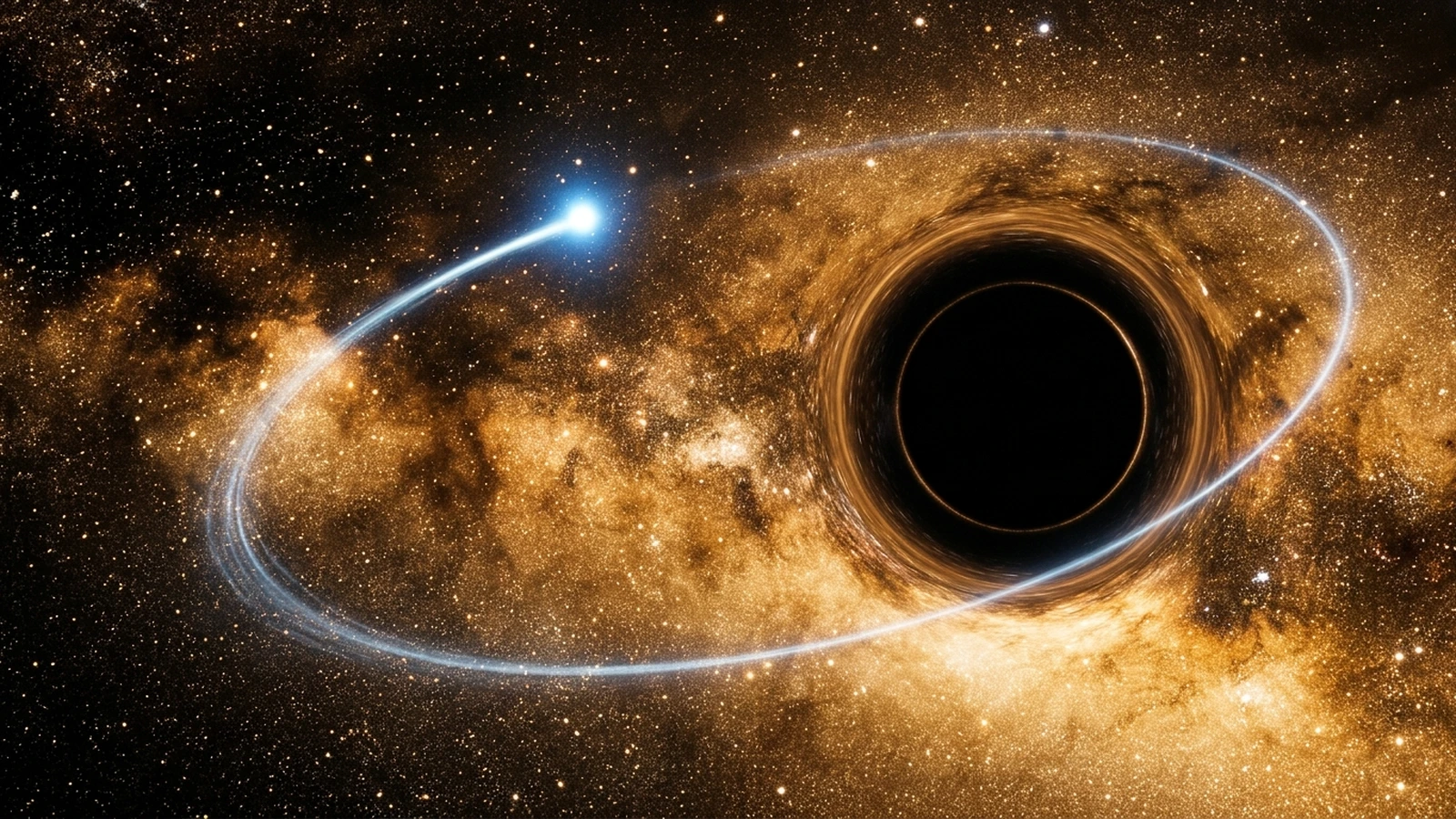
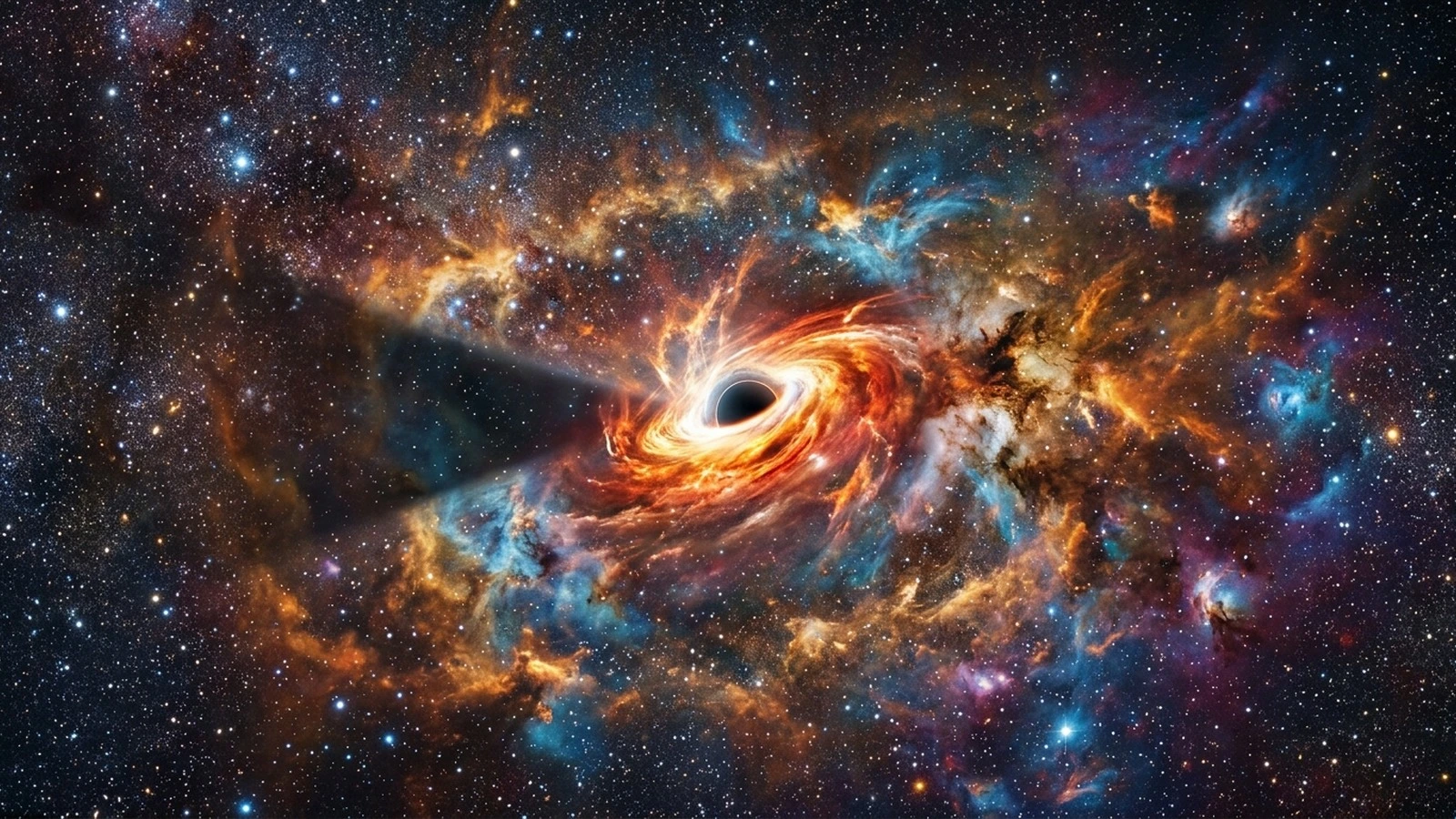
Astronomers have watched a black hole tear apart a massive star in what's now the most powerful stellar explosion ever recorded. For a brief moment, the blast put out as much energy as 400 billion Suns, brighter than any supernova ever observed.
The event has been nicknamed "the Whippet", officially catalogued as AT2024wpp. It was presented at the American Astronomical Society's meeting in Phoenix, Arizona, and the full study, led by Daniel Perley of Liverpool John Moores University, is published in Monthly Notices of the Royal Astronomical Society. Months after the light from the explosion had faded, the team spotted something they weren't expecting: signs that part of the doomed star might have survived.
Tidal Disruption Event Explained: How a Black Hole Shreds a Star
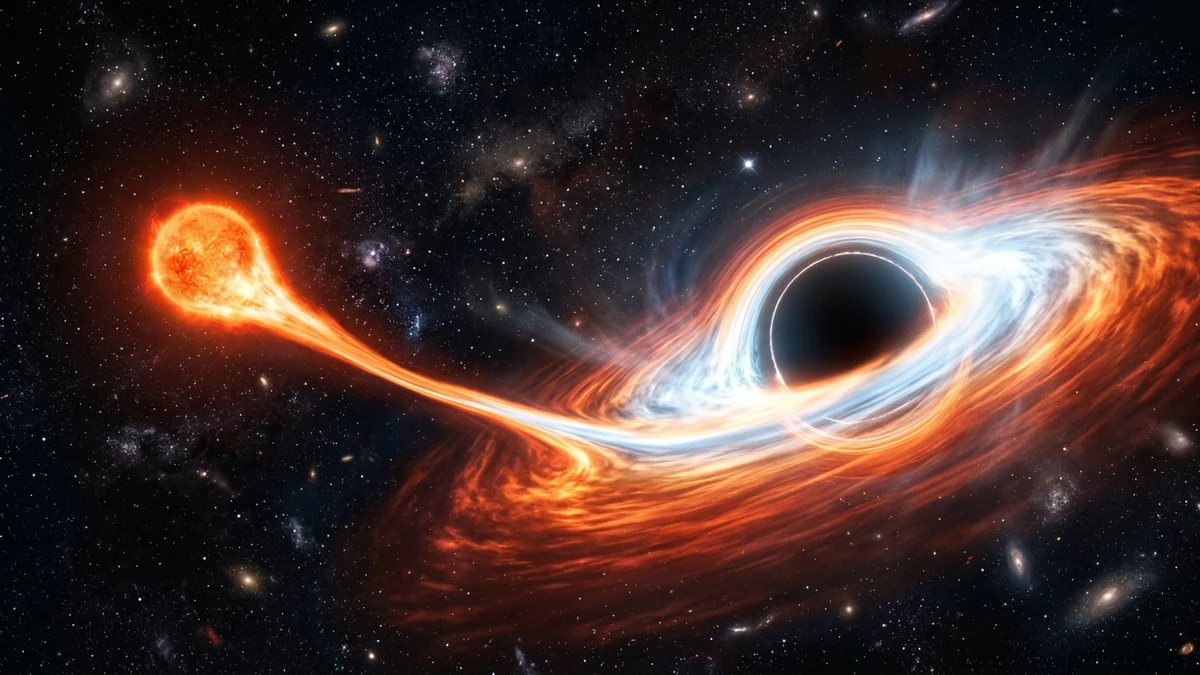
What happened to the star behind the Whippet is called a tidal disruption event, or TDE. It happens when a star strays too close to a black hole and gets caught by its gravity.
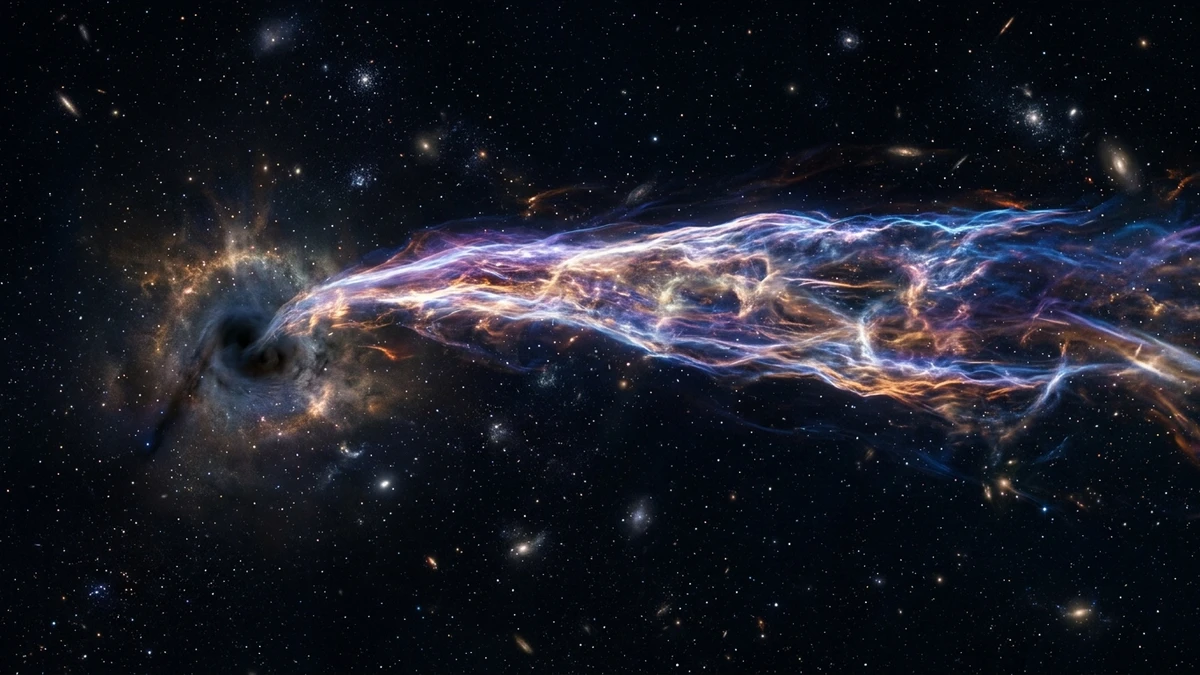
Gravity doesn't pull evenly across an object. The side of the star nearest the black hole gets tugged much harder than the far side, and that difference stretches the star into a long, thin thread, sometimes described as "stellar spaghetti". As the star is pulled apart, its material twists into a swirling disk around the black hole, called an accretion disk, which gradually spirals inward and feeds it. Some of that material never makes it in at all. Black holes are messy eaters, and a share of the shredded star gets blasted back out into space instead.
Astronomers have caught black holes doing this before, but never on this scale. The Whippet is a tidal disruption event turned up to a level nobody had seen before.
The Whippet: The Most Powerful Stellar Explosion Ever Recorded
The Whippet was first picked up by Anna Ho, an astronomer at Cornell University, using the Zwicky Transient Facility at Palomar Observatory in California. That survey camera scans huge swathes of sky every night, looking for anything that changes brightness. Within a day, follow-up observations from the Liverpool Telescope in the Canary Islands and NASA's Swift satellite showed the object was extremely blue and pouring out X-rays, exactly what astronomers would expect from a rare class of event called a Luminous Fast Blue Optical Transient, or LFBOT.
Distance measurements from co-authors R. Michael Rich at UCLA and Yu-Jing Qin at Caltech placed the source about 1.1 billion light-years away. That distance showed it was releasing far more energy than any ordinary exploding star could produce. Combined with its unusually high temperature, that pointed to only one explanation: a black hole was in the process of shredding and swallowing a star.
"We discovered what we think is a black hole merging with a massive companion star, shredding it into a disk that feeds the black hole. It's a rare and awe-inspiring phenomenon," Perley told the AAS conference.
Researchers estimate the doomed star was around 30 times the mass of the Sun, likely a rare Wolf-Rayet star, and that the black hole devouring it may weigh up to 100 solar masses. "Even though we suspected what it was, it was still extraordinary," Perley added. "This was many times more energetic than any similar event and more than any known explosion powered by the collapse of a star."
400 Billion Suns: How Does That Compare to a Supernova?
Four hundred billion Suns' worth of energy is difficult to picture, so it helps to compare it with what a normal exploding star produces. Even the brightest known supernovae, the explosive deaths of massive stars running out of fuel, fall well short of what the Whippet briefly put out. Perley's team say it's more energetic than any known explosion powered by stellar collapse.
The reason a tidal disruption event can outshine a supernova comes down to how the energy is generated. A supernova is a one-off release, the star's core collapsing and its outer layers blasting outward. A black hole feeding on a star works differently. As shredded stellar material spirals into the black hole through the accretion disk, friction heats it to extreme temperatures, and that infall can, for a while, release energy far faster than any star's death throes.
"Not only do these events help us identify black holes, they provide a new way to identify where black holes occur and how they form and grow, and the physics of how this happens," Perley said.
You can't see the Whippet, but you can scan the same skies
Kit we've tested and reviewed in full
AT2024wpp is a survey-telescope target a billion light-years away. What you can do from a UK garden is sweep the star fields these black hole stories keep pointing back to.
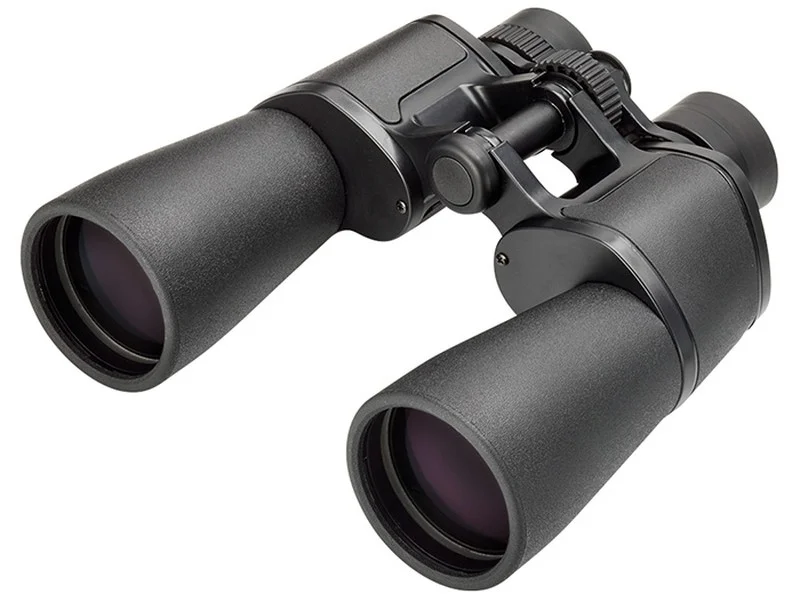
A great first pair for sweeping the Milky Way and the crowded star fields of Cygnus and Sagittarius, where the black holes in this story make their homes.
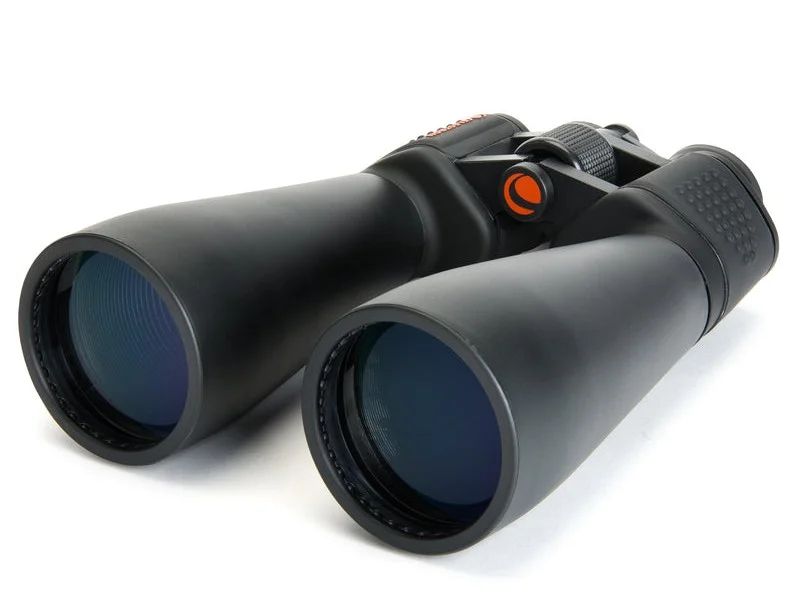
Bigger objectives pull in fainter detail along the summer Milky Way, useful for tracking down the star clusters and nebulae near Cygnus X-1.
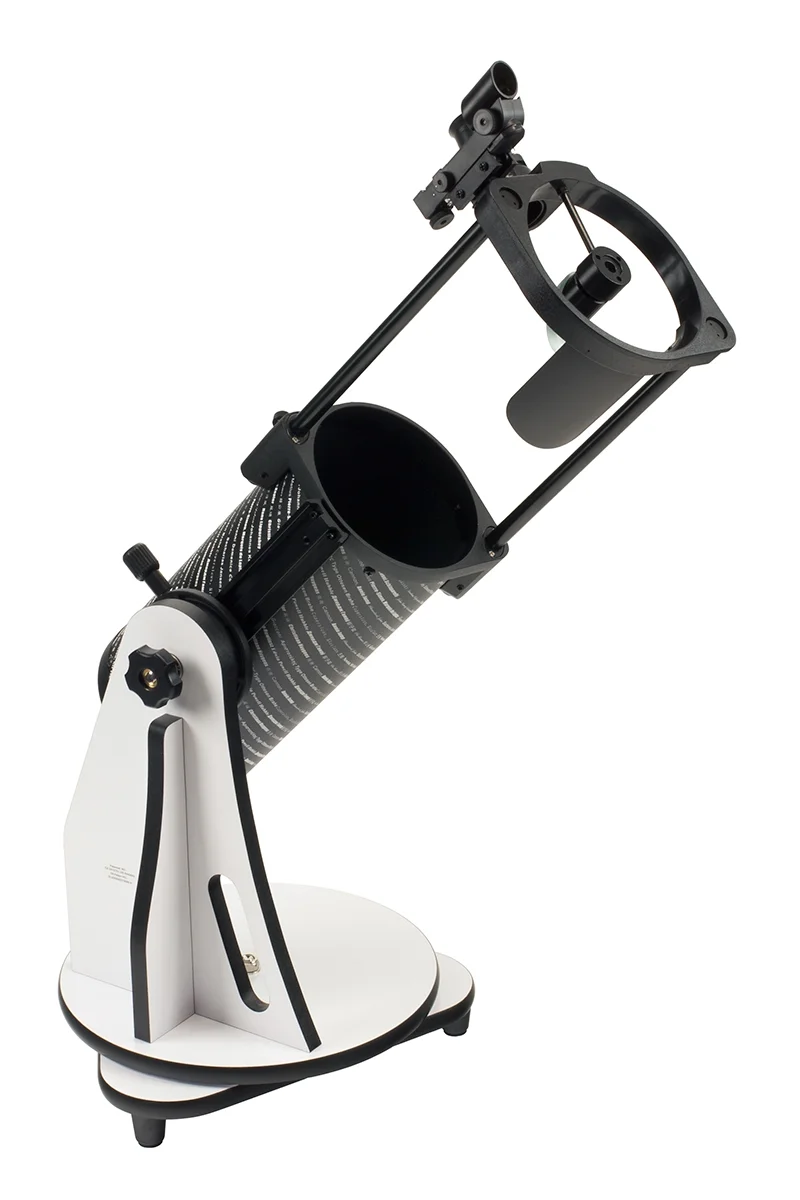
Enough aperture to start resolving star clusters and nebulae scattered through the same rich star fields these black hole discoveries sit behind.
Affiliate links: you pay the same price, we earn a small commission that helps keep WatchTheStars free.
Shock Wave at a Fifth the Speed of Light
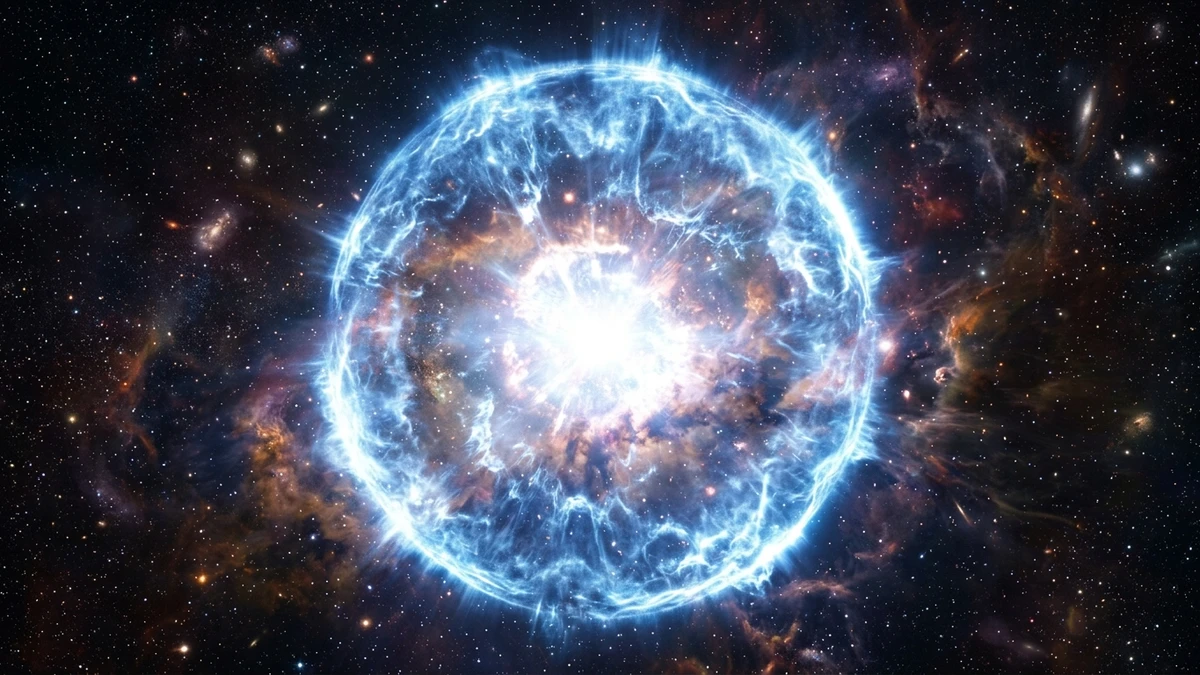
As the black hole fed, the disk around it produced X-rays and drove a powerful wind of gas outward. That outflow slammed into material the star had shed long before its destruction, and the collision generated a shock wave that raced out at roughly one-fifth the speed of light, around 134 million miles an hour.
For comparison, that's about 90,000 times faster than the top speed of an F-16 fighter jet. It's also what produced the bright blue and ultraviolet glow astronomers spotted in the first few days, along with the radio and millimetre-wavelength signals that followed.
The shock wave didn't keep accelerating forever, though. After roughly six months, it suddenly appeared to fizzle out. Researchers think that happened when the shock reached the outer edge of a bubble of gas the star had blown off before the black hole ever got close, essentially running out of material to plough into.
Did Something Survive? The Fast-Moving Helium Mystery
The strangest part of the story showed up only after the fireworks had died down. Observations with the Keck, Magellan and Very Large Telescope observatories found almost no recognisable chemical signatures for the first month, which is itself unusual. Then, as the explosion faded, faint traces of hydrogen and helium appeared.
The helium was the surprise. It was moving towards Earth at more than 6,000 kilometres a second, about 13 million miles an hour. That's far too fast and too coherent to be ordinary leftover debris drifting apart. It suggests a dense, bound structure survived the initial destruction and is now moving through space in our direction.
The team has two ideas about where it came from. It might be a stream of material flung out from the doomed star's core as the black hole tore it apart, a surviving remnant of the star itself. Or, more speculatively, it could be a second star in the system, blasted by the fierce wind of particles and X-rays pouring off the feeding black hole.
Either way, it means the story of the Whippet isn't finished. Something out there is still moving, months after the black hole appeared to have finished its meal.
What This Means for Black Hole Science
Tidal disruption events matter to astronomers well beyond the spectacle. Every time a black hole shreds a star, it briefly lights up an object that would otherwise sit invisible in the dark. That gives researchers a rare way to find black holes that aren't actively feeding on anything else, work out how big they are, and study how they grow over cosmic time.
The Whippet also sits alongside a run of dramatic black hole stories from the past few months. Elsewhere, astronomers have watched a black hole waking up after 100 million years of silence, caught the wind finally confirmed blowing from Sagittarius A*, the supermassive black hole at the heart of our own galaxy, and used James Webb Space Telescope data to argue that some of the universe's strangest early galaxies might actually be "black hole stars". Together, these results are filling in a picture of black holes as far more varied and active than the quiet, invisible objects they're often imagined to be. Some of that picture is even helping map the dark matter scaffolding that holds galaxies together.
None of this is visible from a back garden in the UK, and it never will be. But the black holes in these stories live in directions you can actually point a pair of binoculars towards. Cygnus X-1, one of the very first black holes ever confirmed, sits in the constellation Cygnus, which rides high overhead on clear summer and autumn evenings. Sagittarius, low in the southern sky on summer nights, marks the crowded starfields that lead towards our own galaxy's centre and its black hole. Our guide to seeing the Milky Way from the UK is a good place to start if you want to trace that route for yourself, and our binocular astronomy guide will get you set up if you're new to it. If you're just working out what's worth going outside for, check what's up tonight, or start with our stargazing for beginners guide.
Somewhere, a billion light-years away, a black hole is still quietly finishing its meal. It's worth a thought next time you're out under a clear sky.
Sources:
- A black hole shredded a "super sun", but something strange may have survived · ScienceDaily / Liverpool John Moores University
- 'Super star' being shredded by black hole releases as much energy as 400 billion suns · Space.com
- Black Hole Shredded a Massive Star in the Most Powerful Stellar Explosion Ever Seen · SciTechDaily
- Perley, D. A. et al. "AT 2024wpp: an extremely luminous fast ultraviolet transient powered by accretion onto a black hole" · Monthly Notices of the Royal Astronomical Society, 2026. DOI: 10.1093/mnras/stag678
Frequently Asked Questions
Equipment guides
Related topics
Ian ClaytonAmateur astronomer and founder of WatchTheStars.co.uk, dedicated to helping others explore the wonders of our universe. Full profile →