Key takeaways
- On 24 June 2026, ESA and the Euclid Consortium release their second Quick Data Release (Q2): the Euclid Galactic Bulge Survey
- Euclid stared at the crowded heart of the Milky Way and imaged 4.8 square degrees across nine adjoining fields with its visible-light VIS camera, built by a UK-led team
- The release contains calibrated images plus catalogues pinpointing the position and brightness of every star in that dense field, at a razor-sharp resolution of 0.16 arcseconds
- Its main job is to help hunt for planets: the patch of sky covers dozens of historical 'microlensing' planet signals, and Euclid's sharp eye can now help confirm them
- The survey lays the groundwork for NASA's Roman Space Telescope, which will hunt the same region for microlensing planets from 2027
Jump to section 7 sections
- Europe's Dark-Universe Telescope Turns to the Milky Way's Heart
- What Is the Galactic Bulge, and Why Point There?
- What's Actually in the Q2 Release
- How Euclid Hunts for Planets: Microlensing Explained
- Why This Matters for NASA's Roman Telescope
- See the Milky Way's Core Yourself This Summer
- The Bottom Line
Europe has a telescope built to map the dark, invisible scaffolding of the universe. This week it's doing something a little different, and a lot more relatable. It's handing the world its sharpest-ever view of the crowded heart of our own galaxy, and the point of the exercise is to help find planets around other stars.
On 24 June, the European Space Agency and the Euclid Consortium publish their second "Quick Data Release," known as Q2. The headline isn't a single dazzling photo. It's a whole survey of the Milky Way's core, packaged up so astronomers anywhere can dig into it. Here's what's coming, and why a dark-matter telescope is suddenly in the planet-hunting business.
Europe's Dark-Universe Telescope Turns to the Milky Way's Heart
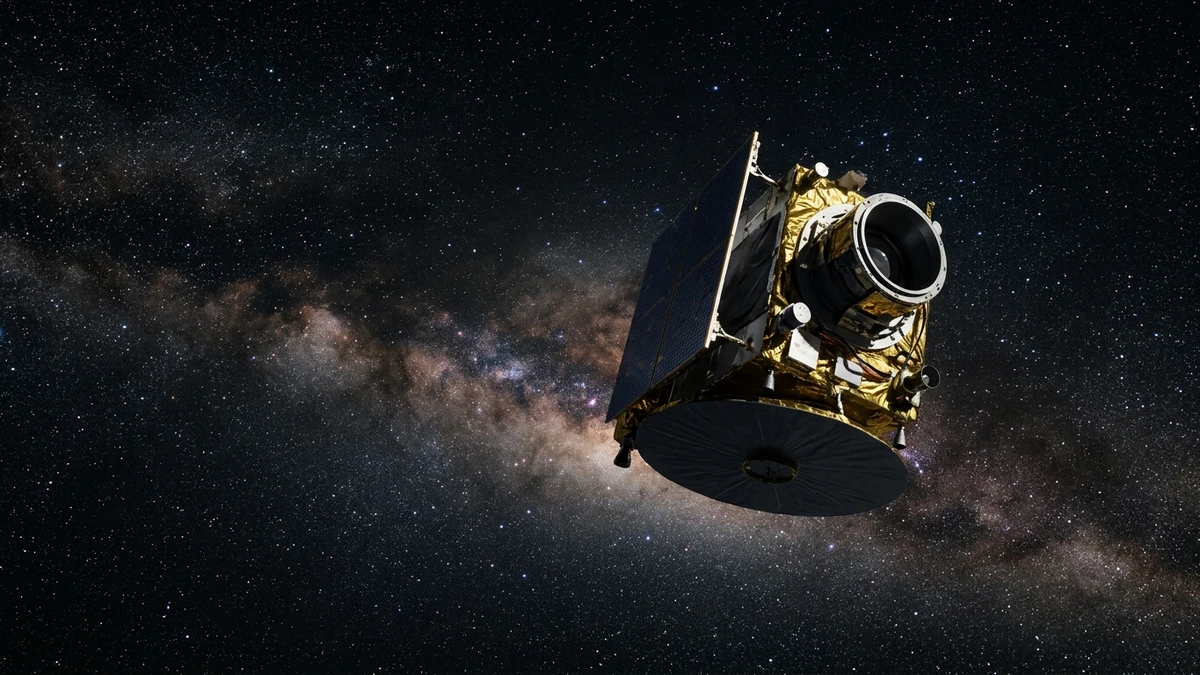
Euclid is one of the most ambitious science missions Europe has ever flown. Launched in July 2023, its day job is to chart billions of galaxies across more than a third of the entire sky, building a 3D map that stretches back 10 billion years. The goal is to pin down the two greatest mysteries in physics: dark matter and dark energy, the unseen stuff that makes up about 95% of the cosmos.
To do that, Euclid carries two cameras behind a 1.2-metre mirror. One sees visible light (called VIS), the other sees infrared (NISP). And there's a quietly satisfying British thread here: the VIS camera, the very instrument behind this week's release, was built by a consortium led from the UK, at University College London's Mullard Space Science Laboratory. When you look at these images of the galactic core, you're looking through a camera with deep British fingerprints on it.
After a hugely successful first data release in March 2025, the team is now opening up something completely different. Instead of staring out into the distant universe, Euclid turned and pointed almost straight at the centre of our own galaxy.
What Is the Galactic Bulge, and Why Point There?
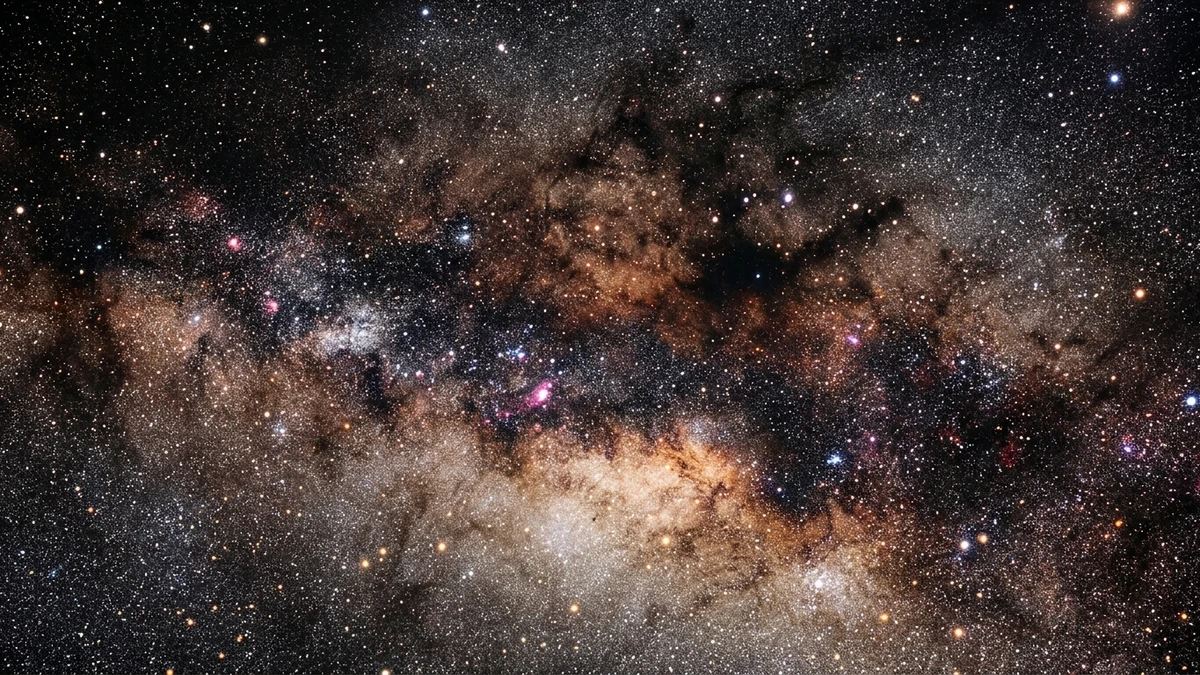
Our Milky Way is a flat spiral of a few hundred billion stars, and at its centre the stars pile up into a dense, rounded swelling called the bulge. Picture a fried egg: the broad, thin spiral disc is the white, and the fat yolk in the middle is the bulge. That's where the action is: millions upon millions of ancient stars crammed together around the galaxy's central black hole.
It's a spectacular target, but a fiendishly difficult one. The bulge is so packed with stars that they blur into one another, and thick lanes of interstellar dust hang in front, soaking up starlight before it ever reaches us. Most telescopes either can't resolve the individual stars or can't see through the murk.
This is exactly where Euclid earns its keep. In March 2025 it pointed close to the Galactic Centre and imaged a patch of sky covering 4.8 square degrees, roughly the area of 24 full Moons laid side by side, split across nine adjoining fields. The result is an unprecedented deep, wide-field, high-resolution view of the inner bulge: sharp enough to tease apart individual stars in one of the most crowded regions of the entire sky.
What's Actually in the Q2 Release
When astronomers talk about a "data release," they don't just mean pretty pictures: they mean a treasure chest of measurements anyone can download and study. The Q2 release has two main parts.
First, the calibrated images themselves: the raw views cleaned up and corrected so they're ready for science. Euclid took these in a single broad band of visible light, stacking 16 slightly shifted exposures of 400 seconds each. That adds up to 1.8 hours of staring per field, all captured at the camera's remarkable resolution of 0.16 arcseconds: fine enough to split apart stars that would smear together in a lesser instrument.
Second, and arguably more valuable, are the catalogues. These are enormous tables listing the precise position (astrometry) and brightness (photometry) of every single star Euclid can pick out in that field. For a region this crowded, that's a staggering number of stars, each one logged with pinpoint accuracy. It's the kind of reference dataset that researchers around the world will be mining for years.
How Euclid Hunts for Planets: Microlensing Explained
Here's the part that turns a dark-matter mission into a planet hunter. The whole reason Euclid was aimed at the bulge is a beautiful trick of physics called gravitational microlensing.
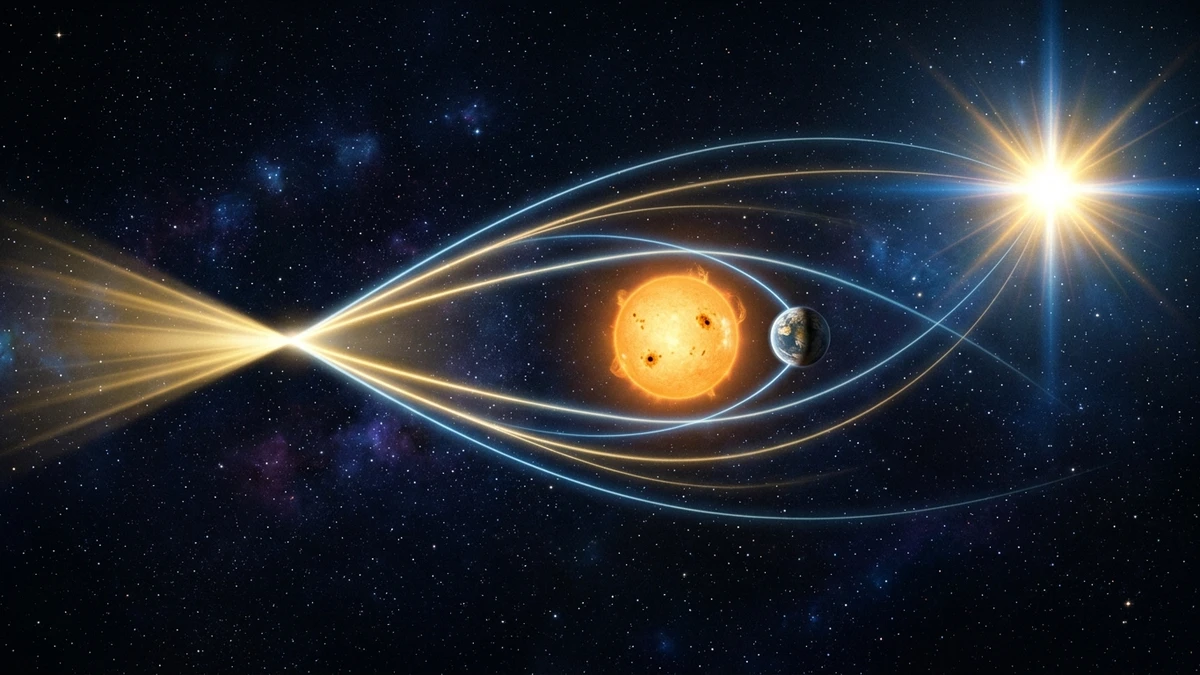
Einstein showed that gravity bends light. So when one star drifts almost exactly in front of a more distant star, the nearer star's gravity acts like a lens, briefly bending and magnifying the light of the one behind it. From Earth, we see the background star flare up and then fade over days or weeks. And if the foreground star happens to have a planet, that planet adds its own tiny, tell-tale extra blip to the brightness spike. It's currently the best way we have of finding cool, distant planets, even ones as small as Earth, far from their stars.
The crowded bulge is the perfect hunting ground, because so many stars are packed together that these chance alignments happen often. Over the past 20 years, ground-based surveys have caught dozens of these microlensing planet signals in this very patch of sky.
The catch has always been confirming them. During a microlensing event, the two stars sit right on top of each other, so you can't easily separate the planet's host star from the background star it lensed. But here's the clever bit: years later, the two stars have drifted apart slightly. Euclid's razor-sharp camera can now resolve that foreground host star on its own: confirming that the signal really was a planetary system and allowing astronomers to measure the planet's mass far more precisely than before. In effect, Euclid is going back to old crime scenes with a much better camera and finally identifying the culprits.
Why This Matters for NASA's Roman Telescope
There's a bigger plan behind all of this, and it links Euclid to its American cousin.
NASA's Nancy Grace Roman Space Telescope, a wide-field observatory we wrote about when it was unveiled, is gearing up for a launch later this year. One of its flagship projects is the Galactic Bulge Time Domain Survey, in which it will watch this same crowded region for years to catch microlensing events as they happen and bag a haul of new planets, starting from 2027.
Euclid's survey is, in effect, the "before" picture. By precisely mapping where all the stars sit right now, at high resolution, it gives Roman a baseline to work against and helps astronomers wring the maximum science out of Roman's planet hunt. Two of the most powerful telescopes ever built, one European and one American, teaming up on the same patch of sky to find new worlds, that's a genuinely exciting bit of international choreography, and the Q2 release is the opening move.
Want to explore the Milky Way's core yourself?
Kit we've tested and reviewed in full
Euclid's survey points at the heart of the galaxy in Sagittarius: the richest star clouds in the entire sky, and beautifully placed on UK summer nights. Here's the kit we'd reach for to sweep them.
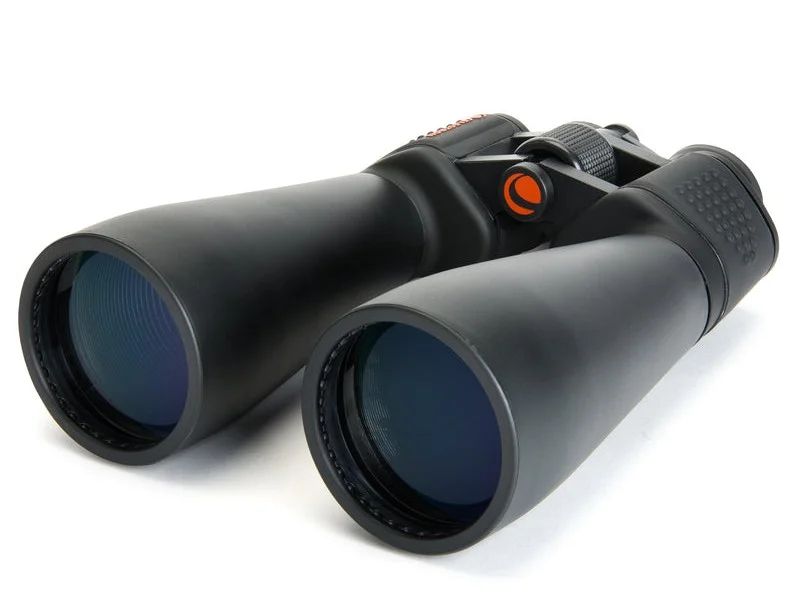
A big, bright pair of binoculars is the perfect way to sweep the Sagittarius star clouds, the same direction Euclid is staring. Lift them on a dark summer night and the Milky Way's core dissolves into countless stars.
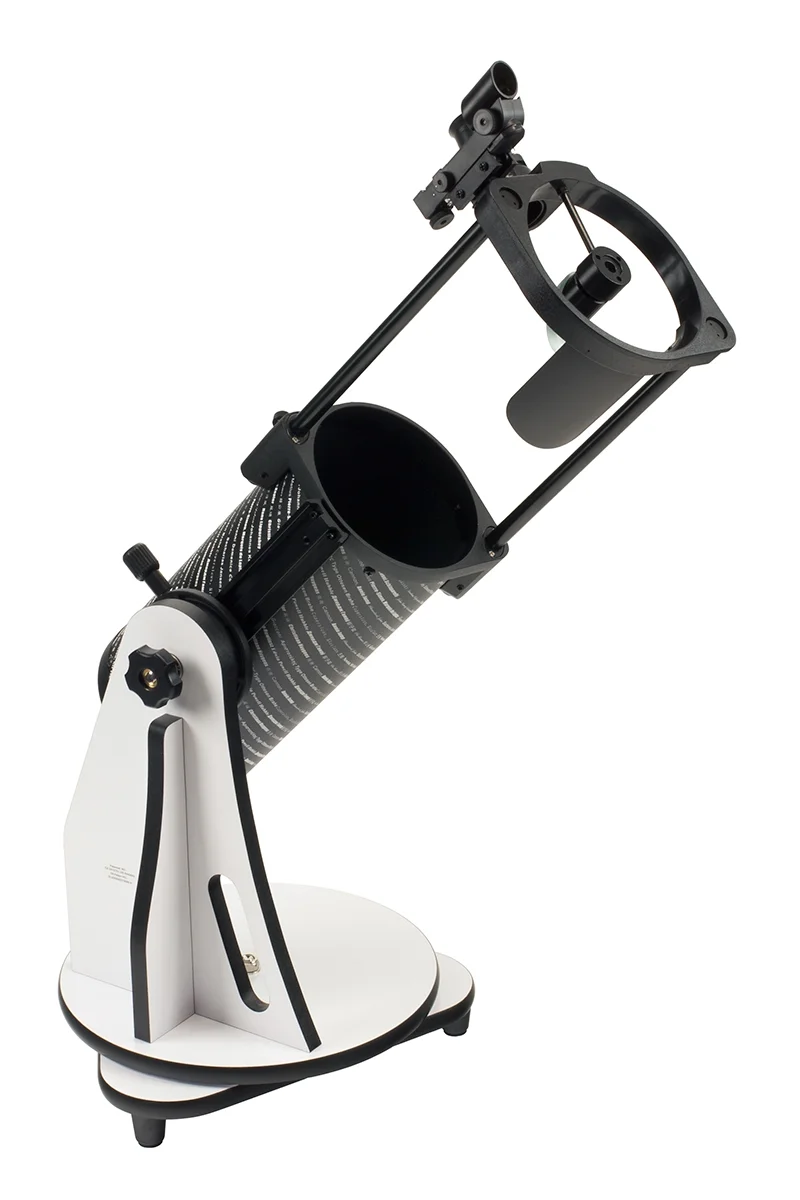
A brilliant beginner scope at a friendly price. Aim its 130mm mirror at Sagittarius and you'll find glowing nebulae and dense globular star clusters scattered right across the galaxy's heart.
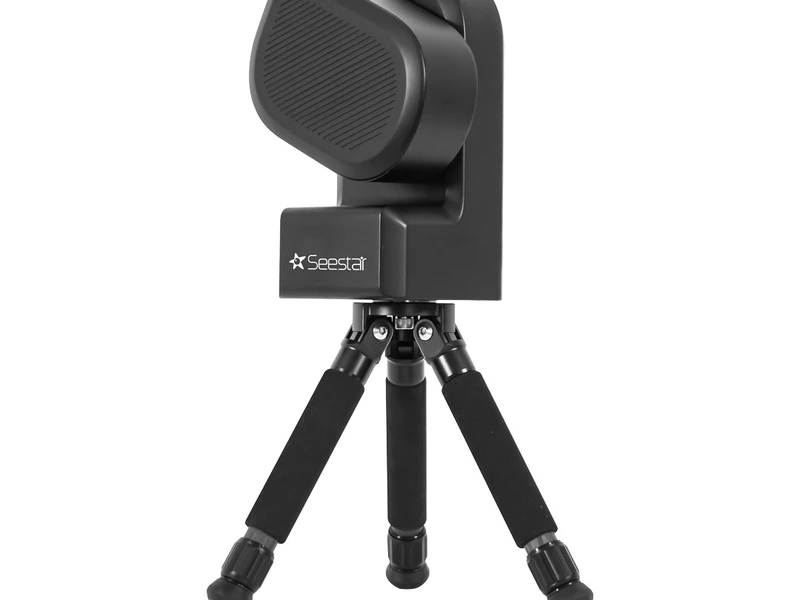
A smart telescope that does the hard work for you. Point it with your phone and it stacks live images of the nebulae and clusters crowding the galactic centre: your own deep view of the region Euclid just surveyed.
Affiliate links: you pay the same price, we earn a small commission that helps keep WatchTheStars free.
See the Milky Way's Core Yourself This Summer
You won't be able to download Euclid's catalogues and spot the difference with your eyes, but you can look at the very same part of the sky, and now is the perfect time of year to do it.
The galactic bulge sits in the constellation Sagittarius, and from the UK it climbs low across the southern sky on summer nights. You'll need to get away from town lights and wait until the sky is properly dark, which in June means waiting until quite late given how short our nights are right now. Look low towards the south, and the brightest, densest stretch of the Milky Way you can see is the direction of the galaxy's core: the exact region Euclid has been studying.
To the naked eye from a dark site it looks like a glowing patch of mist. Through binoculars it explodes into a dazzling carpet of stars, dotted with the smudges of nebulae and globular clusters. It is, without exaggeration, one of the finest sights in all of stargazing, and there's something rather lovely about sweeping your binoculars across the same star clouds that one of the world's great space telescopes just mapped in extraordinary detail.
The Bottom Line
On 24 June, a telescope designed to weigh the invisible universe gives us its clearest-ever look at our own galactic backyard. The Euclid Galactic Bulge Survey is a deep, sharp, wide map of the Milky Way's crowded heart, beautiful to look at, but built with a practical purpose: helping to confirm planets around distant stars and paving the way for NASA's Roman telescope to find many more.
It's a reminder that the big questions and the small ones are often answered by the same instrument. A camera built in Britain to chase dark matter is, this week, helping us hunt for other worlds. Keep an eye on ESA's channels for the release, and on the next clear, dark night, look low to the south and find the heart of the galaxy for yourself. Clear skies.
Sources:
- Euclid data release Q2: the Euclid Galactic Bulge Survey · Euclid Consortium
- Euclid Galactic Bulge Survey · Caltech / Euclid
- Q2 Data Release · ESA Cosmos
- Euclid (space telescope) · Wikipedia
Frequently Asked Questions
Equipment guides
Related topics
Ian ClaytonAmateur astronomer and founder of WatchTheStars.co.uk, dedicated to helping others explore the wonders of our universe. Full profile →