Key takeaways
- A 245-page Air Force correspondence file from 1947–48, declassified on 7 August 2026, documents the birth of official UFO investigation in the United States
- In November 1948, Air Force intelligence chief Colonel Howard McCoy wrote that 'the possibility that the reported objects are vehicles from another planet has not been ignored'
- The same file shows the Air Force plotting UFO sighting frequency against the close approaches of Mercury, Venus and Mars: an extraterrestrial hypothesis test, run officially, in 1948
- A request to put fighters with gun cameras on continuous alert was refused because the US had no radar coverage of its own territory
- The FBI investigated the first forty flying disc witnesses for Communist-inspired 'mass hysteria', with negative results in every case
Jump to section 7 sections
- The 1948 UFO File: What Was Declassified
- The Twining Memo: 'Something Real'
- 'The Conclusion Appears Inescapable': The Cabell Letter
- 'Vehicles From Another Planet Has Not Been Ignored'
- The Plan to Intercept UFOs With Fighters: Refused
- The FBI Check and the RAND Spaceship Study
- The Estimate of the Situation: Why This File Matters Now
Somewhere in the autumn of 1948, a colonel in US Air Force intelligence sat down to answer the most senior officer in his service about flying saucers, and typed a sentence that stayed buried for decades: "The possibility that the reported objects are vehicles from another planet has not been ignored."
That sentence (who wrote it, why, and what the Air Force did about it) is the heart of a 245-page correspondence file declassified on 7 August 2026 in the Pentagon's fifth UFO file release. The press summarised it in a line or two. Having read all 245 pages, I think it's the most important historical document the release programme has published so far. Here's why.
The 1948 UFO File: What Was Declassified
The file was billed as "an Air Materiel Command report on UFOs, 1947–1948". It's actually something better: the complete internal paperwork of the moment official UFO investigation began. Memos, replies, cover sheets, endorsements: the full paper trail from September 1947 to November 1948, between Air Materiel Command at Wright-Patterson and Air Force headquarters in Washington.
Reading it in order, you watch the world's most powerful air force convince itself, in private, that something real was flying over the United States; try to work out what; and carefully manage what the public heard. We've published a full breakdown on our Project SIGN file page: what follows are the passages that matter most, in the order they were written.
The Twining Memo: 'Something Real'
The file opens with the document historians have quoted from secondary copies for years: the memo of September 1947 from General Nathan Twining, commander of Air Materiel Command. Twining's verdict on the summer's flying disc reports was blunt: "The phenomenon reported is something real and not visionary or fictitious."
His memo describes objects that were metallic or light-reflecting, circular or elliptical, flat-bottomed and domed, flying in formations of three to nine, level speeds above 300 knots. The reported extreme rates of climb and evasive manoeuvres, he wrote, "lend belief to the possibility that some of the objects are controlled either manually, automatically or remotely." He also noted the fly in the ointment that would nag every investigator since: no crash-recovered physical evidence.
Twining recommended a classified priority study. On 30 December 1947 the order came back establishing Project SIGN, and a December intelligence analysis in the same file went a step further than Twining had: having formally ruled out secret US projects, it concluded that "if the discs actually exist, they are foreign in origin."
'The Conclusion Appears Inescapable': The Cabell Letter
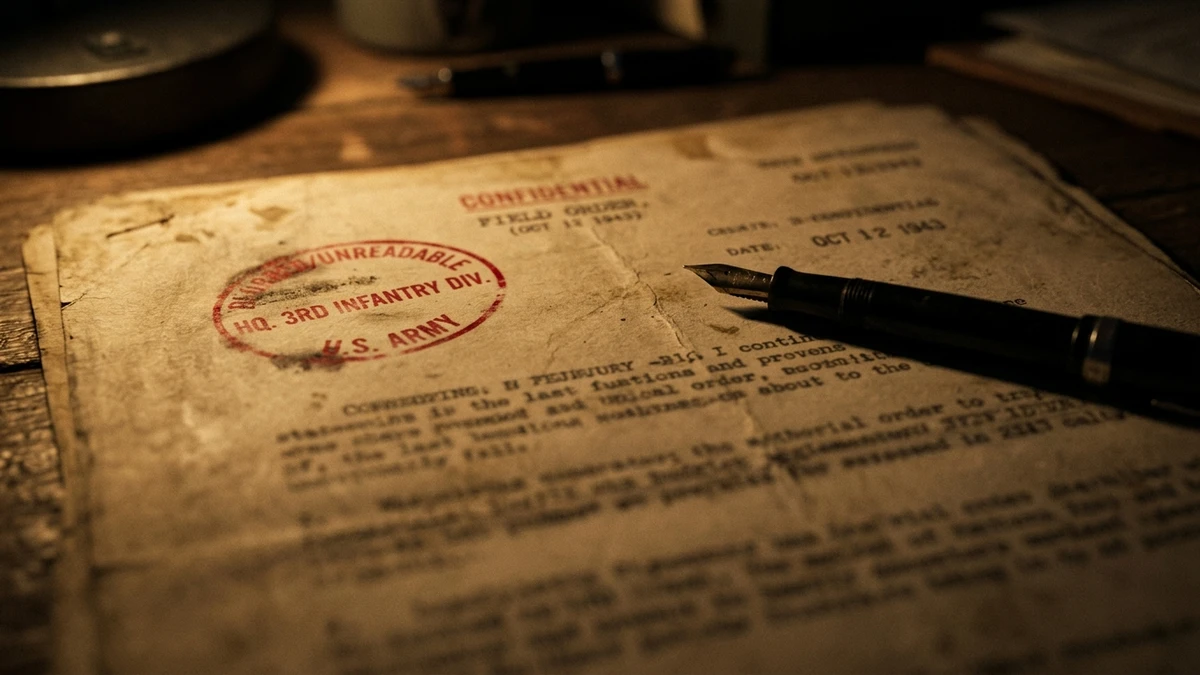
Jump forward a year. By November 1948 the reports hadn't stopped, and headquarters wanted answers. On 3 November, a letter went from Washington to Air Materiel Command over the name of Brigadier General C.P. Cabell's office, and its second paragraph has become one of the most quoted in UFO history, now readable in the original:
"The conclusion appears inescapable that some type of flying object has been observed. Identification and the origin of these objects is not discernible to this Headquarters."
The letter ordered efforts "increased until conclusive evidence is obtained", on national defence grounds. And it worried, in writing, about the press: "too little data to present to the public... The press, however, is about to take it into its own hands and demand to be told what we do or do not know about the situation. Silence on our part will not long be acceptable."
That's the US Air Force, in private, in 1948: the objects are real, we don't know what they are, and the newspapers are getting restless.
'Vehicles From Another Planet Has Not Been Ignored'
The reply is the file's crown jewel. It came from Colonel Howard McCoy, chief of the intelligence department at Air Materiel Command, the officer running the actual investigation. His letter works through what a year of Project SIGN had established. Around 180 incidents had been studied in detail. Prominent scientists, including Nobel laureate Irving Langmuir of General Electric, had been consulted, and a further review with Langmuir was planned. Some sightings were astronomical: brilliant Venus alone accounted for a surprising number of daylight reports. But a residue would not resolve, and paragraph seven delivers the first verdict: all the information available indicated the discs, cigar-shaped objects and "balls of light" were "not of domestic origin".
Then paragraph eight:
"The possibility that the reported objects are vehicles from another planet has not been ignored. However, tangible evidence to support conclusions about such a possibility are completely lacking."
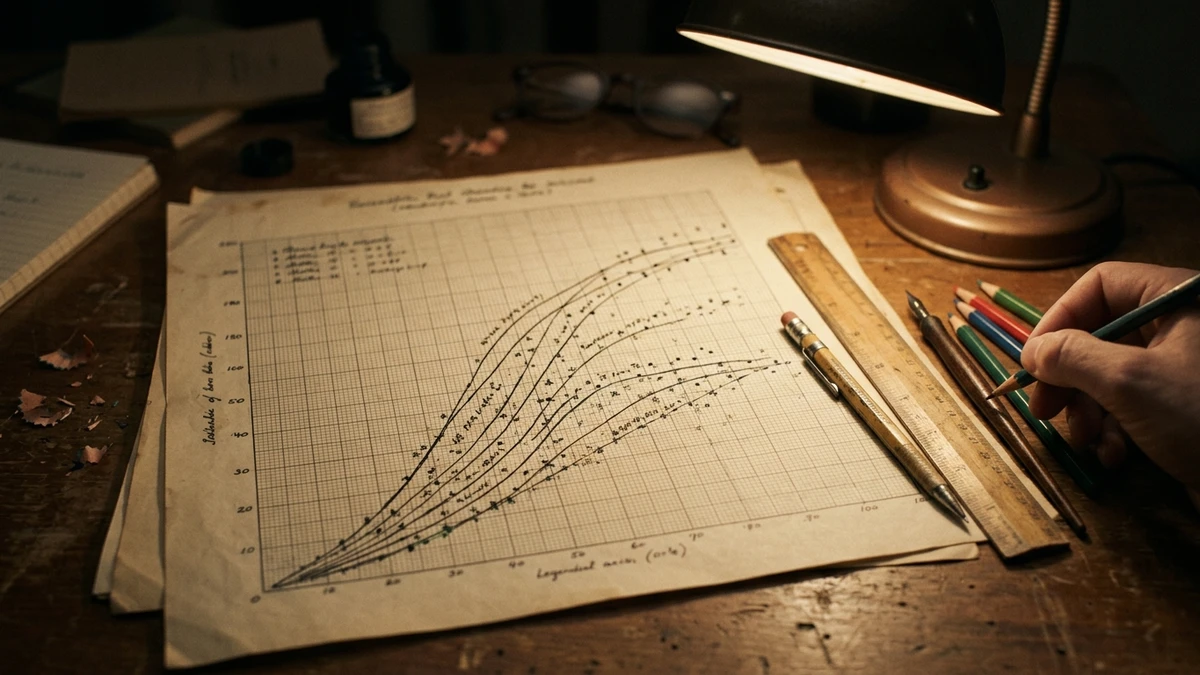
McCoy didn't stop at stating the hypothesis. He tested it. The file records that the occurrence of incidents was plotted against the close approaches of Mercury, Venus and Mars, on the logic that visitors from a nearby planet might come when the crossing was shortest. A periodic variation "which appears to have some relation to the planet approach curves" was noted, though McCoy, careful as ever, added "it may be purely a coincidence". His letter even cites The Books of Charles Fort, the great catalogue of anomalies, noting that similar things had been reported "for the past century or more".
An official extraterrestrial hypothesis test, run by Air Force intelligence, in 1948. It stayed out of public view for more than seventy-five years.
Run the 1948 planet test yourself
Kit we've tested and reviewed in full
The Air Force once plotted saucer reports against the close approaches of Mercury, Venus and Mars, partly because bright planets cause so many sightings. Learn what the planets really look like and you'll never file a false report.
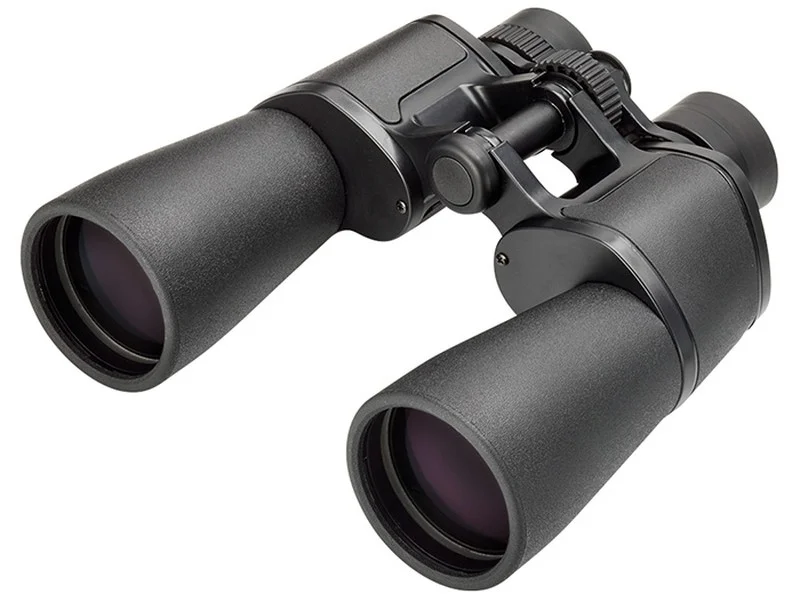
Enough to show Venus as a brilliant steady point and Jupiter with its moons: the two objects behind more UFO reports than anything else in the sky.
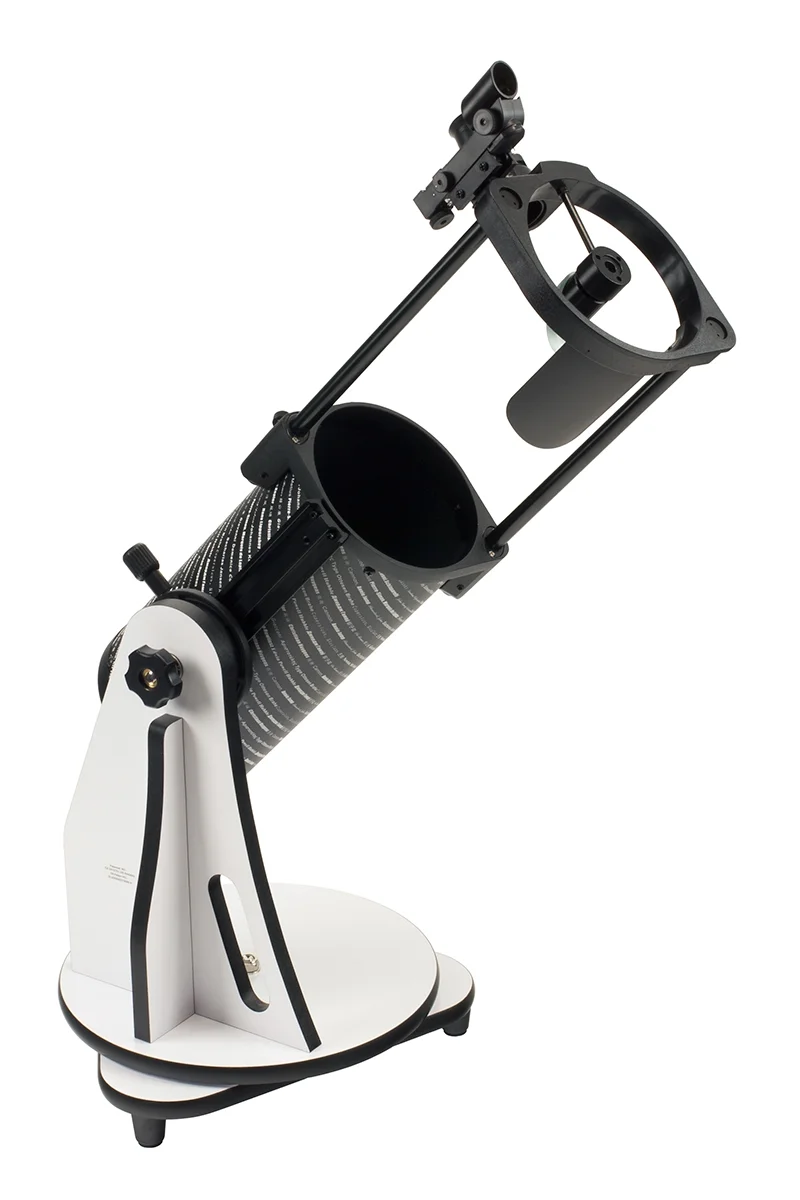
Turns those points into discs: Venus shows phases, Mars an amber face, Saturn its rings. The cheapest cure for misidentification we know.
Affiliate links: you pay the same price, we earn a small commission that helps keep WatchTheStars free.
The Plan to Intercept UFOs With Fighters: Refused
The file's unreported gem is what the Air Force tried to do about the problem. McCoy proposed that fighter or night-interceptor aircraft be held on continuous alert at bases across the United States, equipped with gun cameras, to intercept and photograph "unusual phenomena of the 'flying disc' type".
The refusal, dated 17 March 1948, is extraordinary for what it admits. Interception wasn't possible, wrote Major General George McDonald, the Director of Intelligence, "except by accident, without complete radar coverage", and then the kicker: "The Air Force is incapable of providing such coverage." In 1948, the United States could not track what flew over its own territory, and its intelligence chief put that in writing while declining to chase the saucers.
Anyone following this year's UAP swarm off the Virginia coast, or the Pentagon's admission that objects over military bases remain unexplained, will hear the echo. The technology has improved beyond recognition. The shape of the problem hasn't.
The FBI Check and the RAND Spaceship Study
Two more episodes from the file deserve daylight. First, the Air Force asked the FBI to check whether the flying disc episodes might be "a deliberately planned subversive effort to create mass hysteria, possibly Communist-inspired". The Bureau investigated the first forty people who had reported disc sightings. The result, recorded flatly: negative in each case. The witnesses were ordinary, and they weren't making it up for Moscow. A parallel check against weather balloon releases found "no connection or coincidence" either.
Second, and this is the one that sounds invented but isn't, the file contains a formal tasking to the RAND Corporation. Its subject: what would a spaceship look like? Project SIGN wanted "the distinguishing design and performance parameters for spaceships", plus "any further scientific clues that might assist in their detection and identification", so that sighting reports could be screened against them. The tasking document is careful to say that if such craft existed they were more likely "the effort of a foreign nation... than a product from beyond the Earth", but the Air Force still commissioned a definition of a spaceship from its top scientific advisory body, and it did so with a straight face.
This is also the same file in which the Air Force, hunting for data, sent the CIA to a science fiction magazine: an episode that ended with a red spider from Mars and is worth five minutes of anyone's time.
The Estimate of the Situation: Why This File Matters Now
UFO lore has long held that Project SIGN staff wrote a formal "Estimate of the Situation" in 1948 concluding the discs were interplanetary, and that General Hoyt Vandenberg rejected it and had it destroyed. No copy has ever surfaced, and for decades the Air Force denied it existed. This file doesn't contain the Estimate. What it contains is arguably better: the surviving correspondence of the same officers, in the same months, showing exactly how far their thinking went and how carefully they hedged it. Not proof of visitors, McCoy himself said the tangible evidence was "completely lacking", but proof of what the investigators privately believed was worth testing.
It also shows how old the pattern is. Something real, origin unknown, public told as little as possible: that was the private position in 1948, and files from the NSA's UMBRA-era Cold War archive to this year's AARO annual report suggest it never entirely changed. Within a year of McCoy's letter, green fireballs were crossing the skies above Los Alamos and observatories were photographing things that moved before there were satellites to explain them.
The full 245 pages are free at war.gov/ufo as DOW-UAP-D100, our Project SIGN file page has the guided tour, and the UAP document archive holds the rest of the release. The men who wrote these letters are long dead. Their question is still open.
Sources:
- Department of War UAP file release (PURSUE), Release 05 · DOW-UAP-D100, Air Materiel Command correspondence file, 1947–48
- Project Sign: background
- The Estimate of the Situation: historical accounts
Frequently Asked Questions
Equipment guides
Related topics

Ian ClaytonAmateur astronomer and founder of WatchTheStars.co.uk, dedicated to helping others explore the wonders of our universe. Full profile →