Key takeaways
- Proper astronomical darkness is back across the whole UK: nearly five hours a night from southern England in mid-August, over six by the 31st
- Saturn is the planet of the month. It rises around 9pm by late August and sits 40° high in the south before dawn
- Venus hit greatest elongation on 14–15 August, but from the UK it still sets barely an hour after the Sun. Brilliant, but awkwardly low
- The Kappa Cygnids peak around 18 August. Only a few meteors an hour, but they're slow and often bright
- A deep partial lunar eclipse ends the month before dawn on Friday 28 August, with 93% of the Moon in shadow at 5:12am BST
Jump to section 8 sections
- When Does It Get Dark in the UK in August 2026?
- Kappa Cygnid Meteor Shower 2026: Slow Fireballs Around 18 August
- Venus in August 2026: Greatest Elongation, But Stubbornly Low
- Planets in Late August 2026: Saturn Leads, Jupiter Returns
- Lunar Eclipse 28 August 2026: The Month's Biggest Event
- How to See the Milky Way From the UK in August
- Moon Phases in August 2026
- Key Dates for the Rest of August
The first half of August 2026 was about as busy as the UK night sky ever gets. We had the deepest partial solar eclipse Britain has seen since 1999 on the 12th, the Perseids peaking on a moonless night a few hours later, and six planets strung across the dawn sky. If you were out for any of it, you've earned a quieter fortnight.
The good news is that the second half of the month is arguably better for ordinary stargazing. Proper darkness has come back, Saturn is finally up at a reasonable hour, and there's one more big event to close things out. Here's what's left in the August 2026 night sky.
When Does It Get Dark in the UK in August 2026?
From London in mid-August 2026, astronomical darkness runs from about 22:40 to 03:30: nearly five hours of genuinely black sky. By 31 August it stretches from 21:55 to 04:05, over six hours. This is the quiet story of late August, and it matters more than any single event.
Through June and most of July, the sky over Britain never gets properly dark. The Sun stays close enough below the horizon all night that a permanent twilight glow sits along the northern sky, which is why faint things simply don't show up in midsummer. That's over now.
Further north the window is shorter but growing fast. Edinburgh gets about three hours of true darkness in mid-August, rising to just over five by month's end, and even Inverness is back to a usable stretch. Here's how the three compare:
| City | 17 August | 31 August |
|---|---|---|
| London | 22:40 – 03:30 | 21:55 – 04:05 |
| Edinburgh | 23:40 – 02:55 | 22:35 – 03:50 |
| Inverness | 00:15 – 02:30 | 22:55 – 03:40 |
Astronomical darkness, BST. Times shift by a few minutes either side depending on how far east or west you are.
In practice this means faint targets are worth chasing again. Galaxies, nebulae and star clusters that were washed out in July start showing properly, and you don't need to stay up until 2am to find a dark sky. If you're just getting going, our guide to stargazing for beginners covers what to look at first.
Kappa Cygnid Meteor Shower 2026: Slow Fireballs Around 18 August
With the Perseids finished, the Kappa Cygnids take over. They're a much smaller shower, active from 3 to 25 August and peaking on the night of 17–18 August.
Be realistic about the numbers. The nominal rate is around 3 meteors an hour under perfect conditions, which in the real world means you might see one or two. What makes them worth sitting out for is how they look. Kappa Cygnid meteors are slow compared to the Perseids and they punch above their weight for brightness, with the occasional proper fireball. One good one is worth an hour of nothing.
The radiant sits high in the north, on the border between Cygnus and Draco, and never drops below the UK horizon. That means the shower is technically active all night, though it's best once the sky is fully dark. The Moon helps this year: on peak night it sets at around 21:50 BST, well before astronomical darkness begins, so you're looking at a clean sky.
No equipment needed. Find somewhere with a wide open view, lie back, and give your eyes 20 minutes to adjust. Our meteor shower calendar has the rest of the year's dates if you want to plan ahead.
Venus in August 2026: Greatest Elongation, But Stubbornly Low
On paper, this should be Venus's month. Venus reached greatest eastern elongation on 14–15 August, sitting about 45.9° from the Sun, as far from it as Venus ever gets in this apparition. In a textbook that means the best evening views of the year.
From the UK it doesn't work out that way, and it's worth understanding why. The planets all follow a line across the sky called the ecliptic, and in late summer that line meets our western horizon at a shallow angle. So Venus can be 46° from the Sun in angular terms and still be almost sideways from it rather than above it. The result: Venus is only about 9° up at sunset in mid-August, dropping to 7° by the 31st, and it sets barely an hour after the Sun does.
None of which stops it being obvious. At magnitude −4.3, Venus is the brightest thing in the evening sky and shows up in the twilight before any star. You just need a low, unobstructed western horizon.
Point a telescope at it and there's a real reward. Venus reached dichotomy, or exact half-phase, on 12 August, and through late August the phase shrinks from about 47% to 39% while the disc grows from 25 to 30 arcseconds. Even a small scope shows the shape clearly, and it changes noticeably week to week. It's one of the few things in astronomy where you can watch something happen over a fortnight.
What to take outside this month
Kit we've tested and reviewed in full
Late August is a telescope month. Saturn is the reason: its rings are the single most reliable wow moment in astronomy, and it's up at a sensible hour now. Binoculars still earn their keep for the low eclipsed Moon on the 28th and for sweeping the Milky Way.
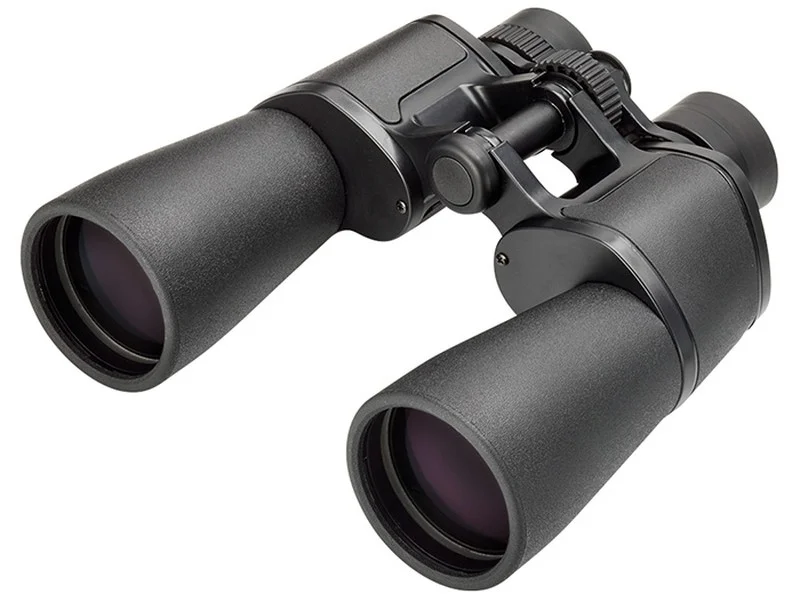
Light enough to hold steady for the eclipsed Moon at 5am, and 10×50 is the sweet spot for scanning the Milky Way through Cygnus and Sagittarius.
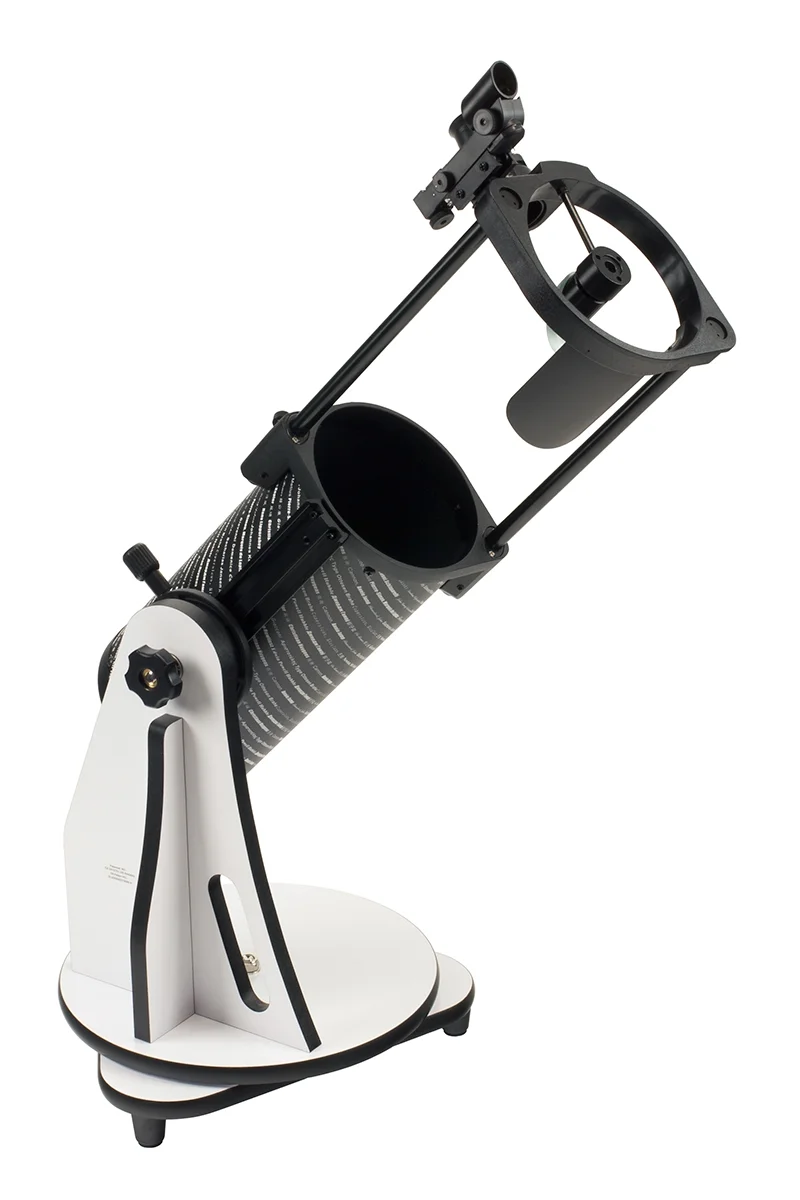
A tabletop scope that shows Saturn's rings clearly and picks up Venus's half-phase at dusk. Still the best first telescope for the money.
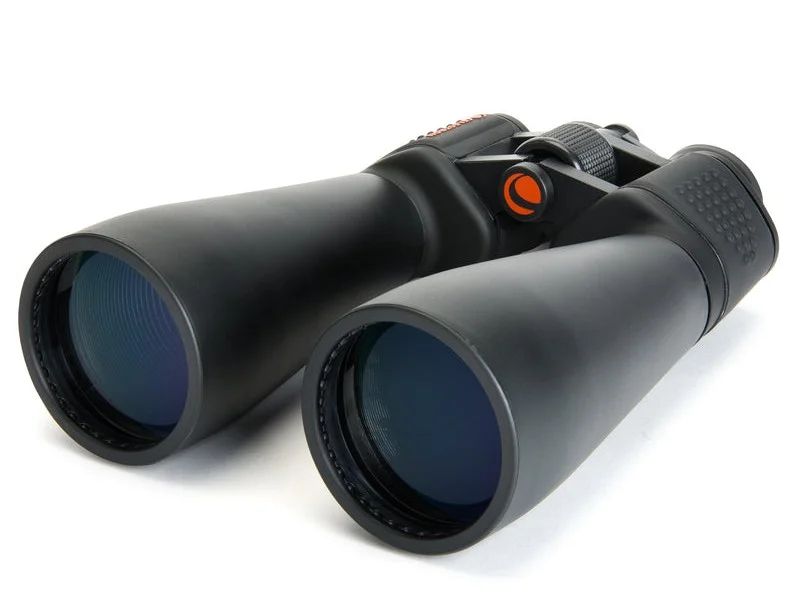
The extra aperture helps when the eclipsed Moon is only 8° up in dawn twilight, and it'll show Uranus as a tiny disc before sunrise. Rest it on a wall or tripod.
Affiliate links: you pay the same price, we earn a small commission that helps keep WatchTheStars free.
Planets in Late August 2026: Saturn Leads, Jupiter Returns
Six planets are technically above the UK horizon at some point in late August 2026, but only three are worth planning an evening around. Here's the quick version for the last fortnight of the month, from London:
| Planet | Magnitude | When to look | Where |
|---|---|---|---|
| Saturn | +0.5 | From ~9pm, best 1–4am | SE rising to S, ~40° up by 3am |
| Venus | −4.3 | 30–60 min after sunset | W, only 7–9° up |
| Jupiter | −1.6 | 60–90 min before sunrise | E, low but improving weekly |
| Mars | +1.3 | Before dawn | E in Gemini, 35–40° up |
| Uranus | +5.7 | After midnight | Taurus, 50°+ before dawn (binoculars) |
| Neptune | +7.8 | Around 3am | Pisces (telescope only) |
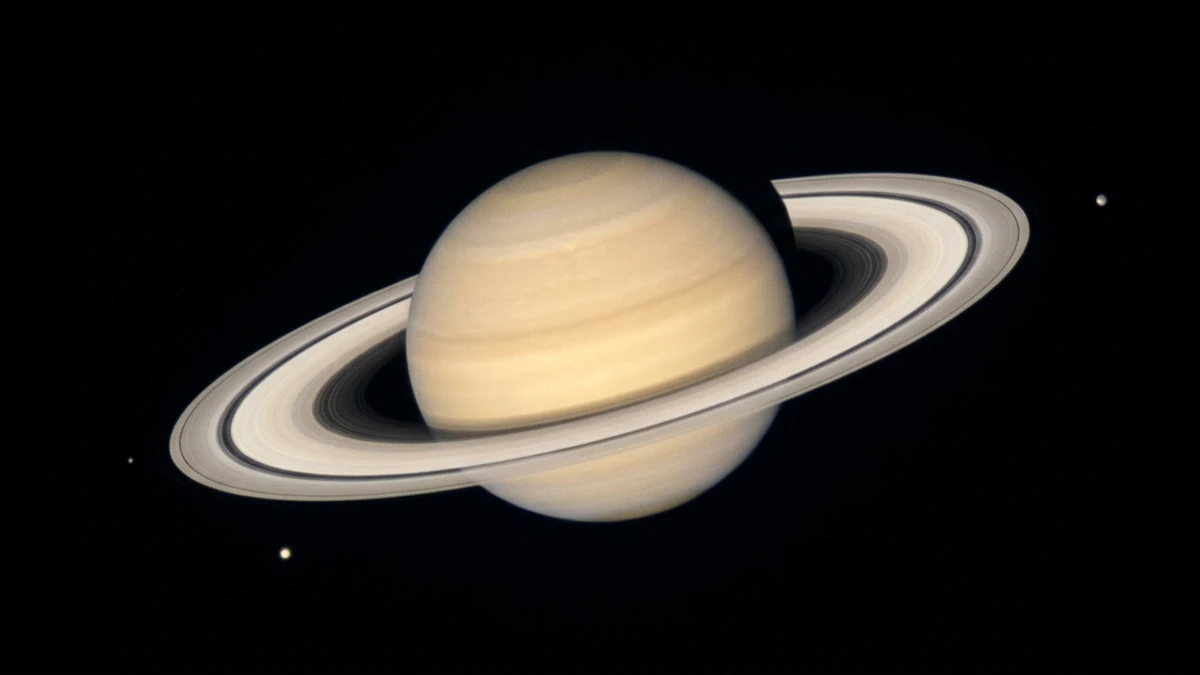
Saturn is the planet of the month and the best telescope target in the sky right now. It rises in the east-south-east at about 21:50 BST on 17 August and around 20:55 by the 31st, so it's up almost as soon as the sky darkens. It climbs steadily through the night: roughly 30° high in the south-east by 1am, and about 40° in the south by 3am. At magnitude +0.5 it looks like a steady yellowish star that refuses to twinkle.
Any small telescope shows the rings. A 4 to 6-inch scope on a steady night will show the Cassini Division, the dark gap in the ring system, plus five or six moons. Late summer air over Britain is often calmer than winter air, so the views can be excellent. Saturn is building towards opposition on 4 October, which means it gets brighter and higher every week from here. Our year-round guide to observing Saturn has the full timeline.
Jupiter is coming back. It passed behind the Sun in late July and is now climbing out of the dawn twilight in the east. On 20 August it's only about 7° up as morning twilight starts, a hard catch. By 31 August that's improved to nearly 15°, and at magnitude −1.6 it's unmistakable once it clears the murk. Give it another few weeks and it becomes a proper target again.
Mars is better placed than most people realise, though it's faint. At magnitude +1.3 it's an ordinary-looking orange star, but it sits nearly 35–40° high in the east in Gemini as dawn twilight begins, much higher than Jupiter. Don't expect any detail through a telescope at this distance. The colour is nice to the naked eye from a dark site.
Mercury is bowing out. It had a good morning showing in early August, but it drops fast after about the 20th and reaches superior conjunction on 27 August, passing behind the Sun. Don't bother looking for it in the last ten days of the month.
Uranus is easy to overlook and better placed than it has been all year. It rises around 23:30 BST in mid-August and by dawn it's over 50° up in Taurus, about as high as it gets. At magnitude +5.7 you'll need binoculars to find it and around 150× to resolve the tiny blue-green disc, but that altitude means steady views.
Neptune is in prime season, rising in the late evening and transiting around 3am at magnitude +7.8. It's a telescope-only target and needs a chart, but opposition on 26 September is close enough that August is a sensible time to start hunting for it.
Lunar Eclipse 28 August 2026: The Month's Biggest Event
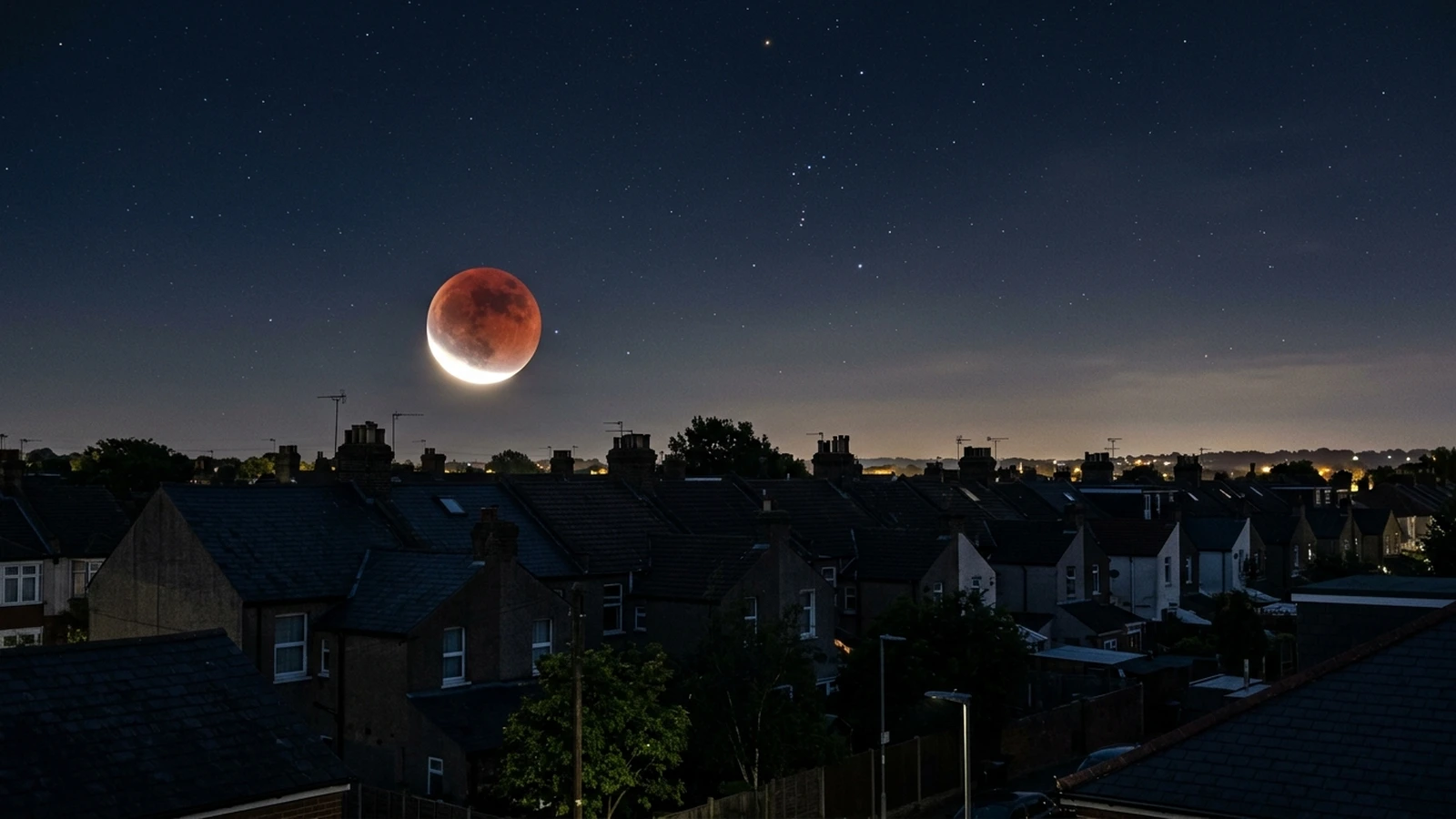
Circle Friday 28 August. A deep partial lunar eclipse happens before dawn: the Moon starts sliding into Earth's dark shadow at 3:33am BST, maximum comes at 5:12am, and the Moon sets at around 6:16am while still eclipsed. It's the best lunar eclipse visible from the UK for years.
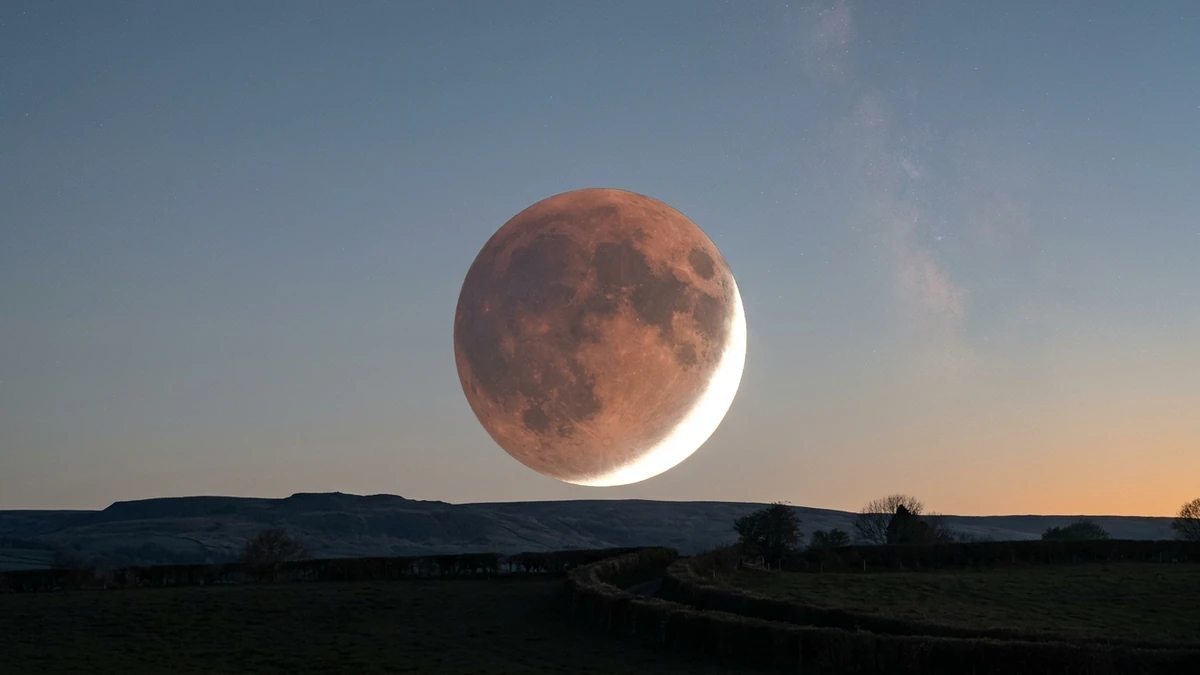
At first contact with the umbra the Moon is about 20° above the south-west horizon. At maximum, 93% of the Moon's diameter sits inside the shadow: deep enough that it behaves like a total eclipse, with the covered portion glowing a dim coppery red and only a thin bright sliver left along one edge.
The catch is height. By maximum the Moon is only about 8° above the west-south-west horizon from London. Sunrise is 6:07am, so you're watching the best of it against a brightening dawn sky.
That makes location everything. You need a completely flat, open view to the west-south-west: a west-facing coastline, a hilltop, or a field. Trees and houses will simply block it. The further west you are in the UK, the longer the Moon stays up, so Cornwall, Wales, western Scotland and Northern Ireland get the better deal.
No eye protection is needed; lunar eclipses are entirely safe to look at. Binoculars make a real difference at this altitude, and if you want to photograph it, our guide to photographing the Moon covers the settings. We've written up the full timings, regional differences and photography advice in our complete guide to the 28 August lunar eclipse.
How to See the Milky Way From the UK in August
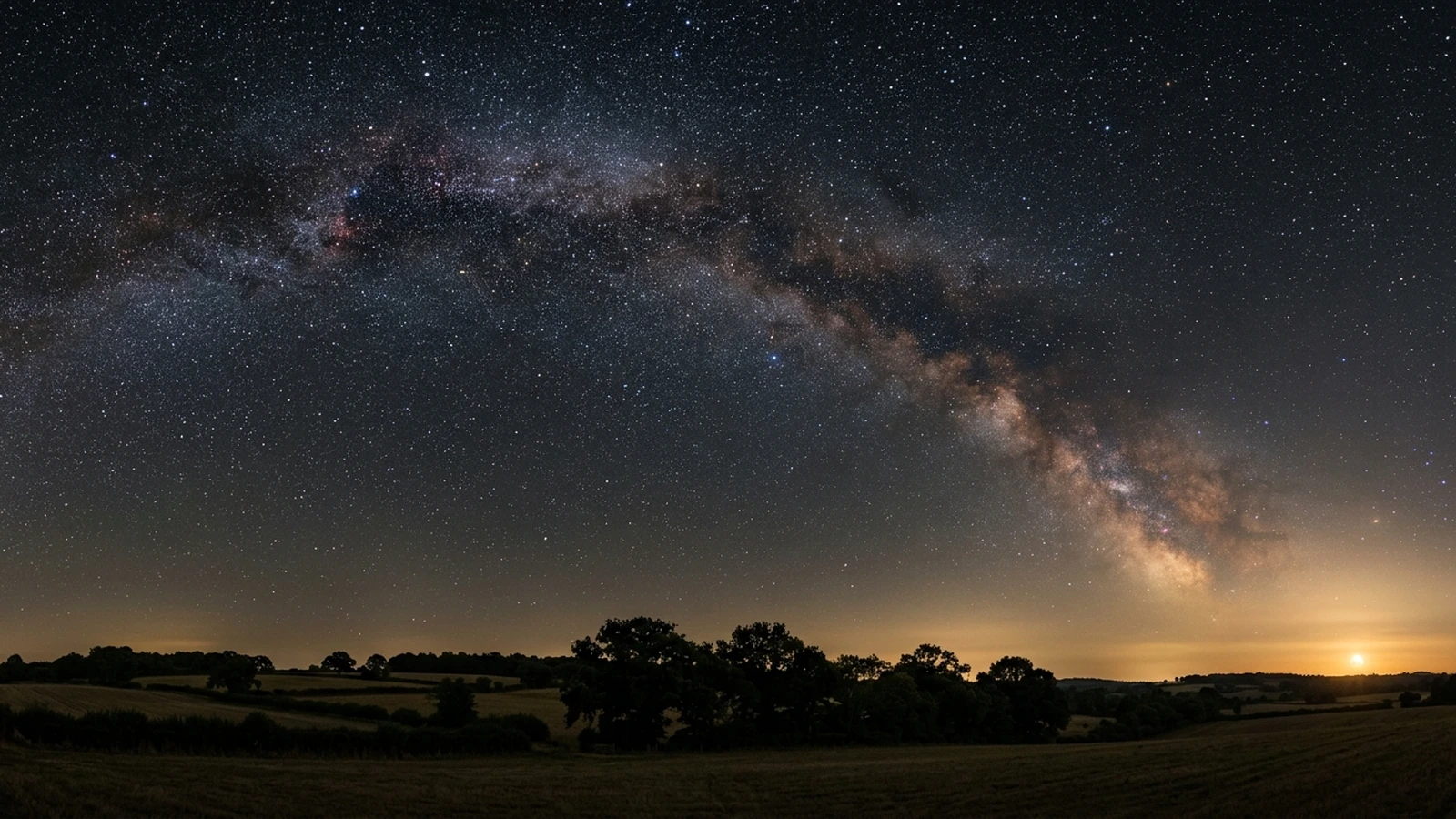
August is the best month of the year for the Milky Way from Britain, and now that darkness has returned it's actually achievable.
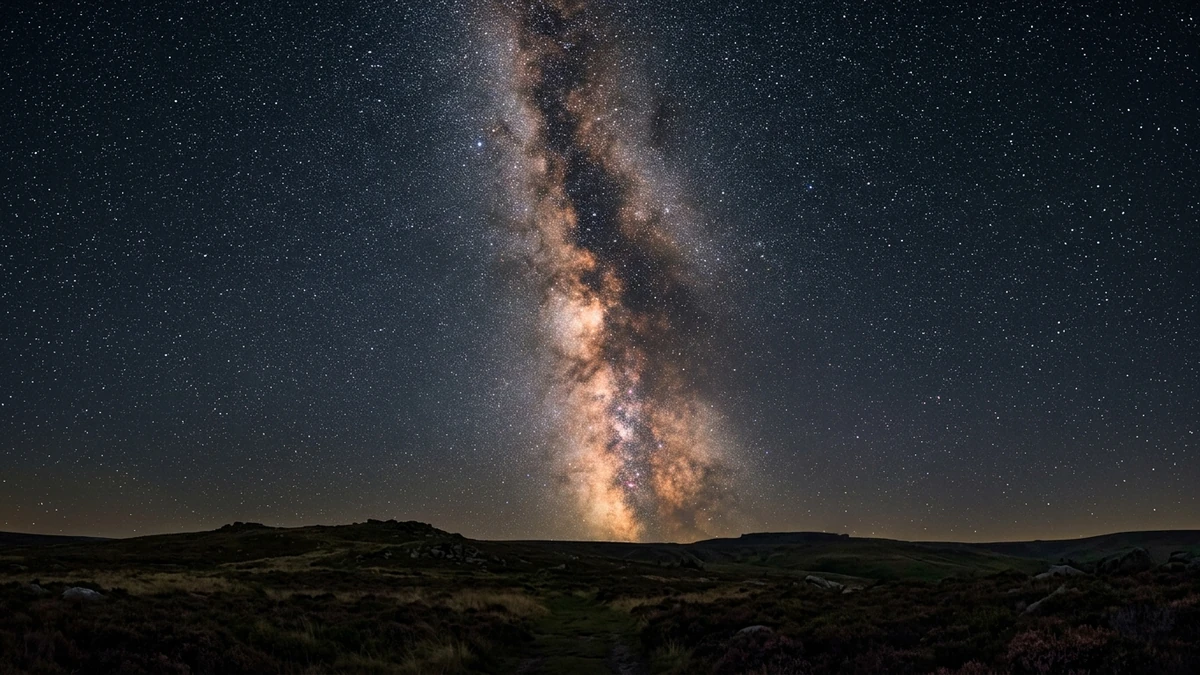
Look south from about 22:30 BST. The band of the Milky Way runs up from the southern horizon, through Aquila and Cygnus almost overhead, and down towards Cassiopeia in the north-east. The brightest part is low in the south, towards Sagittarius and neighbouring Capricornus: that's the direction of the galactic centre, and it's the section that suffers most from horizon haze and light pollution.
The detail worth hunting for is the Great Rift, a dark lane that appears to split the bright band in two from Cygnus down through Aquila. It isn't a gap. It's a wall of interstellar dust hundreds of light years closer to us than the star clouds behind it, blocking their light.
You need a genuinely dark site. The Milky Way is invisible from most towns and suburbs. Give your eyes at least 20 minutes with no phone screen, and use averted vision, looking slightly to one side of what you want to see. Our guide to seeing the Milky Way from the UK has the practical detail, including how to find a dark site near you.
Moon Phases in August 2026
The Moon reached first quarter on 20 August and reaches full on 28 August at 5:18am BST, within minutes of the eclipse maximum, which is no coincidence. Lunar eclipses only happen at full Moon. If the phase names still trip you up, our explainer on what causes the Moon's phases is a five-minute read.
August's full Moon is traditionally called the Sturgeon Moon, named by North American fishing communities for the time of year when sturgeon were most easily caught in the Great Lakes.
There's no new Moon in the second half of the month, which means the darkest skies ran from roughly 15 to 22 August. After that, moonlight takes over and progressively spoils the faint stuff until the first days of September. Plan your deep-sky and meteor watching accordingly, and use the bright nights for the Moon itself, Saturn and Venus, none of which care about moonlight.
One last pairing to end the month: on the night of 30–31 August, the waning gibbous Moon rises alongside Saturn, about 6° apart. Both are up from mid-evening, low in the east.
Key Dates for the Rest of August
Everything still to come this month, at a glance.
Late August is the point where UK stargazing gets easy again. You don't have to wait until midnight for darkness, the air is still warm, and Saturn is finally back where you can get at it. Get one clear night for the rings, one for the Milky Way, and set an alarm for the 28th. Check what's up tonight before you head out. Clear skies!
Sources:
- Night sky highlights, August 2026 · Royal Observatory Greenwich
- Partial lunar eclipse on 28 August 2026: how to see it · Royal Observatory Greenwich
- Calendar of astronomical events, August 2026 · In-The-Sky.org
- κ-Cygnid meteor shower 2026 · In-The-Sky.org
- Venus at greatest elongation east, 14 August 2026 · In-The-Sky.org
- August 28, 2026 partial lunar eclipse, London circumstances · timeanddate.com
Frequently Asked Questions
Equipment guides
Related topics
Ian ClaytonAmateur astronomer and founder of WatchTheStars.co.uk, dedicated to helping others explore the wonders of our universe. Full profile →