Leonid Meteor Shower 2026 UK
Best mornings 17 and 18 November. The fastest meteors of the year, and the Moon is out of the way before the radiant rises.
Leonids 2026 at a glance
| Peak nights | Monday 16 – Tuesday 17 and Tuesday 17 – Wednesday 18 November 2026 |
| Best time (UK) | 3am to 5.15am GMT, both mornings |
| Active | 3 November to 2 December |
| Max rate (ZHR) | About 15 per hour (expect around 10 from a dark UK site) |
| Moon | Crescent, 36–45% lit, sets 10.14pm and 11.27pm GMT (London). Good: gone before the radiant rises |
| Radiant | The Sickle of Leo, near Algieba, rising in the east-north-east around 10.30pm |
| Parent body | Comet 55P/Tempel-Tuttle (33-year orbit) |
| Speed | 71 km/s, the fastest of any annual shower |
When is the Leonid meteor shower in 2026?
The Leonid meteor shower peaks in the early hours of Tuesday 17 and Wednesday 18 November 2026. The moment of maximum is predicted for the afternoon of the 17th, which is daylight in the UK, so the mornings either side of it should give much the same rates. If one is cloudy, try the other. The shower runs at a low level from about 3 November to 2 December.
The Moon is kind this year. First quarter falls on the 17th, so the Moon is a fat crescent in the evening sky and sets at 10.14pm on the 16th and 11.27pm on the 17th in London. The Leonid radiant doesn't clear the horizon until about 10.30pm, so by the time there are any meteors to see, the sky is dark. You can check the phase on any night with our Moon phase tonight page.
What time is best to watch the Leonids in the UK?
The best time to watch the Leonids from the UK is between about 3am and 5.15am GMT on 17 and 18 November. At 3am the radiant is about 40 degrees up in the south-east; by 5am it is 55 degrees up from London and 50 from Edinburgh, and the higher it climbs, the more meteors you see. Astronomical twilight starts at about 5.25am in London, 5.40am in Plymouth and 5.40am in Edinburgh, so that is your cut-off.
Before midnight there is almost nothing to see: the radiant is on or below the horizon, and the few meteors that do appear are long, slow-looking "earthgrazers" skimming the top of the atmosphere. They're lovely if you catch one, but not worth a late night on their own. Both peak mornings fall on school days, so for a family evening the Geminids in December are the better bet.
Where to look for Leonid meteors
Leonid meteors trace back to the Sickle of Leo, the backwards question mark of stars that forms the lion's head, close to the star Algieba. In 2026 there's an easy signpost: Jupiter and Mars sit about a degree apart, 10 degrees from the radiant and just to the right of Regulus, 45 degrees up in the south-east at 4am. You can't miss them.
Don't stare at the radiant, though. Face south-east or south, lie back, and watch a dark patch of sky 30 to 60 degrees away from Leo. Meteors close to the radiant look short; the long streaks turn up further out.
How many Leonid meteors will I see?
The Leonids' ZHR is about 15, so from a dark UK site before dawn you can expect around 10 meteors an hour, and 5 or fewer from a town garden. That puts them well behind the Perseids and Geminids for numbers. What they have is speed. The Leonids hit the atmosphere at 71 km/s, faster than any other annual shower, and the brighter ones often leave a glowing train that hangs for a second or two after the meteor has gone.
You may also catch the odd slow, bright fireball from the Taurids, which are active through November and trickle in from low in the south-west. They are easy to tell apart: a Taurid ambles across the sky, a Leonid is gone before you can point.
Will there be a Leonid meteor storm?
There won't be a Leonid meteor storm in 2026. The Leonids are famous because every 33 years or so, around the return of their parent comet, Earth ploughs through fresh dust and the rate goes through the roof. In 1833 observers across North America saw what looked like the sky falling. In 1966 rates briefly topped 40 meteors a second over the western US, and the returns of 1999 to 2001 gave thousands an hour, including a strong display over Europe in 1999.
Comet Tempel-Tuttle is next back in 2031, but a close pass by Jupiter has shifted its dust trails, and no storm on that scale is expected in the 2030s. An ordinary year with a clear, Moon-free sky, like this one, is still worth a couple of hours.
How to watch the Leonids
Leave the telescope indoors. Meteors cross a big slice of sky in a fraction of a second, and any optical aid shrinks your view. Your eyes are the right tool. What makes the difference:
- Check the forecast first. Our stargazing tonight tool scores your sky out of 10 for cloud, Moon and light pollution. With two good mornings, pick the clearer one.
- Get away from lights if you can. Even a short drive helps. Our UK dark sky sites map finds the nearest one to your postcode.
- Give your eyes 20 minutes. No phone screens. Dark adaptation is the difference between seeing three meteors and twelve.
- Dress for winter. Mid-November at 4am is often near freezing, and frost settles on anything left out. A camping mat, a sleeping bag and a flask will keep you out longer than any amount of enthusiasm.
- Stay out for an hour. Meteors come in bursts and lulls. Ten minutes tells you nothing.
While you wait, Jupiter's moons are an easy binocular target, and the winter stars are all up: Orion in the south-west, Sirius low beneath it, and the Pleiades heading west. Our guide to binocular astronomy shows you what else to find. The full list of this year's showers, from the Orionids to the Quadrantids, is on our meteor shower calendar.
What to take out on Leonid night
Kit we've tested and reviewed in full
You don't need optics to see meteors. A Leonid watch is two hours of cold November pre-dawn, though, and the sky around Leo has Jupiter and Mars in it this year. See our binocular reviews for more.
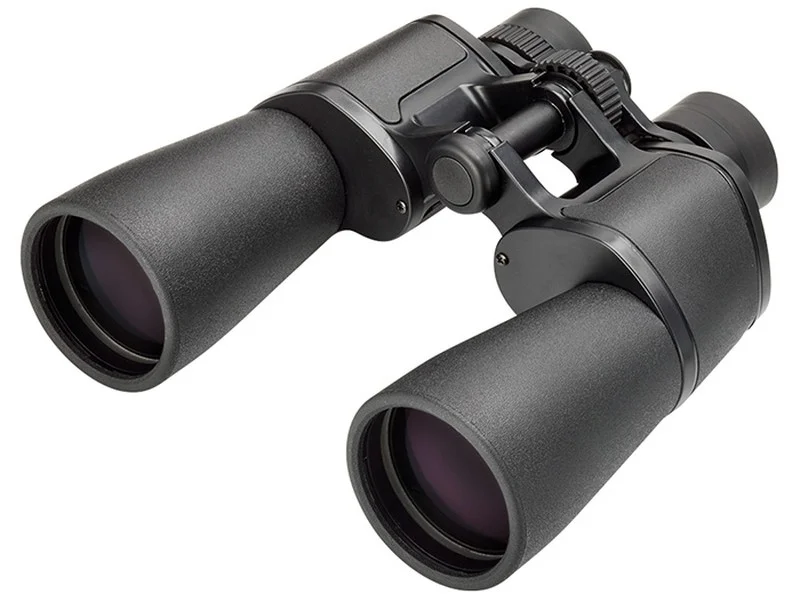
Jupiter's four big moons show as a neat line of dots in a 10×50, with Mars a finger's width away. The pair we point most UK beginners to first.
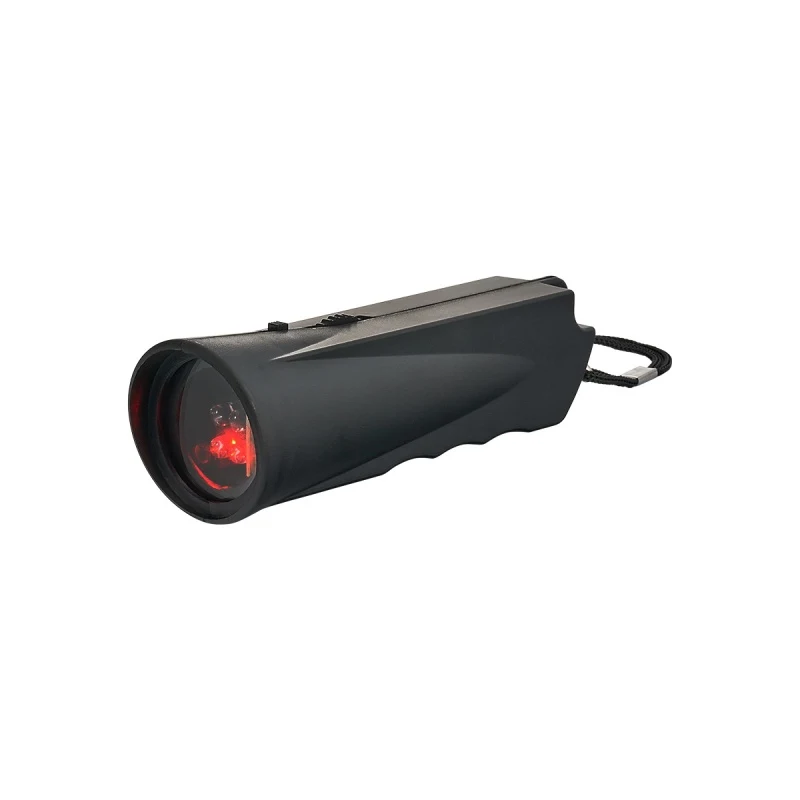
Astro Essentials Red Light Torch
A red torch lets you check the time and find the flask without undoing 20 minutes of dark adaptation. Cheap and worth it.
Browse all our equipment reviews
Honest, research-based recommendations for every budget.
Browse all →Affiliate links: you pay the same price, we earn a small commission that helps keep WatchTheStars free.