Geminid Meteor Shower 2026 UK
Peak night 13–14 December, up to 120 meteors an hour, and almost no Moon. The best meteor shower of the year, and the best conditions for it in years.
Geminids 2026 at a glance
| Peak night | Sunday 13 – Monday 14 December 2026 |
| Best time (UK) | 10pm to 4am GMT, peaking around 2am |
| Active | 4 to 17 December |
| Max rate (ZHR) | 120–150 per hour (expect 40–80 from a dark UK site) |
| Moon | Thin waxing crescent, sets in the early evening. Excellent |
| Radiant | Near Castor in Gemini, rising in the east-north-east at dusk |
| Parent body | Asteroid 3200 Phaethon |
| Speed | 35 km/s (slow, bright, often yellow or green) |
When is the Geminid meteor shower in 2026?
The Geminid meteor shower peaks on the night of Sunday 13 to Monday 14 December 2026. The shower is active from about 4 to 17 December, and rates climb steeply in the two or three nights before the peak, so 12–13 December is a good back-up if the forecast for the 13th looks poor. After the peak the numbers drop away fast.
2026 is a very good Geminid year. New Moon falls on 9 December, so on the peak night the Moon is a slim crescent that sets before 9pm and leaves the sky properly dark for the whole of the main window. The last time the Geminids had a Moon this kind was 2023, and UK observers under dark skies reported their best Geminids in years.
What time is best to watch the Geminids in the UK?
From the UK the best time to watch the Geminids is between 10pm and 4am GMT on the night of 13–14 December, with the highest rates around 2am when the radiant is almost directly overhead. If you can only manage one hour, make it 1am to 2am.
The Geminids are also the friendliest major shower for early nights. The radiant in Gemini rises at dusk, so by 9pm it is already well up and you will see a steady trickle, including the long, slow "earthgrazers" that skim the top of the atmosphere early in the evening. That makes this the one shower where children can see a decent show before bedtime, which is not true of the Perseids or the Orionids.
Where to look for Geminid meteors
Geminid meteors all trace back to a point near Castor, the fainter of Gemini's two bright "twin" stars, which sits above and to the left of Orion. You don't need to find it. Face roughly south-east in the evening or south after midnight, lie back so you can see as much sky as possible, and let the meteors come to you. Streaks 30 to 60 degrees away from the radiant are longer and more dramatic than the short ones close to it.
If your garden has a bright streetlight on one side, put your back to it. The darker the patch of sky you're watching, the more you'll see, and moving from a town garden to a dark sky site can easily triple your count.
How many meteors will I actually see?
The Geminids' zenithal hourly rate (ZHR) of 120 to 150 is the highest of any annual meteor shower. But ZHR is a theoretical ceiling: a perfectly dark sky, the radiant straight overhead, and an experienced observer. Real-world numbers are lower. On the peak night in 2026, a realistic expectation is 40 to 80 meteors an hour from a dark rural site around 2am, 15 to 30 from a suburban garden, and a handful an hour from a city centre. Earlier in the evening halve those figures.
Geminid meteors are slower than most, hitting the atmosphere at about 35 km/s compared with 59 km/s for the Perseids and 66 km/s for the Orionids. That slowness makes them easy to follow with the eye and gives them their colour: yellows and greens are common, with the occasional blue or orange fireball. They rarely leave the glowing trains the Perseids are known for, but they make up for it in numbers.
What causes the Geminid meteor shower?
The Geminid meteor shower is caused by Earth passing through the dust trail of asteroid 3200 Phaethon every December. Almost every other meteor shower comes from a comet; the Geminids are the big exception. Phaethon is a 5km rock on a wildly stretched orbit that carries it closer to the Sun than any other named asteroid, so close that its surface reaches around 750°C and cracks, shedding grit that spreads out along its path. Japan's DESTINY+ mission is due to fly past Phaethon around 2030 to work out exactly how.
The shower itself is young. It was first noticed in 1862 with rates of just 10 to 20 an hour, and has strengthened every decade since as Jupiter's gravity nudges the densest part of the trail towards Earth's orbit. Today it is the strongest annual shower, and it should keep improving for a few more decades before slowly fading.
How to watch the Geminids: the honest version
Leave the telescope indoors. Meteors cross tens of degrees of sky in under a second, and any optical aid narrows your view and guarantees you miss them. Your eyes are the right instrument. What actually matters is this:
- Check the forecast first. Our stargazing tonight tool scores your local sky out of 10 for cloud, Moon and light pollution. If the 13th looks cloudy, go out on the 12th instead.
- Give your eyes 20 minutes. No phone screens. Dark adaptation is the single biggest difference between seeing five meteors and fifty.
- Lie back. A deckchair, camping mat or sun lounger lets you take in half the sky without a stiff neck. Standing and looking up, you'll give up in ten minutes.
- Dress for two seasons colder. Mid-December, lying still, for an hour or more. Hat, gloves, a sleeping bag or blanket, and a flask. The cold ends more Geminid watches than the cloud does.
- Stay out for an hour. Meteors come in bursts and lulls. Ten minutes tells you nothing; an hour tells you everything.
While you wait, the December sky around the radiant is the richest of the year: the Pleiades, the Orion Nebula, and the string of open clusters M35, M36, M37 and M38 are all easy in binoculars. Our guide to binocular astronomy shows you where to find them.
What to take out on Geminid night
Kit we've tested and reviewed in full
Meteors are a naked-eye event, so the only essentials are warm clothes and somewhere to lie back. But December nights are long and the sky around Gemini is the richest of the year, so a small pair of binoculars makes the quiet spells between meteors the second half of the show. See our binocular reviews for more.
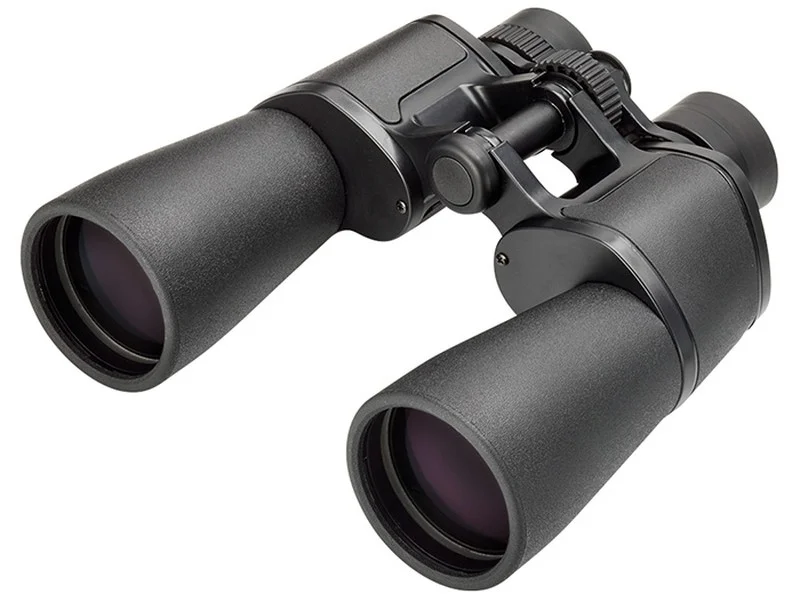
Between meteors, sweep across to the Pleiades, the Orion Nebula and the open clusters M35, M36, M37 and M38 that ring the radiant. The pair we point most UK beginners to first.
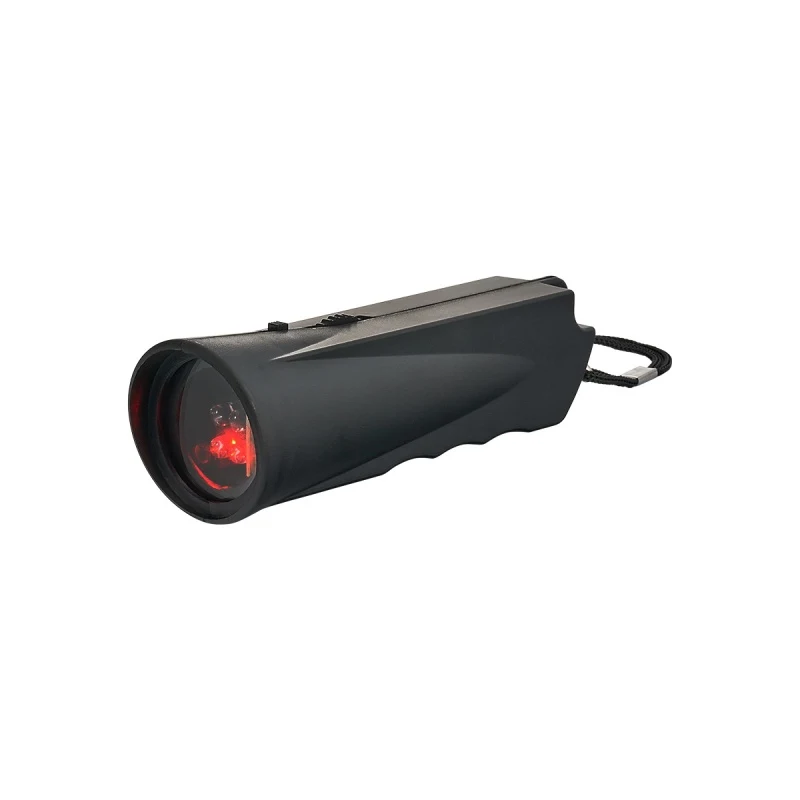
Astro Essentials Red Light Torch
A red torch lets you find the flask and check the time without resetting the 20 minutes of dark adaptation you've just spent. Cheap and worth it.
Browse all our equipment reviews
Honest, research-based recommendations for every budget.
Browse all →Affiliate links: you pay the same price, we earn a small commission that helps keep WatchTheStars free.