Key takeaways
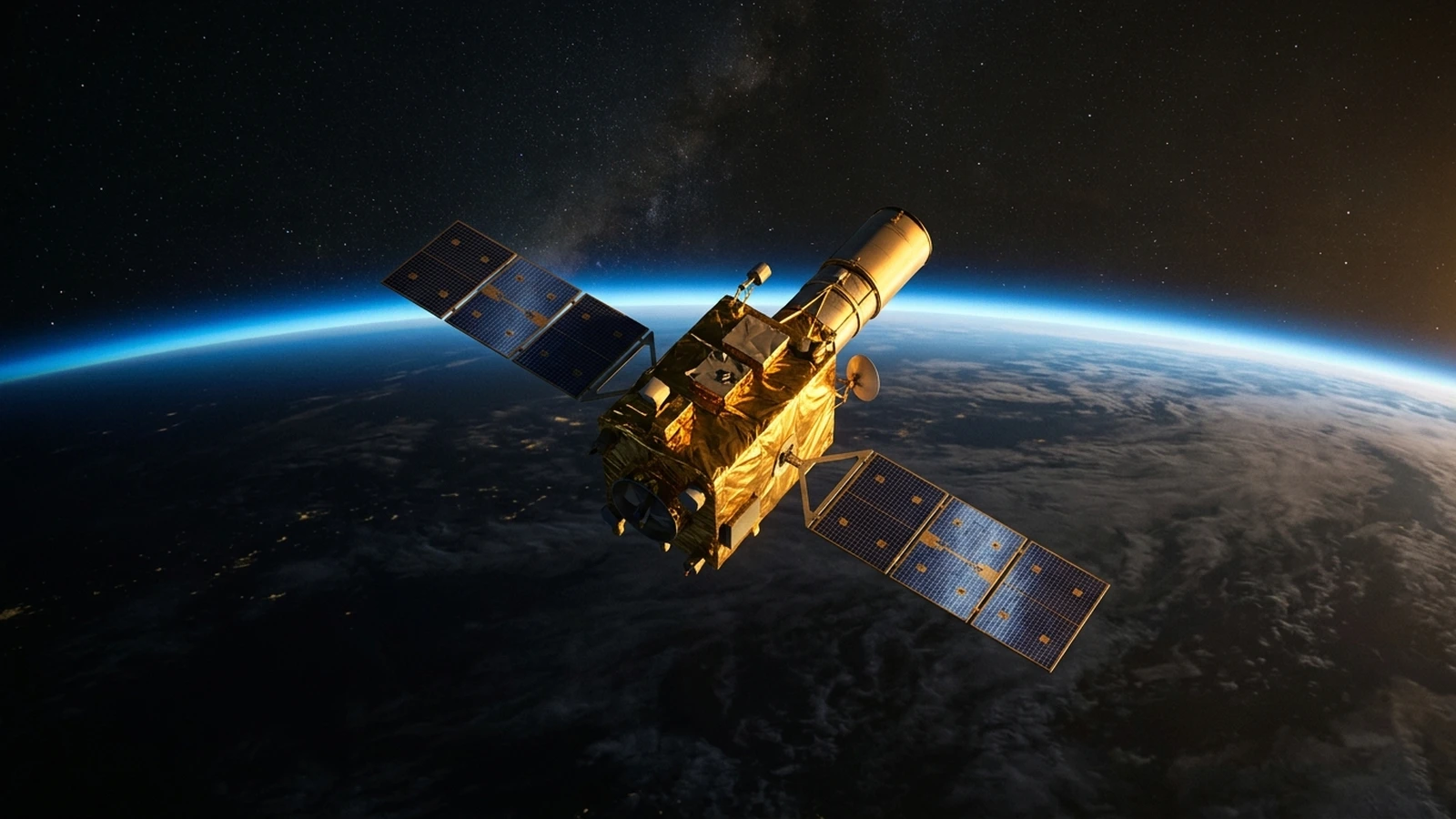
- NASA's 22-year-old Neil Gehrels Swift Observatory has slipped from its 600 km launch orbit to about 400 km and could fall to Earth on its own before the end of 2026
- A stronger-than-expected solar maximum puffed up the upper atmosphere and dragged the telescope down faster than anyone predicted
- NASA hired Arizona startup Katalyst Space Technologies, which built a robotic rescue craft called Link in under a year for around $30 million
- Link will grab Swift with three robotic arms and spend roughly six weeks nudging it back up to a safe orbit
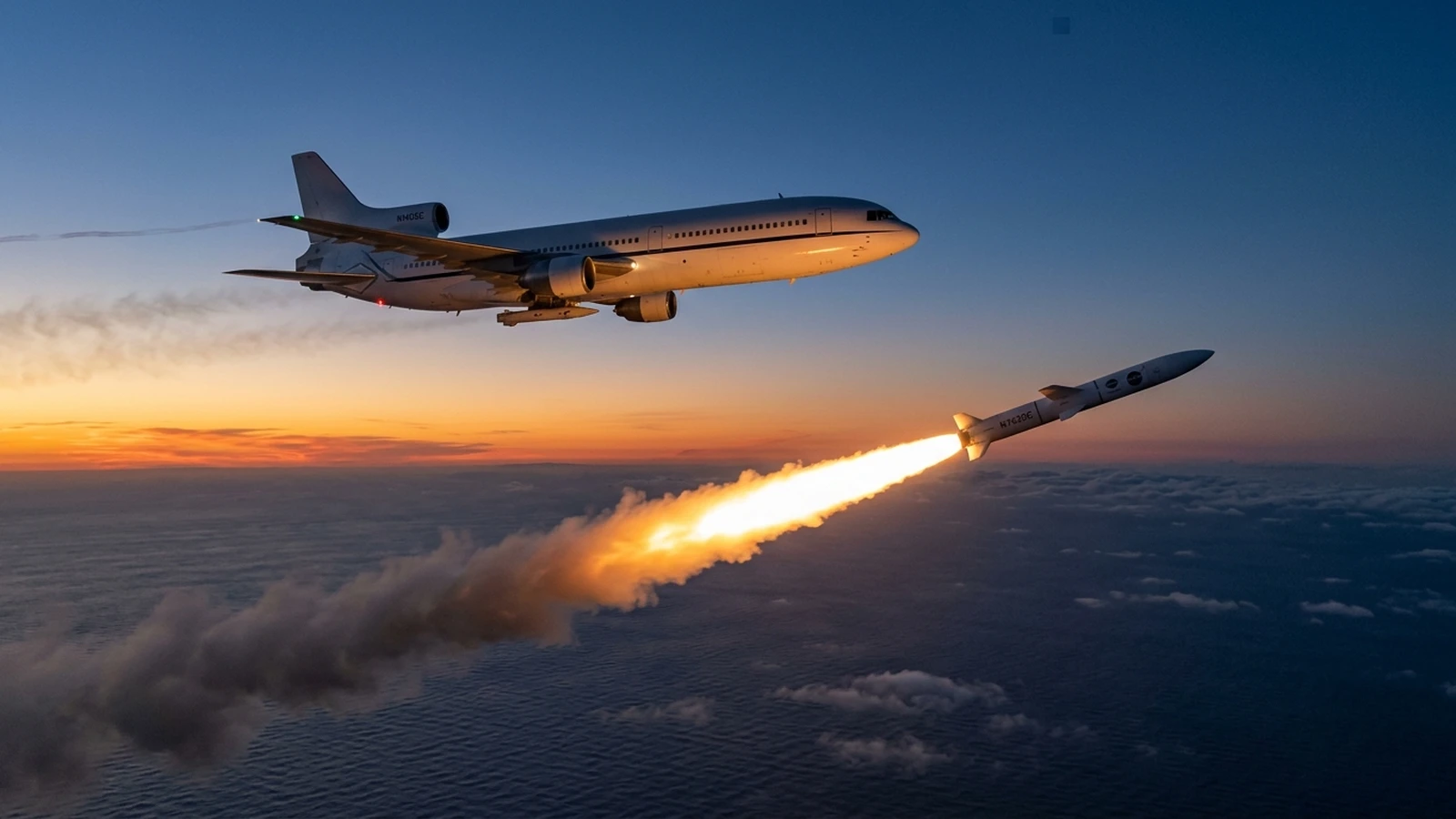
- Launch is set for 27 June 2026 on the very last Northrop Grumman Pegasus XL, a rocket dropped from a plane at 39,000 feet
Jump to section 8 sections
- A NASA Telescope Is Falling Out of the Sky
- What Is the Swift Observatory, and What Does It Do?
- Why Is Swift Falling Out of Orbit?
- NASA's Rescue Plan: A Robot Called Link
- The Last-Ever Pegasus Rocket, Dropped From a Plane
- When Is the Swift Rescue Launch, and How to Follow It
- Why This Rescue Mission Matters
- The Bottom Line
For 22 years, a NASA telescope the size of a small van has been quietly catching the most violent explosions in the universe. Now it's the one in trouble.
The Neil Gehrels Swift Observatory is slowly falling. Its orbit has been sinking for years, and a run of fierce solar activity has sped things up to the point where, left alone, the telescope would burn up in our atmosphere before 2026 is out. So NASA has done something it has never done before: it has hired a private company to build a robot, launch it, and physically push Swift back up to a safe height. The robot is called Link, and it lifts off on 27 June.
Here's what's happening, why it matters, and how you can follow it.
A NASA Telescope Is Falling Out of the Sky
When Swift launched in November 2004, it sat in a comfortable orbit about 600 kilometres (373 miles) up. Today it's down to roughly 400 km (249 miles), and dropping. That might not sound like much of a fall, but in orbital terms it's the difference between safe and doomed.
The lower a satellite goes, the more wisps of atmosphere it runs into. Each of those wisps acts like a tiny brake. The braking pulls the satellite lower still, where the air is thicker, so it brakes harder, and the whole thing snowballs. NASA worked out in 2024 that Swift was decaying faster than its models had predicted, and the conclusion was blunt: the telescope's survival was now a matter of months, not years.
The numbers tell the story. Without help, Swift has roughly a 50% chance of an uncontrolled re-entry by the middle of this year, climbing to about 90% by the end of 2026. And the frustrating part is that there's nothing wrong with the telescope itself. It still works. It's still doing first-rate science. It's just running out of altitude.
What Is the Swift Observatory, and What Does It Do?
Swift is a gamma-ray observatory, and it was built to chase the briefest, most powerful events in the cosmos: gamma-ray bursts.
A gamma-ray burst is exactly what it sounds like: a flash of the highest-energy light there is, coming from somewhere far across the universe. Some last a couple of minutes, some are over in a fraction of a second, and they appear with no warning, anywhere in the sky. For a few seconds, a single burst can outshine everything else in the gamma-ray sky put together. The catch is that you have to be looking in exactly the right direction at exactly the right moment, or you miss it.
That's the problem Swift was designed to solve, and its name is a clue to how. One instrument, the Burst Alert Telescope, keeps watch over about a sixth of the sky at once. The instant it spots a burst, the whole spacecraft swings round, within roughly two minutes, to point its X-ray and ultraviolet telescopes straight at the source while the embers are still glowing. Nothing else in space reacts that quickly.
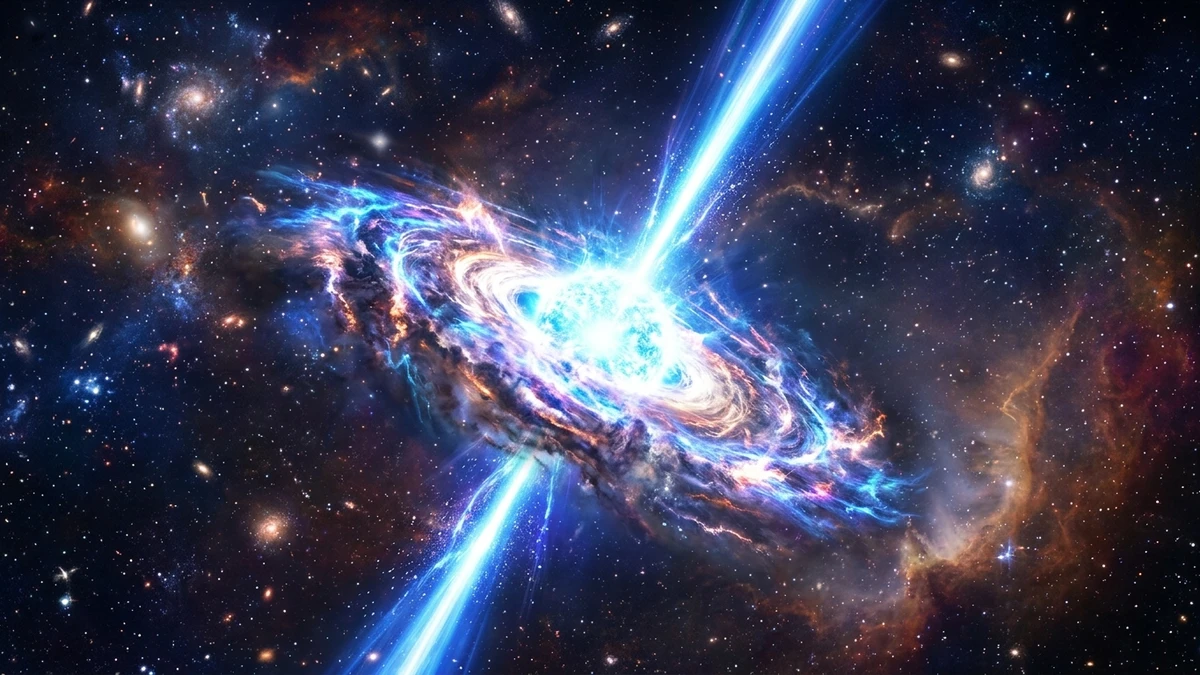
In two decades of doing this, Swift has rewritten a good chunk of the textbook. It helped prove that most long bursts come from enormous stars dying in supernovae and beaming jets of radiation our way. It helped tie the rare, ultra-short bursts to colliding neutron stars: the dead cores of burnt-out suns smashing together. In 2022 it had a front-row seat for the brightest gamma-ray burst ever recorded, an event astronomers nicknamed the BOAT, for "brightest of all time." It has now logged well over a thousand bursts. This is not a tired old satellite limping along; it's a workhorse still pulling its weight, which is exactly why NASA decided it was worth saving.
Why Is Swift Falling Out of Orbit?
The culprit is the Sun.
Our star runs on an 11-year cycle, swinging from quiet to stormy and back again. We've just come through a peak, solar maximum, and this one has been livelier than forecasters expected. When the Sun is active, all that extra energy pours into the top of Earth's atmosphere and heats it up. Heat it, and it swells, puffing outward like a loaf rising in the oven.
That swelling pushes the thin upper atmosphere higher than usual, into the territory where satellites like Swift live. Suddenly there's more gas up there to plough through, more drag, and more braking. Every satellite in low Earth orbit has felt it over the past couple of years, but Swift (old, low, and never built with a propulsion system of its own to climb back up) felt it the most.
That's the cruel twist. Swift has no engine. It can turn to point itself wherever it likes, but it cannot lift itself a single metre higher. Once it started sinking, it had no way to stop. Somebody had to go up and give it a shove.
NASA's Rescue Plan: A Robot Called Link
In September 2025, NASA handed a roughly $30 million contract to Katalyst Space Technologies, a young Arizona company that specialises in fixing and refuelling things in orbit. The brief was simple to say and very hard to do: build a spacecraft that can fly up to Swift, grab hold of it, and push it back to a safe altitude.
What makes this remarkable is the clock. NASA missions usually take many years to design, build, and test. Katalyst did it in under one. Seven months after the contract was signed, the company shipped a finished rescue craft to NASA's Goddard Space Flight Center, and testing wrapped up in early May. Going from a blank sheet of paper to a tested spacecraft sitting on a rocket in that kind of timeframe is almost unheard of.
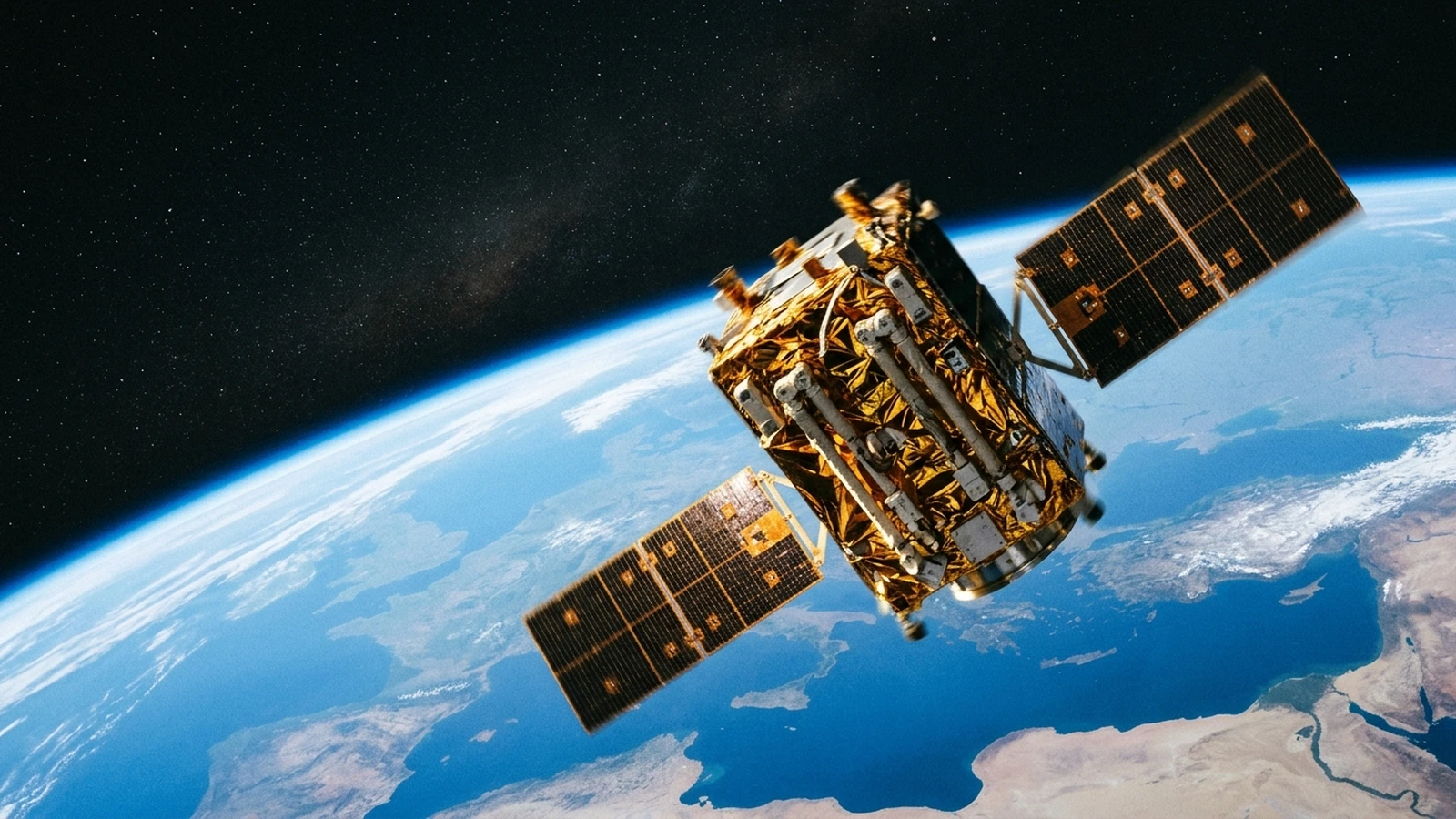
The rescue craft is called Link. It's small (about 400 kilograms, roughly the size of a fridge) with three robotic arms for gripping and a set of electric xenon thrusters for the actual pushing. The plan is for Link to chase Swift down, edge up close, take hold with its arms, and then fire its thrusters in long, gentle nudges. Over about six weeks it will walk the telescope back up from 400 km towards the 600 km it started at, where the air is thin enough to leave it in peace for years to come.
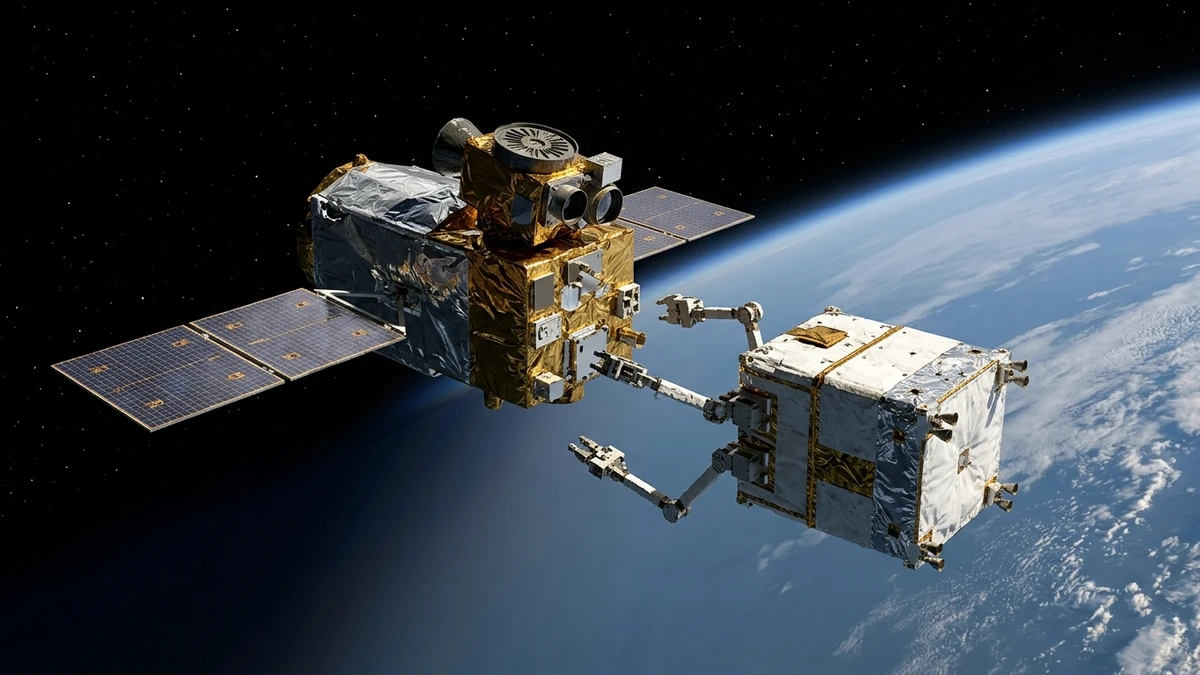
There's one big complication. Swift was launched in 2004, long before anyone seriously planned to service satellites in orbit, so it has no handles: no grapple points, no docking ring, nothing built in for a visiting robot to grab. Link has to catch a spacecraft that was never meant to be caught. The one thing working in its favour is that Swift is still alive and able to hold itself steady, which engineers have described as having an "unprepared but cooperative" partner. The telescope can't help with the rescue, but at least it won't fight it.
The Last-Ever Pegasus Rocket, Dropped From a Plane
The way Link gets to space is almost as interesting as the rescue itself.
It's flying on a Pegasus XL, a small rocket built by Northrop Grumman that doesn't launch from a pad at all. Instead it's bolted under the belly of a converted airliner, an old L-1011 named Stargazer, which carries it up to around 39,000 feet (12,000 metres) and simply drops it. The rocket falls for a few seconds, lights its motors in mid-air, and climbs to orbit from there. The launch is staged out over the equatorial Pacific, near Kwajalein Atoll.

This is a piece of history in its own right. Pegasus has been flying since 1990 and was one of the first privately developed rockets to reach orbit, but air-launch has been overtaken by cheaper, bigger rockets, and the fleet is being retired. The Swift mission is the very last Pegasus flight there will ever be. It's a fitting send-off: an old, one-of-a-kind rocket making its final journey to rescue an old, one-of-a-kind telescope.
When Is the Swift Rescue Launch, and How to Follow It
Launch is targeted for 27 June 2026, next Saturday. After that, the rescue plays out over the following weeks as Link catches up with Swift, grabs on, and begins the slow climb back to a safe orbit.
A quick reality check for stargazers: you won't see any of this from your back garden. Swift is far too faint to spot with the naked eye, and the rendezvous happens hundreds of kilometres up. To follow the mission you'll want to keep an eye on NASA and Katalyst's official channels, where the launch and the capture milestones will be reported.
What you can do from the ground is watch other satellites cross the sky, and it's genuinely good fun once you know how. On any clear night you'll catch dozens of them drifting steadily overhead in the hour or two after sunset: steady points of light that don't blink, sliding from one horizon towards the other. The International Space Station is the brightest of the lot and easy to predict with a free app or the NASA "Spot the Station" service. A decent pair of binoculars turns satellite-spotting from a passing novelty into something you can really chase, and it's the same patch of sky, the same low orbit, that Swift calls home.
Want to explore the sky yourself?
Kit we've tested and reviewed in full
You can't watch Swift's rescue from the ground, but you can scan the same low-orbit sky for satellite passes, sweep the Milky Way, and even photograph the distant galaxies where gamma-ray bursts are born. Here's where we'd start.
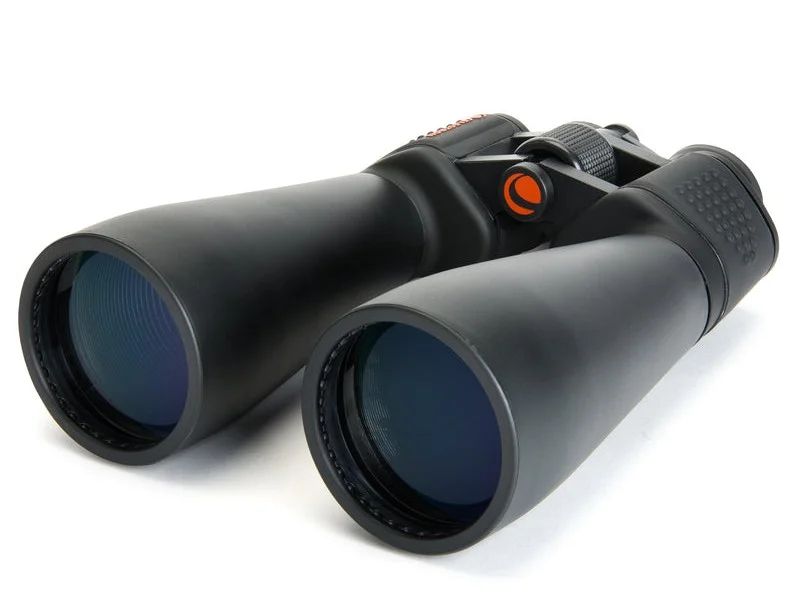
A big, bright pair of binoculars is the easiest way into the night sky, perfect for following the ISS and other satellites as they slide overhead, and for sweeping the star clouds of the Milky Way. No setup, no fuss, just lift and look.
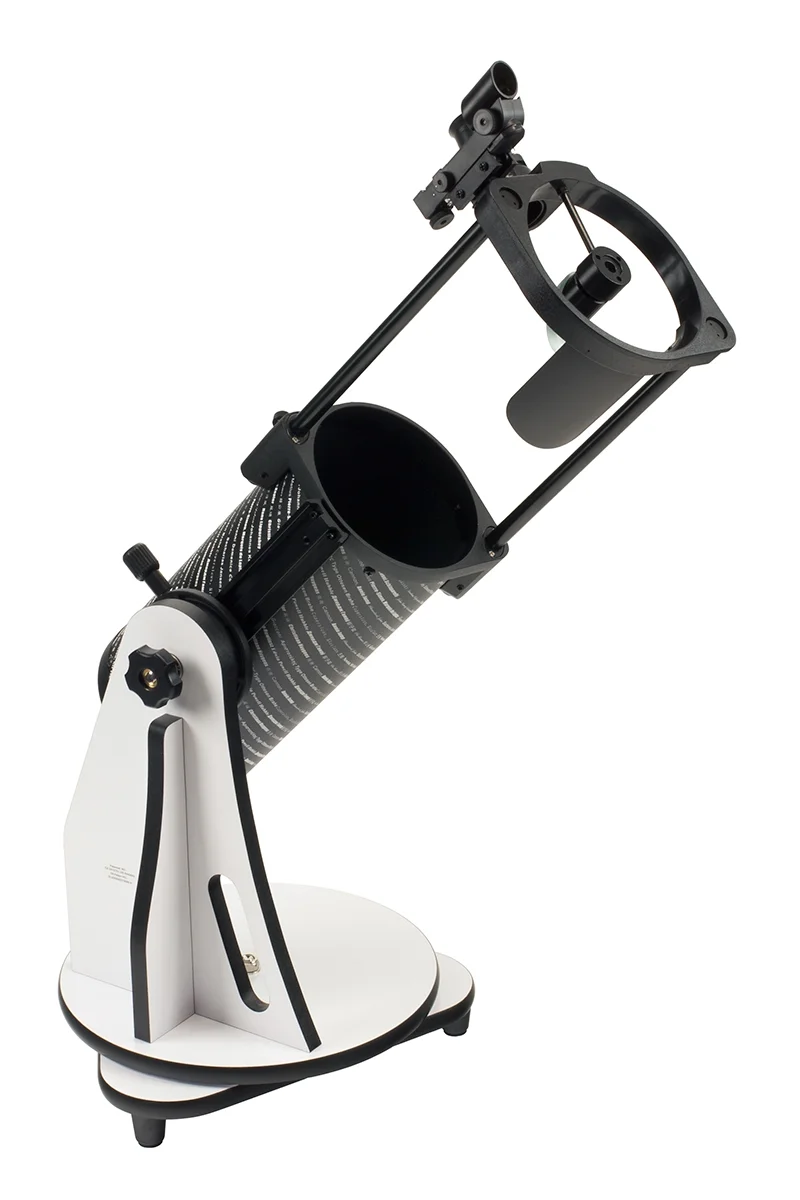
A brilliant beginner scope at a friendly price. The 130mm mirror gathers enough light to show you the Moon's craters, Jupiter's moons, and a scattering of star clusters and galaxies, including the kind of galaxy where a gamma-ray burst might one day go off.
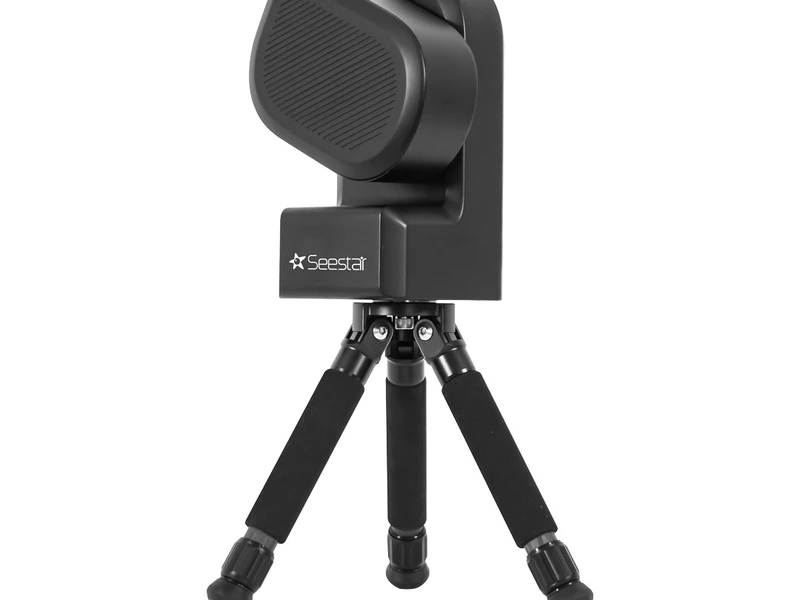
A smart telescope that does the hard work for you. Point it with your phone and it stacks live images of galaxies, nebulae, and star clusters, letting you actually photograph the far-off corners of the universe Swift studies, straight from a city garden.
Affiliate links: you pay the same price, we earn a small commission that helps keep WatchTheStars free.
Why This Rescue Mission Matters
Even if you've never heard of Swift, this mission is worth caring about, because it's a first.
No one has ever flown a dedicated robot to rescue a working NASA science satellite like this. If Link pulls it off, it doesn't just buy Swift several more years of looking for gamma-ray bursts. It proves that a failing satellite doesn't automatically have to become space junk. Right now, when a spacecraft runs low on fuel or drifts out of its orbit, that's usually the end of the road. The idea that you could simply send something up to refuel it, repair it, or boost it back into place would change the economics of space entirely.
There's a bigger picture, too. Low Earth orbit is getting crowded, and dead satellites tumbling around up there are a growing hazard. A proven ability to grab hold of an uncooperative spacecraft (one with no handles, built decades before anyone imagined this) is exactly the skill you'd need to start cleaning up that mess. The same robot arms that save Swift could one day pull defunct satellites safely out of the way.
And there's the speed of it. A small private company built a working orbital rescue craft in under a year for around $30 million, a rounding error by the standards of big space missions. That hints at a faster, cheaper, more nimble way of doing things in orbit, and a lot of people in the industry are watching closely to see whether it works.
The Bottom Line
A 22-year-old telescope is sinking towards a fiery end through no fault of its own, and instead of writing it off, NASA is sending a robot to catch it. On 27 June, the last Pegasus rocket ever to fly will drop from the belly of an ageing aircraft and carry a fridge-sized machine up to save one of the most productive observatories in the sky.
If it works, Swift gets a new lease of life, and the rest of us get a glimpse of a future where falling satellites can be rescued rather than abandoned. If it doesn't, we'll have lost a remarkable telescope, but we'll have learned an enormous amount in the trying. Either way, it's one of the boldest things NASA has attempted in years, and it all starts next Saturday. Clear skies.
Sources:
- 'No one thought it was going to be possible.' A space telescope is falling out of space. This is NASA's daring plan to save it. · Space.com
- A space telescope is falling to Earth. NASA is racing to rescue it · Science / AAAS
- Inside NASA's audacious plan to save a doomed space telescope · Scientific American
- Swift reboost mission ready for launch · SpaceNews
- Katalyst's LINK Robotic Spacecraft Integrated with Pegasus XL and Ready for Launch · Katalyst Space Technologies
- The Neil Gehrels Swift Observatory · NASA Goddard
Frequently Asked Questions
Equipment guides
Related topics

Ian ClaytonAmateur astronomer and founder of WatchTheStars.co.uk, dedicated to helping others explore the wonders of our universe. Full profile →