Key takeaways
- The US Navy's 1953 analysis of the Tremonton and Great Falls UFO films was declassified on 7 August 2026, in the Pentagon's fifth UFO file release
- The Navy's photo-interpretation specialists measured velocities up to 2,457 mph and a peak deceleration of 32,448 mph per second, about 1,479 times the force of gravity
- The report states plainly that 'birds, aircraft and balloons are ruled out' and that the objects could not be identified as natural phenomena or known man-made objects
- Months earlier, the CIA's Robertson Panel had dismissed the same Utah film as seagulls. The two conclusions have never been reconciled
- The analysis took roughly a thousand hours: frame-by-frame projection at 22x magnification, hundreds of velocity measurements and densitometer readings
Jump to section 6 sections
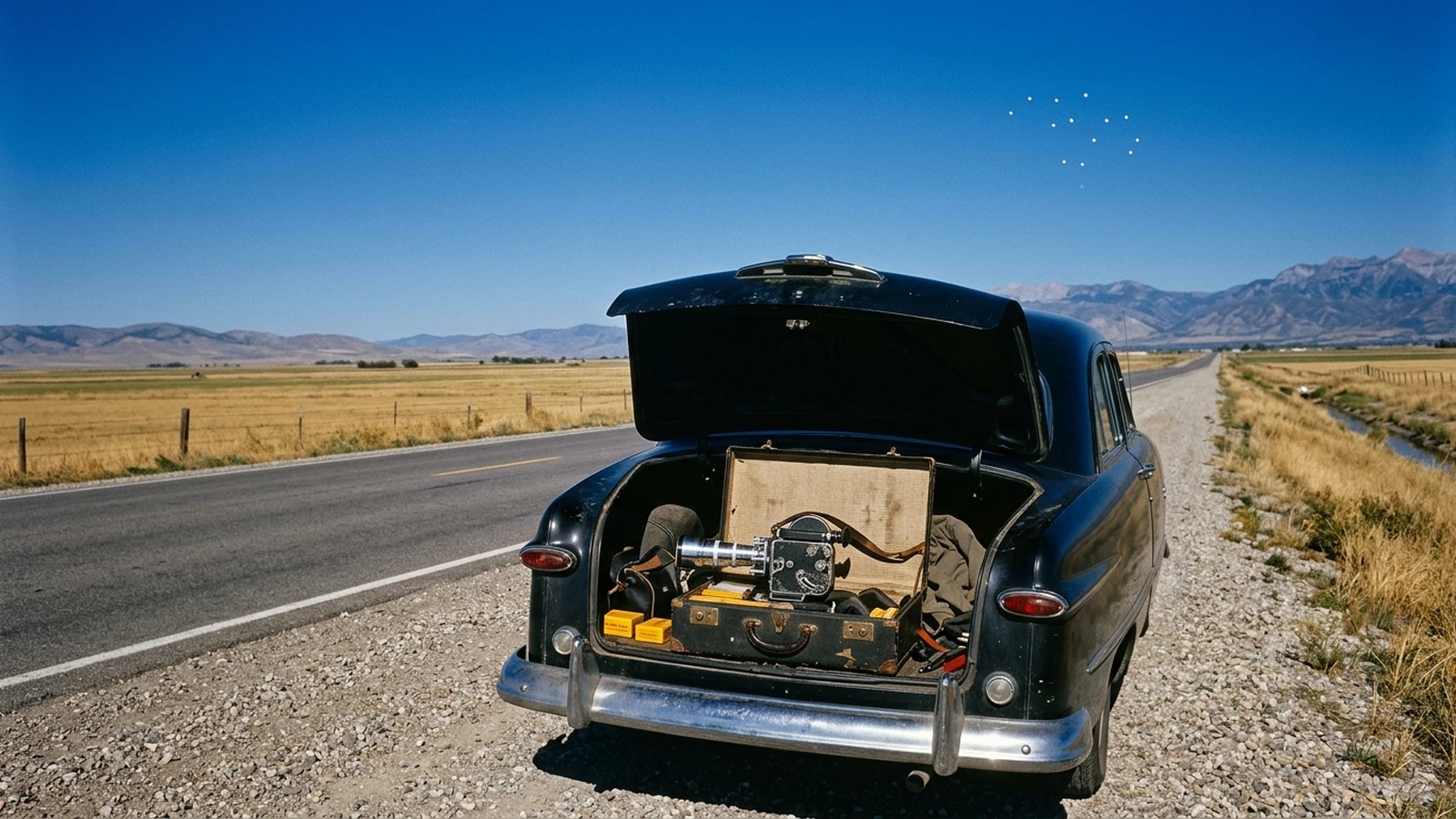
On 2 July 1952, a US Navy chief photographer named Delbert Newhouse was driving past the small town of Tremonton, Utah, with his family when his wife spotted a group of bright objects in the sky. Newhouse pulled over, dug his 16mm camera out of the boot, and shot about 30 feet of colour film of things he later said looked like "two pie pans, one inverted on top of the other," the public record preserves his account, though you won't find his name in the official file.
What happened to that film is one of the strangest stories of the early UFO era. The CIA's expert panel called it seagulls. The Navy's own photo-interpretation specialists, working for months with densitometers and frame-by-frame measurement, said birds were ruled out, and measured decelerations of nearly 1,500 times the force of gravity. Their full report was declassified on 7 August 2026 in the Pentagon's fifth UFO file release, and I've now read all 23 pages.
What Is the Tremonton UFO Film?
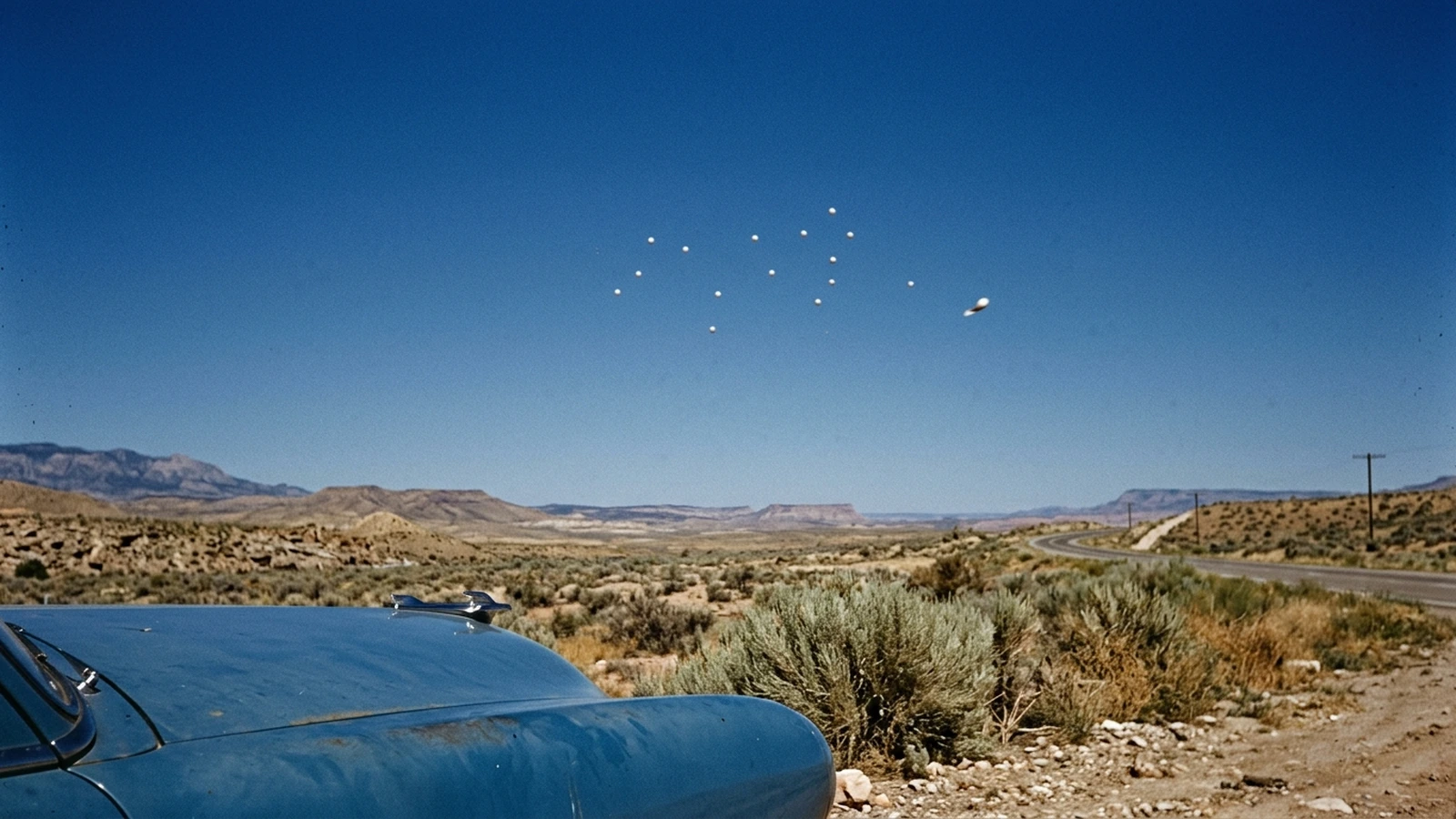
The Tremonton film shows a group of bright, disc-like objects milling about against a clear blue sky for roughly 90 seconds, crossing about 60 degrees of sky. There's nothing else in frame for most of it (no buildings, no horizon), which is precisely what makes it so hard to analyse and so easy to argue about. It was filmed at 16 frames per second, and by the time it reached the analysts the original had become "dry, brittle" and had to be duplicated with colour correction. Everything since has been argued from a copy of a copy.
The Air Force sent it, along with a second reel (the Great Falls or Mariana film, shot in Montana in 1950, showing two bright objects passing over buildings) to the US Naval Photographic Interpretation Center in the autumn of 1952. This was not a fringe outfit. It was the organisation that would evolve into the National Photographic Interpretation Center, the people who later read the U-2 photography during the Cuban Missile Crisis. Reading photographs of unidentified things was, quite literally, their day job.
The Navy's Thousand-Hour Analysis
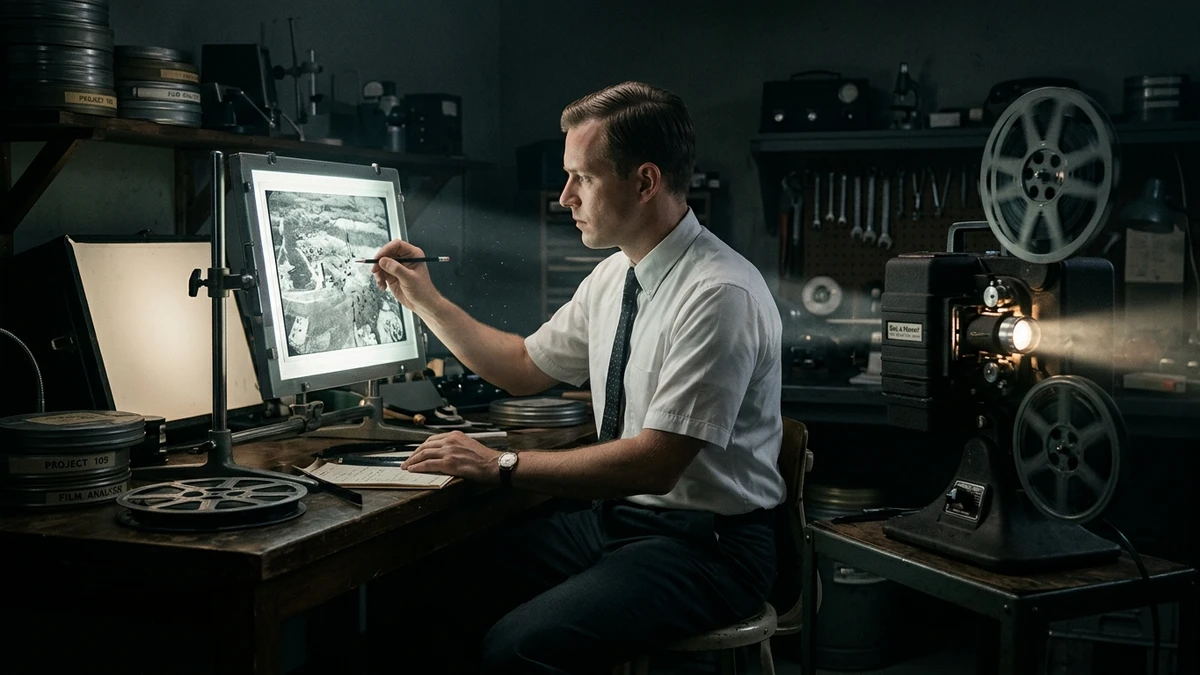
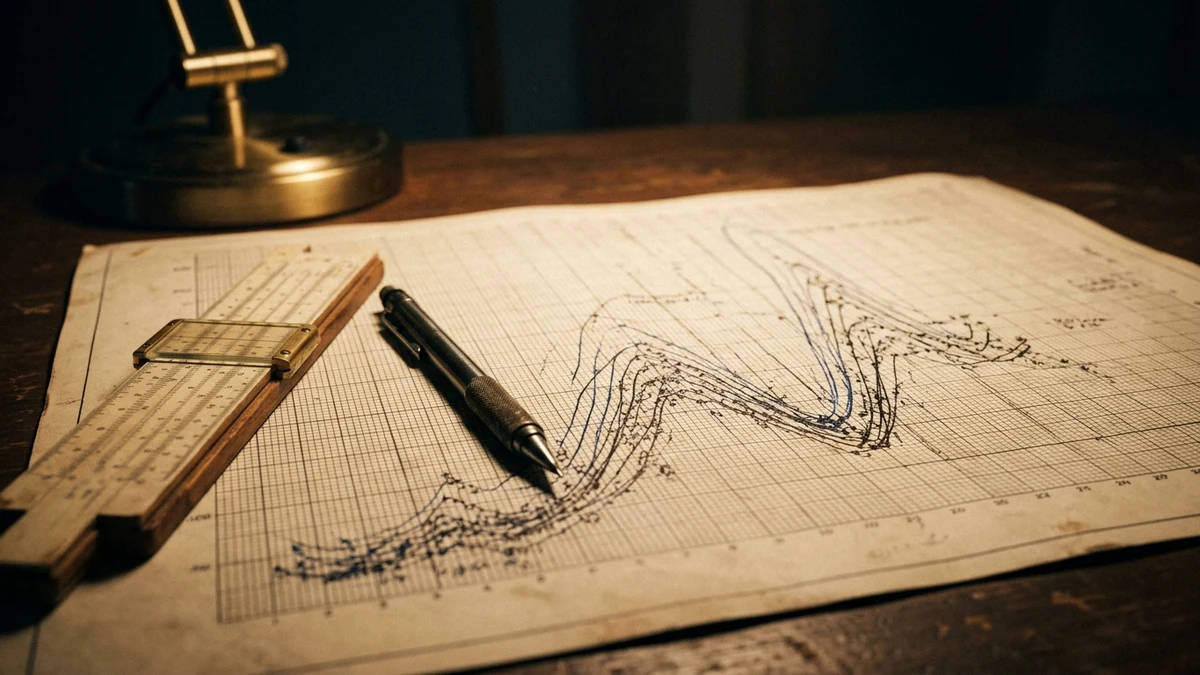
The method, described in the report with the patience of people who expect to be checked, involved no computers and nothing you couldn't reproduce today. Each frame was projected at 22 times magnification onto ground glass. The position of every object was traced onto overlays, frame by frame, producing twelve chart enclosures. Brightness was measured with a Welch Densichron densitometer against a fixed sky-background density, three readings per object, seven objects tracked. The team made 55 velocity measurements from the usable section of the Utah film and 322 from the Montana film, where buildings in frame gave fixed reference points.
The report (dated 4 May 1953, superseding a first version from the previous December) is also honest about its limits in a way that adds to its credibility: "because of the lack of proper equipment, money and personnel, the investigation was limited," it says, and asks for further tests. Contemporary accounts put the total effort at around a thousand hours. This was a serious institution doing serious work, and it knew the file would outlive it.
1,479g: The Numbers in the Report
Because nothing fixes the objects' distance in the Utah film, the analysts computed motion at an assumed five miles from the camera, and flagged that every figure scales with that assumption. On that basis, the numbers are startling. Maximum velocity: 2,457 mph. Minimum: 378 mph. Maximum acceleration: 21,168 mph per second, about 965 times the force of gravity. Maximum deceleration: 32,448 mph per second, roughly 1,479g.
For scale, a modern fighter pilot greys out around 9g. The report adds a detail that makes the figures harder to wave away: they're minimums, because the calculations assumed all motion was perpendicular to the camera's line of sight. Any component towards or away from the lens would push them higher.
Could the objects have been much closer, making the numbers collapse? Of course. That's the seagull theory in a sentence. But the analysts had an answer for that too, and it's the reason this report still bites seventy years on.
Film the sky better than 1952 could
Kit we've tested and reviewed in full
Newhouse had a wind-up 16mm camera and seconds to use it. Your phone through decent optics will do better, and most 'fleets of objects' resolve into birds or balloons the moment you add magnification.
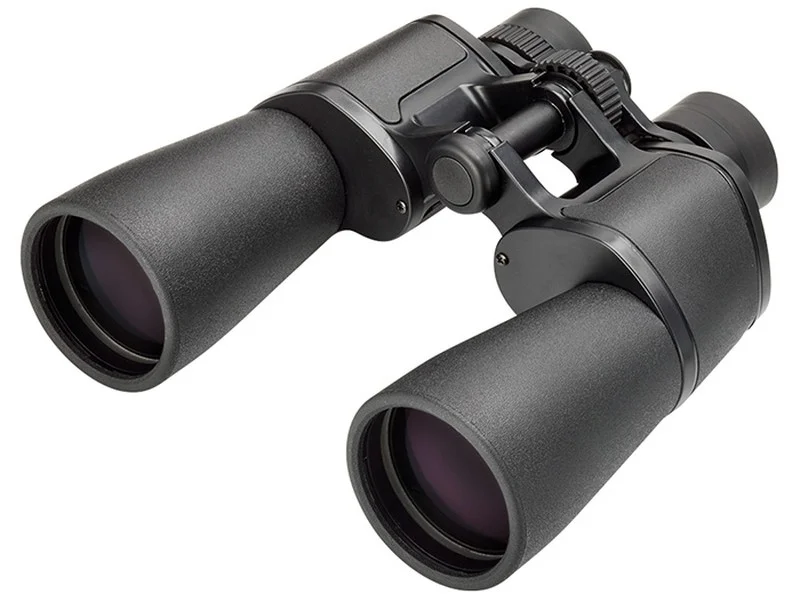
Quick to aim at anything odd overhead. At 10x, a distant gull stops being a mysterious white disc within a second or two.
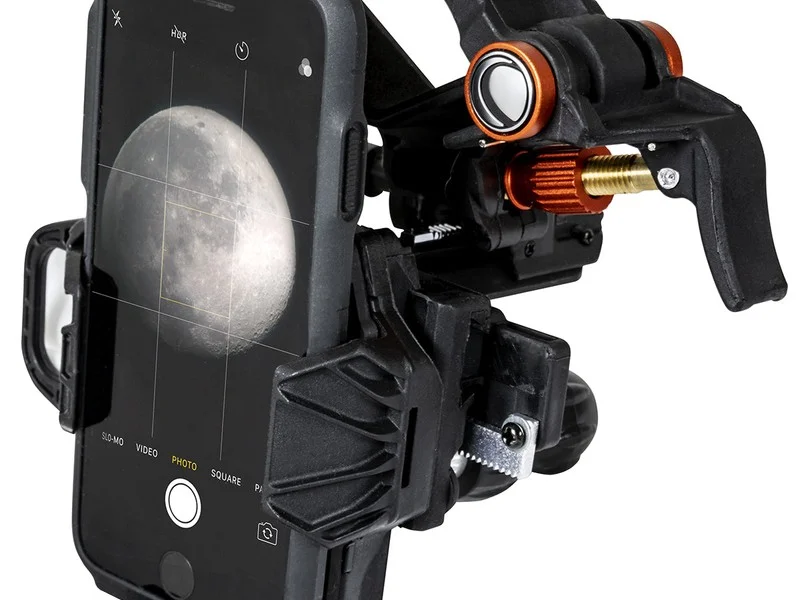
Celestron NexYZ Smartphone Adapter
Clamps a phone to binoculars or a telescope so you can record what you're seeing, the single upgrade that would have settled Tremonton on the spot.
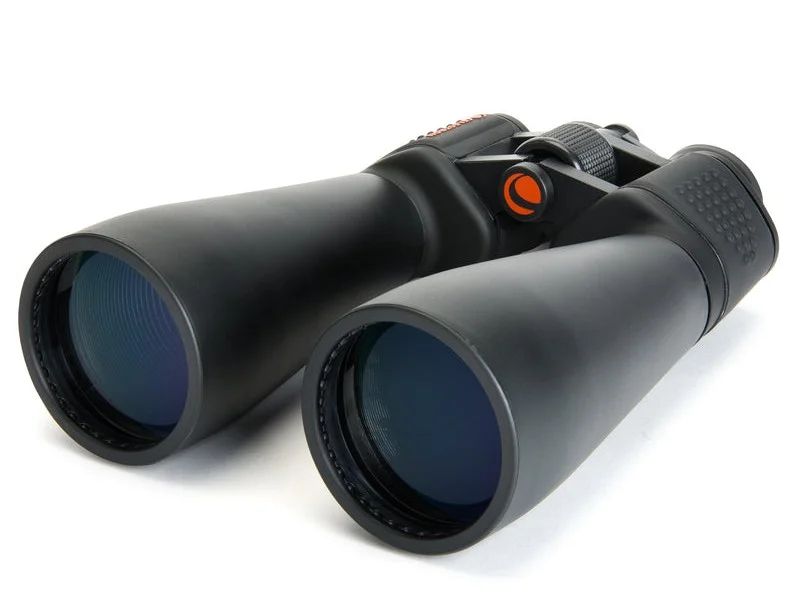
Extra magnification and light grasp for high, distant objects. Tripod recommended, detail guaranteed.
Affiliate links: you pay the same price, we earn a small commission that helps keep WatchTheStars free.
'Birds, Aircraft and Balloons Are Ruled Out'
The densitometry was the heart of the case. The objects registered as light sources, self-luminous or intensely reflective, rather than sunlit solids, and their brightness didn't behave the way a wheeling gull's plumage does. The report's conclusion deserves quoting exactly, because it was written by professional image analysts choosing their words:
"In either case, light source or reflective surface, it appears as if the objects are of a nature which we are not able to identify in terms of natural phenomena or commonly known man-made objects."
And then, without hedging: "birds, aircraft and balloons are ruled out."
Cleared astronomers and physicists were shown the data. They could neither explain the objects as natural phenomena under the recorded conditions nor recognise them as man-made. One oddity in the measurements was flagged and, as far as the record shows, never followed up: the measured accelerations came in multiples of roughly 12.5. Nobody knew what to make of that in 1953. Nobody has since.
The Robertson Panel Said Seagulls. Who's Right?
Here's the awkward part for the official history. In January 1953, the CIA convened the Robertson Panel (five distinguished scientists, meeting for a few days) to review the UFO evidence, the Tremonton film included. The panel judged the objects were birds, most likely seagulls, their plumage catching the Utah sun, and criticised the Navy's preliminary analysis as flawed.
The Navy report now public is dated 4 May 1953. Months after the panel dispersed, the specialists who had actually spent the hours on the film kept their conclusion on the record: birds ruled out, objects unidentified. The report never mentions the panel. The contradiction just sits there in the files, unresolved, for anyone to read. It's a striking early example of a pattern we've seen across the DoD's declassified UAP videos: the quick institutional explanation and the detailed technical analysis pointing different ways, with the quick one becoming history's official answer.
The sceptical case hasn't gone anywhere, to be fair. Newhouse's estimate of distance was a guess; gulls genuinely can look like bright discs against a deep blue sky; and the whole edifice of the g-figures rests on that assumed five miles. The Condon report took the birds' side in 1969. What's changed in 2026 isn't the argument: it's that we can finally read the Navy's side of it in full, rather than through summaries.
It's also worth remembering what else 1952 held: it was the great flap year, the summer of the Washington DC radar sightings, the year MIT's Lincoln Laboratory recorded its 'flying saucer' tape, and only a few years after observatories started photographing objects that predated the space age. The Tremonton film wasn't an isolated curiosity. It was the best-documented piece of a very crowded sky: crowded enough that the Air Force had already concluded in private that something real was up there.
Where to Watch the Tremonton Film
Both films have been in the public domain for decades: search "Tremonton film 1952" or "Great Falls Mariana film" and you'll find clean transfers in a minute. Watch the Utah film knowing what the Navy measured and it becomes a properly strange 90 seconds: the objects circle counter-clockwise in pairs, fuse and split, and never once resolve into anything with wings.
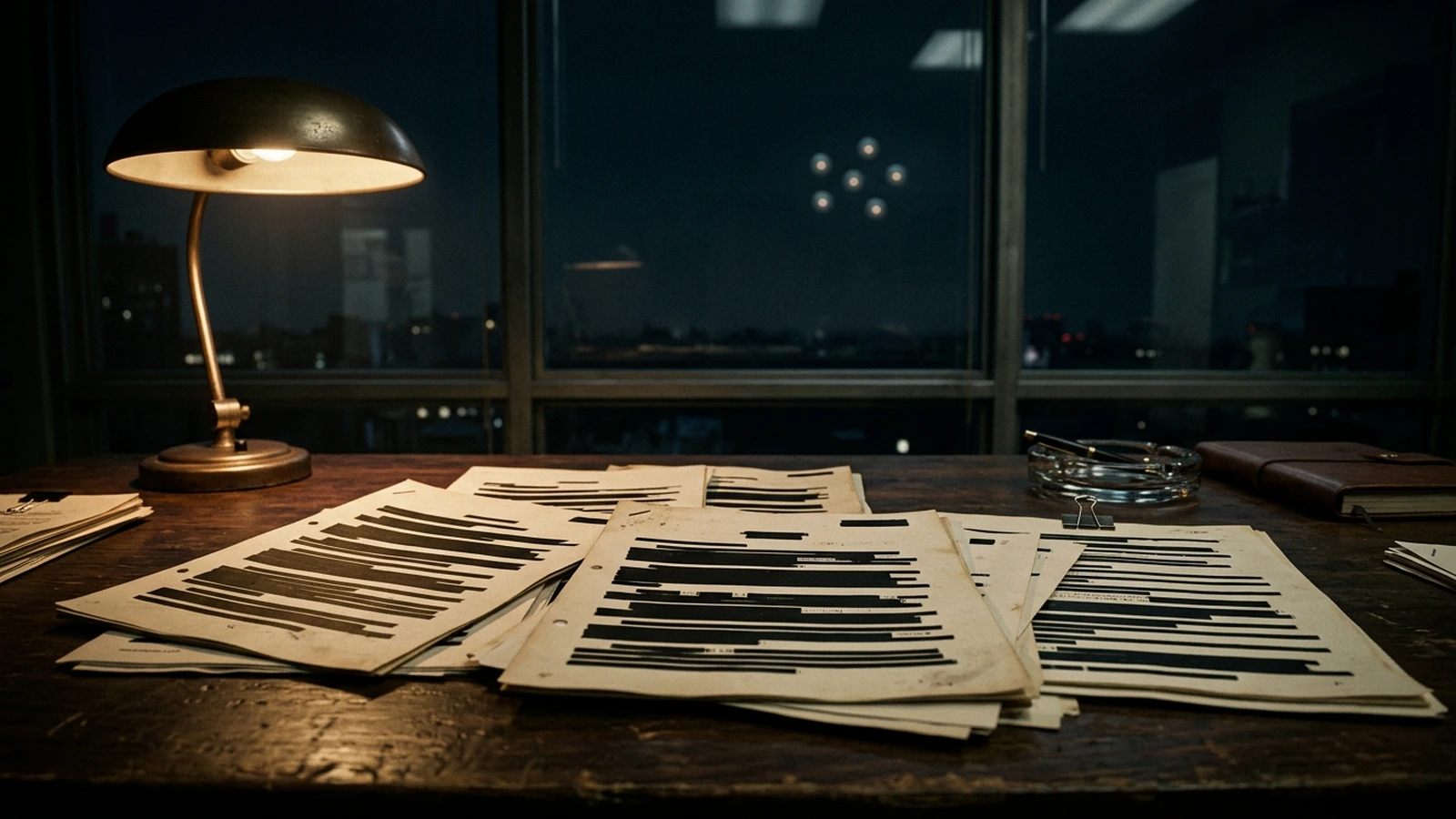
The Navy's 23-page report is free at war.gov/ufo as DOW-UAP-D098: pages one to nine are the written analysis, the rest the hand-plotted charts. Our full case page on the Tremonton and Great Falls film analysis goes through it section by section, and the UAP document archive has every major case from the release programme so far. Seventy-three years later, the most analysed UFO film in history still has two official answers. Pick your expert.
Sources:
- Department of War UAP file release (PURSUE), Release 05 · DOW-UAP-D098, US Naval Photographic Interpretation Center report, 4 May 1953
- Condon Report, Case 49: Tremonton, Utah
- Delbert Newhouse and the Tremonton film: public record
Frequently Asked Questions
Equipment guides
Related topics
Ian ClaytonAmateur astronomer and founder of WatchTheStars.co.uk, dedicated to helping others explore the wonders of our universe. Full profile →