Key takeaways
- In late 1977, during the chupa-chupa flap, the Brazilian Air Force sent two medical officers to examine affected villagers in Colares, Vigia and Santo Antônio de Umbituba
- Their two-page report, Section L of the leaked Operação Prato file, records complaints from hoarseness to paralysis, mutism and a bite-like wound to the neck
- Two patients examined straight after an encounter got one tranquiliser and one placebo, an iron tablet. Both reported only tiredness the next day
- The report concludes the symptoms were an 'adrenergic discharge', a normal fear response, spread through the community as collective hysteria
- The medics never explained the lights themselves, which the same operation was photographing, and the local doctor who treated dozens of burns victims rejected the hysteria label
Jump to section 6 sections
- Operação Prato: Brazil's Official UFO Investigation
- Chupa-Chupa Symptoms: What Villagers Told the Medics
- The Placebo Test: One Tranquiliser, One Iron Tablet
- Mass Hysteria and 'Adrenergic Discharge': The Report's Conclusion
- Does the Mass Hysteria Explanation Hold Up?
- Where to Read the Operação Prato Files
In late 1977, at the height of the chupa-chupa flap, the Brazilian Air Force sent a two-man medical team into the villages around the Bay of Marajó to examine people who said they had been struck by beams of light from the sky. Their findings survive as a two-page typed annex, the "Relatório da Missão Médico-Psiquiatra na Operação Prato", filed as Section L of the leaked I COMAR Operação Prato dossier, the same file set whose cover letter sits in Brazil's National Archives under reference ARX 197. It is the closest thing the Colares case has to an official medical verdict, and its conclusion boils down to two words: adrenaline and fear.
This is the seventh post in our Document of the Week series, where we take one file from our declassified UAP document archive and set out in plain English what it actually says. This one is unusual because it is the sceptical document inside one of the world's most famous official UFO investigations. The Air Force's own psychiatrist looked at the most physical, most frightening UFO claims in the file and reached for a textbook explanation. Whether that explanation stretches far enough is the question we'll come back to.
Operação Prato: Brazil's Official UFO Investigation
Operação Prato, Operation Saucer in English, was run out of Belém by the First Regional Air Command (I COMAR) from roughly October to December 1977. Its trigger was a wave of reports from Colares island and the fishing towns along the Pará coast: fast-moving lights at night, and beams that villagers said came down and touched people. Locals called it chupa-chupa, the sucker-sucker, because of a widespread belief that the beams drew blood. People slept in groups, lit bonfires and banged pans to keep the lights away. Some fled their villages altogether.

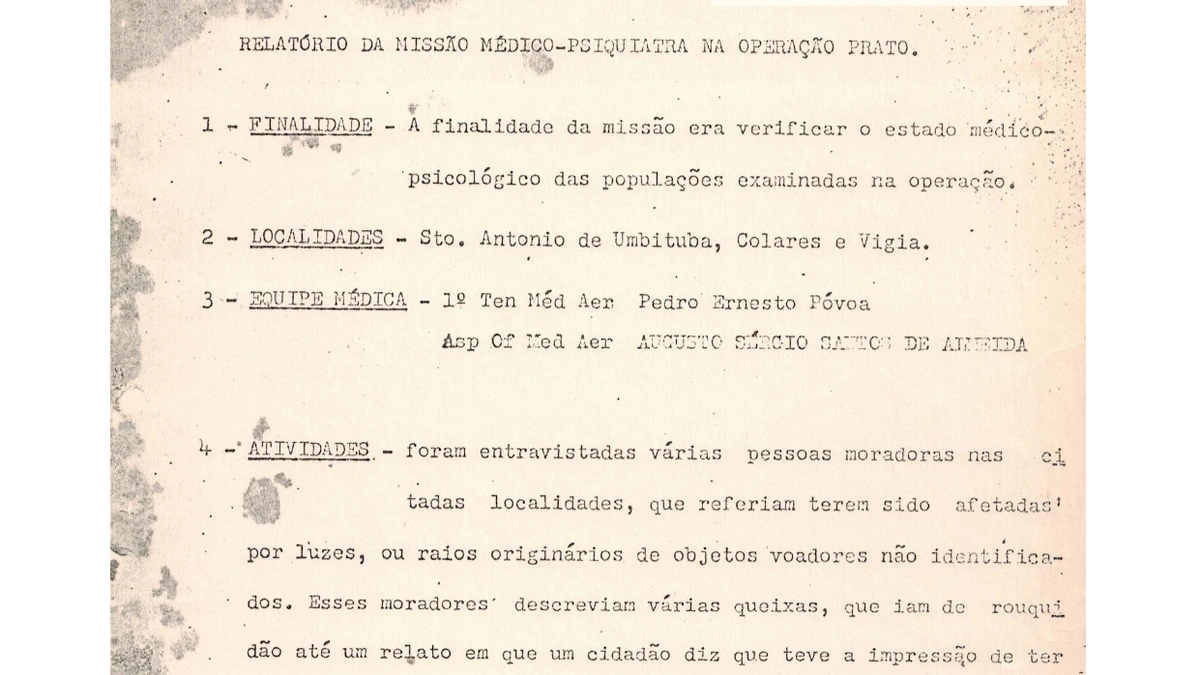
The operation's field commander, Captain Uyrangê Hollanda, led teams that interviewed hundreds of witnesses, logged their own sightings and took photographs, all of which fill the other sections of the dossier this report belongs to. The medical-psychiatric mission was a small piece of that machine with a specific job, which the report states in its first numbered paragraph: to verify the medical and psychological state of the populations examined in the operation. Its area of work was three localities named in paragraph two: Santo Antônio de Umbituba, Colares and Vigia.
The team was two Air Force medical officers: First Lieutenant Pedro Ernesto Póvoa and Aspirant Officer Augusto Sérgio Santos de Almeida. The document is typed on hospital-headed paper, with the header largely eaten by damp stains, and like much of the leaked file it carries no date, though the operation places it in late 1977.
Chupa-Chupa Symptoms: What Villagers Told the Medics
The activities section is the heart of page one. The medics interviewed residents across the three localities who "referred to having been affected by lights, or rays originating from unidentified flying objects". The complaints they recorded run from the mild to the alarming: hoarseness at one end, and at the other an account from a man who had the impression of being bitten or stung on the neck, in the cervical region. Between those extremes the report lists paralysis of the arms or legs, total paralysis and mutism, all said to follow either contact with the beam or simply seeing the light the objects gave off.
That list matches what was being reported across the region at the time. The doctor who ran the Colares health post, Wellaide Cecim Carvalho, treated around 35 people during the flap for superficial burns and small puncture marks, often on the chest or neck. The Air Force team would have been hearing the same stories from the same population, and their report does not dispute that people were genuinely suffering. What it disputes is the cause.
The Placebo Test: One Tranquiliser, One Iron Tablet
The most striking passage in the document describes the only two patients the team examined immediately after an encounter. Both said they had just suffered the effects of "rays coming from the sky". The medics recorded a cluster of acute symptoms: racing heart, muscle tremors, a rapid full pulse, rapid breathing, crying fits, a sensation of heat, stuttering speech, and a curled-up posture in the hammock with arms and legs drawn in, which the report calls a fetal attitude.
Then they ran a quiet little experiment. One patient was given a tranquiliser. The other was given a placebo: ferrous sulphate, an iron tablet used to treat anaemia, which the report notes has no effect on the nervous system. The next day, both patients reported exactly the same thing. The fear, the tremors and the paralysis had gone, leaving only asthenia, physical tiredness. The tablet that did nothing worked as well as the one that did something.
Mass Hysteria and 'Adrenergic Discharge': The Report's Conclusion
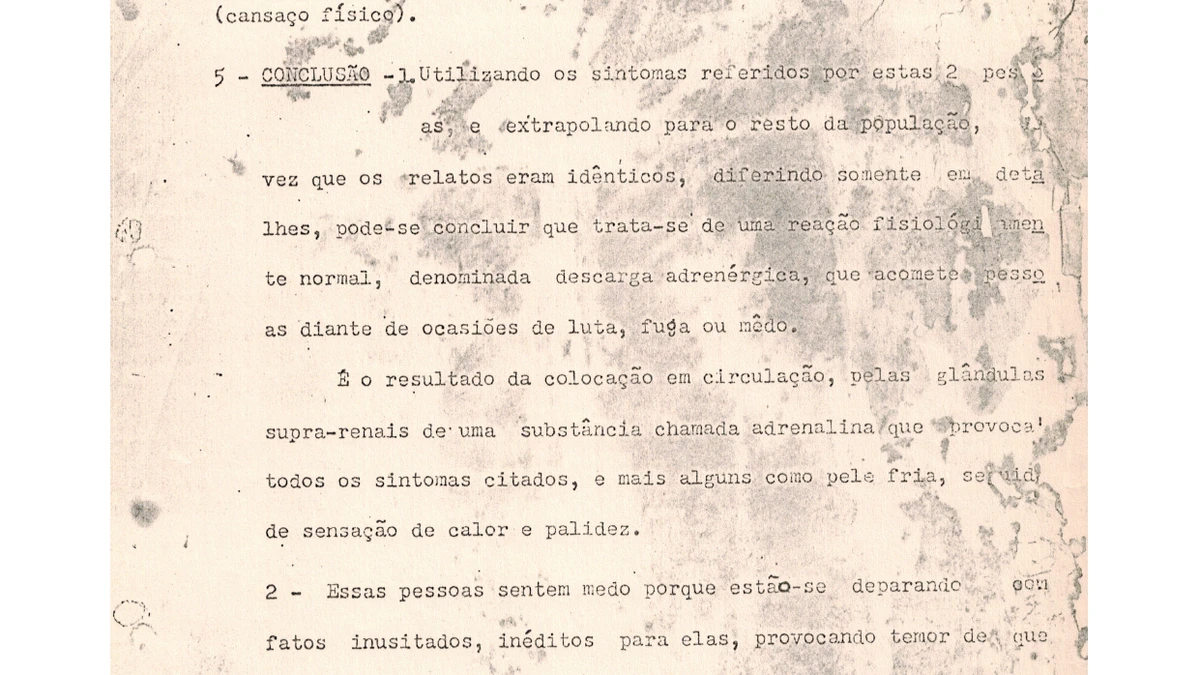
Page two sets out three numbered conclusions. Taking the two examined patients and extrapolating to the rest of the population, "since the accounts were identical, differing only in details", the report finds that the symptoms amount to "a physiologically normal reaction, called an adrenergic discharge, which affects people in situations of fight, flight or fear". It is the adrenaline surge, the report explains, that produces every symptom on the list, plus a few the villagers also described, like cold skin, heat flushes and pallor.
The second conclusion tackles why a whole region was affected. People were frightened because they were facing something completely outside their experience, and in tight-knit communities where everyone knows everyone, the report says, the symptoms were "passed from mouth to mouth and shared in an epidemic fashion", circulating "a climate of collective hysteria". The final paragraph is blunt: what the population attributed to the action of luminous rays from UFOs was, in the team's view, "normal reactions of the organism, caused by fear of the unknown".
Watching lights over the water, the calmer way
Kit we've tested and reviewed in full
Most strange lights over a dark horizon turn out to be planets, satellites or aircraft, and a decent pair of binoculars settles it in seconds. If you're new to them, start with our guide to binocular astronomy.
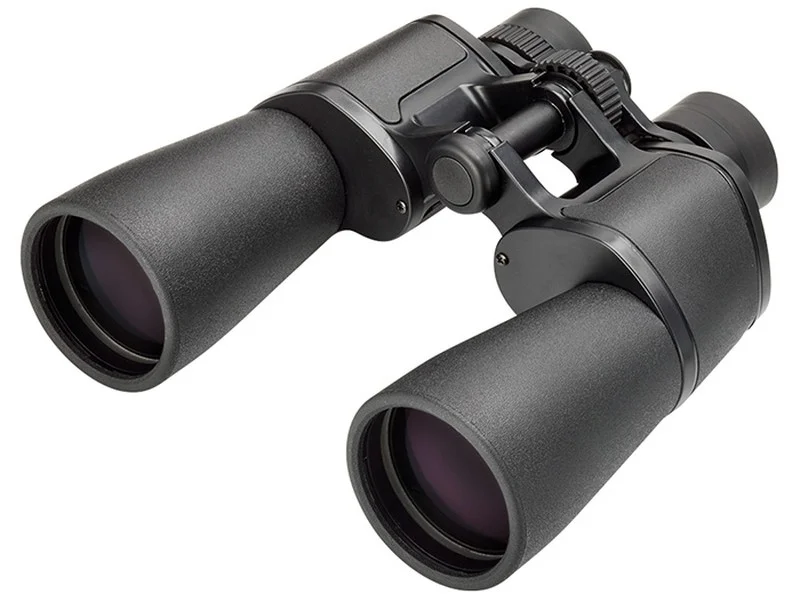
Bright 50mm lenses and a wide view make it easy to find a low light over water and work out what it actually is.
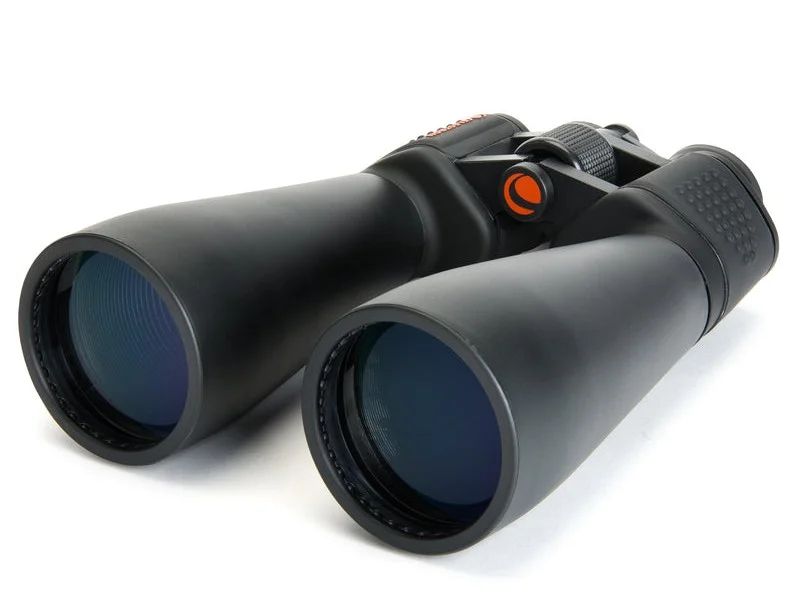
The extra magnification turns a distant glow into a shape. Put them on a tripod and they'll hold steady all evening.
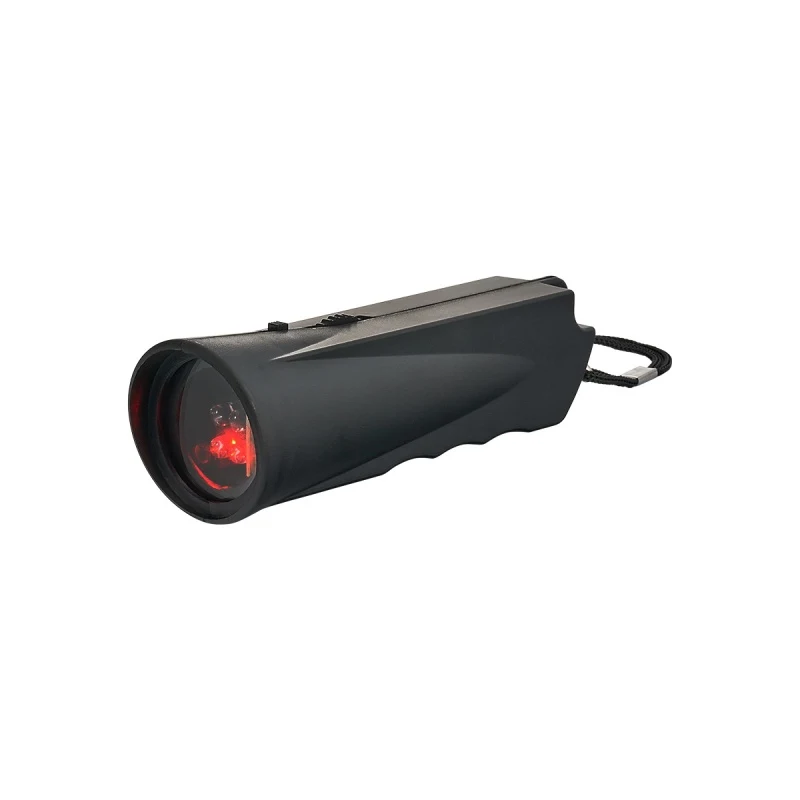
Astro Essentials Red Light Torch
A red torch lets you check a star chart without wrecking your dark adaptation, which matters when the thing you're watching is faint.
Affiliate links: you pay the same price, we earn a small commission that helps keep WatchTheStars free.
Does the Mass Hysteria Explanation Hold Up?
As far as it goes, the medical logic is respectable. Acute fear really does produce racing hearts, tremors, mutism and even temporary paralysis, and the placebo result is a genuinely telling data point for the two patients concerned. Anxiety spreading through a frightened community is well documented in medical literature, and the report deserves credit for being the one part of the dossier that tested a claim rather than collecting it.
But the report's reach is narrow. Look at what it does not say. It examined two people. It offers no comment on the burns and puncture marks that Dr Carvalho was treating in the same villages, injuries she has consistently maintained were real, adding that she refused requests from visiting officials to tell her patients it was mass delusion. And it says nothing at all about the lights. It could hardly have done, because elsewhere in the same file the operation's own teams were logging and photographing unidentified objects night after night. The sketches and observation records fill Sections C and F of the dossier. Captain Hollanda, who commanded those teams, broke twenty years of silence in 1997 to say he believed the objects were intelligently controlled, then died that October, reported as suicide.
So the psychiatrist report is best read as one honest instrument in a larger investigation, not the investigation's verdict. It explains, plausibly, how terror moved through the villages once the stories started. It does not explain what started them. An official file holding both a hysteria diagnosis and its own UFO photographs sounds odd, but we keep meeting the same thing in other government collections, from the Sandia Base sightings logbook to the UK's Manchester Airport near miss file. The CIA's Soviet missile-range report has the same split personality.
Where to Read the Operação Prato Files
Brazil began releasing Operação Prato material through its National Archives in the 2000s, and the released items include the I COMAR cover letter (ARX 197), UFO observation records (ARX 184) and a leak-investigation memo (ARX 322). The fuller dossier this report belongs to, with its lettered sections from cover letter to psychiatrist report, circulates from a leaked copy digitised by the Brazilian research team at operacaoprato.com. We hold both sets in the local collection behind our UAP document archive, and the series has since returned to the file: Section D, the SNI intelligence service's own report on the case, is now covered too.
Brazil's official files have a habit of coming back into the news. Its Senate held hearings on military UFO records in 2022, and campaigners are still pressing for the remaining Varginha files to come out. For the classic-case sceptic's view, our fact-check of the 1963 Brazil UFO sphere story shows the other side of the coin: sometimes the legend really is bigger than the file. The rest of our UAP and UFO research coverage is collected in one place.
Sources:
- Relatório da Missão Médico-Psiquiatra na Operação Prato · Section L, I COMAR Operação Prato dossier (local archive copy, digitised by operacaoprato.com)
- Operação Prato · Wikipedia
- Colares: From UAP flap to military investigation · UAPedia
- Operation Saucer: the official search for UFOs that attacked Brazilians with 'light beams' in 1977 · Yahoo News UK
- 1977 Colares UFO flap / Operação Prato · Metabunk discussion of the documents
Frequently Asked Questions
Equipment guides
Related topics

Ian ClaytonAmateur astronomer and founder of WatchTheStars.co.uk, dedicated to helping others explore the wonders of our universe. Full profile →