Key takeaways
- Astronomers have found S301, the fastest star ever detected in the Milky Way, travelling at 25,000 km/s, more than 8% of the speed of light
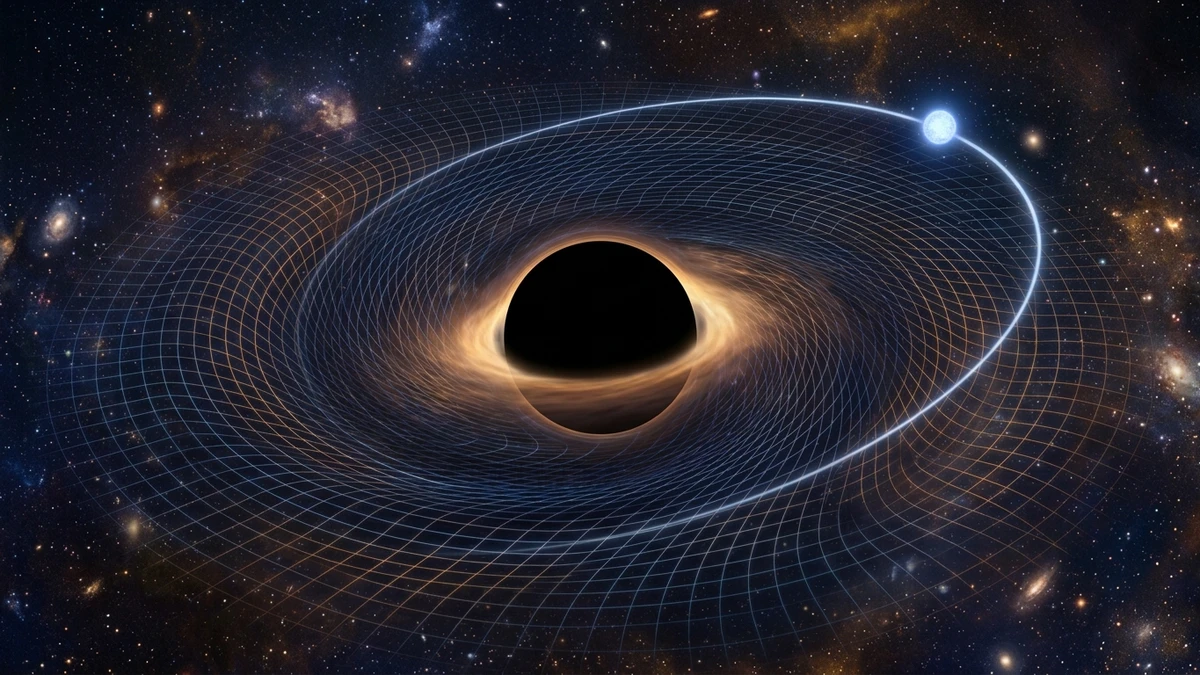
- It orbits Sagittarius A*, our galaxy's supermassive black hole, every 8.7 years and gets closer to it than any star seen before
- S301 passes just 12 times the Earth–Sun distance from the black hole, close enough to feel the black hole's spin twisting spacetime around it
- Within about ten years, astronomers expect to use S301 to directly measure the spin of Sagittarius A* for the first time, a key test of Einstein's general relativity
- The discovery was made with the GRAVITY instrument on ESO's Very Large Telescope Interferometer and is published in Nature
Jump to section 7 sections
- Fastest Star in the Milky Way: What Have Astronomers Found?
- How Fast Is S301? 25,000 Kilometres Per Second
- Sagittarius A*: The Black Hole S301 Is Circling
- How Was S301 Discovered? Nine Years of Watching the Galactic Centre
- Black Hole Spin: How S301 Puts Einstein's Relativity to the Test
- How Did S301 Get So Close? The Lost Twin Theory
- Can You See the Galactic Centre From the UK?
Astronomers have found the fastest star ever seen in the Milky Way. It's called S301, it circles the supermassive black hole at the centre of our galaxy, and at its closest approach it moves at roughly 25,000 kilometres per second. That's more than 8% of the speed of light.
The discovery, announced by the European Southern Observatory on 19 August, matters for more than the record books. S301 passes so close to the black hole that it feels the hole's rotation twisting spacetime around it. For the first time, astronomers have a star that could let them directly measure the spin of Sagittarius A*, and with it put Einstein's general relativity through one of its toughest tests yet.
Fastest Star in the Milky Way: What Have Astronomers Found?
S301 is a faint star on the tightest, fastest orbit ever recorded around Sagittarius A*, the supermassive black hole at the heart of the Milky Way. That black hole weighs about four million times the mass of the Sun, and we know its mass so precisely because of a family of stars called the S-stars, which whip around it on tight, fast orbits. Tracking those stars is what earned Reinhard Genzel and Andrea Ghez a share of the 2020 Nobel Prize in Physics.
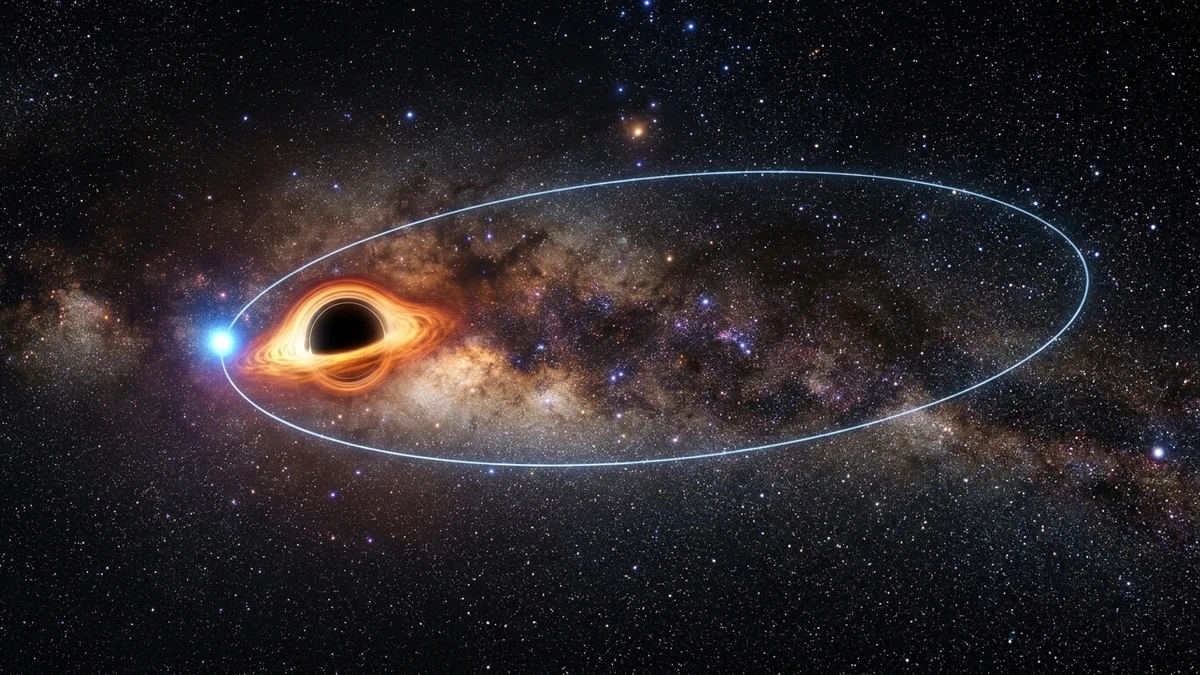
It's the newest member of that family, and it beats them all. It completes a full orbit of the black hole in just 8.7 years, and at its closest approach it passes about 1.78 billion kilometres from Sagittarius A*. That's roughly 12 times the distance from the Earth to the Sun, or only about 20% further out than Saturn sits from our own star. No star has ever been seen so deep in the black hole's grip.
"Decades carefully tracking stars orbiting our galaxy's central black hole, Sagittarius A*, have led to this breakthrough discovery of a very promising star," said Genzel, director at the Max Planck Institute for Extraterrestrial Physics. "Because it orbits so close to Sagittarius A*, S301 opens a new window to the fundamental properties of spacetime in this extreme black-hole environment."
How Fast Is S301? 25,000 Kilometres Per Second
S301 reaches roughly 25,000 kilometres per second at its closest approach to the black hole, which is more than 8% of the speed of light. That's hard to picture, so here are a few comparisons. It's about 100,000 times faster than a passenger jet. It would take you from London to Sydney in under a second. And it's more than three times quicker than S2, the previous star of galactic-centre research, which manages around 7,700 km/s at its closest approach.
The speed comes from the same physics that makes comets sprint around the Sun. S301's orbit is a stretched ellipse, and as the star falls towards the black hole it trades gravitational energy for speed, reaching its peak just as it whips through its closest point. Then it climbs away again, slowing as it goes, before the black hole hauls it back for another pass.
For all that violence, S301 is in no danger. Its orbit is stable, just like a planet's. The black hole bends its path but never quite catches it.
Sagittarius A*: The Black Hole S301 Is Circling
Sagittarius A* sits about 26,000 light-years away in the direction of the constellation Sagittarius. At four million solar masses it's a monster by any everyday standard, though modest compared with the billion-solar-mass giants found in other galaxies. It's the same black hole whose powerful outflowing wind solved a 50-year mystery earlier this year, and it anchors the spiral arms astronomers recently found reach further than we thought.
Black holes themselves are simple objects. Astonishingly, you only need two numbers to describe one completely: its mass and its spin. The mass of Sagittarius A* has been nailed down for years thanks to the S-stars. The spin is the missing half of the description, and until now there's been no clean way to measure it.
That's what makes S301 such a prize. It's a natural probe, parked in the one place where a black hole's spin leaves a readable signature.
You can't see S301, but you can find its neighbourhood
Kit we've tested and reviewed in full
The galactic centre sits low in the south on August evenings, behind the star clouds of Sagittarius. Sweeping that region with binoculars is one of summer's best sights.
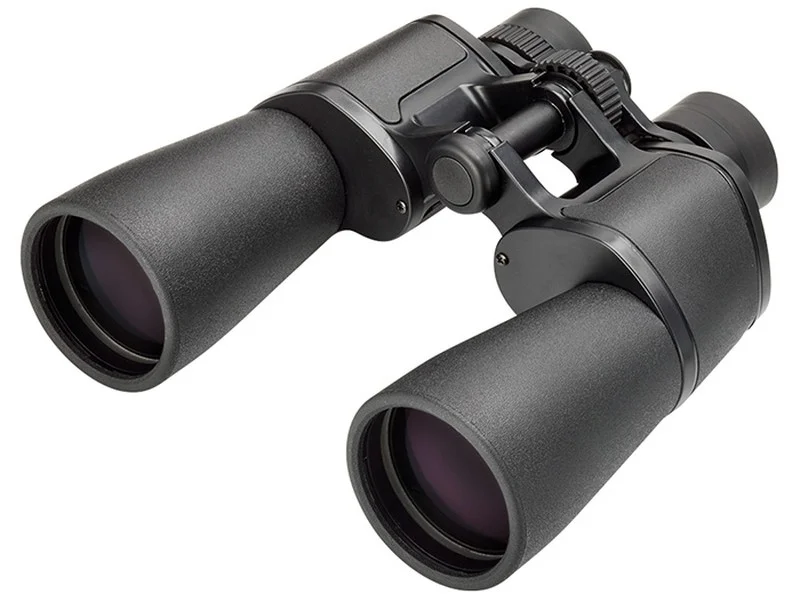
Ideal for sweeping the Sagittarius star clouds and picking out the bright knots of the Milky Way that surround the galactic centre.
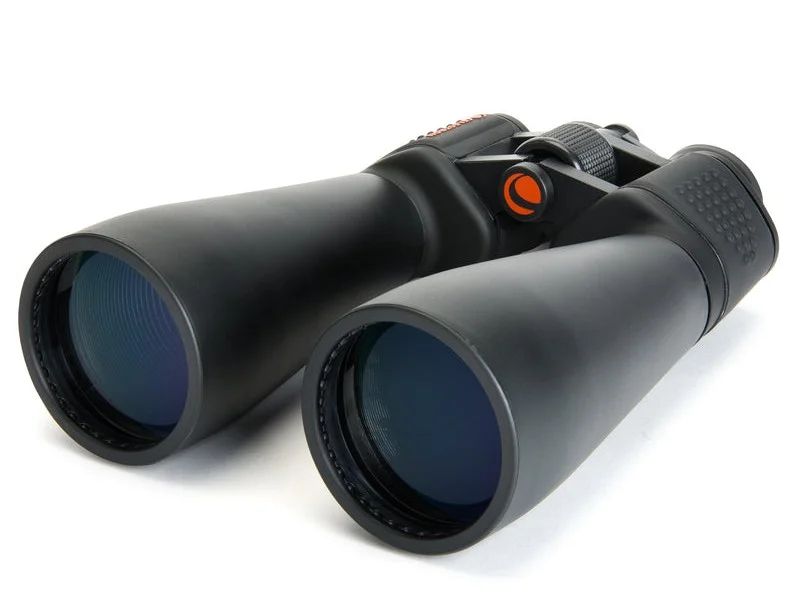
Extra aperture pulls fainter star fields out of the murk, which helps when Sagittarius is sitting low over the southern horizon.
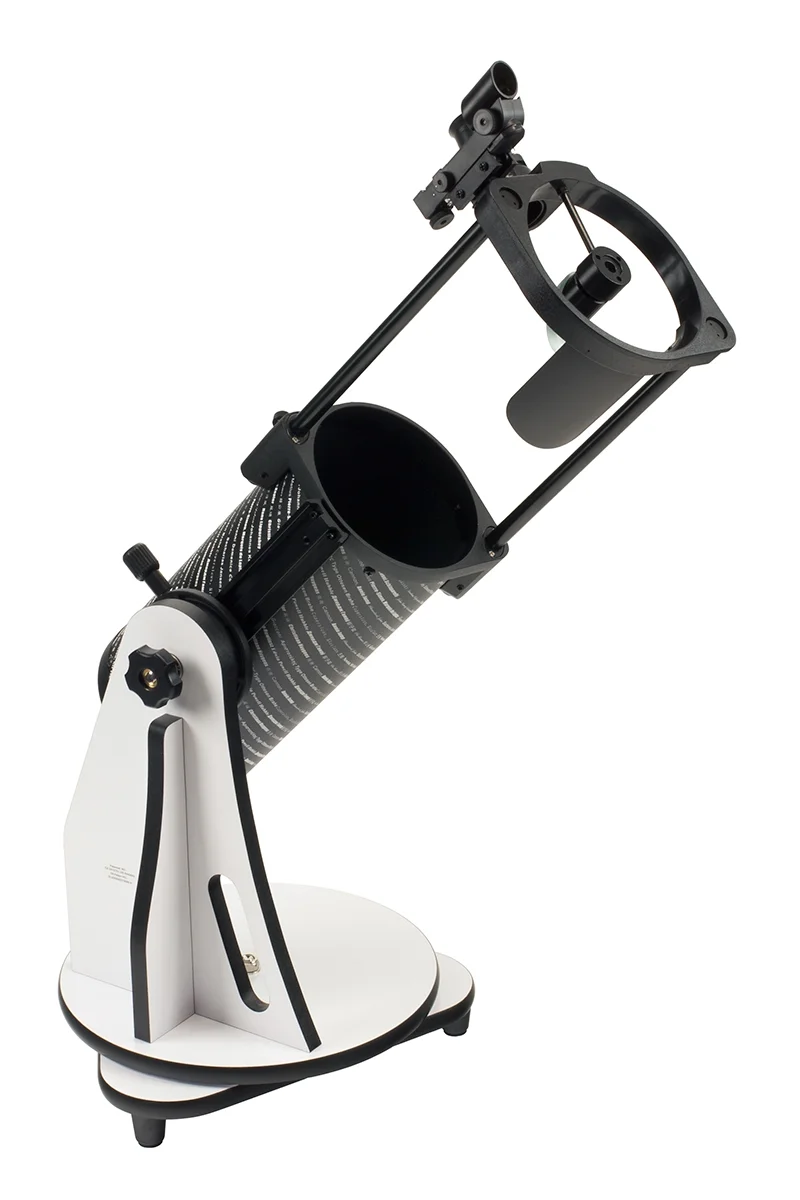
Enough aperture to resolve the star clusters and nebulae scattered across the richest part of the summer Milky Way.
Affiliate links: you pay the same price, we earn a small commission that helps keep WatchTheStars free.
How Was S301 Discovered? Nine Years of Watching the Galactic Centre
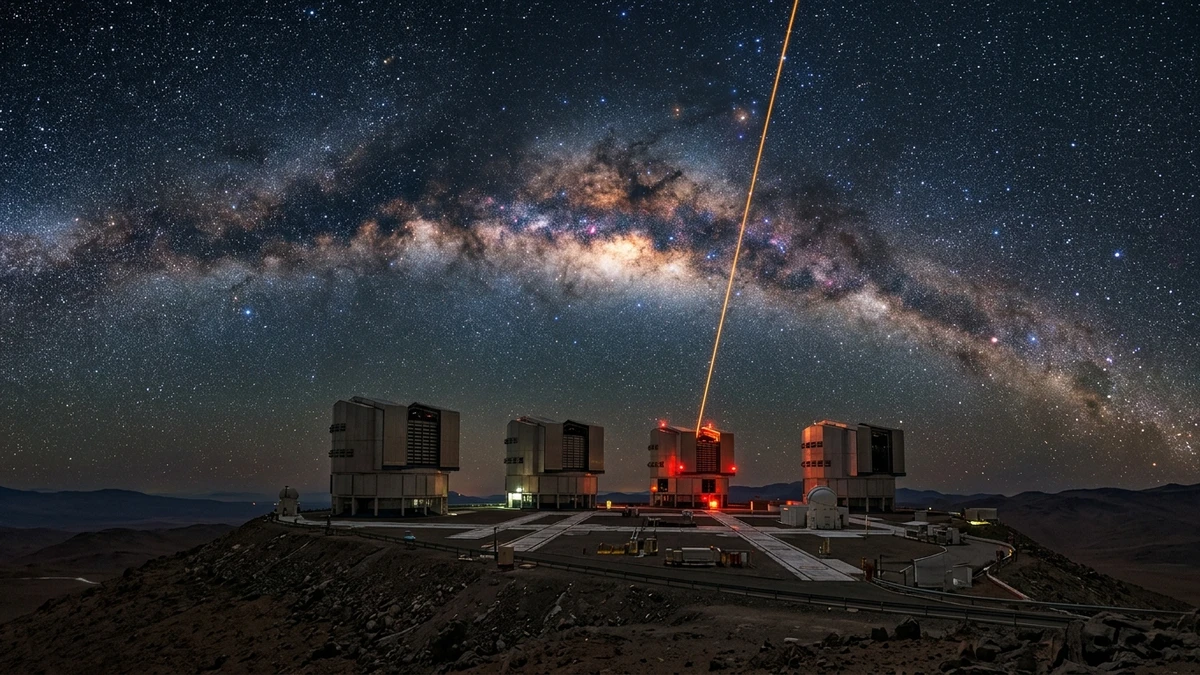
Finding S301 took patience. The star is around two billion times fainter than Betelgeuse as seen from Earth, buried in one of the most crowded regions of the sky. Since 2017, the GRAVITY collaboration has pointed ESO's Very Large Telescope Interferometer at the galactic centre for around 100 hours every year, combining the light of four telescopes in Chile's Atacama Desert to act as one giant instrument.
In spring 2023 the team noticed a faint point of light shifting position near the black hole. They followed it through 2024 and 2025, then searched their archives and found it hiding in data from as far back as 2017. In total, 19 measured positions traced out a clean ellipse on the sky: a new star, on the most extreme stellar orbit ever charted.
The result, led by K. Abd El Dayem at the Paris Observatory, is published in the journal Nature.
"What is special about this star is that it's orbiting Sagittarius A* on a very tight orbit, taking just 8.7 years to complete it, and is approaching the black hole at a mere 12 times the distance of Earth to the Sun. That is unprecedented," said co-author Felix Mang, a PhD student at the Max Planck Institute for Extraterrestrial Physics.
Black Hole Spin: How S301 Puts Einstein's Relativity to the Test
Here's the part that has physicists excited. General relativity predicts that a rotating mass doesn't just bend spacetime, it drags spacetime around with it, like a spoon turning in honey. The effect is called Lense-Thirring precession, and near a spinning supermassive black hole it should be strong enough to detect.
For a star on a tight orbit, that drag shows up as a slow shift in the orbit itself. Each time S301 swings through its closest approach, the orientation of its orbit should twist by a small amount, and the size of that twist depends directly on how fast Sagittarius A* is spinning.
"With this star we hope to measure, within the next 10 years, the spin of the black hole," said Mang. His colleague Stefan Gillessen put it more bluntly: "For the first time, we would actually be able to measure very directly the spin of a massive black hole, which would be a key test of Einstein's theory."
Without S301, this measurement was decades away. "We would need to measure the motion of other stars for several more decades to get anywhere close to measuring the spin of the black hole," said co-author Juan Osorno of the Paris Observatory.
Einstein's theory has passed every test thrown at it so far, from the gravitational lensing that recently revealed a new exoplanet to the orbit of S2 around this same black hole. But it has never been tested against a direct spin measurement of a supermassive black hole. Either it passes again, or something new turns up. Both outcomes would be worth having.
How Did S301 Get So Close? The Lost Twin Theory
One puzzle remains: stars can't form this close to a supermassive black hole. The gravity is too disruptive for a cloud of gas to collapse peacefully into a star. So S301 must have formed further out and been delivered inward.
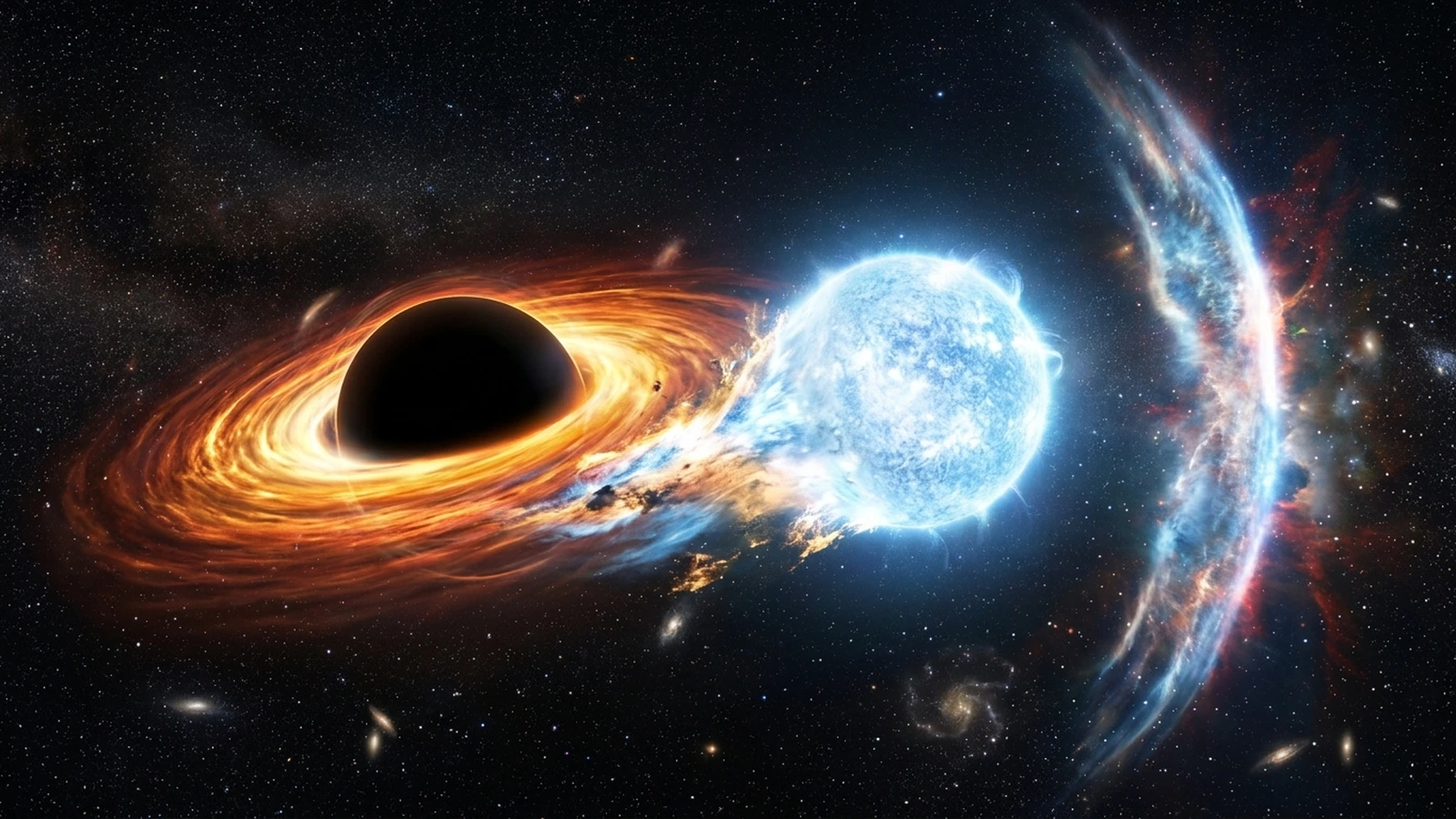
The team's favoured explanation is called the Hills mechanism. S301 likely started life as one half of a binary pair, two stars orbiting each other. When the pair wandered too close to Sagittarius A*, the black hole's gravity ripped them apart. One star, S301, was captured onto its current extreme orbit. Its twin was flung outward at enormous speed, becoming what astronomers call a hypervelocity star, possibly fast enough to leave the Milky Way altogether.
Somewhere out there, in other words, S301's lost companion may still be racing away from the scene.
Can You See the Galactic Centre From the UK?
You can't see S301, and you can't see the black hole. But on a clear summer or early-autumn evening you can look straight at the part of the sky where all of this is happening, and that's not nothing.
Face south after dark and find the "teapot" of Sagittarius sitting low above the horizon. The galactic centre lies just above the teapot's spout, marked by the brightest star clouds of the summer Milky Way. Timing matters more than kit here. From central England the galactic centre is about 7 degrees up at 20:00 BST in late September, only 4 degrees by 21:00, and below the horizon before 22:00, so you want it early and you want a clear southern horizon. By late October it has gone for the year.
From one of the UK dark sky sites, the region is a glorious sweep of glowing patches and dark dust lanes, and it's an easy target for binoculars. If you are shopping for a pair, our guide to the best binoculars for stargazing covers what actually works on star clouds this low. Every photon you catch from those star clouds has travelled tens of thousands of years to reach you from the neighbourhood S301 calls home.
For everything else worth catching right now, see our guide to the UK night sky this week, updated every Sunday.
Sources:
- Milky Way's fastest star orbits our supermassive black hole so closely it feels its spin · European Southern Observatory
- The Fastest Star in the Milky Way Will Test Relativity · Universe Today
- Scientists just found the fastest known star in the Milky Way · Space.com
- Discovery of a star sensitive to the spin of Sgr A* · Abd El Dayem et al., Nature (preprint)
Frequently Asked Questions
Equipment guides
Related topics
Ian ClaytonAmateur astronomer and founder of WatchTheStars.co.uk, dedicated to helping others explore the wonders of our universe. Full profile →