Key takeaways
- A study published in Science Advances on 1 August 2026 has caught giant plasma waves stripping ions out of Mars' atmosphere
- The waves are Kelvin–Helmholtz waves: the same physics as wind whipping up waves on the sea, but with solar wind instead of air
- NASA's MAVEN and China's Tianwen-1 watched together: one monitored the incoming solar wind while the other measured the escaping atmosphere
- The escape is lopsided: the waves mainly form on one side of the planet, set by the direction of the solar wind's electric field
- The same process could strip atmospheres from other unprotected worlds, including rocky exoplanets
Jump to section 7 sections
Mars used to have a thick atmosphere, rivers and standing water. Today it's a freezing desert with air a hundred times thinner than ours. Where did it all go? A new study has just caught one of the thieves red-handed.
Giant invisible waves, whipped up by the solar wind, are rolling along the top of the Martian atmosphere and carrying it away in clouds. And for the first time, two spacecraft watched it happen together.
Giant Waves From the Sun Are Stripping Mars' Atmosphere
The finding was published in Science Advances on 1 August 2026, led by Chi Zhang of Boston University's Center for Space Physics.
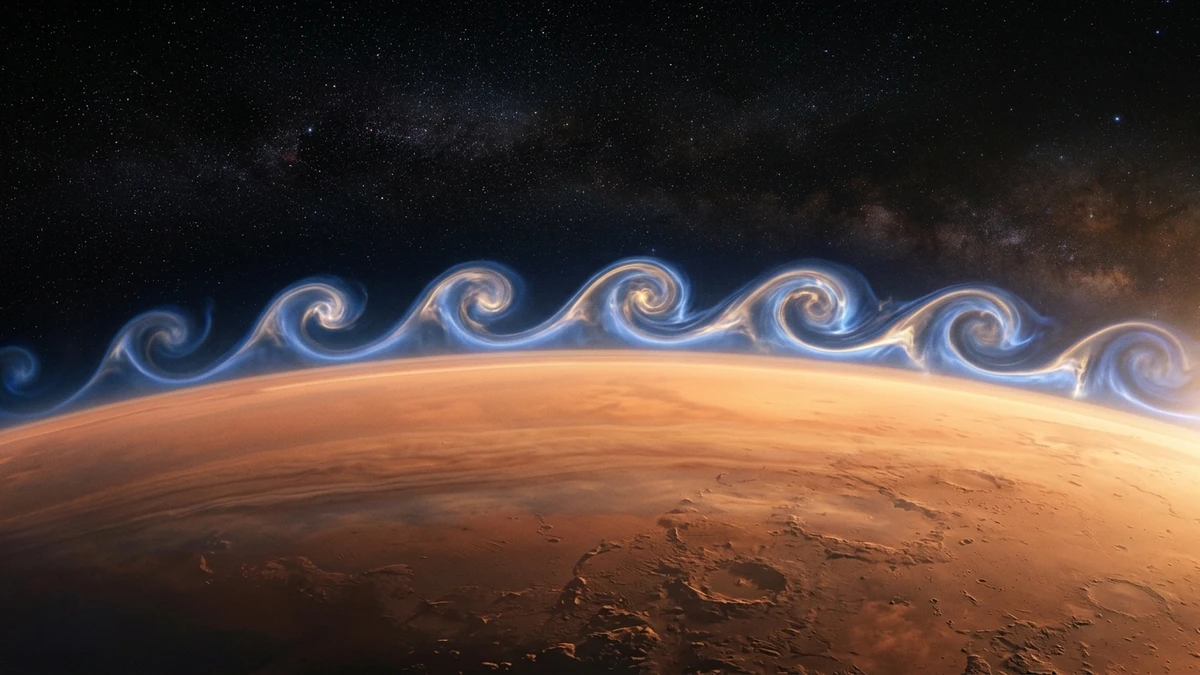
The solar wind is a constant stream of charged particles blowing off the Sun at hundreds of kilometres a second. When it hits the unprotected top of the Martian atmosphere, it behaves like wind blowing across the sea. It raises waves. Not water waves, but enormous ripples in electrically charged gas, known as Kelvin–Helmholtz waves.
Zhang's team showed that these waves scoop up ions from Mars' upper atmosphere and bundle them into huge plasma clouds, which then drift off into space. Scientists had suspected something like this for years, but nobody had been able to prove what was driving it.
There's a twist, too. The waves don't wrap evenly around the planet. "It is mainly observed on one side of the planet, depending on the direction of the solar wind electric field," said Zhang. In other words, the Sun doesn't just strip Mars' atmosphere. It picks a side.
How Did Mars Lose Its Atmosphere?
The short answer: Mars lost its magnetic shield, and the Sun has been sandblasting it ever since.
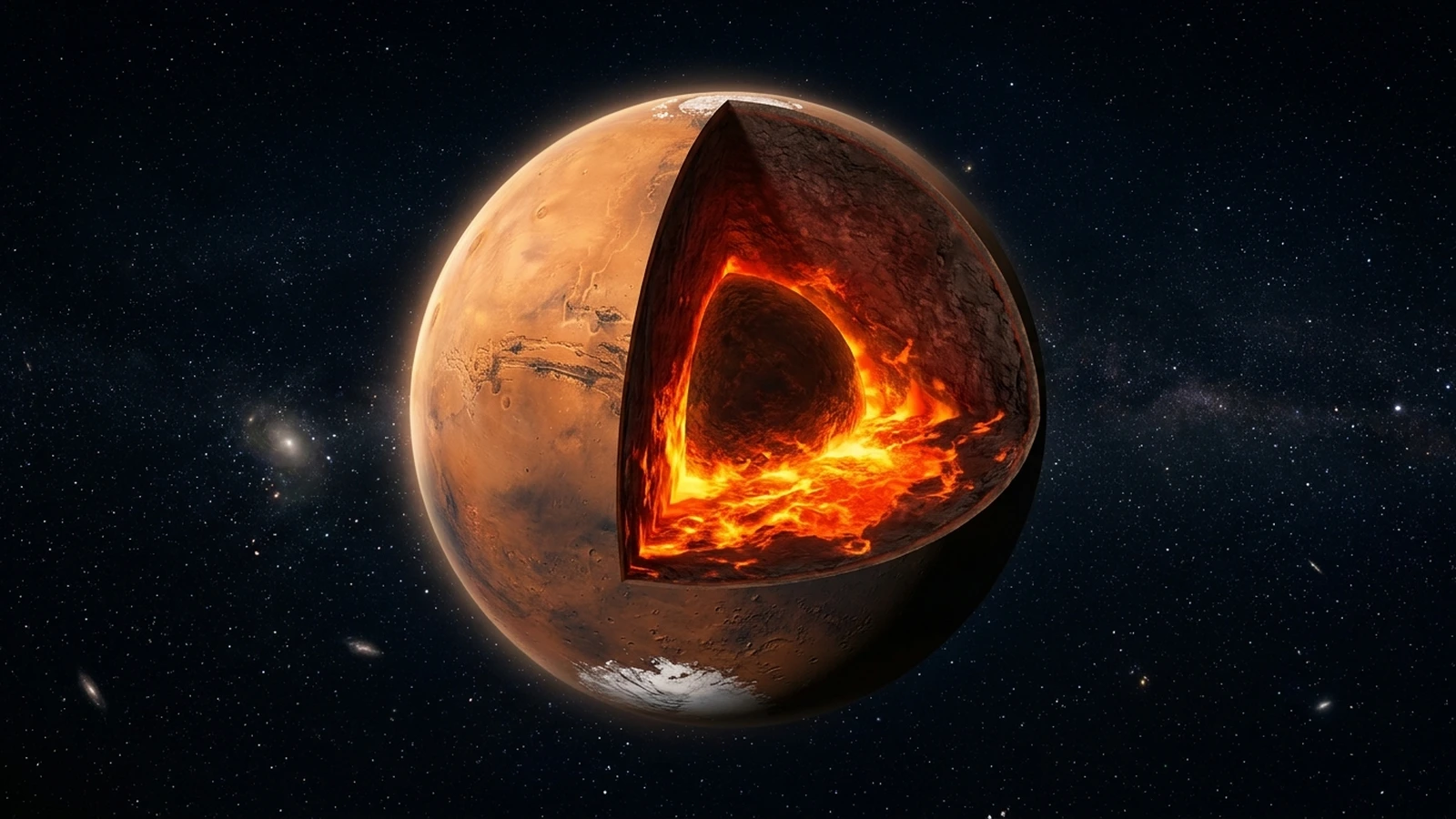
Around four billion years ago, Mars had a global magnetic field like Earth's, generated by molten metal churning in its core. But Mars is only about half Earth's size. It cooled quickly, the churning stopped, and the field died. From that point on, the solar wind could reach the top of the atmosphere directly and peel it away, molecule by molecule.
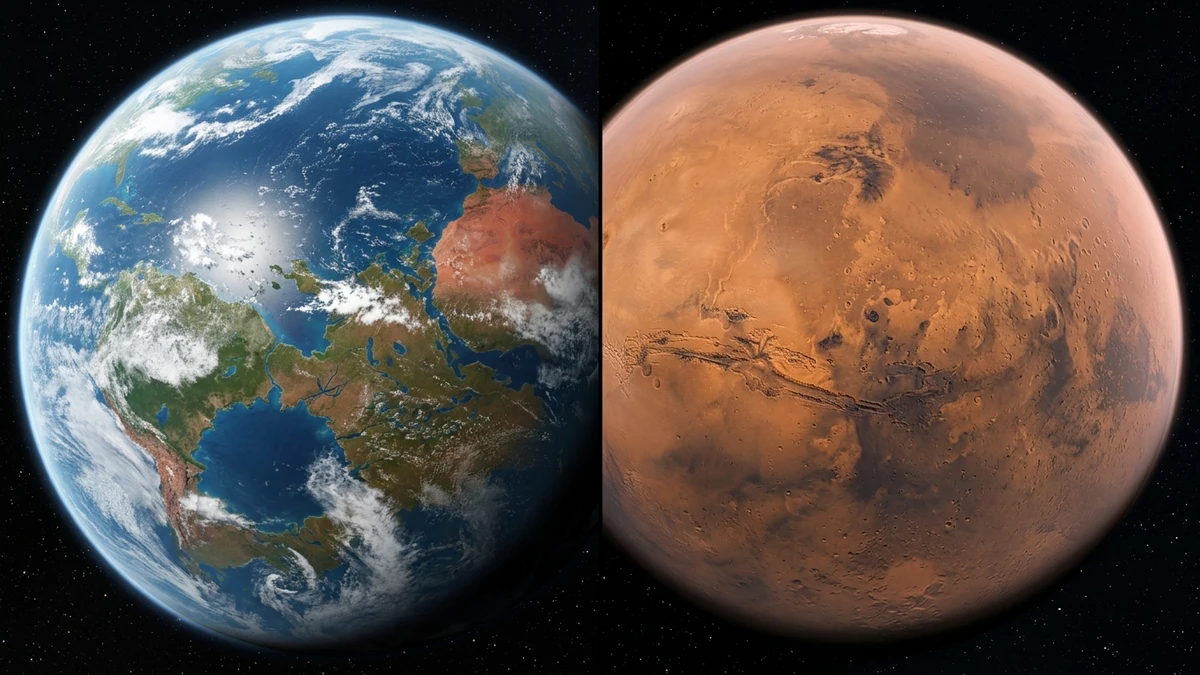
Billions of years of that turned a world with lakes and rivers, the kind of place where NASA's Curiosity rover finds the building blocks of life in ancient mudstone, into the cold desert we see today.
What this new study adds is the how. Rather than a slow, even leak, a good share of the escape happens in bursts, as these giant waves fling whole clouds of atmosphere into space at once.
What Are Kelvin–Helmholtz Waves?
You've seen Kelvin–Helmholtz waves, even if the name is new. They form wherever two flows slide past each other at different speeds. Wind over the sea makes ordinary waves this way. Occasionally the same thing happens in Earth's clouds, producing rare and beautiful breaking-wave patterns in the sky that look like a Hokusai painting.
At Mars, the two flows are the solar wind racing past and the planet's slower, heavier ionosphere below. The boundary between them buckles, curls and breaks, just like a wave on a beach. Each breaking crest can pinch off as a bubble of atmospheric gas that no longer belongs to the planet.
The scale is hard to picture. These are waves thousands of kilometres long, rolling silently along the top of a planet's sky.
How MAVEN and Tianwen-1 Caught the Waves Together
The clever part of this study is not one spacecraft but two, in the right places at the same time.
The long-standing problem with studying atmospheric escape is cause and effect. A single orbiter can measure ions leaving Mars, or it can measure the solar wind arriving, but not both at once. You see the leak or the weather, never together.
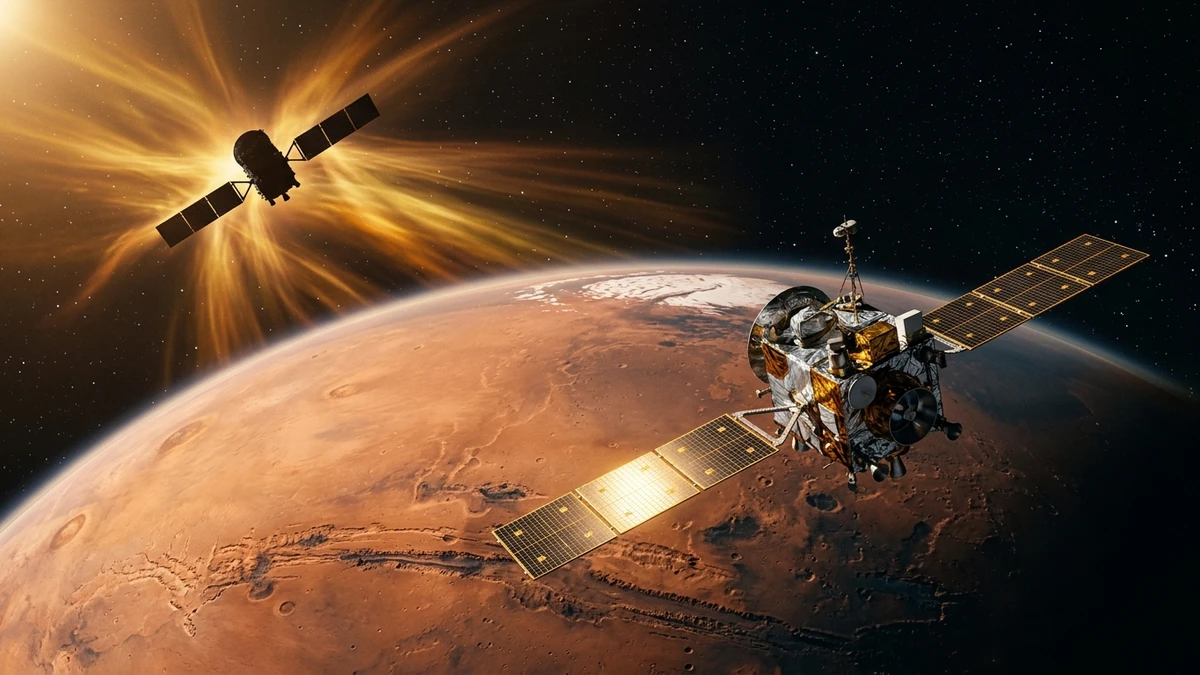
So the team paired them up. China's Tianwen-1 orbiter sat upstream, monitoring the solar wind on its way in. NASA's MAVEN, which has been studying the Martian atmosphere since 2014, flew closer in and measured the ions streaming away. Line up the two datasets and you can match each gust of solar wind to each burst of escaping atmosphere. One telling event from 31 July 2023 showed a whole train of plasma clouds rolling past MAVEN, one after another, like sets of waves reaching a shore.
That pairing is what turned a theory into an observation. It's a nice bit of international teamwork, and a sign of where Mars science is heading. NASA's newly launched ESCAPADE mission will soon put twin spacecraft around Mars to study exactly this, taking over as traffic around the Red Planet gets busier every year.
Could Earth Lose Its Atmosphere Like Mars?
Not any time soon, happily. Earth's core is still molten and still churning, so our magnetic field is going strong. It deflects most of the solar wind around us, which is why our atmosphere has survived 4.5 billion years of solar battering.
The wider point matters, though. Any world without a strong magnetic field is open to this process. "This could also occur on other planets that lack a strong magnetic field, including some exoplanets," said co-author Chuanfei Dong of Boston University.
That makes these waves a genuine clue in the search for life. Astronomers keep finding promising rocky worlds, like the habitable-zone planet LHS 1140 b and its newly confirmed atmosphere. Whether such planets can hold onto their air for billions of years may come down to the same physics now being watched, wave by wave, at Mars.
How to See Mars From the UK
The best part of a story like this: the planet in question is hanging in our sky right now.
In August 2026, Mars rises in the early hours and sits in the morning sky before dawn, an unmistakable orange-red point climbing higher each week. It brightens steadily through autumn and winter on the way to opposition in February 2027, when it will be at its biggest and brightest for the next two years. Our month-by-month guide to seeing Mars in 2026 has dates and finder tips for the whole run.
When you spot it, consider what you now know. That steady orange light is a world losing its sky, one wave at a time.
See the planet that lost its air
Kit we've tested and reviewed in full
Mars is climbing back into the morning sky and brightening every week on the road to its February 2027 opposition. Now is a fine time to get to know it.

Mars is an easy naked-eye target, but 10x50s sharpen that orange point against the winter star fields rising before dawn.
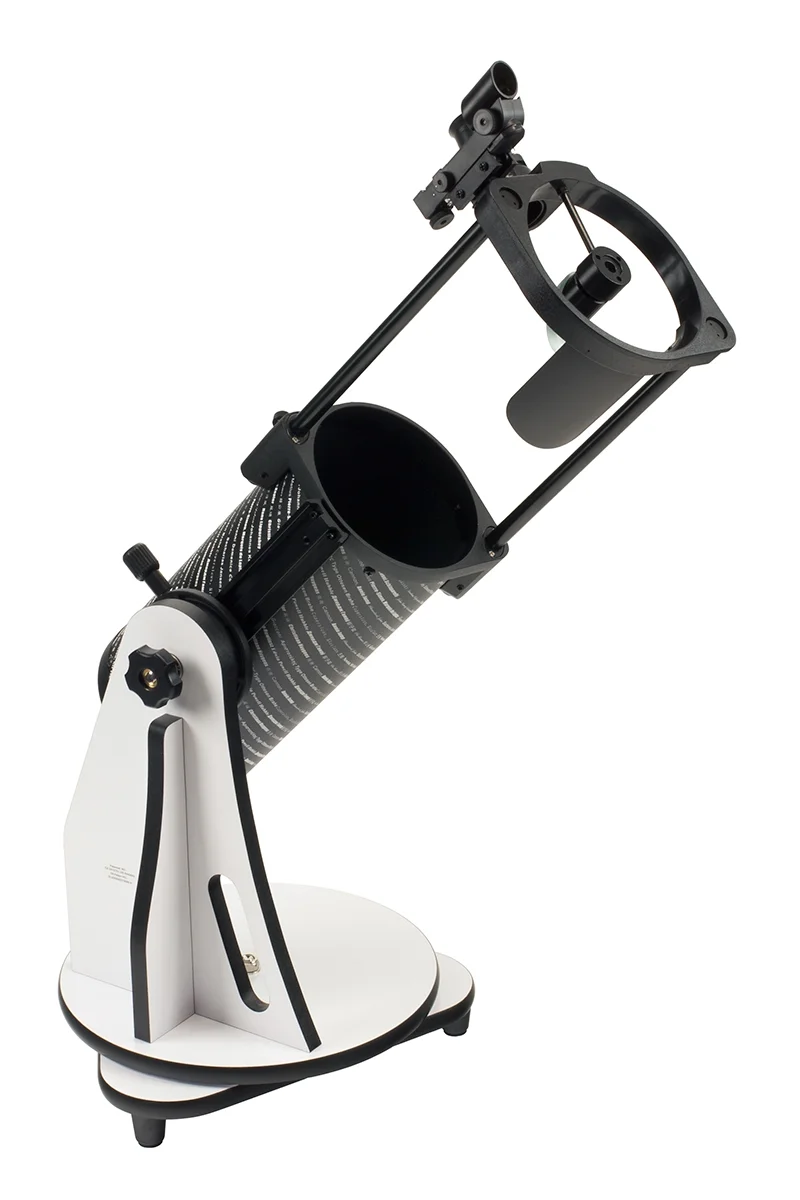
As opposition approaches, this little scope starts to show Mars as a true disc, polar cap and dusky markings included.
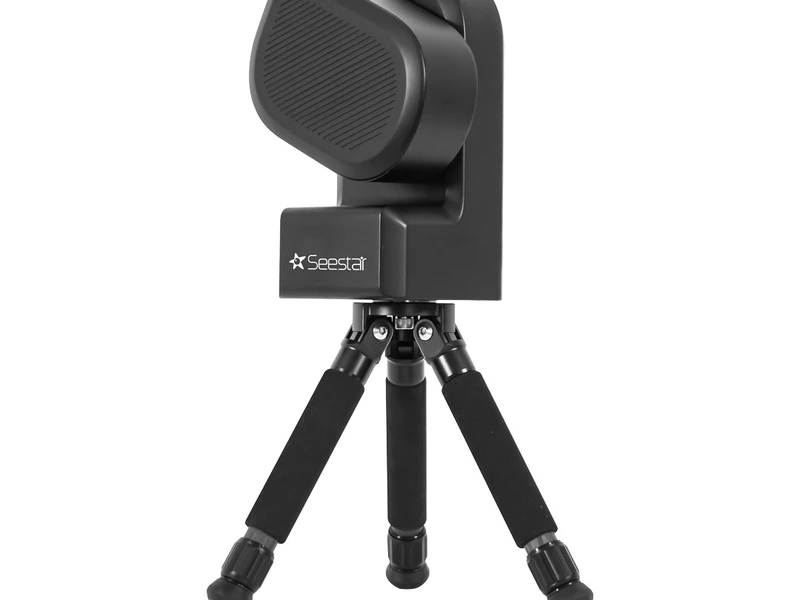
A smart telescope that captures Mars among the stars now, and doubles as your deep-sky camera on every other clear night.
Affiliate links: you pay the same price, we earn a small commission that helps keep WatchTheStars free.
The Bottom Line
Mars didn't lose its atmosphere in one disaster. It's been robbed slowly, for four billion years, by the same Sun that lights our own sky. This week, for the first time, two spacecraft working together caught the robbery in progress: giant waves rolling along the top of the Martian sky, each one carrying a little more of the planet's air away.
The next time Mars glows orange in your morning sky, you're looking at the scene of the crime. Clear skies.
Sources:
- Kelvin–Helmholtz waves drive quasi-periodic plasma cloud escape at Mars · Science Advances
- Scientists Just Discovered a Powerful Force That Is Quietly Tearing Mars' Atmosphere Away · The Daily Galaxy
- How The Sun Is Stripping Away Mars' Atmosphere · Eurasia Review
- How did Mars lose its atmosphere and water? · Physics Today
Frequently Asked Questions
Equipment guides
Related topics

Ian ClaytonAmateur astronomer and founder of WatchTheStars.co.uk, dedicated to helping others explore the wonders of our universe. Full profile →